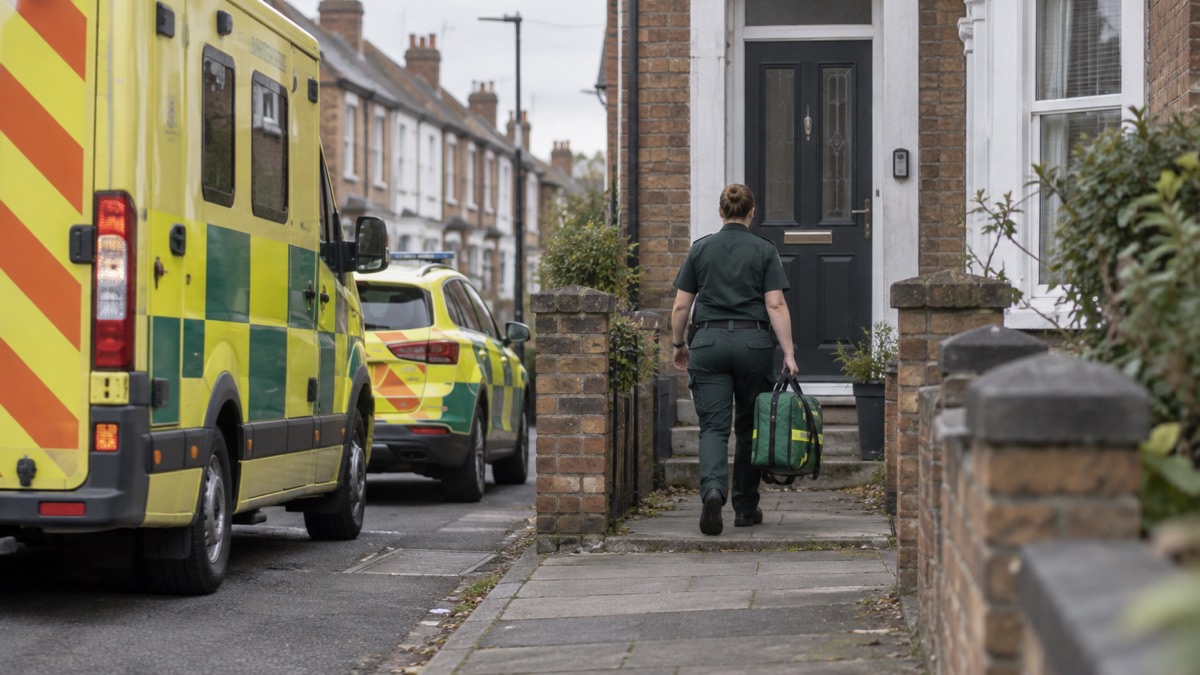
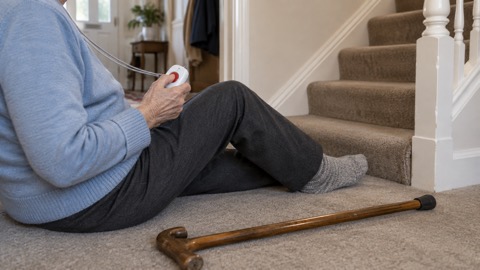
Press the button on your pendant and the base unit in your home places a call to a monitoring centre. A trained member of staff answers, assesses the situation, checks whether you are okay, and takes appropriate action, which could include calling a family member, a friend or the emergency services1. Council telecare services in England describe the same sequence: if you sound the alarm, they will contact a family member, carer or the emergency services2, and Staffordshire's service likewise has the provider contact a relative, carer or the emergency services depending on the situation3.
You do not need to be able to speak for this to work, and you do not need to reach a phone. The button does the dialling. What happens next depends on the plan you agreed when the alarm was set up: who is named as your contacts, whether they answer, and what the monitoring centre does when someone cannot be reached. This page walks through each step, from the first minute after the press to what the digital landline switchover means for your alarm. If you are still choosing an alarm, start with our guide to personal alarms.
What happens in the first minute
The sequence is simple and it is the same whether you pressed the button deliberately or a sensor raised the alarm for you. Pressing the personal alarm, or a sensor detecting a problem, makes the lifeline call the control centre1. The call opens a two-way speech link through the base unit in most set-ups, so the handler can talk to you and you can talk back without picking up a phone. The handler's job in that first exchange is to assess the situation and check if you are okay before deciding what happens next1.
Three outcomes follow. If you answer and say you have fallen but are not hurt, the handler follows your plan, which usually means calling one of your named contacts to come and help you up. If you answer and the situation is serious, they call the emergency services. If you cannot answer at all, they treat it as a potential emergency and work down your contact list, and if no one can be reached or the situation warrants it, they call 999. The exact order is set by the plan agreed when your alarm was installed, which is why it matters to get that plan right, and to keep it current.
The reason a personal alarm is worth having rather than relying on a mobile phone is that the button works when you cannot reach, hold or use a phone: on the floor after a fall, in the bath, or when confusion or a stroke makes dialling impossible. Our page on what happens if you press your alarm but cannot speak covers that situation in detail.
What telecare is and how the call reaches the centre
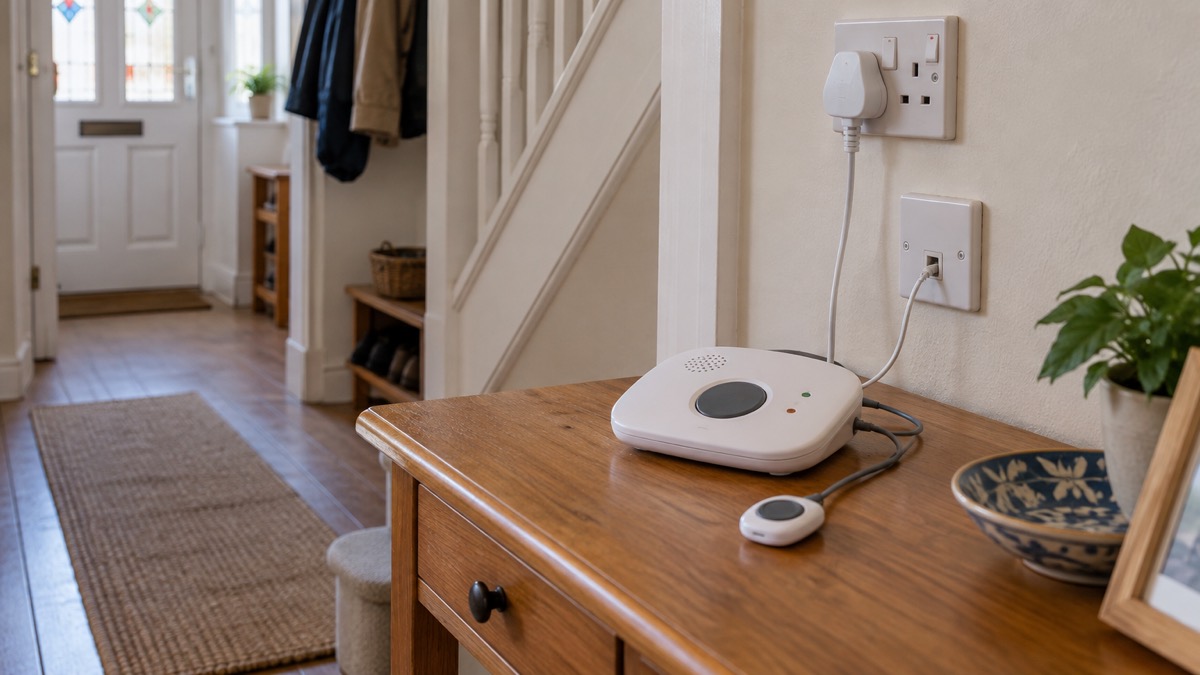
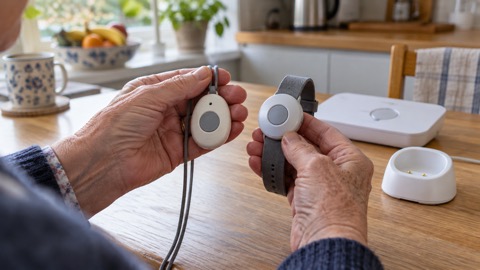
A personal alarm is one piece of a wider category called telecare, previously known as community alarms. NHS inform in Scotland describes telecare as a service that offers support through the use of technology and a monitoring service7. It is usually made up of an alarm base unit and peripheral devices, such as an alarm that you wear, which connect through radio waves and connect to an Alarm Receiving Centre through a phone connection7. The pendant on your wrist or around your neck is the peripheral; the box plugged into your phone line and mains socket is the base unit.
Warwickshire Council describes the same arrangement for its monitored assistive technology: a lifeline pendant, and optionally other sensors, set up in the home through a base unit, connected to a phone line and to a monitoring centre open 24 hours a day, 7 days a week1. That phone line connection is the part that matters most for reliability, and it is the part the digital landline switchover is changing, which we come to later in this page.
| Part of the system | What it is | What it does |
|---|---|---|
| Pendant or wrist button | The peripheral device you wear7 | Sends a radio signal to the base unit when pressed |
| Base unit | The lifeline box in your home1 | Calls the monitoring centre and opens two-way speech8 |
| Monitoring centre | The Alarm Receiving Centre7 | A trained handler assesses the situation and acts1 |
| Your contact list | The people you choose to be contacted3 | You choose who the team contacts, such as a family member, a neighbour or the emergency services3 |
Sensors can raise the alarm without you pressing anything. A fall detector, a smoke alarm linked into the system, or sensors that detect other problems all make the same call to the control centre1. If you are considering automatic detection, see our guides on fall detectors and on which falls a fall detector may miss.
Who they call: family, a neighbour or the emergency services
The monitoring centre's choice of who to contact follows the situation and your agreed plan. Lincolnshire's telecare service puts it plainly: if you sound the alarm, they will contact a family member, carer or the emergency services2. Staffordshire describes the provider contacting a relative, carer or the emergency services, depending on the situation3. In practice that means the handler first tries to establish from the call what has happened, then works down your list.
The emergency services are called when you or someone else is in immediate danger; that is the standing rule for calling 999 in the UK9. Devon and Somerset Fire and Rescue Service notes that a monitored alarm system can notify a call centre when an alarm is activated10, which is the same principle: a human being who is always awake, watching for your signal, and able to summon help.
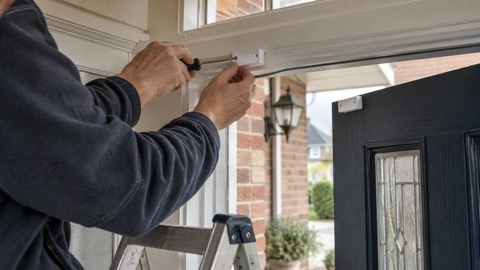
Choosing your contacts well is the part you control. Guidance for carers under the government's Be Ready advice adds the other side of the arrangement: if the situation means it is dangerous for you to visit, or you cannot get in touch with the person, call the emergency services and let them know that someone who relies on you may be at risk11. So when you name a contact, name someone who can genuinely get to your door, and make sure they know what to do if they cannot. A key safe fitted at your door lets a responder get in without breaking it; our page on where to fit a key safe for emergency access covers placement.
If you do not answer, someone is sent to check
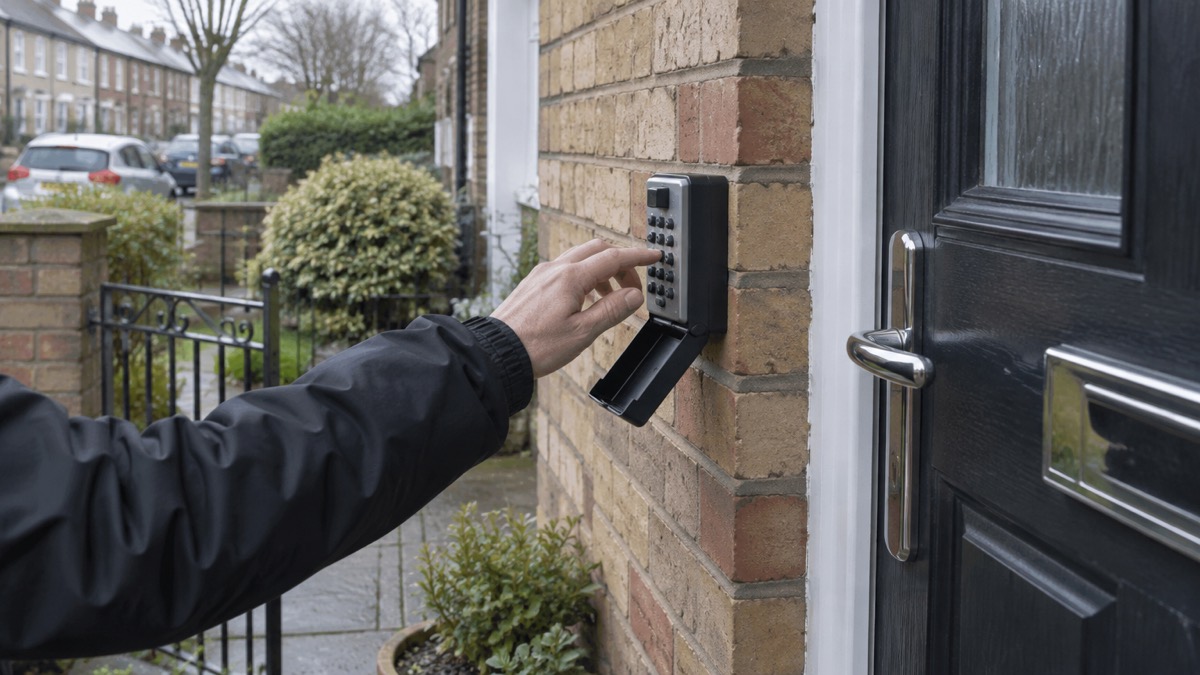
When you press the button and cannot speak, or when the call goes unanswered, the monitoring centre does not simply close the case. The handler assesses the situation and takes appropriate action1, and for monitored systems the agreed plan normally includes arrangements to safely investigate the cause of any alarm, normally by a local key holder, agreed with the Alarm Receiving Centre12. Warwickshire's guidance on remotely monitored fire alarm systems sets out this model: when the building is unoccupied, arrangements to safely investigate the cause of any alarm, normally by a local key holder, will need to be agreed with the ARC12.
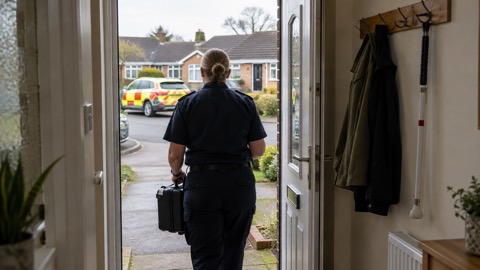
That key holder is your nominated responder: usually a relative, neighbour or friend who holds a key, lives close enough to attend, and has agreed to be called. Surrey Fire and Rescue Service advises anyone investigating an alarm activation to look, listen and smell for signs of fire such as smoke, unusual noises or heat13. The same common sense applies to a responder checking on a person: they are going to assess, not to force entry. If a neighbour's alarm is sounding repeatedly and you cannot contact them, Cheshire Fire and Rescue Service's advice is to try to contact them, and if you cannot, call 999 and do not attempt to enter the property yourself14. Manchester Fire and Rescue Service gives the same message for flats: if you hear a neighbour's smoke alarm, do not ignore it, alert the resident, and if they do not respond, call 999 and ask for Fire15.
For people who cannot mobilise or evacuate on their own, Manchester Fire and Rescue Service's advice for carers is to make sure a suitable plan is in place to aid escape, including the introduction of assistive technology if required16. A personal alarm is itself part of that plan: it summons help precisely for the moments when the person cannot act alone. If the person you care for has dementia, North Wales Fire and Rescue Service suggests that a friendly neighbour may be prepared to keep an eye out for signs that something is wrong, and that you may be able to leave a spare set of keys with them and a phone number where you can be contacted17. That neighbour is exactly the kind of person to name as a nominated responder.
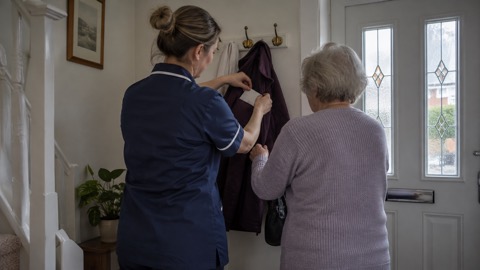
If you press the button but cannot speak, or you do not respond when the team answers, the alarm service still acts. Taking Care states that its Emergency Resolution Team will still know who you are, your location and that you may need help, and will follow your agreed emergency plan8. Where there is no response, the team calls a nominated person, such as a family member or friend, who can go to the household and check that all is well18. You choose who is contacted, from a family member, a neighbour or the emergency services, using the details you provide11.
Monitoring centres: answered around the clock
The monitoring centre your alarm calls is open 24 hours a day, 7 days a week1. That is the core promise of a monitored personal alarm over an unmonitored one: the button always reaches a person, at 3am on a Sunday as reliably as mid-morning on a weekday. Council telecare services and private providers alike run on this basis, and the handler who answers is trained to assess the situation and take appropriate action1.
Some providers describe their teams in more specific terms. Taking Care, one of the larger UK providers, describes its Emergency Resolution Team as a 24/7, UK-based, trained team, and elsewhere describes an around-the-clock, 24-hour monitored alarm service; the maker uses both descriptions for the same arrangement. Treat these as the provider's own description of its service rather than an independent assessment, but the underlying model, a staffed centre that never closes, is standard across monitored telecare.
What the handler sees when your call arrives is the information you or your family gave at set-up: your name, address, the contacts in order, and any medical details recorded against your account. That is why the centre can act without you saying a word, and why keeping that record current is not admin but part of the safety system itself.
Your location and how help finds you
For a home alarm, your address is already known to the monitoring centre: the base unit is registered to your home, so the response is directed there. The question of location matters more for alarms worn outside the home. GPS alarms, such as the Taking Care Anywhere GPS pendant, send your current position with the alarm call so that help can be directed to where you actually are, not just to your registered address. Our comparison of a home personal alarm or GPS alarm sets out which suits your household.
The principle that location follows the person, not the registered address, is also how the UK government's Emergency Alerts service works, and it is worth understanding because it is the reverse mistake people make: alerts are sent to your mobile phone or tablet based on your current location, and you do not need to turn on location services to receive them19. You will get alerts based on your current location, not where you live or work19. A personal alarm works the other way round for a home unit: the centre knows the address, and for a mobile unit it knows where you are when you press.
If you rely on someone else to reach you, make sure they know how to get in. A key safe, a neighbour with a spare key, or a doorstep password arrangement with utility companies all remove a barrier between help and your front door.
Medical details that help the response
The information recorded against your alarm account shapes what happens after the button is pressed. If the monitoring centre calls an ambulance, the details you supplied help the crew understand the situation before they arrive. Keep the line to the monitoring centre open if you can, and unlock your door if you are able, so that crew members and responders are not delayed at a locked door.
Review what is recorded about you whenever your circumstances change: a new diagnosis, new medication, a change of mobility, or a change of hospital all belong on the record. If your provider offers a dedicated number for updating your details, use it rather than assuming the next call handler will know. For Taking Care, the number listed for changes to your address, telephone number, medical conditions or keyholder contact information is 0800 085 7310, while its general customer services number is 0800 0121 321; the maker lists both, so check your own provider's paperwork for its equivalent.
If you care for someone whose medical details another responder would need, a written plan kept where responders can find it serves the same purpose. Our carer's emergency plan checklist and the in case of emergency card set out what to write down.
Test calls and keeping your details current
An alarm is only as good as the chain behind it, and every link in that chain can go stale. Test the alarm itself so you know the button reaches the centre and the speech link works both ways. The wider culture of testing applies to the rest of the arrangement too: Manchester Fire and Rescue Service's advice for carers is to test the person's smoke and heat alarms at least every month, or help identify somebody who can, if they are unable to test and maintain them16. The same monthly habit, applied to your personal alarm, confirms three things at once: that the pendant still triggers the base unit, that the centre still receives the call, and that the details they hold are still correct.
Batteries need attention on a schedule, not on a failure. South Wales Fire and Rescue Service advises that the backup battery in a mains-operated smoke alarm should be changed every year, and that a running-out battery can make the alarm beep20. A telecare base unit on mains power with a backup battery deserves the same annual check; ask your provider how its backup battery is maintained and how you will know when it fails.
Keep this list current with your provider:
- Your emergency contacts, since you choose who the team contacts on your behalf3
- Keyholder details, so a nominated responder can be sent to check12
- Medical conditions recorded against your account21
- Access arrangements, such as a key safe code17
If you have moved house, note that registering with one service does not always follow you to another; our page on whether you need to re-register after moving house covers the equivalent issue for utility priority services, and the same caution applies to alarm accounts.
Will your alarm work in a power cut?
A power cut is the classic hidden failure in a personal alarm system, because the base unit sits on mains power and the household may not notice the alarm has gone dark. Official UK power cut guidance is direct on this point: if you have a personal alarm, also known as telecare devices, or other connected equipment monitoring your health, speak to your device provider or manufacturer to understand how they will function during a power cut6.
Ask two specific questions: does the base unit have a backup battery, and if so, how long does it last? Then plan around the answer. Our page on whether a telecare or personal alarm works in a power cut goes through the practical steps, and our wider power cuts guide covers what else in the household needs thought.
The digital landline switchover
The biggest change to personal alarms in decades is underway: the UK's analogue telephone network is being moved to digital voice services, and telecare alarms that connect through a phone line are directly affected. Ofcom's advice to households is unambiguous: tell your landline provider and your device supplier before your landline is changed to digital if you, or someone in your household, has a telecare alarm, health pendant, personal alarm or any other device that uses your phone line5. Tell both companies, not just one.
Suffolk County Council reassures households on the basics: nobody will have to lose their landline service because of this change, your phone number will not change, and most handsets will work fine with the new system22. But a handset working is not the same as an alarm working. An analogue alarm designed to signal down an old-style phone line may fail silently on a digital line, which is why the switchover is treated as a safety issue for telecare users rather than a routine upgrade.
What to do, in order:
- Identify whether your alarm connects through your landline. If it does, it is affected by the switchover5.
- Tell your landline provider and your device supplier before the change happens5.
- Ask your supplier whether your current model is compatible, or whether it needs replacing5.
- If you are buying a new alarm, ask whether it is digital-ready rather than analogue-only5.
- After any change of landline service, make a test call to confirm the alarm still reaches the monitoring centre1.
Providers have been moving on this. Telecare24 announced in March 2025 that it stopped supplying analogue equipment as part of the digital telephone switchover, and in February 2026 Taking Care told customers that its current personal alarms will not work with the digital switchover, offering a reduced upgrade fee or an alternative analogue alarm with a landline exclusion until January 2027. The UK's analogue landline switchover is due to be complete by January 2027, so if you have done nothing yet, now is the time to make the call.
Emergency alerts on your mobile: a related system
Alongside your personal alarm, your mobile phone can now receive government emergency alerts. These are messages sent to compatible phones and tablets in an area affected by an emergency, and they will only be sent by the emergency services, government departments, agencies and public bodies that deal with emergencies19. You do not need to do anything to receive them, and you do not need location services turned on19.
One caveat matters for some households: it is possible to opt out of the system if you need your phone to stay concealed, which is the government's stated provision for domestic abuse victims23. If someone in your household has a concealed phone for safety reasons, they should know that opting out stops emergency alerts. People without a compatible device will still be informed about an emergency through other means used by the emergency services19.
An emergency alert is a broadcast, not a call for help: it tells you something has happened, whereas your personal alarm tells someone that you need them. The two work together, and households that rely on one should understand the other. Our staying informed guide covers the full range of ways to hear about an emergency as it develops.
Where to get help and more reading
If you are choosing an alarm for the first time, start with personal alarms: types and how to choose one, and see our comparison of a personal alarm or mobile phone for an older person living alone. If the alarm is mainly for falls, read about fall detectors and falls at home. For households affected by dementia, our pages on dementia and emergencies and the Herbert Protocol cover what to register before anything goes wrong. Carers should also see carers: planning for when you cannot be there, and the whole range of extra-help arrangements is gathered in our extra help in an emergency section, including signing up to priority services registers for energy and water.
In an immediate emergency, call 999 yourself if you can9. If you cannot, that is exactly what the button is for.
Sources (23)
- Monitored assistive technology and lifeline pendants, Warwickshire County Council, 2026
- Telecare monitoring service, Lincolnshire County Council, 2026
- Telecare: how the service works, Staffordshire County Council, 2025
- Personal Alarm Watch | Wristband Alarm for Elderly | Taking Care, Taking Care (taking.care)
- The future of landline calls, Ofcom, 2026
- Power cuts: be prepared, UK Government Prepare campaign, 2026
- Telecare: help and support, NHS inform Scotland, 2024
- Elderly GPS Tracker with Automatic Fall Detection | Taking Care, Taking Care (taking.care)
- Prepare yourself for emergencies, Greater Manchester Combined Authority, 2026
- Fire safety advice for carers, Devon and Somerset Fire and Rescue Service, 2026
- Advice for disabled persons and carers, UK Government Be Ready campaign, 2026
- Fire alarm systems and remotely monitored alarms, Warwickshire County Council, 2026
- Automatic fire alarms: investigating an activation, Surrey County Council, 2026
- Smoke alarms, Cheshire Fire and Rescue Service, 2026
- Fire safety information for residents living in high rise flats operating a ‘Stay Safe’ policy, Greater Manchester Fire and Rescue Service
- Additional advice for carers: smoke and heat alarms, Manchester Fire and Rescue Service, 2026
- Dementia fire safety, North Wales Fire and Rescue Service, 2026
- FAQs Product - Taking Care Sense, Taking Care
- UK Emergency Alerts, UK Government, 2026
- Smoke alarms: testing and batteries, South Wales Fire and Rescue Service, 2026
- Digital Personal Alarm FAQs | Taking Care, Taking Care
- The digital switchover, Suffolk County Council, 2026
- National Emergency Alerts Service, Warwick District Council, 2026
 Carer's Emergency Plan
 Herbert Protocol Form
 In Case of Emergency Card
 Energy and Water Company Duties
 Personal Alarms
 How Fall Detectors Work
 Home Oxygen Therapy Safety
 Airflow Mattress Fire Risk
 Fire Risk at Home
 Dementia and Emergencies
 Falls at Home
 Living Alone Safely
 Sight Loss and Emergencies
 Deaf and Hard of Hearing Safety