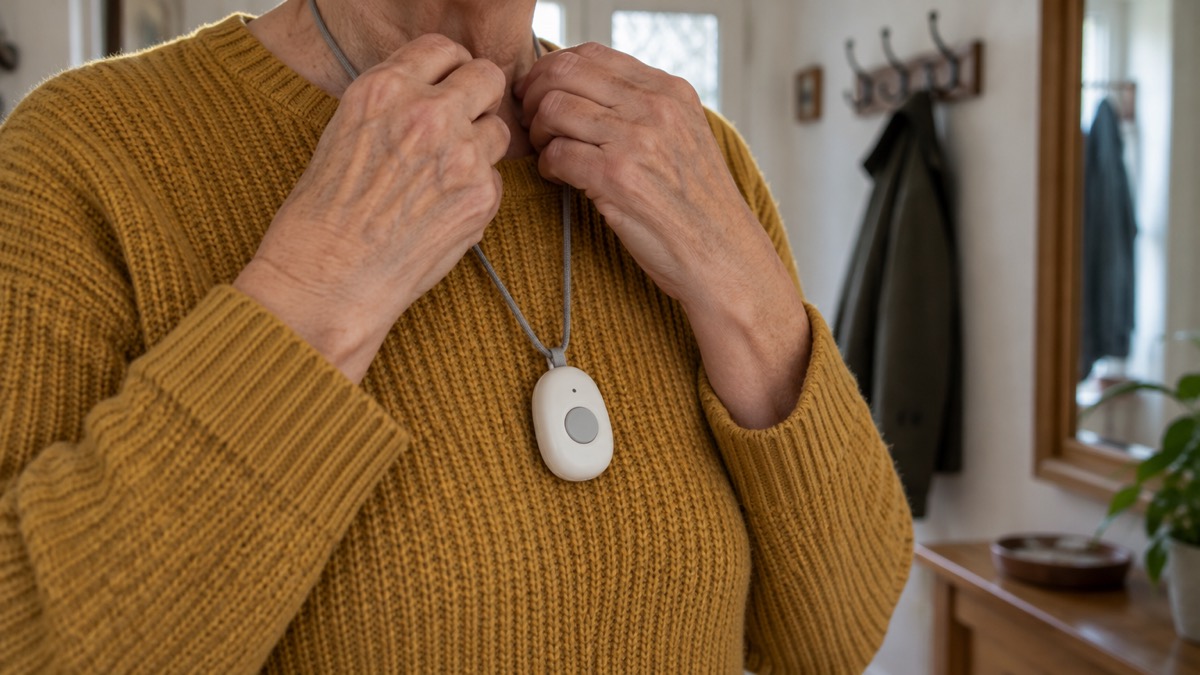
The Taking Care Anywhere is a neck-worn pendant that raises an alarm at the press of a button and shares your GPS location when it does, so that a monitored response team can find you whether you are at home or out and about. It also offers automatic fall detection, which the maker says works only when the pendant is worn openly around the neck. The battery lasts one to two months with standard use before it needs recharging1.
It is a rental product rather than a purchase: the equipment is provided as part of a subscription, with no large upfront cost, and the maker offers a 30-day money-back guarantee covering both the set-up cost and the subscription1. It works anywhere in the UK, excluding the Channel Islands, where there is a 3G or 4G mobile signal, and it will not work outside the UK2.
The one thing to settle before anything else is medical. If you have a pacemaker or another implant, the maker's instructions change how you can use it: the pendant must be kept at least 15cm from a pacemaker at all times, and the maker states that if you have a pacemaker you cannot wear Taking Care Anywhere as a pendant and fall detection will need to be turned off2. Read that section below before ordering.
What the pendant does at home and out and about
The Taking Care Anywhere is described by its maker as an in-home and out-and-about alarm with fall detection for reassurance on the move, and it shares GPS location in an emergency1. In practice that means one device covers the house, the garden and the walk to the shops, rather than a home alarm that stops working at the front gate.
That matters because the commonest reason people look at a personal alarm is a fall or a sudden illness when nobody else is in the house. The NHS Stay Steady and Safe home safety checklist advises considering a personal alarm or another way of calling for help3. A fall detector is a sensor the person wears which sends an alert if the person falls, so that you or a 24-hour monitoring and response centre could be notified as soon as it happens4. The maker states that the pre-alarm will sound for 10 seconds, announce "Fall detected" and the pendant will flash, giving the wearer a moment to cancel a false alert before the call goes through4.
The pendant is one option among several. If you are weighing up whether you need coverage only at home or coverage wherever you go, our comparison of a home personal alarm or GPS alarm sets the two side by side, and personal alarms: types and how to choose one covers the wider field. If the person you are caring for would rather carry a phone, personal alarm or mobile phone for an older person living alone works through that choice.
The maker also states that the backup pendant can be used by a second person living at the same address if they only need a home and garden alarm, provided you let the company know so the correct details are held1. That is a narrower arrangement than a second full subscription, so confirm what the second person is covered for.
Raising an alarm: press both sides of the SOS button
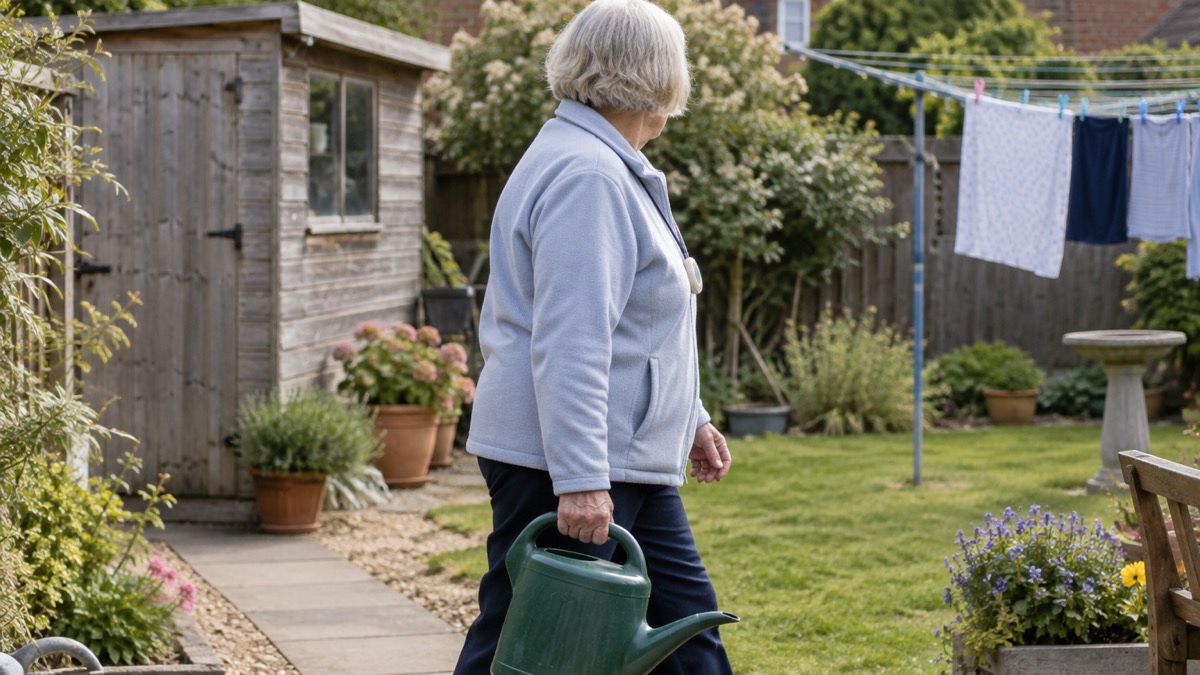
When you need help, press both sides of the SOS button. The pendant then connects to the maker's Emergency Resolution Team, which monitors alarms around the clock, and shares your GPS location so the responder knows where you are1.
The value of a monitored alarm is that it does not depend on you being able to hold a conversation about where you are. The maker's instruction is simple: press both sides of the SOS button together5. If speaking is difficult, our page on what happens if you press your alarm but cannot speak explains how responders work with silence, and what happens when you press a personal alarm walks through the call from the other end.
A few practical points make the button press count:
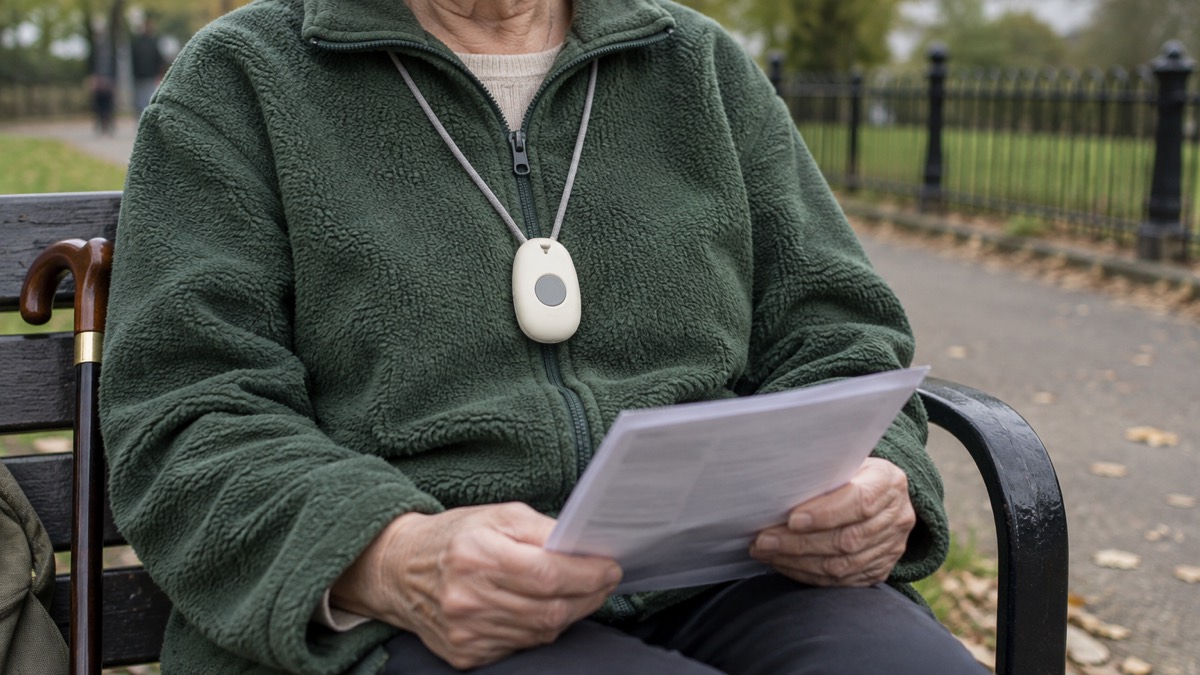
- Wear it, do not pocket it. The maker says the pendant is designed to be worn as a pendant openly around the neck for the fall detection algorithm to work as intended2.
- Keep your details current. The response depends on the contact details and keyholder arrangements held for you, so tell the company when anything changes6.
- Know what happens next. If an ambulance is needed, the responder will pass on what you have said. The maker's monitoring is the first link; the emergency services are the second.
If you press it by mistake, say so as soon as the call connects. Our page on what happens if you press your personal alarm by mistake covers the sequence, and the FAQ below answers the question directly.
Fall detection works only when worn around the neck
Fall detection is the feature that raises an alarm without you pressing anything. The maker is clear about its limits: it cannot guarantee to detect all falls because it depends on where the pendant is worn and the amount of shock or impact from the fall2. It is designed to be worn openly around the neck for the algorithm to work as intended2.
That single sentence decides a lot. A pendant tucked inside a shirt, clipped to a waistband or left on the bedside table is not in the position the detector expects, and a soft fall onto carpet may not produce the shock the detector is looking for. The maker's own wording is worth reading twice:
"it cannot guarantee to detect all falls because it is dependent on where it is worn and the amount of shock or impact from the fall"
Fall detection is a backup to the button, not a replacement for it. If you are still conscious after a fall, press the button. Our page on which falls a fall detector may miss goes through the circumstances in more detail, and fall detectors: how automatic fall alerts work explains the technology generally. If you are comparing a monitored alarm with a smartwatch, smartwatch fall detection or a monitored fall alarm sets out the difference.
Pacemakers and medical implants: keep the pendant 15cm away
This is the section to read before you order if anyone in the household has an implanted medical device. The maker states that the device includes a 2G/3G/4G GSM module that can cause electromagnetic interference with some medical devices, and instructs that it be kept at least 15 cm away from all medical implants including pacemakers, ICDs, VNS, CGMs and AID systems, and not worn or operated on the same side of the body as the implant1. The maker also advises checking with the device manufacturer1.
The support guidance is more specific still: the pendant must be kept at a minimum distance of 15cm from your pacemaker at all times, and if you have a pacemaker you cannot wear Taking Care Anywhere as a pendant and fall detection will need to be turned off2.
The 15cm figure is not unique to this product. Wiltshire and Swindon Prepared, in official guidance on medicines and medical devices, notes that hand-held screening wands can interfere with an implanted device and that security personnel should keep wands 15cm from the body and pass over any device very quickly7. The same caution applies to any electronics carried close to the chest, which is why the maker groups smartphones with the pendant in its warning1.
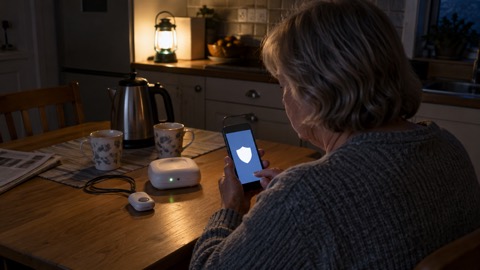
If you have a pacemaker and still want monitored cover, the practical route is a home-based alarm rather than a neck-worn GPS pendant. Our page on whether you can wear a personal alarm with a pacemaker works through the options, and Taking Care Digital Personal Alarm describes the home unit. For anyone using home oxygen, keep the oxygen device at least 1.5 metres from other electrical appliances such as a television, hairdryer or electric heater, as the NHS advises8, and see home oxygen therapy: fire safety and supply interruptions.
Battery: one to two months between charges
The maker states that the pendant's battery will last one to two months with standard use before it needs to be recharged2. That is the figure to plan around: a monthly check of the charge level is enough to stay ahead of it, and a reminder in the diary is simpler than waiting for a low-battery warning.
Standard use means the everyday pattern of the device sitting quietly and connecting when needed. Heavy use of location sharing, or a run of false alarms, will draw more. The maker does not publish a figure for those cases, so treat one to two months as the normal expectation and check more often if the pendant has been busy.
Charging is a maker's instruction, so follow the charging method supplied with the unit rather than substituting a charger. The subscription includes maintenance, repairs and battery replacement if required, so a battery that stops holding charge is a call to the company rather than a DIY job1.
Our page on how long a personal alarm pendant battery lasts compares battery life across alarm types. If you want to understand how the pendant behaves when the mains power is off, the next section covers it.
Where it works: wherever there is a 3G or 4G signal in the UK
The maker states that the pendant will work anywhere in the UK, excluding the Channel Islands, where there is a 3G or 4G cellular network to communicate, and that it will not work outside the UK2. Taking Care's own product page puts it more simply: GPS alarms work wherever you go in the UK, as long as there is mobile network coverage9.
Coverage is good but not universal. About 95% of the population is covered by 4G or 5G access, according to a government report of 8 July 202510. That leaves a minority of places, often rural or deep indoors, where a pendant may struggle. The maker's answer to the 3G switch-off is reassuring: UK mobile networks are gradually phasing out 3G services by 2033, and the pendant and base unit automatically connect to the strongest available signal (2G or 4G), so there is no immediate impact1.
| Question | Answer from the maker |
|---|---|
| Where does it work? | Anywhere in the UK with a 3G or 4G signal, excluding the Channel Islands2 |
| Does it work abroad? | No, it will not work outside the UK2 |
| What about the 3G switch-off? | Networks are phasing out 3G by 2033; the pendant connects to the strongest available 2G or 4G signal, so no immediate impact1 |
| Does it share location? | Yes, it shares GPS location in an emergency1 |
The location sharing is what makes out-and-about cover useful. If you fall in a park or on a high street, the responder can see where you are rather than relying on you to describe it. Our page on how far from the base unit a pendant alarm works covers the home range question, which is a different matter from mobile coverage.
During a power cut or with no mobile signal
A GPS pendant depends on the mobile network, so a power cut that takes out local masts, or a spot with no signal, is the case to plan for. The maker's coverage statement is the honest starting point: it works where there is a 3G or 4G signal2. Where there is none, it cannot raise the alarm.
Official advice gives you a second route. The Met Office advises that people using a digital landline who do not have a mobile phone, or who live in an area with poor or no mobile signal, should speak to their communications provider about additional support in advance11. Be Ready, the government's campaign, adds that if your landline will not work during a power cut, your landline provider might offer a free solution such as a back-up battery unit, for a minimum of one hour12.
Other practical steps from official guidance:
- Keep numbers to hand. Northern Ireland's guidance advises having the phone numbers you might need to hand, and notes that a non-mains powered landline telephone will help you stay in touch during disruptions to your power supply13.
- Call 105 in a power cut from your mobile or landline to report it and get information14.
- Keep a charged phone and written numbers. West Yorkshire Prepared advises keeping a mobile phone charged and writing down important phone numbers14.
- Check on neighbours. Scotland's Ready campaign advises that once you and your household are safe, you check on neighbours and those at greater risk, including older adults and people who need extra assistance to get around15.
Our page on whether a telecare or personal alarm works in a power cut goes through this in more detail, and staying informed and in touch in an emergency covers radios and other ways of keeping in contact.
Setting it up and testing it around your home and garden
Set-up is done with the company rather than alone. The maker states that it will ask you to test the equipment from different locations in your home and garden so the range and signal are fully tested2. Treat that as the most useful hour you will spend with the device: walk the rooms you use, the garden, the front step and the route to the bin, and press the button from each.
There are three ways to make contact with the company, according to its support article: online, using the account set-up link in your order confirmation email; by post, using the form in your welcome pack; and by phone on 0800 023 43012. The two published numbers differ, so use the one printed on your welcome pack if you have it.
Before the first test, sort out access. The maker recommends you have a keyholder within 30 minutes or a key safe, and can supply a key safe when you order2. A key safe is a lockable box that holds a key, fixed to an outdoor wall with a chosen code set to it, and some key safes are police-approved16. Our pages on key safes: letting carers and responders in and where to fit a key safe for emergency access cover siting and codes.
A short checklist for the first week:
- Confirm the account details and keyholder arrangements are correct2.
- Test from each room, the garden and the front door during the set-up call2.
- Agree what the second person in the household is covered for, if there is one1.
- Note the battery expectation, one to two months, and set a monthly charge check2.
- Keep the customer services number with your other emergency numbers2.
If the person you care for is living alone, living alone: staying safe when no one is nearby and carers: planning for when you cannot be there put the pendant in the wider plan. For the household view of emergencies generally, start with extra help in an emergency.
Sources (16)
- Taking Care Anywhere GPS Fall Alarm, Taking Care, 2026-10-29
- Taking Care Anywhere product FAQs, Taking Care, 2026-10-29
- Stay Steady and Safe Home Safety Checklist, NHS Norfolk and Suffolk ICB, 2026
- Technologies to make life easier, Carers UK, 2026-10-25
- eCall, National Highways, 2026-10-29
- Frequently Asked Questions about Key Safes | Taking Care, Taking Care
- Medicines and medical devices: five top tips for summer, Wiltshire and Swindon Prepared, 2026-10-25
- Oxygen, Keeping My Chest Healthy, Keeping My Chest Healthy (Bradford District Care NHS Foundation Trust)
- Taking Care, Taking Care, 2026-10-29
- Government Resilience Action Plan, Hansard, 2025-07-08
- What to do in a power cut, Met Office, 2026-10-25
- Advice for disabled persons and carers, Be Ready, 2026-10-20
- Strong winds and heavy rain warning information and advice, nidirect, 2026-01-27
- Power cuts, West Yorkshire Prepared, 2026-10-29
- Emergency plan, Ready Scotland, 2026-03-24
- Equipment for carers, Devon and Somerset Fire and Rescue Service, 2026
 Taking Care Digital Alarm
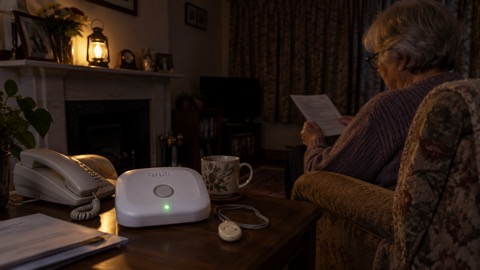 Taking Care Digital Fall Alarm
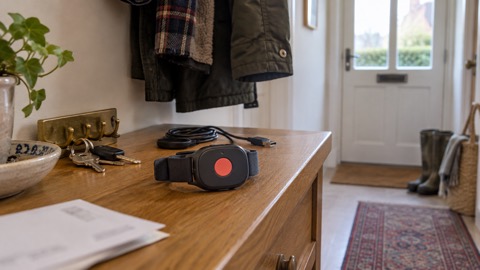 Taking Care Alarm Watch