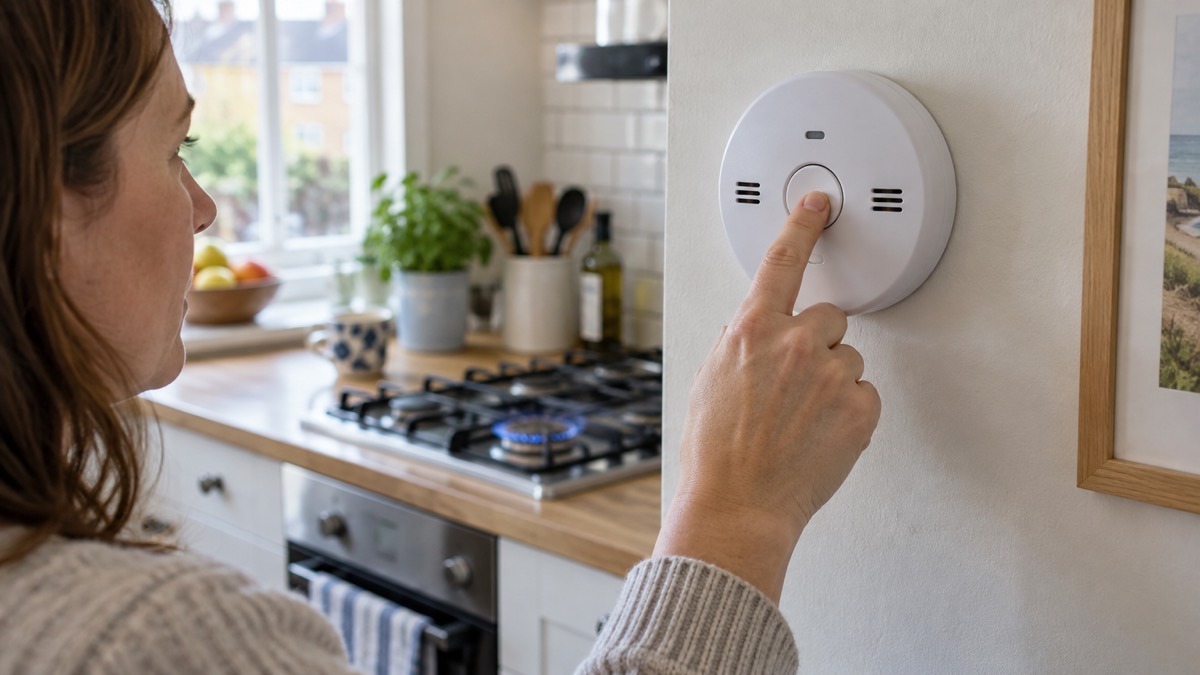
No. A carbon monoxide alarm cannot detect a gas leak. It is built for one job only: to sense carbon monoxide, the colourless, odourless gas that faulty or badly maintained fuel-burning appliances can produce. Carbon monoxide detectors, commonly known as CO alarms, are devices specifically designed to detect the presence of this odourless and invisible gas1. They are not gas leak detectors, and they will not react to natural gas or to the propane and butane in a cylinder.
That distinction matters because the two dangers need different responses. A gas leak is usually noticed by smell, and dealt with by the gas emergency service on 0800 111 9992. Carbon monoxide gives no smell at all, which is why it needs an alarm. If you have a fuel-burning boiler, fire or stove, you should have a CO alarm in every room where fuel is burned1. If you use LPG, you need a separate gas detector as well.
This page sets out what each alarm does, why LPG is a special case, where to fit a CO alarm, and what to do when one sounds.
What a carbon monoxide alarm actually detects
A CO alarm is a single-purpose device. It watches the air for carbon monoxide and raises an audible alarm when levels rise, for example from a blocked flue or chimney or a faulty appliance5. It does not sense smoke, and it does not sense the gas in your supply pipe or cylinder. CO alarms are specifically designed to detect carbon monoxide, while smoke alarms are designed to detect smoke and fire1.
That narrowness is deliberate. Carbon monoxide is dangerous precisely because you cannot see, taste or smell it, so the alarm is the only thing in the house that will notice it while you are asleep or in another room. The purpose of an alarm is to alert you to the presence of carbon monoxide and give you time to exit the building safely6.
What it will not do is tell you where the gas is coming from, how much has built up, or whether your boiler is about to fail. It is a warning, not a diagnostic tool. That is why the fire and rescue services pair the alarm with maintenance: fitting an alarm should not be used instead of regular checks of appliances7.
LPG leaks need a separate gas detector
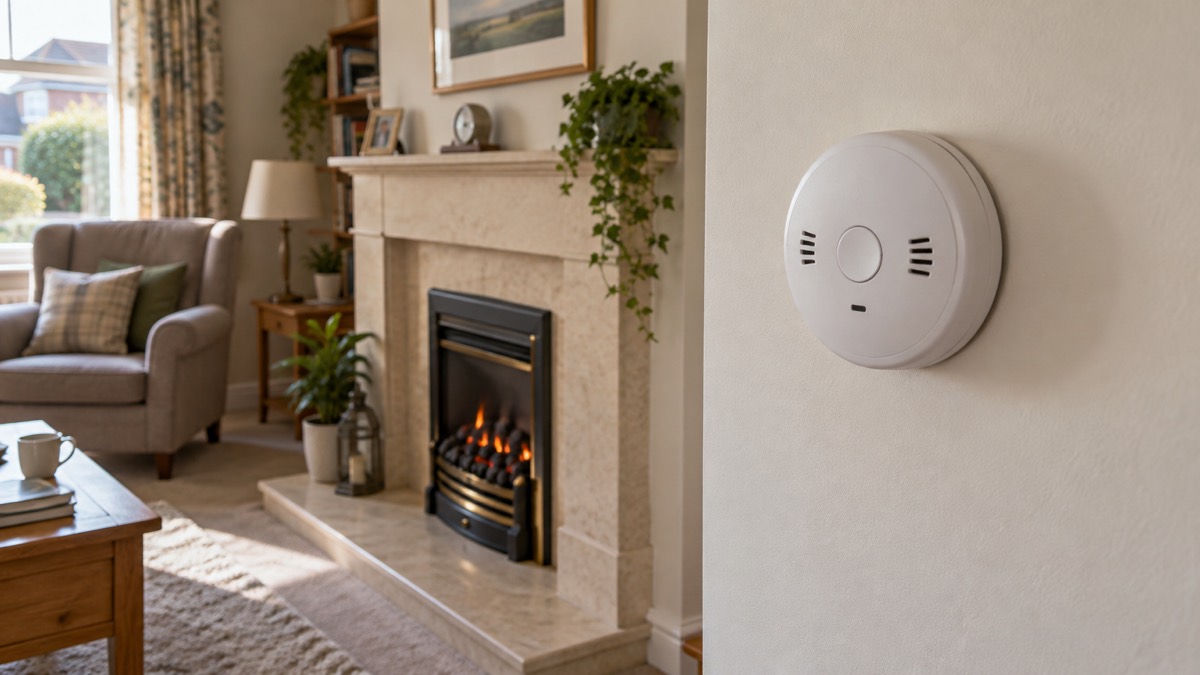
Liquid petroleum gas, the propane and butane sold in cylinders and bulk tanks, is a different hazard from carbon monoxide, and a CO alarm will not detect it. LPG equipment can be particularly vulnerable: blocked or partially blocked burners can lead to higher carbon monoxide levels and flame failure, and LPG can also leak from damage to hoses and connections4. So an LPG household faces two separate risks, and needs two separate responses.
| Risk | What warns you | What to do |
|---|---|---|
| Carbon monoxide from any fuel-burning appliance | A CO alarm in each room with an appliance1 | Get outside, ventilate, call the fuel supplier's emergency line3 |
| LPG escaping from a cylinder, hose or connection | A separate gas detector, or your nose | Follow your supplier's emergency advice; do not operate switches or flames |
| Natural gas escaping from the mains supply | Your nose, usually; the gas emergency line | Call 0800 111 999, even if there is no obvious leak2 |
The gas emergency freephone number, 0800 111 999, is the number to call for a gas or carbon monoxide emergency, or if a gas pipeline is struck, even if there is no obvious leak2. Keep it somewhere you can find it in the dark.
Why a CO alarm is still worth fitting in a home with gas
It would be easy to read the first half of this page and conclude that a CO alarm is not much use in a gas home. The opposite is true. Every home with a solid fuel or gas appliance should also have a working carbon monoxide alarm installed nearby8. If you have a gas boiler or solid fuel appliance, a carbon monoxide alarm should be fitted in your home which will warn you9.
The reason is that a gas appliance can produce carbon monoxide without leaking gas at all. A blocked flue, a poorly serviced boiler or a burner that is not burning cleanly can send CO into the room, and nothing about the smell of gas will tell you. Alarms can provide early warning of a carbon monoxide leak, allowing for a prompt response10. That early warning is the whole point: it gives you time to get out and call for help.
Watch for the physical signs too. A floppy yellow or orange flame where it should normally be crisp and blue, extra condensation inside windows, pilot lights that frequently blow out, and soot or yellow stains around appliances are all worth acting on2. If you see them, stop using the appliance and get it checked.
"In the event of a fire or carbon monoxide leak, these alarms can provide early warning, allowing for a prompt response."
A CO alarm is not a substitute for servicing. CO alarms must never be regarded as a substitute for the proper installation, maintenance, servicing and cleaning of appliances that use gas, coal, oil or any other solid fuel4. Use the alarm as a backstop, and keep the annual service going.
Where to fit a CO alarm, and how many you need
The rule of thumb from the fire and rescue services is simple: one alarm for every room that contains something that burns fuel. Get one for each room of your home containing appliances that burn gas, oil, coal or wood6. Carbon monoxide alarms should be fitted in all rooms containing solid fuel appliances, any gas appliances or paraffin heaters11. That includes boilers, fires including open fires, heaters, and stoves, or a room with a flue12.
- Gas boiler or gas fire: fit a CO alarm in the same room12.
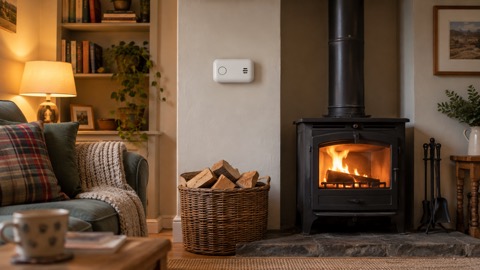
- Open fire, log burner or solid fuel stove: fit one in the room, and have the chimney swept12.
- Paraffin heater: fit one in the room where it is used11.
- Bedroom: you may wish to keep a CO alarm in the bedroom so it would wake you when sleeping13.
- Rented home: your landlord must ensure a carbon monoxide alarm is equipped in any room used as living accommodation which contains a fixed combustion appliance, excluding gas cookers14.
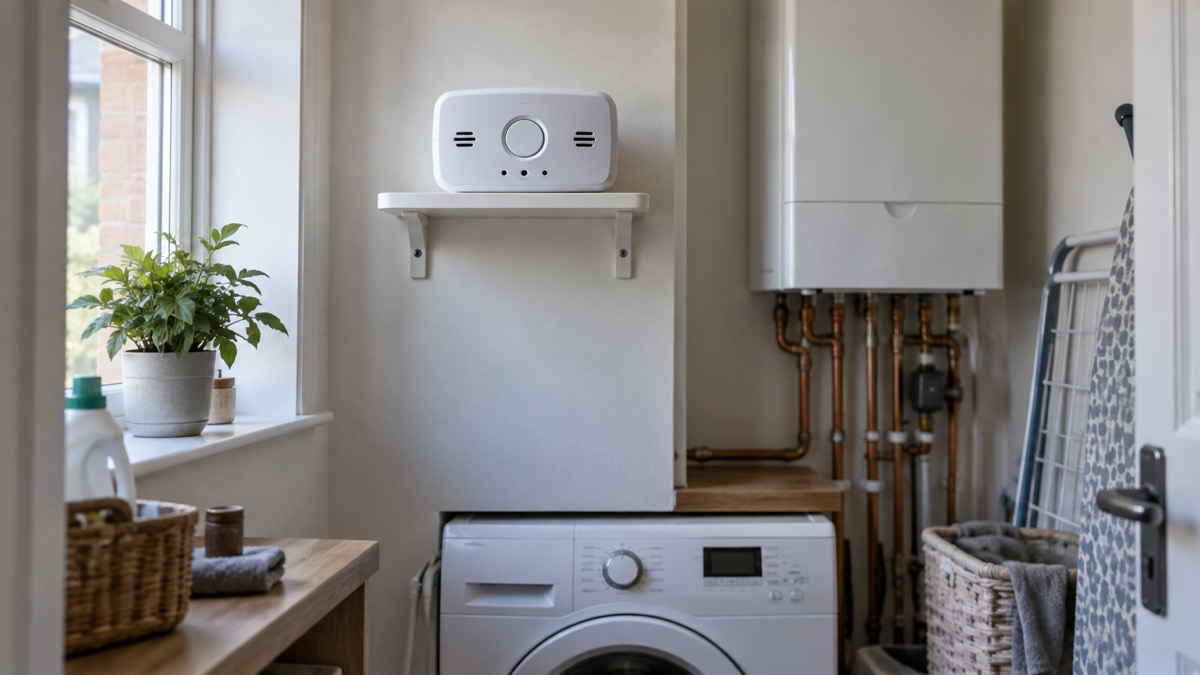
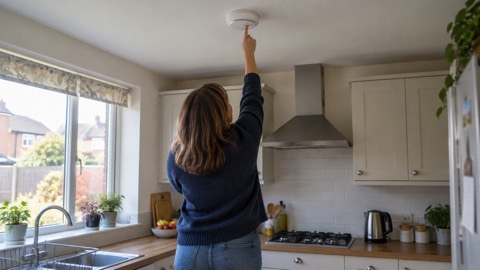
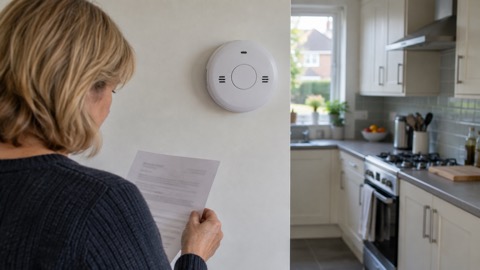
Position matters. In rented homes, alarms should be installed in every room used as living accommodation containing a fixed combustion appliance, excluding gas cookers, positioned at head height, either on a wall or shelf, approximately 1 to 3 metres away from a potential source of carbon monoxide15. Test the alarm weekly, alongside your smoke alarms3.
What the alarm sound means and what to do next
When a CO alarm sounds, treat it as real. They rarely beep as a false alarm, so if your carbon monoxide detector is beeping you should act fast and get out of the property3. The alarm is not telling you to open a window and carry on; it is telling you to leave.
The fire and rescue service sequence is:
- Open all doors and windows3.
- Stop using and turn off all fuel-burning appliances3.
- Evacuate, leaving doors and windows open3.
- Do not re-enter the property until the alarm has stopped3.
- Contact your gas or fuel supplier on their emergency number3. For gas appliances, call the gas emergency freephone number, 0800 111 9992.
If anyone in the household has symptoms, get medical help. The NHS advises that you get a carbon monoxide alarm for each room of your home that contains appliances that burn gas, oil, coal or wood6, and to know the symptoms of carbon monoxide poisoning7. Symptoms and next steps are set out in full on our pages on carbon monoxide poisoning symptoms and what to do if your CO alarm sounds.
Alarms, detectors and the limits of each
It helps to keep the family of alarms straight, because each covers a different failure.
| Device | What it senses | What it will not sense |
|---|---|---|
| Carbon monoxide alarm | Carbon monoxide from fuel-burning appliances1 | Gas leaks, smoke, heat |
| Smoke alarm | Smoke and fire1 | Carbon monoxide, gas leaks |
| Heat alarm | Heat from a fire | Carbon monoxide, gas leaks |
| Gas detector (LPG) | Escaping LPG from cylinders or connections | Carbon monoxide |
CO alarms and smoke alarms are not a substitute for one another, and both types of alarm should be installed in your house10. The emergency services advise the fitting of a carbon monoxide and smoke alarm in the house, thus protecting lives and property16. If you live in a house or flat that is entirely powered by electricity, you will not need a carbon monoxide detector, but if you have a fuel-burning boiler, fire or stove you should have one in every room where fuel is burned10.
There is one more case worth knowing. Even if you do not have any fuel-burning appliances in your home, carbon monoxide can seep through walls, so if you live in a semi-detached home or a terrace and your neighbour burns gas, LPG, oil or wood, the safety-first approach would be to install a carbon monoxide detector17. If you are choosing between a combined unit and separate alarms, our comparison of combined or separate alarms sets out the trade-offs, and carbon monoxide alarms: what they do and how to choose covers the wider range.
Where to get help and further advice
If you smell gas, or suspect a carbon monoxide leak, call the gas emergency freephone number, 0800 111 9992. For gas appliances, that is the number the fire and rescue services direct you to1. Keep it by the phone and in your emergency kit.
For households that need extra support, a telecare service can add a carbon monoxide detector that raises an audible alarm within the home and an instant alarm call to a monitoring centre when carbon monoxide levels are increased, for example from a blocked flue or chimney or faulty appliances5. This is worth asking about if someone in the home is older, disabled or living alone. Our guide to extra help in an emergency explains the wider options.
If you are renting, your landlord has duties. Landlords must supply you with a carbon monoxide detector and alarm in any room of the premises which is used wholly or partly as living accommodation and contains a solid fuel burning combustion appliance19. The rules differ in Scotland, Wales and Northern Ireland; our page on Wales and Northern Ireland: alarm rules and fire services sets out the differences.
Finally, make the alarm part of your routine. Test smoke alarms monthly and consider getting a carbon monoxide alarm for rooms with gas, oil, coal or wood-burning appliances20. If you are unsure whether you need one at all, our page on whether you need a carbon monoxide alarm answers that directly, and where to put a carbon monoxide alarm goes into placement in more detail.
Sources (20)
- Smoke and carbon monoxide alarms, Warwickshire County Council, 2026
- Carbon monoxide, Wessex Water, 2026-10-28
- Smoke alarms and carbon monoxide detectors, Surrey County Council, 2026-08-24
- Carbon monoxide, Health and Safety Executive, 2026
- Household fire safety, Somerset Council, 2025-01-30
- Carbon monoxide, Devon and Somerset Fire and Rescue Service, 2026
- Chimneys, Scottish Fire and Rescue Service, 2026-10-25
- Carbon monoxide, Health and Safety Executive for Northern Ireland, 2026
- Carbon monoxide poisoning, NHS 111 Wales, 2025-10-02
- Safe home heating, Warwickshire County Council, 2026-10-29
- Fire safety for carers, Devon and Somerset Fire and Rescue Service, 2026
- Carbon monoxide, Greater Manchester Fire and Rescue Service, 2026-10-25
- Emergency alarms, lifeline and telecare, Isle of Anglesey County Council, 2026-10-29
- Fire safety in rented accommodation, Cornwall Council, 2026-10-29
- Housing standards, Cherwell District Council, 2026-10-29
- Avoiding accidental fires at home, nidirect, 2025-10-16
- What to do when a carbon monoxide detector goes off, Which?, 2026-07-14
- Smoke and carbon monoxide alarms, Northamptonshire Fire and Rescue Service, 2026
- Chimney fire safety, North Yorkshire Fire and Rescue Service, 2026-09-08
- Poisoning, NHS, 2025-06-12
 Home Fire Safety Checklist
 Bedtime Fire Safety Checks
 Fire Risk Checks for Carers
 Why a CO Alarm Is Beeping
 Smoke Alarm Keeps Chirping
 Testing Smoke and CO Alarms
 Replacing Smoke and CO Alarms
 Where to Fit Smoke Alarms
 How Many Smoke Alarms
 Where to Put a CO Alarm
 Do I Need a CO Alarm
 Trapped by Fire What to Do
 Putting Out a Chip Pan Fire
 Electrical Fire Safety
 Appliances Left On Overnight