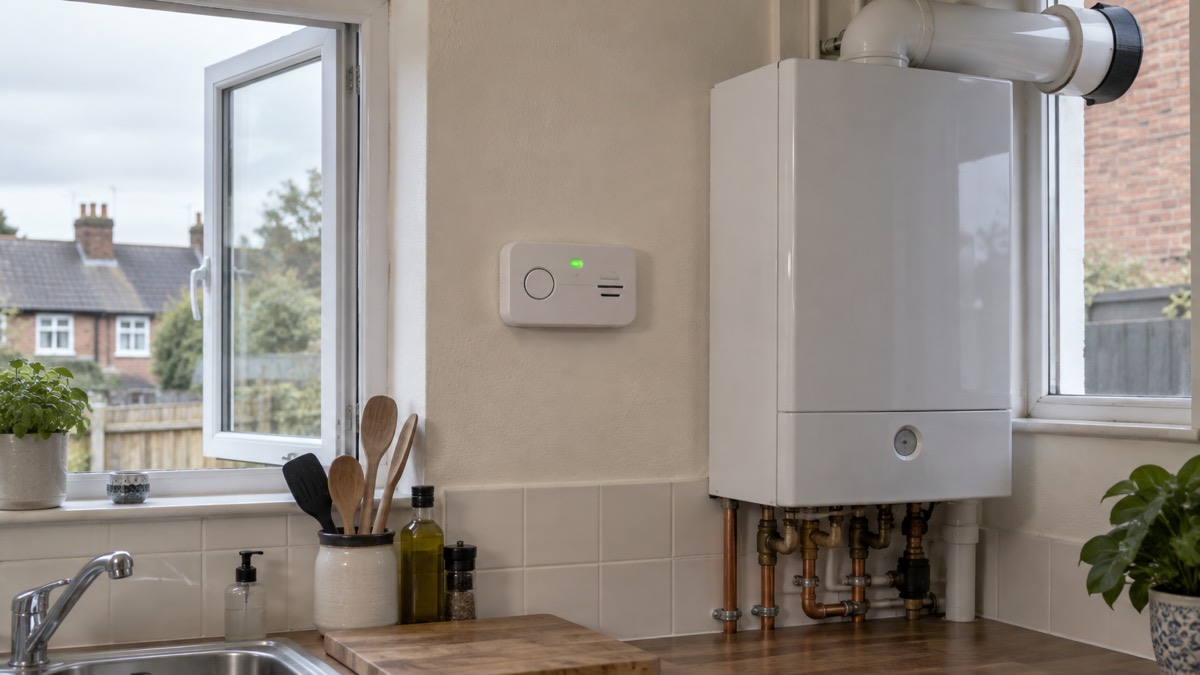
Carbon monoxide is a highly poisonous gas with no smell, colour or taste, released by any appliance that burns oil, solid fuel, wood or gas, including boilers1. It reduces your body's ability to carry oxygen, which can quickly make you seriously ill2. Because you cannot see it, taste it or smell it, the symptoms in you, your family and your pets are often the only warning you will get.
The most common symptom is a headache: a tension-type headache is the most common symptom of mild carbon monoxide poisoning3. Around it come nausea, dizziness, tiredness and confusion, which are easily mistaken for flu, food poisoning or simple tiredness5. The pattern matters as much as the symptoms: if they come on at home, ease when you leave and return when you go back, suspect carbon monoxide5.
If someone is finding it hard to breathe, suddenly becomes confused, loses consciousness, feels weak, or has chest or muscle pain, call 999 or go to A&E straight away5. If your alarm sounds or you suspect a leak but nobody is seriously unwell, get everyone out into fresh air, open doors and windows, turn off appliances, and call the Gas Emergency Helpline on 0800 111 9998.
Call 999 or go to A&E immediately in these situations
Some symptoms mean the poisoning is severe and every minute counts. The NHS says to call 999 or go to A&E if you think you or someone else has been exposed to carbon monoxide and is finding it hard to breathe, has suddenly become confused, has lost consciousness, is feeling weak, or has chest or muscle pain5. NHS 111 Wales gives the same list: difficulty breathing, sudden confusion, or someone losing consciousness12.
If someone is showing signs of poisoning or has collapsed, get them outside into fresh air first, then call 999 and ask for an ambulance13. Do not go back inside to collect belongings while the atmosphere may still be unsafe. Devon and Somerset Fire and Rescue Service puts it plainly for households caught in a carbon monoxide incident: if you start to feel unwell, this could be carbon monoxide poisoning, so call 999 immediately14.
Breathing in high levels of carbon monoxide causes more severe symptoms than the familiar headache and nausea. These include an impaired mental state and personality changes, vertigo, ataxia (loss of physical co-ordination), breathlessness and tachycardia (a heart rate of more than 100 beats per minute), chest pain caused by angina or a heart attack, seizures, and loss of consciousness4. At very high levels, death may occur within minutes, and exposure to high concentrations leads to collapse and death within minutes4. This is why the emergency advice is to act on severe symptoms first and investigate the cause afterwards.
If you suspect carbon monoxide: get out, open up, call 0800 111 999
When nobody is severely unwell but your alarm has sounded or the symptoms point to carbon monoxide, there is a set sequence to follow. North Yorkshire Fire and Rescue Service advises: open windows and doors, turn off appliances and leave the property9. nidirect gives the same steps for people affected while camping, caravanning or boating: open doors and windows for ventilation, go outside into the fresh air, then go to your GP or nearest emergency department, and call 999 if it is urgent15.
Once you are out, call the National Gas Emergency Service on 0800 111 9999. The London Fire Brigade's carbon monoxide safety booklet is explicit about the order of things: before returning to your home, call the 24 hour Gas Emergency Number on 0800 111 9998. Scottish Fire and Rescue Service gives the same number, 0800 111 999, for a suspected carbon monoxide leak10. Manchester Fire and Rescue Service adds that if the alarm sounds, get out and call the Gas Emergency Helpline on 0800 111 9997.
The steps in order:
- Stop using the suspect appliance, open windows and doors, and get everyone outside into fresh air9.
- Call the Gas Emergency Helpline on 0800 111 9998.
- Seek medical advice: 999 if anyone is seriously unwell, otherwise NHS 111 or your GP5.
- Do not use the appliance again until it has been tested by a registered engineer, and do not sleep in a room you think has carbon monoxide fumes in it1.
- Do not go back inside until the property has been checked for safety4.
If you think you have been exposed and feel unwell or are worried, Public Health England's guidance is to call NHS 111, contact your GP, or in an emergency contact the emergency services on 99916. Your house will also need to be checked for safety before anyone returns4. For the fuller procedure around alarms, see what to do if your CO alarm sounds or you suspect carbon monoxide.
The symptoms: a headache comes first in most cases
A headache is the most common symptom of carbon monoxide poisoning3. The NHS describes it more precisely as a tension-type headache, the most common symptom of mild poisoning4. Scottish guidance puts a figure on it: headache occurs in 90% of cases11.
The full list of symptoms from the NHS is long because carbon monoxide affects the whole body: a headache; dizziness; feeling sick or being sick; feeling weak; tiredness and confusion; chest and muscle pain; shortness of breath; your face turning hot and red (flushing); and loss of vision5. Staffordshire Fire and Rescue Service lists other common symptoms including dizziness and nausea, vomiting, tiredness and confusion, stomach pain, and shortness of breath and difficulty breathing3. Cornwall Fire and Rescue Service adds later symptoms of confusion, loss of memory, and problems with co-ordination6.
How often each symptom appears, from Scottish guidance on cases of poisoning11:
| Symptom | How often it appears |
|---|---|
| Headache | 90% of cases11 |
| Nausea and vomiting | 50% of cases11 |
| Vertigo | 50% of cases11 |
| Alteration in consciousness | 30% of cases11 |
| Subjective weakness | 20% of cases11 |
The symptoms may come and go. They may get worse when you spend time in an affected room or building and get better when you leave or go outside5. That rise and fall is not random: it tracks your exposure, and it is the single most useful clue that you are dealing with carbon monoxide rather than an infection.
Not flu: no high temperature, and you feel better away from home
The early symptoms of carbon monoxide poisoning can mimic many common ailments and may easily be confused with food poisoning, viral infections, flu or simple tiredness6. Manchester Fire and Rescue Service lists the same confusions: flu, food poisoning, viral infections and tiredness7. A national diagnosis algorithm goes further, calling carbon monoxide notorious for simulating other more common conditions, including flu-like illnesses, migraine, food poisoning, tension headaches and depression17.
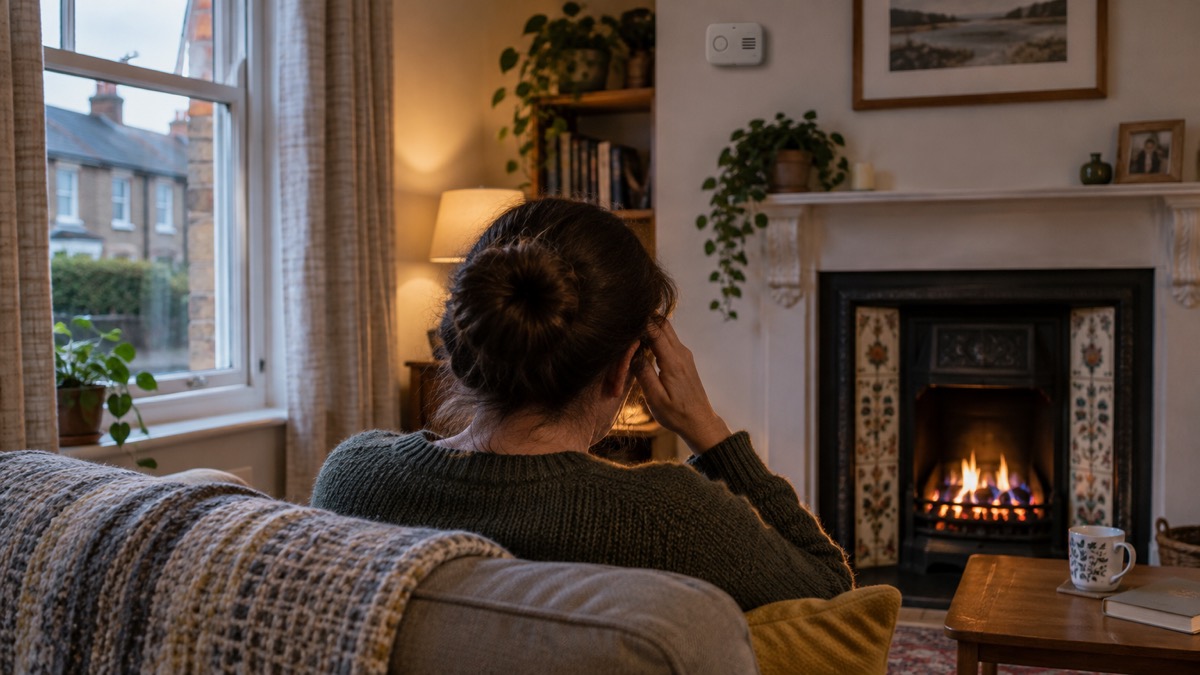
Two features separate it from flu and the other mimics. First, unlike flu, carbon monoxide poisoning does not cause a high temperature4. If you or your family have headache, nausea and tiredness but no fever, flu is less likely and carbon monoxide becomes more likely. Second, the symptoms are tied to the building: they occur when you are at home and disappear or get better when you leave, then come back when you return7.
The NHS lists further patterns that should make you suspect carbon monoxide4:
- Other people in your house, flat or workplace fall ill with similar symptoms.
- Your symptoms disappear when you go away and return when you come back.
- Your symptoms tend to be seasonal, for example headaches more often during the winter when the central heating is used more.
- Your pets also become ill.
That last point deserves emphasis. Others in your household experiencing symptoms, including pets, at a similar time is a recognised warning sign7. Because the symptoms can gradually get worse with long periods of exposure, there is a real risk of a delay in diagnosis while everyone puts it down to a bug going round4. Carbon monoxide poisoning is often undetected because of its unnoticeable properties and non-specific symptoms, which leads to misdiagnosis18.
Severe poisoning: collapse within minutes at high levels
Mild poisoning feels like flu. Severe poisoning does not. Breathing in high levels of carbon monoxide gas causes impaired mental state and personality changes (intoxication), vertigo, ataxia (loss of physical co-ordination), breathlessness and tachycardia (a heart rate of more than 100 beats per minute), chest pain caused by angina or a heart attack, seizures, and loss of consciousness4.
At the top of the range, the outcome is stark. The nidirect guidance states that in cases where there are very high levels of carbon monoxide, death may occur within minutes4. Scottish guidance agrees that exposure to high concentrations leads to collapse and death within minutes11, and a government press release from 2015 warns that at high levels, carbon monoxide poisoning can cause sudden collapse, loss of consciousness and death19.
The practical point is that severe symptoms are an emergency before they become a collapse. Sudden confusion, unsteadiness, a racing heart, chest pain or breathlessness in a household where milder symptoms have been building should be treated as severe poisoning: get the person into fresh air and call 9995. Long periods of significant exposure can cause serious complications including brain damage and heart problems, and in very severe cases, death4.
Using NHS 111 and your GP when symptoms are mild
Not every exposure needs an ambulance. The NHS advises seeking medical advice from your GP if you think you have been exposed to low levels of carbon monoxide4. The Health and Safety Executive says that if you or your family experience symptoms and believe you may have been exposed, you should seek urgent medical advice from either your GP or an A&E department20.
Warwickshire's fire safety guidance is specific about what to say: visit your GP urgently, tell them you believe your symptoms could be carbon monoxide poisoning, and request a blood and/or breath sample21. Naming carbon monoxide matters because the symptoms alone will not point a busy clinician to it; the diagnosis algorithm notes the condition is notorious for simulating more common illnesses17.
In Wales, get help from NHS 111 Wales if you think you have carbon monoxide poisoning: you can call 111 or use the 111 Wales online service12. In England and Scotland, call NHS 111 or use the online service for the same purpose. If you think you have been exposed to low levels of carbon monoxide, seek medical advice from your GP.
One timing note from the diagnosis algorithm: carbon monoxide levels in the blood decline with a half-life of about 6 hours17. That is why the guidance is to seek advice urgently and to mention the exposure, rather than waiting to see whether you feel better the next day. For broader guidance on getting medical help when services are stretched, see health emergencies.
What happens in hospital: blood tests and oxygen
If you are treated in hospital, you will usually have tests to check the level of carbon monoxide in your blood5. If the level is high, you may be given oxygen through a mask12. The national diagnosis algorithm sets out the same approach for clinicians: in the emergency department, a heparinised venous blood sample for COHb estimation, and oxygen therapy commenced as management17. For acute exposures, the recommended treatment is high flow oxygen, with urgent referral to hospital if the patient is in primary care22.
Not everyone needs hospital checks, but some groups are more likely to. NHS 111 Wales says you may need to be checked in hospital if you have symptoms of severe poisoning (difficulty breathing or lost consciousness), you are pregnant, you are a child or older person, or you have anaemia or a condition affecting your lungs, heart or blood vessels12.
Two practical points about the tests. A breath test for exhaled carbon monoxide, which a GP may have available, only indicates recent exposure, and interpretation is difficult in smokers17. A blood test is the definitive measure in the emergency department17. If you were exposed some hours before being seen, tell the clinician when the exposure happened, because the level in your blood falls over time17.
Long-term effects of low-level exposure
Carbon monoxide poisoning is not always a single dramatic event. Exposure to small amounts over a long time may lead to flu-like symptoms with tiredness, headaches, nausea, dizziness, personality changes, memory problems, loss of vision and dementia16. A brief exposure to small amounts may cause headache, flushing, nausea, dizziness, vertigo, muscle pain or personality changes16. A slow build-up of carbon monoxide over a long period can lead to serious health problems such as headache, tiredness, confusion, dizzy spells, stomach pain, nausea and vomiting, shortness of breath and difficulty breathing, and paralysis13.
The serious end of chronic exposure is documented in official guidance. Low-level exposure over a long period can cause permanent brain damage and, in more serious cases, death1. nidirect states that carbon monoxide poisoning can cause long-term health problems if you are exposed to low doses over a long period of time23. Prolonged exposure to concentrations that produce only minor symptoms may, in some cases, be associated with lasting neurological effects including difficulties in concentrating and emotional lability11. Long periods of significant exposure can cause brain damage and heart problems4.
The delayed nature of these effects is what catches households out. The diagnosis algorithm warns that further consequences of chronic exposure may be delayed, or mild symptoms may persist, multiply or intensify17. North Wales Fire and Rescue Service adds that long-term exposure to lower levels can cause ongoing health problems and may be difficult to recognise2. So the end of the exposure is not the end of the matter: if symptoms continue or new ones appear after you have left the affected building, go back to your GP or NHS 111 and repeat that you were exposed to carbon monoxide17.
Where carbon monoxide comes from in and around the home
The majority of cases of carbon monoxide poisoning are due to faulty combustion heating and cooking appliances7. The national diagnosis algorithm is more specific still: malfunctioning gas, oil, coal, coke and wood fuel heating and cooking appliances are the most common sources in the home17. Heating and cooking appliances fuelled by coal, smokeless fuels, wood, oil and gas can cause carbon monoxide poisoning if they are poorly installed, incorrectly used, or not properly and regularly maintained24.
The risk rises when a fuel-burning appliance is left on overnight: there is a risk of carbon monoxide poisoning when you sleep in a room where a conventional coal or gas fire, a log burner, a cooker, or a back burner is left on24. Belfast City Council's home safety guidance is blunt: you should not sleep in a room if you think there are carbon monoxide fumes1.
The conditions that raise the risk24:
- The appliance was not installed by a Gas Safe registered installer.
- The appliance is not working correctly.
- The appliance is not checked or maintained correctly.
- There is not enough fresh air in the room.
- The chimney or flue is blocked.
Carbon monoxide is not only a home-and-boiler problem. It may be in the home, the car (from a leaking exhaust system), the workplace, or in tents or caravans17. Incidents and fatalities also occur in holiday homes, caravans and on board boats, where faulty gas cookers, appliances or petrol-powered generators have led to poisoning23. If you are preparing for power cuts or heating failures, be aware that portable generators and alternative heaters brought indoors are a recognised source: see heating and cooking without mains power or gas and backup power at home.
Leaks from a neighbour's home
You do not need a faulty appliance of your own to be poisoned. Carbon monoxide can seep into properties via shared flues and chimneys, and people may be poisoned by carbon monoxide produced by an appliance in a neighbouring property11. It can leak into a semi-detached or terraced house or flat from neighbouring premises17. Warwickshire's guidance puts it in household terms: you could be poisoned by carbon monoxide if you share a wall or chimney with a house that has a leak, even if your own house does not have one21. Venting gas fires into cavity walls can lead to poisoning of people living above, and integral garages can be a source if car engines are run without adequate ventilation11.
Why cases rise in winter
Many accidental deaths take place between November and February due to faulty fossil fuel and wood burning appliances leaking carbon monoxide19. The mechanism is simple: heating runs for longer, blocked or unserviced flues fail, and ventilation drops as windows stay shut. The NHS lists seasonal symptoms, headaches more often during the winter when the central heating is used more, as a pattern that should raise suspicion of carbon monoxide4. Manchester Fire and Rescue Service advises fitting a carbon monoxide detector and having chimneys checked as part of winter preparation24.
Who is most at risk
Carbon monoxide poisoning can occur in all income groups and types of housing17. But some groups are harmed more readily by the same exposure. Children, students, the elderly, pregnant women and anyone with heart or breathing problems are more vulnerable23. Scottish guidance lists older people, children, pregnant women and their babies, and those with breathing problems or cardiovascular disease as at increased risk11. NHS learning materials add that carbon monoxide can disproportionately affect vulnerable people and unborn babies18. Belfast City Council's guidance names children, pregnant women, older people and those with heart or breathing problems as more vulnerable to the long-term effects1.
For households that include someone in these groups, two things follow. First, hospital checks are more likely to be needed after an exposure: being pregnant, a child or an older person is listed among the reasons you may need to be checked in hospital12. Second, prevention matters more, because the same leak that gives a healthy adult a headache can cause far graver harm to a fetus, a child or someone with heart disease11. If someone in your home depends on others in an emergency, see extra help in an emergency.
Alarms and your landlord's duties
Symptoms are a late warning. An alarm is an early one. You can compare types on our page on carbon monoxide alarms, with placement guidance in where to put a carbon monoxide alarm.
If you rent, the law in England is on your side. Under the Smoke and Carbon Monoxide Alarm (England) Regulations 2015, as amended, landlords must supply a carbon monoxide detector and alarm in any room used wholly or partly as living accommodation which contains a solid fuel burning combustion appliance25. From 1 October 2022, the Smoke and Carbon Monoxide Alarm (Amendment) Regulations 2022 extended this: private and social landlords in England must fit carbon monoxide alarms in rooms with fixed combustion appliances, excluding gas cookers, and must repair or replace faulty alarms once informed26. Landlords must also fit smoke alarms on every storey of living accommodation25. The arrangements differ in Scotland, Wales and Northern Ireland; see Wales and Northern Ireland: alarm rules and fire services.
If you rent and think a required alarm is missing or faulty, tell your landlord in writing and keep a copy. For deaf and hard of hearing householders, there are alarms designed for you: see smoke and CO alarms for deaf and hard of hearing people.
Sources (26)
- Home safety, Belfast City Council, 2026-10-29
- Carbon monoxide safety at home, North Wales Fire and Rescue Service, 2026
- Carbon monoxide awareness, Staffordshire Fire and Rescue Service, 2026-10-29
- Carbon monoxide poisoning, nidirect, 2024-12-16
- Carbon monoxide poisoning, NHS, 2025-12-16
- Carbon monoxide, Cornwall Fire and Rescue Service, 2026-10-29
- Carbon monoxide, Manchester Fire and Rescue Service, 2026-10-29
- Carbon monoxide safety booklet, London Fire Brigade, 2019-08
- Smoke and carbon monoxide alarms, North Yorkshire Fire and Rescue Service, 2026-02-20
- Carbon monoxide detectors, Scottish Fire and Rescue Service, 2024-04-16
- Carbon monoxide: CMO letter 2011, Scottish Government, 2011-11-17
- Carbon monoxide poisoning, NHS 111 Wales, 2025-10-02
- Carbon monoxide: the silent killer, Wiltshire and Swindon Prepared, 2026-10-25
- Fire service sees worrying increase in carbon monoxide incidents and fire risks due to power cuts from Storm Eunice | Devon and Somerset Fire and Rescue Service, Devon and Somerset Fire and Rescue Service
- Carbon monoxide dangers if camping, caravanning or boating, nidirect, 2026-04-02
- Carbon monoxide: general information, UK Health Security Agency, 2022-05-24
- CO diagnosis algorithm 2015, HM Government, 2015
- Preventing exposure to carbon monoxide, NHS Learning Hub, 2026-10-26
- Reduce the risk of carbon monoxide poisoning over winter, HM Government, 2015-11-16
- Gas safety FAQs, Health and Safety Executive, 2026
- Carbon monoxide awareness, Warwickshire County Council, 2026-10-29
- Public Health Wales CO algorithm, Public Health Wales, 2016-10
- Gas safety and carbon monoxide, nidirect, 2025-11-24
- Carbon monoxide, Doncaster and Bassetlaw Teaching Hospitals NHS Foundation Trust, 2026-10-25
- Fire safety in rented accommodation, Cornwall Fire and Rescue Service, 2026-10-29
- Carbon Monoxide Alarm Regulations: Are you ready? | CO-Gas Safety, CO-Gas Safety
 Home Fire Safety Checklist
 Bedtime Fire Safety Checks
 Fire Risk Checks for Carers
 What to Do If Fire Starts
 How to Make a Fire Escape Plan
 Fire in a Block of Flats
 Kitchen Fires and Cooking Safety
 Electrical Fires and Sockets
 Smoking, Matches and Lighters
 E-bike Charging Safety
 Hoarding and Fire Risk
 Thatched Properties Fire Risk
 Fireworks and Bonfire Safety
 What to Do After a House Fire
 How Fire Services Respond