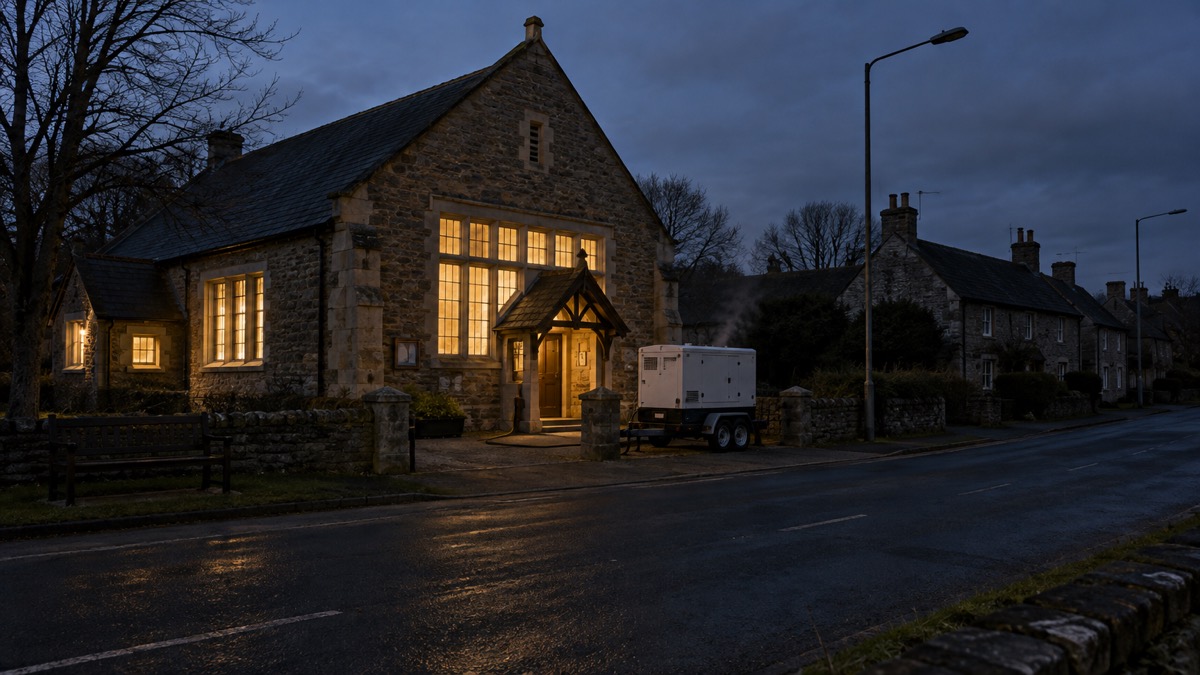
A power cut is easier to get through when the thinking has already been done. The government's Be Ready campaign, launched on 22 October 2026, asks households to take a few simple steps so that disruption to power, water, phones and the internet does not turn into a crisis1. The core of it is a written household plan: who you ring, where your trip switches are, who you check on, and what you have ready in the cupboard.
The advice is deliberately modest. Keep three days' worth of supplies2, know how to report a cut on 1053, and agree in advance what you will do if the phone lines fail4. The Be Ready campaign is a three-year effort aimed particularly at families with young children and older people, the groups most at risk when everyday services stop1.
This page is a checklist you can copy out and fill in. Work through it once, keep it somewhere you can find in the dark, and revisit it when a storm is forecast. Everything below is drawn from official UK guidance, with the nation named where arrangements differ.
Your household power cut plan checklist
Write the plan down and keep a copy where everyone can reach it. The items below are the ones official guidance returns to again and again.
Why the plan matters, and what goes in it
The Welsh Government's resilience statement makes the case plainly: thinking through a basic household emergency plan can help reduce disruption when incidents occur19. A plan does not stop the power going off. It means that when it does, nobody is hunting for a torch, arguing about who to ring, or wondering whether the freezer food is still safe.
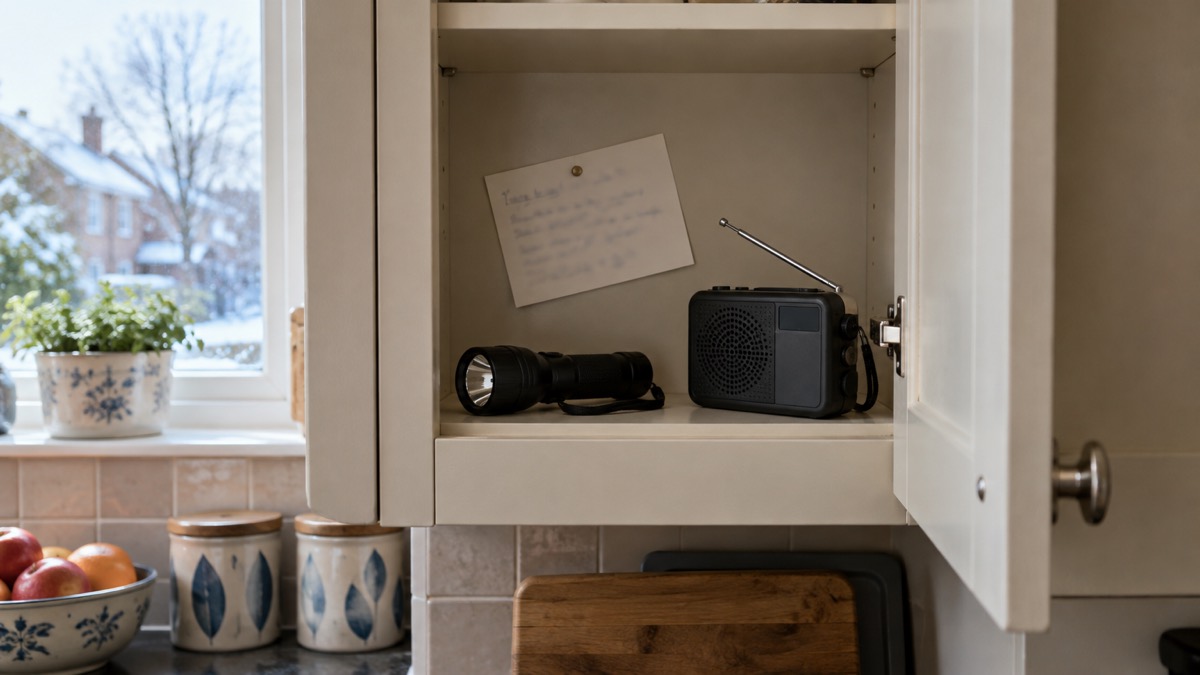
The Be Ready campaign frames the risk as ordinary rather than dramatic: severe weather can occasionally affect services including power, water, phones and the internet1. That is the scenario to plan for, not a national emergency. The Met Office's WeatherReady advice is to make sure you have basic supplies in case you have to leave home quickly, or your power and water are disrupted12.
A workable plan has four parts:
- Contacts. Your network operator, your supplier, your family, and anyone you would check on.
- The house. Where the trip switches are, where the stopcock and gas shut-off are, and how to check whether the fault is yours alone8.
- Supplies. Three days' worth, kept together and checked2.
- People. Who you would visit, who would visit you, and what happens if the phones are down4.
Plan for neighbours and relatives who live alone
The single most useful thing in a household plan is often a name and a knock on the door. The Met Office advises looking out for elderly neighbours and making sure they are prepared for a possible power cut6, and fire services in northern England add checking on any elderly or vulnerable neighbours or relatives when the weather turns21.
Be Ready suggests agreeing a backup plan with anyone who might need extra support, particularly if they live alone. The example given is a simple one: if an outage happens and you cannot call, you or another trusted person they know will visit them in person4. That covers the case where the phone network is down, which is exactly when a call would have been most useful.
The checklist for checking on neighbours and relatives sets this out in more detail. In outline:
- Agree the trigger. Who visits whom, and after how long without power.
- Agree the route. If they cannot drive, who can get to them15.
- Share the plan. Ready Scotland suggests sharing clear, accurate information so others can prepare and get support quickly, whether by speaking to friends, family and neighbours or setting up a group for your street or building22.
- Know the support available. Checking eligibility for schemes such as the Priority Services Register is part of the same conversation19.
If the person you are worried about relies on electricity for medical equipment, the plan needs their care team in it. Official guidance is to make a plan with your care provider or clinical care teams now, setting out what action you or the person you care for needs to take and who to contact if there is a power outage7. The medical equipment checklist covers this in full.
Check your appliances against product recall notices
A power cut is a good moment to think about the appliances you will be switching back on. Manufacturers issue recall notices if an electrical appliance could develop a fault, including a risk of electric shock or fire23. The London Fire Brigade's advice is blunt: the most important thing you can do is regularly check whether your appliances have been recalled, using the government's product recall site, the manufacturer's website or Electrical Safety First's recall register16.
There are two habits worth building:
- Register your appliances. Fire services recommend registering electrical appliances so you can be made aware if a product is recalled17, and the Register My Appliance service will notify you if a product gets recalled24.
- Check the recall list. Electrical Safety First's website lists recalled items and explains what to do with your recalled appliance23.
Fire and rescue services across the UK treat electrical faults as a leading cause of home fires. Fire Scotland points households to recall checks as part of its electrical safety advice27, and the general principle holds everywhere: a recalled appliance should be unplugged and dealt with according to the manufacturer's instruction, not kept going through the winter.
Keep the plan current through winter storms
Plans go stale. Ready Scotland's storm guidance is to charge mobile phones and power banks in case there is a power cut, and to find your emergency plan and make sure it is up to date13. That is the routine: when a warning is issued, get the plan out and check it, rather than starting from scratch.
The Met Office issues warnings for all four nations, and its accessible warnings service sets out what each colour means so you can judge how seriously to take a forecast14. When a storm is coming:
- Charge everything. Phones, power banks and any torches that recharge13.
- Gather the kit. Torches, batteries, a mobile phone power pack and other essential items14.
- Check the plan. Confirm contact numbers and who is visiting whom13.
- Check on neighbours. Particularly older or vulnerable people21.
Ready Scotland also advises making a household emergency kit and an emergency plan before cold weather arrives27, rather than in the middle of a freeze. Northern Ireland's guidance for strong winds and ice repeats the same preparation message8, and the Met Office's seasonal advice for power cuts is a useful single page to keep6.
"People cope better with power cuts when they have prepared for them in advance. It's easy to do; consider gathering torches and batteries, a mobile phone power pack and other essential items."
Where to get help, and what to do first
If someone is in immediate danger, call 9994. For a power cut, call 105, which is free and puts you through to your electricity network operator3. You can also report the cut and track updates on your operator's website11. In Northern Ireland, the NIE Networks Customer Helpline is 03457 643 64320.
Beyond the emergency numbers, there is help for households that need it:
- The Priority Services Register tells your supplier you need additional support during a power cut7. The guide to the Priority Services Register explains who can join.
- Your local resilience forum coordinates the local response. Wiltshire and Swindon, for example, maintains a Widespread Utilities Plan and a Local and National Power Outage Plan, with each partner holding its own service plans11.
- Your community. Ready Scotland encourages creating an instant messaging or social media group for your street or building, and encouraging others to make their own plan22.
The power cut kit checklist and the emergency numbers to keep at home are the two lists to print alongside this plan. Keep them together, and check them when the first winter warning arrives.
Sources (27)
- Households encouraged to take small simple steps to stay prepared, UK Government, 2026-10-22
- Prepare: get prepared for emergencies, UK Government, 2026-10-19
- Plan for a power cut, Ofgem, 2026
- Be Ready for emergencies, UK Government, 2026-10-21
- Check if you can get payment for a power cut, Ofgem, 2026
- What to do in a power cut, Met Office, 2026
- Supporting vulnerable people before and during cold weather, UK Government, 2025-09-24
- Strong winds weather warning: information and advice, nidirect, 2026-10-24
- Preparing for flood, nidirect, 2025-09-11
- Preparing yourself for emergencies, London Resilience Partnership, 2026-10-25
- Failure of national electricity, Wiltshire and Swindon Local Resilience Forum, 2026-10-25
- Top tips to be WeatherReady, Met Office, 2026-10-25
- Storms and wind, Ready Scotland, 2026-03-24
- Accessible UK warnings, Met Office, 2026-10-24
- Phone and broadband outages, UK Government, 2026-10-12
- Total recalls: making white goods safer, London Fire Brigade, 2026-10-25
- Electrical safety, North Yorkshire Fire and Rescue Service, 2026-09-14
- Candle safety, Carmarthenshire County Council, 2026-06-26
- Statement on resilience and emergency preparedness, Welsh Government, 2026-10-13
- Ice weather warning: information and advice, nidirect, 2026-02-16
- Keeping safe during high winds and heavy rain, North Yorkshire Fire and Rescue Service, 2024-01-22
- Find and share information in an emergency, Ready Scotland, 2026-03-24
- Electrical safety, Scottish Fire and Rescue Service, 2025-02-27
- Top ways to reduce your risk of having a fire at home, Devon and Somerset Fire and Rescue Service, 2026
- Fire safety for carers, Devon and Somerset Fire and Rescue Service, 2026
- White goods, London Fire Brigade, 2026-10-25
- Cold, snow and ice, Ready Scotland, 2026-03-25
 Power Cut Kit Checklist
 What to Keep Charged
 Emergency Numbers to Keep