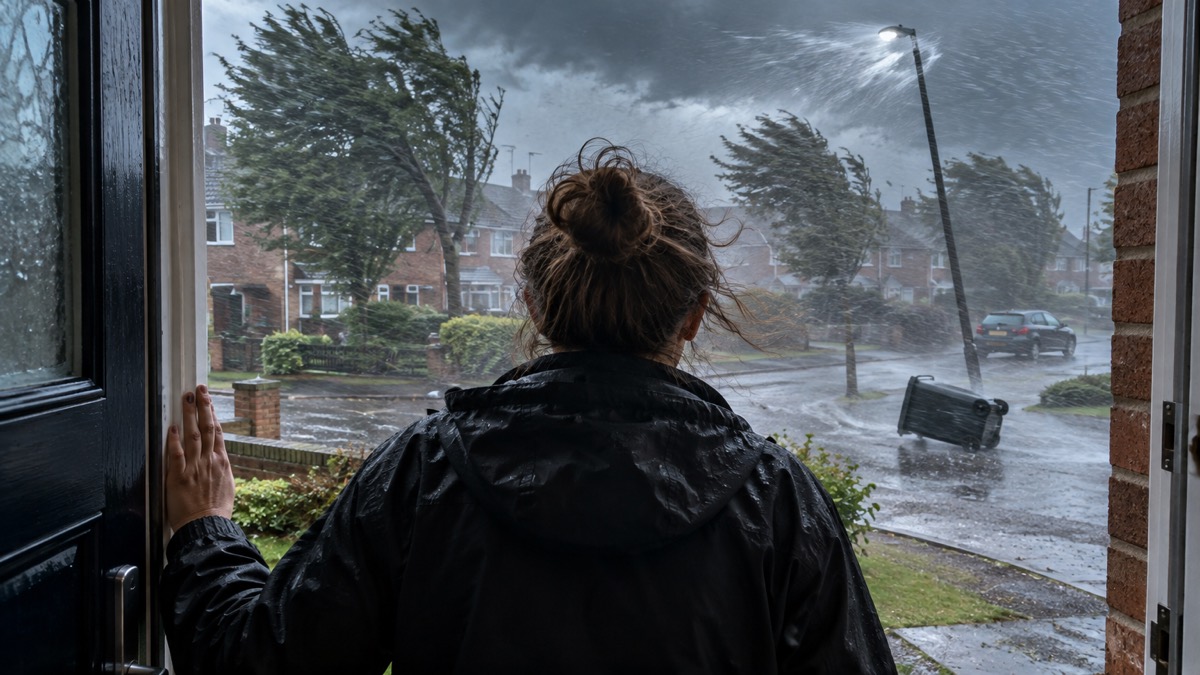
When the Met Office issues a weather warning, the colour tells you two things at once: how bad the impacts could be, and how likely they are. Warnings are yellow, amber or red, and the level is set by combining the impact the weather may have with the likelihood of those impacts occurring, not by the weather alone1. A yellow warning asks you to check the forecast and think about what could affect you. An amber warning asks you to change plans and take action to protect yourself and your property. A red warning means dangerous weather is expected and you should take action now to keep yourself and others safe2.
The Met Office, as the UK's official weather service, is responsible for issuing these warnings, which warn of impacts caused by severe weather3. It operates 24 hours a day, 365 days a year, so warnings can be issued at any time, day or night, and they can appear up to seven days ahead of the expected severe weather1. Warnings are issued for rain, thunderstorms, wind, snow, lightning, ice, extreme heat and fog4.
How the Met Office sets the colour: impact and likelihood
A weather warning is not simply a statement that strong wind or heavy rain is coming. The Met Office uses an impact-likelihood matrix to determine the appropriate colour for each warning, and warnings are based on the potential impacts and how likely those impacts are to be realised, not just on the weather itself2. This matters to you because it explains why two similar-looking forecasts can carry different colours, and why a warning in your area may be a different colour from the one next door.
The matrix works on two axes. One is impact: what the weather could actually do, from minor travel inconvenience through to widespread damage to property and infrastructure and a risk to life. The other is likelihood: how confident the forecasters are that those impacts will occur. A very high impact that is only just possible can still justify a strong warning; a near-certain but minor disruption may only earn a yellow. The Met Office moved from threshold-based to impact-based warnings in 2011, and since then the focus has been on consequences rather than raw numbers2.
You can see this assessment for yourself. The matrix is available in the Further Details section of every warning, showing the assessed combination of impact and likelihood behind the colour you are looking at2. If you have ever wondered why a yellow warning sometimes feels worse than expected, or why an amber warning passed off quietly, the matrix is where the reasoning sits.
The same principle runs through the UK's health alerting systems. The UKHSA cold-health and heat-health alerts are also given a colour, yellow, amber or red, based on the combination of the impact the weather conditions could have and the likelihood of those impacts being realised8. Those alerts cover health effects rather than the weather itself, and you can read about them in our guide to cold-health alerts.
Yellow, amber and red: what each level asks of you
Each colour carries a plain instruction. Local resilience planning in England sums the three levels up as BE AWARE, BE PREPARED and TAKE ACTION9, and the Met Office's own guidance fills in what that means for a household.
| Colour | What it means | What you should do |
|---|---|---|
| Yellow | Likely low-level impacts, including some disruption to travel in a few places; many people can continue their daily routine but some will be directly affected3 | Check the details of the forecast and consider steps to minimise impacts for you and your household6 |
| Amber | Increased likelihood of impacts, which could disrupt your plans; possible travel delays, road and rail closures, power cuts and potential risk to life and property10 | Change plans that could be impacted and take action to protect yourself and your property6 |
| Red | Very dangerous weather with a high level of certainty; a risk to life is very likely, with substantial disruption to travel, energy supplies and possibly widespread damage to property and infrastructure10 | Take direct action now to keep yourself and others safe6 |
Yellow warnings deserve particular care, because they are the most varied. Yellow warnings can be issued for a range of weather situations, and the Met Office says it is important to read the content of yellow warnings to determine which weather situation is being covered11. A yellow warning for wind in summer is a different proposition from a yellow warning for snow on a school run. Even within a yellow warning area, people will see disruption to a greater or lesser extent, so check the details and see which steps you could take to prepare6.
Amber means disruption is more likely and more widespread. The weather could potentially disrupt your plans, with the possibility of travel delays, road and rail closures, power cuts and the potential risk to life and property10. This is the level at which you should actively change arrangements rather than simply keep an eye on things.
Red warnings are reserved for very dangerous weather with a high level of certainty. The Met Office's wording is direct:
"Dangerous weather is expected and, if you have not done so already, you should take action now to keep yourself and others safe from the impact of the severe weather."7
It is very likely that there will be a risk to life, with substantial disruption to travel, energy supplies and possibly widespread damage to property and infrastructure7. Red warnings are rare, and when one is issued for your area it should change what you do that day, not just what you talk about.
Amber and red warnings: travel and following official advice
Travel is where the colour levels bite hardest on an ordinary household. For red warnings, the official guidance is unambiguous:
"You should avoid travelling, where possible, and follow the advice of the emergency services and local authorities."5
Traffic Scotland's guidance is firm on driving in either level: driving in amber and red warnings poses a greater risk, therefore travel should be avoided unless absolutely essential3. If a journey cannot be avoided, check conditions before setting out, allow extra time, and be ready to abandon the trip if conditions deteriorate. Our page on whether to delay a journey in bad weather works through that decision.
The reason for the travel advice is what amber and red weather actually does. An amber warning means there is the possibility of travel delays, road and rail closures, power cuts and the potential risk to life and property12. Roads can be blocked by water, snow or debris; rail lines can close; and if the power goes out as well, the situation on the ground can change faster than satnav apps can keep up. Following the advice of the emergency services and local authorities matters because they have the live picture of closures and incidents5.
Police travel advice often follows amber warnings. Treat police and council travel messages during warnings as the final word on whether a route is passable.
Which weather types get a warning
The National Severe Weather Warning Service, which is the formal name for Met Office weather warnings13, covers eight weather types: rain, thunderstorms, wind, snow, lightning, ice, extreme heat and fog4. Warnings are provided up to seven days in advance for all of these4.
Each type brings its own pattern of disruption, and the warning text tells you which one you are dealing with:
- Wind: damage to buildings, fallen trees and flying debris; see our guides on preparing for high winds and dangerous trees
- Rain and thunderstorms: flooding and surface water; lightning brings its own risks, covered in our lightning safety guide
- Snow and ice: travel disruption, school closures and slips; see driving in snow and ice and walking on ice
- Extreme heat: health risks, especially for older people and those with health conditions
- Fog: travel delays on roads and at airports
The Met Office will usually name a storm when it has the potential to cause disruption or damage that requires an amber or red weather warning14. So if you hear a storm name in the news, expect at least amber-level impacts somewhere in the country. Our page on named storms explains how the names are chosen.
During autumn and winter there is an increase in unsettled weather, and with it a greater chance of weather warnings being issued3. The Met Office has also charted higher annual temperatures, increased days with very heavy rainfall and record-breaking high temperatures compared with the 1961 to 1990 baseline, and extreme weather events such as heatwaves and heavy downpours are likely to become more frequent and more intense15. Warnings are not a seasonal curiosity; they are becoming a routine part of planning a week.
Warnings come up to seven days ahead, at any hour
Warnings are provided up to seven days in advance for rain, thunderstorms, wind, ice, snow, extreme heat, fog and lightning16. That gives a household real time to prepare, but the lead time also means early warnings can change. A warning issued five days out may be upgraded, downgraded, extended in area or cancelled as the forecast firms up, so check back rather than acting once and forgetting it.
The Met Office operates 24 hours a day, 365 days a year, so warnings can be issued at any time, day or night1. As one resilience forum puts it, the Met Office is a 24 hour organisation and therefore warnings can be issued at any point, even Christmas Day16. Warnings do not pause for holidays: an amber weather warning for heavy rainfall was issued for Wales on 14 to 15 December 2025, with multiple flood warnings and flood alerts issued alongside it17. If severe weather is possible over a holiday period, keep checking the forecast, and plan around the fact that shops, services and travel may already be running reduced schedules when the weather hits.
Within the NSWWS webpages an interactive five-day map of warnings is provided, which can be used to determine whether there is a warning in force for your area13. That map is the quickest single check for most households.
Reading a warning: the four sections that matter
Every warning is built the same way, and knowing the structure helps you read one quickly under pressure. Warnings contain the following sections: a Headline, which is a short weather headline stating what weather type is forecast; What to expect; What should I do; and Further details4.
- Headline: the weather type and its severity in one line
- What to expect: the impacts the Met Office anticipates, such as travel delays, power cuts or damage to property
- What should I do: the actions appropriate to the colour and weather type
- Further details and the matrix: the assessed combination of impact and likelihood behind the colour2
The What to expect section is where you find the practical detail. A yellow wind warning, for example, may state that there is a slight chance that power cuts may occur, with the potential to affect other services, such as mobile phone coverage7. That single line tells you two things to prepare for: the lights, and the phone signal you would use to report the outage or check on relatives.
The What should I do section is written for the specific warning. During a yellow wind warning in late October 2026, the Met Office advised:
"People cope better with power cuts when they have prepared for them in advance. It's easy to do; consider gathering torches and batteries, a mobile phone power pack and other essential items."7
That is the level of specificity to look for: not generic advice, but actions matched to the impacts actually expected in your area. If you want to go further, our emergency kit and power cuts guides set out what a household should have ready before any warning is issued.
Emergency Alerts on your phone for red warnings
For the most serious events, your phone can warn you directly. The UK government's Emergency Alerts system allows people to be contacted on their mobile phone when lives are in danger18. An alert arrives as a loud siren-like sound and a message on the screen, and you do not need to sign up or install anything; it works on compatible phones automatically.
Emergency Alerts sit alongside weather warnings rather than replacing them. The UK government's Emergency Alerts system allows people to be contacted on their mobile phone when lives are in danger, and the service will only be used to warn you about life-threatening emergencies such as severe flooding18. Alerts are sent to compatible 4G and 5G mobile phones and tablets, with audio and vibration attention signals to let you know an alert has arrived18.
Do not rely on alerts alone. They are reserved for the most serious situations, so the great majority of yellow and amber warnings will never trigger one. Keep the Met Office app or email alerts in place for day-to-day warning notifications, and treat an Emergency Alert as the signal to act immediately on whatever the message instructs. Our guide to staying informed in an emergency covers the full range of ways to receive warnings and official messages.
Getting your home ready before the warning arrives
The best time to prepare for a warning is before it is issued. The Met Office's WeatherReady campaign, run in partnership with the Cabinet Office, is a year-round campaign to help individuals, families and communities prepare for and cope with severe weather, providing tips and guidance on simple actions people can take to reduce the impact of severe weather on their lives19. The winter campaign launches each October; the 2026 launch was on Thursday 22 October20.
For power cuts, the advice is consistent. Gather torches and batteries, a mobile phone power pack and other essential items in advance, because people cope better with power cuts when they have prepared for them7. Consider a separate battery charger, and store key information such as the power cut helpline number, 105, on your phone21. Our backup power and lighting guides go into the options in more detail.
For cold, heat your home, and those of elderly relatives and neighbours, to at least 18°C21. Cold weather can be a risk to your health, particularly if you are over 65 or have health conditions21. Our pages on getting your home ready for cold weather and staying well in cold weather expand on this.
For wind, check your outside space. In windy weather surprising things can become dangerous: trees or branches can come down, cast iron guttering could be lethal and so can roof slates, garden furniture, children's toys and trampolines can fly around causing damage and potential harm, and fences can become problems too21. Secure or bring in loose items before the wind arrives, not during it.
For the car, take a quick check of your tyres and use a screen wash additive to keep your windscreen free of winter road grime caused by road salting and gritting21. Getting stuck in your car in winter could be dangerous, so get a winter car kit ready21. Our car checks before winter checklist covers this step by step.
What severe weather can disrupt
The impacts the Met Office warns about are concrete: damage to property, loss of water supplies, power cuts and travel delays22. When you read a warning, it is worth thinking through what each of those would mean for your household over the warning period.
| Impact | What it can mean at home | Where to read more |
|---|---|---|
| Power cuts | Loss of lighting, heating, cooking and, in some areas, mobile phone coverage7 | Power cuts guide |
| Travel delays and closures | Road and rail closures, delayed journeys, stranded vehicles12 | Travel disruption guide |
| Damage to property | Wind damage to roofs, fences and garden items21 | Wind damage and insurance |
| Loss of water supplies | Burst pipes in cold weather, supply interruptions22 | Water in an emergency |
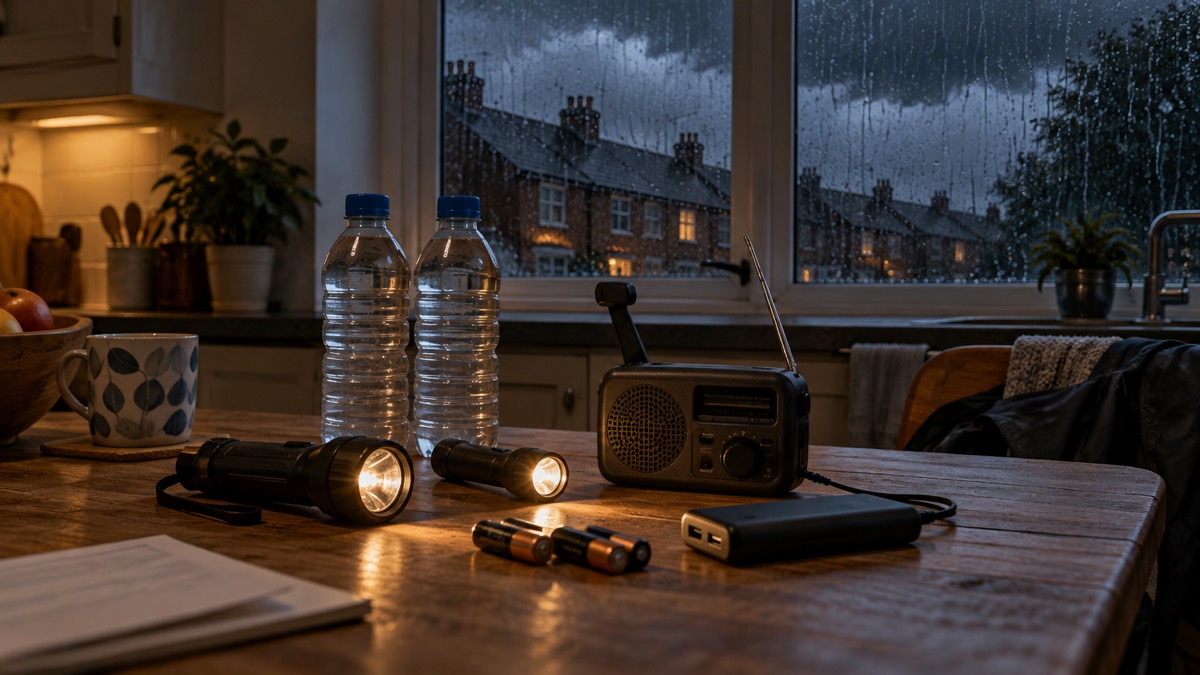
The combination matters as much as the individual impact. A yellow wind warning that states power cuts may occur, with the potential to affect other services such as mobile phone coverage7, means you could lose your phone signal at the same time as your lights. That is why the Met Office advises storing key information such as the 105 power cut helpline on your phone before the weather arrives21, and why a battery power pack is worth having charged and ready.
Where to see current warnings, and what to do if the page misbehaves
The Met Office's UK warnings page shows all warnings in force, with an interactive map you can search by area7. The Met Office advises that you always check your latest local forecast to find out if there are any weather warnings in force for your local area23. Warnings are designed to let people, businesses, emergency responders and governments know what weather is in store23, so the same page serves your household that serves the emergency services.
To stay informed while out and about, download the Met Office weather app or sign up for its email alerts, pass warnings on to family and friends or share them through social media, and check local weather reports on radio and television4. Our page on how to sign up for Met Office weather alerts walks through the options.
One thing to know: the warnings service occasionally has problems. On 24 October 2026 the warnings page displayed the message:
"We are experiencing issues. These warnings may be out of date."11
If you see that banner, do not treat the page as the final word. Cross-check with the Met Office app, its social media accounts, or local radio and television, and recheck before you travel. West Yorkshire Prepared lists the Met Office contact as its website or the phone number 0870 900 010024.
WeatherReady materials are also worth sharing in your community. The WeatherReady poster for community spaces is available in Welsh, Polish, Bengali, Gujarati, Hindi and Punjabi as well as English20, and the campaign team can be contacted at WeatherReady@metoffice.gov.uk20. If you want to help neighbours prepare as well as your own household, our community resilience guide is a good starting point.
Red warnings in past storms: what they looked like
Red warnings are rare, but the UK has had enough of them in recent years to know what they mean in practice. Warnings are provided up to 7 days in advance for rain, thunderstorms, wind, ice, snow, extreme heat, fog and lightning, so there is usually time to prepare before severe weather arrives25. You can read about one of these events in our guide to the Beast from the East.
In November 2021, Storm Arwen brought severe winds across the UK overnight, with a red warning for wind on the east coast of Scotland and north-east England; our Storm Arwen page covers what happened and what changed afterwards.
These events show why the Met Office will usually name a storm when it has the potential to cause disruption or damage that requires an amber or red weather warning7. Households that had prepared in advance, with torches, power packs and a plan for the day, coped better than those that had not. That is the practical lesson of every past red warning, and it is why the Met Office's preparation advice is worth acting on at yellow, long before the colour ever turns red.
Sources (25)
- Met Office weather warnings guide, Met Office, 2026-10-25
- How are weather warnings categorised, Met Office blog, 2025-07-21
- Weather warnings and travel advice, Traffic Scotland, 2026-10-29
- Community resilience leaflet, Met Office, 2024
- National Severe Weather Warning Service, Met Office, 2026-10-25
- When and why do we issue warnings, Met Office, 2026-10-26
- Accessible UK warnings, Met Office, 2026-10-24
- Cold Health Alerting system overview, UK Government, 2025-09-24
- Community Emergency Plan template, North Yorkshire Local Resilience Forum, 2025-02
- UK weather warnings page, Met Office, 2026-10-24
- UK warnings, day 2 view, Met Office, 2026-10-24
- Met Office weather warnings, Met Office, 2026-10-24
- Early warning and weather forecasts, UK Government, 2024-12-19
- Resilience and risks in Wales, Welsh Government, 2026-09-07
- Adapting to extreme weather, Derbyshire County Council, 2026-10-29
- Weather warnings guide, Wiltshire and Swindon Prepared, 2026-10-25
- Flood risk management annual report 2025 to 2026, Natural Resources Wales, 2025-12-14
- Emergency Alerts, Isle of Anglesey County Council, 2026-10-29
- About WeatherReady, Met Office, 2026-10-29
- WeatherReady Winter partner toolkit, Met Office, 2026-10-28
- Top tips to be WeatherReady, Met Office, 2026-10-25
- Community resilience leaflet, impacts, Met Office, 2024
- Community resilience, Met Office, 2026-10-25
- Severe weather advice, West Yorkshire Prepared, 2026-10-29
- Thaw report on the March 2018 severe weather, Ofwat, 2018-06-19