A few hours spent on the car before the first hard frost will see most households through the winter. The essentials are simple: a battery that is fully charged, tyres at the right pressure with enough tread, lights that work and are clean, wipers that clear the glass, and fluids topped up with the right concentration of antifreeze and screenwash1. Then, on any cold morning, clear every window, mirror and light completely before you move off, not just a porthole to peer through3.
The Met Office's advice for winter travel is to check tyre pressure and screenwash as well as oil and coolant levels before you head out1. Councils and fire and rescue services across the UK say the same things in slightly different words, which is a good sign that these are the checks that matter. Screenwash should be effective down to at least -15 degrees Celsius, so it does not freeze on the glass2.
What follows is a checklist you can work through now, then the reasoning behind each item and how to keep it ready through the season. If the forecast turns, the storms, snow and ice guide covers the wider household picture, and driving in snow and ice goes further on the road itself.
The winter car checklist
Work through this list once before the cold sets in, then repeat the quick items before any long or important journey. Each line says why it matters.
Lights, windows and mirrors: clear means clear
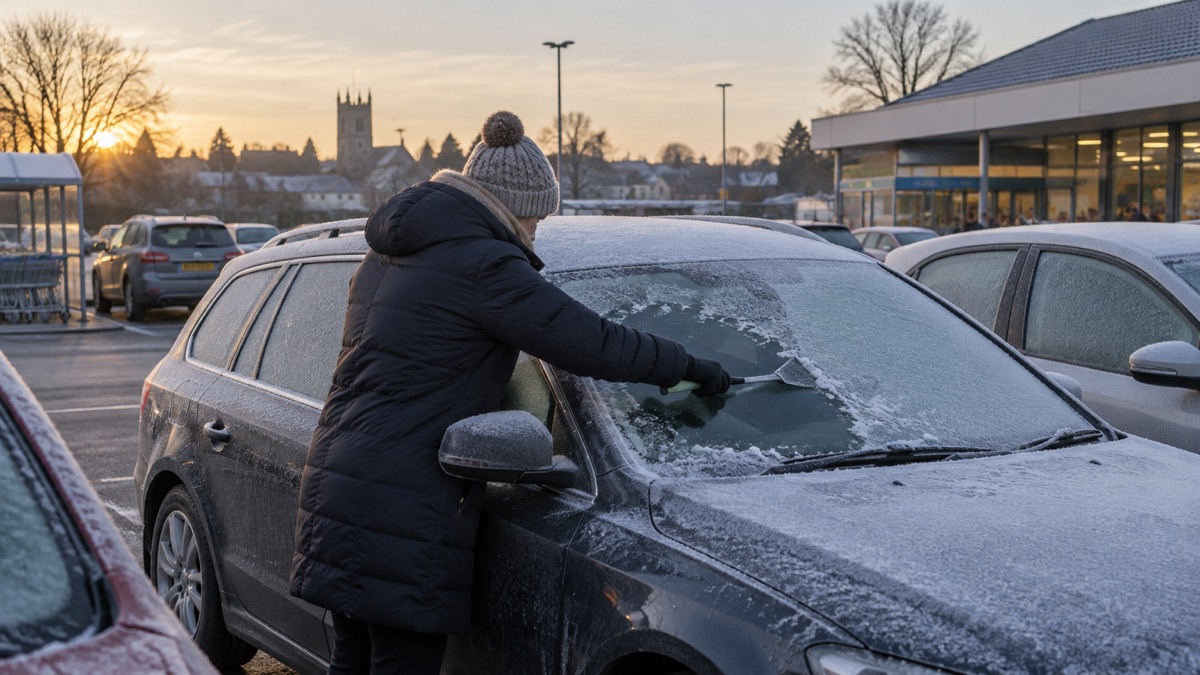
Keep the lights, windows and mirrors clean and free from ice and snow, and clear your windows and mirrors completely of snow and ice before you set off16. That means the whole windscreen, the back window and the side windows, cleared outside and inside, and demisted before you move12. Do not simply clear a porthole to look through19.
Why so insistent? Because a partly cleared screen leaves blind spots exactly where a child, a cyclist or a braking car will appear. Dirty windows and mirrors also make it hard to see in low winter sun, which sits low in the sky through the middle of the day20. Clean the inside of the glass as well as the outside, because condensation and grime build up there over the winter15.
Lights need the same treatment. Check they are in working order, that reflectors and mirrors are clean, and that the washer bottle is full with the correct mixture21. Regularly inspect headlights, taillights, brake lights and indicators so a failed bulb is caught at home rather than on a dark road8. A simple routine: switch on the lights, walk round the car, and have someone press the brake and flick each indicator while you watch.
Antifreeze and screenwash: top up before the cold sets in
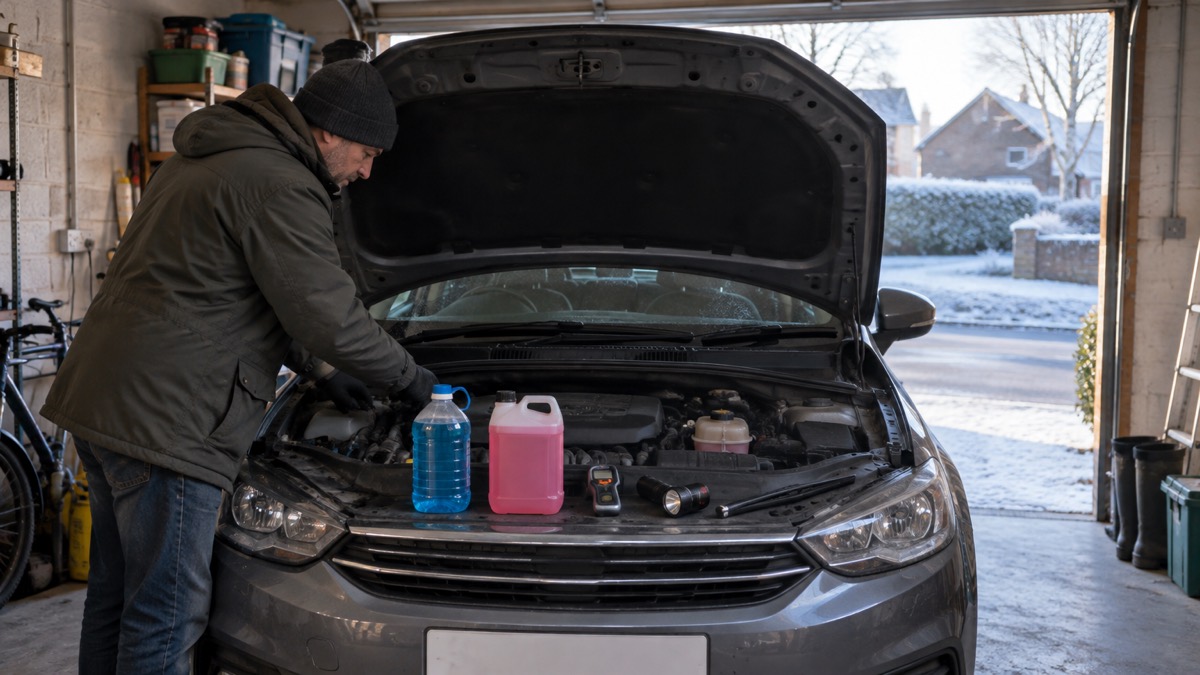
Screenwash is the fluid most drivers get wrong. Plain water freezes on the glass and in the bottle, leaving you unable to clear the screen when you most need to. The Met Office advises a product effective down to at least -15 degrees Celsius2. One council checklist suggests a 50% mix of good quality screenwash to stop it freezing, topped up regularly because you will use far more in winter22. A screenwash specifically formulated for winter is less likely to freeze and clears the windscreen more efficiently10.
Antifreeze protects the engine cooling system from freezing and from corrosion. Top up anti-freeze and screenwash before the cold sets in11. The same under-the-bonnet pass should cover oil and coolant levels, which the Met Office lists alongside tyre pressure and screenwash1.
If you are not confident under the bonnet, that is fine. North Wales Fire and Rescue Service suggests checking the following yourself or taking the car to your mechanic: battery, wipers, engine antifreeze levels, windscreen washer antifreeze fluid, heating system, brakes, tyres and windscreen defroster23. Your vehicle manual or a reputable garage can tell you what to look for, such as oil, tyres and coolant levels24.
Tyres, wipers and battery: what you can check yourself
Some checks take minutes and need no tools; others are worth handing to a mechanic. The table sets them out.
| Check | What to look for | Do it yourself or garage? |
|---|---|---|
| Tyres | Correct pressure, tread depth, bulges, cracks, slow punctures7 | Yourself, every fortnight and before long journeys2 |
| Wipers | Blades that clear the screen, no splits9 | Yourself; renew if worn9 |
| Battery | Fully charged, in good condition2 | Yourself for a visual check; garage to test |
| Antifreeze and oil | Correct concentration, topped up11 | Yourself if confident, otherwise garage23 |
| Brakes | Working well, no change in feel2 | Garage |
| Lights | All working and clean8 | Yourself, with a helper |
On tyres, check pressure and tread on all four plus the spare, and look for damage such as bulges, cracks and slow punctures3. The RAC recommends checking tyres every fortnight and before long journeys2. If you drive rurally or in the hills, consider winter tyres; Highland Council suggests this especially for rural areas26, and winter tyres explains whether they suit you.
Wiper blades wear quietly. Spray washer fluid and check the wipers clean the windscreen, then run your fingers along the blades to feel for splits2. Renew them if worn or damaged9. Before you turn on the ignition on a frosty morning, check your wipers are free and switch off any auto wiper control, so a frozen blade is not dragged across the glass19.
Check the battery, wipers, engine antifreeze levels, windscreen washer anti-freeze fluid, heating system, brakes, tyres and windscreen defroster yourself or take your car to your mechanic and ask them to check them2. Short winter journeys with lights, heater and wipers running drain it, so a long run now and then helps. For more, see how to stop your car battery going flat in winter.
Check the forecast and warnings before you set out
Before any winter journey, check the forecast and road conditions9. The Met Office issues warnings up to 7 days in advance for rain, thunderstorms, wind, ice, snow, extreme heat, fog and lightning5. Keep up to date on the Met Office website, app and social media channels27. Our guide to Met Office weather warnings explains what yellow, amber and red mean for your plans.
Then think about the journey itself. Consider whether it is necessary, plan to use main roads and check the gritting routes, check live weather cameras, allow extra time, tell someone your plans, and check whether you need breakdown or recovery cover3. In snow, plan your route, check for delays and road closures, leave more time to prepare and check the car before setting off28. If conditions look poor, delaying your journey is often the safest choice.
In ice, the advice is to take extra care, adjust your driving to the conditions and reduce your speed11. Make sure the mirrors are clear and the windows thoroughly demisted before you go11.
Driving in storms and high winds
In strong winds, the official advice is not to drive unless your journey is really necessary29. If you must go out, grip the steering wheel tightly to keep control through gusts, and keep an eye out for gaps between trees or buildings where you are more likely to meet side winds9. Check the forecast and road conditions before travelling9.
Before a storm arrives, close and securely fasten doors and windows at home29. Our guides to preparing your home and garden for high winds and how to drive safely in strong winds cover the rest.
A winter kit to keep in the car
A breakdown or a closed road in cold weather is far less serious with the right things in the boot. The Met Office suggests an ice scraper and de-icer, jump leads, a reflective warning triangle (ideally two), sunglasses for low sun, an in-car phone charger and a portable battery charger, and a blanket2.
Argyll and Bute Council's list is broader: warm clothes, boots and a blanket; a fully charged mobile phone; a hot drink in a flask; energy boosting food; a pen or pencil; a first aid kit; a torch; an ice scraper; a map for unplanned diversions; and a shovel for snow15.
- Warmth: warm clothes, boots and a blanket15
- Light and power: a torch, an in-car charger and a portable battery charger15
- Clearance: ice scraper, de-icer and a shovel for snow2
- Communication and navigation: a fully charged phone and a map15
- Sustenance: a flask of hot drink and energy boosting food15
- Safety and first aid: a warning triangle, ideally two, and a first aid kit2
Keep the kit in the car all winter, not just for long trips. A short journey on an untreated road can still leave you waiting in the cold.
Sources (29)
- WeatherReady Winter Partner Toolkit, Met Office
- 6 things to do to prepare your vehicle for winter weather, Met Office
- Winter, summer and wet weather driving tips, North Yorkshire Council
- Stay safe in winter, Oxfordshire County Council
- Weather warnings guide, Wiltshire and Swindon Prepared
- Winter driving, Staffordshire County Council
- Winter driving advice, Nottinghamshire County Council
- Road safety, Warwickshire Fire and Rescue Service
- Adverse driving conditions, South Wales Fire and Rescue Service
- Help keep our roads safer this winter, North Yorkshire Fire and Rescue Service
- Ice weather warning: information and advice, nidirect
- Driving in bad weather, Transport Scotland
- Winter driving tips, Isle of Anglesey County Council
- Winter preparedness, South East Coast Ambulance Service
- What advice can you give me on driving?, Argyll and Bute Council
- Winter driving, Mid and West Wales Fire and Rescue Service
- Winter driving, Cornwall Fire and Rescue Service
- Driving in adverse weather, Cheshire Fire and Rescue Service
- Staying safe in the snow, North Yorkshire Fire and Rescue Service
- Driving in bad weather, West Lothian Council
- Winter driving, Derbyshire County Council
- Winter Driving Checklist, West Yorkshire Prepared
- Stay safe this winter, North Wales Fire and Rescue Service
- Car and vehicle fires, Devon and Somerset Fire and Rescue Service
- Winter hacks this winter, Wiltshire and Swindon Prepared
- Winter service, Highland Council
- Top tips to be WeatherReady, Met Office
- Stay safe in snow, Met Office
- Strong winds weather warning: information and advice, nidirect
 Flood Warning Checklist
 First Steps After a Flood
 Insurance Claim Records