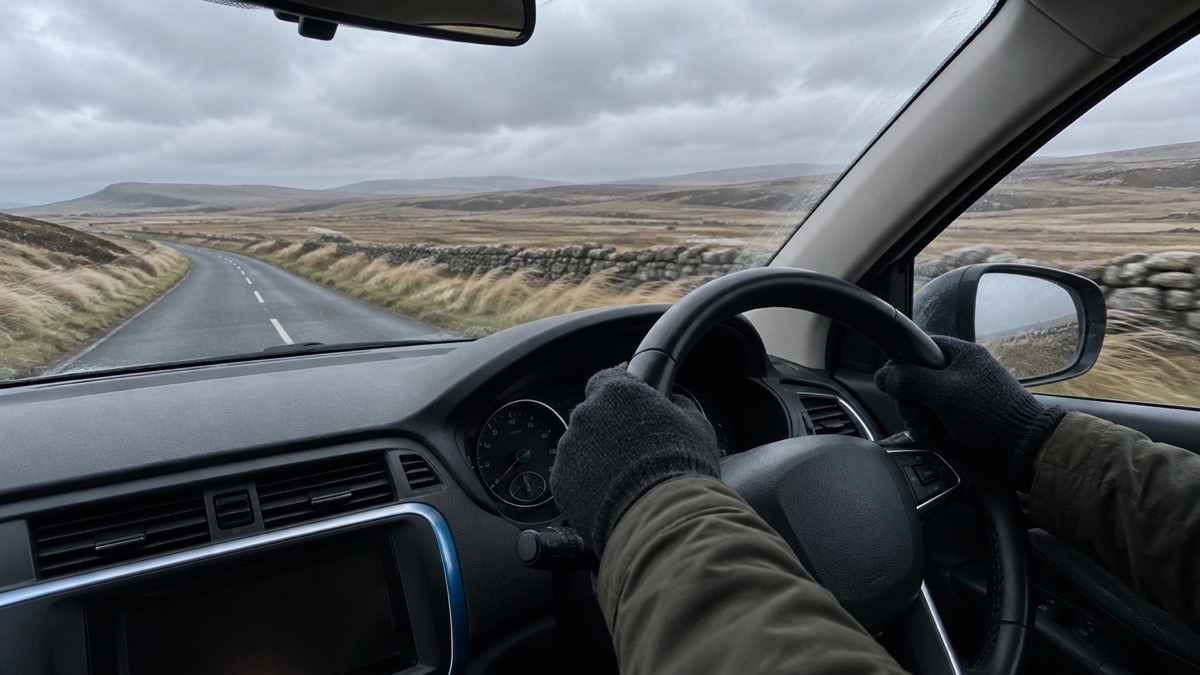
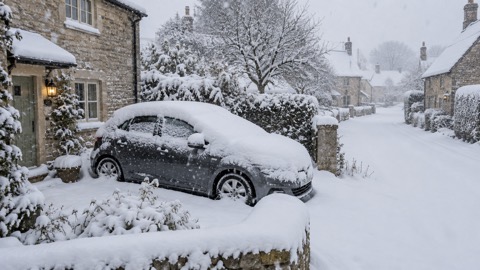
The first rule in strong winds is the simplest: do not drive unless your journey is really necessary1. If you can move the trip to another day or another time, do. Official guidance for periods of extreme weather is to adjust when you travel to avoid the worst days and times of day if possible2.
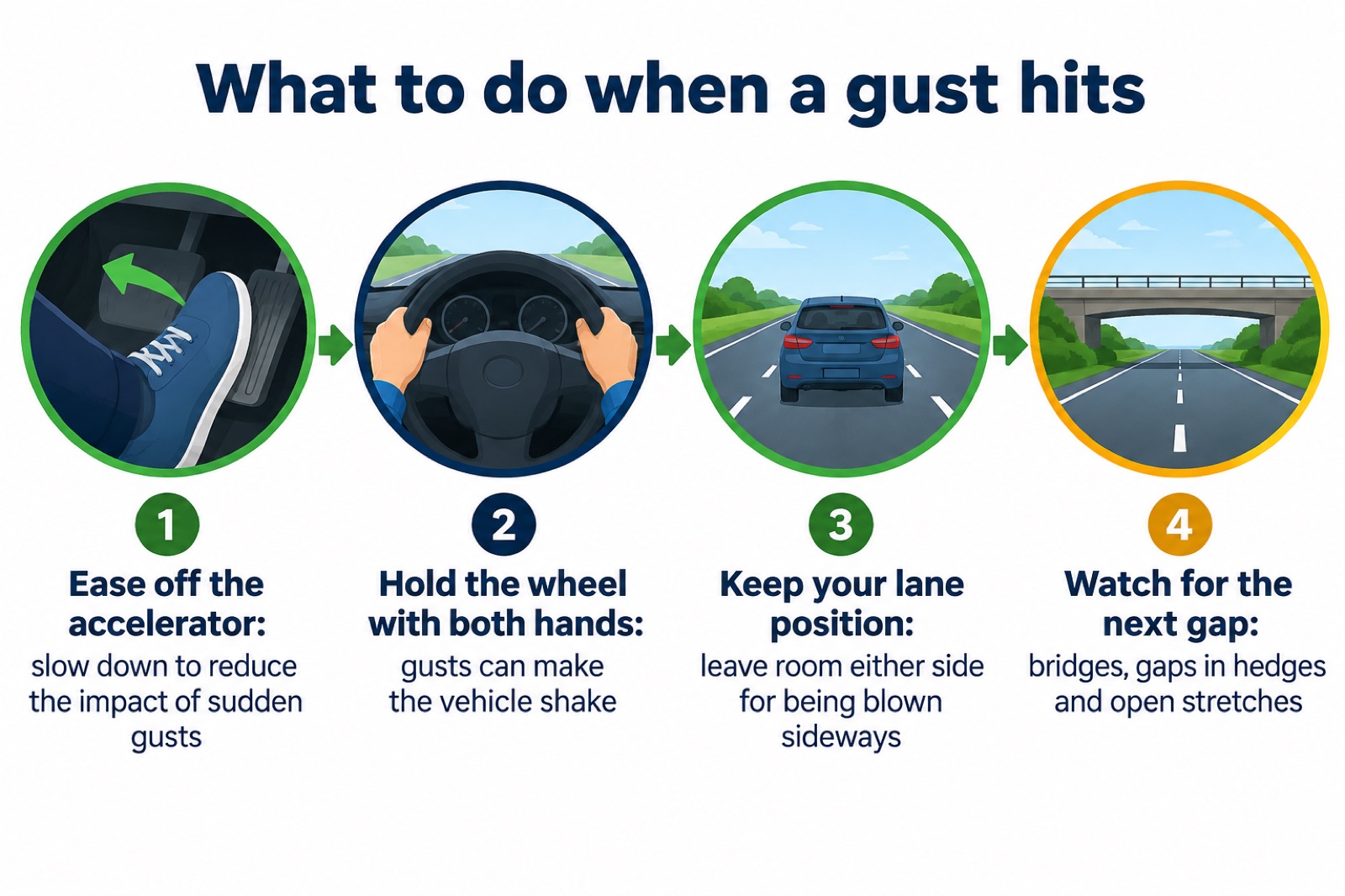
If you must go, the driving changes. Slow down to reduce the impact of sudden gusts, keep a firm grip on the steering wheel with both hands, take extra care around high-sided vehicles, cyclists and motorcyclists, and give larger vehicles more room, especially when overtaking3. Expect sudden gusts on open stretches of road, when passing bridges or gaps in hedges, and when overtaking high-sided vehicles4.
Plan before you leave. Check traffic alerts for restrictions or road closures, and check with your local authority if non-trunk roads are closed5. High-sided vehicles face more restrictions in strong winds, so check those before travelling too5. The sections below take each of these in turn: whether to go at all, how to prepare, how to hold the road, where the danger sits, and what to do about debris and crosswinds.
Only drive if the journey is really necessary
Several official bodies give the same instruction in almost the same words. The Northern Ireland Executive's advice during strong winds is not to drive unless your journey is really necessary1. North Wales Fire and Rescue Service says the same, adding that if your journey is essential you should check first with Traffic Wales and plan your journey in advance8. Essex Prepared goes further: do not drive unless absolutely necessary, and if you have to drive, slow down and be aware of side winds and exposed routes9.
Warwickshire Council frames it around warnings: when there are severe weather warnings, only travel when absolutely necessary10. That is the practical test for a household. If a warning is in force and the trip is a choice, the choice is to wait.
Driving in strong winds needs additional time and care11. That is not a reason to stay at home if you do not need to, it is a reason to plan. If you do travel, Cumberland Council's advice is to do so with caution, pack your car with essentials, plan your route and listen to travel updates12.
There is a second reason to think about the whole journey rather than just the drive. Strong winds bring power cuts, and the Northern Ireland Executive advises making sure you are prepared in case there is a power cut1. A car with a full tank or a full charge, a charged phone and a torch in the glovebox covers both the drive and the return to a dark house. For the home side of that, see Preparing Your Home and Garden for High Winds and Power Cuts: A Household Guide.
Before you set off: check alerts, closures and your route
The preparation is short and it changes the journey. Plan any journeys and check routes for delays and road closures11. Before you leave, check your route to see if there is any known disruption; road closures will be on local authority websites and social media13. In Wales, Traffic Wales carries traffic alerts for restrictions or road closures, and you can check with your local authority if non-trunk roads are closed5.
- Forecast: check the weather forecast and road conditions before travelling14.
- Alerts: check traffic alerts for restrictions or road closures5.
- Route: plan your route and listen to travel updates12.
- High-sided restrictions: check these before travelling, as there will be more of them in strong winds5.
- Car: pack your car with essentials12.
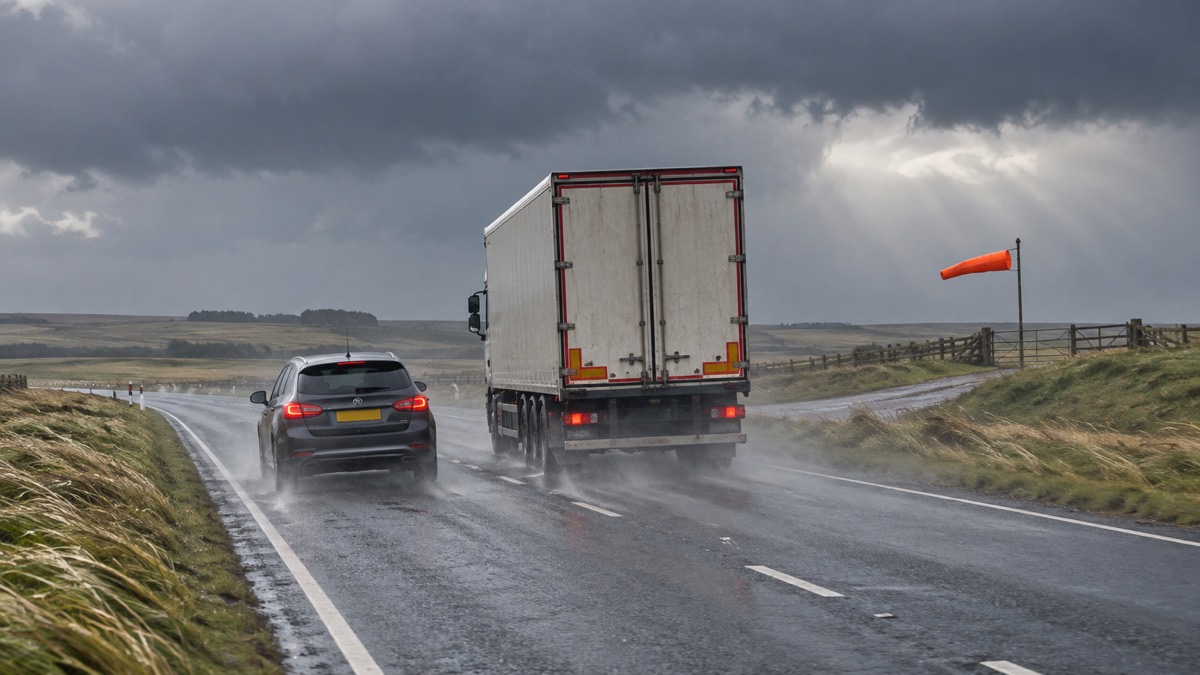
Choosing the route matters as much as checking it. Guidance from North Yorkshire Fire and Rescue Service, issued during Storm Debi, was to use main roads15. Main roads are the ones most likely to be monitored, cleared and reported on, and they carry the closures information that tells you to turn back. Minor roads bring hedges, trees and unmarked debris.
If your journey crosses a bridge or a high open stretch, treat that as the part to plan around. Official storm advice is to take care on exposed routes such as bridges or high open roads, delay your journey or find alternative routes if possible, slow down and be aware of side winds, particularly if you are towing or are a high-sided vehicle7. The same warning appears in Scotland's national storm guidance16.
Hold the wheel with both hands and slow down
Once moving, two habits do most of the work: speed and grip. Gusts of wind can cause your vehicle to shake, so always keep good control by using both hands on the steering wheel6. South Wales Fire and Rescue Service puts it as gripping the steering wheel tightly to keep control through gusts of wind17.
Slowing down is the other half. Met Office storm advice is to slow down and be aware of side winds, with particular care if you are towing or are a high-sided vehicle18. The Met Office's Storm Chandra guidance adds the detail: drive more slowly to reduce the impact of sudden gusts, take extra care around high-sided vehicles, cyclists and motorcyclists, keep a firm grip on the steering wheel, and give larger vehicles more room, especially when overtaking3.
A few smaller habits help. Accelerate gently using low revs, keep both hands on the wheel and take your time19. That advice comes from cold weather driving guidance, but the principle holds in wind: smooth inputs keep the tyres settled when the body of the car is being pushed.
Where gusts hit hardest: high-sided vehicles, cyclists and motorcyclists
High-sided vehicles are most affected by windy weather, but strong gusts can also blow a car, cyclist, motorcyclist or horse rider off course, on open stretches of road exposed to strong crosswinds and when passing bridges or gaps in the hedges20. That sentence, from the Highway Code's rules on driving in adverse weather, is the clearest summary of who is at risk and where.
| Road user | What happens in wind | What you should do |
|---|---|---|
| High-sided vehicles, caravans, motorbikes | Increased risk of being blown over in high wind4 | Take extra care, and check restrictions before travelling5 |
| Motorcyclists | Particularly affected by turbulence from large vehicles1 | Keep well back when they overtake a high-sided vehicle1 |
| Cyclists and pedestrians | More likely to be blown around by side winds21 | Give them more room than usual and keep a safe distance21 |
| Your own car | Can be blown off course on exposed stretches20 | Slow down and hold the wheel with both hands6 |
Drivers of high-sided vehicles, caravans and motorbikes should take extra care because of the increased risk of vehicles being blown over in high wind4. If you are towing, the same applies to you: side winds can be dangerous if you are towing or driving a high-sided vehicle16.
For everyone else, the job is to give space. Give vulnerable road users including cyclists, motorcyclists and pedestrians more room than usual, as they are more likely to be blown around by side winds, and always keep a safe distance21. In very windy weather a vehicle may be affected by turbulence created by large vehicles, and motorcyclists are particularly affected, so keep well back from them when they are overtaking a high-sided vehicle1.
Thunderstorms bring their own version of the problem. They can bring a risk of sudden gusty winds, and those most at risk include cyclists, motorcyclists and high-sided vehicles21. If thunderstorms are forecast, the same spacing rules apply with less warning. See Lightning Safety: Staying Safe in a Thunderstorm.
Watch for debris and for gaps that expose you to crosswinds
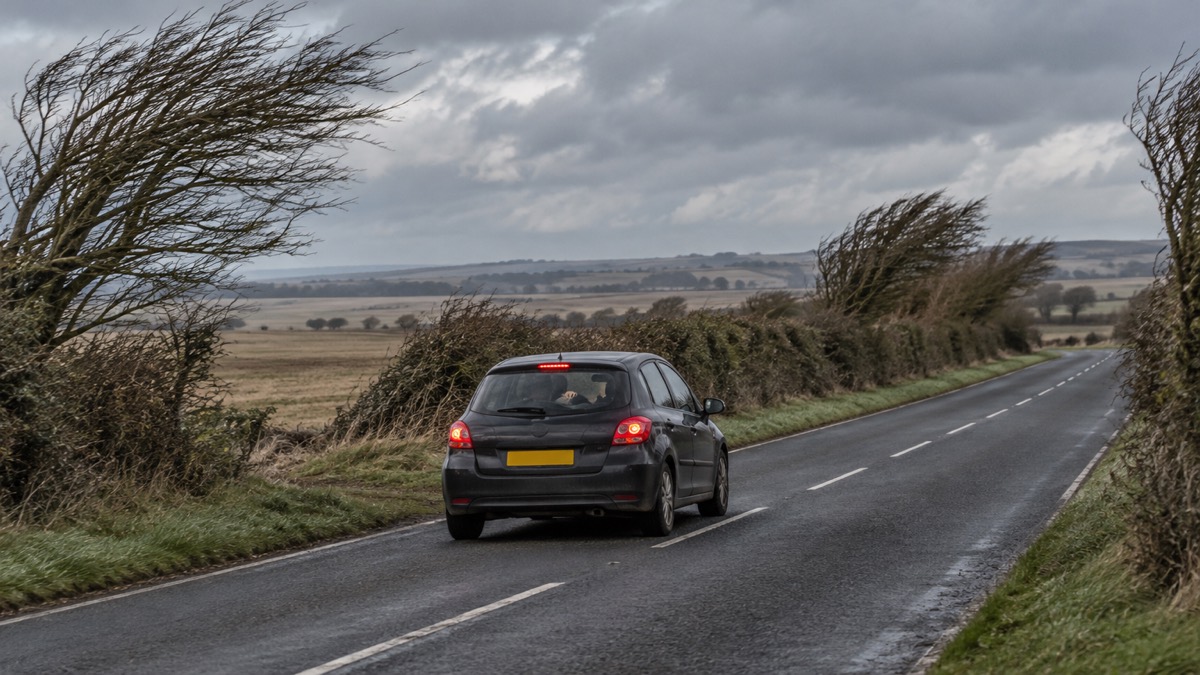
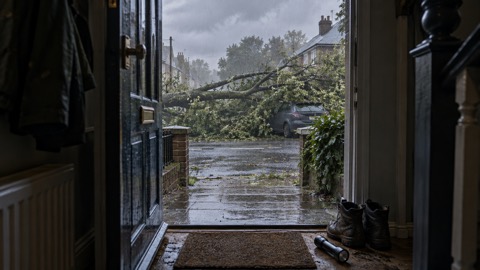
Wind lifts things. Watch for flying debris, including tree branches22. Be aware of your surroundings and any flying debris which could cause injury or danger to life23. On the road, watch for debris in the road as well as above it24.
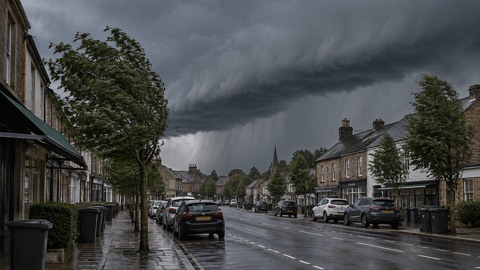
The second hazard is the gap. Keep an eye out for gaps between trees, buildings or bridges over a river or railway, because these are some of the places you are more likely to be exposed to side winds2. Cheshire Fire and Rescue Service lists the same triggers: expect sudden gusts at any time but particularly on open stretches of road, when passing bridges or gaps in hedges or when overtaking high-sided vehicles4.
Leave yourself room to be moved. Ensure that you maintain enough room either side of your vehicle so you can account for it being blown sideways2. That is also the answer to the car in the next lane: keep your distance from cars travelling around you, as wind could push them into your lane of travel24.
If you are on two wheels rather than four, the calculation changes. Additional care is needed when cycling in affected areas: be aware of the possibility of strong crosswinds in exposed areas and of falling branches, and consider taking other forms of transport25. If you are caught out on foot during high winds, stay clear of roads and railway lines, since gusts could blow you into the path of an oncoming vehicle24.
Coastal roads, towing and the limits of the car
Coastal routes combine two hazards: exposure and water. With extremely strong winds expected, Cornwall Council's advice is to stay well away from the coast and water's edge26. That is aimed at people on foot as much as drivers, but it applies to route choice too. A coast road is an exposed route, and exposed routes are exactly where side winds are dangerous if you are towing or driving a high-sided vehicle16. For the walking side of that, see Staying Safe on the Coast in Gales and High Waves.
Towing deserves its own line. The Met Office advises slowing down and being aware of side winds, with particular care if you are towing or are a high-sided vehicle27. A caravan or trailer gives the wind a large flat surface and a pivot point, so a gust that would merely shake a car can start a sway you have to correct gently rather than fight.
Finally, know when the car is the wrong tool. If conditions are bad enough that you are unsure, the official position is to delay the journey or find an alternative route if possible7. For the wider picture on warnings and what the colours mean, see Met Office Weather Warnings: Yellow, Amber and Red Explained. For snow and ice on the same roads, see Driving in Snow and Ice: Staying Safe on the Road.
Sources (27)
- Strong winds weather warning information and advice, nidirect, 2026-10-24
- Travelling in storms, rain and strong wind, Met Office, 2026-10-26
- Met Office Storm Chandra WeatherReady advice, Met Office, 2026-01-26
- Driving in adverse weather, Cheshire Fire and Rescue Service, 2026-03-11
- Driving in strong winds, Traffic Wales, 2026
- Travelling in strong winds, Traffic England, 2026-10-29
- Storms, UK Government Prepare campaign, 2026-10-19
- Flooding and high winds, North Wales Fire and Rescue Service, 2026-10-25
- Storms, Heavy Rain and High Winds, Essex Prepared, 2026-10-29
- Keeping warm in winter, Warwickshire County Council, 2026-10-29
- Keeping safe during high winds and heavy rain, North Yorkshire Fire and Rescue Service, 2024-01-22
- Staying safe in strong winds, Cumberland Council, 2026
- Storms and power cuts, Dorset and Wiltshire Fire and Rescue Service, 2022-08-03
- Driving in bad weather, West Lothian Council, 2019
- Amber warning in place as Storm Debi hits North Yorkshire, North Yorkshire Fire and Rescue Service, 2023-11-13
- Storms and wind, Ready Scotland, 2026-03-24
- Adverse driving conditions, South Wales Fire and Rescue Service, 2026-08-28
- Stay safe in strong wind, Met Office, 2026-10-25
- Cold weather advice, West Midlands Ambulance Service, 2026-05-20
- The Highway Code: driving in adverse weather conditions (226 to 237), GOV.UK, 2026-10-29
- Stay safe in thunder and lightning, Met Office, 2026-10-25
- Extreme weather winter guide, London Fire Brigade, 2025-01
- Tips for keeping safe during strong winds, North Yorkshire Fire and Rescue Service, 2023-12-20
- High winds, Scottish Borders Council, 2026-10-29
- Winter weather and cycling, Met Office, 2026-10-26
- Storm preparation, Cornwall Council, 2026-10-29
- Stay safe in a storm - Met Office, Met Office
 Flood Warning Checklist
 First Steps After a Flood
 Insurance Claim Records
 Delaying Journeys in Bad Weather
 Reporting a Fallen Tree
 Driving in Heavy Rain
 Met Office Weather Alerts
 Wind Damage and Insurance