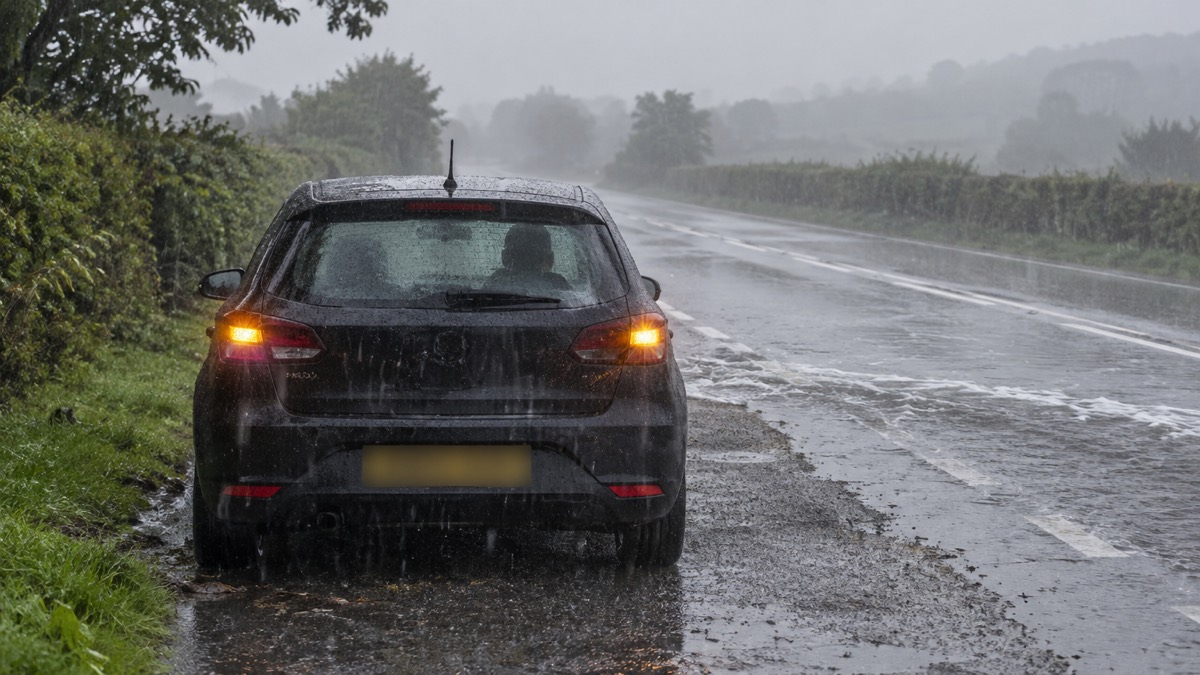
Heavy rain changes three things at once: how far you can see, how long it takes to stop, and whether your tyres stay in contact with the road at all. The first two you manage by slowing down and leaving a bigger gap. The third is aquaplaning, and it can happen to any driver on any road once standing water builds up faster than the tyres can push it aside.
The core advice is short. Slow down, and increase the gap between you and the vehicle in front to at least four seconds1. Use dipped headlights, even in daylight, so other drivers can see you2. If the car starts to float, hold the steering wheel lightly and lift off the throttle until the tyres regain grip3. And if you cannot see, pull over4.
Everything else on this page is the detail behind those four actions: what aquaplaning feels like, why wet roads take so much longer to stop on, where the surface is more slippery than it looks, and what to do when a flood warning is out and the car is parked in the wrong place.
Slow down and double your distance from the car in front
Wet roads take longer to stop on, and the faster you are going the more room you need. Official guidance is consistent on this: reduce your speed and leave more space between you and the vehicle in front, because stopping distances in rain are increased6. Several fire and rescue services put it more simply: double the distance between your car and the car in front, as stopping distances are increased by wet roads8. National Highways gives a figure to aim at: increase the gap to at least four seconds1.
Why the gap matters more than usual: stopping your vehicle during rain or wet conditions can take up to four times longer, and you can quickly lose control5. That is the difference between a near miss and a collision. It takes a lot longer to stop when the road conditions are wet9.
A four second gap is easy to check. Pick a fixed point ahead, such as a bridge or a sign. When the car in front passes it, count "one thousand and one, one thousand and two" and so on. If you reach the point before you finish four, you are too close.
- Reduce speed before the surface changes, not after6
- Leave at least four seconds to the vehicle in front1
- Double the normal gap as a rule of thumb on wet roads8
- Brake earlier and more gently than you would in the dry10
The same advice holds across the UK. Traffic Wales tells drivers to reduce speed and leave plenty of distance between their car and the one in front5. Traffic Scotland advises using dipped headlights during daylight hours, slowing down and keeping a safe distance from the vehicle in front11. In Northern Ireland, the Highway Code rules on adverse weather apply in the same way12.
Use dipped headlights, even in daylight
Visibility will probably be reduced in rain, so use dipped headlights13. This is not about seeing better yourself, though it helps. It is about being seen. Use dipped headlights when driving during periods of rain, fog or snow14, and use headlights whenever visibility is reduced, for example early morning, at dusk, when it is raining or in any gloomy conditions15.
Use dipped headlights if visibility is seriously reduced16. Ceredigion County Council adds a practical point for wet weather: use dipped headlights when driving in rain, snow or fog, and always keep plenty of fuel in the tank17.
If you are unsure when fog lights are appropriate, our guide to when you should use fog lights sets out the conditions.
Avoiding aquaplaning: low speed and no hard braking
Aquaplaning happens when water builds up in front of your tyres faster than the weight of your vehicle can displace it, pushing water under the tyre and creating a thin layer between the rubber and the road surface7. The tyres lose grip, and you may be unable to steer, brake or accelerate5. It is caused by driving too fast into surface water13.
The signs are distinctive. You may hear your engine suddenly become louder, feel as though you have dropped the clutch down gears while driving at speed, feel the steering become light, or experience the back end of the car drifting from side to side, known as fishtailing1.
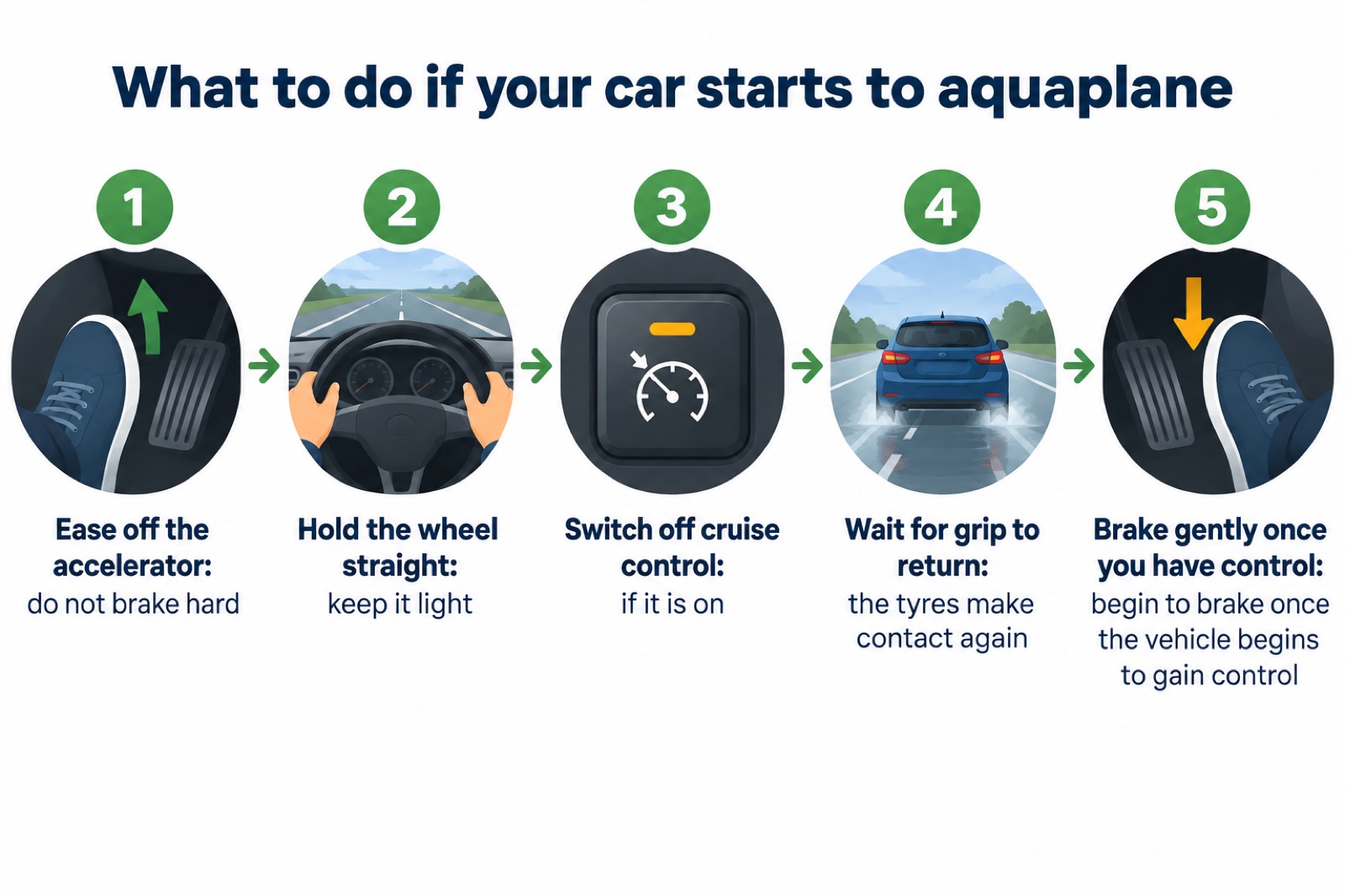
If it happens, National Highways advises: don't hit the brakes hard, gently ease off the accelerator, hold the steering wheel straight, switch off cruise control if it is on, and begin to brake once the vehicle begins to gain control7. Cheshire Fire and Rescue Service puts it slightly differently: hold the steering wheel lightly and lift off the throttle until the tyres regain grip3.
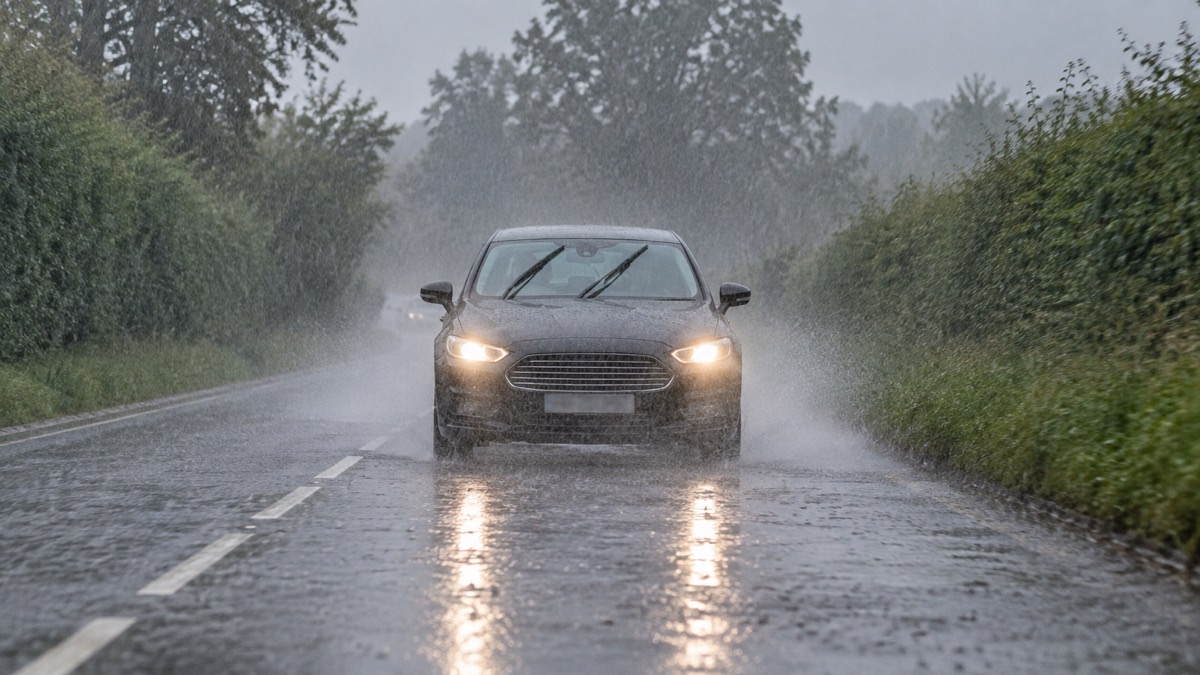
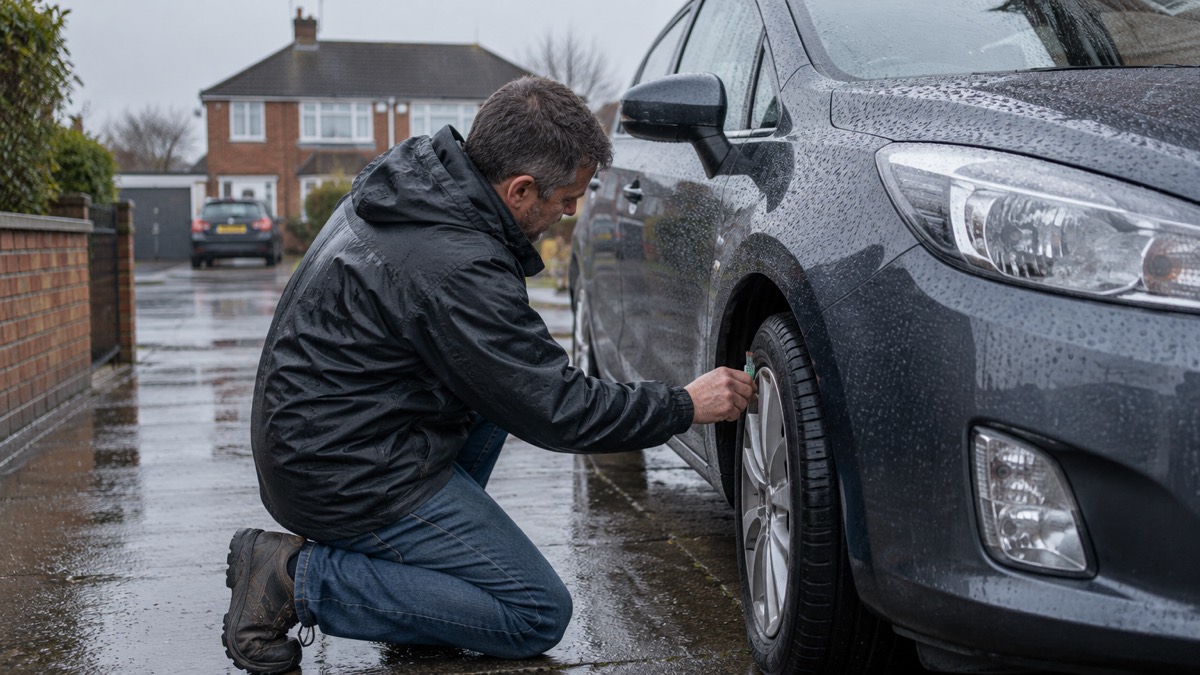
To avoid it in the first place, slow down and prepare for the risk of sudden areas of standing water, and ensure that your tyres are in excellent condition15. Having the correct tyre pressure and tyre tread depth will maximise your tyres' ability to maintain their road grip13. Even the most modern road surface is susceptible to standing water in heavy downpours, creating a potential aquaplaning hazard as well as significantly reducing visibility3.
If you do have to drive through floods, drive slowly using first gear and try to keep the engine revving at a high rate, moving forward continuously to avoid stalling; in an automatic, engage and hold in a low gear; check your mirror and test your brakes afterwards18. But the better answer is not to drive into flood water at all.
When to pull over because you cannot see
If heavy rain is making visibility difficult, pull over if possible4. That is the straightforward rule from Dorset and Wiltshire Fire and Rescue Service, repeated in their flood guidance19. The Met Office adds a planning point: if heavy downpours are expected, avoid starting your journey until it clears16.
If hail is severe, stop driving and pull over to a safe, preferably sheltered area, such as under an overpass or onto a hard shoulder20. The Met Office says the same: if hail is severe, stop and pull over to a safe place and remain inside the vehicle10.
Where to stop matters. A hard shoulder is for emergencies, and stopping under a bridge or overpass puts you in a place where other drivers may not expect you. If you must stop, get as far from the carriageway as you safely can, keep your seatbelt on, and put your hazard lights on. If you are on a motorway, National Highways advises going left to the hard shoulder or an emergency area and calling for help.
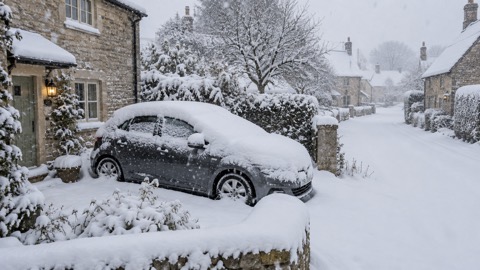
For more on planning around bad weather, see our guide to whether you should delay your journey and the wider driving in snow and ice page.
Where the road is more slippery than it looks
Some surfaces catch drivers out even when the rain does not look heavy. Spilt diesel is one. Be aware of the dangers of spilt diesel that will make the surface very slippery15. Spillages on road surfaces, particularly diesel, create slippery conditions that are a major hazard to other road users21. You will not see it in the wet, so the only defence is speed and gentle controls.
The first rain after a dry spell is another. The Highway Code warns that the road surface may become soft or, if it rains after a dry spell, it may become slippery, which could affect steering and braking2. Oil and rubber that have built up on the surface lift into a film when the first rain arrives.
Freezing rain and black ice are a third. In freezing rain, keep your distance and reduce speed, because black ice is difficult to see and conditions can be slippery even when they seem normal22.
| Hazard | What it does | What to do |
|---|---|---|
| Spilt diesel | Makes the surface very slippery15 | Reduce speed, use controls gently10 |
| First rain after dry spell | Road surface may become slippery2 | Slow down, leave a longer gap2 |
| Standing water | Creates aquaplaning hazard3 | Slow down, prepare for sudden water15 |
| Freezing rain and black ice | Slippery even when conditions seem normal22 | Keep your distance and reduce speed22 |
On any slippery road, travel slowly and at a safe distance from the vehicle in front, use dipped headlights if visibility is poor, avoid sudden or harsh braking, steering and accelerating to prevent skidding, and use all controls very gently10. It takes much longer to stop on slippery roads10.
Parking and driving when a flood warning is out
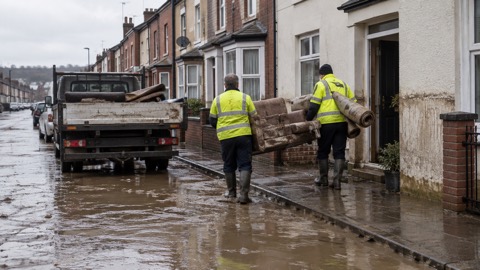
If a flood warning is in force, the first thing to do with the car is move it. Park your car outside the flood zone23. Move vehicles to higher ground24. Do not wait until water is on the road outside.
The same advice appears in thunderstorm guidance: park your car outside the flood zone25. If you are caught in a thunderstorm while driving, the safest place is inside the vehicle with the windows closed.
If you have to drive through floods, drive slowly using first gear and keep the engine revving at a high rate, moving forward continuously to avoid stalling; in an automatic, engage and hold in a low gear; check your mirror and test your brakes afterwards18. But this is a last resort, not a plan.
For the household side of flooding, including what to do before, during and after, see our flooding guide. For weather warning levels, see Met Office weather warnings explained.
Heavy rain in mid and west Wales, and autumn and winter driving
Heavy rain is a common issue in mid and west Wales, especially during the autumn and winter months15. The Welsh language version of the same Mid and West Wales Fire and Rescue Service guidance says the same: heavy rain is a common event in Mid and West Wales, especially in autumn and winter26. Their seasonal safety page repeats it: heavy rain is a common issue in Mid and West Wales, especially during the winter months27.
If you live in or travel through mid and west Wales, treat wet roads as the normal winter condition rather than the exception. Check the forecast before setting out, allow more time, and expect standing water on routes you know well.
Across the UK, roads can be affected by adverse weather, particularly in winter, when snow, ice, heavy rain and strong winds create difficult driving conditions28. Hail, heavy snow and rain reduce visibility29. The broad instruction from the fire and rescue service is to drive appropriately in severe weather conditions30.
Autumn and winter bring the worst of it, but heavy rain can arrive at any time of year. The preparations are the same: check your tyres, lights and brakes before the season starts, keep plenty of fuel in the tank18, and carry a few basics in case you are stopped for a while.
For the full seasonal checklist, see car checks before winter and what tyre tread depth you need. If you are driving in snow rather than rain, our guide to driving in snow and ice covers the differences.
Sources (30)
- Travelling when it's raining, National Highways, 2026-10-29
- Driving in adverse weather conditions (226 to 237), GOV.UK, 2026-10-29
- Driving in adverse weather, Cheshire Fire and Rescue Service, 2026-03-11
- Flooding, Dorset and Wiltshire Fire and Rescue Service, 2023-11-20
- Driving in heavy rain or floods, Traffic Wales, 2026
- Safe driving in winter, Nottinghamshire County Council, 2026-10-29
- Travelling when it's raining, Traffic England, 2026-10-29
- Adverse driving conditions, South Wales Fire and Rescue Service, 2026-08-28
- Road safety, Northern Ireland Fire and Rescue Service, 2026-09-16
- Winter, summer and wet weather driving tips, North Yorkshire Council, 2026
- Driving in rain, Traffic Scotland, 2026-10-29
- Driving in adverse weather conditions (226 to 237), nidirect, 2026-09-22
- Winter preparedness, South East Coast Ambulance Service, 2025-10-22
- Extreme weather, Flintshire County Council, 2026-10-29
- Driving in heavy rain, Mid and West Wales Fire and Rescue Service, 2026-10-29
- Driving in severe weather, Met Office, 2026-10-25
- Snow and Ice - Ceredigion County Council, Ceredigion County Council
- Driving in bad weather, Transport Scotland, 2026-10-29
- Driving in adverse conditions, Dorset and Wiltshire Fire and Rescue Service, 2024-02-07
- Winter driving, Greater Manchester Fire and Rescue Service, 2026-10-29
- Storing fuel, Devon and Somerset Fire and Rescue Service, 2026
- Travelling in snow and ice, National Highways, 2026-10-29
- Stay safe in heavy rain, Met Office, 2026-10-28
- During a flood, Nottinghamshire County Council, 2026-10-29
- Stay safe in a thunderstorm, Met Office, 2026-10-25
- Gyrru mewn glaw trwm, Mid and West Wales Fire and Rescue Service, 2026-10-29
- Winter safety, Mid and West Wales Fire and Rescue Service, 2026-10-29
- Drive safely in winter weather, Met Office, 2026-10-26
- Winter driving, Cornwall Council, 2026-10-29
- Top causes of rescues and how to avoid them, Devon and Somerset Fire and Rescue Service, 2026
 Flood Warning Checklist
 First Steps After a Flood
 Insurance Claim Records
 Delaying Journeys in Bad Weather
 Reporting a Fallen Tree
 Met Office Weather Alerts
 Driving in Strong Winds
 Wind Damage and Insurance