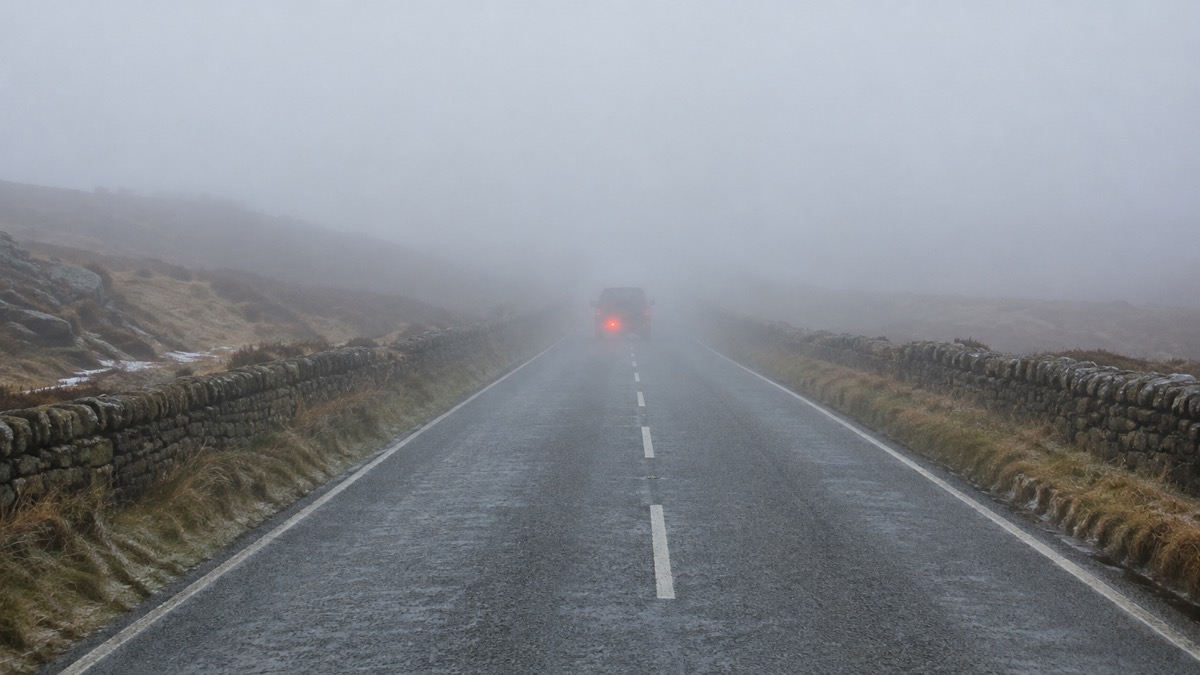
Fog lights are for one situation only: fog so thick that you cannot see clearly ahead. The Highway Code says you must not use front or rear fog lights unless visibility is seriously reduced, because they dazzle other road users and can obscure your brake lights1. National Highways puts a number on it: use fog lights only when visibility is seriously reduced and below 100 metres (328 feet)2.
When that happens, switch them on, and switch them off again as soon as visibility improves1. That second half matters as much as the first. Fog lights left burning in clear air are a hazard to everyone around you, and in patchy fog the moment of clearer air can be brief.
This page covers when to use each set of lights, how to judge the distance, why fog lights at the wrong time cause problems, and what to do in rain, at night and in Northern Ireland. For the wider picture of driving in bad weather, see Driving in Snow and Ice: Staying Safe on the Road.
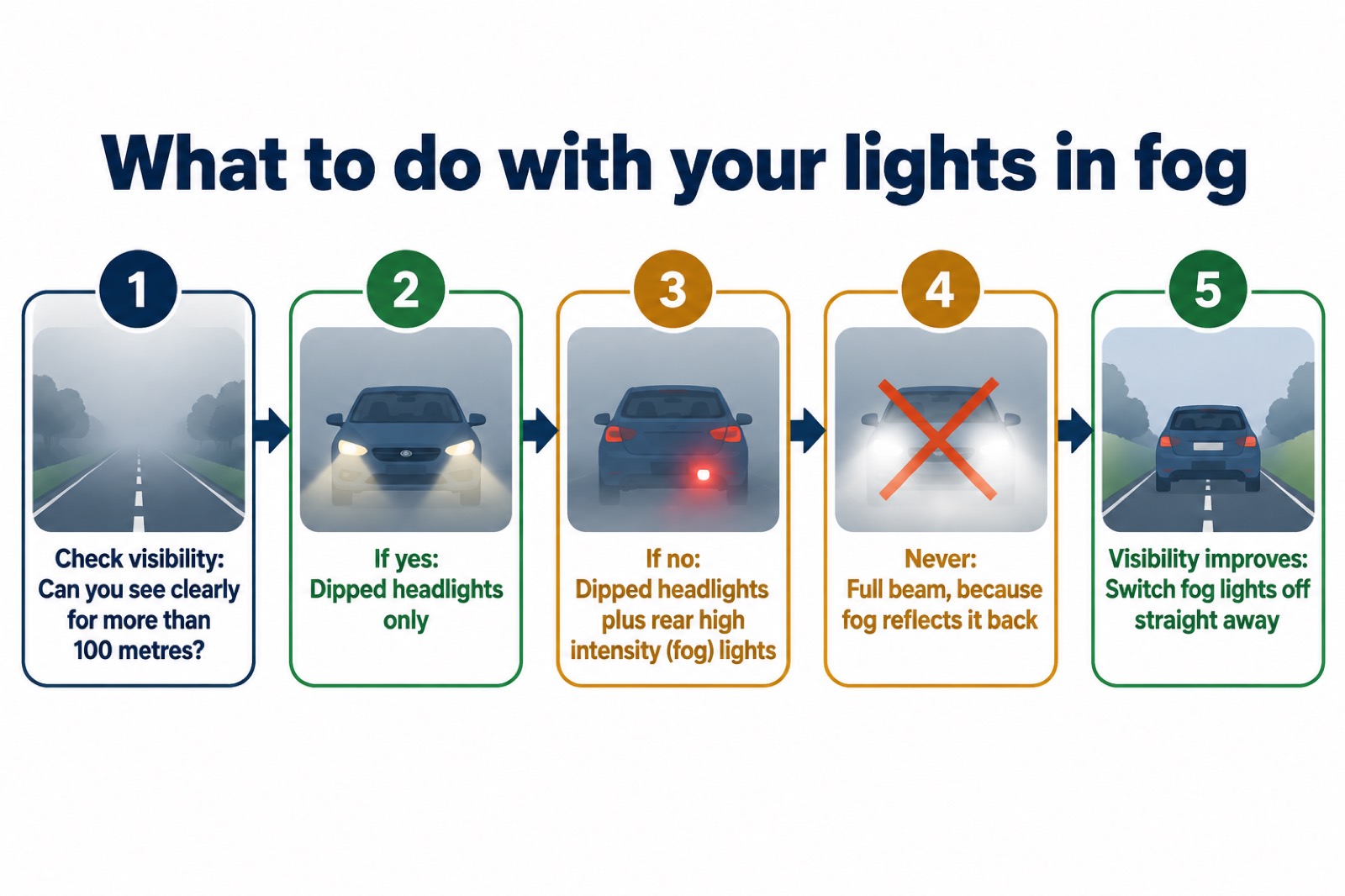
Use fog lights when visibility drops below 100 metres
The trigger for fog lights is visibility, not darkness, rain or the time of day. National Highways advises using them only when visibility is seriously reduced and below 100 metres (328 feet)2. Traffic Wales gives the same figure: use fog lights when visibility is significantly reduced and below 100 metres4. Sefton Council's winter road safety guidance says that if it is really foggy, with less than 100 metres visibility, switch your fog lights and rear high-intensity lights on, and remember to switch them off when visibility improves5.
The same 100 metre figure is the threshold for ordinary headlights. According to the Highway Code, you must use headlights when visibility is seriously reduced, generally when you cannot see for more than 100 metres3. So the two rules line up: at 100 metres you need headlights, and below it you may add fog lights.
Scotland's guidance frames it by what you can see rather than a measurement: if the fog is so severe that you are struggling to see other vehicles, switch on your fog lights3. North Yorkshire Fire and Rescue Service uses the figure directly: if visibility drops below 100m, use your fog lights, but remember to turn them off when the visibility improves6. The same advice appears in its snow guidance7, and Devon and Somerset Fire and Rescue Service says to use lights accordingly, fog lights in foggy conditions and dipped headlights when visibility is reduced8.
Fog is unpredictable, which is why the rule is written as a switch rather than a setting. Traffic Wales notes that fog can appear and disappear quickly, so you must know how to adapt4. The Met Office adds that where fog is patchy, drivers tend to slow down or speed up as they move into and out of it, which can present a greater risk of collisions than widespread fog where everyone drives slowly all the time9.
Switch them off as soon as visibility improves
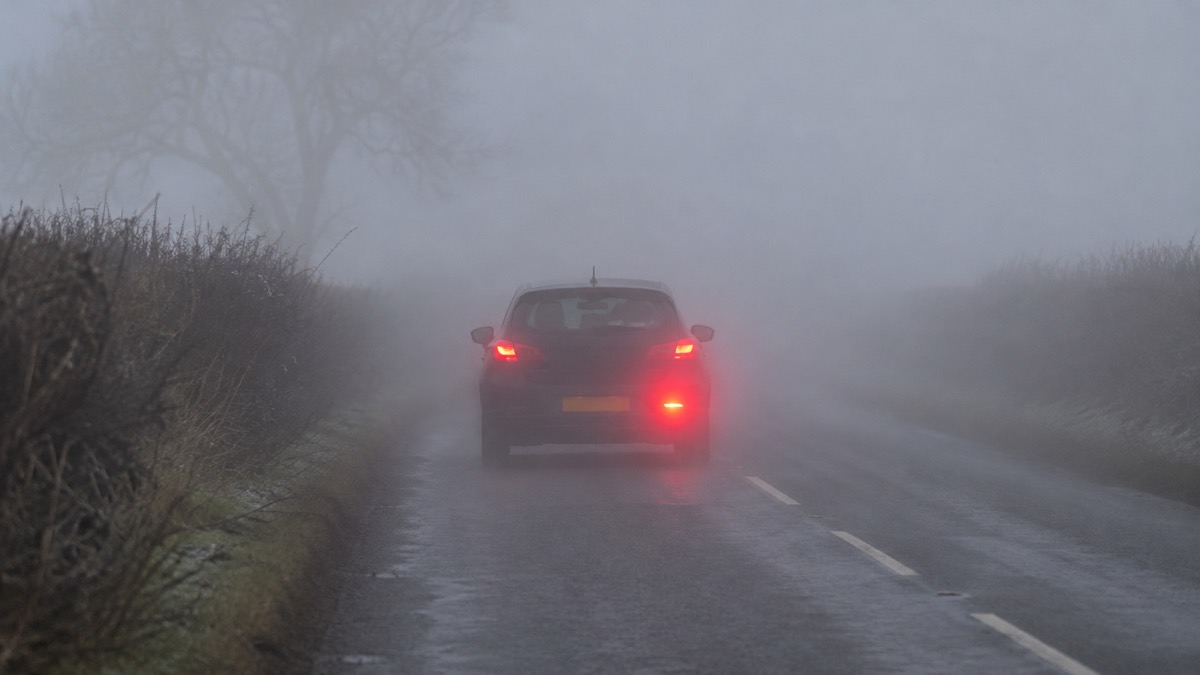
The instruction to switch off is not a courtesy. It is part of the same rule. The Highway Code says you may use front or rear fog lights when visibility is seriously reduced, but you must switch them off when visibility improves1. Northern Ireland's version of the same rules says exactly the same10. The Met Office's fog driving advice is to use fog lights, but remember to turn them off when the visibility improves11. Cornwall Council's winter driving guidance repeats it12, and the road safety charity Brake advises putting lights on in gloomy weather and when visibility is reduced, using front and rear fog lights in dense fog, and remembering to switch them off when visibility improves13.
There is a second reason to be quick about it. South Central Ambulance Service warns drivers not to speed up immediately when visibility improves slightly, because in patchy fog you could find yourself driving blind again only moments later14. The fog light switch and the accelerator should be treated the same way: wait until you are sure the improvement is real.
| Situation | Fog lights | Headlights |
|---|---|---|
| Visibility below 100 metres in fog | On, front and rear as fitted2 | On, dipped3 |
| Visibility improves | Off as soon as possible1 | Dipped as conditions require1 |
| Patchy fog, brief clear spells | Off in the clear, on again in the thick14 | On throughout3 |
| Heavy rain or spray | Usually off15 | Dipped16 |
| Clear night | Off1 | Dipped in urban areas, full beam elsewhere, dipped for other traffic17 |
Why fog lights at other times are a problem
Fog lights are built to be seen through fog, which makes them bright. That brightness is exactly what makes them wrong at any other time. Traffic Scotland states that you must only use your fog lights when your visibility is severely reduced, and that using them at other times can dazzle drivers18. The Highway Code gives the two mechanisms in one sentence: they dazzle other road users and can obscure your brake lights1.
The brake light problem is the one drivers underestimate. Oxfordshire's fire and community safety guidance explains that fog lights are brighter than standard tail lights, so other motorists may not notice your brake light when you brake19. A driver behind you sees a bright red glow whether you are slowing or not, and loses the one signal that tells them you are stopping.
"You MUST NOT use front or rear fog lights unless visibility is seriously reduced (see Rule 226) as they dazzle other road users and can obscure your brake lights."
There is a related habit to avoid in fog itself. The Met Office says do not hang on the tail lights of the car in front, because rear lights can give a false sense of security11. South Central Ambulance Service makes the same point: you will be too close to be able to brake safely14. Sefton Council adds that it means you may be driving too close5, and Cornwall Council says not to rely on the rear lights of a vehicle in front to light your way, as it may cause you to travel too close12. Northern Ireland's Highway Code rules say to keep a safe distance behind the vehicle in front, because rear lights can give a false sense of security10.
Front and rear fog lights: when each may be used
The Highway Code treats front and rear fog lights together: you may use either when visibility is seriously reduced, and you must switch either off when it improves1. In practice they do different jobs, and the guidance on each reflects that.
Front fog lights are low-mounted lights that light the road immediately ahead under the fog. They help you see, but only a little, and they do nothing for the driver behind you. Rear fog lights are high-intensity lights that make your car visible to traffic coming up behind. Traffic Scotland notes that you should only use rear fog lights when visibility is 100 metres or less, around the length of a football pitch, because drivers behind may not be able to tell if you are braking18.
That football pitch comparison is the most useful way to hold the figure in your head. If you could not see the far goal from the near one, the fog is thick enough for fog lights.
Fog lights in heavy rain, spray and at night
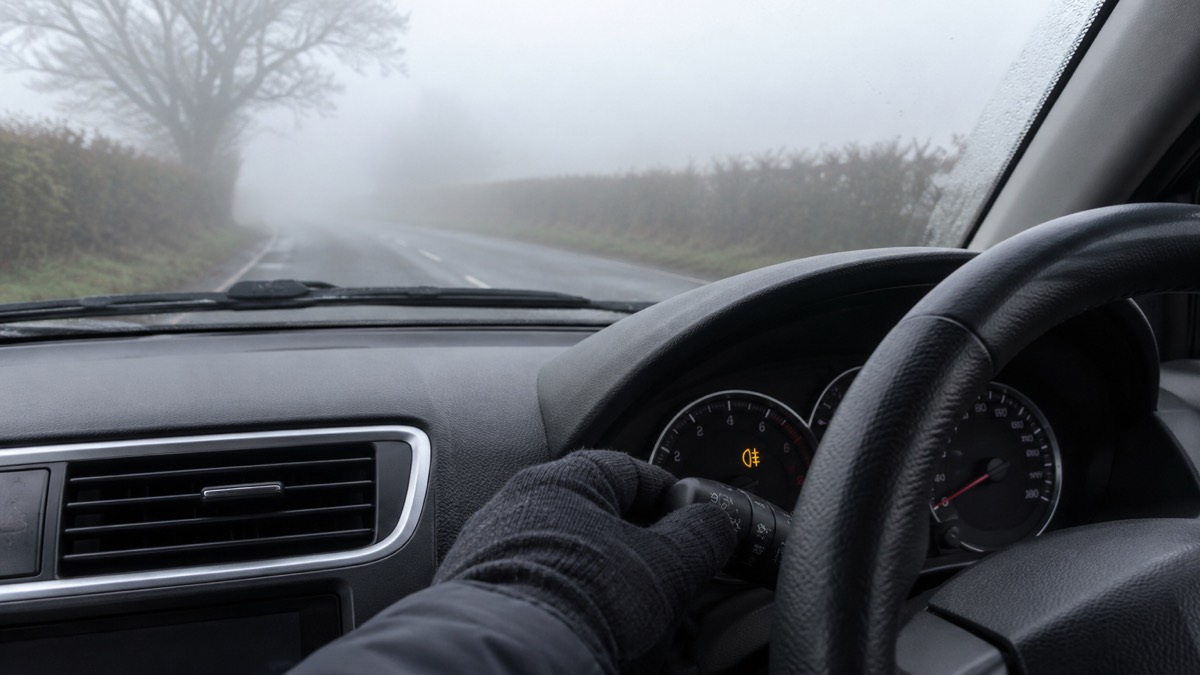
Heavy rain is not fog, and the guidance treats it differently. Nottinghamshire's winter driving advice is blunt: do not use rear fog lights, because they can mask your brake lights and dazzle drivers behind you15. The same masking problem applies in rain as in clear air.
What to use instead is dipped headlights. Traffic Scotland's rain guidance says to use dipped headlights during daylight hours, slow down and keep a safe distance from the vehicle in front16. Surrey Fire and Rescue Service says to use headlights in wet weather because rain and spray from other vehicles can make it difficult to see and be seen20. The national winter highways information sheet says to use at least dipped headlights in poor visibility, and not to rely on daytime running lights if you have them21.
Fog lights may still have a place if visibility becomes much less than usual. Mid and West Wales Fire and Rescue Service advises checking your lights to make sure you are visible to others, and notes that fog lights may be required if visibility is less than usual22. The test is the same one: is visibility seriously reduced, below 100 metres? If not, leave them off.
At night on a clear road, fog lights have no role at all. West Lothian's driving in bad weather guidance sets out the night-time rule: switch on lights as soon as it starts to get dark, use dipped beam in urban areas, and use full beam on other roads at night but dip them when there is someone in front or coming towards you17. The London Fire Brigade's winter guide adds a simple caution: use your lights where required, and beware of other drivers who do not have theirs on23.
Using dipped headlights with fog lights
Fog lights are an addition to dipped headlights, not a replacement. Derbyshire's winter driving advice says to use dipped beam headlights, and in fog or falling snow to use rear high intensity fog lights24. Flintshire's extreme weather guidance says to use dipped headlights when driving during periods of rain, fog or snow25. South Central Ambulance Service says visibility will probably be reduced, so use dipped headlights14. The Humber Local Resilience Forum's winter guide puts it simply: drive slowly using dipped headlights or fog lights26.
What you must not use in fog is full beam. The Met Office explains why: do not use full beam lights, because the fog reflects the light back, reducing visibility even further3. North Wales Fire and Rescue Service says to use headlights whenever visibility is reduced and not to dazzle others with main beam27.
Where to get help and further advice
If fog is forecast on a journey you are about to make, the Met Office's travel advice is the place to start, and its weather warnings tell you how widespread and how severe the fog is expected to be. Our guide to Met Office Weather Warnings: Yellow, Amber and Red Explained sets out what each level means for your plans. If you are weighing up whether to travel at all, Should I Delay My Journey in Bad Weather? covers the decision.
Before winter sets in, it is worth checking that every light on the car works and that you know where the fog light switch is. Our Car Checks Before Winter checklist covers lights along with the rest of the vehicle. For driving in the other conditions that reduce visibility, see How to Drive in Heavy Rain and Avoid Aquaplaning and How to Drive Safely in Strong Winds.
The Highway Code rules on driving in adverse weather apply across the UK, and Northern Ireland publishes the same rules 226 to 237 for drivers there10. If you are travelling abroad, the rules on fog lights differ between countries, so check before you go.
Sources (27)
- The Highway Code: Driving in adverse weather conditions (226 to 237), GOV.UK, 2026-10-29
- Travelling in fog, National Highways, 2026-10-29
- Driving in severe weather, Met Office, 2026-10-25
- Driving in fog and mist, Traffic Wales, 2026
- Winter road safety, Sefton Council, 2026-10-29
- Top tips for keeping warm and safe this winter, North Yorkshire Fire and Rescue Service, 2023-11-29
- Staying safe in the snow, North Yorkshire Fire and Rescue Service, 2023-03-09
- Driving snow and icy conditions, Devon and Somerset Fire and Rescue Service, 2026
- Severe weather advice, Met Office, 2026-10-25
- Driving in adverse weather conditions (226 to 237), nidirect, 2026-09-22
- Advice for travelling in fog, Met Office, 2026-10-28
- Winter driving, Cornwall Council, 2026-10-29
- Check it's safe to travel, Brake, 2026-10-29
- Winter preparedness, South Central Ambulance Service, 2025-10-22
- Safe driving in winter, Nottinghamshire County Council, 2026-10-29
- Driving in rain, Traffic Scotland, 2026-10-29
- Driving in bad weather, West Lothian Council, 2019
- Driving in fog, Traffic Scotland, 2026-10-29
- Driving in winter, Oxfordshire County Council, 2026
- Roads, Surrey County Council, 2026
- Winter highways information sheet: driving in rain and floods, GOV.UK, 2014
- Driving in heavy rain, Mid and West Wales Fire and Rescue Service, 2026-10-29
- Extreme weather winter guide, London Fire Brigade, 2025-01
- Winter driving, Derbyshire County Council, 2026-10-29
- Extreme weather, Flintshire County Council, 2026-10-29
- Winter guide, Humber Local Resilience Forum, 2024-08
- Driving in snow, North Wales Fire and Rescue Service, 2026-10-29
 Car Checks Before Winter
 Flood Warning Checklist
 First Steps After a Flood
 Bedroom Temperature at Night
 Hitting Black Ice
 Car Battery in Winter
 Car Stuck in Snow
 Clearing Snow and Ice Safely
 Clearing Snow from Pavements
 Signs of Frostbite
 Falling Through Ice
 De-Icing a Frozen Windscreen
 Request or Refill a Grit Bin
 Overtaking a Gritter
 Insulating a Loft Water Tank