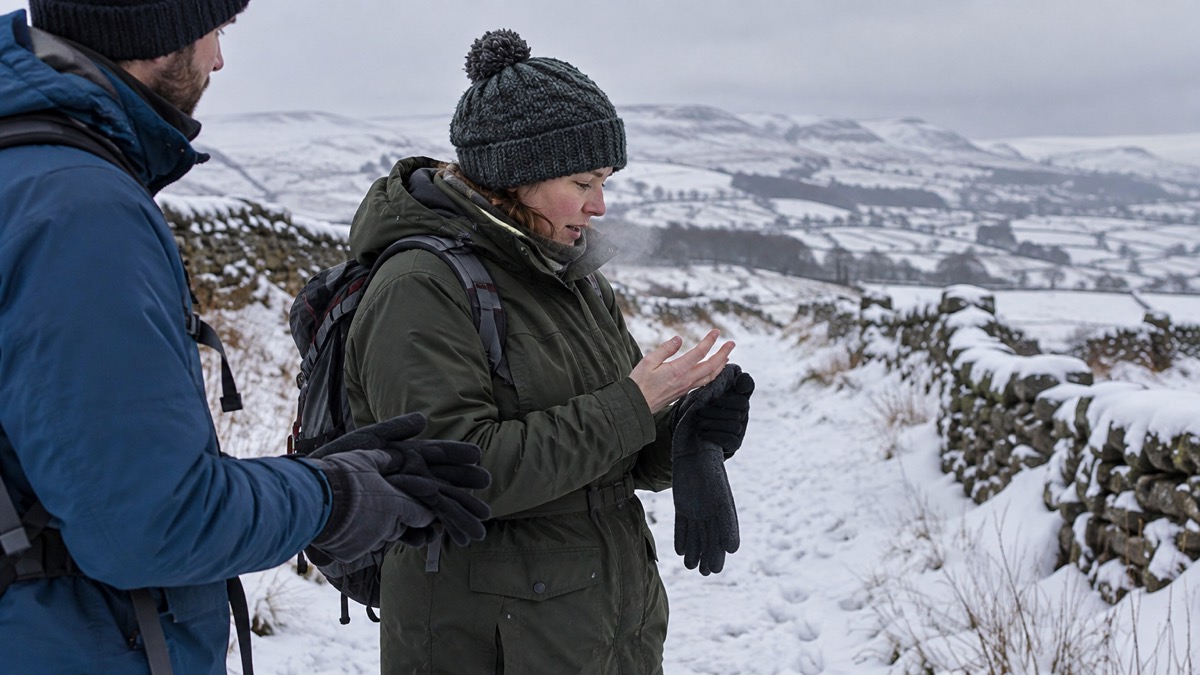
Frostbite happens when your skin freezes after being in very cold temperatures1. It usually happens with prolonged exposure to freezing cold temperatures, particularly if there is added wind chill2. The parts of the body most often affected are the fingers, toes, nose and ears1.
The earliest warning is usually a sensation of pins and needles, then paleness and numbness in the area2. The skin may look white or pale, or red, and it will feel cold and firm1. If you notice loss of feeling in the extremities with a white or pale appearance, get medical help immediately3.
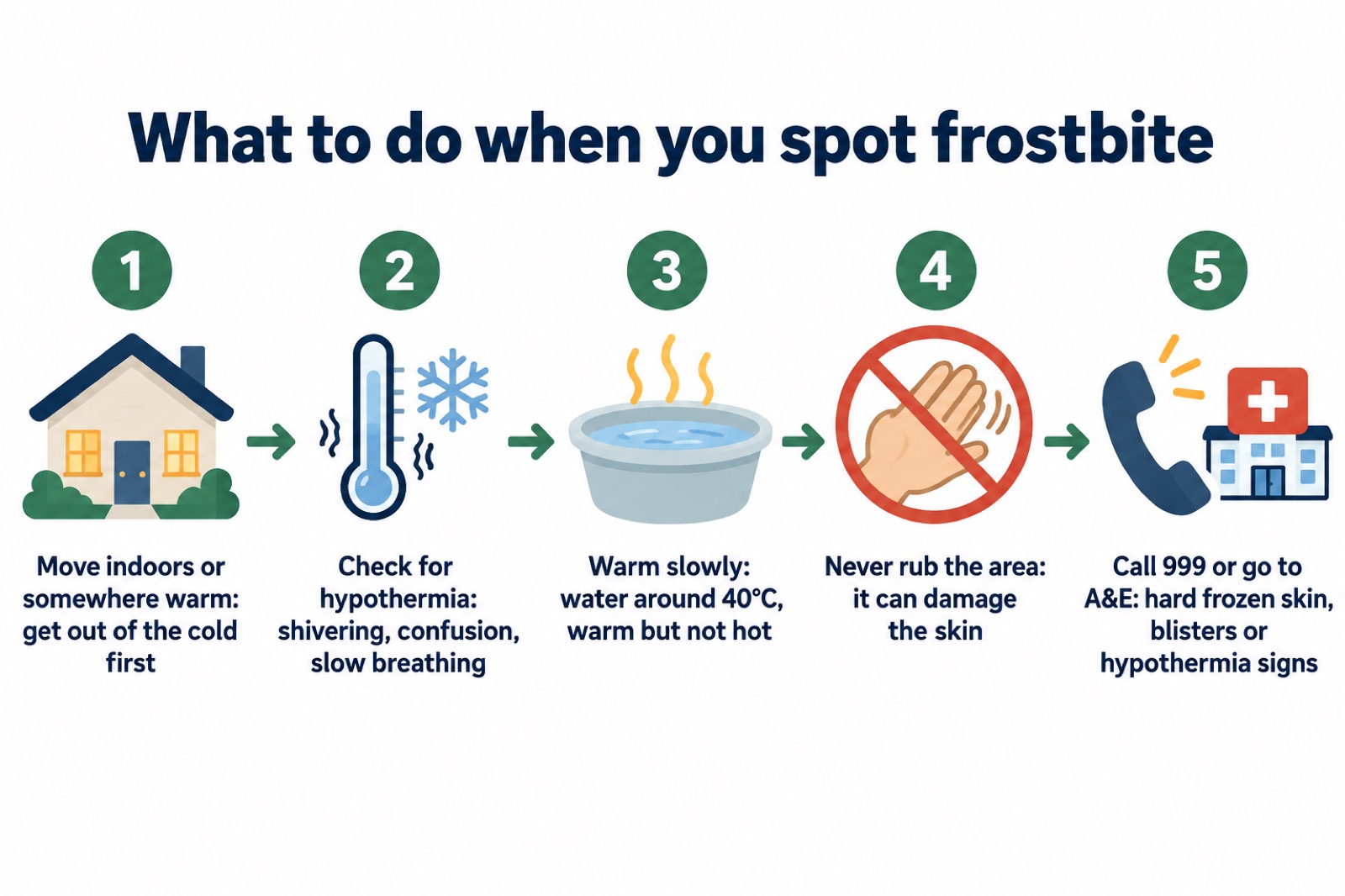
Do not rub the affected area, as this can damage the skin1. Move the person indoors or somewhere warm, warm the part slowly in water around 40°C, and call 999 or go to A&E if the skin is hard and frozen, if blisters form, or if there are signs of hypothermia1.
Early signs: pins and needles, numbness and pale or red skin
Frostbite announces itself quietly. The first thing most people notice is a sensation of pins and needles in the affected part2. That tingling gives way to numbness, and the skin turns pale2. By the time feeling has gone, the damage is already under way.
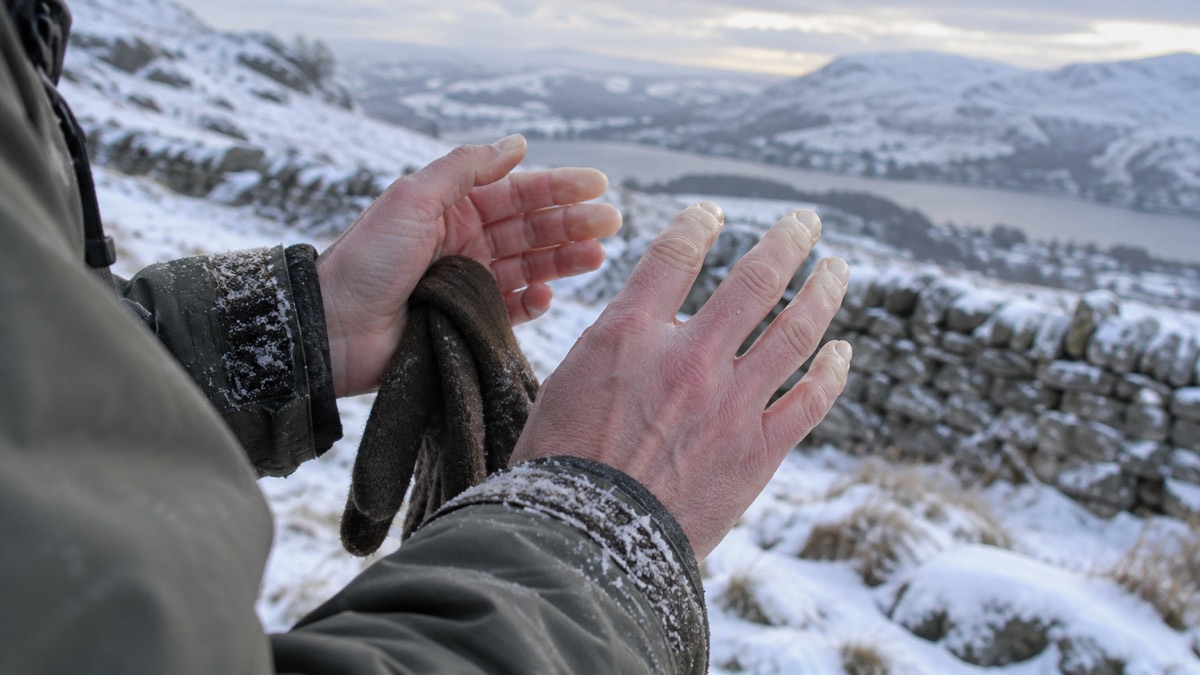
The NHS describes the early appearance of frostbitten skin as cold and firm, with numbness, a stinging or burning sensation, and pain that is throbbing or aching1. The skin may be red or pale, and redness can be harder to see on black or brown skin1. St John Ambulance adds that the area may look pale and numb, and that the skin can harden and stiffen, changing colour from white to mottled and blue2.
Local council winter advice across Wales uses a simple test: watch for loss of feeling in the extremities with a white or pale appearance, and get medical help immediately if you see it3. That is the same message from Flintshire, Pembrokeshire and Ceredigion, and it is worth taking at face value. Numb, white fingers are not a minor inconvenience to walk off.
The British Red Cross puts it plainly: when someone has frostbite, their fingers, toes or extremities will become pale or blue and lose feeling6. If you are checking yourself or someone else, look for the part that has gone quiet: no feeling, no colour, no pain. That silence is the warning.
Fingers, toes, nose and ears: where frostbite strikes first
Frostbite can affect anywhere on the body, but it most commonly affects the extremities, such as fingers and toes, or the tip of the nose, ears or lips2. The NHS names the fingers, toes, nose and ears as the parts most often affected1. Age UK notes that extremities like the hands, feet and ears are more likely to be affected7.
The reason is simple enough to act on: these parts are furthest from the body's core and hardest to keep covered. A scarf that leaves the ears exposed, gloves with a gap at the wrist, or thin shoes in slush all leave the most vulnerable skin out in the cold.
Frostbite usually happens with prolonged exposure to freezing cold temperatures, particularly if there is added wind chill2. Wind makes a cold day behave like a colder one, and it strips warmth from exposed skin faster than still air. That is why a walk that felt fine in shelter can leave fingers numb on an exposed ridge or a windy platform.
How frostbite gets worse: hard, frozen, blotchy skin and blisters
Left untreated, frostbite moves through stages you can see. The NHS lists the worsening symptoms as hard, frozen skin that can be white, blue or blotchy; swelling and loss of feeling in the affected area; blisters filled with blood or clear or milky fluid; and skin turning black and hard as it starts to die, which may be harder to see on black or brown skin1.
| Stage | What you see | What it means |
|---|---|---|
| Early | Pins and needles, numbness, pale or red skin, cold and firm skin1 | Skin is starting to freeze; get warm and seek advice |
| Worsening | Hard, frozen skin that is white, blue or blotchy; swelling; loss of feeling1 | Significant freezing; call 999 or go to A&E |
| Severe | Blisters filled with blood or clear or milky fluid; skin turning black and hard1 | Tissue damage; urgent hospital treatment |
The blisters are the point at which frostbite stops being something you can manage at home. Blood-filled or milky blisters mean tissue has been injured, and the NHS says frostbite is treated in hospital1. Hospital treatments include warming the affected body part, removing dead skin, medicines to treat swelling and infection, and surgery if the frostbite is severe1.
The long-term risk is real. Frostbite can lead to loss of sensation and eventually tissue death and gangrene2. It can cause the skin and tissue to die, which may mean the affected body part needs to be removed1. When gangrene occurs, the skin may become black due to the loss of blood supply2. That progression is why the early signs matter so much: the sooner you act, the less there is to lose.
When to call 999 or go to A&E
Call 999 or go to A&E if, after exposure to very cold temperatures, someone has hard frozen skin with swelling and loss of feeling, blood or clear or milky fluid blisters, or constant shivering, slurred speech, slow breathing, tiredness and confusion1. Those last signs point to hypothermia as well as frostbite, and they are just as urgent: the NHS advises phoning 999 or going to A&E if you or someone else has signs of hypothermia2.
Someone suffering from frostbite is likely to be experiencing hypothermia, so be sure to look for the signs of this and treat if necessary1. The NHS lists hypothermia symptoms as shivering, pale cold and dry skin with lips that may turn blue or grey, slurred speech, slow breathing, and tiredness or confusion2. On black or brown skin, colour change may be easier to see on the palms of the hands or the soles of the feet2. Age UK's winter guidance also lists lack of co-ordination among the symptoms of hypothermia3.
If you are the one waiting for an ambulance, stay calm9. Keep the person warm by covering their legs and body with coats or blankets, and monitor them until help arrives9. If you are on your own and waiting for help after a fall or injury in the cold, cover yourself with anything you can reach, such as a towel, coat, rug or blanket10.
What to do while waiting for help: warm slowly and never rub
The first step is to get out of the cold. Help move the casualty indoors or to somewhere warm2. Then warm the affected part slowly and gently.
St John Ambulance advises placing the affected part into warm but not hot water, around 40°C2. If you are with someone who has frostbite, you can place the affected body part in your lap and gently warm it with your hands1. If the casualty is an adult, you can suggest they take the recommended dose of paracetamol2.
What you must not do matters as much as what you do. Do not rub the affected area, as this can damage the skin2. The NHS is equally direct: do not rub the affected area1. Rubbing frozen tissue can tear it, and it does not warm the skin from the inside where the damage is.
As feeling returns, the skin may be red, hot, painful and blistered2. That is expected, but it is not a reason to skip medical advice. Keep the area protected and let a clinician look at it.
Frostbite and hypothermia together, and frostbite in pets
Frostbite rarely arrives alone. St John Ambulance says someone suffering from frostbite is likely to be experiencing hypothermia, so be sure to look for the signs of this and treat if necessary1. Treat the person, not just the part: help move the casualty indoors or to somewhere warm, cover them, and get help1.
Pets are exposed too. The RSPCA says cats are at risk of hypothermia, frostbite or respiratory problems if exposed to temperatures below 10°C for too long12. Frostbite causes severe damage to body tissues such as the tail, toes, nose and tips of the ears in freezing temperatures12. For dogs, the RSPCA notes that the extremities, ears, feet, nose and tail, which have less or no fur, may be at increased risk of frostbite13.
If you suspect frostbite in a cat, move the cat to a warm dry place and wrap them in blankets, do not rub the area, do not heat them up too quickly or place anything hot directly on the skin, and take them to the vet immediately12. The same principles apply to dogs: warm gently, do not rub, and seek veterinary advice.
Where to get help and how to prepare
Frostbite is much less common than hypothermia because it usually happens in extreme cold conditions6. That is reassuring, but it is not a reason to ignore numb fingers on a cold walk. The UK does get the conditions that cause it, and the councils that publish winter advice treat it as a real risk3.
If you are worried but it is not an emergency, NHS 111 can advise on whether you need to be seen. In an emergency, go to A&E immediately or call 9991. If you are helping someone who is vulnerable to the cold, the government's guidance for healthcare professionals notes that cold exposure can worsen breathing problems, which is worth bearing in mind for anyone with a lung condition10.
Preparing for cold weather is mostly about time and cover. Check the Met Office weather warnings before a long walk, keep gloves, a hat and a scarf where you will find them, and know the health risks of cold weather for yourself and anyone you care for. If you are heading out on foot in icy conditions, the advice on walking on ice helps you avoid the falls that leave people lying in the cold. For the wider picture, the storms, snow and ice guide sets out how to prepare a household before the cold arrives.
Sources (13)
- Frostbite, NHS, 2025-06-09
- Frostbite, St John Ambulance, 2026-10-28
- Extreme weather, Flintshire County Council, 2026-10-29
- Severe weather, Pembrokeshire County Council, 2026-10-29
- Snow and ice, Ceredigion County Council, 2026-10-29
- Hypothermia, British Red Cross, 2026-10-28
- Cold weather illnesses and your health, Age UK, 2026-04-30
- Hypothermia (low body temperature), NHS inform, 2026-07-15
- Falls, NHS, 2025-03-06
- Supporting vulnerable people before and during cold weather, GOV.UK, 2025-09-24
- Cold weather, Public Health Wales, 2026-06-16
- Cats in winter, RSPCA, 2026-10-29
- Dogs in winter, RSPCA, 2026-10-29
 Car Checks Before Winter
 Flood Warning Checklist
 First Steps After a Flood
 Bedroom Temperature at Night
 Hitting Black Ice
 Car Battery in Winter
 Car Stuck in Snow
 Clearing Snow and Ice Safely
 Clearing Snow from Pavements
 Using Fog Lights
 Falling Through Ice
 De-Icing a Frozen Windscreen
 Request or Refill a Grit Bin
 Overtaking a Gritter
 Insulating a Loft Water Tank