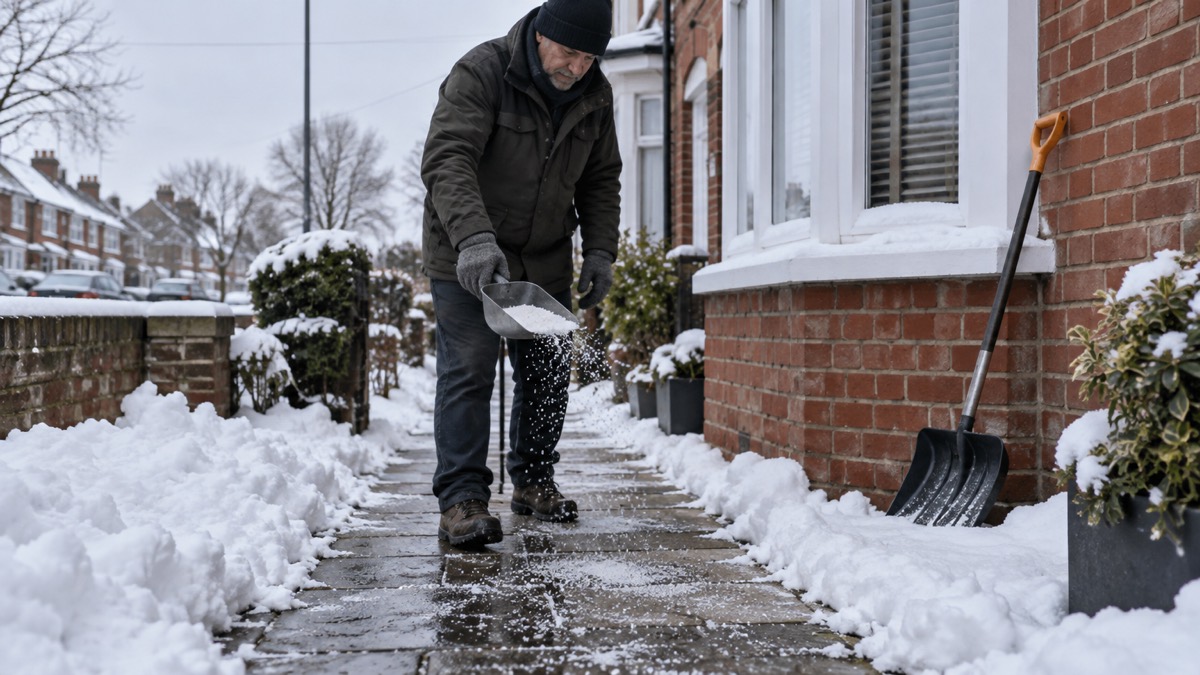
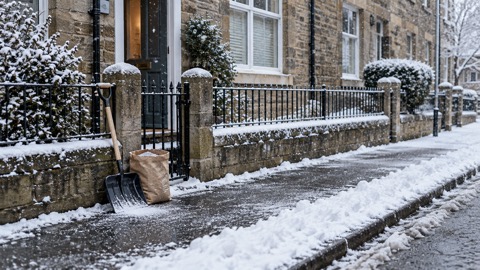
Clearing a path in snow and ice is straightforward if you do it in the right order. Make a pathway down the middle of the area to be cleared first, so you have a clear surface to walk on, then shovel the snow from the centre of the path to the sides1. Start early: fresh, loose snow is easier to move than snow that has been walked on and compacted2. Cover the path with salt before nightfall to stop it refreezing overnight3.
You do not need permission to clear the pavement outside your home. There is no law stopping you from clearing snow and ice on the pavement outside your property, pathways to your property or public spaces4. If an accident did happen, it is unlikely you would be sued as long as you are careful and use common sense to make sure you do not make the pavement or pathway clearly more dangerous than before5. People walking on snow and ice have a responsibility to be careful themselves6.
Salt is the main tool. Ordinary table or dishwasher salt works, at about a tablespoon for each square metre you clear7. If you are short of salt, sand or ash will not stop the path icing over as effectively but give good grip underfoot8. Never use hot water to melt snow or ice, because it may refreeze to form black ice5.
Clear a path down the middle first
The order of work matters more than the tool. Make sure you make a path down the middle of the area to be cleared first, so you have a clear surface to walk on, then shovel the snow from the centre of the path to the sides1. Working from the middle outwards means you always have somewhere safe to stand, and you are not stepping over the snow you have just moved.
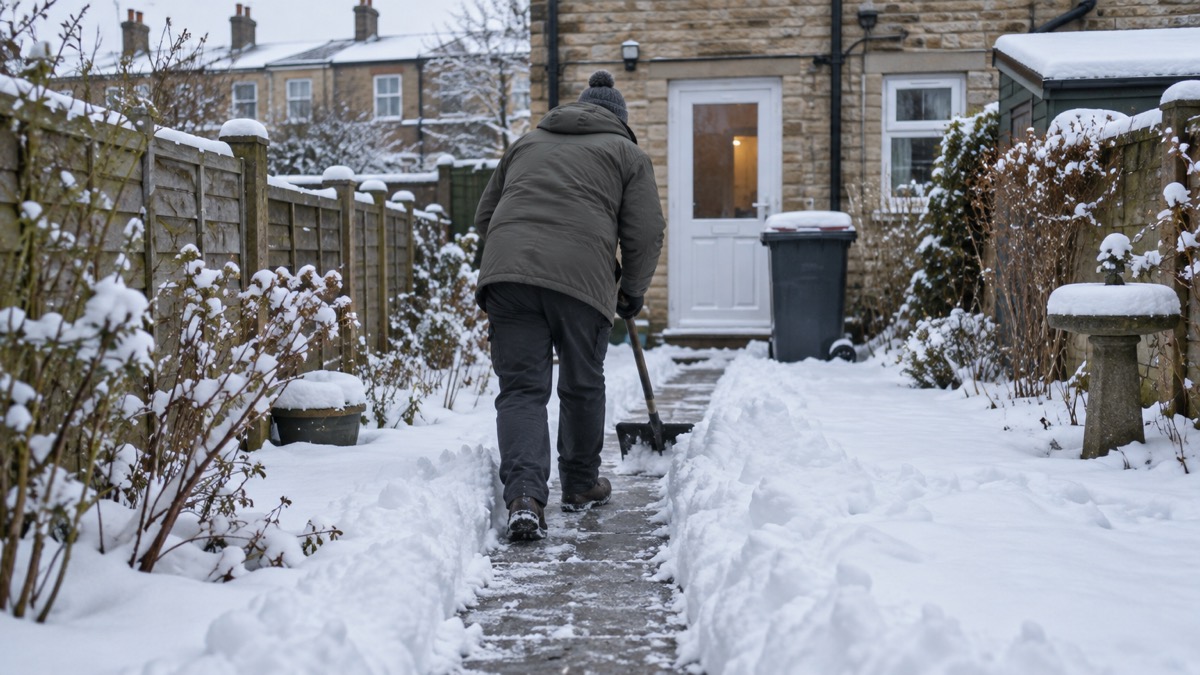
Start early. Clear the snow and ice early in the day and cover the path with salt before nightfall to stop it refreezing overnight3. Clearing fresh, loose snow is easier than shifting snow that has been trodden down2. If you remove the top layer of snow in the morning, any sunshine during the day will help melt any ice beneath, and you can then cover the path with salt before night to stop it refreezing8.
Do not lift too much snow or ice at one time, because compacted snow can be very heavy5. Do not work in blizzard conditions5. If you are clearing a longer stretch, such as a shared path or a route to a neighbour's door, work in stages and take breaks.
Councils clear roads, footways and footpaths in priority order, so a residential pavement may not be treated quickly9. That is why clearing your own frontage helps. You can also help by clearing snow and ice from paths and driveways so care services can reach people who need help10. Community emergency planning guidance puts clearing local paths of snow and ice and putting down grit, if you can, among the things a neighbourhood group can do11.
Working beside a road: face oncoming traffic
If your path runs alongside a road, treat the road as a hazard. Work from the footway at all times, working towards oncoming traffic wherever possible5. Facing the traffic means you can see vehicles approaching and step back if one skids or passes close.
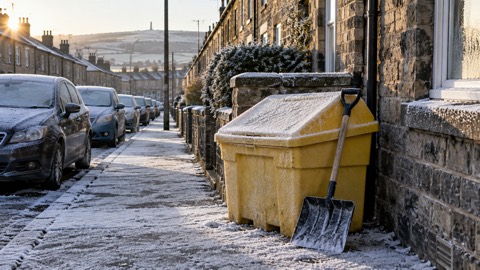
Place snow at the edges of footways next to the road to form a barrier between cars and pedestrians5. Put sand or ash down on cleared areas, as it will give grip to walkers5. Use grit or salt from grit bins sparingly5. Wrap up warm, and wear a reflective coat if you have one5. Wear snow and ice grippers when walking, especially when pushing snow, and beware of hypothermia and wind chill effects5.
If you are the one clearing, keep your phone with you and tell someone you are going out if the weather is severe. Drivers should keep well back from the road user in front in icy conditions13.
Keeping a cleared path from refreezing
A cleared path can become more dangerous than an uncleared one if meltwater refreezes. The defence is salt, applied before the temperature drops. Start early, clear the snow or ice early in the day and cover the path with salt before nightfall to stop it refreezing overnight3.
Use salt or sand to clear paths, not water, because water may refreeze and turn to black ice6. Do not use hot water to melt snow or ice, as it may refreeze to form black ice5. Do not use grit or salt from highways grit bins on private property, as this is theft5.
| What you have | What it does | How to use it |
|---|---|---|
| Table or dishwasher salt | Melts ice and stops refreezing | A tablespoon per square metre cleared7 |
| Rock salt or grit | De-ices and gives grip | Spread on cleared areas; use bin supplies sparingly5 |
| Sand or ash | Grip underfoot, but will not stop icing as effectively as salt8 | Put down on cleared areas5 |
| Cat litter or grit | Lessens the risk of slipping on compacted snow14 | Put on paths and driveways14 |
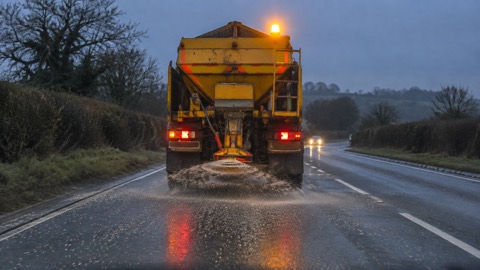
Councils spread rock salt on roads to prevent ice forming, and during heavy snowfalls snow ploughs may be used to clear snow15. When snow is expected, Surrey County Council spreads grit in advance so it can start working as soon as snow falls16. You can do the same at home: get the salt down before the freeze, not after.
Clearing ice from steps and paths without injury
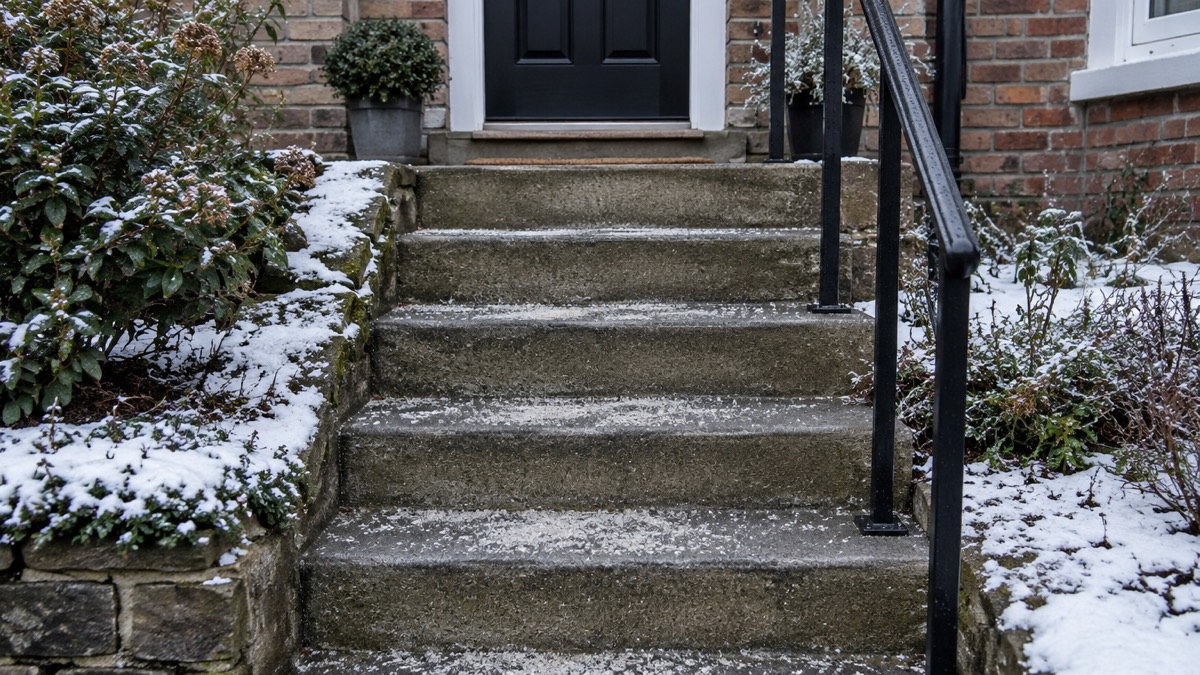
Steps are where falls happen. Keep outdoor steps, paths and garden walkways clear of ice and frost17. Treat them before ice forms where you can, and use salt or sand rather than water6.
Clear a route down the middle first so you have a safe surface to stand on1. Put grit or cat litter on paths and driveways to lessen the risk of slipping on compacted snow14. Take your time, use a handrail where there is one, and do not carry more than you can manage.
If you have neighbours who are older or less able, offer to clear their paths when you clear yours and spread salt7. Ordinary table or dishwasher salt can be used, a tablespoon for each square metre you clear18. This is one of the simplest things a household can do to reduce slips on the street.
What to wear and how to pace yourself
Dress for the work, not for the walk. Wrap up warm, wear a reflective coat if available, and wear snow and ice grippers when walking, especially when pushing snow5. Community plans list boots, gloves, a hard hat and a fluorescent jacket as the correct protective equipment for clearing snow19. For most householders, stout footwear, gloves and something reflective are the practical minimum.
Keep a mobile telephone or radio system with you, and take emergency food and drink if you will be out for a while5. If you are clearing a long path or helping several neighbours, tell someone where you are and when you expect to be back.
When to start, and when to leave it to the council
Start as soon as it is safe to do so. Clear the snow and ice early, because it is easier to move fresh, loose snow2. If you remove the top layer of snow in the morning, any sunshine during the day will help melt any ice beneath, and you can cover the path with salt before night to stop it refreezing8.
Councils work to their own timetables. In Lincolnshire, for example, footways and cycleways in the highest priority category are targeted for clearance within 12 hours of snowfall stopping, subject to resources, while lower priority categories may wait up to 5 days5. In the Scottish Borders, roads, footways and footpaths are cleared of snow and ice in priority order9. That means a pavement near you may not be treated for some time, and your own clearing makes a difference in the meantime.
If you cannot clear your path yourself, ask a neighbour, or contact your council to ask what help is available. You can also help by clearing snow and ice from paths and driveways so care services can reach people who need help10.
Sources (19)
- The Snow Code, Derbyshire County Council, 2026
- Winter Resilience Plan, Humber Local Resilience Forum, 2024
- Snow Code, Derbyshire County Council, 2026
- Snow Wardens, Warwickshire County Council, 2026
- Winter Service Plan, Lincolnshire County Council, 2025
- Extreme Weather Winter Guide, London Fire Brigade, 2025
- Stay Safe in Ice, Met Office, 2026
- Safe Driving in Winter, Nottinghamshire County Council, 2026
- Winter Travel Advice, Scottish Borders Council, 2026
- Keep Warm in Winter, Derbyshire County Council, 2026
- Community Emergency Planning: Prepare, Ready Scotland, 2026
- Travelling in Heavy Snow and Ice, Met Office, 2026
- Snow and Ice, Essex Prepared, 2026
- Snow and Ice Advice, Ceredigion County Council, 2026
- Does Gritting Always Work?, Derbyshire County Council, 2026
- Salting and Gritting, Surrey County Council, 2026
- Falls Guidance at Home, Oxford Health NHS Foundation Trust, 2026
- Weather Ready Tips for Snow and Ice, Met Office, 2025
- Gavinton, Fogo and Polwarth Resilient Community Plan, Scottish Borders Council, 2018
 Car Checks Before Winter
 Flood Warning Checklist
 First Steps After a Flood
 Bedroom Temperature at Night
 Hitting Black Ice
 Car Battery in Winter
 Car Stuck in Snow
 Clearing Snow from Pavements
 Using Fog Lights
 Signs of Frostbite
 Falling Through Ice
 De-Icing a Frozen Windscreen
 Request or Refill a Grit Bin
 Overtaking a Gritter
 Insulating a Loft Water Tank