

A blizzard is strong wind driving heavy or blowing snow, and what makes it dangerous is not just the snow but the loss of visibility and the speed with which ordinary life stops. Winter storms can range from a moderate snow over a few hours to a blizzard that lasts for several days, and one of the biggest concerns is the winter weather's ability to knock out heat, power and communications services, sometimes for days at a time1. The Met Office warns that when snow is accompanied by strong winds it can drift, causing large variations in snow depth and making it difficult to clear roads, railways and runways2.
The single most useful thing you can do is to stay indoors if you can3. Official guidance is to avoid travel if possible, and if snow or icy conditions are forecast, only travel if absolutely necessary5. Be prepared for weather warnings to change quickly, and when a warning is issued, stay up to date with the weather in your area7.
If the power or heating fails, homes can become cold very quickly, so keep blankets, sleeping bags and warm clothing ready, and aim to heat your home to at least 18°C where you can9. Before winter arrives, stock tinned or long-life food, because you may not be able to reach a supplier for a number of days8. The sections below take each of these in turn.
What a blizzard is, and how it differs from a snowstorm
A snowstorm is heavy snow. A blizzard is that snow combined with strong wind, which lifts it, drives it and cuts visibility. The Met Office's severe weather guidance describes how, when accompanied by strong winds, snow can drift, producing large variations in snow depth and making it difficult to clear roads, railways and runways2. That drifting is why a blizzard can block a road that was passable an hour earlier, and why the depth of snow on the ground tells you very little about what you will meet on a journey.
Winter weather more broadly can bring extreme cold, freezing rain, snow, ice and high winds12. Freezing rain is worth knowing about: on some rare occasions rain freezes immediately on contact with very cold surfaces such as roads and windscreens, leading to very dangerous icy conditions and high impacts for emergency services and normal daily routines2. Black ice may form when rain or drizzle fall on a road surface at a temperature below zero13. A dawn frost, the early morning dew that falls on a cold dry road and freezes on impact, is currently impossible to forecast accurately14.
In the UK, heavy snow falls at its heaviest between 2°C and 0°C; above 2°C the snowflake melts and falls as sleet or rain12. Severe winter weather is defined as when a severe weather warning has been issued by the Met Office14, and extreme winter weather as a period of widespread, prolonged snow following severe winter weather, with sufficient depth to disrupt both treated and untreated highway networks15. Be prepared for weather warnings to change quickly, and when a warning is issued, stay up to date with the weather in your area16.
What to do when a blizzard is forecast
When a warning is issued, the first job is to keep watching it. Be prepared for weather warnings to change quickly and stay up to date with the weather in your area17. Then decide what you can cancel or postpone, and do it early, before the roads deteriorate.
- Stay indoors if you can. Official guidance across the UK is consistent on this: stay indoors as much as possible during a storm3, and when the weather is really bad, it is best to stay indoors18.
- Avoid travel. Avoid travel if possible5, and if snow or icy conditions are forecast, only travel if absolutely necessary6.
- Check on your plan. If it is not safe to go outside, go indoors and close all windows and doors, stay indoors and stay up to date using radio, TV or online information19.
- Prepare for power loss. Make sure electric gates are open before a storm, so you are not trapped or cut off if the power goes20.
If you have to make a journey when snow is forecast, make sure you have warm clothes, food, water, boots, a torch and spade, and let someone know when you expect to arrive and your route. Try to wait until the roads have been gritted before travelling13. When making necessary journeys, ensure you have warm clothes, food, water, boots, a torch and shovel, and let someone know your route and when you expect to arrive21.
Why you should not travel in a blizzard
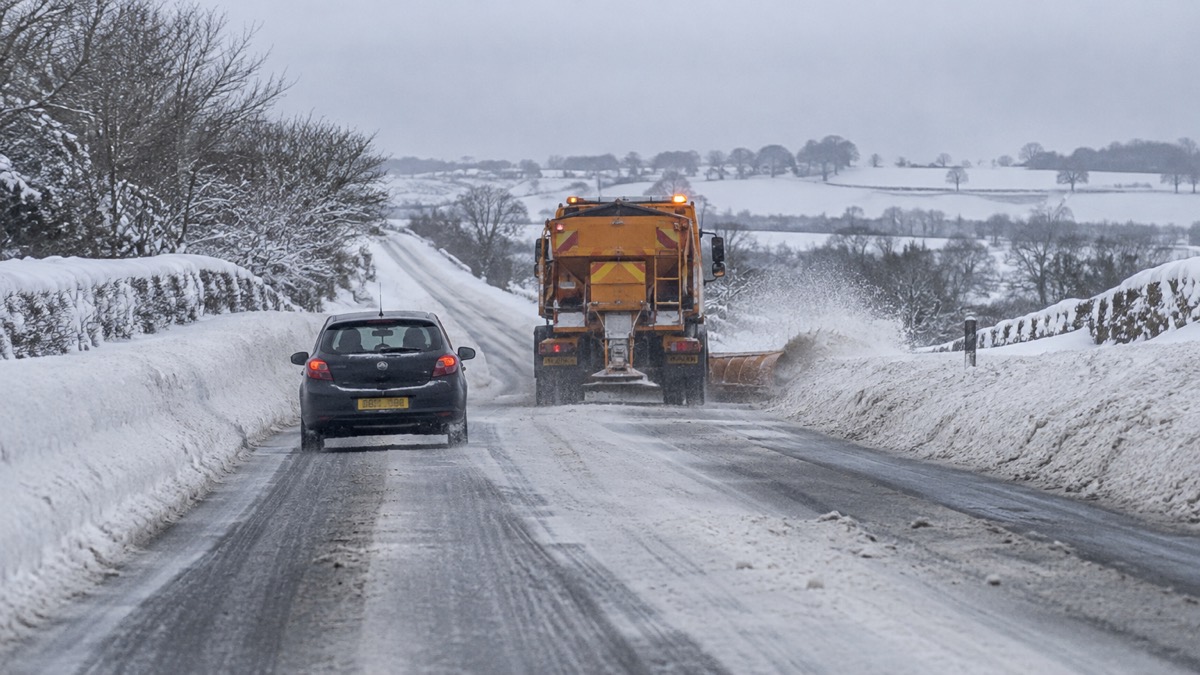
The case against driving in a blizzard is simple: you may not get there, and you may become part of the problem. Heavy snow reduces the movement of people, disrupts the delivery of food, drink and fuel, delays emergency service response, causes power outages from snow on power lines, and brings snowmelt flooding12. Every vehicle stuck on a road is one more obstacle for the gritters and the emergency services.
Gritting does not guarantee a clear road. Larger gritting lorries can be fitted with snow ploughs, but the plough must have clearance above the road to protect the road surface, which leaves a layer of snow on the roads, and no guarantee can be given that roads will always be completely clear of ice or snow22. Snow ploughing is carried out in severe snow conditions to keep the most important roads passable, normally confined to busier A class roads, with considerable delay possible on minor roads22. You should never assume that a road has been gritted7.
If you do drive, the Met Office's advice is not to put yourself in danger, to keep an eye on local conditions, and to make essential journeys only12. In Northern Ireland the advice during a storm is not to drive unless your journey is really necessary3. If you encounter a skid, steer gently into it and do not take your hands off the steering wheel or brake hard21. Braking distances can increase tenfold on ice compared to a dry road21.
Caught outside in reduced visibility
If you are out when visibility drops, the priority is to get back indoors. If it is not safe to go outside, go indoors and close all windows and doors, stay indoors and stay up to date using radio, TV or online information19. Do not go outside to repair non-urgent damage while the snow storm is in progress8. During high winds, watch for flying debris23.
If you are walking, keep to gritted or cleared paths where you can24. If you are cycling, wear high visibility clothing, use bright flashing bike lights and listen carefully for oncoming traffic, and consider using alternative forms of transport in thick fog7.
If you are stuck in a car
Getting stuck in your car in winter could be dangerous, so get a winter car kit ready18. If you get stuck, make the vehicle and yourself as visible as possible to other road users and rescuers, keep warm, and if you use a mobile phone, give accurate details of your location25. Stay in your vehicle and keep the engine running, unless you are stuck in a snow drift, when you should switch it off to prevent your vehicle filling with exhaust fumes25. Do not leave the vehicle unless you are in sight of a suitable destination; let help come to you26.
If your wheels are spinning, clear the snow from the wheels and put a sack or old rug in front of the driving wheels to give grip27.
Pack a few essential items in your car boot for wintry weather: a torch, in-car phone charger, warm clothes and blankets, high-visibility clothing, jump leads, food and drink, and a shovel for snow; a first aid kit can also be helpful9. Consider packing a few essential items in your car's boot to make sure you are ready in case of getting stuck in cold and wintry weather28.
| Item | What it does for you when stuck |
|---|---|
| Torch | Part of the winter car kit packed in case you get stuck9 |
| In-car phone charger | Part of the winter car kit packed in case you get stuck9 |
| Warm clothes and blankets | Keeps you warm while you wait9 |
| High-visibility clothing | Part of the winter car kit packed in case you get stuck9 |
| Jump leads | Part of the winter car kit packed in case you get stuck9 |
| Food and drink | Part of the winter car kit packed in case you get stuck9 |
| Shovel | Part of the winter car kit packed in case you get stuck9 |
| First aid kit | Part of the winter car kit packed in case you get stuck9 |
Keeping warm at home if the heating or power fails
Homes can become cold very quickly when the heating goes off, so keep blankets, sleeping bags and warm clothing9. Keep warm by using blankets and layered clothing, and shut curtains and doors of unused rooms to keep the heat in29. If it is cold, wrap up warm and close internal doors to keep the heat in17. Keep your bedroom windows closed at night30.
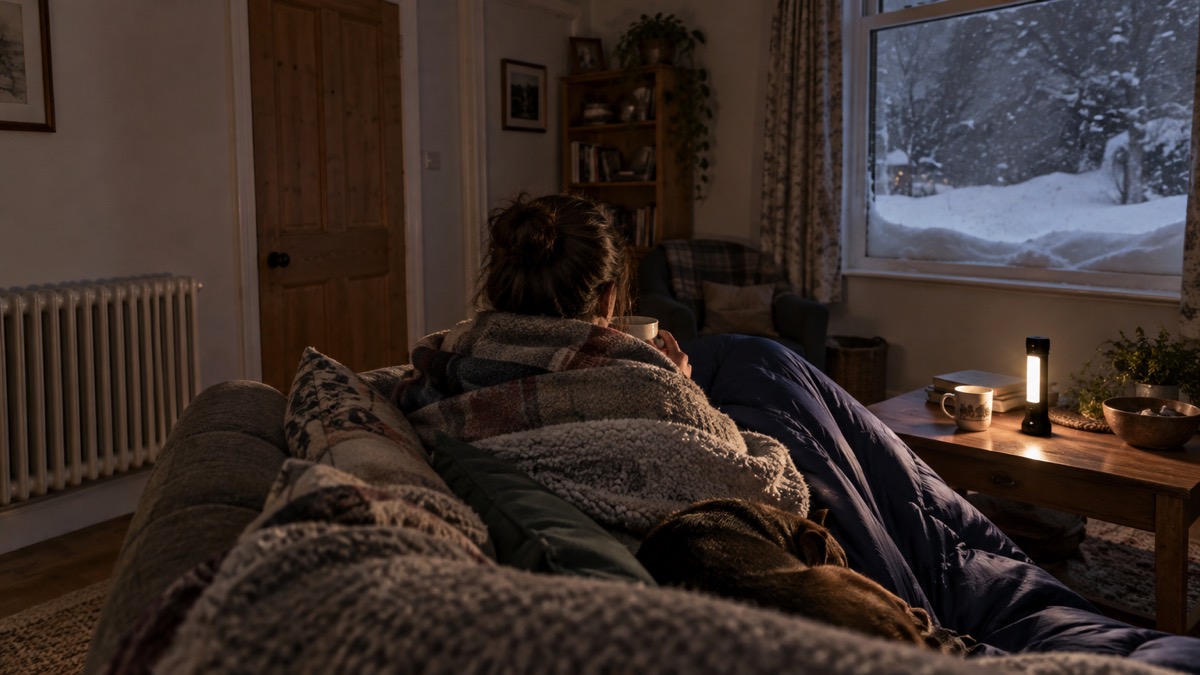
If heating your home is a challenge, try to stay warm in the room or place you will spend most of your time by wearing layered clothing, taking warm drinks and food, with some regular movement to help with circulation and keep your muscles active16. Do what you can to stay active, indoors28. Where you can, keep your home warm, ideally heat to at least 18°C10.
What to get ready before winter
The work that makes a blizzard manageable happens in autumn. Official guidance for preparing your home for winter includes loft insulation30. Ensure you have a good stock of tinned or long-life food, as you may not be able to reach a supplier for a number of days8. Keep blankets, sleeping bags and warm clothing ready9.
- Food and water: a stock of tinned or long-life food for several days8
- Warmth: blankets, sleeping bags and layered clothing9
- Light: torches and spare batteries, kept where you can find them in the dark
- Car kit: torch, charger, blankets, high-visibility clothing, jump leads, food, drink and shovel9
- Gates: know how to open electric gates manually before a storm20
For a fuller household list, see Emergency Kit: What a UK Household Should Keep Ready and Storms, Snow and Ice: A Household Guide. If you are planning for power loss specifically, Backup Power at Home and Heating and Cooking Without Mains Power or Gas set out the options.
Clearing snow safely after the storm
Wait for the wind to drop. Do not work in blizzard conditions15, and during strong winds avoid all work at height20. When you do clear snow, clear it early, because it is easier to move fresh, loose snow15. If you remove the top layer of snow in the morning, any sunshine during the day will help melt any ice beneath; you can then cover the path with salt before night to stop it refreezing27.
If you are clearing your own path, think about also doing so for your older neighbours to help make it easier for them to leave the house if they need to16.
Checking on neighbours and vulnerable people
Once you and your household are safe, check on neighbours and those who are at greater risk, such as young children, older adults, people who need extra assistance to get around, and people who get care at home19. Check in on vulnerable neighbours and, if you can, offer to share blankets, clothing or other supplies such as food29. A community emergency response plan can give you prompts for checking on people known to be vulnerable when snow or ice melts and flooding results6.
For more on supporting households that need extra help, see Extra Help in an Emergency and Community Resilience.
Where to get help and official updates
Official sources include the websites and social media accounts of the emergency services, government agencies and local councils, plus local radio, TV and the internet31. In Scotland, Ready Scotland sets out how to find and share information in an emergency31. In Northern Ireland, nidirect publishes warning information and advice during strong winds and heavy rain3.
If you are cut off, stay up to date using radio, TV or online information19. Keep a battery or wind-up radio so that you can still hear updates if the power fails.
Sources (31)
- Adverse weather events, Llangattock Community Council, 2026-10-25
- Severe weather advice, Met Office, 2026-10-25
- Strong winds and heavy rain warning: information and advice, nidirect, 2026-01-27
- Storms and wind, Ready Scotland, 2026-03-24
- Severe weather, West Yorkshire Prepared, 2026-10-29
- Low temperatures and heavy snow, Dorset Prepared, 2024-03-14
- Winter weather and cycling, Met Office, 2026-05-20
- Be prepared, Lancaster City Council, 2026-10-26
- Be ready for emergencies, Be Ready, 2026-10-21
- West Mercia Risk Register, West Mercia NHS, 2025-01
- TrafficWatchNI - Winter News, TrafficWatchNI (Department for Infrastructure)
- Heavy snow, Wiltshire and Swindon Prepared, 2026-10-25
- Travelling in heavy snow and ice, Met Office, 2026-10-25
- Weather forecasting, Derbyshire County Council, 2026-10-29
- Winter service plan, Lincolnshire County Council, 2025-04
- Amber snow warning issued New Year's Day, Met Office, 2026-01-01
- Stay safe in snow, Met Office, 2026-10-25
- Top tips to be WeatherReady, Met Office, 2026-10-25
- Emergency plan, Ready Scotland, 2026-03-24
- Strong winds weather warning: information and advice, nidirect, 2026-10-24
- Winter driving, Greater Manchester Fire and Rescue Service, 2026-10-29
- Check which roads are gritted, Suffolk County Council, 2026-10-29
- High winds, Scottish Borders Council, 2026-10-29
- Cold weather advice - West Midlands Ambulance Service University NHS Foundation Trust, West Midlands Ambulance Service University NHS Foundation Trust
- Winter driving, Staffordshire County Council, 2026
- Winter, Humber Local Resilience Forum, 2024-08
- Safe driving in winter, Nottinghamshire County Council, 2026-10-29
- Cold weather, snow and ice, Prepare, 2026-10-02
- Loss of essential services, Greater Manchester Combined Authority, 2026-10-29
- Stay warm and well this winter, Lancashire Prepared, 2026-10-29
- Find and share information in an emergency - Ready Scotland, Ready Scotland
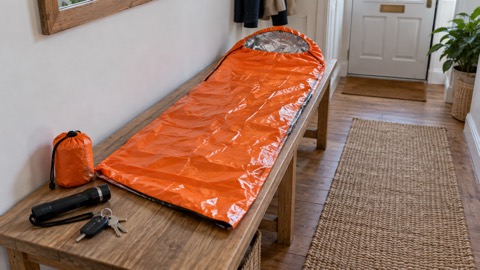 Blizzard 3 Layer Survival Bag
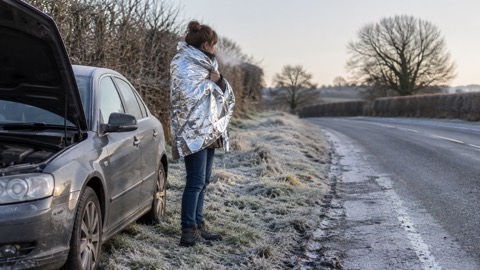 Blizzard EMS Survival Blanket