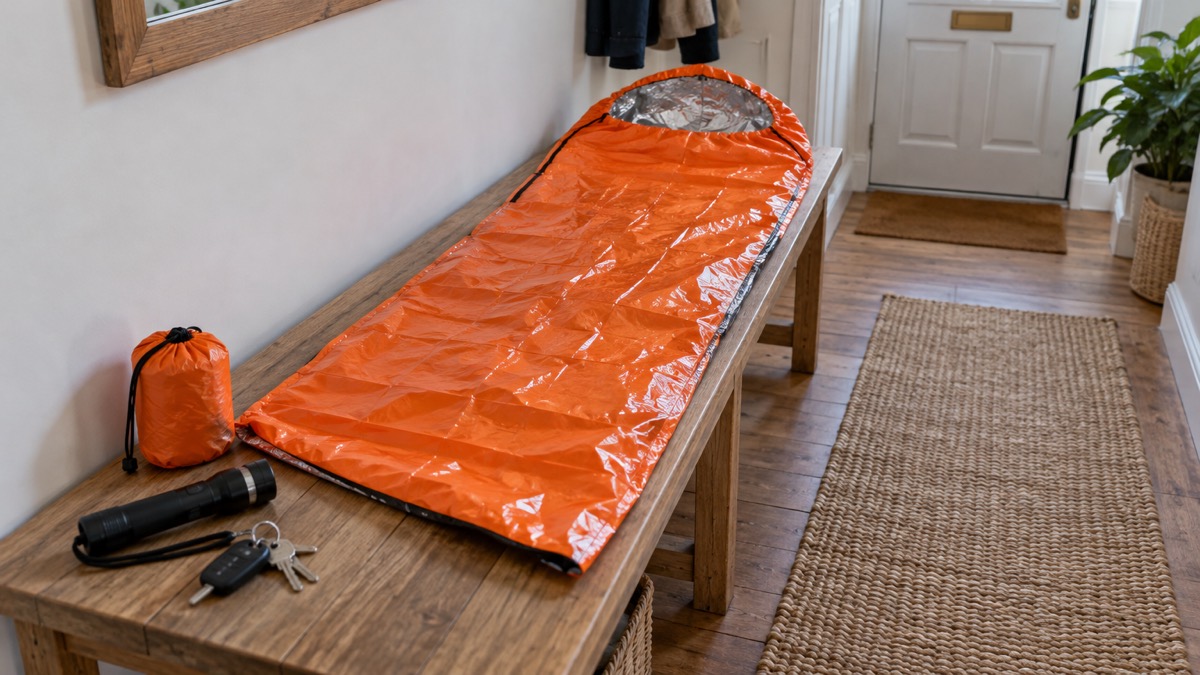
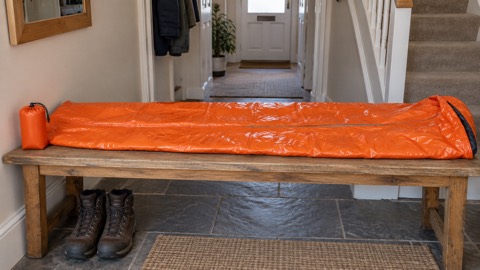
The Blizzard 3 Layer Survival Bag is a reusable emergency sleeping bag made from three layers of Reflexcell, a material the maker developed to be more effective than a traditional plastic bivvy bag and lighter than a conventional sleeping bag1. It is rated at 7.5 togs, which the maker says is equivalent to a medium weight regular sleeping bag, and it is effective down to -40°C1. It weighs 385g and packs to 24cm x 11.5cm x 5cm, so it takes up about the space of a large flask in a car boot or a cupboard1.
For an ordinary household, the point of a bag like this is the gap it fills. Official winter advice is to dress in layers, wear a hat, gloves and a scarf, and keep dry to prevent loss of body heat3. A survival bag does the same job when you are static: waiting for a recovery truck on a hard shoulder, sitting out a power cut in a cold room, or sheltering after a fall until help arrives5. It is not a substitute for warm clothing, but it is a layer you can put on in seconds and keep on.
This page sets out what the bag is, what its figures mean, how it fits a fully clothed adult, how it behaves when wet, and how to store and reuse it in a home or vehicle kit. It is a named product page, so the specifications come from the maker, and the safety advice around it comes from official and independent sources.
What the Blizzard 3 Layer Survival Bag is
The maker describes the bag as a multifaceted tool for critical outdoor situations, providing essential thermal protection1. In plain terms it is a sleeping bag shaped sack that you climb into fully clothed, pull up over your shoulders and close at the top. It is not a tent, a shelter or a blanket you drape over yourself: it is a bag you get inside, which is why the maker lists full mobility as one of its features1.
The material is the heart of it. Reflexcell is built up in three layers, and the maker says the three-layer construction gives superior insulation and maximum warmth1. The maker's account of its origins is that Derek Ryden, an engineer and active mountaineer, developed Reflexcell about 15 years ago because he saw the need for a material more effective than traditional plastic bivvy bags and lighter than conventional sleeping bags2. The maker also states that a Blizzard Survival Blanket made from Reflexcell is endorsed by the US Army Medical Center Directorate of Combat and Doctrine Development and used exclusively in training Army medics for treating hypothermia1. That is the maker's own claim about its own material, and it is worth knowing as background rather than as a reason to buy.
The maker lists its users as military personnel, emergency services, mountain rescue teams, walkers, climbers, cavers, canoeists, ski mountaineers and adventure racers1. Those groups carry it because it is light and small and works when someone has stopped moving and started to lose heat. A household kit asks the same thing of it, at a smaller scale.
Warmth: 7.5 togs, rated down to -40°C
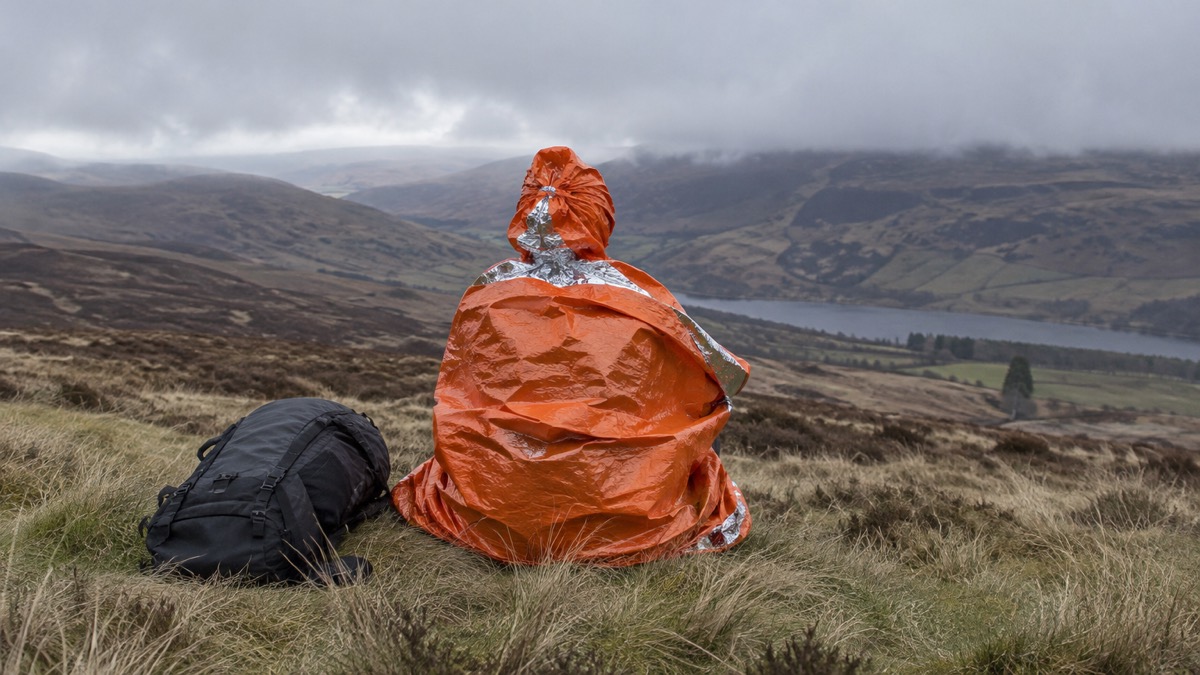
The two figures that decide whether this bag suits your kit are its tog rating and its temperature range. The maker gives the warmth as 7.5 togs and says that is equivalent to a medium weight regular sleeping bag1. Togs are a measure of insulation, the same scale used for duvets, so 7.5 togs tells you this is a warm layer rather than a thin sheet. The maker gives the temperature range as effective down to -40°C1.
Read those two figures together and you get a realistic picture. A -40°C rating is the outer limit the maker claims for the material, not a promise that anyone will be comfortable at that temperature in ordinary clothing. The bag works by trapping the heat you are already producing, so what you wear underneath still matters. Official cold weather advice is consistent on this: several layers of light, loose fitting clothing are better than one thick layer, the outer layer should be water repellent, mittens are warmer than gloves, and you should always wear a hat because most body heat is lost through the head4. The NHS in Wales gives the same message: wrap up warm in several layers, a hat, gloves and a scarf, and keep dry to prevent loss of body heat3. Age UK adds that wool or fleecy synthetic fibres keep you warmest because layers trap warm air6.
So the bag is the outer layer of a system, not the whole system. Get into it wearing what you have, including your coat if you have one, and put a hat on. If you are waiting for help after a fall, the NHS advises keeping warm by covering yourself with anything you can reach, such as a towel, coat, rug or blanket7. A survival bag is a better version of that same instinct.
Size and weight: 385g, packing to 24cm x 11.5cm x 5cm
The bag weighs 385g and the maker's specification table gives the pack size as 24cm x 11.5cm x 5cm1. The same product page also says, in its FAQ, that the bag packs down to 23 x 11 x 4 cm1. Both figures come from the maker and they do not match, so treat the packed size as roughly this size rather than an exact measurement. For planning purposes, it is a package about the length of a paperback and the thickness of a couple of paperbacks stacked, which will sit in a glovebox, a door pocket, a rucksack lid or a kitchen drawer.
The open size is 2.3m x 0.79m1. That is long enough for a tall adult to lie in and wide enough to wrap around a seated person. It is worth picturing before you buy: 2.3m is longer than most car boots are wide, so in a vehicle kit it is a bag you unfold along the back seat or across the front seats rather than something you lay out in the boot.
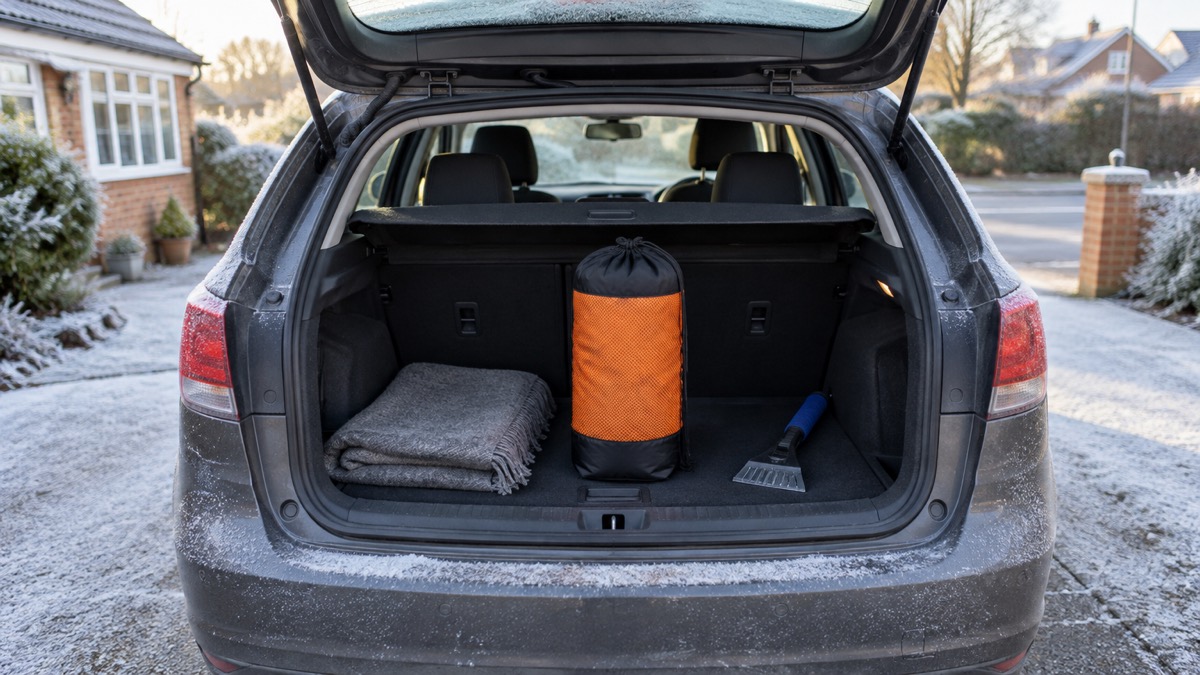
Weight matters more than it sounds. A car kit that is too heavy gets left at home, and a home kit that is too bulky gets moved to the loft. At 385g the bag is light enough to go in every vehicle and still leave room for the rest of a car kit1. Nottinghamshire County Council's winter driving advice lists warm clothes and a blanket, boots or sturdy footwear, a first aid kit, a torch and spare batteries, and personal medication8. The survival bag sits alongside the blanket rather than replacing it: the blanket is for wrapping around several people or for draping over a seated passenger, the bag is for one person who needs to hold heat in.
If you are weighing up what to carry, our guide to what to keep in your car in case of a breakdown or storm sets the bag in the context of the rest of a vehicle kit, and survival bag or foil blanket compares the two approaches directly.
Fit, hood and closure for a fully clothed adult
The maker gives the size as one-size-fits-all, suitable for a fully clothed large adult1. That is the key phrase: you do not take your clothes off to get in. The bag is designed to go over what you are wearing, which is exactly what you want in an emergency, because removing clothing outdoors in cold weather loses heat and takes time.
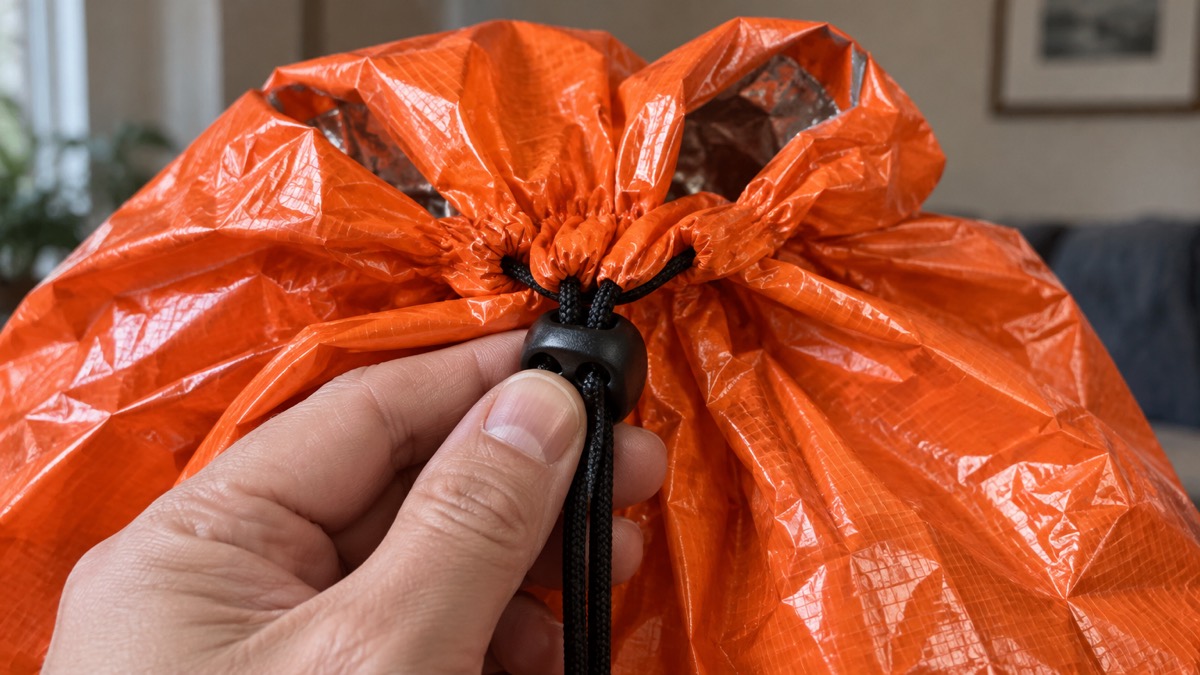
The top can be closed to form a protective hood, with a drawcord and spring toggle for easy adjustment1. The maker also lists a resealable closure for convenient access and flexibility in use1. In practice that means you get in, pull the top up over your head, and tighten the drawcord so the hood stays put and the warm air stays in. The resealable closure lets you open and close the bag without destroying it, which is part of why it can be reused.
A good fit around the face and neck is the same principle official advice applies to other protective hoods. Fire and rescue service guidance on fire escape hoods says the hood is one size and must be a close fit around the neck, nose and mouth9. The comparison is not exact, because a fire escape hood filters smoke and a survival bag does not, but the fitting lesson carries over: a hood that gaps lets warmth out and weather in. UK health guidance on face coverings makes a similar point, that a good fit around the nose and mouth matters and multiple layers work best10. With the Blizzard bag, tighten the drawcord until the hood sits close, but leave yourself able to breathe easily and to see out.
It stays waterproof, windproof and warm even when wet
The maker describes the bag as fully waterproof and windproof, and says it remains effective in a wide range of temperatures, down to -40°C, and maintains performance even when wet1. That last point is the one that separates it from a down sleeping bag, which loses much of its insulation when soaked. For a UK household, wet is the normal condition of an emergency: rain on a motorway hard shoulder, sleet on a hill walk, a soaked coat after a flood evacuation.
Official advice is built around staying dry for the same reason. Ceredigion County Council's snow and ice advice says to dress in several layers of light loose fitting clothing with a water repellent outer layer, and to keep dry4. The NHS in Wales says the same: keep dry to prevent loss of body heat3. A waterproof bag is a way of keeping dry when you have already got wet or when you have nowhere else to shelter.
It is worth being clear about what waterproof means here. The maker's claim is about the bag's own fabric and construction, not about the person inside staying dry in every circumstance. If you get into the bag in wet clothes, you will still be wet, but the bag will keep the wind and rain off and hold the heat your body produces. That is the difference between a cold wait and a dangerous one.
Storage and reuse in a home or vehicle kit
The maker says the bag can be stored indefinitely without being affected by temperature or moisture, retaining its functionality1. It is also described as durable and reusable, crafted for repeated use without losing performance1. That combination is unusual in emergency kit: most of it has a shelf life, and this does not. It means you can put one in a car and forget about it, check it once a year, and expect it to work.
Where to keep it follows the same logic as any other emergency kit. Official guidance on grab bags says to keep them upstairs or near your door11. Carmarthenshire Council's household advice says to keep your kit in a safe place at home where you can reach it easily, in a waterproof bag12. Denbighshire Council suggests plastic boxes or backpacks to keep supplies together, in a designated place that all household members know13. For a survival bag, the practical version is: one in the car, in the same bag as the ice scraper and the blanket, and one in the home kit, near the door or with the torches, so you can find it in the dark.
The maker describes the bag as an essential component of a vehicle emergency kit, particularly for those travelling in areas prone to severe weather1. That is a fair description of much of the UK in winter. If you want to build the rest of the kit around it, our guides to the household emergency pack at home and the grab bag set out what else official advice says to include, and where and how to store your supplies safely covers keeping it all findable.
How to open and use it
The maker's instruction is specific: start by tearing the pack open at the red pre-cut slit located at its base, then unroll and stretch the bag sideways so all cells are fully extended1. The stretching matters. The bag's insulation depends on the cells opening out, so a bag that is shaken out half-heartedly will not give you the warmth it is rated for.
A sensible order of use, drawn from the maker's instructions and general cold weather advice:
- Get out of the wind and off the ground if you can. NHS Scotland's hypothermia guidance says to move the person inside or somewhere sheltered, keep them out of the wind and off the ground, for example with a backpack underneath them14.
- Open the pack at the red slit and unroll the bag1.
- Stretch it sideways so all the cells are fully extended1.
- Get in fully clothed, hat on, and pull the top up into a hood1.
- Tighten the drawcord and spring toggle so the hood sits close1.
- Stay put and wait for help, or move only if you must, taking care on ice and uneven ground.
If you are helping someone else, the same NHS Scotland guidance is the frame: shelter them, keep them off the ground, and keep them warm while you wait14. The NHS advises anyone who has fallen to keep warm while waiting for help by covering themselves with anything they can reach7. A survival bag is a better version of that.
CT scans, X-rays and medical examinations
The maker states the bag is designed to be compatible with CT scans and X-rays, facilitating medical examinations without removal1. That is a useful feature in a specific situation: someone wrapped in the bag after an accident or in cold weather who needs imaging can stay wrapped while the scan is done. It is the maker's claim about its own product, and clinical staff will make the final call on what happens in a scanner. If you are the patient, follow their instructions.
High visibility colour and being seen
The maker lists the colour as high visibility orange1. For a household, that is a practical benefit rather than a fashion choice. If you are waiting at the roadside, on a verge or on a hillside, a bright orange bag is easier for a recovery driver, a passer-by or a rescue team to spot. It does not replace a high visibility jacket if you are working near traffic, and it does not make you visible in the dark on its own. Our guide to why to carry a hi-vis jacket and blanket in the car covers the clothing side of being seen.
Reflexcell material and who uses the bag
Reflexcell is the material the bag is made from, in three layers1. The maker's account is that Derek Ryden, an engineer and active mountaineer, developed it about 15 years ago to be more effective than traditional plastic bivvy bags and lighter than conventional sleeping bags2. The maker states that a Blizzard Survival Blanket made from Reflexcell is endorsed by the US Army Medical Center Directorate of Combat and Doctrine Development and used exclusively in training Army medics for treating hypothermia1. The maker lists military personnel, emergency services, mountain rescue teams, walkers, climbers, cavers, canoeists, ski mountaineers and adventure racers among its users1.
For a household, the relevant part is not the list of users but the reason they carry it: it is light, small, waterproof and warm, and it works when someone has stopped moving. The same reasons apply to a car kit, a home kit and a bag kept at work in case you cannot get home. If you want to compare it with the simpler options, our pages on the Blizzard EMS Survival Blanket and on foil blankets set out what each does.
Moving while inside, and packed size differences
The maker states the bag allows full mobility1. That means you can shuffle, sit up and turn over in it, which matters if you are waiting in a car seat or need to move a short distance. It does not mean you can walk normally in it. Official winter safety advice warns against carrying a heavy bag on ice because it shifts your weight unevenly15, and a survival bag around your legs has a similar effect. If you have to move, get out of the bag, move, and get back in.
On packed size, the maker's page gives two figures: 24cm x 11.5cm x 5cm in the specification table and 23 x 11 x 4 cm in the FAQ1. Either way it is small enough for a glovebox or a rucksack lid.
UK availability and where to get help
The maker's product page lists the bag as in stock1. Availability changes, so check before you rely on buying one at short notice. If you cannot get one, a foil blanket or another survival bag still gives you a layer of warmth, and our guide to survival bag or foil blanket explains the difference.
For help in cold weather, the NHS 111 service can advise on non-emergency health concerns, and 999 is for emergencies. If you are worried about a neighbour, family member or someone who lives alone, official advice is to check on them during cold weather, and our guide to extra help in an emergency covers the Priority Services Register and other support for older, disabled and medically dependent households. Age UK's figures on excess winter deaths underline why this matters, and the charity's advice on layers and warm fibres is a useful complement to a survival bag6. The bag is in stock in the UK1.
Sources (15)
- Blizzard 3 Layer Survival Bag, Steroplast, 2026-10-28
- Blizzard Blankets Compact Blanket 2 Layer, Steroplast, 2026-10-28
- Cold weather advice, West Midlands Ambulance Service NHS Foundation Trust, 2026-05-20
- Snow and ice, Ceredigion County Council, 2026-10-29
- Power cut plan, Northern Powergrid, 2026-10-26
- Excess winter deaths, Age UK, 2014-11-28
- Falls, NHS, 2025-03-06
- Winter driving advice, Nottinghamshire County Council, 2026-10-29
- Fire escape hoods, Scottish Fire and Rescue Service, 2025-03-11
- Living safely with respiratory infections including COVID-19, UK Government, 2022-04-01
- Resident grab bags, Harborough District Council, 2026-10-29
- Get prepared, Carmarthenshire County Council, 2026-10-25
- Emergency supplies kit, Denbighshire County Council, 2020
- Hypothermia (low body temperature), NHS inform, 2026-07-15
- Your Health Guide Winter 2025, NHS Western Isles, 2025-12
 Lifesystems Survival Bag