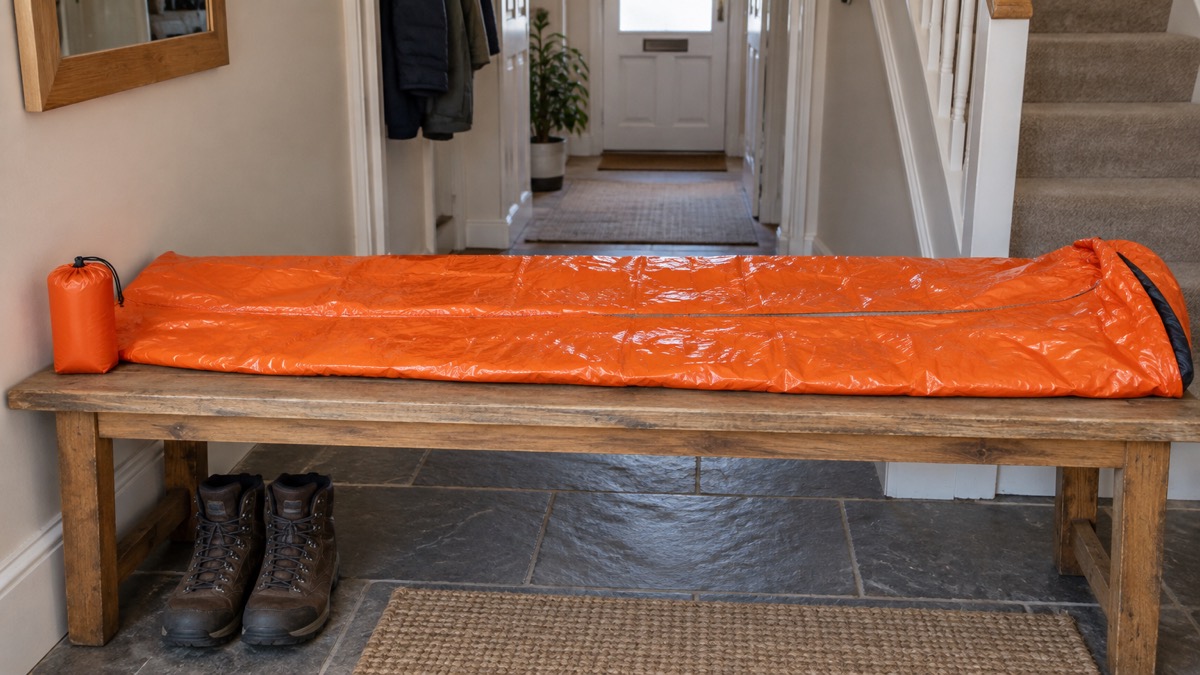
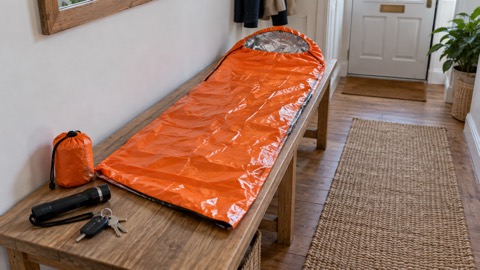
The Lifesystems Survival Bag is a bright orange polyethylene bag that you climb into when the weather turns and you cannot get out of it. It is not a tent and not a blanket: it is a windproof and waterproof layer that covers the whole body, packs down to 10 x 18 x 3cm, and weighs 290g1. Lifesystems describes it as a durable, lightweight emergency survival bag designed to provide vital protection when conditions change1.
For a household, the sensible place for one is in the rucksack that goes on a hill day, a long walk or a winter journey, not in the cupboard under the stairs. Lifesystems is direct about this: "Everyone on the hills should find space inside their rucsac for one of these. You'll be glad you have it when the going gets tough"1. If you are building a household kit rather than a hill kit, the emergency kit section sets out what a home pack and a grab bag should hold, and the survival bag or foil blanket comparison helps you decide which of the two belongs in the car.
What the Lifesystems Survival Bag is for
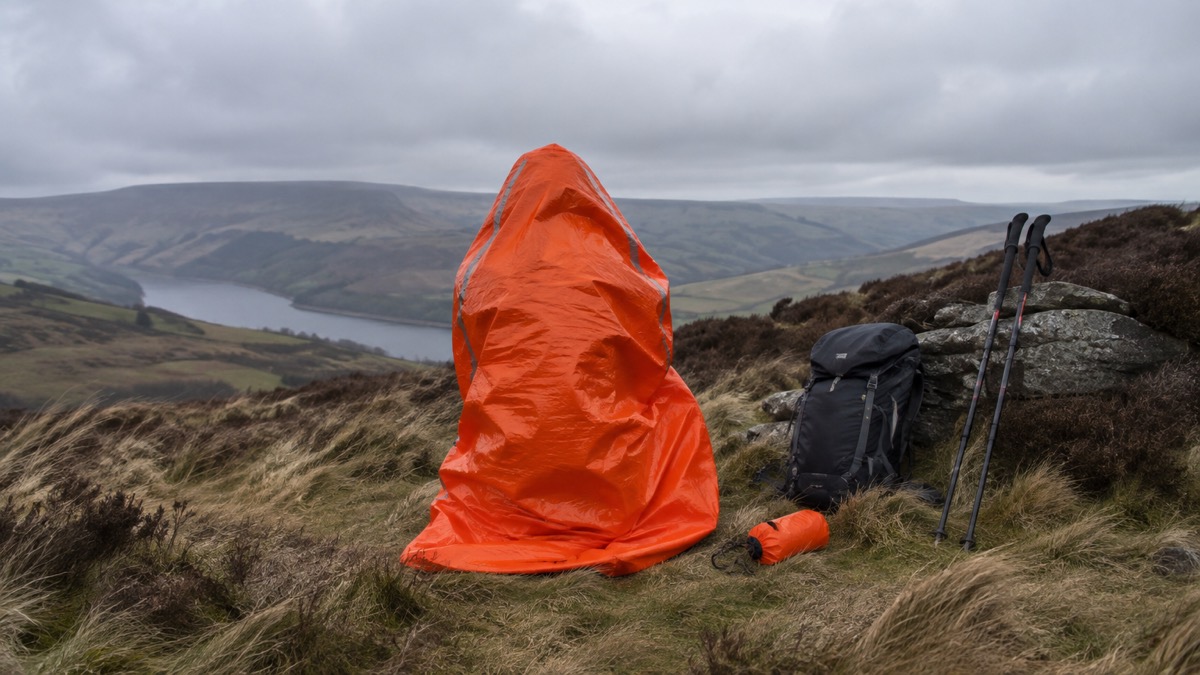
The bag exists for the moment when the weather arrives faster than you expected: a squall on a ridge, a walk that runs into dusk, a breakdown on an exposed road. Its job is to stop wind and rain taking heat off you while you wait, and to make you easy to see. Lifesystems calls it an emergency survival bag designed to provide vital protection when conditions change1.
It is a single person's piece of kit. The maker's own description is of whole body coverage with a tapered design, with side bellows for increased internal space so the bag is not pressed against your legs1. That tapered shape is what lets it sit over boots and a pack without ballooning.
The bag is also a signalling aid. The bright orange colour improves visibility in poor conditions, and the maker says it can be used as a signalling aid when assistance is required1. SOS instructions are printed on the bag itself, so the person inside does not have to remember a procedure in the cold1.
Where it fits in a wider kit is worth being clear about. Official household guidance tends to ask for warm, wind and rainproof clothing, strong shoes, a torch and a radio with spare batteries in a grab bag2, and for a sleeping bag or warm blanket for each person at home3. A survival bag is the outdoor version of that same idea: a layer that keeps the weather off one person when there is no building to step into. It does not replace warm clothing, and it does not replace a blanket at home.
Specifications
The figures below are the maker's own, from the Lifesystems product page1. There is no retailer specification in this article to set against them.
| Specification | Figure |
|---|---|
| Packed dimensions | 10 x 18 x 3cm1 |
| Weight | 290g1 |
| Unpacked dimensions | 105 x 210cm1 |
| Capacity | One person with equipment, or up to two people in an emergency1 |
| Material | Tough polyethylene with welded seams1 |
| Weather protection | Windproof and waterproof1 |
| Colour and markings | Bright orange, SOS instructions printed on the bag1 |
| Design | Whole body coverage, tapered, side bellows for internal space1 |
| Endorsement | DofE Recommended Kit1 |
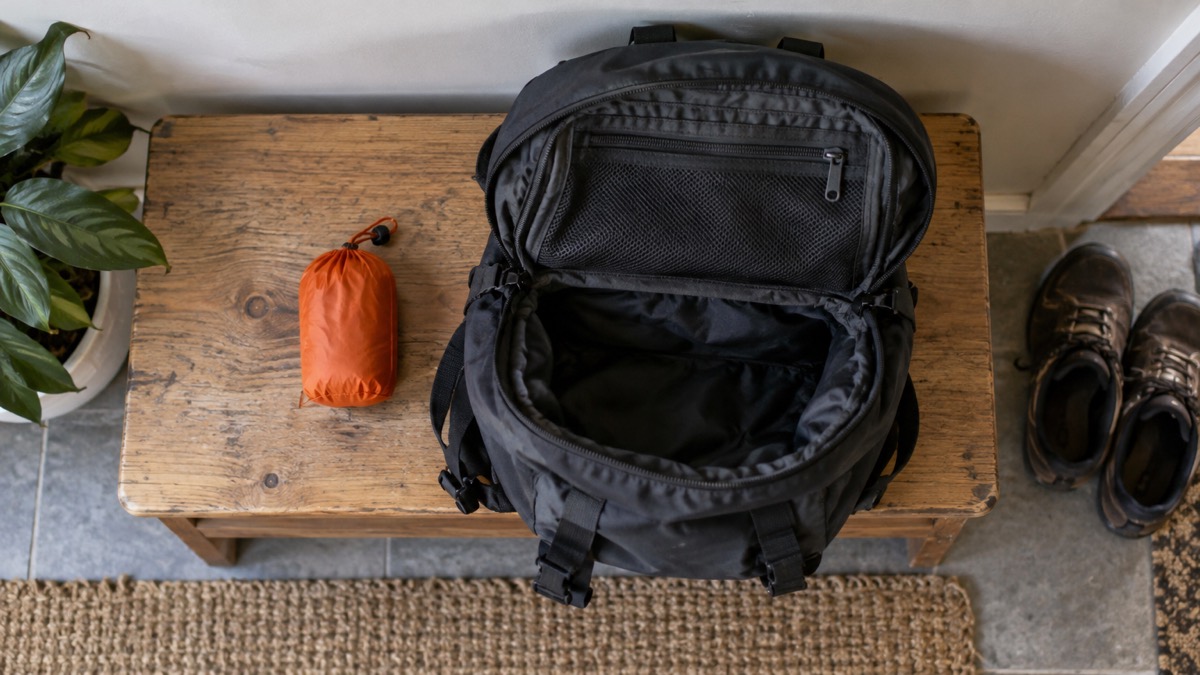
Two of those numbers decide whether it comes with you. At 290g and 10 x 18 x 3cm it is light and small enough to live in a rucksack lid or side pocket without a second thought, which is the point: kit you leave at home because it is bulky is kit you do not have1. At 105 x 210cm unpacked it is long enough to lie in and wide enough to sit up in with a pack beside you1.
The maker's product page carries an overall rating of 4.7777777 out of 5 from 9 reviews1. That is a small sample and it is the maker's own page, so treat it as a signal of satisfaction rather than evidence of performance.
Material and how it behaves in weather
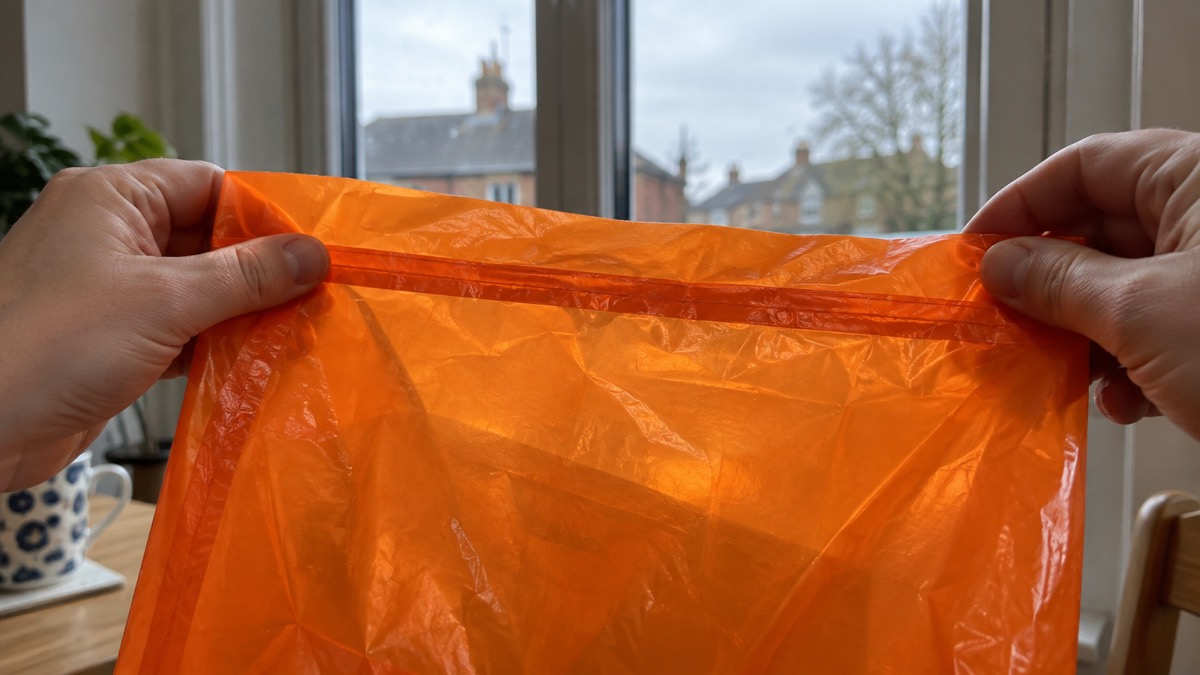
The bag is made from tough polyethylene with welded seams, and Lifesystems rates it as windproof and waterproof protection1. Polyethylene is the same family of material as heavy duty plastic sheeting and bags, which is why the bag is light for its size and why the seams, rather than the sheet, are the part to look after. Welded seams are stronger and more watertight than stitched ones, but a weld can still split if the bag is dragged over rock or caught on a gate.
Windproof matters as much as waterproof. Most of the heat you lose outdoors in bad weather goes with the wind stripping warm air off your clothing, and a sealed bag stops that. The trade-off is condensation, covered below.
Room for one person with kit, or two in an emergency
Lifesystems says the bag comfortably accommodates one person with equipment, or up to two people in an emergency1. Those are two different uses and it is worth keeping them apart.
- One person with kit: the normal case. You get in with boots on and your pack either inside with you or tucked against the bag. The side bellows give the extra internal space that makes this work1.
- Two people in an emergency: a shared bag is warmer than two people shivering separately, but it is cramped and it is not what the bag is shaped for. Treat it as a way to get two people through a wait, not a plan for a night out1.
If you are packing for a household rather than one walker, the same logic applies to blankets and bedding at home: official guidance suggests a sleeping bag or warm blanket for each person, with extra bedding considered in winter3, and foil blankets at one per household member in a flood kit4. A survival bag is a personal item, so one per person who walks or travels is the sensible rule.
Bright orange, with SOS instructions printed on it
Visibility is a safety feature in its own right. The bright orange colour improves visibility in poor conditions and can be used as a signalling aid when assistance is required, and SOS instructions are printed on the bag1. In practice that means three things:
- Get inside the bag rather than sitting beside it, so the colour is a block rather than a crumpled heap.
- If you are waiting to be found, use the printed SOS instructions rather than trying to remember a signal pattern1.
- Keep the bag where you can reach it without unpacking everything, because the moment you need it is the moment your hands are coldest.
The same principle runs through household emergency advice. A grab bag should hold a torch and a battery or wind-up radio with spare batteries5, and a portable power bank, whistle and torch appear on standard kit lists6. Being findable and being able to signal are part of the kit, not an afterthought.
Condensation inside, especially near the feet
A sealed bag traps moisture. Lifesystems is straightforward about it: "Some moisture collects inside which can leave your sleeping bag a little damp, especially near the feet area, but it rea"1. The bag keeps rain out and keeps your own moisture in, and the feet end is where it gathers.
What to do about it:
- Vent when you can. If conditions allow, open the bag slightly at the head end rather than sealing it completely.
- Keep your sleeping bag as dry as you can. If you are using the bag over a sleeping bag, expect dampness near the feet and plan to air and dry the sleeping bag at the first opportunity1.
- Dry the survival bag fully after use. Open it out, wipe it down and let both sides dry before it goes back in the rucksack.
- Do not store it wet. A bag packed away damp will smell and the seams will suffer.
Carrying one in your rucksack on the hills
The maker's advice is direct: everyone on the hills should find space inside their rucsac for one of these1. That is the whole use case in a sentence. It is a hill and travel item first, and a household item second.
For a household, the sensible pattern is to treat the survival bag as part of the outdoor layer of your kit, alongside the things official guidance already asks for:
- Warm, wind and rainproof clothing and strong shoes for outdoors2
- A waterproof torch and spare batteries, checked regularly2
- A radio and spare batteries, checked regularly2
- A first aid kit, with a smaller one for when you go out7
- A personal kit in a backpack, kept where everyone knows, for use if you have to leave6
The rucksack and holdall guide covers how to carry a personal kit, and the waterproofing guide covers keeping it dry. If you are packing for a car, the car kit guide sets out what to keep in the boot, and the high visibility blanket page explains why visibility kit earns its place.
DofE recommended kit and the BMC partnership
Lifesystems lists the Survival Bag as DofE Recommended Kit1. For anyone buying for a Duke of Edinburgh's Award expedition, that is the relevant label: it tells you the maker's product is on the recommended list, not that every participant must carry this particular bag.
Lifesystems also states that it has partnered with the British Mountaineering Council (BMC) to support climbers, hill walkers and mountaineers through improved safety awareness, education and access to trusted outdoor safety equipment8. That is a statement about the maker's work with the BMC, not a claim about how this bag performs.
The DofE resources are the practical part. Lifesystems says its kit lists and expedition resources, produced with the Duke of Edinburgh's Award, are available to download, share or print, from Lifesystems and Lifeventure8. Use the list for your award level and expedition rather than a generic packing list, because the required kit changes with route, season and level.
Using it with a sleeping bag, and reusing it afterwards
The bag is designed to go over a sleeping bag, not instead of one. Whole body coverage with a tapered design and side bellows gives room for a sleeping bag inside1, and the maker's own note about moisture near the feet assumes you are using one1.
On reuse, the maker gives no instruction for this bag, so be conservative. Polyethylene with welded seams can be wiped clean and dried, but a split seam or a puncture lets wind and water straight in. After any use, open the bag out, dry both sides, inspect the seams and the base, and replace it if it is damaged. If you want a comparison of single use and reusable options for a household kit, the foil blanket guide covers the alternatives, and the Blizzard 3 Layer Survival Bag page describes a different design if you are weighing up what suits your walking.
Where it fits in a household emergency kit
A survival bag is a personal outdoor item, and it earns its place in a household kit only if someone in the household walks, cycles, works outside or drives in exposed places. The rest of the household kit is a separate job, and the official lists are consistent about what it should hold:
| Kit | What official guidance suggests | Where it lives |
|---|---|---|
| Home emergency pack | Food and bottled water for 3 days, not relying on the fridge or freezer4; water for drinking and sanitation3; a sleeping bag or warm blanket for each person3 | A designated place all household members know9 |
| Grab bag | Prescribed medication and medical aids, documents in a waterproof wallet, keys, toiletries, radio and torch with spare batteries, first aid kit, phone and charger, cash, warm waterproof clothing and blankets, bottled water, ready-to-eat food and an opener5 | Upstairs or near your door10 |
| Personal kit | A smaller kit in a backpack for evacuation, with everyone knowing where it is kept6 | With the grab bag |
| Outdoor layer | Warm, wind and rainproof clothing, strong shoes, torch and radio with spare batteries2; a survival bag for anyone on the hills1 | In the rucksack |
The household emergency pack guide and the grab bag guide go through those lists item by item, and the household checklist pulls them together. If you are storing kit for a household with babies, older people or anyone with a health condition, the extra help section covers the additions that matter.
Sources (10)
- Lifesystems Survival Bag, Lifesystems, 2026-10-28
- Emergency grab bag, Buckinghamshire Council, 2023-08-25
- Emergency kit, Lincolnshire County Council, 2026-10-29
- Food and bottled water for 3 days, West Yorkshire Prepared, 2026
- Are You Ready booklet, Culham Parish Council, 2025-09
- Preparing for emergencies, North Hertfordshire District Council, 2015-01-12
- First aid kits, nidirect, 2025-12-04
- Lifesystems, Lifesystems, 2026-10-28
- Emergency Supplies Kit, Denbighshire County Council, 2020
- Flood Grab Bag, Harborough District Council, 2026-10-29
 Blizzard 3 Layer Survival Bag