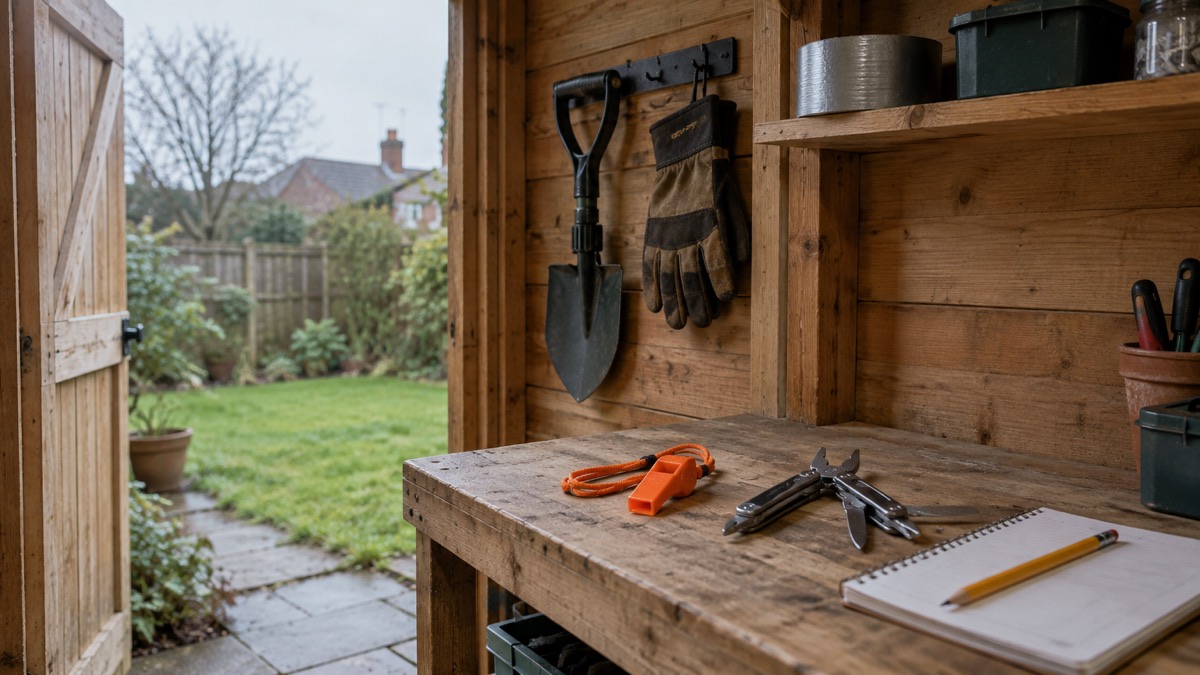
Every UK household emergency kit needs a handful of small tools, and they cost little and take up almost no space. The core items that appear again and again on official council, fire service and government kit lists are a whistle, duct tape, heavy duty gloves, a penknife or safety knife, a notepad and pencil, and the tools you would need to turn off your gas, water and electricity1. None of these is exotic: the point of the list is that in a flood, a storm or an evacuation you will want to signal, cut, tape, write and isolate your supplies, and you will not have time to hunt through drawers.
This page covers what each of those tools does, what to keep in the car as well as the house, and how to find and use the shut-offs for your utilities. It sits alongside the wider advice on what to keep in a household emergency pack and what to pack in a grab bag, and the full household preparedness checklist.
The tools that earn their place in your kit
The tools worth keeping are the ones that appear on official lists because they have repeatedly proved useful. Duct tape appears alongside plastic sheeting and a dust mask on the North Hertfordshire District Council kit list, a combination aimed at sealing and temporary repairs2. Heavy duty gloves, needles and thread, a manual can opener and a safety knife all appear on Denbighshire County Council's emergency supplies kit list3.
A penknife is named directly on Neath Port Talbot Council's kit checklist, which suggests keeping a pencil, paper, penknife and whistle at home in the event of an emergency4. The Scottish Borders community resilience plan for Gavinton, Fogo and Polwarth lists the same pairing, pencil and paper, penknife, whistle, alongside a first aid kit, spare keys and a wind-up torch8. Nottinghamshire County Council adds a basic tool kit to the optional items in an emergency kit, together with antibacterial hand wipes or gel and a checklist of what the kit contains9.
| Tool | Where it appears |
|---|---|
| Duct tape | North Hertfordshire kit list, alongside plastic sheeting and a dust mask2 |
| Heavy duty gloves | Denbighshire emergency supplies kit3 |
| Penknife or safety knife | Neath Port Talbot and Denbighshire lists3 |
| Manual can opener | Denbighshire list3 |
| Basic tool kit | Nottinghamshire optional items9 |
Choose these by function rather than by brand. A whistle needs only to be loud and attached to something you carry: the Lifesystems Safety Whistle, for example, is listed by its maker as DofE Recommended Kit, which tells you it meets a recognised standard for expedition use10. A penknife or multi-tool needs a blade you can lock or handle safely, a can opener if your food stores are tinned, and enough weight to be usable without being too heavy to carry. Heavy duty gloves should be thick enough for moving debris; disposable gloves belong in your first aid kit instead, and are covered below.
A whistle for signalling, and how to carry it
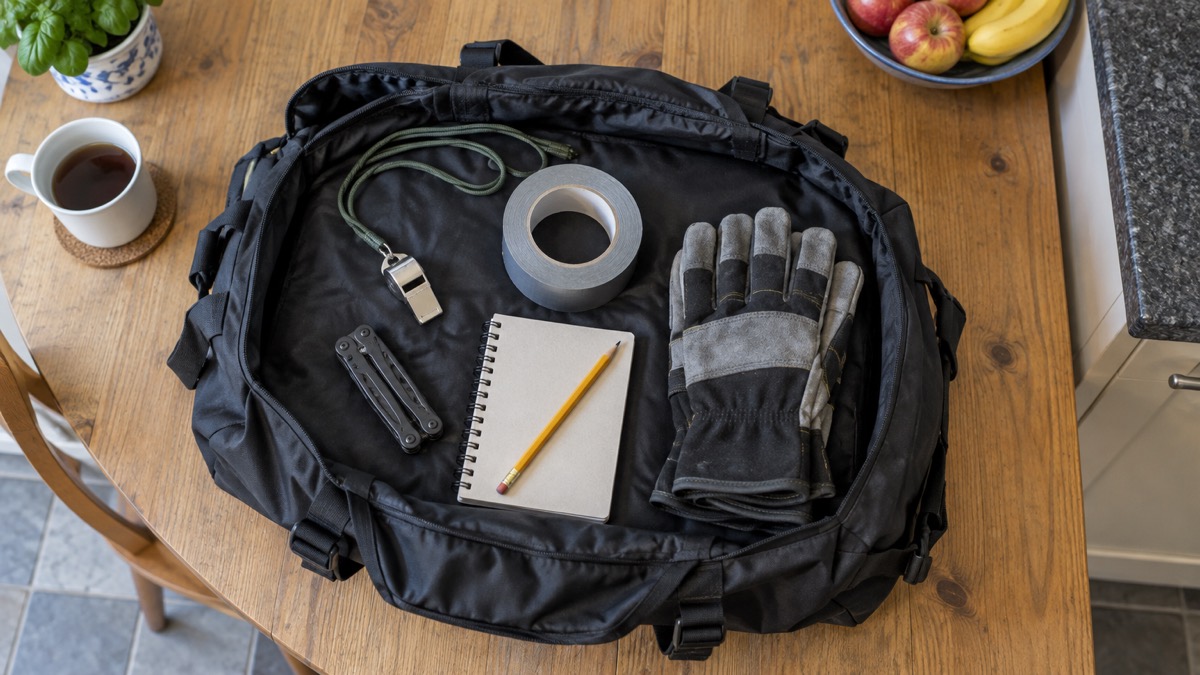
The whistle is the smallest item on the list and one of the most useful. Keep one in the grab bag and one in the car kit, and make sure each person in the household knows where theirs is.
Attach it to the outside of the bag or to a zip pull rather than burying it at the bottom, because a signalling tool you cannot reach quickly is of no use. If you walk or cycle in remote areas, carrying one on your person rather than in a bag is the better habit, since bags can be separated from you in a fall or in water. The Lifesystems Safety Whistle is one widely available example, and its maker lists it as DofE Recommended Kit10.
Duct tape, plastic sheeting and heavy duty gloves
Duct tape earns its place by doing jobs nothing else in the kit can do. Official guidance lists it with plastic sheeting and a dust mask as part of an emergency kit's basic contents2. In practice that combination covers taping sheeting over a broken window after a storm, sealing a draught or a leak temporarily, marking off an area, and holding things together until a proper repair is possible. A full roll is bulky, so many households keep a shortened roll or wrap a length of tape around a card or a water bottle to save space.
Heavy duty gloves are listed by Denbighshire County Council among the tools and equipment in an emergency supplies kit3. Their job is protecting your hands: after a storm or flood you may be moving debris, broken glass or wet, contaminated material, and cuts to the hands are both likely and hard to treat when help is stretched. Keep them where the rest of the kit is, not in the shed, so they are to hand when the kit comes out.
Disposable gloves do a different job and live in the first aid kit. Keep both types: heavy duty gloves for the rough work, disposables for anything involving blood or bodily fluids.
"If gloves are available in your first aid kit, wear them whenever you're cleaning wounds, handling bodily fluids, or disposing of waste."
A penknife or multi-tool in the home kit and grab bag
Official UK kit lists name a penknife or a safety knife directly. Neath Port Talbot Council's emergency kit checklist says to keep a pencil, paper, penknife and whistle at home in the event of an emergency4. Denbighshire County Council's list includes a safety knife alongside a manual can opener, needles and thread, and a fire extinguisher every family member knows how to use3. The Gavinton, Fogo and Polwarth community plan pairs the penknife with pencil, paper and a whistle in the kit it asks households to keep in a waterproof bag8.
What matters is what the tool can actually do for you. A penknife or multi-tool covers opening tinned food if you have not packed a dedicated can opener, cutting tape, cord and packaging, and small cutting jobs during repairs. If your food stores are largely tinned, a manual can opener is worth packing in its own right, since Denbighshire's list treats it as a separate item3. Keep any knife in the household kit or grab bag rather than loose in a pocket, somewhere every adult knows and children cannot reach, and check that the blade is still sharp and the tool still opens and locks as it should when you refresh the kit.
Paper and a pencil for notes and messages
Nearly every official kit list includes something to write with and on. Lincolnshire County Council's list says simply "Paper and pencil"5. Wiltshire Council's kit list includes a notepad and pencil6. Neath Port Talbot pairs pencil and paper with the penknife and whistle4. Argyll and Bute Council suggests a notebook and pen or pencil in the emergency box, alongside telephone numbers, insurance details and reference numbers for utility companies12. The Royal Borough of Windsor and Maidenhead's home emergency plan lists notebook and pen or pencil as grab bag items to consider13.
The reason is that emergencies generate information you will not remember. You may need to write down a phone number someone gives you, leave a message for a family member saying where you have gone, note the reference number of an insurance claim, or list what you have taken from the house. If phones are flat or the network is down, paper is the only record you have.
A pencil is the safer choice for the kit itself, and it is what the official lists name: they ask for paper and pencil, or a notepad and pencil, alongside the rest of the kit5. A pen is a reasonable addition, and several lists say "pen/pencil", so packing both costs nothing12. Keep the notepad with the kit rather than on a desk, and write your household's key phone numbers on the first page before an emergency, so the information is there even if you cannot think clearly.
Sanitary items and toiletries
Tools are only part of what a kit holds, and the toiletries section is where many households are underprepared. Nottinghamshire County Council lists sanitary items and toiletries among emergency kit contents9. Lincolnshire's list includes feminine supplies and personal hygiene items if required, and water for drinking and sanitation5. The government's Be Ready checklist includes hand sanitiser, wet wipes, and hygiene and bathroom products in a household emergency hygiene kit14. Lancashire's emergency pack advice adds toiletries including toothpaste, toothbrush and sanitary supplies, plus toilet paper, rubbish bags, anti-bacterial hand wipes or gel, and baby supplies such as formula and nappies15.
Denbighshire's emergency supplies kit list goes furthest on sanitation, suggesting moistened towelettes, soap, hand sanitiser, liquid detergent, toothpaste, toothbrushes, shampoo, deodorants, hairbrush, feminine supplies, heavy duty plastic rubbish bags and ties for personal sanitation, toilet paper, a medium sized plastic bucket with a tight lid, disinfectant and household chlorine bleach3. North Hertfordshire adds toiletries and sanitary items, baby supplies such as nappies and ready-made formula, paper towels, paper cups and plates, and disinfectant to its list of specific needs2.
Pack for your own household, not for a hypothetical one:
- Basics: toothbrush, toothpaste, soap, hand sanitiser, wet wipes, toilet paper14
- Sanitary supplies: feminine supplies and personal hygiene items if required5
- Rubbish bags and ties: for personal sanitation and waste3
- Babies: nappies and ready-made formula2
- Pets: litter bags and other sanitation needs16
- Medicines: essential medicines in a flood kit17
If you have pets, Wiltshire and Swindon Prepared advises including sanitation needs such as litter bags in a pet emergency kit16. Northern Ireland's flood preparation advice includes essential medicines in the flood kit17. Full lists for these are on the hygiene and sanitation supplies and supplies for babies and young children pages.
A shovel for the car kit
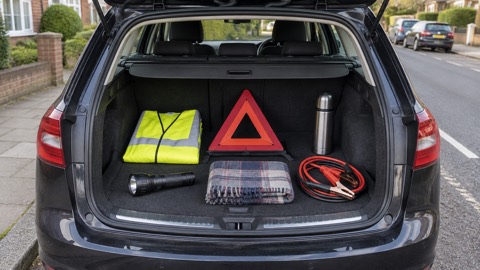
The car kit needs its own tools, and a shovel is on every official winter driving list. Warwickshire County Council's road safety advice says: "Prepare an emergency kit that includes essential items like a snow shovel, grit or cat litter for traction, ice scraper," along with spare warm clothing, a blanket, a torch and a fully charged mobile phone18. Traffic Scotland's vehicle emergency travel kit includes a shovel year-round, alongside a first aid kit, jump start cables, an empty fuel can, water and food, and a phone backup battery19. Anglesey County Council's winter driving tips recommend carrying a tow rope, a shovel, Wellington boots, a hazard warning triangle, de-icing equipment, a first aid kit in good order, a working torch, a car blanket, warm clothes, emergency rations including a hot non-alcoholic drink in a flask, and a fully charged mobile phone20.
Ready Scotland's car emergency kit list adds battery jump leads, a reflective warning sign, a map, a snow shovel, and some food and a warm drink in a flask21. Neath Port Talbot also advises keeping jump leads in your car4.
| Item | Why it is on the list | Source |
|---|---|---|
| Snow shovel | Clearing snow from around wheels and doors | Warwickshire, Traffic Scotland, Anglesey, Ready Scotland18 |
| Ice scraper or de-icing equipment | Clearing windows before driving | Warwickshire, Anglesey18 |
| Grit or cat litter | Traction on ice | Warwickshire18 |
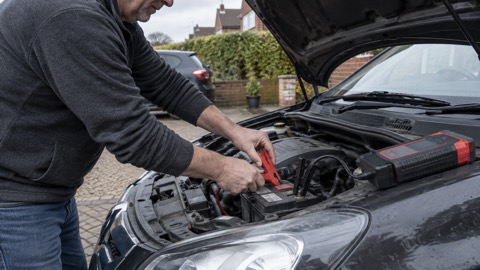
| Jump leads or jump starter | Restarting a flat battery | Traffic Scotland, Ready Scotland, Neath Port Talbot19 |
| Hazard warning triangle or reflective sign | Warning other traffic | Anglesey, Ready Scotland20 |
| Tow rope | Recovery from snow or mud | Anglesey20 |
| Wellington boots | Walking in snow and flood water | Anglesey20 |
A folding shovel takes less boot space than a full-size one and still clears snow from around a wheel. Keep it in the car through the winter rather than carrying it in and out, and keep it with the rest of the kit so nothing is missing when you need it. The full car list, including blankets and food, is on the what to keep in your car page, and portable jump starters are covered separately.
Turning off water, gas and electricity
The most important "tool" in your home is knowledge: how to shut off the three supplies that can turn an emergency into a disaster. Official advice is consistent on this point. The London Resilience Forum says to know how to safely turn off your electricity, water and gas supplies22, and the same advice appears from Warwickshire County Council7 and Nottinghamshire County Council9. The London Fire Brigade says to make sure you know how to turn off your gas, water and electrical supplies in an emergency23.
Essex Prepared's advice for evacuation is conditional: "Only if you have time and it is safe to do so, turn off/isolate electricity, gas and water supplies, unplug appliances and lock all doors and windows."24 Surrey County Council gives the same instruction for leaving home in an emergency25, and Essex Prepared's preparation step is simply to find out how to turn off home gas, electricity and water supplies26. The Met Office's thunderstorm advice goes further for that specific hazard, telling households to turn off gas, water and electricity supplies27. The London Fire Brigade's street flooding advice says that in an emergency you should be ready to turn off your gas supply, your water supply and your electricity supply, if possible23.
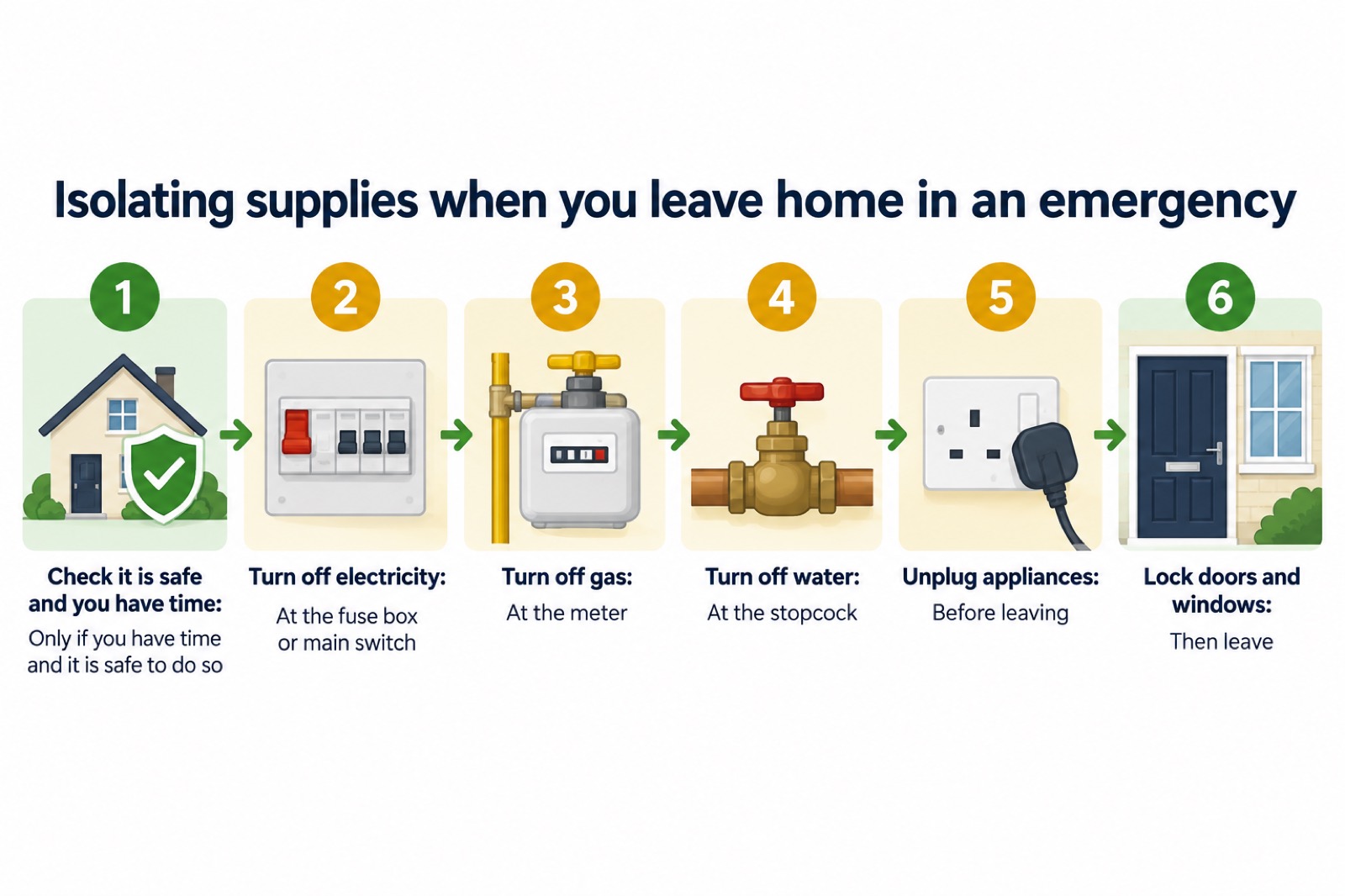
Do this before an emergency, not during one. Find each shut-off, check that it actually turns, and show everyone in the household who is old enough where they are.
Finding your stopcock
For water, Yorkshire Water explains that most properties have an external stopcock, "usually housed in a small metal or plastic cover (sometimes called a valve box) set into the ground near the property boundary or in the pavement outside"28. Go and find yours now: lift the cover, confirm you can see the valve, and check that it is not seized. If you have a leak, this is the valve that stops it, and knowing where it is before water is pouring through the ceiling is the difference between a nuisance and a flood. More on leaks and burst pipes is on the home emergencies page.
Where to keep your tools so you can reach them
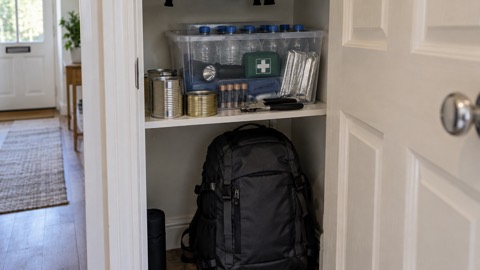
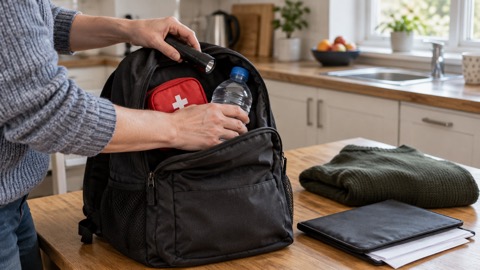
A kit you cannot find is not a kit. Northern Ireland's nidirect guidance on the household emergency kit says: "It should be kept somewhere in the house where everyone can get to it if needed."29 Denbighshire County Council suggests using plastic boxes or backpacks to keep the supplies together, and keeping the kit in a designated place that all household members know3. North Hertfordshire District Council adds a further step: prepare a household emergency kit and a smaller personal kit, for example in a backpack, for use should you need to be evacuated, and make sure everyone knows where the kits are kept2.
In practice that means:
- One home kit in a plastic box or backpack, in a designated place every household member knows3
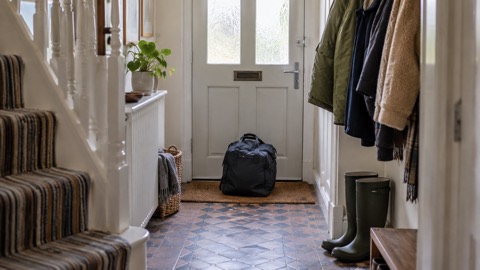
- One grab bag per person or one shared grab bag, smaller and ready to carry2
- One car kit kept in the car, so it is there when the car is19
- Everyone briefed, including children old enough to fetch the kit2
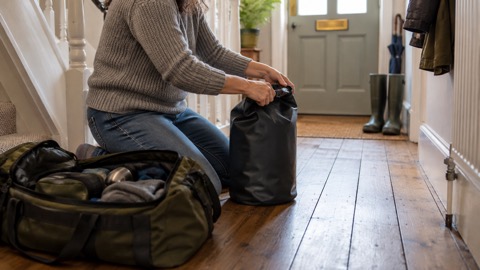
Keep the home kit somewhere it will survive the emergencies it is for: not in a cellar that floods first or a loft with a drop-down ladder that is hard to reach in the dark. The Gavinton, Fogo and Polwarth plan asks households to keep their kit in a waterproof bag8, which protects the contents and makes the whole kit carryable in one go. Choosing the right container is covered on choosing a rucksack or holdall and keeping supplies dry, and where to put it on where and how to store your supplies.
Checking and refreshing your kit
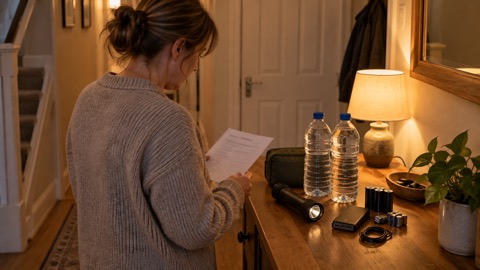
Tools do not expire, but the information around them does. Central Bedfordshire Council publishes an emergency kit checklist and emergency contacts list as a printable two-pager to fill out with personal details, and advises: "Don't forget to check once in a while to see if the details are still up to date, such as emergency phone numbers for family and medical providers."30 That check is the one that matters most for this page's contents: the notepad's first page of phone numbers, the utility reference numbers you wrote down, and the details of who collects the children are all useless if they are five years out of date.
Set a reminder to go through the kit a couple of times a year:
- Phone numbers and contacts: still current, still legible30
- Penknife or multi-tool: still present in the kit and working as it should
- Whistle: still in the grab bag and the car kit where you expect it
- Duct tape: still in the kit and usable
- Gloves: both pairs still present
- Toiletries and sanitary items: enough for the household, nothing run out
The wider job of checking dates and replacing used items is on the checking and restocking supplies page. The government's own checklist is explained on the Be Ready checklist explained page, and the question of how much to store overall is on how many days your supplies should last.
Sources (30)
- Be Ready for Emergencies, UK Government Be Ready campaign, 2026-10-21
- Preparing for Emergencies, North Hertfordshire District Council, 2015-01-12
- Emergency Supplies Kit, Denbighshire County Council, 2020
- NPT Prepared Emergency Kit Checklist, Neath Port Talbot Council, 2026-10-29
- Get Help and Advice in an Emergency, Lincolnshire County Council, 2026-10-29
- Planning for an Emergency Kit, Wiltshire Council, 2026-10-29
- Emergency Advice for Residents, Warwickshire County Council, 2026-10-29
- Gavinton, Fogo and Polwarth Resilient Community Plan, Scottish Borders Council, 2018
- Preparing for an Emergency, Nottinghamshire County Council, 2026-10-29
- Safety Whistle, Lifesystems, 2026-10-28
- What to Put in a First Aid Kit, St John Ambulance, 2026-10-29
- Preparing for Civil Emergencies in Argyll and Bute, Argyll and Bute Council, 2026
- Emergency Home Emergency Plan, Royal Borough of Windsor and Maidenhead, 2025-10
- Be Ready Checklist, UK Government Be Ready campaign, 2026
- Emergency Pack, Lancashire Prepared, 2026-10-29
- Your Pets, Wiltshire and Swindon Prepared, 2026-10-25
- Preparing for Flood, nidirect, 2025-09-11
- Road Safety, Warwickshire County Council, 2026-10-29
- Vehicle Emergency Kit, Traffic Scotland, 2026-10-29
- Winter Driving Tips, Anglesey County Council, 2026-10-29
- Emergency Kit, Ready Scotland, 2026-10-29
- Preparing for Emergencies, London Resilience Forum, 2026-10-26
- My Street is Flooding, London Fire Brigade, 2026-10-25
- Step 2: During an Emergency, Essex Prepared, 2026-10-29
- Homes Prepared, Surrey County Council, 2026-10-28
- Step 1: Preparation, Essex Prepared, 2026-10-29
- Stay Safe in a Thunderstorm, Met Office, 2026-10-25
- I've Got a Leak Emergency, What Do I Do?, Yorkshire Water, 2026-10-28
- Household Emergency Kit, nidirect, 2026-07-06
- Emergency Kits and Grab Bags, Central Bedfordshire Council, 2026
 30-Day Household Checklist
 Emergency Plan Template
 Supply Interruption Checklist
 Home Emergency Pack
 Grab Bags
 What to Keep in Your Car
 Important Documents
 Cash to Keep at Home
 How Many Days Supplies Last
 Storing Your Supplies Safely
 Checking and Restocking Supplies
 Rucksacks and Holdalls
 Keeping Supplies Dry
 Foil Blankets
 Portable Jump Starters