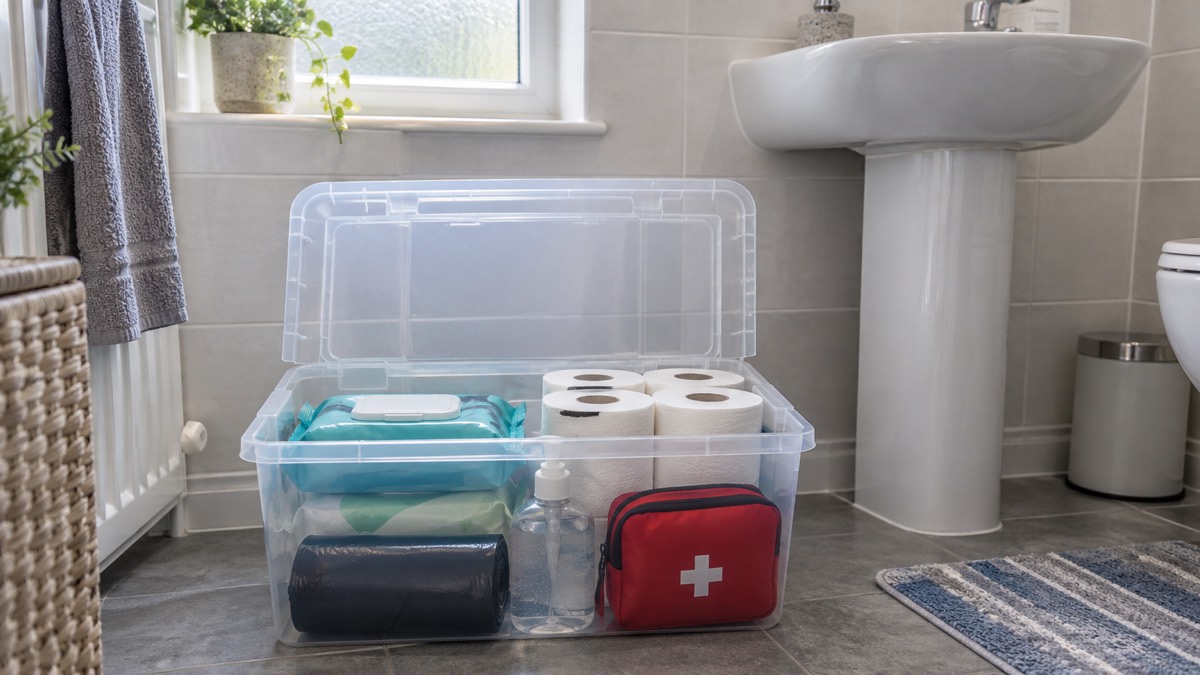
When the water stops running or the power goes off, staying clean is one of the things that keeps a household healthy. Every UK emergency kit list from central government down to parish councils puts hygiene items in the same breath as torches and first aid: wet wipes, rubbish bags and plastic ties for personal hygiene, hand sanitiser, toiletries, and sanitary and baby supplies1. This page sets out what to keep at home and what to pack in a grab bag, and what to do about the toilet when you cannot flush.
The core items are simple and cheap to gather. Lincolnshire Council's emergency advice lists wet wipes, rubbish or bin bags and plastic ties for personal hygiene, alongside water for drinking and sanitation1. The government's Be Ready household emergency plan says to keep hand sanitiser, wet wipes, and hygiene and bathroom products2. Denbighshire's emergency supplies kit goes further and lists the full sanitation set: moistened towelettes, soap, hand sanitiser, liquid detergent, toothpaste, toothbrushes, shampoo, deodorants, hairbrush, feminine supplies, heavy duty plastic rubbish bags and ties for personal sanitation, toilet paper, a medium sized plastic bucket with a tight lid, disinfectant and household chlorine bleach3.
Wet wipes, bin bags and plastic ties: the basics for staying clean
Three items appear on nearly every official list: wet wipes, rubbish or bin bags, and plastic ties. Lincolnshire Council lists all three for personal hygiene1. North Hertfordshire's emergency kit basics include rubbish bags with plastic ties, alongside hand sanitiser and wet wipes5. Lancashire's emergency pack advice adds toilet paper and anti-bacterial hand wipes or gel to the same group6.
Each item does a distinct job. Wet wipes clean skin when there is no water: hands, faces, and anywhere that needs freshening between proper washes. Bin bags hold the waste that piles up fast when the bins are not being collected, whether because of a storm, a strike or a flood, and they are the basis of an emergency toilet (covered below). Plastic ties, or strong tape, seal those bags so nothing leaks or smells, and let you store waste safely until collection resumes.
Buy heavy duty bags rather than the thinnest kitchen liners. Denbighshire's emergency supplies kit specifies heavy duty plastic rubbish bags and ties for personal sanitation uses3. Heavy duty bags are less likely to split when full, and they can double for other jobs: official sandbag guidance notes that in an emergency you can use refuse sacks, filled with garden soil, as an alternative to sandbags for flood protection7.
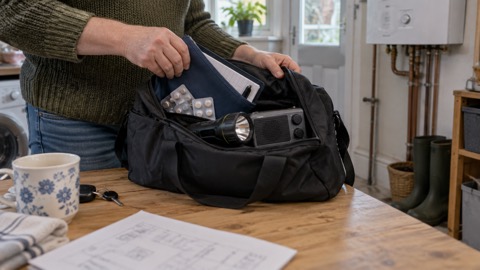
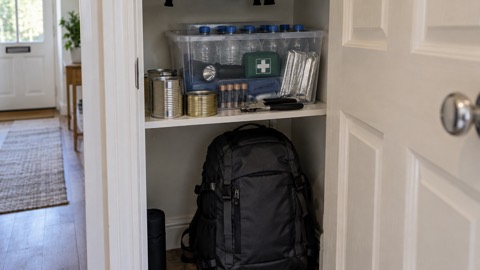
Keep the wipes, bags and ties together in the same box as the rest of your emergency kit, and keep a smaller set in your grab bag. North Hertfordshire advises preparing a household emergency kit and a smaller personal kit, for example in a backpack, in case you need to be evacuated, and making sure everyone knows where the kits are kept5. Denbighshire suggests using plastic boxes or backpacks to keep supplies together, kept in a designated place all household members know3.
Hand sanitiser and soap when you cannot wash normally
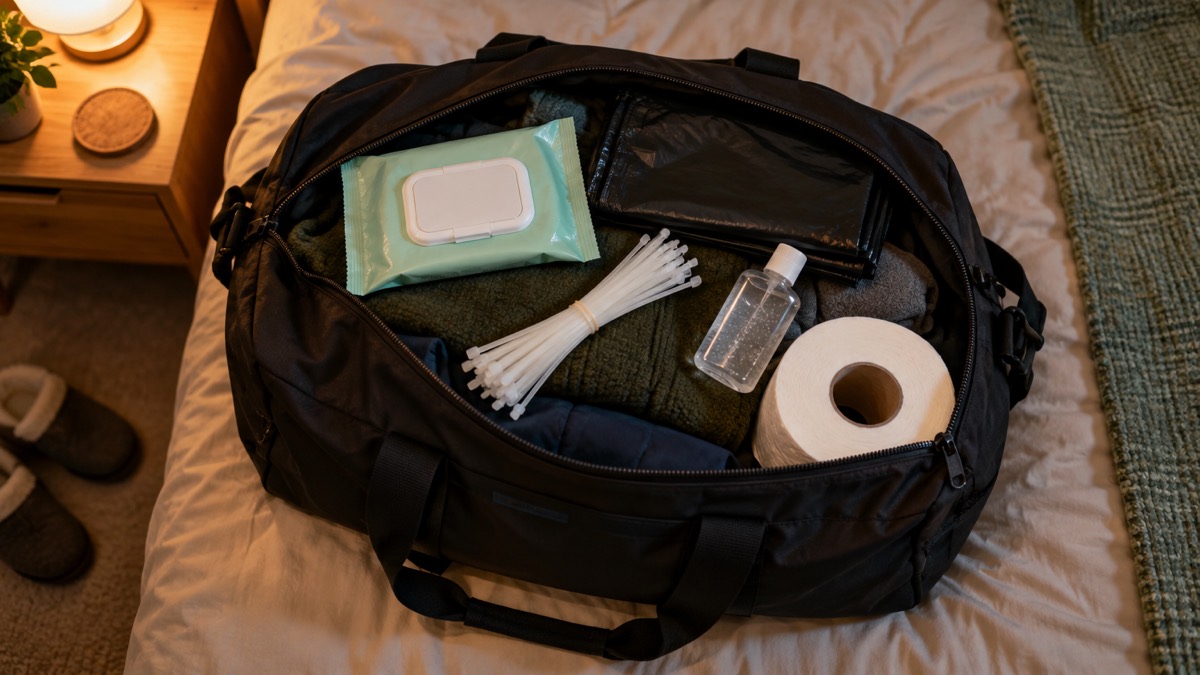
Hand hygiene is the single most important habit for limiting illness in an emergency, because stomach bugs and respiratory infections spread fastest when washing is hard. The government's infectious disease guidance is clear about the order of preference: hand sanitiser can be used to clean hands that are not visibly dirty if you do not have immediate access to soap and water8. Devon's public health advice says the same: if you do not have immediate access to soap and water, use alcohol-based hand rub if available9.
When the water supply itself is cut off, the advice extends further. The Food Standards Agency's flood advice states:
So the practical rule is: soap and water whenever any clean water is available, sanitiser or wipes when it is not, and sanitiser only on hands that are not visibly dirty. If hands are dirty, wipe them clean first with a wet wipe, then use the gel.
Keep both forms in your kit. Nottinghamshire's emergency kit advice lists antibacterial hand wipes or gel as optional kit contents10, and the Scottish Government's emergency kit guidance includes hand sanitiser and wet wipes for hygiene11. A bottle of gel plus a pack of wipes covers the two situations: gel for quick decontamination, wipes for removing visible dirt.
The same guidance covers coughs and sneezes. The West Mercia risk register promotes the "Catch it, Bin it, Kill it" habit: carry tissues to catch coughs or sneezes, bin the used tissues as soon as possible, and then wash your hands to kill germs12. That is exactly why tissues belong next to the sanitiser in your kit, and why the bin bags matter: used tissues need somewhere to go.
Toiletries to keep in your kit
Toiletries appear on every official list, usually as a single word, so it is worth spelling out what that means in practice. Denbighshire's emergency supplies kit gives the fullest list: moistened towelettes, soap, hand sanitiser, liquid detergent, toothpaste, toothbrushes, shampoo, deodorants, hairbrush, feminine supplies, toilet paper, and the sanitation items covered above3. Lancashire's emergency pack advice includes toiletries such as toothpaste, toothbrush and sanitary supplies6. Wiltshire's emergency kit checklist lists toiletries and a personal first aid kit13.
Pack a toiletry set for each household member, in the same way you would pack for a trip, because that is what an evacuation amounts to. The Royal Borough of Windsor and Maidenhead's home emergency plan lists toiletries among the items to consider for an emergency grab bag14. NHS advice for winter emergencies suggests keeping a small bag ready with essentials such as nightwear, toiletries, comfortable clothing, a phone charger, glasses, hearing aids and emergency contact details, in case you need to go into hospital at short notice15. The same bag serves any sudden departure from home.
| Toiletry | Why it earns its place | Source |
|---|---|---|
| Toothbrush and toothpaste | Named in the official sanitation list; dental problems are hard to treat in an emergency | 3 |
| Soap | First choice for handwashing whenever clean water is available | 3 |
| Shampoo and deodorant | Keep you comfortable and socially clean over days without a shower | 3 |
| Hairbrush | Listed in the official emergency supplies kit | 3 |
| Moistened towelettes (wet wipes) | Whole-body cleaning without water | 3 |
| Liquid detergent | Hand washing of clothes and general cleaning | 3 |
| Toilet paper | Listed with the personal sanitation items | 3 |
| Tissues | Catch coughs and sneezes, then bin them | 12 |
A community-level plan from the Scottish Borders shows the same thinking at village scale: the Gavinton, Fogo and Polwarth resilient community plan lists toiletries and details of prescription medication among the items each household's kit should include, kept in a waterproof bag16. Whether your plan is for one household or a street, the toiletries are the same.
Sanitary and feminine supplies
Sanitary products are named on official lists in plain terms. Nottinghamshire's emergency kit advice includes sanitary items and toiletries10. Lincolnshire's advice says to include feminine supplies and personal hygiene items if required1. Denbighshire lists feminine supplies within the sanitation section of its emergency supplies kit3.
The phrase "if required" is the point: pack for the people actually in your household, and pack enough for the length of time your supplies are meant to last. If your household stores supplies for several days, store sanitary products for the same several days, plus a margin. Tampons, pads, reusable pads and period underwear all work; what matters is that the supply is already in the box before the emergency, because shops may be shut or unreachable.
Think beyond periods as well. "Personal hygiene items" in the official lists covers incontinence products, and anyone who uses them needs a stock in the kit alongside the bin bags and ties for disposal. Bagging such waste before it goes in the bin is the same habit official hot weather advice gives for nappies: bag nappies before placing them in your waste bin17. That advice, from nidirect in Northern Ireland, applies whenever bins are delayed, not only in heat.
Keep sanitary supplies in both the home kit and the grab bag. The grab bag is the one you leave with, and a period or continence need does not pause for an evacuation. Store them in a waterproof pouch so a flood or burst pipe does not ruin them; see keeping supplies dry for pouch and dry bag options.
Nappies and baby hygiene supplies
If there is a baby or toddler in the house, their supplies are not optional extras; they set the size of your kit. Essex Prepared's grab bag guidance lists supplies for babies and children: formula and drink, a change of clothing, nappies, and toys, books and activities18. North Hertfordshire's emergency kit advice lists baby supplies such as nappies and ready-made formula, along with toiletries and sanitary items, a change of clothes, waterproof clothing and boots, eating utensils, paper towels, paper cups and plates, and disinfectant5. Lancashire's emergency pack advice includes baby supplies such as formula and nappies, plus toilet paper, rubbish bags and anti-bacterial hand wipes or gel6.
Ready-made formula matters as much as the nappies. Powdered formula needs safe water and careful cleaning of bottles, both of which are harder when the supply is disrupted or you are away from home. North Hertfordshire's advice notes that additional water might be needed for pets, to make baby formula and for medical devices5, so a baby in the household changes your water storage too. See water in an emergency for how much to store, and supplies for babies and young children for a full baby kit list.
For hygiene specifically, pack:
- Nappies, enough for several days plus a margin5
- Wipes, the same antibacterial kind listed for general kit use6
- Bags for bagging nappies before they go in the bin17
- Ready-made formula and drink18
- A change of clothing for the child18
- Disinfectant for surfaces and changing areas5
Flood kits name baby supplies as well. Somerset's flooding advice lists nappies among the items a flood kit could include19, and the government's personal flood plan lists baby care items and toys for children alongside medicine and drinking water20.
Medicines and first aid alongside your hygiene kit
Hygiene and first aid belong in the same box, because both are about keeping infection out. The Scottish Government's emergency kit guidance pairs them directly: a first aid kit and face masks, toiletries, hand sanitiser and wet wipes for hygiene11. The government's Be Ready checklist lists a first aid kit with first aid items, essential medication and medical supplies21, and its household emergency plan keeps hand sanitiser, wet wipes, hygiene and bathroom products in the same kit2. Neath Port Talbot's emergency home kit advice says to keep essential medication and a first aid kit at home in the event of an emergency22.
What goes in the first aid kit is specified in NHS guidance. NHS Somerset says it should contain bandages, plasters in a range of sizes (waterproof if possible), a thermometer, antiseptic, alcohol-free antiseptic wipes, eyewash solution, sterile dressings, medical tape and tweezers23. The Black Country integrated care board gives a matching list: bandages, plasters, a thermometer, antiseptic, eyewash solution, sterile dressings, tweezers24. The Be Ready checklist adds gloves and medical tape for dressings21.
Waterproof plasters earn their place in a hygiene kit specifically: a cut that stays dry and covered is a cut that does not become a bigger problem when washing water is scarce. Denbighshire's emergency supplies kit also lists non-prescription medications to keep with the first aid kit: pain relief preparations you normally use, such as aspirin, paracetamol or ibuprofen, anti-diarrhoea medication, laxative, vitamins and medication for an upset stomach3. Anti-diarrhoea medication is worth noting here because poor hygiene is exactly what causes stomach upsets in an emergency; treating the symptom while you fix the handwashing is the practical pairing.
| First aid item | Purpose | Source |
|---|---|---|
| Waterproof plasters, range of sizes | Cover cuts so they stay clean | 23 |
| Bandages and sterile dressings | Dress larger wounds | 23 |
| Thermometer | Check for fever | 23 |
| Antiseptic and alcohol-free antiseptic wipes | Clean around wounds | 23 |
| Eyewash solution | Rinse eyes after dust or contamination | 23 |
| Medical tape and tweezers | Secure dressings, remove debris | 23 |
| Gloves | Keep dressing wounds clean | 21 |
| Your usual pain relief | Pain and fever treatment | 3 |
| Anti-diarrhoea medication | Stomach upsets from disrupted hygiene | 3 |
Keep prescription medicines with the kit as well. Argyll and Bute's emergency box advice lists prescriptions or medicines among the suggested items25, and the Scottish Borders community plan includes details of prescription medication with the toiletries16. If a prescription runs out mid-emergency, pharmacies can often help in an urgent situation; see health emergencies and first aid at home for more.
When the water supply fails or is unsafe
A water failure is the emergency that tests a hygiene kit hardest, because everything clean you own starts to run out. The first rule is to store water for sanitation as well as drinking. Lincolnshire's emergency kit advice lists water for drinking and sanitation as one item1, and North Hertfordshire notes that additional water might be needed for pets, to make baby formula and for medical devices5. See water in an emergency for storage quantities and methods.
When clean water is scarce, the Food Standards Agency's flood advice allows alcohol-based hand sanitiser and other non-water based products, such as wet wipes and alcohol gels, for cleaning your hands if the water supply is cut off or you have no clean water26. Ration the water you do have to the uses where it matters most: drinking, preparing food, and washing hands after toileting.
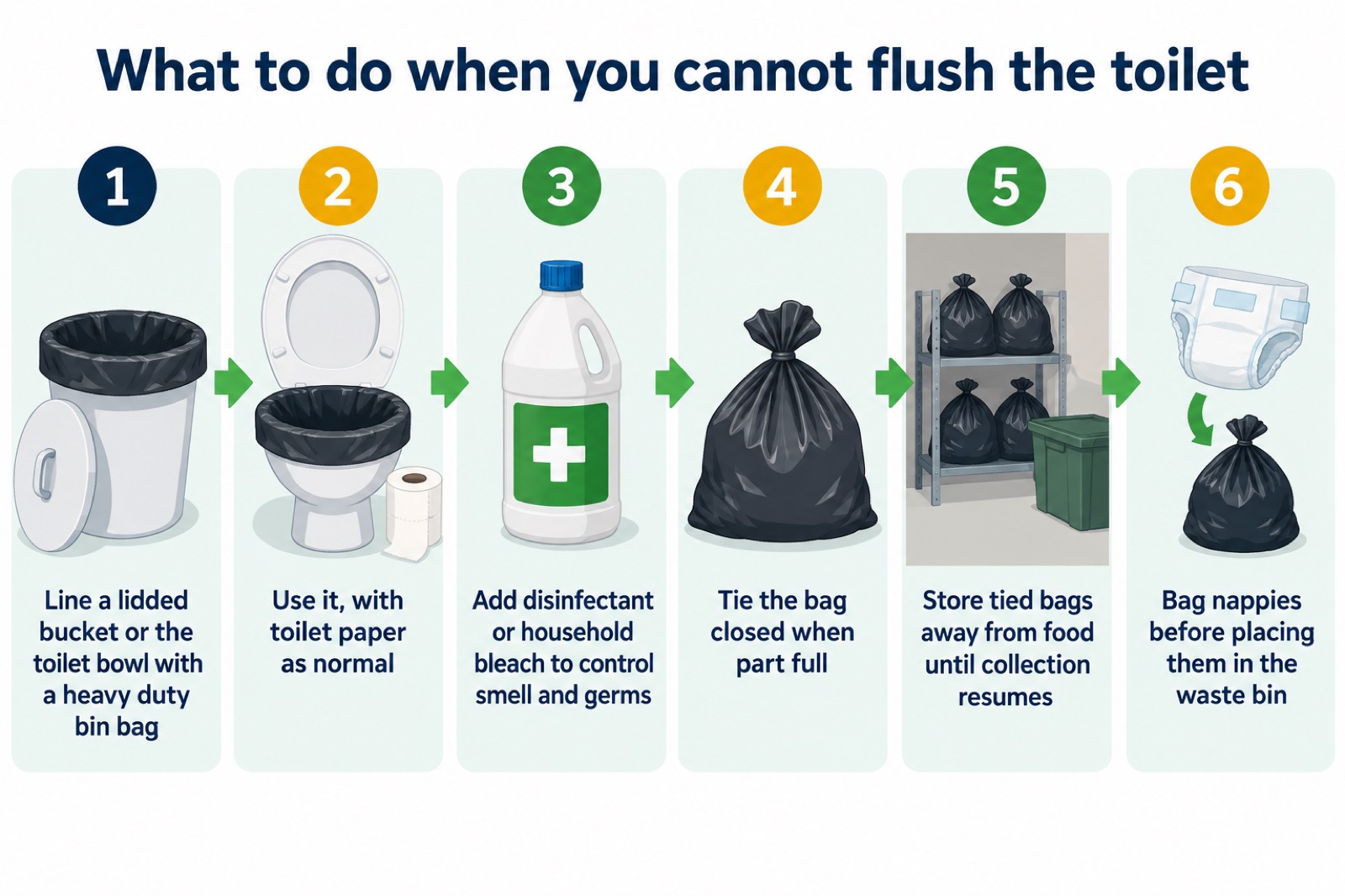
The toilet is the next problem. If the water supply fails, you cannot flush, and a full cistern gives you one flush at most. Denbighshire's emergency supplies kit provides the official answer: heavy duty plastic rubbish bags and ties for personal sanitation, toilet paper, a medium sized plastic bucket with a tight lid, disinfectant and household chlorine bleach3. The method is straightforward:
- Line the bucket, or the toilet bowl itself, with a heavy duty bin bag3
- Use it, adding toilet paper as normal
- Sprinkle in disinfectant or a little bleach to control smell and germs3
- Tie the bag closed when it is part full
- Store tied bags somewhere secure, away from food and living areas, until waste collection resumes
- Bag nappies separately before they go in the waste bin17
Keep the lidded bucket with the kit even if it seems an odd thing to store: the lid is what makes the arrangement livable in a bedroom or bathroom for a day or two. Denbighshire's kit also suggests considering a small shovel for digging a latrine3, which applies mainly if you are outdoors or in a rural property with ground you can safely dig.
If the water is not off but unsafe, for example after flooding, the same hygiene rules apply and you should follow the water company's advice about boiling or not using the supply. Flood water itself is contaminated: official flood kit advice includes rubber gloves precisely because everything you touch after a flood needs protection27.
Hygiene items for a flood kit
A flood kit is a grab bag with a hygiene slant, because flood water brings contamination into the home. The official lists agree on the core. Mid and West Wales Fire and Rescue Service says:
Perth and Kinross Council's flooding checklist for residents says a flood kit should contain a torch, first aid kit, prescription medicines, warm and waterproof shoes and clothing, rubber gloves, bottled water and snacks, essential pet and children supplies, insurance and passport details, a portable wind-up radio and a list of important contact numbers, stored high up in a box28. Suffolk's flood smart living guidance lists mops, buckets, waterproof clothing, PPE, a first aid kit, torch, radio and batteries, non-perishable foods and bottled water29. Somerset adds nappies and toys for children19, the London Assembly's flash flooding advice lists medicine and prescriptions30, nidirect lists essential medicines31, and the government's personal flood plan lists drinking water, medicine, baby care items and a device charger20.
The hygiene thread through all of them: rubber gloves, a first aid kit, prescription medicines, and supplies for babies. Keep the kit upstairs or stored high, as the fire and rescue service advises27, so you can reach it without wading through contaminated water. For the wider flood response, see flooding: a household guide.
Face masks, tissues and covering coughs
Face masks appear in official kit lists in two roles. The Scottish Government's emergency kit guidance includes face masks alongside the first aid kit and hygiene items11, and North Hertfordshire's kit basics include a dust mask with plastic sheeting and duct tape5. The dust mask role is protection against dust and debris, for example after a fire, a flood clean-up or building damage; the face covering role is limiting the spread of coughs and sneezes, which is the "Catch it, Bin it, Kill it" habit from the West Mercia risk register: carry tissues, catch coughs or sneezes, bin the used tissues as soon as possible, then wash your hands12.
Neither role needs anything exotic. A small stock of face coverings and a box of tissues, kept dry in the kit, covers both. During an infectious disease outbreak, follow the current government guidance on face coverings, which explains when and how to use them8.
Keeping the kit usable: storage and checking
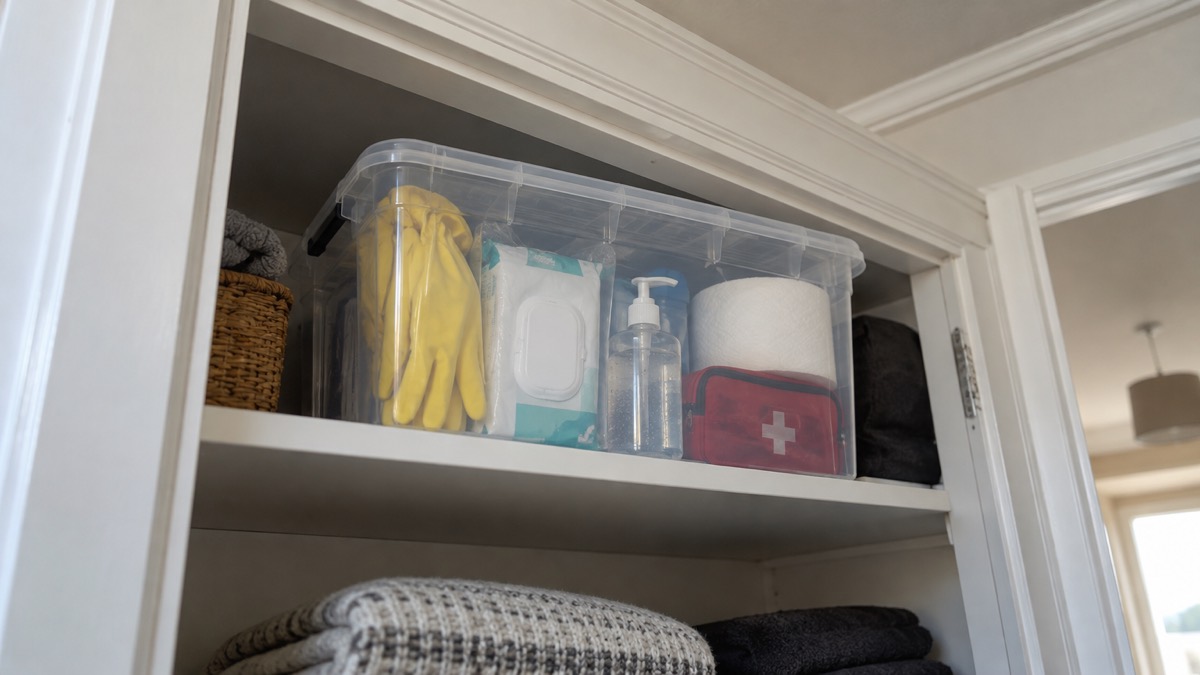
Hygiene items expire and degrade, so storage and checking matter as much as the initial purchase. Denbighshire advises using plastic boxes or backpacks to keep supplies together, kept in a designated place all household members know3, and the Scottish Borders community plan says the kit should be kept in a waterproof bag16. Wipes dry out once opened, sanitiser evaporates or separates, and toothpaste has a shelf life, so buy sealed packs for the kit and use your everyday supplies at home rather than dipping into the kit.
Check the kit on a schedule and swap anything dated. See checking and restocking supplies for a routine, and where and how to store supplies safely for placement. If anyone in the household needs extra help, for example with medical devices that need water or with continence supplies, see extra help in an emergency for the Priority Services Register and similar support.
A final word on scale. The government's Be Ready campaign asks households to prepare for emergencies by building a kit and a plan32, and its checklist puts the hygiene items, first aid kit and medicines in one place21. Start with the basics this week: wipes, bags, ties, sanitiser, soap, toilet paper, a lidded bucket, and the toiletries and sanitary or baby supplies your household actually uses. That modest box is what stands between a disrupted week and a genuinely difficult one.
Sources (32)
- Get help and advice in an emergency, Lincolnshire County Council
- Be Ready Household Emergency Plan, UK Government Be Ready campaign, 2026
- Emergency Supplies Kit, Denbighshire County Council, 2020
- Be Ready for Emergencies, UK Government Be Ready campaign
- Preparing for emergencies, North Hertfordshire District Council, 2015-01-12
- Emergency pack, Lancashire Prepared, 2026-10-29
- Sandbags and how to use them properly for flood protection, UK Government, 2009-03
- Health: infectious disease outbreaks, UK Government Prepare campaign, 2026-10-12
- Health protection, Devon County Council, 2026-10-29
- Preparing for an emergency, Nottinghamshire County Council, 2026-10-29
- Emergency kit, Ready Scotland, 2026-10-29
- West Mercia Risk Register, West Midlands Ambulance Service NHS Foundation Trust, 2025-01
- Planning for an emergency kit, Wiltshire Council, 2026-10-29
- Emergency home emergency plan, Royal Borough of Windsor and Maidenhead, 2025-10
- Be prepared for winter emergencies, NHS Norfolk and Waveney ICB, 2026-10-01
- Gavinton, Fogo and Polwarth Resilient Community Plan, Scottish Borders Council, 2018
- Hot weather advice, nidirect, Northern Ireland Government, 2026-10-05
- Step 1: preparation, Essex Prepared, 2026-10-29
- Preparing for flooding, Somerset Council, 2026-10-28
- Personal flood plan, UK Government, 2023-11-15
- Be Ready Checklist, UK Government Be Ready campaign, 2026
- NPT Prepared emergency kit checklist, Neath Port Talbot Council, 2026-10-29
- Which NHS service?, NHS Somerset, 2026-01-13
- Keep a well stocked medicine cabinet at home, NHS Black Country ICB, 2026-10-28
- Preparing for civil emergencies in Argyll and Bute, Argyll and Bute Council, 2026
- Food safety after a flood: consumer advice, Food Standards Agency, 2018-01-09
- Flooding advice, Mid and West Wales Fire and Rescue Service, 2026-10-29
- Flooding checklist for residents, Perth and Kinross Council, 2024-08-01
- Flood Smart Living, Suffolk County Council, 2024-11
- How to prepare for flash flooding, Greater London Authority, 2026-10-25
- Preparing for a flood, nidirect, Northern Ireland Government, 2025-09-11
- Get prepared for emergencies, UK Government Prepare campaign
 30-Day Household Checklist
 Emergency Plan Template
 Supply Interruption Checklist
 Home Emergency Pack
 Grab Bags
 What to Keep in Your Car
 Important Documents
 Cash to Keep at Home
 How Many Days Supplies Last
 Storing Your Supplies Safely
 Checking and Restocking Supplies
 Rucksacks and Holdalls
 Keeping Supplies Dry
 Foil Blankets
 Portable Jump Starters