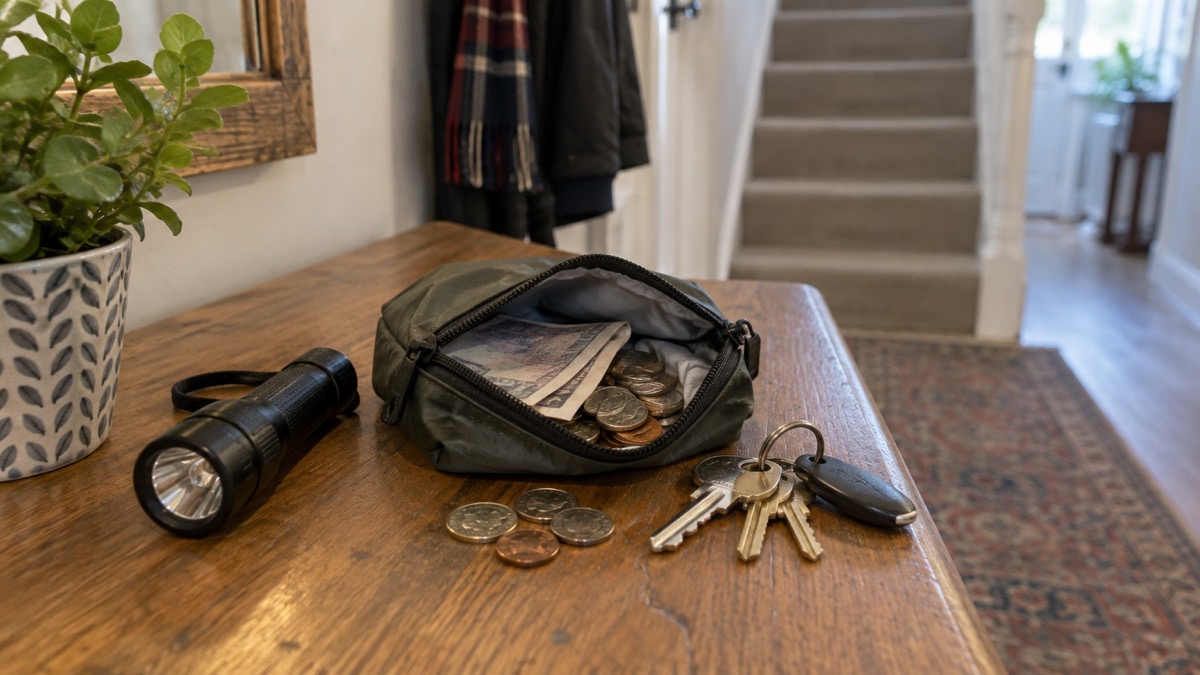
Keep a small amount of cash at home for essential purchases. That is the direct advice of the UK government's Prepare campaign, which tells households to hold cash in case electronic payments or ATMs are disrupted1. A community risk register from West Yorkshire gives the same instruction: keep a small amount of money at home in case cash points and electronic payment systems stop working2. Scottish Borders Council puts it most plainly of all: "Shops will not be able to take electronic payment in a power cut, so have some cash available, including some change"3.
The reason is simple. Most of what you buy day to day now runs through a card terminal, a phone app or a cash machine, and all three need electricity and communications networks to work. A power cut, a storm, a flood or a cyber attack can take any of them out for hours or days. Cash in your hand still works when the systems behind the till do not.
No official source sets a fixed pound amount. The government's Be Ready campaign says the amount of cash you should keep depends on your family's specific needs for essentials, and its checklist describes what to hold as "Cash (mix of coins and notes) and cards"4. This page explains how to turn that into a practical amount, which notes and coins to choose, where to keep it, and how to keep it usable.
Why cash matters when card payments stop working
When the power goes, the card machine goes with it. Scottish Borders Council's resilience advice states it directly: shops will not be able to take electronic payment in a power cut, so have some cash available, including some change3. The government's power cut guidance makes the same point for cash machines: keep a small amount of cash for essential purchases in case electronic payments or ATMs are disrupted1. A community risk register covering West Yorkshire echoes it, advising a small amount of money at home in case cash points and electronic payment systems stop working2.
The problem is not limited to power cuts. The government's advice on phone and broadband outages tells households to keep a small amount of cash for essential purchases if mobile payment apps are disrupted10. Lancashire's guidance on the loss of essential services goes further, warning that when telecommunications and banking systems are lost you may not be able to withdraw money from ATMs, and advising an emergency supply of cash for exactly that reason11. Essex Prepared lists the loss of telephone or internet services as one of the situations households should prepare for12.
So the failure can come from several directions: the electricity that runs the till and the cash machine, the mobile network that carries app payments, or the banking systems behind both. Cash sidesteps all of them. It needs no power, no signal and no working bank. That is why every strand of official UK preparedness advice, from the national campaign to individual councils, lands on the same instruction: hold some cash at home, and hold some of it as coins.
Keep your cards too. Wiltshire Council's emergency kit list includes "cash (coins and notes) and credit cards" together9, and nidirect's household emergency kit list does the same13. Cards are still the easier way to pay when systems are working; cash is the fallback for when they are not.
How much cash: enough for about three days of essentials
No official body sets a pound figure, and you should treat any number you see online with caution. What official guidance does set is a duration. Renfrewshire Council tells households to keep a range of supplies that can meet essential household needs for at least 3 days5. Ready Scotland says the same for the emergency kit: 3 days' supply of bottled water and food that does not need cooking14. Birmingham City Council puts it as at least 72 hours15, and the government's Be Ready checklist lists non-perishable food for 3 days4.
Some councils go further. Central Bedfordshire recommends a home emergency kit so you can look after yourself and your family for at least 7 days of disruption16, and a community booklet published by Culham Parish Council advises enough emergency reserves in your house for up to ten days, including essential medications, food and water17. Dumfries and Galloway, Lancashire and Lincolnshire all work to the three-day figure for food and water6.
The practical way to apply this to cash is to work out what your household would have to buy, in cash, over three days if cards stopped working. The government's Be Ready campaign says the amount depends on your family's specific needs for essentials4. Think through what those essentials actually are:
- Food and drink you would need to buy if your own supplies ran short
- Petrol or diesel for an essential journey
- Medicines or baby supplies you cannot substitute
- Bus or taxi fares if contactless payment is down
- A phone top-up or other small essential purchases
Lancashire Prepared describes the amount to include as "a small amount of cash, including change, and credit cards"6, which is a useful anchor: this is a working float for essentials, not a substitute for your bank account. If your council area advises seven or ten days of supplies, scale your cash to the same period. Our page on how many days your supplies should last works through the durations in more detail.
Keep small notes and coins, not large notes
The mix matters as much as the amount. When Scottish Borders Council says to have some cash available "including some change"3, and Lancashire Prepared says "a small amount of cash, including change"6, both are describing the same thing: a reserve made up of coins as well as notes, not a few large notes on their own.
Picture buying bread, milk and tinned food with a large note in a shop that has been running on cash all morning. If the shop cannot break the note, you either lose the difference or lose the purchase. The same applies to taxis, market stalls and any informal purchase. Small notes and coins keep you able to pay exact amounts.
A sensible mix of notes and coins, so that what you have stored matches the "coins and notes" and "change" the official checklists describe4:
- Coins for small purchases and exact fares
- Small notes for food and everyday items
- Perhaps one or two larger notes as a reserve, kept separately from the everyday mix
Keep the whole amount modest and countable. If it is small enough to review in a minute, you will actually review it. Wiltshire Council also makes a related point about the kit itself: your bag should be small enough to carry, and all members of your family, or those who live with you, should know where to find it in your home9. That applies to the cash as much as to anything else in it.
Paying for things when banks and shops are down after a cyber attack
A cyber attack or major IT failure can disrupt payments even where the lights are on. The government's guidance on phone and broadband outages advises keeping a small amount of cash for essential purchases if mobile payment apps are disrupted10. Lancashire Prepared, covering the loss of telecommunications and banking systems, advises having an emergency supply of cash available because you may not be able to withdraw money from ATMs11.
Alongside the cash, Lancashire's guidance sets out steps that help you stay in control of your money during such an outage11:
- Have several means of contact, including telephone and mobile phone
- Check your bank account to ensure you can access your funds
- Contact your bank if you experience any problems or uncover any issues
- Check on neighbours who may be vulnerable
Surrey's emergency planning guidance adds the protective habits that reduce the risk in the first place: use strong passwords, be vigilant to phishing emails, text messages and phone calls, and keep all software and systems up to date, including mobile phones18. A cyber attack that compromises your account is a different problem from one that takes down a payment network, and good password and phishing habits address the first, while your cash reserve addresses the second.
Our page on cyber attacks and major IT failures covers this scenario in full. The cash point to remember is that your emergency money works regardless of what has failed, because it does not depend on any network at all.
Where to store cash safely at home
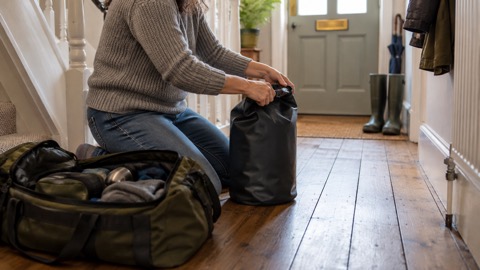
Official guidance is consistent: keep your emergency cash somewhere safe at home that you can reach easily. Carmarthenshire Council's advice for the household emergency kit is to "Keep it in a safe place at home where you can reach it easily. Your kit should be kept in a waterproof bag"7. Denbighshire's emergency supplies kit guidance extends this to the documents and cash themselves, advising that personal identification, cash and credit card, copies of important documents and an extra set of house and car keys be stored in watertight containers19.
That watertight point matters more than it sounds. Flood water and burst pipes ruin paper notes, and a soaked banknote is a loss you cannot claim back. A sealed waterproof pouch inside your kit bag protects the cash from both weather and ordinary spills. Our page on keeping supplies dry covers the options.
Practical points from the official guidance:
- Keep the cash with the rest of your kit, in a waterproof bag7
- Store documents and cash in watertight containers19
- Keep the bag somewhere all household members can find it9
- Keep some of the kit in a waterproof bag in case you need to leave without notice, for example if your home is at risk of flooding14
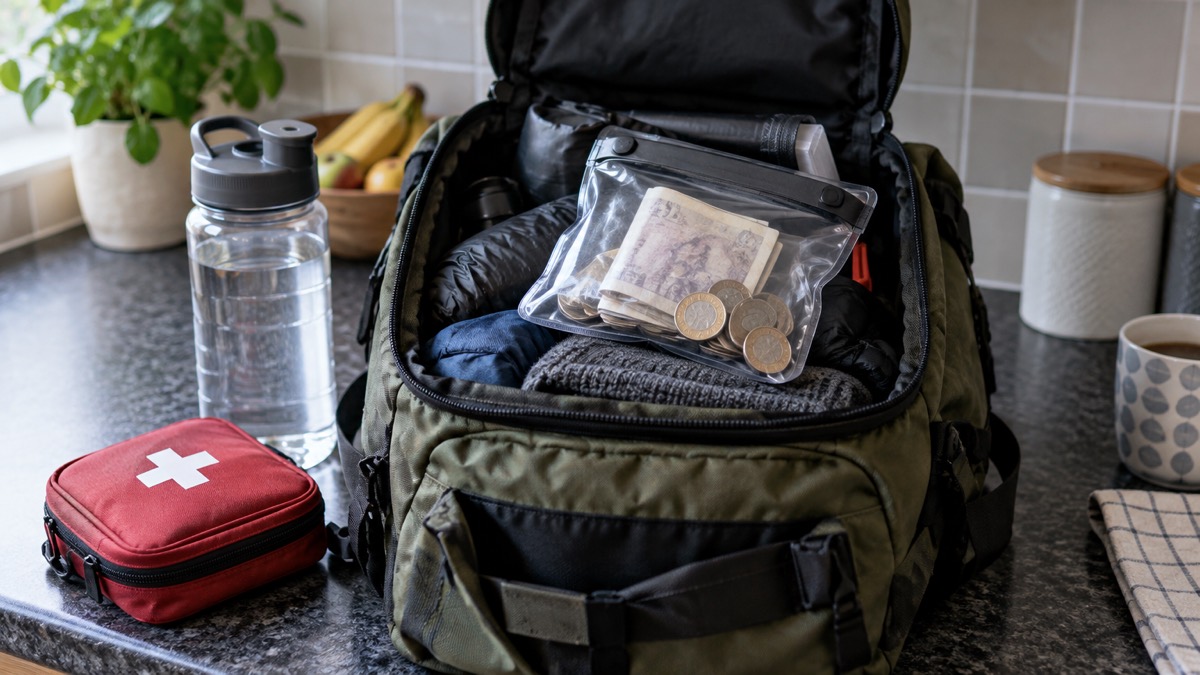
Hillingdon Council's household emergency plan guidance lists the grab bag contents, and cash in small bills sits on that list alongside important documents, insurance papers and ID8. Keeping the cash inside the kit, rather than in a separate hiding place, means it travels with you when you grab the bag. Our page on where and how to store your supplies safely goes into the wider storage questions.
Cash, theft and home insurance limits
Keep the amount modest, and keep where you hold it to yourself. There is a security dimension to holding cash at home that official guidance touches on from another direction: Surrey County Council, advising on staying safe after flooding, warns that if you need to leave your property you should make sure it is left secure to reduce the risk of burglars breaking in, and to be careful of doorstep callers who may trick or steal from you20. The same caution applies to any period of disruption, when homes may be empty or attention is elsewhere.
On insurance, be aware of what a policy may and may not do. Anglesey's Home Emergency Plan carries a blunt warning about household insurance claims: "IMPORTANT NOTE: The insurance company may only offer to clean and repair something, not replace it"21. That note is about possessions generally, but it flags the right habit: read your policy and know its limits before you need it, rather than assuming a claim will make you whole.
The practical rules that follow from all this:
- Do not discuss your emergency cash or its location outside the household
- Leave your home secure if you have to evacuate20
- Check your home insurance policy so you know what is and is not covered21
A small, well-hidden float inside a grab bag is a very different proposition from large sums kept at home, and official advice is firmly aimed at the first: a small amount, including change6.
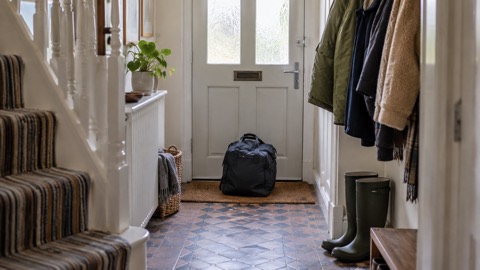
Keeping your emergency cash in the grab bag
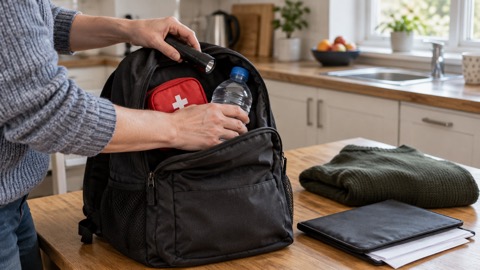
The grab bag is the bag you take if you are asked to leave your home quickly, and the government's Be Ready campaign suggests keeping essential items you might need in a spare bag for exactly that4. The Met Office includes the grab bag in its seasonal preparedness advice, listing bottled water, medicines, torch, radio and batteries, copies of important documents and a change of clothes22. Hillingdon's household emergency plan guidance gives the fullest contents list, and it includes "cash in small bills" alongside important documents, insurance papers and ID8.
Cash belongs in the grab bag for two reasons. First, if you leave home in a hurry you will not have time to find money elsewhere, and nidirect advises that if you are at home when an emergency happens you should try to gather essential items before you leave, keeping such items in the same place within the home to make that possible13. Second, the situations that force you out, such as flooding, are the same situations most likely to have disrupted card payments in the affected area.
Councils across the UK make the same point about what to take if you evacuate. Neath Port Talbot's emergency kit checklist says to take cash and credit cards if you have to leave your home23. Carmarthenshire lists cash and credit cards among the additional items to take if you have to leave your home and there is time to gather them safely7. Surrey's in-case-of-emergency template advises taking your mobile phone and charger as well as key documents like ID, your purse or wallet and current prescriptions24.
Our page on grab bags covers the full packing list. For the cash element, the essentials are: small notes and coins, in a waterproof pouch, in the bag, with everyone in the household knowing it is there.
Checking and topping up your cash supply
Cash is the one item in your emergency kit that does not go off but does go out of date in two ways: prices rise, so the same float buys less each year, and notes are periodically withdrawn and replaced. Build a review into the same routine you use for the rest of your supplies. The government's Be Ready campaign frames the amount as depending on your family's specific needs for essentials4, so revisit that amount whenever your household's needs change.
A workable routine:
- Count the cash and check you still have a mix of coins and notes4
- Swap any withdrawn or damaged notes at your bank
- Rethink the amount against your family's current needs for essentials, and top up if needed4
- Confirm everyone in the household still knows where it is9
Do this at the same time as you check food expiry dates and battery levels, so it becomes one habit rather than several. Our page on checking and restocking supplies sets out the wider routine, and the household preparedness checklist puts cash in its place among everything else you are keeping ready.
Where to get help if you cannot get money in an emergency
If payments are down and your cash is running short, the official guidance points to a few places to turn. Lancashire's advice on the loss of telecommunications and banking systems is to check your bank account to ensure you can access your funds, and to contact your bank if you experience any problems or uncover any issues11. Banks are the route to resolving account problems, and they have their own contingency arrangements for major outages.
For people who depend on someone else, there are specific tools. The government's Be Ready advice for disabled people and carers explains that in an emergency a carer's card can help the emergency services and others know that someone depends on you25. Derbyshire County Council's carer's emergency card covers the crisis itself: a crisis or emergency is something that could not be planned for that stops you giving your usual level of care, such as being admitted to hospital or going through a period of ill health26. If you care for someone who would be left without money or support if you were suddenly unavailable, a carer's card or emergency card scheme is worth setting up in advance. Our page on extra help in an emergency covers the support available to older, disabled and medically dependent households.
In a wider emergency, keep written contact details to hand. Wiltshire and Swindon Prepared advises keeping important numbers such as family or insurance written down somewhere safe in case you cannot access them on your phone or online27. And if you cannot reach the emergency services by phone during an outage, the government's guidance says that if you still cannot get through, and it is safe to do so, seek help directly from emergency responders or go to your nearest police station, fire station, ambulance station or hospital10.
: Written contact details work when phones and payment apps do not.
Sources (27)
- Power cuts: how to prepare, Prepare campaign (UK government), 2026
- Community Risk Register, West Yorkshire Prepared, 2025
- Be more resilient in 30 simple ways in 30 days, Scottish Borders Council, 2026
- Be Ready Checklist, Be Ready campaign (UK government), 2026
- Prepare your home for emergencies, Renfrewshire Council, 2025
- Emergency pack, Lancashire Prepared, 2026
- Get prepared, Carmarthenshire County Council, 2026
- Household emergency plan, London Borough of Hillingdon, 2026
- Planning for an emergency kit, Wiltshire Council, 2026
- Phone and broadband outages, Prepare campaign (UK government), 2026
- Loss of essential services, Lancashire Prepared, 2026
- Protecting your family, Essex Prepared, 2026
- Household emergency kit, nidirect (Northern Ireland government), 2026
- Emergency kit, Ready Scotland, 2026
- Are you ready?, Birmingham City Council, 2026
- Emergency kits and grab bags, Central Bedfordshire Council, 2026
- Are You Ready booklet, Culham Parish Council, 2025
- Prepare for emergencies: risks, Surrey County Council, 2026
- Emergency supplies kit, Denbighshire County Council, 2020
- Staying healthy and safe after flooding, Surrey County Council, 2026
- Home Emergency Plan, Anglesey County Council, 2020
- 10 things you should do now to prepare for summer, Met Office, 2026
- NPT Prepared emergency kit checklist, Neath Port Talbot Council, 2026
- ICE template, Surrey Prepared, Surrey County Council, 2026
- Advice for disabled persons and carers, Be Ready campaign (UK government), 2026
- Carers' emergency card, Derbyshire County Council, 2026
- Personal resilience: yourself, Wiltshire and Swindon Prepared, 2026
 30-Day Household Checklist
 Emergency Plan Template
 Supply Interruption Checklist
 Home Emergency Pack
 Grab Bags
 What to Keep in Your Car
 Important Documents
 How Many Days Supplies Last
 Storing Your Supplies Safely
 Checking and Restocking Supplies
 Rucksacks and Holdalls
 Keeping Supplies Dry
 Foil Blankets
 Portable Jump Starters
 Supplies for Babies and Children