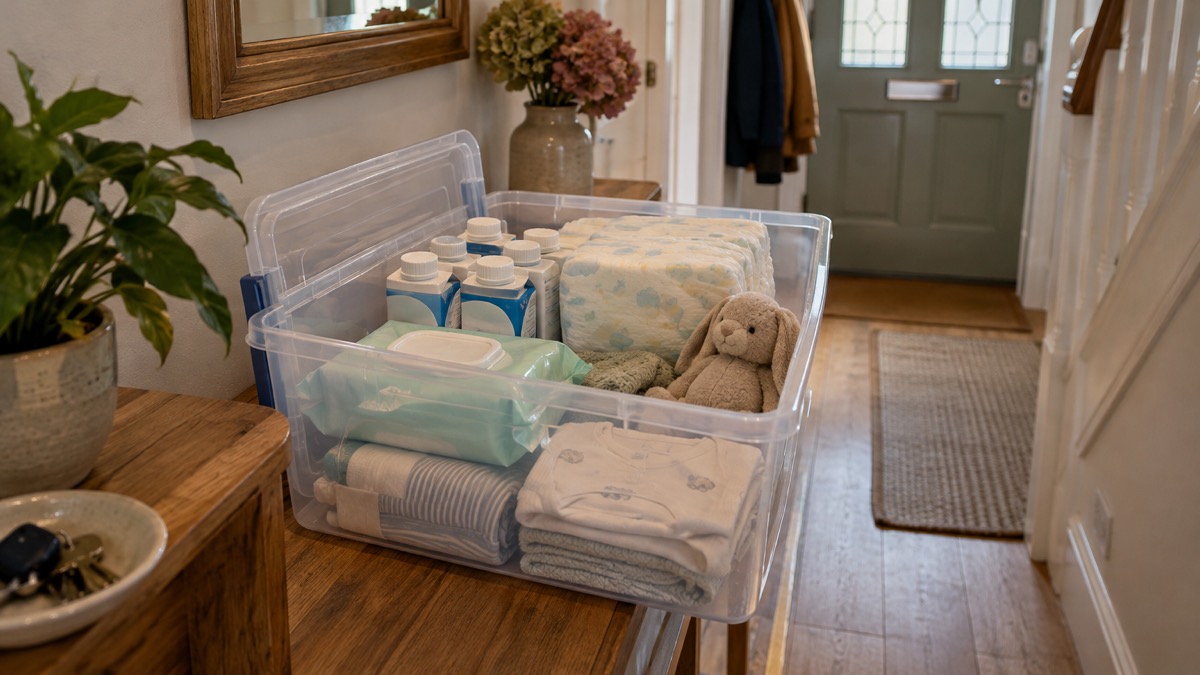
If you have a baby or a young child, your household emergency kit needs more than the standard torch, radio and tinned food. Babies cannot wait for the shops to reopen: they need feeding, changing and comforting on their own schedule, whatever else is going on. The government's Be Ready checklist tells households to pack baby products such as nappies, wipes and ready-made formula alongside the rest of the kit1, and councils across the UK repeat the same message, adding toys, books and activities for children2.
The single most important item, if your baby is formula fed, is ready-made formula. The official advice is blunt about why: you may not be able to boil water or sterilise bottles during an emergency3. Beyond feeding, you need nappies and wipes, a change of clothing, children's medicines, comfort items, and a written list of phone numbers so that whoever is holding the child can reach the right help. This page sets out what to keep at home, what to pack in a grab bag, and how to keep the whole lot current as your child grows.
Keep baby supplies in your home emergency kit
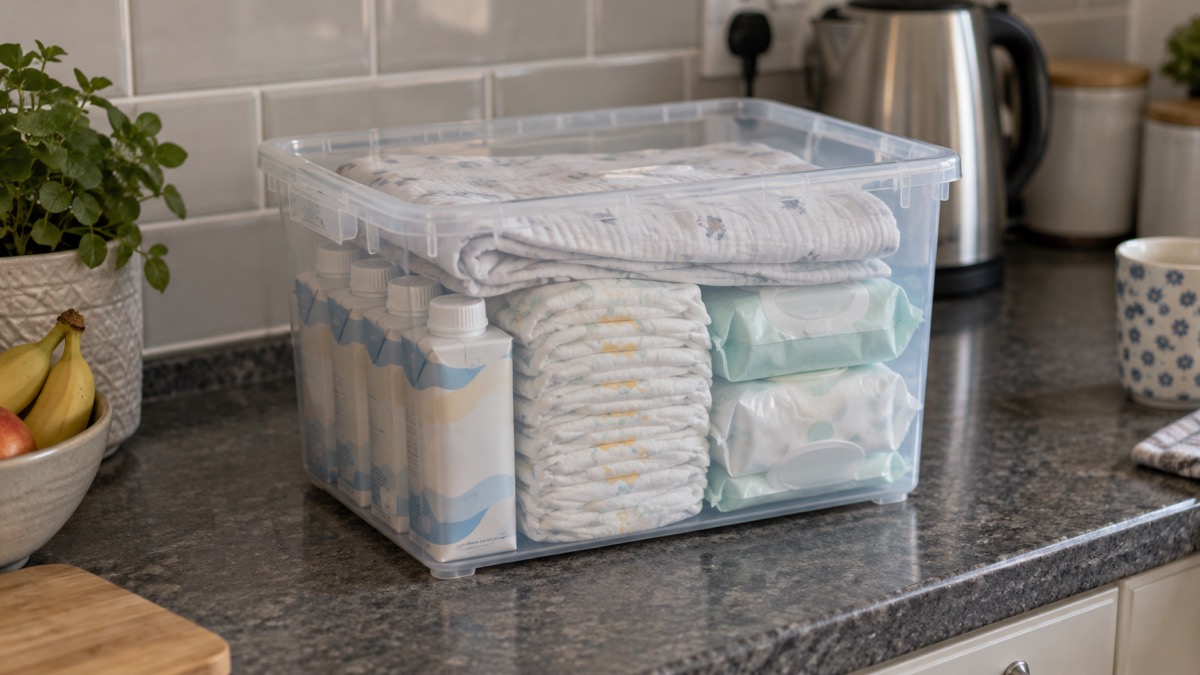
Every household should have a kit at home, and for a family with a baby that kit includes items unique to you: nappies, baby food, and anything else your child cannot do without8. Councils in England and Wales list baby supplies such as formula and nappies as a standard part of the home kit9, and the national Be Ready household plan says the same, telling families to keep baby products such as nappies, wipes and ready-made formula alongside pet products and the rest of the household stores1.
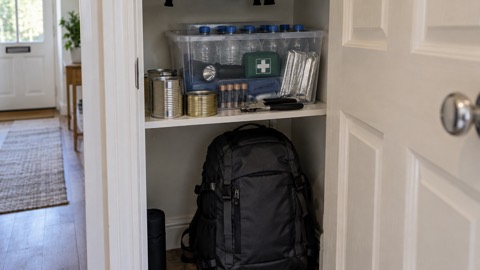
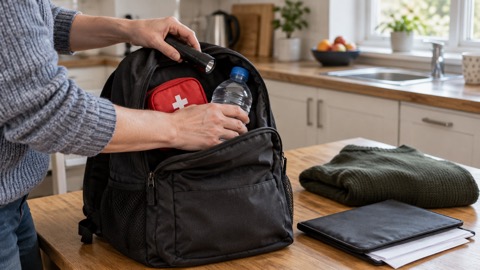
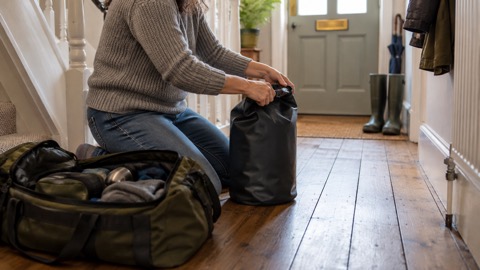
Where you keep it matters as much as what is in it. Keep the kit in a safe place at home where you can reach it easily, and keep it in a waterproof bag10. Denbighshire Council suggests using plastic boxes or backpacks to keep the supplies together, kept in a designated place that all household members know11. That last point is worth emphasising for families: if you are out and your partner, a grandparent or a childminder is at home with the baby, they need to know where the kit is without asking you.
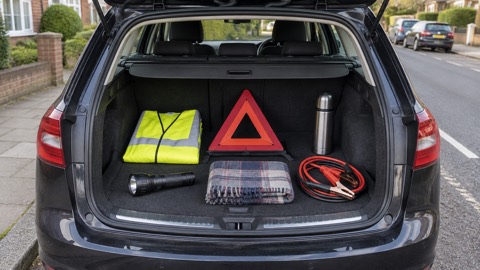
You may also want to keep an emergency kit in your car as well as your home, or simply keep a list of where to find the items12. For most families with a baby, a home kit plus a small grab bag (covered below) is the practical arrangement. The home kit holds the bulk supplies; the grab bag holds what you would carry out of the door.
For the wider contents of a home kit, see What to Keep in a Household Emergency Pack at Home, and for where to store it, Where and How to Store Your Supplies Safely.
Feeding: ready-made formula, baby food and bottles
Why ready-made formula
The government's advice on water supply interruptions is unambiguous:
"ready-made or 'ready-to-feed' formula is the safest option, as you may not be able to boil water or sterilise bottles during an emergency"
Be Ready campaign, water supply interruptions advice3
The same message appears in the power cuts advice from both the UK and Scottish preparedness campaigns: store non-perishable food that doesn't need cooking, a tin opener, and ready-made baby formula if needed13. The reason is simple. Powdered formula must be made up with water that has been boiled and then cooled, and bottles and teats need sterilising. In a power cut your kettle, hob and steriliser may all be out of action; in a water supply interruption you may have no safe tap water at all. Ready-made formula comes in sealed cartons or bottles, needs no preparation, and can be poured straight into a clean bottle or given with a sterile teat.
The flood advice for Northern Ireland makes the same point from another direction, telling parents to use ready-made formula milk as an alternative to powdered feeds when normal feeding is disrupted15. So whatever the emergency, the answer for formula feeding is the same.
Water for formula and everything else
If you do need to make up powdered formula, or you use formula to mix with cereals, plan for extra water. Greater Manchester's resilience guidance notes that additional water might be needed to make up baby formula, for medical devices and for pets, on top of the water a household stores for drinking and sanitation5. Dumfries and Galloway Council's figure for the baseline is 2.5 litres of bottled water per person for each day4. If you have no tap water at all, using ready-made or ready-to-feed formula remains the safest option13.
What else to pack for feeding
Lincolnshire's emergency advice lists infant formula milk and disposable nappies and nappy sacks among the items to include if required16. Alongside the formula itself, think about:
- Ready-made formula in the size and stage your baby currently uses
- A clean bottle and teat, or several, kept in the kit
- Baby food in jars or pouches that need no cooking, for weaning-age babies
- A drink, as Essex Prepared's grab bag list for babies and children includes flood, formula and drink7
- A tin opener if any of your stores need one13
For more on storing water safely, see Water in an Emergency: A Household Guide, and for food that needs no cooking, Emergency Food: A Household Guide.
Children's medicines and health items
For a family, the medical side of the kit means two things: a general first aid kit, and the specific medicines your child takes.
Children's medicines to keep
NHS guidance on what to keep in your medicine cabinet lists painkillers such as infant paracetamol for children or infant ibuprofen, plus children's antihistamine, among the contents of a family first aid kit17. A GP practice first aid kit list adds the same items and warns that aspirin should not be given to children under 1618. North Hertfordshire District Council's kit advice includes prescription medicines kept up to date, and non-prescription items such as pain relief tablets and medication for an upset stomach or diarrhoea19, which covers the stomach upsets young children are prone to. If your child has a regular prescription, keep a current supply in the kit and rotate it so it never goes out of date.
First aid kit contents for families
The NHS and GP practice lists largely agree on what a family first aid kit should contain17:
| Item | Why it matters for children |
|---|---|
| Plasters in a variety of sizes and shapes | Small cuts and grazes |
| Sterile gauze dressings, small, medium and large | Larger cuts |
| At least two sterile eye dressings | Eye injuries |
| Triangular bandages, crêpe rolled bandages, safety pins | Sprains and support |
| Disposable sterile gloves | Hygiene when treating |
| Tweezers and scissors | Splinters and cutting tape |
| Alcohol-free cleansing wipes | Gentle cleaning |
| Sticky tape | Securing dressings |
| Thermometer, preferably digital | Checking a child's temperature |
| Skin rash cream, insect bite cream, antiseptic cream | Common childhood complaints |
| Infant paracetamol and infant ibuprofen | Pain and fever |
| Children's antihistamine | Allergic reactions and stings |
| Distilled water for cleaning wounds, eye wash and eye bath | Flushing eyes and wounds |
The niDirect first aid guidance for Northern Ireland adds a medical spoon or syringe for giving babies and children their medicines, sun block of factor 25 or higher for children, and child insect repellent20. Wales' 111 service suggests choosing a waterproof, durable box that is easy to carry, with a childproof lock, kept out of the reach of children but handy for adults21.
Keeping the medical kit current
The Health and Safety Executive's advice on first aid kits applies equally at home: check your kit regularly, because many items, particularly sterile ones, are marked with expiry dates, and replace expired items, disposing of them safely. For non-sterile items without dates, check that they are still fit for purpose22. Medicines for children are especially easy to overlook, because doses and formulations change as they grow. See Checking and Restocking Supplies: Expiry Dates and Replacing Items for a routine, and First Aid at Home: A Household Guide for the wider subject.
Comfort items for young children
An emergency is frightening for a small child, and the items that calm them are emergency supplies in their own right. Council and resilience guidance treats them as such. Lancashire Prepared's emergency pack advice includes toys, books and activities2. Essex Prepared's grab bag list for babies and children includes toys, books and activities alongside the food, clothing and nappies7. North Hertfordshire's list includes books and games for children19. And Carmarthenshire's evacuation advice is the most specific of all: if you have to leave your home, think about taking games, books and a child's special toy23.
That last item deserves attention. A child's special toy or comfort blanket is not replaceable in a shop, and it is the one thing on this list that only you can identify. If your child has an attachment object, know where it is, and consider whether it goes in the grab bag or in your head as the first thing to pick up. For a baby, the equivalent may be a familiar muslin or the smell of a particular blanket.
Entertainment matters for practical reasons too. If you are evacuated to a rest centre, or stuck at home without power, a child with nothing to do will find something to do, and books and small toys make the hours pass for everyone. Pack a mix:
- One or two small toys your child already loves
- A book or two, or a small activity for older children
- A comfort object, if your child has one
- Paper and pencils, which also appear in general kit lists10
Clothes and toiletries for babies and toddlers
Children go through more clothing than adults in an emergency: spills, nappy failures and weather all take their toll. The general rule from Denbighshire's emergency supplies kit is one complete change of clothing and sturdy footwear per household member, plus waterproof clothing, hat and gloves, and a blanket or sleeping bag for each person11. For a baby, read that as several changes rather than one, because a single outfit will not last a day.
Essex Prepared's grab bag list for babies and children includes a change of clothing and nappies7. Wipes appear on the national Be Ready household plan's baby products list1, and anti-bacterial hand wipes or gel appear in Lancashire's pack advice2, which matters doubly with a baby who is crawling or being changed in less than ideal conditions.
For toiletries and sanitation generally, the Denbighshire kit list covers the household basics: moistened towelettes, soap, hand sanitiser, toothpaste and toothbrushes, toilet paper, heavy duty plastic rubbish bags and ties for personal sanitation, and disinfectant11. Rubbish bags are worth singling out for families: used nappies need containing somewhere, and a supply of bags and nappy sacks solves it. For the wider subject, see Hygiene and Sanitation Supplies: Wipes, Bags and Toilet Needs.
A note on sizing: clothes stored in a kit are only useful if they still fit. A change of clothing packed when your baby is three months old will be useless at nine months. Tie the clothing check to the date check on formula and medicines, and swap sizes as your child grows.
Emergency phone numbers and contacts for your family
Every kit should include a list of useful phone numbers: your doctor, close relatives and your local council, according to the niDirect household emergency kit list, which also includes special equipment for children and people with special needs among its contents24. Anglesey's emergency kit advice adds emergency procedures for children's school and workplace, and a family contact plan25. If someone else is looking after your child when an emergency hits, that list is how they reach you and everyone else who matters.
Central Bedfordshire Council publishes a printable Emergency Kit Checklist and Emergency Contacts List as a two-pager to fill out with personal details, and advises checking occasionally that the details are still up to date, such as emergency phone numbers for family and medical providers26. That is a good pattern for any family: write the numbers down, keep the paper in the kit, and check it when you check the rest of the kit.
When to call for help with a child
The emergency number is 999, and the advice is consistent across the UK: call 999 if someone is in immediate danger27, teach children how and when to call 99928, and for a choking infant, dial 999 and request an ambulance29. Leeds Teaching Hospitals' baby basic life support guidance follows the same sequence: shout for help and ring 99930.
For anything less than an emergency, Somerset Council's heat health advice gives the pattern that applies generally: if your child seems unwell and you are worried, contact NHS 111 or your GP; if they lose consciousness or have a fit, phone 999 immediately31. Wales' 111 service adds that if a fit hasn't stopped within five minutes, call 999, and if it stops but it was the child's first fit, take them to the nearest accident and emergency department32. In Wales, if you're worried about your child and not sure if they need medical help, call NHS 111 Wales if available in your area32.
| Situation | Who to contact |
|---|---|
| Immediate danger, choking, unconsciousness or a fit | 99927 |
| A fit that hasn't stopped within five minutes | 99932 |
| Child seems unwell, you are worried | NHS 111 or your GP31 |
| In Wales, worried and unsure | NHS 111 Wales where available32 |
For staying informed during an emergency itself, see Staying Informed and in Touch in an Emergency: A Household Guide.
Extra help and planning for families with children
A few pieces of planning go beyond the kit itself. Neath Port Talbot's kit advice includes taking essential medication if you have to leave your home33, and Carmarthenshire's evacuation list adds mobile phone and charger, cash and credit cards, spare clothes and blankets, and pets23. Anglesey's evacuation advice is to leave as quickly and calmly as possible, turn off electricity, gas and water, unplug appliances, lock doors and windows, take your emergency kit, take bottled water and blankets if leaving by car, and tune in to local radio or trusted social media25. Practise the sequence in your head so that with a baby on your hip you are not deciding what to do for the first time.
The grab bag
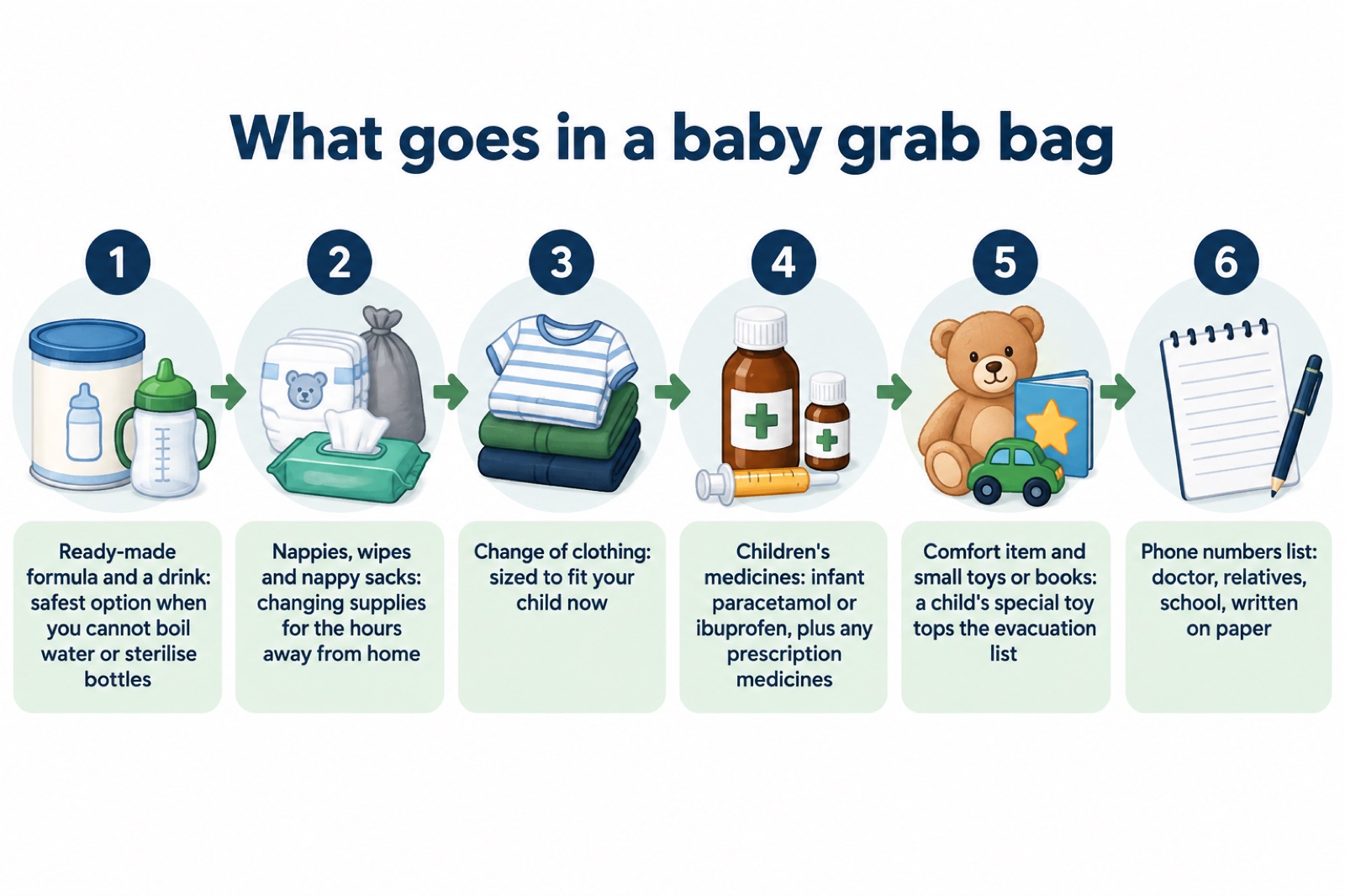
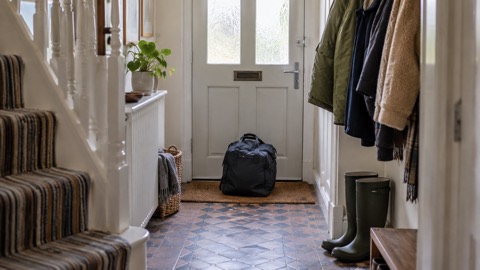
Emergency kits are sometimes called grab bags8, and for families the advice is to prepare a small easy-to-carry bag with essentials, stored in an accessible place ready to go. At the very least, keep an up-to-date checklist of things to put into your emergency grab bag7. North Hertfordshire suggests preparing a household emergency kit and a smaller personal kit, for example in a backpack, for use should you need to be evacuated, and making sure everyone knows where the kits are kept19. The niDirect first aid guidance makes the same point about first aid kits specifically: you may choose to have two, a large one that stays at home and a smaller emergency kit for when you go out20.
For a baby, Essex Prepared's grab bag list for babies and children covers formula and a drink, a change of clothing, nappies, and toys, books and activities7. Add the children's medicines, the comfort object and the phone numbers list from the sections above. See Grab Bags: What to Pack If You Have to Leave Home for the full household version, and Choosing a Rucksack or Holdall to Carry Your Supplies for the bag itself.
Keeping the kit current as your child grows
The defining feature of a children's kit is that it expires faster than the rest of your household stores, and not just on the dates printed on the cartons. Formula stage, nappy size, clothing size, toy interests and medicine doses all change within months. Build a routine around it: check the kit regularly, replace expired sterile items and dispose of them safely, and check undated items are still fit for purpose22. Each check, ask three questions: does the formula still match your baby's stage, do the clothes still fit, and are the medicines still the right ones for your child's age? For the wider routine, see The Government's Be Ready Checklist Explained and Household Preparedness Checklist: Home, Grab Bag and Car.
Where families can get extra help
If your household needs extra support in an emergency, because of a medical dependency, a disability or circumstances at home, planning ahead matters even more with a child in the house. See Extra Help in an Emergency: Older, Disabled and Medically Dependent Households for the arrangements that exist and how to register for them. And if you have pets as well as children, the kit advice covers both: pet food and bottled water appear on the Be Ready household plan alongside the baby products1, and Lancashire's pack advice includes pet supplies2. See Pets and Animals in an Emergency: A Household Guide.
Sources (33)
- Be Ready Checklist, Be Ready campaign, 2026
- Emergency pack advice, Lancashire Prepared, 2026
- Water supply interruptions or outages, Be Ready campaign, 2026-10-12
- Prepare for emergencies, Dumfries and Galloway Council, 2026
- Loss of essential services, Greater Manchester Combined Authority, 2026-10-29
- Be prepared for emergencies, North Devon Council, 2026-10-29
- Step 1: preparation, Essex Prepared, 2026-10-29
- Planning for an emergency kit, Wiltshire Council, 2026-10-29
- Emergency kit, Ready Scotland, 2026-10-29
- Get prepared, Carmarthenshire Council, 2026-10-28
- Emergency supplies kit, Denbighshire Council, 2020
- Preparing for an emergency, Nottinghamshire County Council, 2026-10-29
- Power cuts, UK Prepare campaign, 2026-10-21
- Power cuts, Be Ready campaign, 2026-10-21
- Keeping children safe during flood, niDirect, 2025-12-09
- Get help and advice in an emergency, Lincolnshire County Council, 2026-10-29
- What to keep in your medicine cabinet, NHS Healthier Together, 2026-10-28
- What should I keep in my first aid kit, Collingwood Surgery NHS, 2026-10-28
- Preparing for emergencies, North Hertfordshire District Council, 2015-01-12
- First aid, niDirect, 2025-12-04
- Newborn essentials: first aid, NHS 111 Wales, 2021-04-19
- What to put in your first aid kit, Health and Safety Executive, 2026
- Get prepared, Carmarthenshire Council, 2026-10-25
- Household emergency kit, niDirect, 2026-07-06
- Preparing for an emergency: what you need to know, Anglesey Council, 2020
- Emergency kits and grab bags, Central Bedfordshire Council, 2026
- Staying safe, Manchester Fire and Rescue Service, 2026-10-29
- Be ready for emergencies, Cheshire Fire and Rescue Service, 2026-10-14
- Choking infant, Wirral University Teaching Hospital NHS, 2026-10-29
- Baby basic life support, Leeds Teaching Hospitals NHS, 2025-06-04
- Stay cool and safe in hot weather, Somerset Council, 2026-07-08
- Baby accidents: what to do, NHS 111 Wales, 2023-05-17
- NPT Prepared emergency kit checklist, Neath Port Talbot Council, 2026-10-29
 30-Day Household Checklist
 Emergency Plan Template
 Supply Interruption Checklist
 Home Emergency Pack
 Grab Bags
 What to Keep in Your Car
 Important Documents
 Cash to Keep at Home
 How Many Days Supplies Last
 Storing Your Supplies Safely
 Checking and Restocking Supplies
 Rucksacks and Holdalls
 Keeping Supplies Dry
 Foil Blankets
 Portable Jump Starters