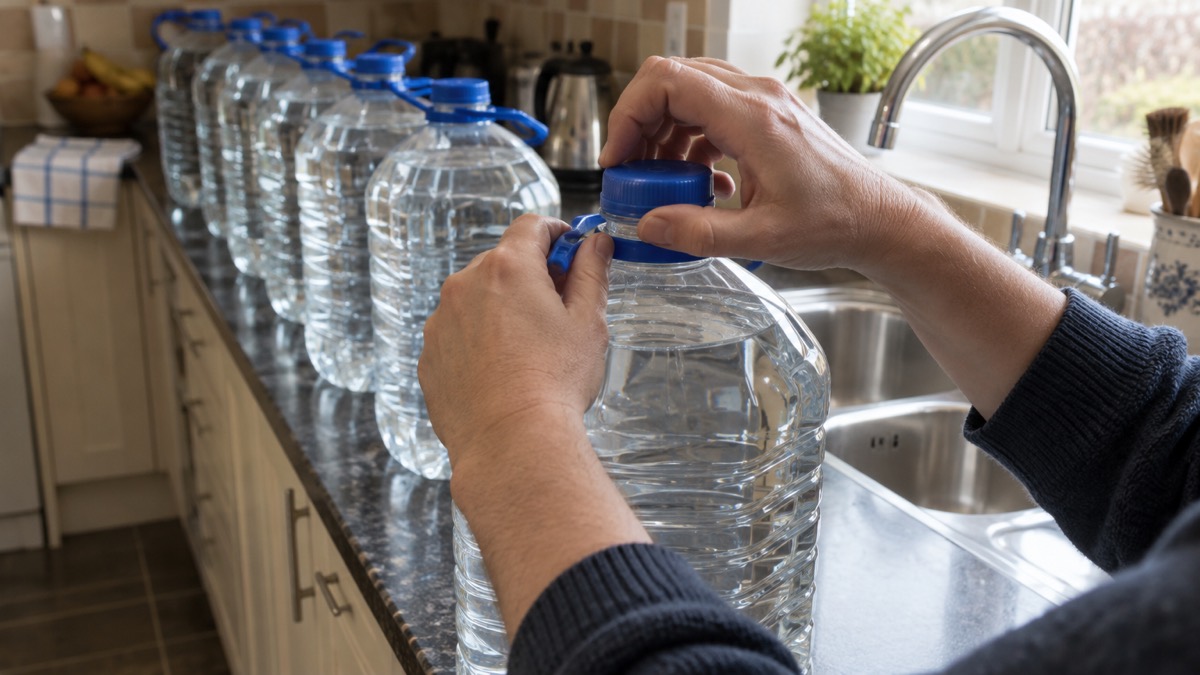
Store at least 3 litres of bottled water per person per day, for at least 3 days. That is the core figure repeated across official UK guidance, from the national "Be Ready" checklist to local council emergency pages1. For a family of four, that means 36 litres of drinking water set aside before anything goes wrong.
That 3 litres covers drinking only. Official guidance is clear that more would be needed for other tasks such as cooking and washing2, and one widely used planning figure puts the comfortable total at 10 litres per person per day once basic cooking and hygiene are included3. If anyone in your household is a baby, a nursing mother, unwell, older, or a pet, they need extra on top of their share.
This page works through the numbers so you can settle on a total for your own household: where the figures come from, why they differ, what to add for special needs, how long supplies should last, and what help exists if a cut outlasts your store.
The headline figure: 3 litres per person per day, for 3 days
The national "Be Ready" campaign tells households to keep at least 3 days' worth of bottled water, at 3 litres per person per day1. Its checklist repeats the same instruction: bottled water for 3 days, 3 litres per person per day for drinking, with more needed for other tasks such as cooking and washing2. The Household Emergency Plan template that accompanies the campaign states it as "Bottled water (3 litres per person per day for at least 3 days)"8.
Local authorities give the same advice. Birmingham City Council tells residents to keep water for cooking and washing at at least 3 litres per person per day, and drinking water at at least 2 litres per person per day9. Lancashire Prepared's emergency pack list includes enough food and bottled drinking water to last three days10, and Renfrewshire Council advises keeping supplies that can meet essential household needs for at least 3 days11. Argyll and Bute Council advises at least three days' supply of food, bottled water and other essentials, including medicines and tinned and dry foods that store safely without electricity12.
Working out your household total is simple multiplication:
| Household | Drinking only, per day | Drinking, cooking and hygiene, per day |
|---|---|---|
| Each person | 3 litres | 10 litres |
To find your household's 3-day total, take the daily figure for each person and set aside that amount for each of the 3 days. A two-person household drinking only needs twice the single-person daily amount, repeated across the 3 days; the same arithmetic applies to the 10 litre comfort rate if you want cooking and hygiene covered as well.
The drinking-only column uses the 3 litres per person per day figure1; the wider column uses the 10 litres per person per day comfort figure3. Both are 3-day stores, the duration official guidance most commonly asks for2. For guidance on what to put the water in, see containers and jerrycans and storing tap water safely.
Why the figures differ: 2.5 litres, 3 litres, 10 litres and a gallon a day
You will meet several numbers if you read around, and they are not in conflict so much as answering different questions.
The smallest figures describe survival needs. Greater Manchester's resilience guidance states that a minimum of 2.5 to 3 litres of drinking water per person per day is recommended for survival, and that 10 litres per person per day will make you more comfortable by also providing for basic cooking and hygiene needs3. North Devon Council attributes the 2.5 to 3 litre survival minimum to the World Health Organisation13. Dumfries and Galloway Council's household plan asks for 2.5 litres of bottled water per person for each day14, and Denbighshire Council similarly advises storing at least 2.5 litres per person per day to cover sanitary purposes and possibly cooking6.
The 3 litre figure in the national campaign sits at the top of that survival range and adds a margin. It is also close to what a healthy adult actually drinks: the Food Standards Agency advises that the average adult should drink 1.5 to 2 litres of water in a typical day, about 6 to 8 250 ml glasses15, and South East Coast Ambulance Service NHS Foundation Trust notes the normal recommended daily intake of fluid is 2.5 litres or 8 glasses per day16. Three litres gives headroom for a hot day, extra activity, or a child spilling theirs.
The larger figures cover more than drinking. Ten litres per person per day is the planning figure for basic cooking and hygiene3. In Wales, the flood response framework goes further: if an interruption of mains water exceeds 5 days following the declaration of a major incident, the allowance increases to 20 litres per person per day18.
The gallon figure comes from a different tradition. Bradford Council's flood pack advises storing one gallon (eight pints) of water per person per day, split as four pints for drinking and four pints for food preparation and sanitation4. Because it covers drinking plus some cooking and washing in a single number, it sits between the drinking-only and full-comfort figures. It is a reasonable single rule of thumb if you want one amount that covers a little of everything.
Extra water for cooking, washing and hygiene
Drinking is the priority, but a supply interruption that lasts more than a few hours starts to bite in the kitchen and bathroom too. North Hertfordshire District Council spells it out: 10 litres per person per day would provide for basic cooking and hygiene needs17, matching the Greater Manchester figure3.
What does that look like in practice? Water for rehydrating tinned or dried food, for rinsing plates and utensils, for a strip wash at the sink, for brushing teeth, and for a small amount of flushing. It is worth knowing that a family of four generates around 570 litres of wastewater per day in normal life19, which shows how far an emergency store falls short of ordinary use: 10 litres per person is about keeping clean and fed, not about showers and laundry.
If you want to stretch your store, plan to use the water already in your home. The pipes, cistern and hot water cylinder hold usable water in most houses, and there are safe ways to flush the toilet and wash with very little. Guidance on heating and cooking without mains power covers preparing food when the hob is off too.
Babies, medical needs and people who need more
Several groups need more than the standard allowance, and official guidance names them directly.
Children, nursing mothers and people who are unwell will need more4. Denbighshire Council makes the same point: a normally active person needs at least two litres of water daily just for drinking, and children, nursing mothers and ill people need more6. In hot weather, fluid needs rise further16.
Babies bring a specific issue: formula. Additional water might be needed to make up baby formula, for medical devices and for pets3, and North Hertfordshire District Council gives the same list17. The national campaign advises that in rare circumstances, such as when drinking water is unavailable or has been contaminated, you can use still bottled water to make up formula feeds, but bottled water is not usually recommended for this because it is not sterile and may contain too much salt (sodium) or sulphate1. If you have no tap water, ready-made or ready-to-feed formula is the safest option1. There is a full guide at babies and formula feeds, and for medical equipment such as home dialysis, see home dialysis and medical needs.
For disabled people and carers, the national campaign's easy-read guidance recommends having an extra supply of food and bottled water22. If someone in your household depends on electricity or water for medical reasons, the extra help page sets out the wider arrangements.
Water for pets
Pets need their own allocation, and official guidance is consistent that it should be part of your store rather than an afterthought.
Birmingham City Council advises making sure you have at least 3 days' supply of pet food and water, stored in waterproof containers, if advised to stay indoors5. Wiltshire and Swindon Prepared's pet kit list asks for a couple of bottles of water and a bowl to keep it in23, plus a small extra supply of any required medicine in a waterproof cover23. Slough Borough Council goes further and suggests a week's worth of food, water, medication, cat litter or any other supplies your pet needs on a regular basis24. Buckinghamshire Council's pet emergency kit list includes several days' supply of food in an airtight, waterproof container, a water bowl and several days' supply of water, an extra supply of regular medicine, a first aid kit, a collar with ID tag and leash, a carrier, and a picture of you and your pet together25. Lincolnshire's advice adds pet medications and medical records in a waterproof container26.
A practical approach: count each pet as roughly another person's drinking ration, stored separately in sealed bottles with a dedicated bowl, and keep any pet medicine with it in a waterproof container. The pets and animals page covers the wider plan.
How many days should your supplies last?
Three days is the figure almost every official source settles on, but it is a minimum, not a maximum.
Birmingham City Council tells residents to keep enough supplies to meet their household's needs for at least 72 hours9. Renfrewshire Council says at least 3 days11, Argyll and Bute at least three days12, and the national campaign's checklist is built around 3 days2. The emergency kit page pulls the whole list together.
Why three? Because most interruptions are shorter than that, but the worst ones are not. After the 2018 freeze-thaw, Ofwat reported that most water companies were able to restore supply to most customers within 12 hours, but over 60,000 customers were without supply for over 12 hours, and over 36,000 of those were impacted for more than 24 hours27. The London Risk Register's planning assumption for a severe water supply scenario is starker: up to 350,000 people affected for between 24 hours and two weeks7.
Real events show the spread. In December 2022, a freeze-thaw in West Wales left approximately 12,000 properties supplied from six reservoirs without water, with some customers off supply for up to seven days and the majority restored within four days28. During that incident bottled water was delivered to over 3,000 customers28. A 3-day store covers the common case comfortably and buys time in the rare long one; if you have the space, a week's store, as Slough suggests for pets24, covers more of the tail.
Storing bottled water: keep it fresh and replace it every six months
Bottled water does not keep indefinitely in an emergency store. Denbighshire Council's emergency supplies guidance is direct: bottled water will have to be replaced every six months6. The national power outage guidance adds a simpler habit: hold a small amount of bottled water in your home, but make sure it is not past its expiry date29.
The reason is quality as much as date. Official guidance notes that the bacteria count in bottled water is much higher than in tap water, varies according to the temperature at which it is stored, and can be very high if someone has drunk the water from the bottle30. So three rules follow:
- Store bottles somewhere cool and dark, not next to a boiler or in a hot loft.
- Keep bottles sealed until you need them; never drink from and then re-store an emergency bottle.
- Rotate the stock: drink it and replace it every six months6.
For how to store water beyond shop-bought bottles, including tap water in your own containers, see storing tap water safely, storage tanks and the home drinking supply storage checklist. The narrow guide on how to store bottled water goes into detail on where and how.
When the tap stops: what your water company must provide
If the mains fails, you are not on your own. Water companies have duties to provide alternative supplies, and the scale is set by planning thresholds. In the December 2022 West Wales incident, the company's calculations were based on providing 10 litres per person per day for the first 24 hours and 3 days, and 20 litres per person per day after 5 days28. For rural locations in that company's area, the threshold for providing alternative supplies was 10,000 customers within the first 24 hours and 20,000 customers within the first 3 days of an incident being declared28.
In practice, alternative supply means bottled water stations and deliveries. Research into recent incidents found that people typically received two lots of 6x2 litre packs of water at stations, which were typically loaded into car boots by staff members31. That is a useful amount but not a household's full 3-day store at the 3 litre per person per day rate, so expect to return. The bottled water stations page explains where they are set up, and how water companies respond to a major incident explains the machinery behind it.
One caution from the same research: in the South East Water disruptions of late 2025 and January 2026, significant minorities of customers were unclear how to access safe drinking water31. Knowing in advance how your company will contact you matters; see incident alerts and how to check if there is an outage in your area.
The Priority Services Register: bottled water delivered to your door
If someone in your household is vulnerable, register with your water company's Priority Services Register before anything goes wrong. Official drought guidance states that vulnerable consumers should contact their water company to register on their Priority Services Register so they can receive extra help and support, for example the delivery of bottled water21.
The register works during incidents. In the December 2022 event, the water company stated that customers registered for bottled water for non-medical reasons were intended to receive bottled water after 4 hours where possible28. Registration is free and is done directly with your water company; the narrow guide on how to get bottled water delivered if you are vulnerable walks through it, and the extra help page covers the wider support available to older, disabled and medically dependent households.
Filtering instead of, or as well as, storing
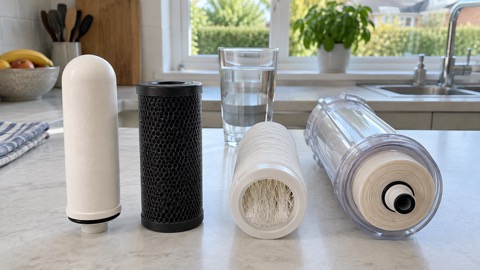
Storing every litre is not the only approach. A filter jerrycan lets you treat water you collect, which suits households with space limits but a stream, pond or rainwater nearby. The maker states that the LifeSaver Jerrycan Starter Pack filters up to 20,000 litres32, and a customer review on the maker's page reports using it all through the summer to filter lake, pond and rain water for up to 8 people, and through winter to filter tap water32.
Treat a filter as a complement to a stored supply, not a replacement. It depends on there being water to filter and on the filter being maintained, and it does nothing for cooking and hygiene volumes. If this route interests you, the emergency filters page compares the types, what each filter removes explains the technologies, and there are product pages for the LifeSaver Jerrycan and its stablemates. For making any collected water safe by other means, see boiling and purification tablets.
A worked example: a family of four
To make it concrete, take two adults, one child, a baby and a dog.
- Drinking water for the three who drink: 3 litres each per day for 3 days1.
- Cooking and hygiene at the comfort rate: 10 litres per person per day3; a more modest store of the drinking total plus a few extra litres for cooking is a reasonable start.
- Baby: plan on ready-to-feed formula as the safest option if tap water is off1, with a small extra allowance of water for washing bottles.
- Dog: a couple of bottles of water and a bowl23, or 3 days' pet food and water in waterproof containers5.
- Replace the bottled water every six months6.
That household's realistic minimum is drinking water at 3 litres per person per day for each of the 3 days, plus extra litres for cooking, plus formula, plus pet supplies, plus whatever they can draw from the pipes and cistern in an emergency. The supply interruption checklist turns this into a tick-list.
Sources (32)
- Power cuts: be informed about hazards, Prepare Campaign, 2026-10-21
- Be Ready Checklist, Be Ready Campaign, 2026-10-21
- Loss of essential services: prepare yourself, Greater Manchester Combined Authority, 2026-10-29
- Create a flood pack, Bradford Council, 2026-10-29
- Are you ready: pets, Birmingham City Council, 2026-06-05
- Emergency supplies kit, Denbighshire County Council, 2020
- London Risk Register v14, public version, Greater London Authority, 2025-01
- Be Ready Household Emergency Plan, Be Ready Campaign, 2026
- Are you ready: household supplies, Birmingham City Council, 2026-05-06
- Emergency pack, Lancashire Prepared, 2026-10-29
- Prepare your home for emergencies, Renfrewshire Council, 2025-10-09
- Be prepared: home and your community, Argyll and Bute Council, 2026
- Be prepared for emergencies, North Devon Council, 2026-10-29
- Create a household emergency lifesaving plan, Dumfries and Galloway Council, 2026
- Prepare your household for emergencies, Westminster City Council, 2014-04
- Stay safe and cool in the sun, South East Coast Ambulance Service NHS Foundation Trust, 2021-07-14
- Preparing for emergencies, North Hertfordshire District Council, 2015-01-12
- Wales flood response framework, Welsh Government, 2016-12
- Hydraulic flooding and wastewater, Thames Water, 2026-10-28
- Power cuts: be informed about hazards, Be Ready Campaign, 2026-10-21
- Public health impact of drought: advice for the public, UK Government, 2022-07-28
- Easy read: disabled persons and carers, Prepare Campaign, 2024-07
- Your pets: pet emergency kit, Wiltshire and Swindon Prepared, 2026-10-25
- How you prepare for an emergency, Slough Borough Council, 2026-10-29
- Emergency grab bag, Buckinghamshire Council, 2023-08-25
- Get help and advice in an emergency, Lincolnshire County Council, 2026-10-29
- Thaw report, Ofwat, 2018-06-19
- Freeze-thaw response, February 2023, Ofwat, 2023-02
- What is a national power outage?, Wiltshire and Swindon Prepared, 2026-10-25
- Water risks message, NHS Fife, 2024
- CCW, Ofwat and SEW incident research report, CCW, 2026-06
- LifeSaver Jerrycan Starter Pack, Icon Lifesaver, 2026-10-28
 Supply Interruption Checklist
 Boil Notice Checklist
 Drinking Supply Checklist
 Storing Tap Water Safely
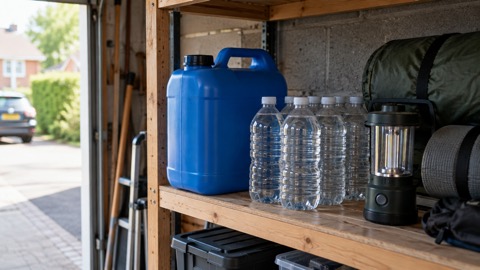 Containers and Jerrycans
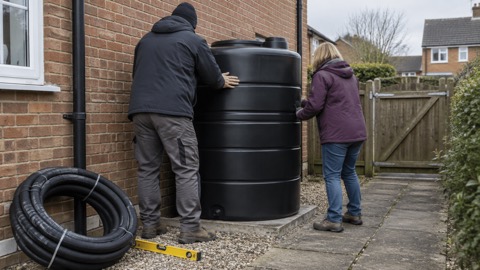 Household Storage Tanks
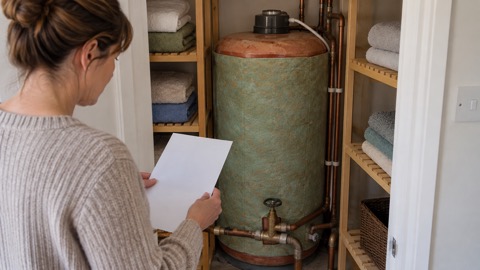 Water Already in Your Pipes
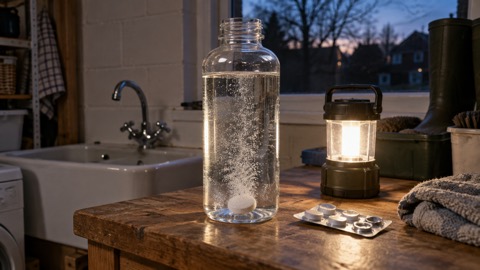 Making Water Safe to Drink
 Boiling Water to Kill Germs
 Purification Tablets
 Emergency Filter Types
 What Water Filters Remove
 Gravity Filters Explained
 Hand Pump Filters
 Filter Bottles and Straw Filters