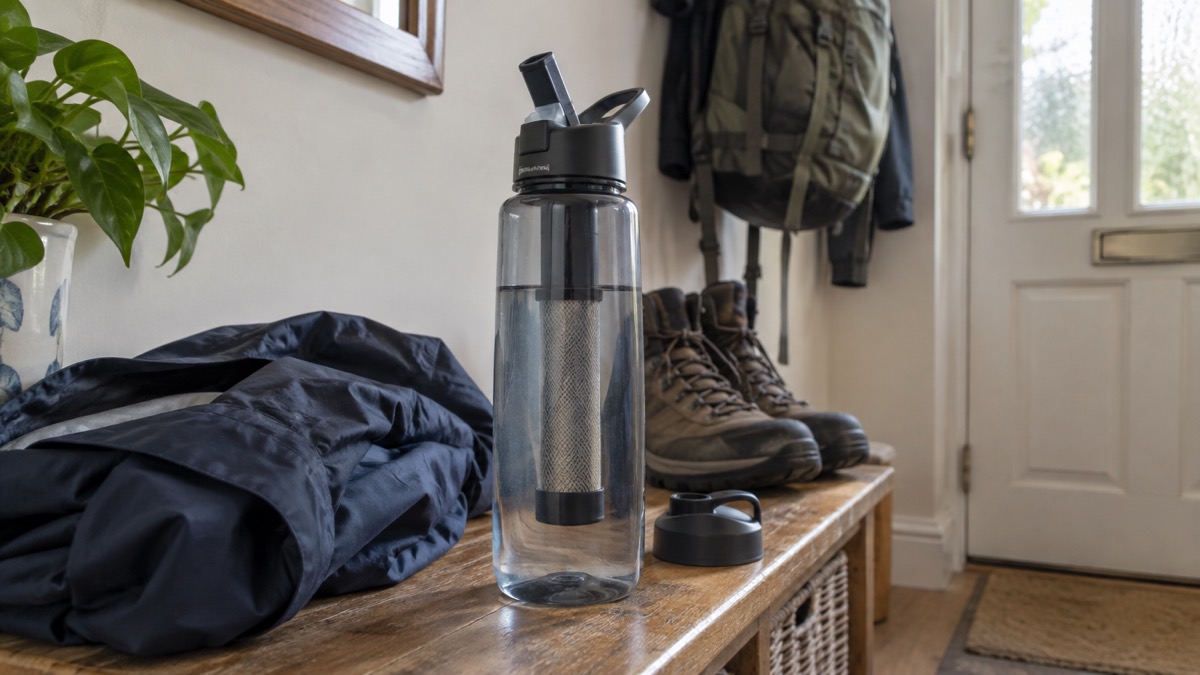
A personal water filter is the smallest piece of emergency water kit you can carry: a bottle or a straw that lets you drink directly from a water source, with the filter inside doing the work as the water passes through1. For one person walking, travelling or caught away from a safe supply, it is designed to enable safer drinking directly from contaminated water, without electricity, chemicals or extensive training1.
What it buys you is independence from the tap for as long as the cartridge lasts. The LifeSystems and Lifeventure filter purifier bottles treat up to 600 litres before the cartridge needs replacing2, and their cartridges keep for 10 years unopened3. The LifeSaver bottle, a larger and heavier option, is stated by its maker to treat 6,000 litres with its main filter4. Against that, a filter bottle is strictly a one-person tool: it will not supply a household, and no personal filter is safe against every kind of polluted water.
This page explains what these filters remove and what they do not, how long they last, how to store one ready for an emergency, and how to choose between a bottle, a straw, a soft flask and a jug. For the wider picture of household water in an emergency, start with Water in an Emergency: A Household Guide.
What a filter bottle or straw filter does for one person
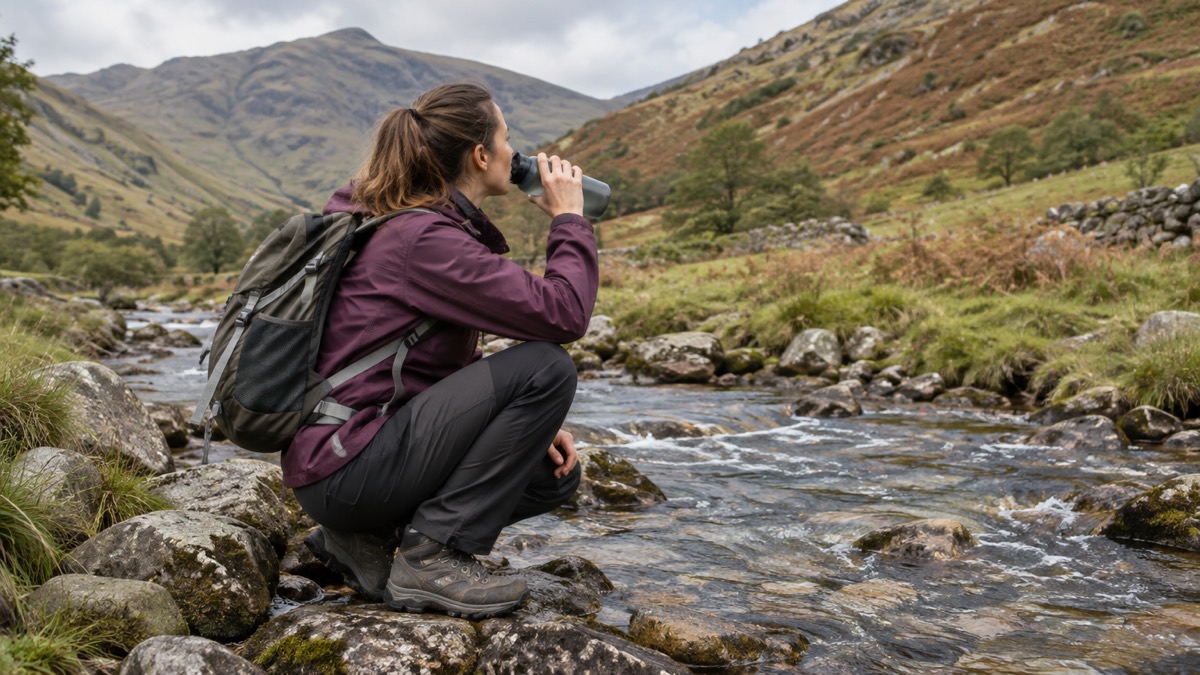
A portable filter reduces contaminants as water passes through it. The bottle and straw types do this instantaneously as you drink; gravity systems, which sit in the home, filter more gradually1. That difference is the whole point of a personal filter: it works at the speed of drinking, in your hand, wherever you are.
In practice this means one person can fill from a stream and drink straight away, as the Lifeventure filter purifier bottle's maker puts it2. The Lifeventure bottle has a 1000ml capacity2, and the maker advises using a separate reservoir to fill it rather than the bottle itself, to avoid cross contamination between the dirty source and your drinking container2. The soft flasks work two ways: you can drink directly through the filter, or squeeze water through it to decant purified water into another bottle or container6. That second mode matters in an emergency, because it lets you fill a clean container for later, or share a small amount of filtered water for cooking, without everyone drinking from the same flask.
The straw format goes further: the LifeSaver Lifeline straw is designed to be placed straight into the source, and its maker states it transforms cloudy or muddy water into clear drinking water7. A straw is the lightest and most compact option, but it produces water only at the pace of drinking, and only for the person holding it.
For a household, the honest framing is this: a personal filter is the kit you carry when you might be away from your stored supplies, or the last-resort tool in a grab bag. It does not replace storing tap water safely at home or knowing how much drinking water to store per person. It complements them.
Straw filters were made for unsafe water, not for camping
Straw filters carry a serious pedigree. They were originally developed for humanitarian and public health reasons, not for outdoor recreation purposes, and they have been a vital tool in parts of Africa in enabling safer drinking directly from contaminated water, without electricity, chemicals or extensive training1. The same point is made again in guidance for the Canadian market: these were originally developed for humanitarian and public health reasons, not outdoor recreation purposes2.
That origin tells you two useful things. First, the design brief was unsafe water in difficult conditions, which is exactly the scenario a UK household might face after flooding or a supply failure, not just a camping trip. Second, the design assumed no infrastructure: no power, no chemicals, no training. A filter you can hand to any adult in the family, with the instruction "put it in the water and drink", is a genuine emergency tool.
But the same makers are clear about the limits. LifeSaver states you cannot use its bottle on small stagnated pools or canals, and that even the best filter would not take that on8. LifeSystems' guidance for its purifier bottle is blunt about chemical contamination:
"Do not use the Bottle to treat water affected by severe chemical or industrial pollution."
LifeSystems, maker support guidance3
That includes industrial spills, fuel, mining waste, radioactive contamination or extremely high concentrations of heavy metals3. A personal filter is for clear water from a natural source that may carry germs: streams, rivers, rainwater, collected water. It is not for water you have reason to believe is chemically poisoned. For guidance on choosing sources, see Drinking From Streams, Rivers and Other Sources Safely, and for what to do when the water company issues a notice, see Do Not Drink and Do Not Use Notices.
What a personal filter removes: the makers' claims
The headline numbers come from the makers' own product pages and support guidance, and they are consistent across the LifeSystems and Lifeventure ranges. The filter purifier bottle and its cartridge are stated to remove 99.99% of viruses (Rotavirus, Norovirus, Hepatitis A), 99.9999% of bacteria (E. coli, Salmonella, Dysentery) and 99.9% of protozoa (Giardia, Cryptosporidium, Amoebae)2. The soft flask cartridge carries the same claims9. The LifeSaver bottle states it removes 99.99% of viruses, bacteria, parasites and microplastics, with bacteria reduction stated separately at 99.9999%10.
| Claimed removal | LifeSystems / Lifeventure purifier bottle | LifeSaver bottle |
|---|---|---|
| Viruses | 99.99% (Rotavirus, Norovirus, Hepatitis A)2 | 99.99%10 |
| Bacteria | 99.9999% (E. coli, Salmonella, Dysentery)2 | 99.9999%10 |
| Protozoa / parasites | 99.9% (Giardia, Cryptosporidium, Amoebae)2 | 99.99% parasites10 |
| Microplastics | Particulates including microplastics11 | 99.99% microplastics10 |
| Chemicals and metals | Chlorine, benzene, chloroforms; lead, arsenic, chromium11 | Not stated on the cited page |
Two caats apply. First, these are maker claims, not an independent test result shown to you at the point of sale. One LifeSaver product, the Lifeline straw, is stated by the maker to be the only water straw system tested and certified by NSF International against NSF/ANSI standards7; if certification matters to you, look for it on the specific product. Our page on Filter Claims and Certification: NSF Standards and Log Reduction explains what these standards mean. Second, the percentages are not the whole story: a filter that removes 99.99% of viruses is a purifier, and one that stops at bacteria and parasites is not. The difference matters most for water that may carry human waste, such as flood water or streams below habitation. For a fuller comparison of filter types, see Ceramic, Carbon, Hollow-Fibre and RO: What Each Removes.
Filter life: how many litres, and how many years
Cartridge life varies widely between products, and it is the number that decides how much emergency use a filter gives you. The LifeSystems and Lifeventure filter purifier bottles treat up to 600 litres2, and the replacement cartridge for the bottle is rated the same12. The soft flask cartridge treats up to 250 litres, with the maker noting that actual life depends on the quality of the source water5. The LifeSaver bottle's main filter is stated to be good for 6,000 litres4. At the shorter end, the Doulton Water Filter Bottle 580ml is rated for effective filtration of up to 3 months rather than a litre count13.
| Product | Cartridge life | Notes |
|---|---|---|
| LifeSystems / Lifeventure purifier bottle | Up to 600 litres2 | Cartridge replaceable12 |
| Soft flask cartridge | Up to 250 litres5 | Actual life depends on source water quality |
| LifeSaver bottle | 6,000 litres, main filter4 | Stated in maker's product listing |
| Doulton Water Filter Bottle 580ml | Up to 3 months13 | Rated by time, not litres |
Two things shorten a cartridge faster than the headline figure. Murky water clogs it sooner, which is why the soft flask maker qualifies its 250-litre figure with source water quality5. And a cartridge that has been used and then left wet can be damaged by freezing, which is covered below. Treat the litre figures as a maximum under good conditions, and keep a sealed spare: unopened cartridges have a shelf life of 10 years3.
No power, chemicals or training needed: dip and sip
The strongest argument for a personal filter in a UK emergency is that it needs nothing else. LifeSystems states that no electricity, pump or chemicals are required for its purifier bottle, because purification happens as you draw water through the cartridge3. The same applies to the soft flask, where purification happens as you draw or gently squeeze water through5. Doulton describes its portable filters as needing no plumbing or electricity14.
This is not a marketing flourish. In a national power outage, official preparedness guidance advises households to hold a small amount of bottled water at home and make sure it is not past its expiry date15. A filter that needs no power keeps working when the pumps, the kettle and the UV purifier pen do not. Compare the alternatives: boiling to kill germs needs a heat source and fuel, purification tablets need contact time and a stock that is in date, and a UV purifier pen needs charged batteries. A filter bottle needs only you.
The training point is just as real. The humanitarian origin of straw filters was built on the fact that people could drink safely without extensive training1. In a household emergency, the person holding the filter may be a teenager or a stressed adult who has just read the instructions for the first time. A tool with one action, dip and sip, is the right tool for that moment.
Filter bottle, straw or jug: which suits one person
The choice comes down to how you will carry and use it. Doulton's guidance on choosing a filter sets out the main categories, including the pitcher or jug filter, a gravity-fed filter inside a plastic pitcher container where water slowly moves through the cartridge16. Welsh Water's independent guidance describes the two household types: an in-line filter usually fitted under the kitchen sink by a plumber, or a jug filter17. Both of those are home kit. For one person on the move, the choice is between a bottle, a straw and a soft flask.
| Type | What it is | Weight | What it does |
|---|---|---|---|
| Filter purifier bottle | 1000ml rigid bottle, drink through the cartridge2 | 255g2 | Carries a day's drinking supply for one person |
| Soft flask | Flexible flask, drink through it or squeeze water into another container6 | 81g (500ml) or 88g (1000ml)6 | Light carry, and decanting water for later |
| Straw filter | Filter straw placed directly in the source7 | Lightest, no container | Minimal grab bag weight, drinking at the source |
| Filter jug | Gravity-fed jug for the home16 | Not a carry item | Improving taste at the kitchen counter |
On weight, the replacement cartridges themselves are light, 28g for the bottle cartridge and 43g for the soft flask cartridge12, so carrying a spare adds almost nothing to your kit.
On the jug: UK water companies are clear that a filter is a matter of personal choice and not needed for safety, since drinking water in their regions is already treated, though jug filters can help people sensitive to taste variations caused by naturally occurring minerals18. A jug is a taste tool for the kitchen, not an emergency tool. If you want a home filter that works without power for a whole household, look instead at Gravity Filters and Ceramic Candles Explained or the British Berkefeld gravity system, which Doulton describes as a plastic-free alternative to a classic filter jug needing no electricity and no plumbing19. For the full range of emergency filter types, see Emergency Filters: Gravity, Pump, Bottle and Straw Types.
Storing a filter until you need it
A filter you only use in emergencies spends most of its life in storage, and how you store it decides whether it works when you need it. LifeSystems gives detailed storage guidance for its purifier bottle: remove the cartridge, shake off excess water, and let it air-dry thoroughly, which may take up to three days. Hand-wash the other components, rinse and dry them, then reassemble with the dry cartridge for an airtight seal and store the whole thing in a clean, dry place3.
Store a spare cartridge sealed in its original packaging, where it will keep for up to 10 years3. LifeSaver states its foil-sealed replacement cartridges have a shelf life extended up to 10 years from the date of manufacture8. Check the packaging date when you buy, and note it in your kit inventory.
Alongside the filter, keep your stored water itself in good order. Official guidance for a national power outage is to hold a small amount of bottled water at home and make sure it is not past its expiry date15. Bradford Council's flood pack guidance advises storing water in plastic containers such as soft drink bottles, and avoiding containers that will decompose or break, such as milk cartons or glass bottles20. Bristol Water advises storing bottled water in a cool, shaded place away from direct sunlight, and after opening keeping it refrigerated and using it by the date on the bottle21. Thames Water advises making sure you have stored enough bottled water for drinking, cooking and for pets22. For filtered water you have decanted, Welsh Water's guidance is to store it in the fridge and use it within 24 hours of filtering17. The Chartered Institute of Plumbing and Heating Engineering adds that water stored in a clean sterile container with a close-fitting lid, made from a material that will not contaminate the water, could last for several days if kept cool23. Our pages on Storing Tap Water Safely at Home and How to Store Bottled Water cover this in full.
Packing a filter in a grab bag
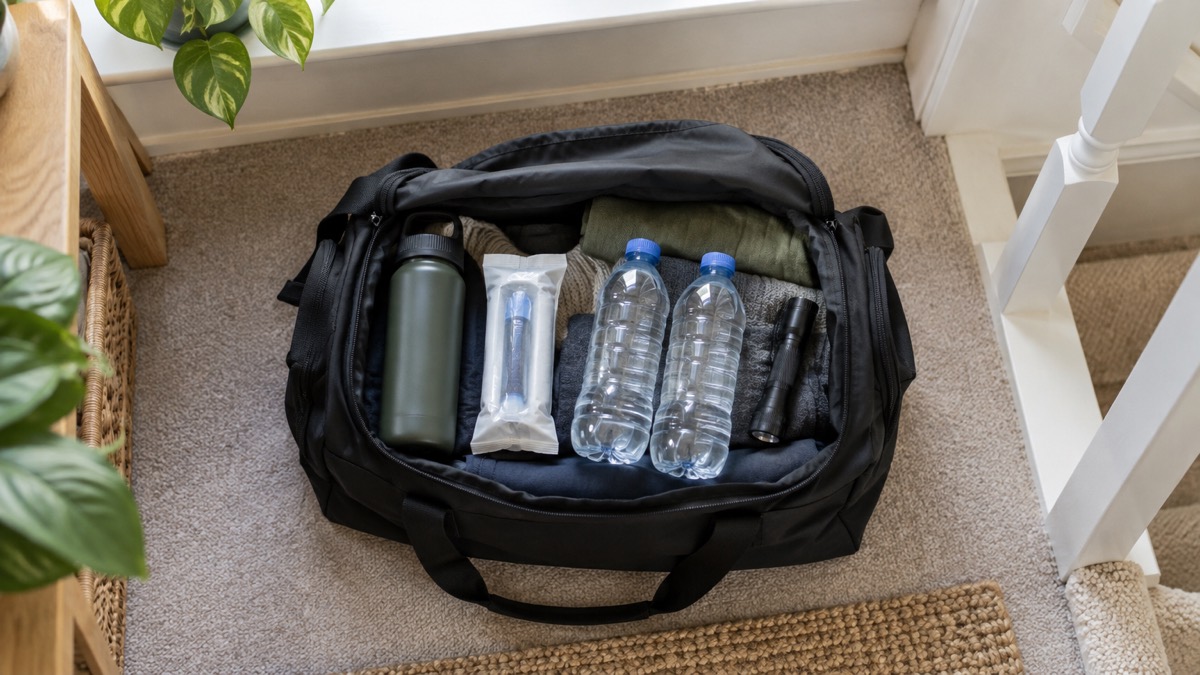
A grab bag is the kit you grab if you have to leave home quickly, or if your power and water are disrupted. The Met Office's advice is to put one together with bottled water, medicines, a torch, radio and batteries, copies of important documents and a change of clothes24, advice it repeats in its winter preparation guidance25. Hampshire Fire and Rescue Service includes bottled water in its grab bag list for wildfire preparedness26. Our full checklist is at Emergency Kit: What a UK Household Should Keep Ready.
A filter bottle or straw earns its place in that bag as the water back-up. Bottled water in a grab bag is heavy and runs out; a 255g filter bottle that treats up to 600 litres2 is the weight of half a litre of water and keeps working long after the bottles are empty. A soft flask at 81g6 is lighter still, and collapses when empty. A straw filter is the lightest of all.
A few practical points from the makers:
- Fill the bottle from a separate reservoir rather than dunking it in the source, to avoid cross contamination2.
- Carry a sealed spare cartridge: 28g for the bottle, 43g for the flask12, with a 10-year unopened shelf life3.
- Choose a bottle with a carry handle if it will live in a bag: the Doulton 580ml bottle has an integrated carry handle and a high flow filter13.
- Keep the filter insulated from cold in winter, and never let a wet cartridge freeze3.
Replacing and caring for a used filter
Cartridges do not last forever, and the makers design them to be swapped rather than binned whole. LifeSystems and Lifeventure describe their purifier bottles as easy to clean with replaceable parts2, and the replacement cartridge is described as easy to fit and replace with just a simple pull and push27. The same cartridge line covers both the bottle and the soft flask27. The soft flask's cartridge is replaceable and treats up to 250 litres9.
Replace the cartridge when it reaches its litre capacity, when flow becomes very slow, or when the maker's time limit passes: the Doulton 580ml bottle, for example, is rated for up to 3 months of effective filtration13. If a wet cartridge may have frozen at any point, replace it regardless of how it looks3. Doulton notes its new water bottle replacement filter uses 75% less plastic than the previous filter13, which may matter to you if you are replacing cartridges regularly.
For the fuller routine of priming, cleaning and frost protection across filter types, see Looking After a Filter: Priming, Cleaning, Cartridges and Frost.
Where a personal filter fits in the household plan
Be realistic about what one filter can do. A bottle or flask serves one person at drinking pace. Even the 600-litre cartridge2, used at a typical day's drinking, is one person's supply for a long emergency, but a family of four cannot crowd around it at a stream. The maker categories make the scale explicit: Doulton's guidance lists whole house systems as comprehensive water filtration for all uses16, which is a different class of kit entirely from a 255g bottle.
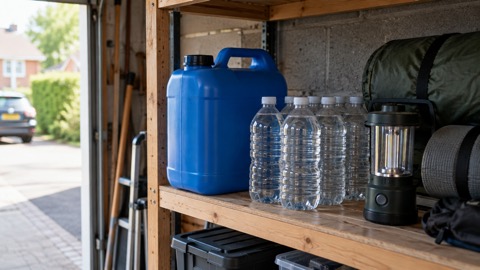
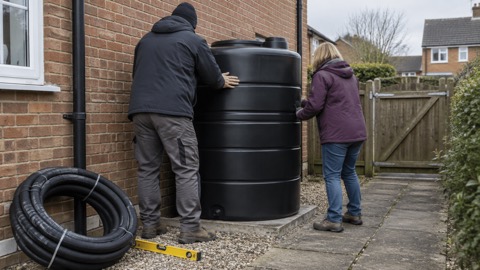
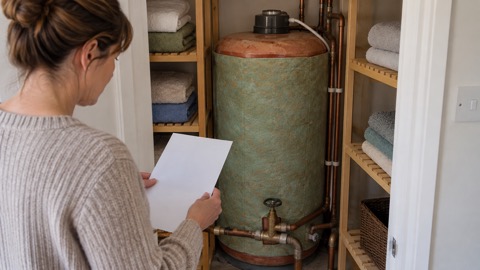
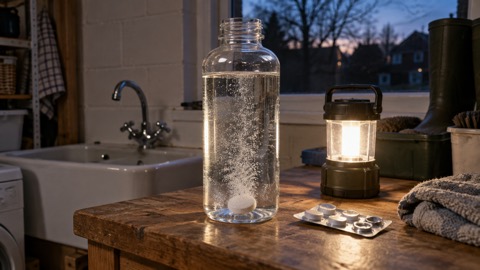
So build the plan in layers. At home, store bottled water and know how much drinking water to store per person, using proper containers and jerrycans or a household storage tank. Know how to make water safe to drink in an emergency by boiling or tablets, and know what is already available in your pipes, cistern and cylinder. If you want a home filter that serves everyone without power, look at gravity filters. Then, at the top of the pile, put the personal filter: the one-person tool for the grab bag, the car, the walking kit, or the moment the household has to move.
One last check on the tap itself. If your concern is particles or taste in everyday tap water rather than emergencies, Bristol Water advises that regular cleaning in and around tap spouts with a chlorine-based solution can help minimise biofilm development28. And if your flow seems poor, Bristol Water's simple test is to fill a 1-litre jug or bottle from the cold kitchen tap: if it fills in under 7 seconds, your flow is fine29. Neither needs a filter bottle, but both are worth knowing before you buy one.
Sources (29)
- Portable Water Filters, Doulton, 2026-10-28
- Water Filter Plus Purifier Bottle, Lifeventure, 2026-10-28
- Water Filter Purifier Bottle FAQs, LifeSystems, 2026-10-28
- LifeSaver Bottle Desert Pouch, LifeSaver, 2026-10-28
- Water Filter Purifier Soft Flask FAQs, LifeSystems, 2026-10-28
- Water Filter Purifier Soft Flask, Lifeventure, 2026-10-28
- LifeSaver Lifeline Gravity Bag Bundle, LifeSaver, 2026-10-28
- LifeSaver Replacement Cartridge Foil Sealed, LifeSaver, 2026-10-28
- Water Filter Purifier Soft Flask, LifeSystems, 2026-10-28
- LifeSaver Bottle, LifeSaver, 2026-10-28
- Water Filter Purifier Bottle, LifeSystems, 2026-10-28
- Water Filter Plus Purifier Cartridge, LifeSystems, 2026-10-28
- Doulton Water Bottle with Filter 580ml, Doulton, 2026-10-28
- Portable Water Filters Collection, Doulton, 2026-10-29
- What Is a National Power Outage, Wiltshire and Swindon Prepared, 2026-10-25
- How Do I Choose a Water Filter, Doulton, 2026-10-28
- Water Quality in the Home, Dŵr Cymru Welsh Water, 2026-10-28
- Your Water FAQs, United Utilities, 2026-10-28
- Countertop Water Filter Systems, Doulton, 2026-10-28
- Create a Flood Pack, Bradford Council, 2026-10-29
- Bottled Water, Bristol Water, 2026
- How to Prepare for an Incident, Thames Water, 2026-10-28
- Flooding, CIPHE, 2026-10-29
- Top Tips to Be WeatherReady, Met Office, 2026-10-25
- 10 Things You Should Do Now to Prepare for Winter, Met Office, 2026-10-25
- Reduce the Risk of Wildfire Damage to Your Property, Hampshire Fire and Rescue Service, 2026-08-27
- Water Filter Plus Purifier Cartridge, Lifeventure, 2026-10-28
- Water Appearance, Bristol Water, 2026
- Water Pressure Management, Bristol Water, 2026
 Supply Interruption Checklist
 Boil Notice Checklist
 Drinking Supply Checklist
 How Much Water to Store
 Storing Tap Water Safely
 Containers and Jerrycans
 Household Storage Tanks
 Water Already in Your Pipes
 Making Water Safe to Drink
 Boiling Water to Kill Germs
 Purification Tablets
 Emergency Filter Types
 What Water Filters Remove
 Gravity Filters Explained
 Hand Pump Filters