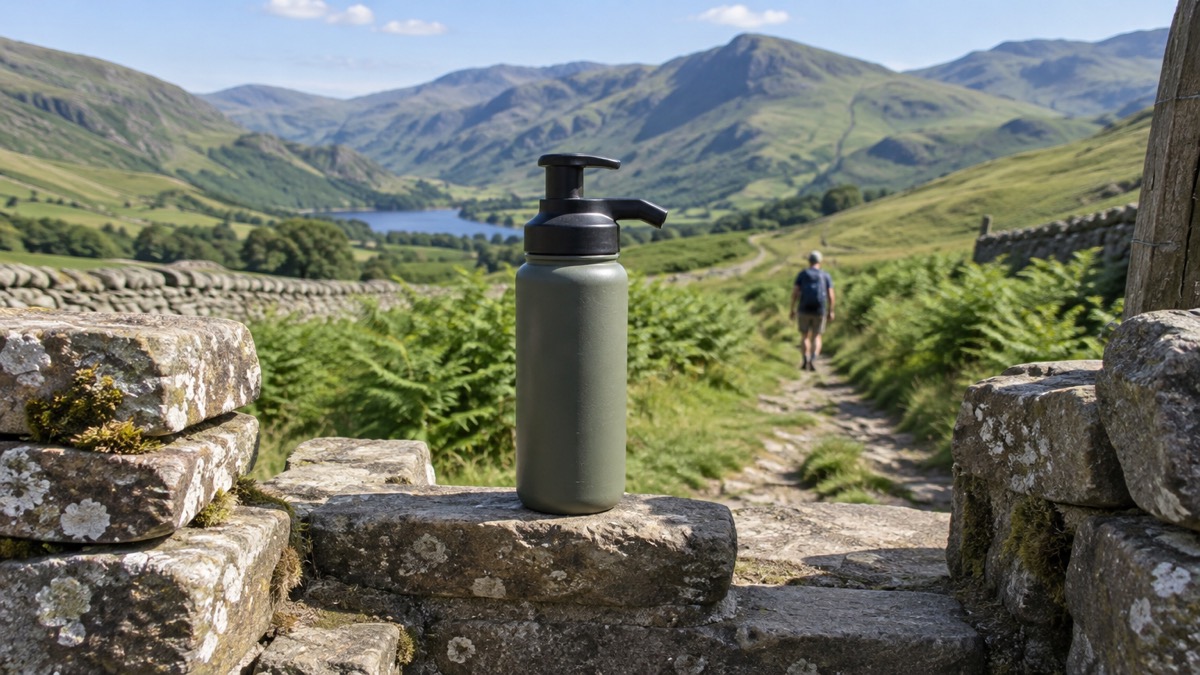
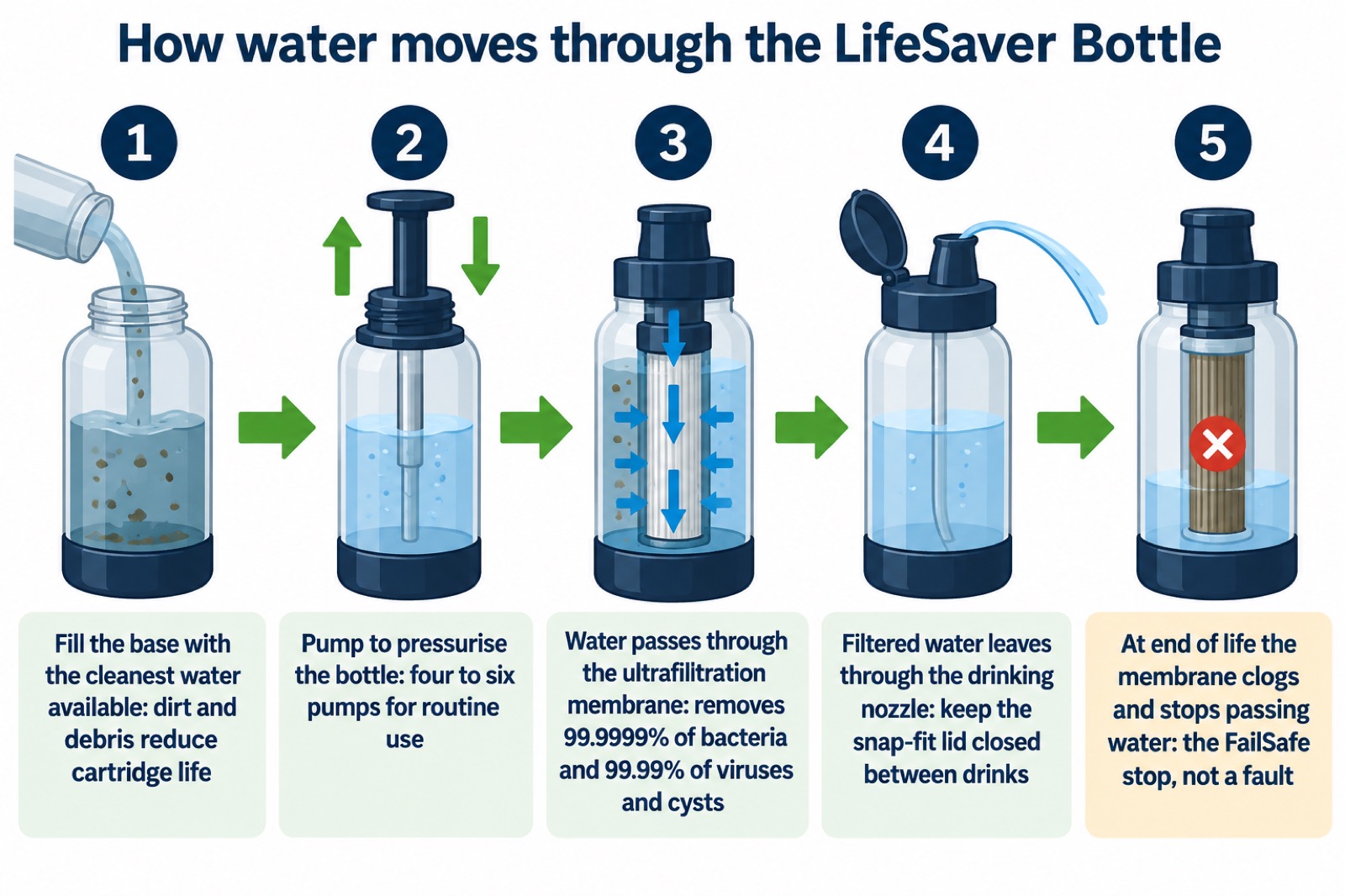
The LifeSaver Bottle is a 750ml water bottle you fill from the bottom, screw shut and pressurise with a built-in hand pump. Air pressure pushes the water through an ultrafiltration membrane and out through the drinking nozzle, leaving contamination behind1. It needs no batteries and no mains power, which is why it suits a household facing a supply interruption or collecting water from a stream.
The maker states the bottle purifies up to 6,000 litres through its main cartridge, and that it removes 99.9999% of bacteria and 99.99% of viruses and cysts3. Before first use it must be primed: fill it, pump four times over a sink and leave it for 10 minutes2. After that there are no wait times, just fill, pump and drink3.
This page sets out what the bottle does, which water it suits and which it does not, how to prime and use it, how to keep it leak-free, and how to store it and get support. It is one option among several for treating water at home; the wider choices are set out in Emergency Filters: Gravity, Pump, Bottle and Straw Types.
What the LifeSaver Bottle is and who it suits
The bottle is a pressure vessel: the maker's manual says so plainly, and that shapes how you handle it2. You unscrew the base, fill it with water, screw the base back on and work the inbuilt manual pump5. The pump pressurises the water, forcing it through the membrane and out through the exit nozzle, leaving microbiological contamination behind6. Because the fill is at the bottom, filtered water is not contaminated by water going in at the top, unlike a traditional top-fill bottle1.
That design makes it a one-person drinking bottle rather than a household supply. It holds 750ml at a time1, so it suits carrying to a stream, keeping in a bag, or making safe drinking water for one or two people through the day. A household storing water for several days will want to read How Much Drinking Water to Store per Person alongside this page, and may find a larger container better for the bulk of its supply.
It suits these circumstances:
- A mains interruption where you have stored or collected water and want to make it safe to drink.
- Collecting from a stream, river or lake while out, where you cannot carry treated water.
- A household that wants a purifier that works without power, batteries or a pump handle that needs charging1.
It is less suited to filling a kettle or cooking pot for a family, because of the 750ml capacity and the pumping involved. For that, a gravity filter or a larger container is the better shape of kit; see Gravity Filters and Ceramic Candles Explained.
What it removes, and what it does not
The maker's headline figures are 99.9999% removal of bacteria and 99.99% removal of viruses and cysts3. Product listings describe the same performance as removing 99.99% of viruses, bacteria, parasites and microplastics4. The maker also states that the LifeSaver Bottle has been accredited with the full NSF P248 Military Operation Microbiological Water Purifier Standard6.
| What the maker states | Figure |
|---|---|
| Bacteria | 99.9999%3 |
| Viruses | 99.99%3 |
| Cysts | 99.99%3 |
| Microplastics | 99.99%4 |
| Main cartridge capacity | up to 6,000 litres4 |
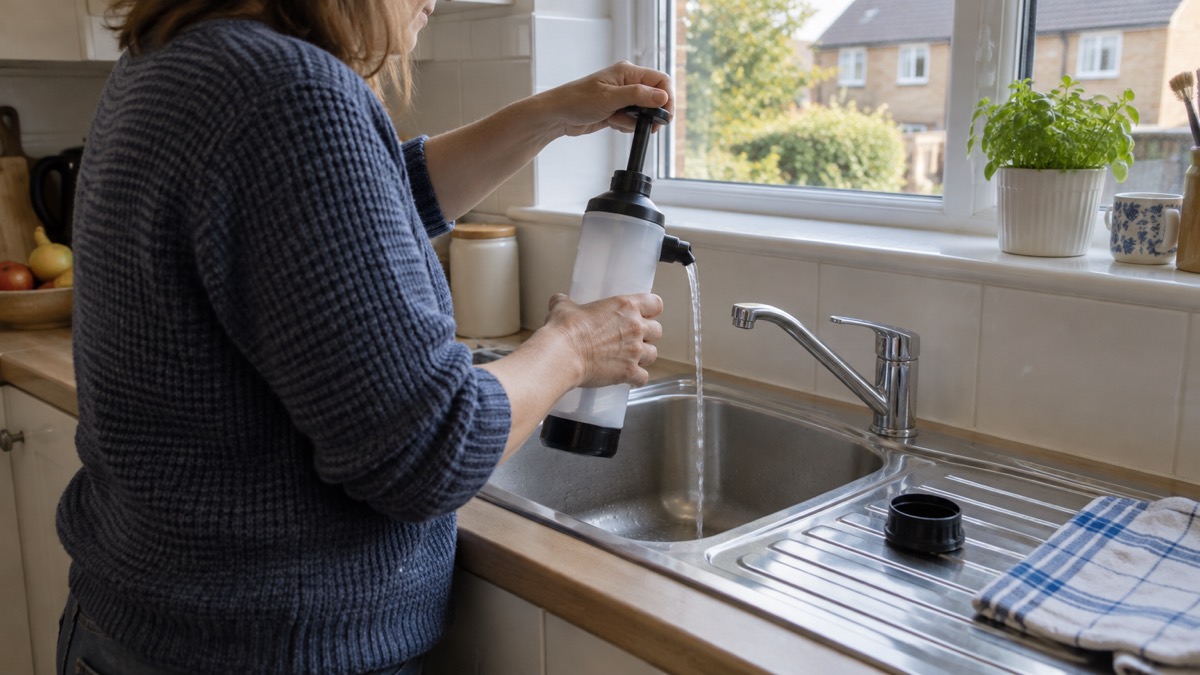
The bottle is a microbiological purifier. It is not suitable to treat sea water, coffee or wine, grey water, Microcystin toxin, or urine, because of salt levels6. If you are dealing with a chemical or fuel contamination, a microbiological filter is the wrong tool; see What to Do If Your Water Smells of Petrol or Oil and Ceramic, Carbon, Hollow-Fibre and RO: What Each Removes.
An optional activated carbon filter removes chlorine, taste, smell and odour, and the maker says it helps improve taste and reduce heavy metals4. It is effective for up to 250 litres7. Fit it when chlorine or taste is the issue; it does not replace the main cartridge's microbiological work.
Priming and first use: fill, pump four times, wait 10 minutes
The maker is clear that the bottle must be primed before its very first use, following the product manual; once primed there are no wait times, simply fill, pump and drink3. The manual's priming steps are:
- Unscrew the base and fill the bottle with clean water.
- Replace the base and leave it for 10 minutes2.
- Hold the bottle over a sink, turn the pump handle and pump four times2.
- The flow rate will improve over the first 24 hours following priming2.
For routine use, open the snap-fit lid and pump four to six times2. The bottle should not require more than five pumps to work effectively2. If it needs more pumping than expected, the manual says the bottle may need cleaning, or the filter may be reaching the end of its service life2.
Which water to use it on, and where it must not be used
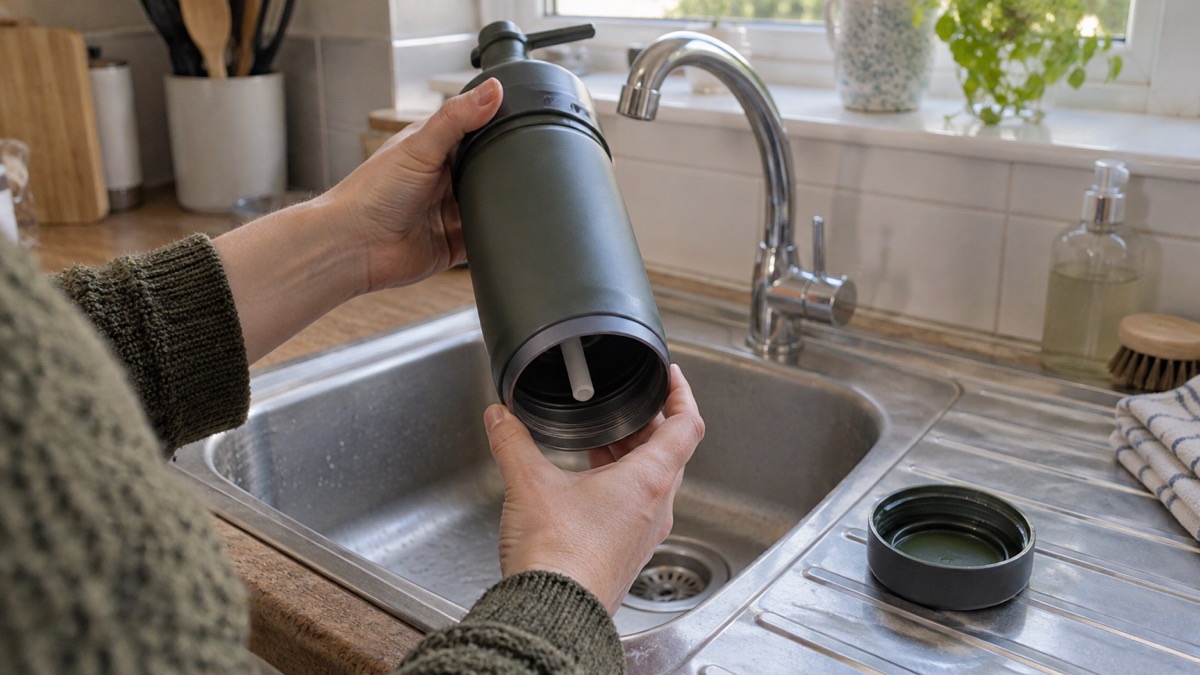
The maker's guidance is to always use the cleanest water available, because dirt and debris build up on the surface of the cartridge and reduce its life2. The blue sponge at the bottom acts as a pre-filter for larger particles2.
Customer reviews published by the maker describe the bottle as suitable for big lakes and streams, even slow-moving streams, but not for small stagnated pools or canals, with one reviewer noting that even the best filter would not take that on4. Treat that as a user's experience rather than a maker's specification, but it points the same way as the manual: cleaner water in means longer cartridge life and easier pumping.
| Water source | Suits the bottle? |
|---|---|
| Stored tap water during an interruption | Yes, and the cleanest option2 |
| Rainwater you have collected | Yes, as a collected supply1 |
| Streams, rivers and lakes | Yes, the cleaner and faster-moving the better4 |
| Shallow puddles | Only in a desperate situation, using the sponge8 |
| Small stagnant pools and canals | The maker's reviewers advise against4 |
| Sea water, urine, grey water, coffee or wine | No, not suitable6 |
If you cannot get water into the bottle easily, the maker says you can use the sponge at the bottom to soak up water and squeeze the contents into the bottle before following the pressurisation steps, describing this for desperate situations with no other water source8. For the wider question of which outdoor sources are safe to approach, see Drinking From Streams, Rivers and Other Sources Safely.
Filter life: up to 6,000 litres, and the FailSafe stop
The main ultrafiltration cartridge is effective for up to 6,000 litres4. The maker puts that in perspective: in theory, based on an individual drinking two litres of water every day, the filter could last over eight years9. In reality it depends on how dirty the water source is: clear water from a fast-running stream or river clogs the filter less than muddy ditch water, and camping or hot climates mean more water is needed each day9.
One listing for the bottle states that a replaceable cartridge filter lasts up to 5,000 litres, while the maker's other pages give 6,000 litres10. The maker's documents disagree on this point, so plan on the lower figure if you want a cautious estimate, and check the cartridge you actually hold.
The FailSafe mechanism is the safety feature that matters most. The maker states that the bottle will physically stop filtering when it is incapable of putting out safe drinking water: the membrane will clog entirely and will not pass any fluid9. In other words, a bottle that has stopped passing water is telling you the cartridge is finished, not that the bottle is broken. Do not try to force it.
Avoiding cracks and leaks: pumping, seals and cleaning
The bottle is made of plastic, and the maker's reviewers warn that you have to be careful with it in the field because a crack is the last thing you want1. The most common cause of damage is over-pumping: the maker states that over-pumping can stress the bottle shell and crack the bottle pump and bottle base, and advises reading the bottle instructions thoroughly before use to avoid it11.
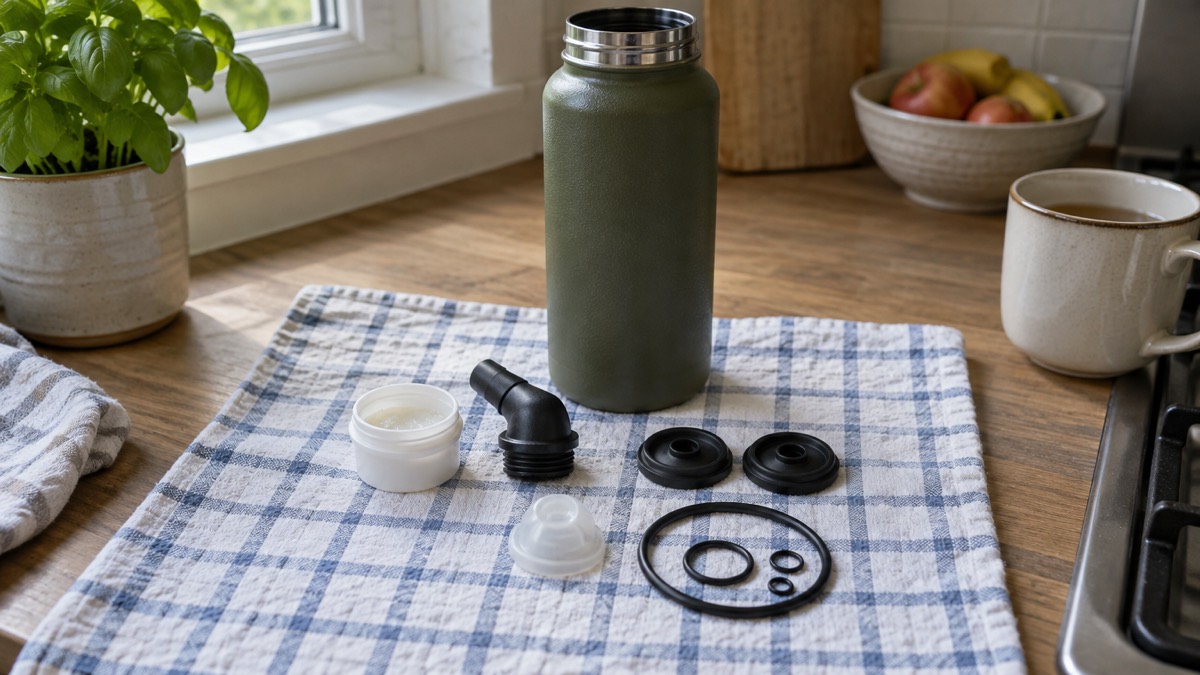
Sand, grit and silt in the water supply can damage the seals around the bottle, so the maker sells a maintenance pack to keep it leak-free5. The pack includes a pot of silicone grease, a replacement drinking nozzle, cartridge pump seals, a dome valve, a pump O-ring and an O-ring5.
For the seals themselves, the manual gives these steps:
- If the O-ring in the pump base begins to wear, apply a thin layer of silicone grease to the outer lip edge of the bottle shell, and replace the O-ring if leaking continues2.
- Place a small amount of silicone grease around the black O-ring on top of the pump shaft12.
- Make sure the red O-ring is correctly seated on the pump tube at the base of the thread, and do not over-tighten12.
To clean the bottle in the field, the manual says to half fill it with the cleanest water available through the blue pre-filter sponge, screw the pump back in place, swill and turn it upside down for up to 1 minute, empty, and repeat until the tipped water is visibly clean2. Keep the snap-fit lid closed to protect the drinking nozzle from contamination2.
Storage, shelf life and what comes in the box
For storage between uses, the manual says to keep at least 1 inch / 2.5 cm of water in the bottle at all times, with the bottle sealed with the pump and nozzle2. If you are flying with it, the manual says to remove the pump, drain the bottle completely, screw the pump back, seal all parts, pack it securely, and on arrival pour 1 inch / 2.5 cm of water in and perform a membrane integrity check before re-use12.
Spare cartridges keep for different periods depending on type:
| Cartridge | Shelf life |
|---|---|
| Standard replacement cartridge | 3 to 5 years from date of purchase13 |
| Standard replacement cartridge (one listing) | 2 to 3 years13 |
| Foil-sealed replacement cartridge | 10+ years storage, extended up to 10 years from date of manufacture14 |
The maker explains the difference: the aluminium barrier foil on the sealed cartridge extends the filter shelf life up to 10 years from the date of manufacture14. The maker's listings disagree on the standard cartridge, giving both 2 to 3 years and 3 to 5 years from purchase, so check the packaging of the cartridge you buy.
What comes in the box depends on the pack. The Starter Pack includes one LifeSaver Bottle, four activated carbon filters, two pre-filter sponges, two chew-proof nozzles, a bottle strap and a protection pouch, and the maker states it is manufactured in the UK4. The Solo Emergency Preparedness Pack includes the bottle with its filter cartridge, four activated carbon filters and a maintenance pack8. A protective pouch is also sold separately to protect the bottle from knocks, scrapes and damage1.
Warranty, support and where to get help
The maker provides a 2-year limited warranty for defects in materials and workmanship on products bought directly or through authorised partners2. In case of defects within that period, return the product with proof of purchase to the original retailer, and LifeSaver will repair, replace or refund at its discretion2. Customers bear the initial transport costs to the UK factory, and LifeSaver covers return shipping2. The warranty excludes normal wear and tear, unauthorised opening or repairs, accidental or misuse damage, non-compliance with instructions, and lack of proof of purchase, and it is not transferable or applicable to second-hand purchases2.
For advice on using or caring for the bottle, the maker invites you to get in touch15. The manual gives the phone number +44 (0) 1206 580 999 and the website www.iconlifesaver.com2.
If your supply has been interrupted, the bottle is one part of the response. Follow any do not drink or boil notice from your water company, which takes priority over any filter; see Do Not Drink and Do Not Use Notices and What to Do If You Get a Boil Water Notice. For the wider picture of treating water at home, start with How to Make Water Safe to Drink in an Emergency, and for keeping a filter in good order, see Looking After a Filter: Priming, Cleaning, Cartridges and Frost.
Sources (16)
- LifeSaver Bottle product page, Icon LifeSaver, 2026-10-28
- LifeSaver Bottle User Manual (Multilingual), Icon LifeSaver, 2026
- LifeSaver FAQs, Icon LifeSaver, 2026-10-28
- LifeSaver Bottle Starter Pack, Icon LifeSaver, 2026-10-28
- LifeSaver Bottle Maintenance Pack, Icon LifeSaver, 2026-10-28
- Independently Tested, Icon LifeSaver, 2026-10-28
- LifeSaver Bottle Activated Carbon Filters (4 pack), Icon LifeSaver, 2026-10-28
- LifeSaver Solo Emergency Preparedness Pack, Icon LifeSaver, 2026-10-28
- LifeSaver FailSafe Technology, Icon LifeSaver, 2026-10-28
- Foil Sealed LifeSaver Bottle Replacement Cartridge | Icon Lifesaver, Icon Lifesaver
- LifeSaver Bottle Replacement Pump, Icon LifeSaver, 2026-10-28
- LifeSaver Bottle Manual 2023, Icon LifeSaver, 2023
- LifeSaver Replacement Cartridge, Icon LifeSaver, 2026-10-28
- LifeSaver Replacement Cartridge Foil Sealed, Icon LifeSaver, 2026-10-28
- How to Prime Your LifeSaver Bottle, Icon LifeSaver, 2026-10-28
- LifeSaver Wayfarer User Manual (Multilingual), Icon LifeSaver, 2026
 LifeSaver Liberty
 Katadyn BeFree