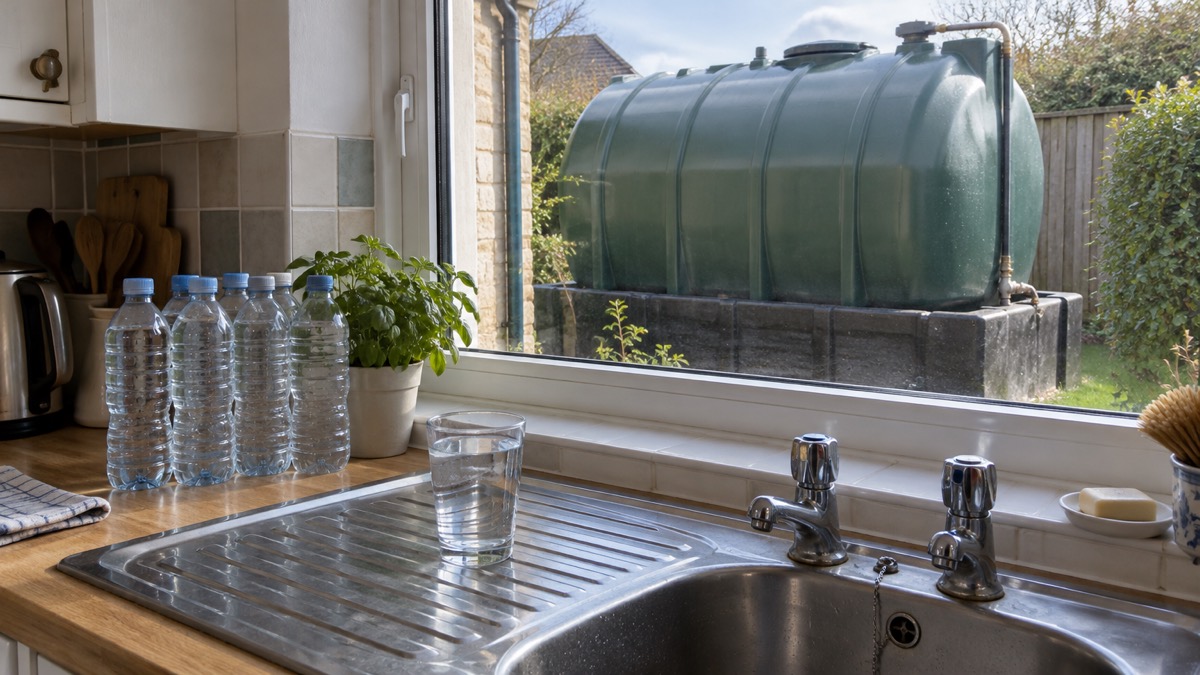
If your tap water smells or tastes of petrol, diesel or oil, stop drinking it and call your water company straight away. The Drinking Water Inspectorate, which regulates drinking water quality in England and Wales, is blunt about why: if you notice a fuel or petrol type taste or odour to your drinking water, contact your water company immediately, as these can be dangerous to your health1. This is not a common problem, and it should be investigated immediately2.
The smell usually has a physical cause. Fuel or oil can spill or leak onto the ground near a plastic water pipe, soak through the soil, and pass through the plastic into the water you drink. That can come from a car fuel spill on a driveway, a leak from a domestic heating oil tank, or a spill nearby that you know nothing about. The water company will investigate, tell you whether the supply is safe, and advise on what to do while it works.
While you wait, use bottled water or water you stored before the problem began for drinking, cooking, brushing teeth and making up feeds. Do not try to boil the smell away: boiling kills germs, not fuel. The sections below set out who to call in each part of the UK, what to do about washing, how to tell whether the problem is your supply or your plumbing, and how households with oil tanks or private supplies can reduce the risk.
Stop drinking the water if it smells of petrol, diesel or oil
The first action is the same whoever supplies you: stop using the water for drinking and for anything that goes into your body. Southern Water's instruction is direct: if your tap water tastes or smells like petrol, diesel or oil, do not drink it and call straight away3. Affinity Water says much the same, that if you notice this taste or odour it is sensible not to drink your water and to contact the company immediately to discuss it with its water quality team7. Yorkshire Water's wording is the shortest version of the rule: contact us straightaway and do not drink it4.
Treat the water as unfit until the company tells you otherwise. That covers drinking, cooking, preparing food, brushing teeth and making up baby formula. If you have a safe alternative, such as bottled water or water you stored before the problem started, use it. Our guide to storing tap water safely at home explains how to keep a reserve that will see you through a few days without a safe tap.
There is a fire risk to think about as well, and it is not only about drinking. Belfast City Council's flooding advice is explicit: do not smoke or use a naked flame where there is a smell of petrol or oil from flood water8. The same caution applies to any strong fuel smell in or around the home. Do not light candles, use a gas hob or strike matches near the source of the smell, and keep children and pets away from it.
If the smell is accompanied by a gas smell, that is a different emergency. The National Gas Emergency Line is 0800 111 999, and the advice is to open doors and windows, leave the area and call it9. Do not assume a fuel smell at the tap and a gas smell in the kitchen are the same incident; treat a gas smell as an immediate danger to the household.
Call your water company straight away
Every water company in the UK gives the same core instruction, and it is worth knowing what will happen when you ring. You will speak to someone who can take the details and pass them to water quality specialists. Thames Water says its water quality experts will assess the situation and let you know what to do10. Yorkshire Water offers a call back if you notice a petrol or diesel taste or smell4. United Utilities customers can call its team on 0345 672 372311.
Have these details ready when you call:
- Your address and postcode, and whether the smell is at one tap or several.
- Whether the water is cold, hot or both, and whether the smell is in the water itself or in the air around the tap.
- Any recent work on the heating system, plumbing or oil tank, and any fuel spill you know of nearby.
- Whether anyone in the household has drunk the water, and whether anyone is unwell.
The company may ask you to run the cold tap for a short time and check again, because a smell that clears can point to plumbing inside the home rather than the mains. It may also send someone to sample the water. Do not be reassured by clear-looking water: the smell is the warning sign, and the company needs to test to know what is in the supply.
If you suspect a spill or leak of fuel has occurred, the Drinking Water Inspectorate advises contacting your water company and your local authority immediately5. That second call matters, because the council's environmental health team can investigate the source and try to stop further contamination. If you know of fuel spills in your area, contact the environmental health team at your local council as soon as possible to try to prevent further damage4.
Who to contact in England, Scotland, Wales and Northern Ireland
The rule is the same across the UK, but the organisation you call depends on where you live. In England and Wales, your water company is the first call: Severn Trent Water asks you to contact it if your water tastes or smells of petrol or diesel1, Wessex Water asks you to get in touch if you notice an oily taste or smell or become aware of a spill2, and Bristol Water asks you to contact it if you suspect contamination by petrol, diesel, oil or solvents so it can investigate3. In Scotland, Scottish Water asks you to contact it without delay if your water tastes of petrol, oil or solvents, after first checking the taste is in the water and not the surrounding air4. In Northern Ireland, contact Northern Ireland Water if you notice a petrol-like taste or smell to your water5. If you smell gas, open doors and windows, leave the area and call the National Gas Emergency Line on 0800 111 9996.
| Nation | Who to call first | What to say |
|---|---|---|
| England | Your water company (for example Thames Water, Yorkshire Water, United Utilities, Wessex Water, Bristol Water, Southern Water, Affinity Water, Severn Trent) | Petrol, diesel or oil taste or smell at the tap; ask for the water quality team3 |
| Wales | Your water company, which for many households is Dŵr Cymru Welsh Water | Same report; the Drinking Water Inspectorate regulates supplies in England and Wales1 |
| Scotland | Scottish Water | Contact it without delay if water tastes of petrol, oil or solvents, after first checking the taste is in the water and not the surrounding air2 |
| Northern Ireland | Northern Ireland Water | Contact it if you notice a petrol-like taste or smell to your water13 |
A few practical points differ. Scottish Water's guidance adds a useful check before you call: make sure the taste or smell is in the water and not coming from the air around you, because a smell in the room can be mistaken for a smell in the glass2. In Northern Ireland, if you have a private supply rather than a mains connection, you should contact the Drinking Water Inspectorate for Northern Ireland or the environmental health department of your local council13.
If the problem is a flood rather than a fuel spill, the body that issues flood warnings differs by nation: the Environment Agency in England, NI Direct in Northern Ireland, the Scottish Environment Protection Agency in Scotland and Natural Resources Wales in Wales14. Our flooding guide covers what to do before, during and after a flood, including the fuel and oil hazards that flood water can carry.
Why fuel gets into your water, and why plastic pipes matter
The mechanism is worth understanding because it explains why a spill you never saw can reach your tap. Fuel or oil leaks or spills into the ground near plastic pipes, and chemicals seep into the water supply. It is more common in rural areas and can be caused by car fuel spills on driveways or leaks from oil tanks3. Affinity Water describes the same process: if the ground around plastic water pipes becomes contaminated with fuel, for example from a spill from a car or a fuel storage tank, this can sometimes be detected in your drinking water7.
The Drinking Water Quality Regulator for Scotland sets out the range of possible causes: spillages of petrol or hydrocarbons that have made their way through the soil and penetrated the plastic main. The usual cause is a petrol or diesel spill on a driveway, but sometimes more than one property is affected2. Wessex Water adds that petrol, diesel or solvent tastes and smells can be associated with chemical or fuel spills on the ground near water pipes, which can soak through a driveway or soil and permeate plastic water pipes15.
This is why the problem can persist. Yorkshire Water warns that even if the water has not been affected yet, it can still become contaminated through the plastic pipe in the future4. If a neighbour's tank or a spill on a nearby driveway is the source, the contamination can reach your supply after the spill itself has been cleaned up. That is also why the company may need to keep testing after the smell has gone.
Smell from one tap only: supply problem or plumbing?
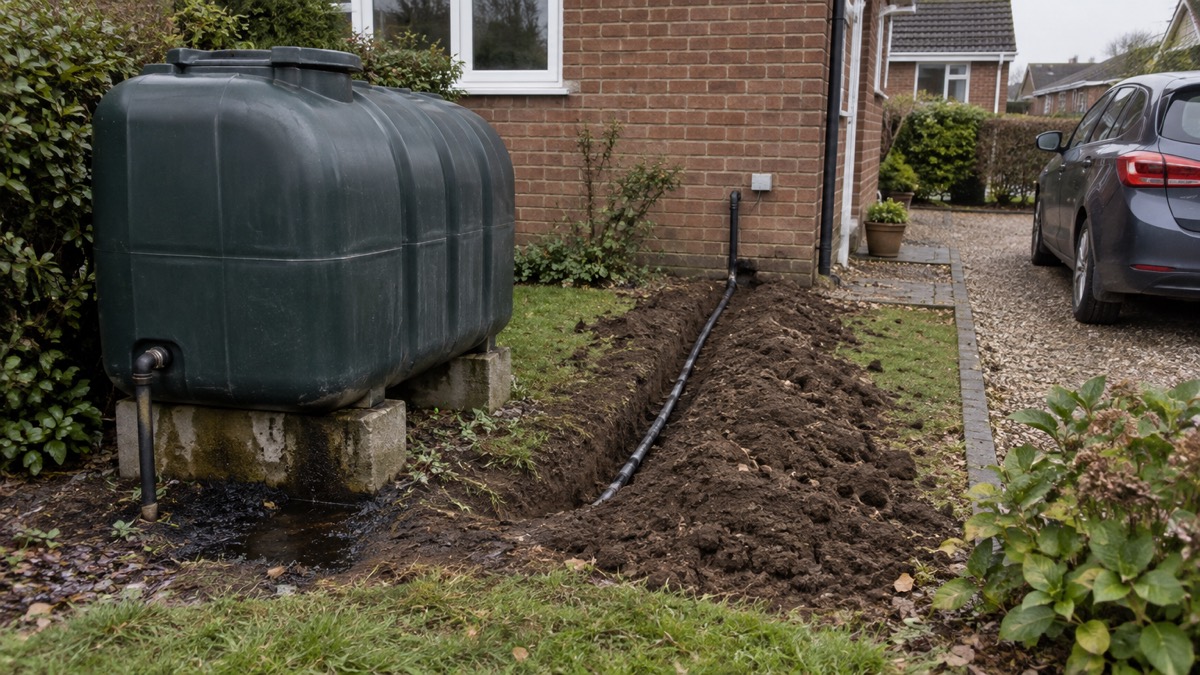
Not every petrol-like smell comes from the mains. Bristol Water says tap water should have no noticeable taste or smell except chlorine, and that most unusual tastes and smells are caused by plumbing problems in the home16. Severn Trent Water points to a new kettle or the breakdown of an older one, or your tap washer, especially if you notice the smell when you are having a hot drink17. United Utilities suggests checking whether you have had any work done in your home, for example on the heating system11.
Use that to narrow it down before you call:
- Run the cold kitchen tap for a short time and smell the water in a clean glass, away from the sink.
- Compare the cold tap with another cold tap in the house, and with the hot tap.
- Think about recent work: a new kettle, a new tap washer, a boiler service or heating work.
- Check whether the smell is in the room rather than the water, as Scottish Water advises2.
If the smell is only at one tap and clears after running, plumbing is the more likely explanation. If it is at the cold kitchen tap and persists, treat it as a supply problem and call your water company. Our page on why tap water tastes or smells different covers the other common causes, from chlorine to TCP-like tastes, so you can tell them apart.
Keeping oil storage away from your supply pipe
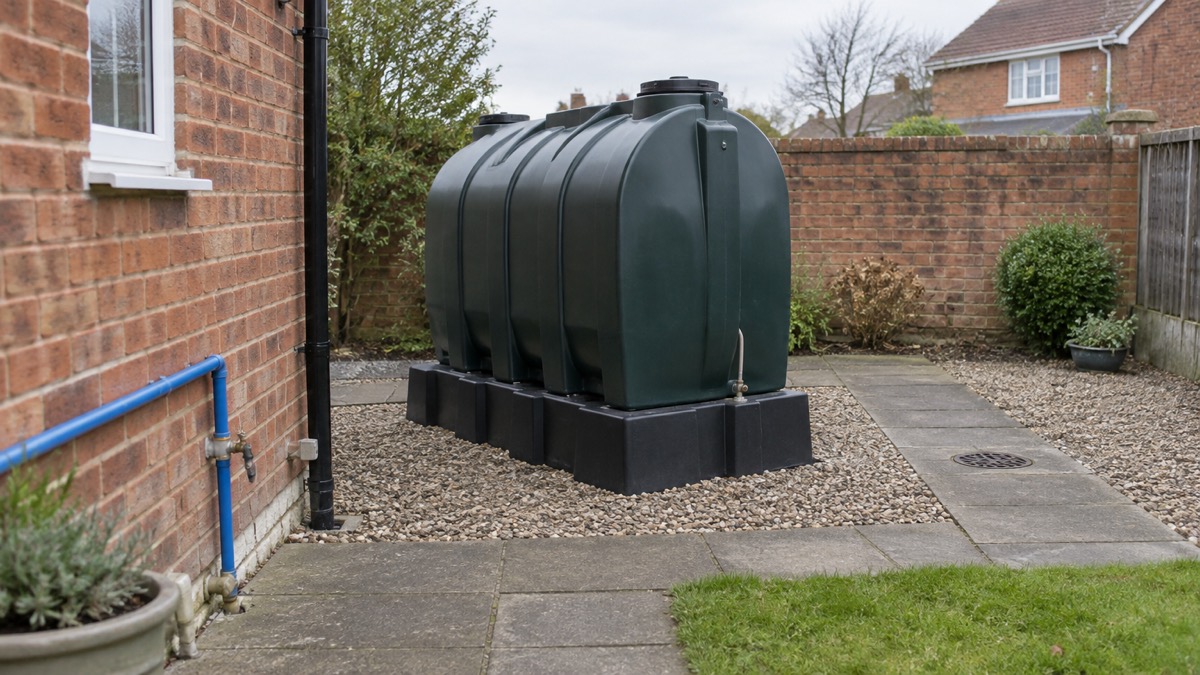
If you have a domestic heating oil tank, you are one of the households where this problem is most likely to start. United Utilities explains that if your property has an oil heating system, it is common for small leaks or spills from your tank to sink into the ground and leach through plastic water pipes and into your water supply11. Faulty or badly maintained domestic central heating oil tanks cause numerous pollution incidents18.
The warning signs of a tank leak include a strong smell of solvent, petrol or oil inside or outside your home or in your cupboards19. If you notice that, act. Northumberland Council advises calling its environmental protection team if there is a strong smell of oil in your home18. Wessex Water advises contacting it if you become aware of a spill or notice an oily taste or smell to your water15.
Practical steps to reduce the risk, from the water companies and councils:
- Store fuel safely, keep petrol or fuel oil away from water pipes, and consider protective measures such as bunds or specialist barrier pipe11.
- Locate your tank as far away from water sources such as ditches, soakaways, groundwater, streams, rivers and lakes as possible, to minimise contamination risk if it leaks15.
- Keep petrol out of the reach of children20.
- Store petrol containers in a garage or shed away from other buildings, in a well-ventilated area away from sources of ignition such as electrical equipment and naked flames21.
Private water supplies: wells, boreholes and springs
If your water comes from a private supply rather than the mains, the petrol smell deserves extra care. The Scottish Borders Council warns that you may not be able to tell whether your water is safe, as contaminated water may smell, taste and look normal6. Argyll and Bute Council notes that a lack of chlorine smell may indicate a private supply, because most private supplies are not chlorinated, whereas the mains supply usually has a faint chlorine or bleach-like odour22.
That means you cannot rely on your senses to clear a private supply. You may not be able to tell whether your water is safe, as contaminated water may smell, taste and look normal13. For stored fuel near a private source, the Drinking Water Inspectorate's guidance is specific: all stored fuels or oils within a 50 m radius of the source should be adequately bunded to prevent leaks contaminating the supply23.
The consequences of a contaminated private supply can be serious and long-running. A case study published by the Drinking Water Inspectorate describes a supply affected by contamination in which, in April 2012, several householders contacted the local authority reporting discoloured water24. The lesson for a household is to report early and keep records, so that action is not delayed.
Our guide to private supplies: wells, boreholes and springs sets out testing, treatment and what to do when a supply is affected.
Using the water for washing, and what to do while you wait
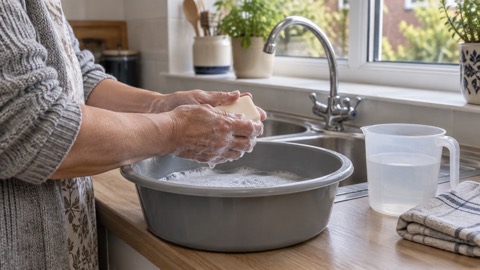
The safest position on washing is to ask before you use the water on your skin. The water companies' public guidance focuses on drinking, but the underlying concern is chemical contamination, and the company is the only body that knows what has been found in your supply. Ring it, describe the smell, and ask directly whether the water is safe for washing, showering and laundry. Until you have that answer, keep washing brief, avoid swallowing any water, and do not use it on broken skin or for a baby's wash.
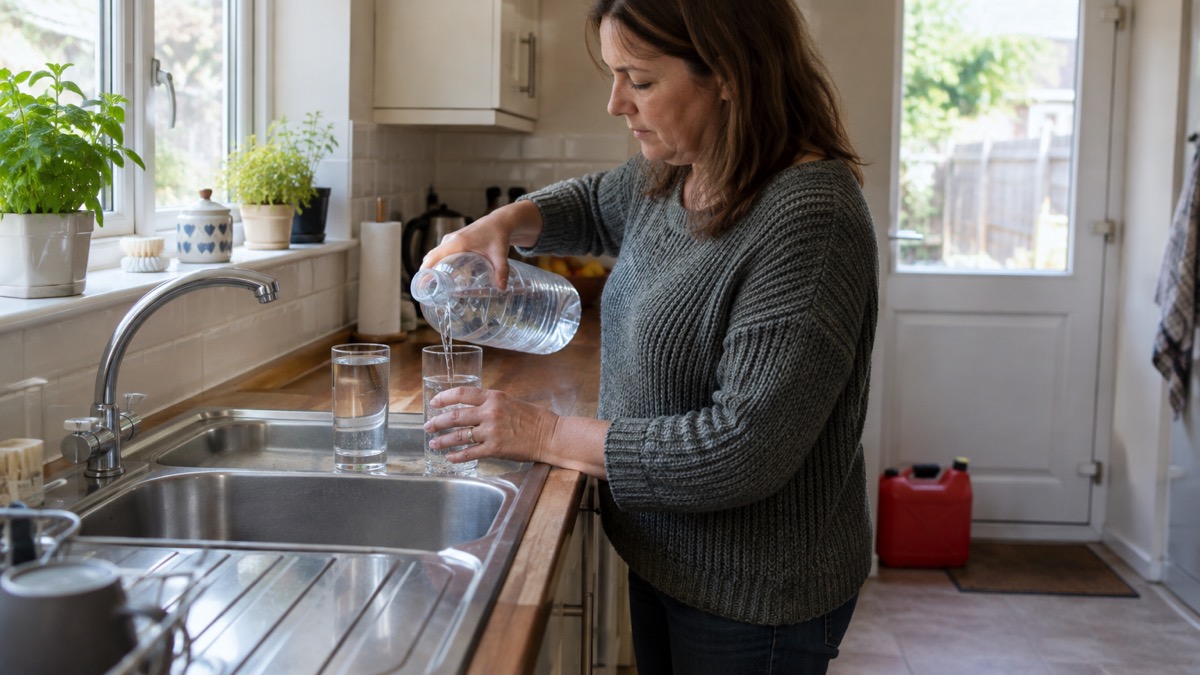
For drinking, use bottled water or water you stored before the problem started. Do not boil the affected water in an attempt to make it safe: boiling is a germ treatment, and the problem here is fuel, not bacteria. Our guide to how to make water safe to drink in an emergency explains which treatments work against which hazards, and boiling to kill germs sets out what boiling does and does not do.
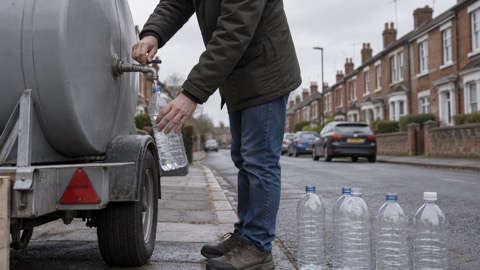
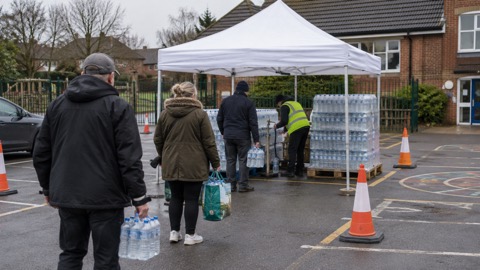
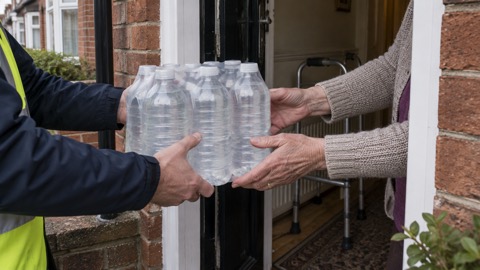
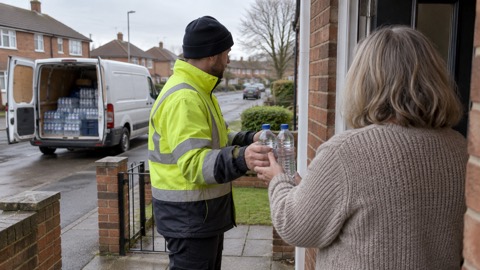
If the supply is interrupted or restricted while the company investigates, it may provide alternative supplies. Our pages on bottled supplies, tankers and bowsers and do not drink and do not use notices explain what those notices mean and how to work within them. Households with babies, people who are medically dependent or anyone who needs extra help should read extra help in an emergency and ask the company what support it can provide.
Sources (24)
- Oil, fuel and other hydrocarbons, Drinking Water Inspectorate, 2026
- Taste and smell, Drinking Water Quality Regulator for Scotland, 2026
- My water looks, smells or tastes unusual, Southern Water, 2026
- My water tastes or smells of petrol or diesel, Yorkshire Water, 2026
- Taste and odour in drinking water, Drinking Water Inspectorate, 2024
- Private water supplies, Scottish Borders Council, 2026
- Tastes and odours, Affinity Water, 2026
- Flooding advice, Belfast City Council, 2026
- Preparing for an emergency: be ready, stay safe, act now, Sussex Resilience Forum, 2025
- Different smell or taste, Thames Water, 2026
- Fuel or oil taste or smell in water, United Utilities, 2026
- Taste and smell, Bristol Water, 2026
- Dealing with drinking water problems, nidirect, 2026
- Community resilience, Met Office, 2026
- Oil storage and leaks, Wessex Water, 2026
- Water appearance, Bristol Water, 2026
- My water tastes or smells unusual, Severn Trent Water, 2026
- Domestic oil, Northumberland Council, 2026
- Oil tank leaks, Somerset Council, 2025
- Staying safe, Health and Safety Executive, 2026
- Domestic and non-workplace petroleum storage, Greater Manchester Fire and Rescue Service, 2026
- Private water supplies for your property, Argyll and Bute Council, 2026
- Protecting your private water supply, Drinking Water Inspectorate, 2026
- Water safety plan approach to improving the safety of a private supply, Drinking Water Inspectorate, 2026
 Supply Interruption Checklist
 Boil Notice Checklist
 Drinking Supply Checklist
 Boil Water Notice Advice
 When Supply Is Restored
 Check for an Outage
 Report No Water or Burst Pipe
 Bottled Water Stations
 Bottled Water Delivery Help
 Flushing the Toilet in an Outage
 Washing Without Running Water
 Combi Boiler When Water Is Off
 Water Company Incident Alerts
 Checking a Water Company Caller
 Brown or Discoloured Tap Water