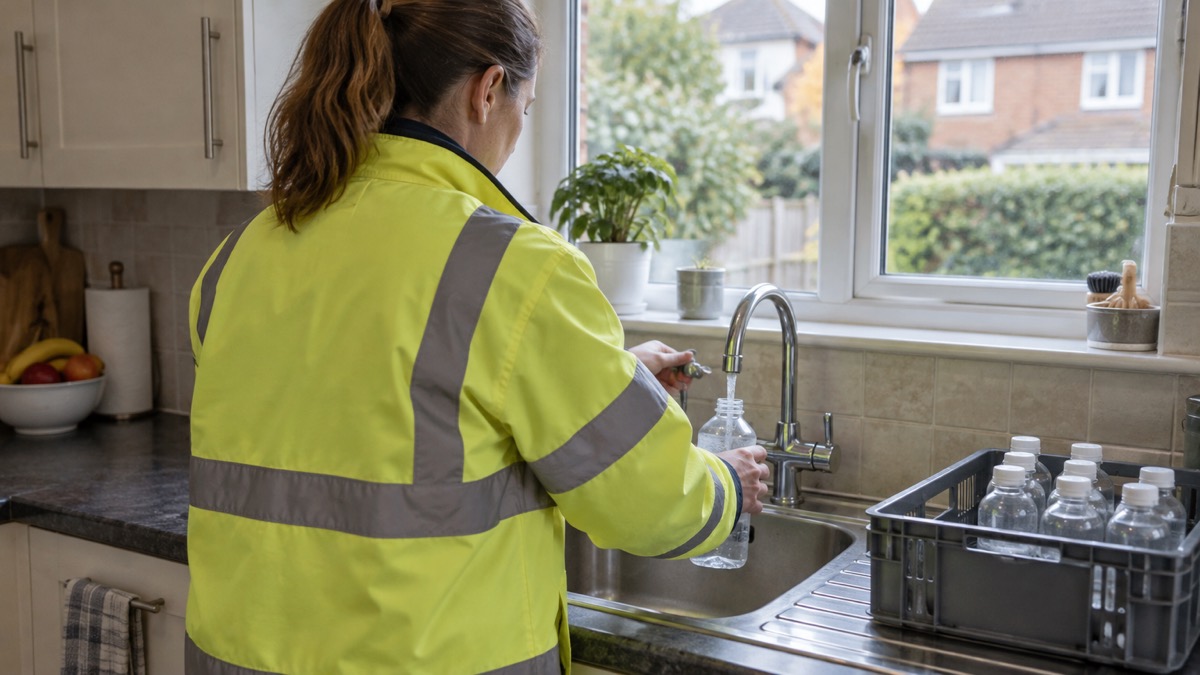
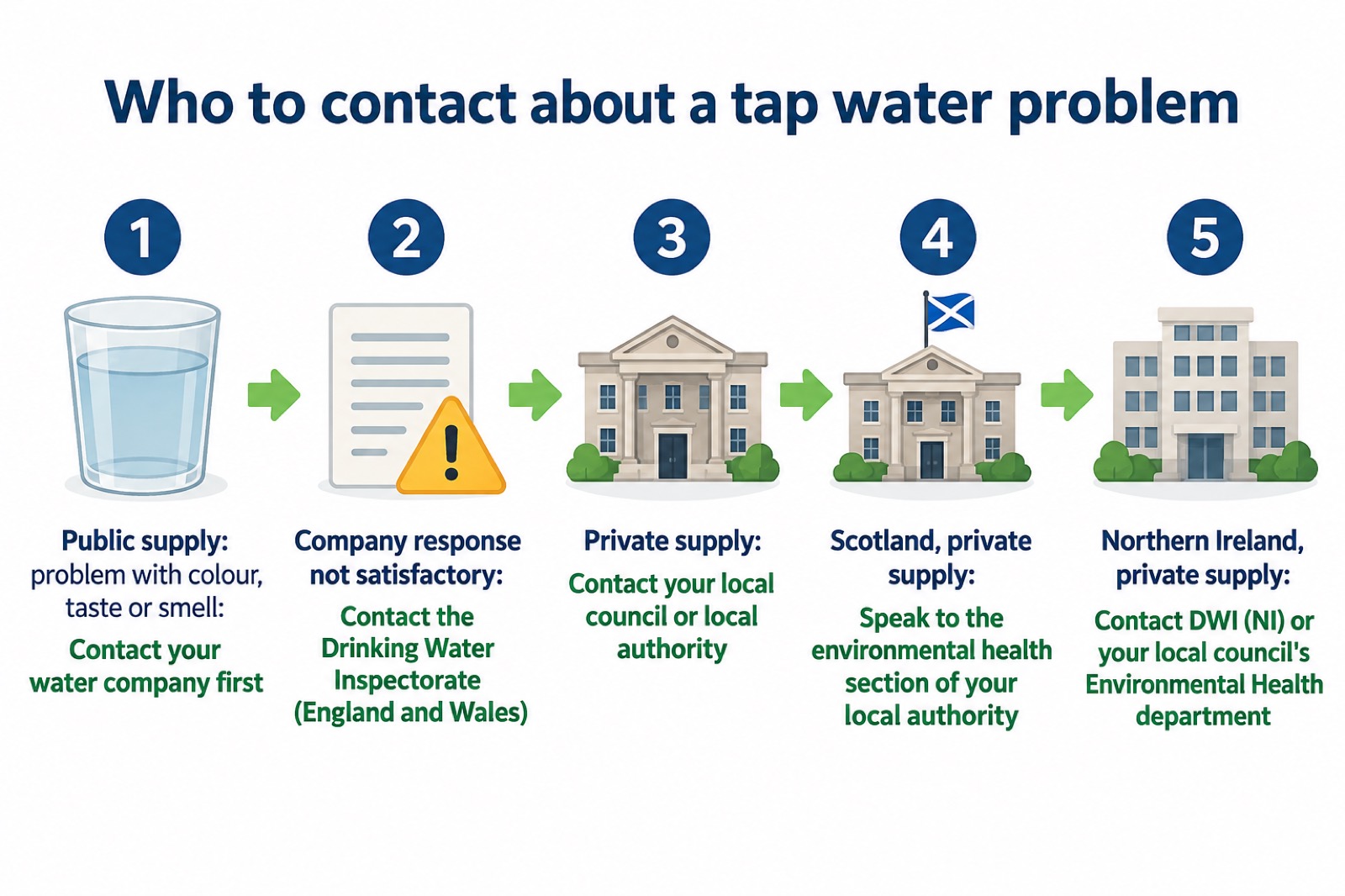
If something is wrong with your tap water, or your water company has let you down, the first call is almost always the company itself. Your tap water should not smell and should be clear; if it is not, contact your water company, or your local council if you have a private water supply. If you have already contacted your water company about your tap water and you are not happy with their response, contact the Drinking Water Inspectorate1.
Beyond that first call, several different bodies oversee drinking water in the UK, and which one helps you depends on where you live and what has gone wrong. Quality is checked by the Drinking Water Inspectorate in England and Wales, by the Drinking Water Quality Regulator in Scotland, and by the Drinking Water Inspectorate for Northern Ireland. Prices and service standards in England and Wales are set by Ofwat, and complaints that the company will not settle go to CCW. Private supplies, from wells, boreholes and springs, are regulated by your local authority.
Who to contact first when your tap water looks, smells or tastes wrong
Start with your water supplier. If you have concerns about the quality of your tap water, you should first approach your water supplier and explain the problem to them7. This is the same advice whether the change is colour, taste or smell: contact your water company if you notice a change in the colour, taste or smell of tap water, including after a flood8, and fire and rescue services in Wales give the same instruction, to contact your water company if tap water is discoloured or tastes bad9.
Act quickly when the problem is severe. The Drinking Water Inspectorate's advice on TCP or medicinal taste and odour is to contact your water company immediately if you notice a particularly bad or strong smell or taste which means you cannot drink the water, or if you notice a smell or taste for the first time10. If you suspect your home has lead pipes, you can ask your water company to test the water at your kitchen tap; if they find lead they should provide written advice on what to do11.
If you are on a private water supply, from a well, borehole or spring, the route is different: contact your local council rather than a water company1. In Wales, Public Health Wales similarly recommends that you contact your water company in the first instance, or your local authority if you are on a private water supply3.
The Drinking Water Inspectorate: independent checks on water quality in England and Wales
The Drinking Water Inspectorate (DWI) provides independent reassurance that water supplies in England and Wales are safe3. It independently assesses drinking water quality against the regulatory standards5, so when a company tells you your water meets the standards, there is a public body whose job is to check that claim.
For households, the DWI works in two ways. It gives consumer advice on water standards and has a range of water quality advice leaflets to help you if you are worried, and if you have contacted your water company about your tap water and are not happy with their response, you should contact the Inspectorate1. Its telephone number is 0330 041 65012. The Inspectorate also publishes detailed guidance on specific problems, such as lead in drinking water and unusual tastes and odours, which explains what the company should be doing10.
There is one important limit. The Drinking Water Inspectorate has no direct enforcement powers under the Regulations in relation to private water supplies; its role for those supplies in England and Wales is to provide technical guidance2. If your water comes from your own well or spring, the body with real powers over it is your local authority, covered later on this page.
DWQR keeps Scotland's drinking water safe to drink
In Scotland the quality regulator is the Drinking Water Quality Regulator for Scotland (DWQR). DWQR ensures that drinking water is safe to drink for you and your family, and public supply water in Scotland has been treated to make it safe and has to meet stringent regulations4. Scottish Water is the licensed water authority14, so it is Scottish Water you deal with day to day, with DWQR watching over the quality of what it delivers.
DWQR publishes answers to the questions households actually ask. On chlorine, the amount added to water is tightly controlled by Scottish Water, and DWQR expects Scottish Water to use no more chlorine than is absolutely necessary and to regularly review the amount used15. DWQR is also open about where work remains: some treatment works in Scotland currently have difficulty producing water that complies with the THM standard, and DWQR is working to ensure these facilities are upgraded as quickly as possible15. If your supply is a private one, you should speak to the environmental health section of your local authority12.
Scottish Water's role extends beyond the tap. It is a responsible authority for flood risk management and is working closely with SEPA, local authorities and other responsible authorities16. For a household, that means the body supplying your water is also part of the planning system for floods that could affect your supply.
Northern Ireland: NI Water is regulated within NIEA
Northern Ireland's arrangements are its own. Northern Ireland Water Limited (NI Water) is responsible for the supply and distribution of the public drinking water in Northern Ireland5, and it is the sole provider of water and sewerage services there13. It is a Government Owned Company, set up to provide the water and sewerage services17. Drinking water in Northern Ireland is of very high quality, but on rare occasions things may go wrong13.
Quality is overseen by the Drinking Water Inspectorate, within NIEA, which regulates the quality of the drinking water supply provided by NI Water5. The Drinking Water Inspectorate for Northern Ireland provides independent assurance of the quality of drinking water provided by Northern Ireland Water13. For concerns over burst pipes or your water supply, contact Northern Ireland Water17, and NI Water provides information on supply issues and customer advice18.
Two further bodies matter in Northern Ireland. The Consumer Council represents consumers on water and sewerage matters13. And the Utility Regulator is an independent public body set up to oversee the electricity, gas, and water and sewerage industries in Northern Ireland17, the closest equivalent there to Ofwat's role in England and Wales. If you are concerned that you may have lead pipework, or would like your drinking water checked for lead, contact Northern Ireland Water to request a lead sample at your property13.
Ofwat sets prices and service standards, not water quality
Ofwat, formally the Water Services Regulation Authority, is a non-ministerial government department19. Its job is the economic side of the industry: prices, service standards and the companies' performance, not the safety of what comes out of the tap. Ofwat has a general duty under section 27 of the Water Industry Act 1991 to keep under review the way in which companies carry out their functions, and primary duties to further the consumer objective to protect the interests of consumers and the resilience objective to secure the long-term resilience of water companies' water supply and wastewater systems19.
Ofwat's reviews show why its oversight matters to households. Its report into the 2018 thaw incident found that some companies, such as Thames Water, did not have accurate or up-to-date information and data on customers who needed priority help, meaning they could not get in touch or offer tailored support before, during or after the incident19. In Welsh Water, no one team had an overall view of how well they were meeting the needs of vulnerable groups19. The lesson for a household is not to assume your company knows you need help: register, and check.
Ofwat also publishes information on what communication you should expect from your water company in the case of an interruption to water supply20. On long-term resilience, at PR24 Ofwat's decisions allowed for £5 billion to be spent on expanding supplies, including funding for 424 million extra litres of water per day, currently over three million people's usage, to be delivered by 2030; of this, £2 billion will kick off 30 large longer-term schemes which will ultimately represent around £50 billion in investment6.
CCW: free independent advice when your water company lets you down
CCW, the voice for water consumers in England and Wales, provides answers to frequently asked questions for household customers18. It is free and independent of the water companies, and it is where a complaint goes once you have given your company the chance to put things right. If you are not happy with how your water company has handled your complaint, or your issue is over eight weeks old, you can take it to CCW, or simply ask it for free, trusted, independent advice18.
CCW also explains the standards your company is legally required to meet. The Guaranteed Standards Scheme (GSS) is the set of minimum standards every water and sewerage company in England and Wales must keep to. If your company fails to keep to a standard, it must make you a fixed payment or credit that amounts to your water services account21.
Private water supplies: your local authority is the regulator
If your home draws water from a well, borehole or spring, the regulator is not the DWI or Ofwat but your local council. The regulator for private water supplies is the relevant local authority, with its functions prescribed in sections 77 to 85 of the Water Industry Act 199122. The local authority is the first point of contact for any concern about a private supply, including having it checked for lead23. In Scotland, private water supplies are likewise regulated by local authorities24, and Public Health Wales advises that if your water has changed colour or has a taste or smell, you contact your local authority for advice25.
What the local authority will do depends on the supply. It will provide advice on any testing and arrange for this to be carried out on your behalf7. If a sample fails, an Environmental Health Officer will issue appropriate advice to every person who manages the supply14. The Regulations allow the local authority to recover its costs, and charging rates should be available on its website, usually found by searching for "private water supplies"26.
Testing obligations depend on what the supply serves. If a supply serves more than 50 people or is used for commercial purposes it is classed as a regulated supply27. If your private water supply serves the public, or a commercial operation, you are required by law to have it tested28. Any private water supply used for domestic purposes that supplies two or more dwellings or other properties must be risk assessed every 5 years and regularly tested in accordance with the regulatory requirements by the local authority26.
| What your supply serves | Who regulates | What is required |
|---|---|---|
| One owner-occupied home | Local authority, but not regulated as such | Other supplies, such as those for owner-occupied homes, are not regulated27 |
| Two or more dwellings (domestic) | Local authority | Risk assessment every 5 years and regular testing26 |
| More than 50 people, or commercial use | Local authority | Classed as a regulated supply27; serving the public or a commercial operation means testing is required by law28 |
| Two or more properties, public or commercial premises in Northern Ireland | DWI (NI) | DWI (NI) is responsible for monitoring these supplies13 |
The local authority has real teeth where health is at risk. The Regulations give enforcement powers to local authorities when a supply is considered to present a potential danger to human health, though they do not give powers to require a sufficient supply2. Where the cause is lead, the local authority is compelled to use its powers of enforcement to require a suitable remedy to mitigate the lead risk23. And under section 79 of the Water Industry Act 1991, where a supply causes a danger to life or health and piped supply is not practicable at reasonable cost, the local authority must require the local water company to provide a wholesome water supply to the premises for a specified length of time, with costs recoverable from the relevant persons22.
Day to day, though, the supply is yours to look after. Your local authority can advise you, but the problem needs to be dealt with by the owner or occupier of the home, or anyone else with ownership or control over the water source or supply25. In Scotland, the Private Water Supply grant is administered by local authorities on behalf of the Scottish Government, so it is worth asking your council what help is available24.
What to expect from your water company when the supply is cut off
Your water company is the first place to turn for information during an interruption. Check its website regarding service in your area and whether you can pick up alternative sources of water18. Ofwat provides information on what communication you should expect from your water company in the case of an interruption20. Water companies are ultimately responsible for managing water supplies to meet the needs of customers while protecting the environment6, and community risk registers place water companies as the lead agency for supply restoration and interim water supply when infrastructure fails29.
If you are on the Priority Services Register, your water company will arrange alternative supplies for you during an interruption18. Sign up to your water supplier's Priority Service Register, via thepsr.co.uk, if you are eligible, to let the company know you need additional support, including when there is an interruption to your supply18. Eligibility includes households where someone has a mental health condition30, and support can include sending someone to check your meter regularly30. Ask anyone you provide care for if they are registered; if you believe you are registered but have not received support, contact your water company as soon as possible18.
If problems continue after the supply returns, contact your water provider18. Where the company has failed a Guaranteed Standards Scheme standard, such as notice of supply interruption or supply restoration, claim the fixed payment or credit you are owed21.
Drought: who leads and who advises
In a drought the roles shift away from the quality regulators. In England, Defra is responsible for the policies relating to water resources, and therefore drought31. The Environment Agency is responsible for safeguarding water resources in England and protecting the environment6. Ofwat, as the economic regulator, does not have a lead operational response role in the event of any drought, though it is a statutory consultee on water company draft drought plans6.
Drought permits and drought orders are legal mechanisms to allow more flexibility in managing water resources when there is an exceptional shortage of rain, under the Water Resources Act 1991 as amended by the Environment Act 1995 and the Water Act 200331. Retailers with a water supply and sewerage licence are not required to prepare their own drought plans but must work with water companies to communicate drought messages and encourage customers to reduce water use31. Local authorities take a lead role in local resilience forums and prepare for severe drought impacts within their emergency plans31. Community risk registers identify legislative restrictions on water usage as an Environment Agency lead29.
One point on money: all companies are required under licence conditions to pay compensation to customers where essential household water supplies are interrupted as a result of restrictions authorised by emergency drought orders6.
Where each regulator cannot help
Knowing the limits saves wasted time. The Drinking Water Inspectorate has no direct enforcement powers over private water supplies in England and Wales; it provides technical guidance only2. Local authority powers over private supplies are directed at ensuring a supply is sufficient by being well maintained, not at requiring a private individual to continue supplying water to others indefinitely or resolving private law disputes32. Somerset Council, for example, states plainly that it cannot intervene in water supply disputes between owners and users or prevent disconnection; this is a civil matter and users must seek their own legal advice32.
Supplies serving a single owner-occupied home sit outside regulation altogether: other supplies, such as those for owner-occupied homes, are not regulated27. And bottled water is a different regime entirely: in Scotland, all matters concerning the quality of bottled water are the responsibility of Food Standards Scotland12.
For tenants, the practical route is through the landlord. Your landlord or managing agent should be able to tell you if the drinking water is from storage, what inspection and maintenance has been carried out on the drinking water cistern, and what water quality samples have been taken33. Under the Protection from Eviction Act 1977, a landlord in charge of a private water supply should not deliberately disconnect water to tenants served by that supply in a bid to remove them from the premises2.
Sources (33)
- Check your drinking water quality, GOV.UK, 2026-10-29
- Managing insufficiency of private water supplies, Drinking Water Inspectorate, 2025-12-15
- Water and health, Public Health Wales, 2026-10-15
- Domestic consumers, Drinking Water Quality Regulator for Scotland, 2026-10-28
- Drinking water and blue-green algae, DAERA, 2025-08-27
- Drought: information for households, Ofwat, 2026-10-29
- Water testing, Drinking Water Inspectorate, 2025-12-09
- What to do after a flood, GOV.UK, 2026-10-25
- Flooding advice, Mid and West Wales Fire and Rescue Service, 2026-10-29
- TCP or medicinal taste and odour, Drinking Water Inspectorate, 2026
- Lead in drinking water, Drinking Water Inspectorate, 2026-05-01
- Drinking water quality FAQs, Drinking Water Quality Regulator for Scotland, 2026-10-28
- Dealing with drinking water problems, nidirect, 2026-10-06
- Private water supplies, Scottish Borders Council, 2026-10-29
- Chlorine FAQs, Drinking Water Quality Regulator for Scotland, 2026-10-28
- Developing our knowledge on flooding, SEPA, 2026-10-29
- Energy, power supply and utilities, nidirect, 2025-10-23
- Water supply interruptions or outages, Prepare Campaign, 2026-10-12
- Thaw report, Ofwat, 2018-06
- Water supply interruptions or outages, Be Ready Campaign, 2026-10-12
- What standards are guaranteed by water and sewerage companies, CCW, 2026-09-22
- Managing insufficiency of private water supplies: installations, Drinking Water Inspectorate, 2025-12-15
- Lead in private water supplies, Drinking Water Inspectorate, 2026-10-28
- Owners and users of private water supplies, Drinking Water Quality Regulator for Scotland, 2026-10-28
- Weather and health, Public Health Wales, 2026-07-16
- Buying a dwelling with a private water supply, Drinking Water Inspectorate, 2026-10-28
- Private water supplies, The Highland Council, 2025-10-10
- Private water supplies, Argyll and Bute Council, 2026
- Community Risk Register 2026, Surrey County Council, 2026
- Priority Services Register, Derbyshire County Council, 2026-10-29
- Drought: how it is managed in England, GOV.UK, 2026-04-08
- Private water supplies, Somerset Council, 2026-08-12
- Water storage tanks and cisterns, Drinking Water Inspectorate, 2026-06-09
 Supply Interruption Checklist
 Boil Notice Checklist
 Drinking Supply Checklist
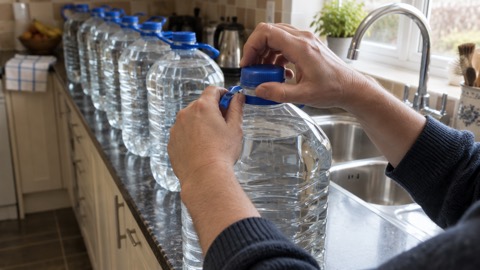 How Much Water to Store
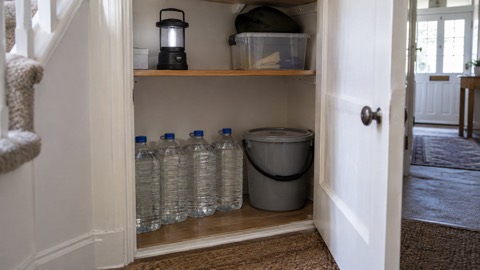 Storing Tap Water Safely
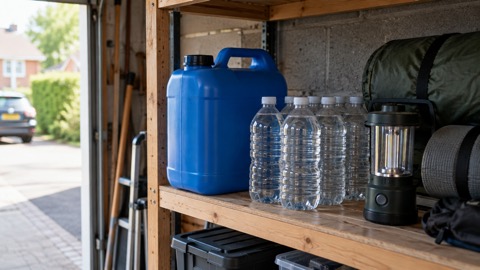 Containers and Jerrycans
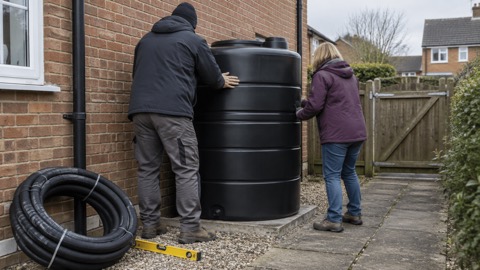 Household Storage Tanks
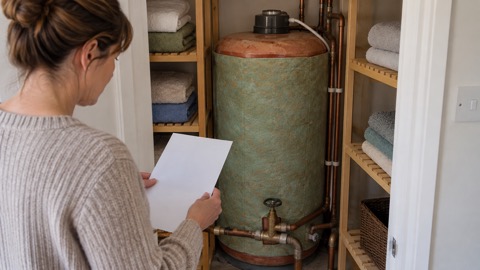 Water Already in Your Pipes
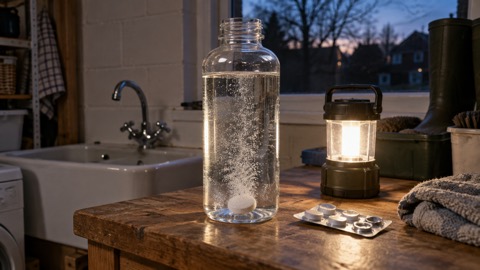 Making Water Safe to Drink
 Boiling Water to Kill Germs
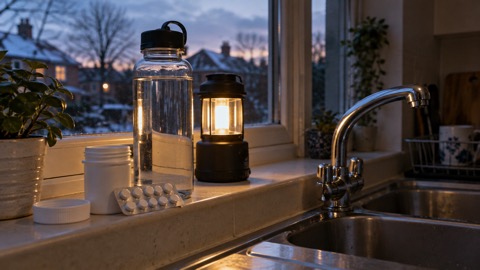 Purification Tablets
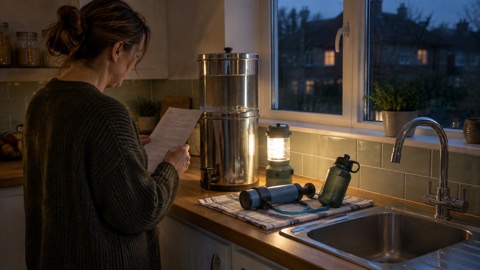 Emergency Filter Types
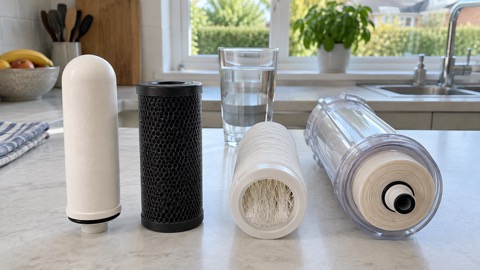 What Water Filters Remove
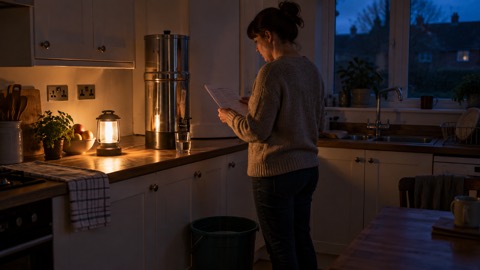 Gravity Filters Explained
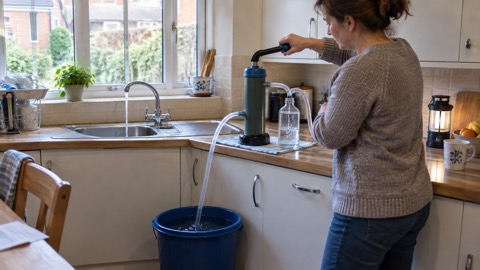 Hand Pump Filters