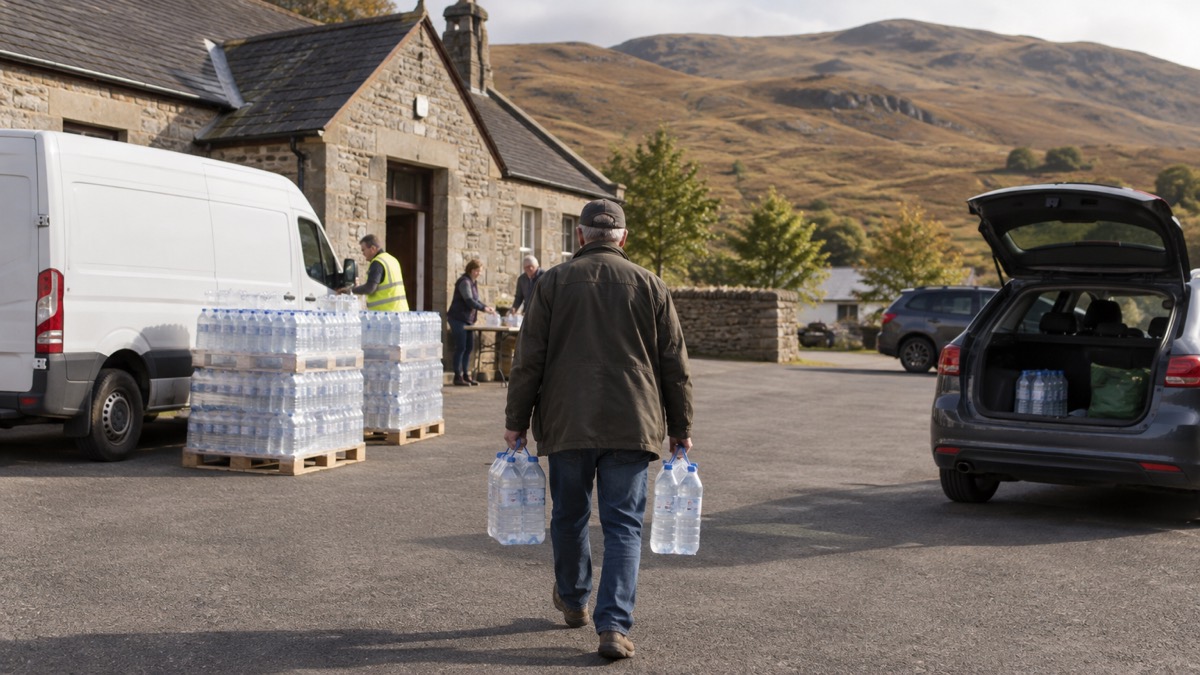
A private water supply is any supply to a property that does not come from a mains network or a licensed water supplier, drawing instead from sources such as boreholes, natural springs and watercourses1. Most are in remote, rural parts of the country, and each summer councils take calls from households whose springs, wells or boreholes have dried up, sometimes for many months2. An insufficient supply, in the official definition, is one that fails to provide enough water for human consumption, including all domestic purposes: drinking, washing, cooking, central heating and sanitary purposes3.
The most important things to know are these. First, reduce your use immediately and line up safe drinking water, because the responsibility for a private supply lies with its users, not with the council or a water company4. Second, tell your local authority, which regulates private supplies and can act where a failure threatens health5. Third, do not assume anyone will bring you water: where no contingency plan is in place, there is no obligation on the local authority or water company to provide an alternative supply, unless the circumstances pose a danger to life or human health3.
What counts as an insufficient private water supply
A private water supply is any water supply that is not provided by a water company7. The source could be a spring, a well, a borehole, a river, a stream or a pond, and the supply might serve one property, or many properties through a network of pipes and reservoirs2. In Scotland the definition is the same in substance: private water supplies are those not provided by Scottish Water8.
Insufficiency has a specific meaning in the regulations and guidance. A private water supply is insufficient when it fails to provide enough water for the purposes of human consumption, including all domestic purposes: drinking, washing, cooking, central heating and sanitary purposes3. That is a broader test than simply "no water comes out of the tap". A supply that still trickles but cannot fill a bath, run a washing machine or feed a central heating system can count as insufficient, because the test covers everything a household uses water for at home.
Insufficiency is also a growing problem rather than a rare one. Somerset Council reports that insufficiency is becoming an ever increasing problem with private supplies, due to the impact of climate change, and that each summer it takes calls from private supply users whose springs, wells or boreholes have dried up, sometimes for many months2. About 80,000 people in Wales have a private water supply5, and councils in Scotland, from Argyll and Bute to the Highlands, publish dedicated guidance for supply users facing loss of supply9.
The causes are wider than drought alone. The Drinking Water Inspectorate lists challenging weather conditions such as drought or severe cold weather, sources drying up or freezing, undetected leaks, pipe bursts, pump failure, inadequate supply arrangements and disconnection of pipework3. So a supply that fails in November after a hard frost is an insufficiency problem just as much as one that fails in August after a dry summer, and the steps you take are the same.
Why springs, wells and boreholes run low or dry
Private supplies tend to fail in dry weather for a structural reason: they often rely on small water sources that can dry up quickly, which makes houses on private supplies more vulnerable to drought than houses on the mains11. When there is a lack of rainfall over a long period, groundwater levels can become exceptionally low, and there may be impacts on supplies: spring sources can dry up and pumps can run dry7.
The pattern is well established across the UK. In the uplands of the north and west of England, water resources deplete relatively quickly after just 2 or 3 consecutive months of below average rainfall, because there is little groundwater base flow to support the rivers12. Cornwall Council describes the sequence households see on the ground: reduced water levels in springs, wells, boreholes and streams, then lower water pressure and reduced flow rates, then in some cases complete loss of supply, along with changes in water quality caused by the lower water volumes13.
Hot weather makes the demand side worse at the same moment the supply side worsens. Wiltshire and Swindon Prepared notes that we all use more water in hot weather, with extra showers, paddling pools and garden watering, which water companies call the supply and demand problem14. On a private supply there is no company balancing that equation for you: your household's extra use comes straight out of the same small source that is already shrinking.
Not every failure is weather driven, and it matters not to assume it is. Undetected leaks, pipe bursts and mechanical failures such as pump failures and blocked filters can all stop or reduce a supply15. If your supply struggles in a normal rainfall year, a leak or a failing pump is a genuine possibility, and a risk assessment from the council, which examines the whole supply from source to taps, is the way to find out4.
There are also longer term fixes worth knowing about. Natural Resources Wales advises considering deepening your well or borehole to reduce the chances of it drying up, and installing water storage tanks to make the supply more resilient in dry weather7. In Scotland, the private water supply grant scheme can assist with increased storage where adequate treatment already exists and insufficiency is a regular issue9, and grant funding of up to £800 per property may be available, administered by councils on behalf of the Scottish Government16. Our page on the private water supply grant in Scotland covers who can apply.
First steps when your supply stops: contact your local authority
When a private supply runs dry, the responsibility lies with the users of the supply, or with any third party who provides or manages the supply by contract15. That is the key difference from a mains supply, and it shapes what you should do first. Scottish Borders Council sets out the opening moves: reduce current usage to conserve what remains, and consider where you could access drinking water should the supply cease4. Argyll and Bute Council gives the same advice9.
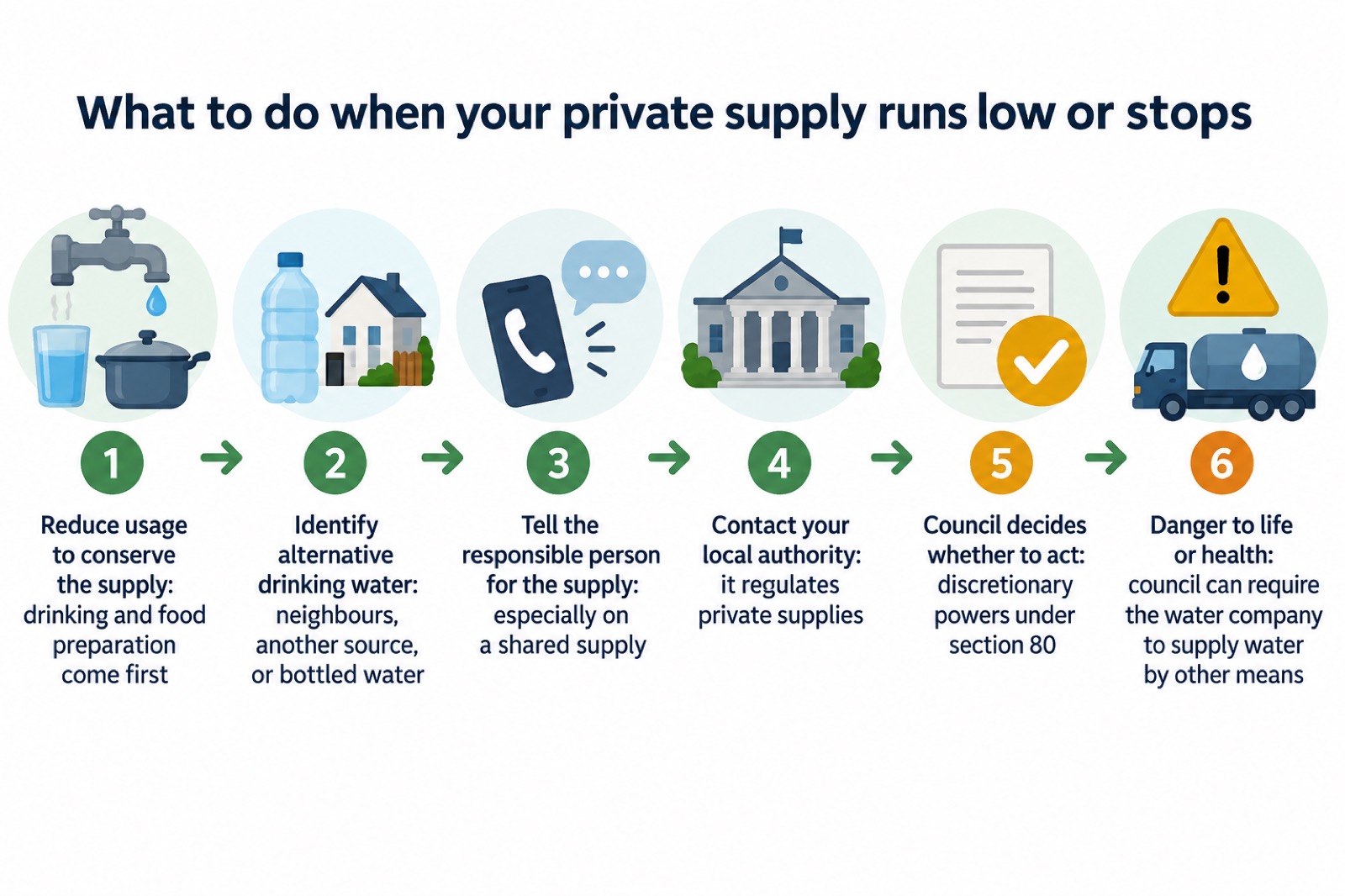
In practice, work through these steps in order:
- Cut your use immediately. Reduce current usage to conserve the supply4. Prioritise water for drinking and food preparation over washing, laundry and outside use.
- Identify alternative drinking water. Options include neighbours on a different supply, connecting to an alternative source if one is available, and purchasing bottled water9.
- Contact the responsible person for the supply. On a shared supply, tell the person who manages it that there may be a problem2.
- Notify your local authority. The local authority is the regulator for private water supplies and should be the first point of contact for any concern18. In Wales, Public Health Wales recommends contacting your local authority if you are on a private water supply5.
- Check on neighbours. See whether others, particularly anyone in your community who might need extra support, are also without water, and offer assistance such as collecting bottled water19.
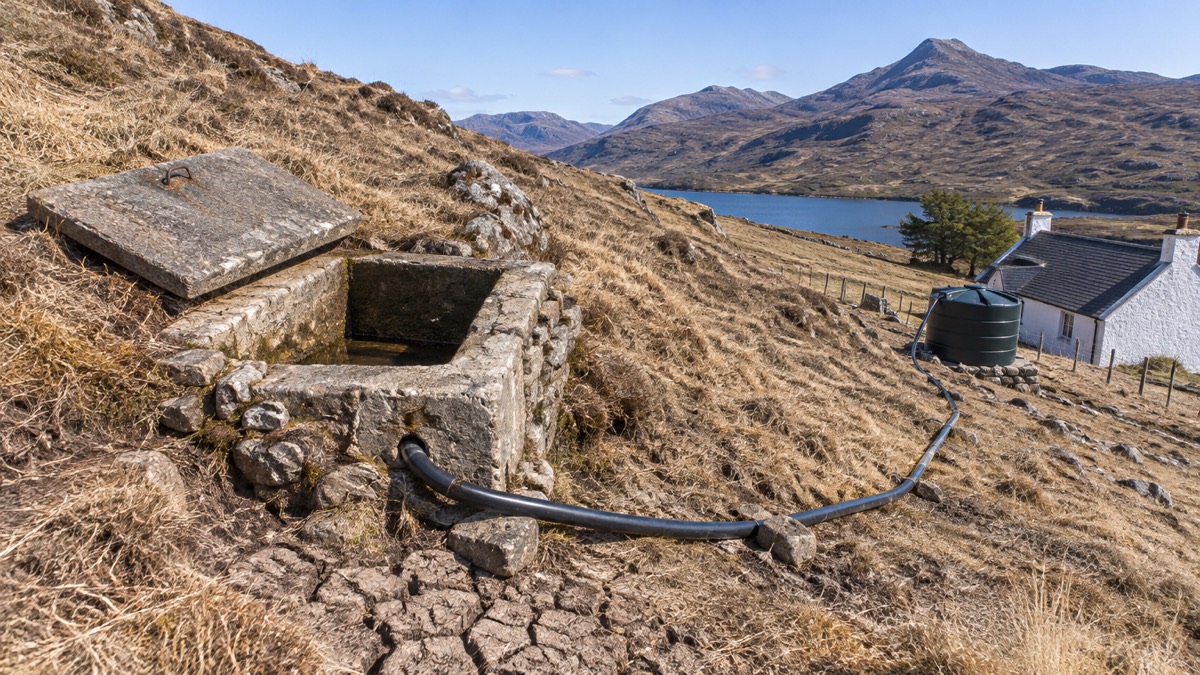
The local authority has real powers, though they are discretionary. Under section 80 of the Water Industry Act 1991, local authorities have discretionary powers to serve a notice on one or more relevant persons when a private supply is failing, has failed or is likely to fail to provide a sufficient supply of wholesome water3. Where circumstances pose a danger to life or human health, the local authority has power to require, if practicable at reasonable cost, the local water company to supply water by means other than in pipes for a specified period, with costs recoverable from the relevant persons20. So the council cannot simply be asked for water, but it can act, and it can compel a water company to help, when the situation is serious enough.
If you are thinking about a permanent connection to the mains instead, contact your water company or local council for information on connecting to a mains supply7. Our page on private water supplies in Scotland covers the position there in more detail.
Alternative water: bottled water, tanks and bowsers
When a supply fails, alternative supplies take predictable forms. The Drinking Water Inspectorate's drought guidance gives the examples of a supply of bottled water, or water supplied in tanks or bowsers6. Cornwall Council advises households whose supply becomes insufficient to consider alternative drinking water supplies, bottled water for drinking and food preparation, water delivery by tanker, and reducing water-intensive activities13.
Where the help comes from depends on the circumstances. Where the local authority uses its power to require a water company to supply water by means other than in pipes, that water arrives as bottles, tanks or bowsers20. But the Inspectorate also warns that provision of alternative supplies by a water company where no agreement is in place should be limited to short term unplanned emergencies, and that water companies may not always be able to provide an emergency supply in bowsers or bottles, for example if they have their own ongoing emergency such as a burst main20. In Scotland, Scottish Water provides bottled water or bowsers when there are issues with sufficiency or quantity of public water supplies, but that duty sits with public supplies, not private ones9.
For a private supply household, the practical position is this:
- Bottled water is the reliable fallback for drinking and food preparation, and you can buy it before you need it13.
- Water delivery by tanker can refill private storage, and is worth arranging in advance with a local supplier13.
- Neighbours on a different supply may be able to help, and containers used to transfer water must be cleaned and disinfected to prevent contamination7.
- Bowser or bottled water should be used where there is no gas or electricity available to boil water, for example during flooding21.
If you rely on boiling water to make it safe, remember that a power cut removes that option: Shropshire Council advises that if there is no gas or electricity available to householders to boil water, bowser or bottled water should be used in all these circumstances21. Our page on water in an emergency covers how much water a household needs and how to store it, and rainwater harvesting can reduce your demand on the supply for non-drinking uses, with guidance on sizing a storage tank.
No contingency plan means no duty to supply you
This is the section to read before your supply fails, not after. The Drinking Water Inspectorate is blunt about it:
Where a contingency plan is not in place, the Drinking Water Inspectorate's guidance is clear: there is no obligation on either the local authority or the water company to provide an alternative supply of water, except where the local authority considers the circumstances pose a danger to life or human health3. In other words, for a private supply owner without a plan, the usual emergency safety net simply is not there. The exception is narrow and is triggered by the local authority's own judgement, not by the owner's request, so it cannot be relied on as a substitute for preparing your own alternative supply.
Somerset Council puts the same point in local terms: Somerset Council and mains water companies are not responsible for providing an emergency supply of water to private supply owners2. The council's advice follows directly: every supply owner and user should have a contingency plan for an alternative supply in cases of emergency2.
A contingency plan does not need to be elaborate. At its simplest it answers three questions before you need the answers: where you would get drinking water if the supply stopped (a shop, a neighbour, a tanker arrangement), how you would reduce your use to stretch what remains, and who you would contact at the council. Local authorities are advised to require contingency plans for insufficiency as part of their regulation 6 risk assessments and five yearly reviews, so expect the council to ask about yours3.
The exception in the Inspectorate's warning matters. Where the local authority considers the circumstances pose a danger to life or human health, it has power to require the local water company to supply water by means other than in pipes for a specified period, if practicable at reasonable cost, with costs recoverable from the relevant persons20. That is a backstop for genuine emergencies, not a substitute for planning, and the costs can come back to the supply's users.
Shared and community supplies need a written agreement
Many private supplies serve more than one property through a network of pipes and reservoirs2, and shared supplies bring a second problem on top of insufficiency: deciding who pays and who acts. The Drinking Water Inspectorate advises that, where possible, the relevant persons of shared and community supplies establish agreements, preferably written and legally binding, setting out clear accountabilities and responsibilities for running the supply, including costs and contingency arrangements3.
The point is not legal formality for its own sake. When a supply fails or needs repair, disputes over pipe ownership and costs can delay remediation, which is why relevant persons on shared supplies are advised to proactively establish local agreements, preferably legally binding18. A dried-up spring is bad enough; a dried-up spring plus an argument about who pays for the tanker is far worse.
A useful agreement for a shared supply should cover, at minimum:
- who is the responsible person for managing the supply day to day2
- how costs of repairs, improvements and emergency water are shared3
- what the contingency arrangements are when the supply fails3
- who contacts the local authority, and when3
The scale of shared supplies can be larger than people expect. A Drinking Water Inspectorate case study describes a supply serving an estate encompassing nine residential properties and a commercial unit with a coffee shop supplying drinks to the public22, and another describes a converted premises serving 34 domestic dwellings23. Supplies serving the public or commercial operations, including self catering properties, food businesses, hotels, B&Bs, schools and campsites, are subject to stricter monitoring duties4, which our page on private water supply regulations explains.
Drought and very low rainfall: what it means for private supply households
Drought is managed in stages in England, and the stage matters because it signals how much strain the water environment is under. At the severe drought (red) stage, the possible impacts listed by the government include widespread long term environmental damage, widespread wildfires, failure of crops and shortage of fodder and drinking water for livestock, and failure of public and private water supplies12. You do not need to wait for a formal declaration to act: by the time a severe drought is declared, small private sources are likely already struggling.
For private supply households the effects arrive earlier and harder. NHS Inform in Scotland warns that private water supplies often rely on small water sources that can dry up quickly, that a drought may cause interruptions to water supplies such as a drop in water pressure, and that supplies can become contaminated when water levels are low, which could make someone who drinks that water unwell11. Natural Resources Wales adds a quality warning specific to falling levels: as water levels lower, water may be drawn into the well or borehole from greater distances, which may affect drinking water quality7.
How long a dry spell can bite for is worth planning around. In the uplands of the north and west of England, water resources deplete relatively quickly after just 2 or 3 consecutive months of below average rainfall12. Councils report supplies drying up sometimes for many months2. For comparison, a London risk register assessment of failure of water supply infrastructure puts the impact at up to 350,000 people affected for between 24 hours and two weeks24, but that describes mains infrastructure failure, not a private source that has stopped yielding. A private supply household should plan for a disruption measured in weeks or months, not hours.
What to do as dry weather sets in:
- Reduce usage early, before the supply is critical4.
- Speak to neighbours to find out whether they are affected and whether they can help7.
- If water levels are very low, take action to seek an alternative supply of water7.
- Ensure containers used to transfer water are cleaned and disinfected7.
- Find out whether there is a nearby mains supply you could connect to7.
For the wider picture on hosepipe bans, restrictions and drought declarations, see our guide to heatwaves and drought.
Risk assessment and sampling: when the council charges and when it doesn't
Councils have a legal duty to risk assess and sample many private supplies, but not all of them, and the boundaries decide whether you pay. The starting point is the type of supply you have:
| Type of supply | Risk assessment | Sampling | Charge |
|---|---|---|---|
| Single owner-occupied dwelling | Not required unless requested, or the dwelling is rented and meets certain criteria, or there is a believed risk to health25 | May never have been sampled; no plans to sample unless a problem is suspected or sampling is requested26 | Fee for any assessment or sampling carried out on request25 |
| Supply serving two or more dwellings or properties | Every 5 years25 | Supplies serving two or more properties and up to 50 people sampled every 5 years in Cornwall's scheme13 | Costs payable by the owner, users or requester2 |
| Supply serving the public or a commercial operation | Assessed by the council4 | At least once a year; more often for higher risk or failing supplies26 | Costs payable by the owner, users or requester2 |
The single dwelling exemption is the one that catches people out. If a supply provides water for domestic purposes to only a single dwelling, the regulations do not require a risk assessment or testing unless it is requested by the owner or occupier, the dwelling is rented to tenants and meets certain criteria, or the local authority believes there is a risk to health25. Argyll and Bute Council confirms that a single domestic supply may never have been sampled, and that there are currently no plans to sample such supplies unless a problem is suspected or sampling is requested, though it can be arranged on request, with a charge made for that service26.
There is one situation where you do not pay. No charge is made where the local authority has concerns that a supply to a single domestic dwelling is a risk to human health and investigates, which may require collection of samples or a risk assessment25. So if you report illness or contamination rather than simply requesting a test, the fee position can be different.
A risk assessment is worth having even when it costs. During a risk assessment the whole supply is assessed from the source to the taps, areas of potential contamination are identified, advice is given on how to reduce the associated risks, and samples are taken to assess the quality of the drinking water4. Cornwall Council's team undertakes risk assessments that identify any vulnerability in the supply and advise on how best to protect the water source from contamination13. One caveat from Argyll and Bute: if you have no treatment on your supply, the council may not sample for bacteriological contamination, because untreated supplies are all recommended to have treatment fitted15. Our page on treating a private water supply explains the options.
If you believe your water is making you ill, contact your GP, who can provide containers for a stool sample, and contact the council water team, who can arrange to take a sample if appropriate27.
Water quality after a supply recovers
A supply that comes back is not automatically a supply that is safe. NHS Inform warns that private water supplies can become contaminated when water levels are low, which could make someone who drinks that water unwell11. Argyll and Bute Council describes what households actually see: water quality and chemical characteristics may change when levels are low and when the supply is returning to normal, including coloured water, increased solids during heavy showers, and increased surface water run off which could include high levels of bacteria9.
The quality of private supplies is variable in the best of times: the Drinking Water Quality Regulator for Scotland notes that some are very good, with adequate treatment and good management, while others present a risk to health due to the quality of the water8. A Welsh literature review found that many private water supplies did not meet water quality limits, and reported two outbreaks of gastrointestinal illness, though the link to private water supplies was unclear29.
Case studies show both how supplies become contaminated and how they are recovered. In one, a risk assessment found a supply source contaminated with animal faeces after the water turned brown following heavy rainfall, confirmed by failed microbiological samples. In another, the emergency response involved diverting the spring to waste through the overflow and blocking off the pipework to the reservoir to prevent more contaminated water entering the supply, then isolating the reservoir and diverting flow from an uncontaminated spring into a temporary reservoir of two water tanks connected to the existing downstream pipework23. By August 2013 that supply's owner had completed a water safety plan covering weekly checks, annual servicing, alternative supply arrangements and use of the diversion valves23.
That is the standard worth aiming at: a supply with a plan behind it, not just a source that has refilled. Protecting the source matters too. Somerset Council lists improvements including fencing around the source or collection tanks, drainage ditches to prevent ground water run off, repairing collection chambers and installing tight fitting lids, clearing overgrown vegetation, repairing old leaking pipes and taps, and replacing lead pipe2. The Drinking Water Inspectorate also advises creating a run to waste facility for borehole or spring chambers to prevent contaminated water entering the supply, noting that discharges to waste may need to be agreed with the environmental regulator30.
Who regulates private supplies in England, Wales and Scotland
The regulator is the same everywhere: your local authority. In England and Wales, the relevant local authority is the regulator for private supplies, with functions prescribed in sections 77 to 85 of the Water Industry Act 199120. In Scotland, private water supplies are regulated by local authorities17, and if you have a query or would like advice about managing your supply, you should talk to your local authority17.
The Drinking Water Inspectorate sits behind the English and Welsh system but does not enforce against supplies: it has no direct enforcement powers under the Regulations in relation to private water supplies, and its role is to provide technical guidance on the interpretation and implementation of the Regulations in England and Wales3. Where a supply is deemed a potential or actual danger to human health by the local authority, a relevant person is liable to be served a notice under regulation 18 in England, or regulation 20 in Wales25.
Scotland has its own two tier structure. There are two types of private water supply in Scotland, and the legislation relating to each is different: larger supplies, or those with a commercial activity, are Regulated supplies, while smaller supplies serving only domestic properties are Exempt supplies8. The Private Water Supply grant in Scotland is administered by local authorities on behalf of the Scottish Government17.
Not every supply is regulated at all. Highland Council notes that supplies to owner-occupied homes are not regulated, while commercial uses, including food businesses, holiday accommodation, visitor attractions, campsites, workplaces and rented homes, are covered10. The requirements differ between the UK nations, though they share similarities29. In Wales, about 80,000 people have a private water supply, and Public Health Wales directs households with concerns to contact their local authority5.
Flooding sits slightly differently, and it matters in Wales in particular. Natural Resources Wales now provides its own independent flood warning service for the people of Wales31, and its flood risk reporting counts over 91,100 residential properties at risk of river flooding in Wales, with 127,076 residential properties at risk of flooding from surface water and small watercourses32. In Scotland, the local authority has a duty to prepare for flooding and to respond if flooding occurs, and if your water supply is cut off or contaminated you should contact Scottish Water for public supplies, or your local authority for a private supply28. See our guide to flooding for the wider picture.
Sources (32)
- Private water supplies: consumer information, Drinking Water Inspectorate, 2026-10-28
- Private water supplies, Somerset Council, 2026-08-12
- Managing insufficiency of private water supplies, Drinking Water Inspectorate, 2025-12-15
- Private water supplies, Scottish Borders Council, 2026-10-29
- Water and health, Public Health Wales, 2026-10-15
- Private water supplies drought guidance, Drinking Water Inspectorate, 2026-10-28
- Drought planning and management, Natural Resources Wales, 2026-10-29
- Private water supplies, Drinking Water Quality Regulator for Scotland, 2026-10-28
- Loss of supply for private water supply users, Argyll and Bute Council, 2026
- Private water supplies, Highland Council, 2025-10-10
- How to stay safe during a drought, NHS Inform Scotland, 2026-05-12
- Drought: how it is managed in England, Department for Environment, Food and Rural Affairs, 2026-04-08
- Private water supplies, Cornwall Council, 2026-10-29
- Failure of water infrastructure or loss of drinking water, Wiltshire and Swindon Prepared, 2026-10-25
- Private water supplies, Argyll and Bute Council, 2026
- Public health and housing, Argyll and Bute Council, 2026
- Owners and users of private water supplies, Drinking Water Quality Regulator for Scotland, 2026-10-28
- Lead in private water supplies, Drinking Water Inspectorate, 2026-10-28
- Water supply interruptions or outages, Prepare Campaign, 2026-10-12
- Managing insufficiency of private water supplies, Drinking Water Inspectorate, 2025-12-15
- Flooding advice for properties using a private water supply, Shropshire Council, 2026-10-29
- Faecal contamination of a supply, Drinking Water Inspectorate, 2022-07-11
- Water safety plan approach to improving the safety of a private supply, Drinking Water Inspectorate, 2022-07-11
- London Risk Register version 14, Greater London Authority, 2025-01
- Buying a dwelling with a private water supply, Drinking Water Inspectorate, 2026-10-28
- Private water supplies, Argyll and Bute Council, 2026
- Private water supplies water sampling, Argyll and Bute Council, 2026
- How to protect your health when flooding occurs, NHS Inform Scotland, 2025-11-07
- Private water supplies: a rapid scope of the literature, Public Health Wales, 2023-10-01
- Protecting your private water supply, Drinking Water Inspectorate, 2026-10-28
- Flood risk management annual report 2024 to 2025, Natural Resources Wales, 2025
- Resilience risks in Wales, Welsh Government, 2026-09-07
 Composting Toilet Kit Checklist
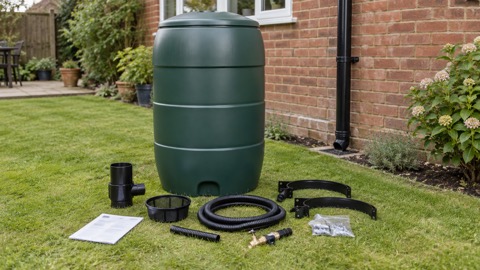 Garden Harvesting Kit Checklist
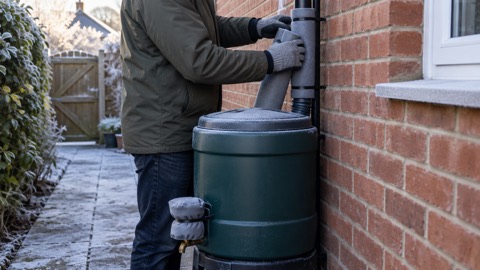 Rainwater Winter Checklist
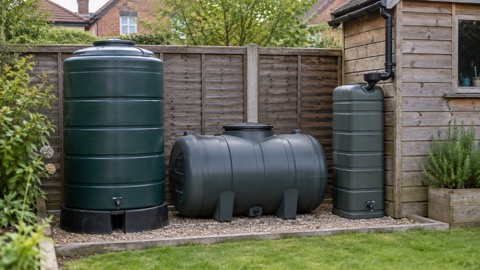 Above-Ground Rainwater Tanks
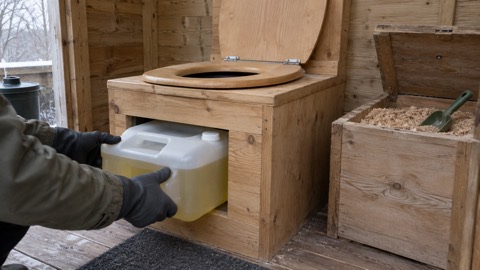 Composting Toilets
 Direct vs Gravity Feed Systems
 Planning Permission for Systems
 Private Water Supply Regulations
 Private Water Supplies Scotland
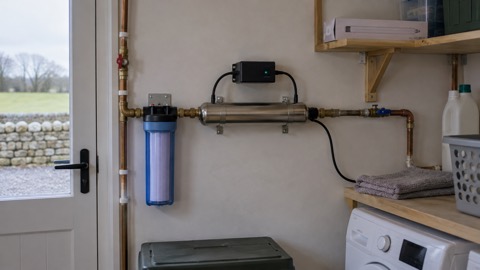 Treating a Private Water Supply
 Rainwater Filter Types
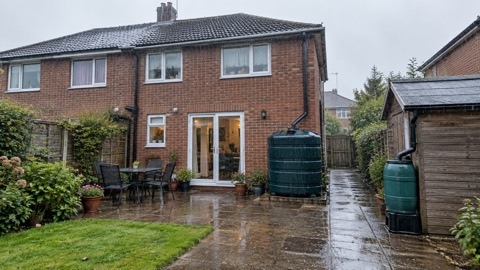 How Rainwater Harvesting Works
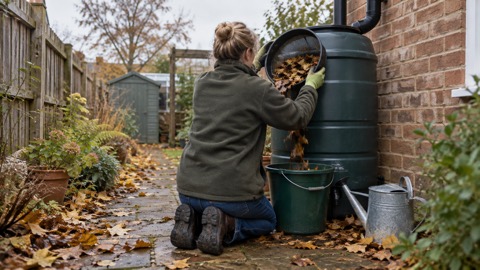 Rainwater System Maintenance
 Pumps for Rainwater Tanks
 Rainwater Systems and the Law