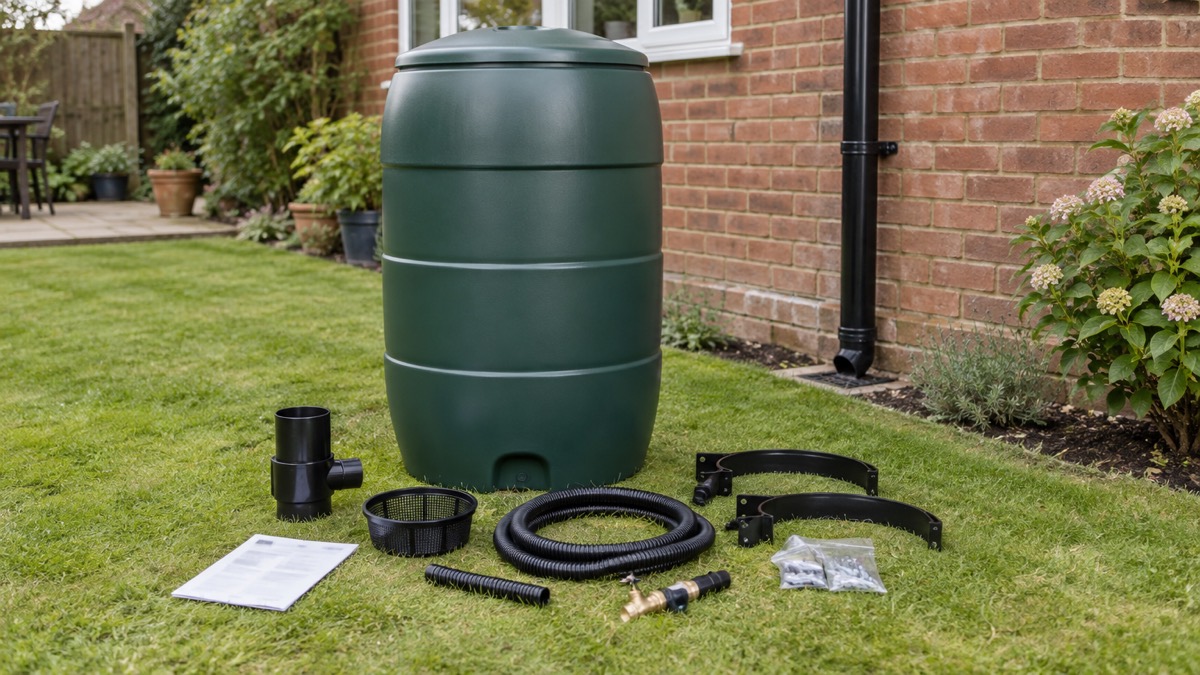
A garden rainwater harvesting kit is a set of parts that catch rain off your roof, filter out leaves and moss, store the water and get it to a garden tap. What arrives in the box varies by maker and model, but the garden kits from the main UK suppliers follow a pattern: a tank, an inline filter and overflow kit, a pump, and the pipework and fittings to reach the tap. A 3000 litre underground garden kit, for example, includes a shallow dig tank, an inline filter and overflow kit, a Hydroforce Series 4 pump and the accessories to deliver rainwater to a garden tap1.
Before you dig or cut anything, read the maker's contents list and check it against what has arrived. The parts most often missing are the small ones: several makers state plainly that the wall bracket is not included with their filter kits, and some extras, such as a level sensor, are optional additions rather than standard2. Knowing this before installation day saves a second order and a stalled job.
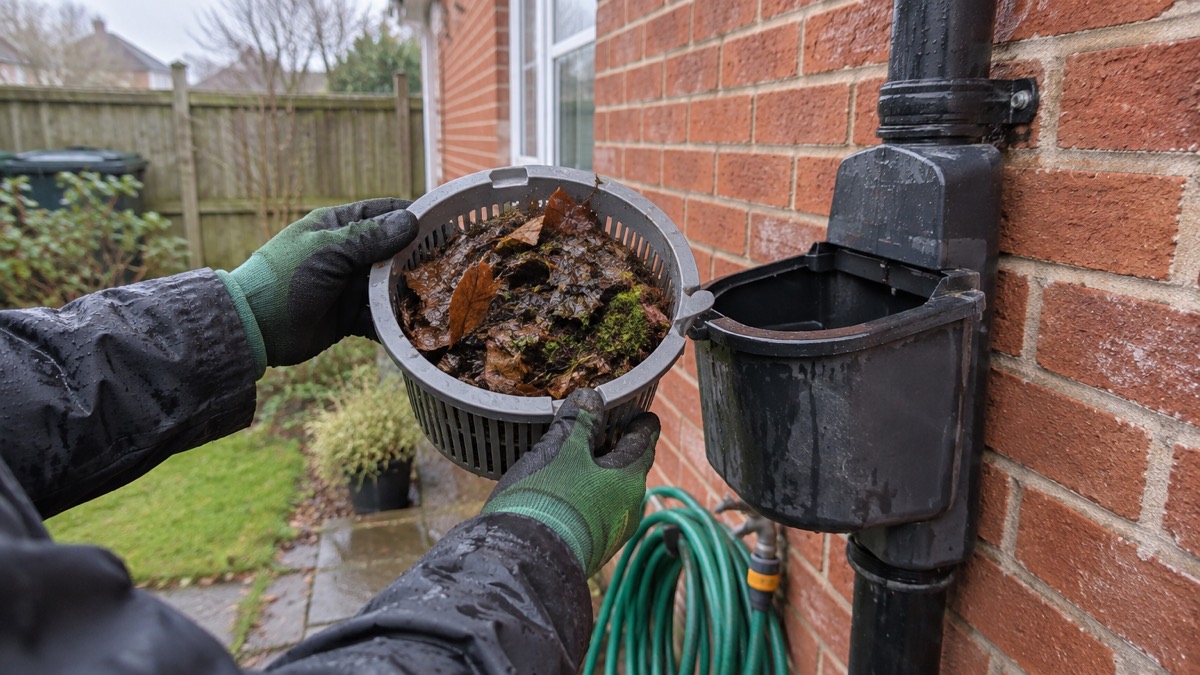
The filter is the part that decides how well the whole kit works. It catches debris before it reaches the tank, and it needs clearing. One maker states its filter should be cleaned one to two times during the year depending on the contamination4. Self-cleaning designs cut the work but do not remove it entirely.
The checklist: what to have before you install
Work through this list before installation day. Each item is something the kit needs, or something the maker's own instructions say is separate.
What a garden rainwater harvesting kit includes
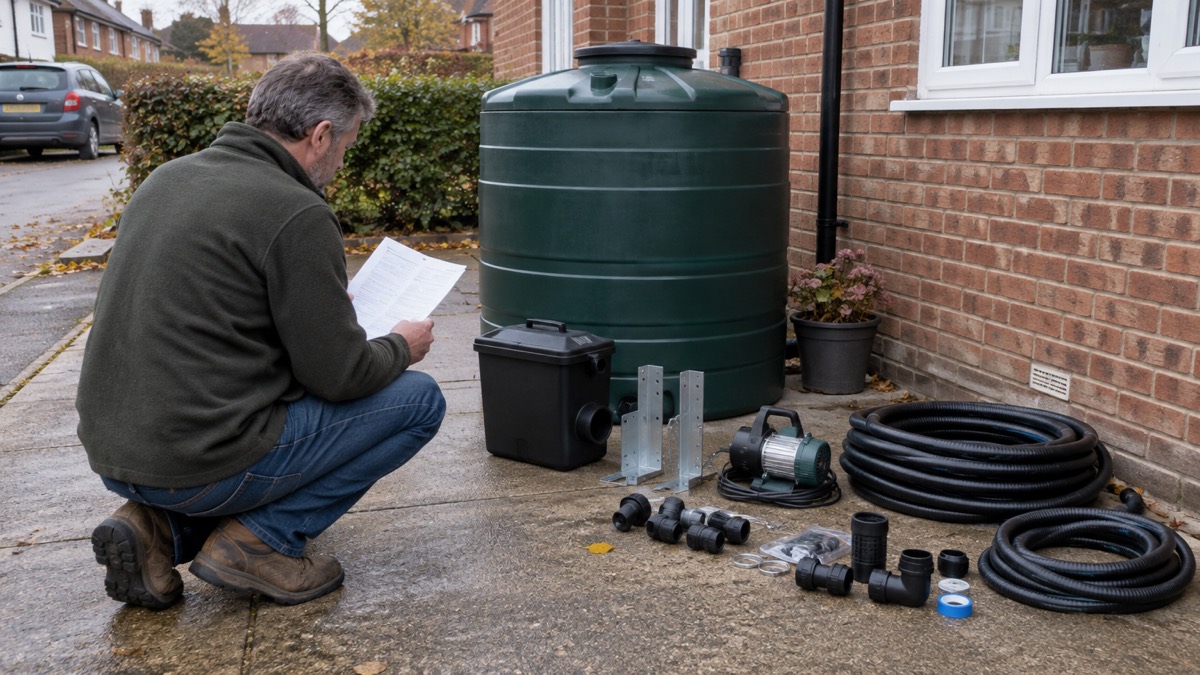
Garden kits sit at the simpler end of the market. They collect, filter and store rainwater for outdoor use, and the pumped versions add a tap you can fill a watering can from. The F-Line 3000 litre garden system is described as an underground garden rainwater harvesting system kit, and its contents list names a 3000 litre shallow dig underground tank, an inline filter and overflow kit, a Hydroforce Series 4 pump and the accessories to deliver rainwater to a garden tap1. The 7500 litre version follows the same pattern with a larger tank10, and the 15,000 litre version uses two 7500 litre shallow dig tanks13.
Above-ground garden kits exist too. The 7500 litre garden system is supplied as a kit for horticultural, agricultural or garden use9. Some kits combine garden watering with storm control: the Rain Activ Dual Garden System is described as a storm attenuation system with garden rainwater harvesting14.
The Stormsaver system shows what a more complete package looks like. Its shallow dig tank is described as robust and comes with all the necessary components such as integral filtration, overflow siphon and inlet calmer pre-fitted for ease of installation15. That pre-fitting is worth checking for on any kit: parts already fitted to the tank save assembly time and reduce the chance of a leak at a joint you made yourself.
| Kit type | What the maker lists | Best suited to |
|---|---|---|
| Underground garden kit, 3000 litre | Shallow dig tank, inline filter and overflow kit, pump, tap accessories1 | A garden tap with a modest roof |
| Underground garden kit, 7500 litre | Same pattern, larger tank10 | Larger gardens or bigger roofs |
| Underground garden kit, 15,000 litre | Two 7500 litre shallow dig tanks, filter and overflow kit, pump13 | Large roofs and heavy garden demand |
| Above-ground garden kit, 7500 litre | Above-ground tank supplied for garden use9 | Where digging is not possible |
| Storm attenuation plus garden | Storm water discharge control with garden harvesting14 | New builds managing runoff |
Parts that may not be in the box: wall brackets and fittings
The single most common gap in a filter kit is the wall bracket. Enduramaxx states "Wall bracket not included" on its 450m2 rainwater harvesting kit, its Kit B, its 450m2 Combi Rainwater Filter and its Kit B filter kit12. That is four separate product pages carrying the same line, so treat it as the norm rather than an oversight on one listing.
Other extras are optional by design. Rainwater Harvesting Ltd lists the Rain Acculevel as not part of the standard kit, selectable from a drop-down list to add to the system3. If you want a level indicator, order it with the kit rather than after the tank is in the ground.
Some kits do include their connectors. The Multitank wall tank kit comes complete with a downpipe filter, a tank to tank connector and a filter to tank connector, described as ready to install11. Read each contents list on its own terms rather than assuming one kit's inclusions carry across.
Fittings on the tank itself also vary. One large tank is supplied as standard with a 2 inch outlet, with other options available16. If your pipework is a different size, confirm the outlet before delivery.
The filter basket: why it matters and how to keep it clear
The filter is the hardest-working part of a garden kit. Rainwater filters are used to filter debris from the rainwater as it flows from the collection roof before it enters the storage tank17. Without one, leaves and moss build up as sediment in the tank, and sediment is far harder to deal with than a basket you can lift out.
Basket filters work by interception. On one kit, rainwater flows into the filter basket where debris is collected, and filtered water passes through a calmed inlet at the bottom of the tank so as not to disturb any sediment5. The basket is the part you maintain. The same kit has an easily removable filter basket5, and the maker's Kit B states the filter insert is easily removable for cleaning6.
Most filters share a common layout: two inlets for incoming water, an overflow taking leaves and moss away to a drain or soakaway, and an outlet to the storage tank12. That overflow matters as much as the basket. It is the route by which the debris the filter rejects leaves the system rather than sitting on top of it.
To keep a basket filter clear:
- Check the basket after heavy leaf fall and at the start of autumn.
- Lift the basket out, tip the debris away from the tank, rinse and refit it squarely.
- Look at the water in the tank: heavy sediment suggests the filter is being bypassed or overloaded.
Self-cleaning filters and low-maintenance upkeep
Self-cleaning filters reduce the frequency of basket clearing but do not remove the need to check. Enduramaxx describes its 450m2 rainwater harvesting kit and its Kit B as self-cleaning and low maintenance, and says the filter cartridge location assists continuous removal of dirt2. The 450m2 Combi Rainwater Filter is described as self-cleaning, with a filter insert that is easily removable for cleaning2.
The maker's own cleaning guidance is the figure to plan around: the 450m2 Combi filter has to be cleaned depending on the contamination, one to two times during the year4. That is a modest commitment, and it assumes the filter is doing its job. If your roof is under trees, expect to be at the upper end.
Some kits build in a second stage of cleaning. Kit B and Kit C both use a two step cleaning system independent of flow rate, which the maker says ensures high filtering efficiency6. The overflow siphon on Kit B incorporates a skimming inlet that skims the upper surface water and removes further debris, oils or other floating contaminants, increasing the quality of the stored water6. That is a quiet benefit: the overflow is doing filtration work every time the tank fills.
Sizing a kit by roof area
Filter kits are rated by the roof area they can serve, and the rating is per kit. Enduramaxx lists a 200 square metre kit, a 450 square metre kit and an 800 square metre kit, each designed for roof sizes up to that maximum per kit5. The same limits appear on the individual product pages: Kit A up to a maximum of 200 square metres per kit, Kit B up to 450 square metres per kit, and Kit C up to 800 square metres per kit5.
That gives a simple rule. Measure the roof area feeding the downpipe, then choose the smallest kit whose limit covers it. A roof larger than the limit needs a second kit or a larger filter, not a bigger tank alone.
| Filter kit | Maximum roof area per kit | Notes |
|---|---|---|
| Kit A | 200 square metres5 | Total retention filter with integrated dirt collecting basket5 |
| Kit B | 450 square metres6 | Two step cleaning system, frost resistant6 |
| Kit C | 800 square metres7 | Two stage filter unit, siphon overflow and calmed inlet7 |
Tank volume is a separate question from filter capacity. Rainwater Harvesting Ltd offers a tank size calculator that accepts measurements for a main building and up to three extensions, or a total roof area if you already know it, which overrides the individual measurements20. For the wider method, see How to Size a Rainwater Tank: Roof Area, Rainfall and Demand.
Using harvested rainwater in a drought
A garden kit earns its keep in a dry summer. Government drought guidance is direct: in the garden, use a watering can instead of a hosepipe and install a water butt if you can to capture rain21. A harvesting kit is the larger version of that advice.
On restrictions, Rainwater Harvesting Ltd states that installing either a Garden System or the Rain Director Gravity Feed System means you can use the water in your underground tank during a hosepipe ban, water that cannot be claimed by the Water Authorities, adding "This is your water that you have collected and cannot be claimed by the Water Authorities."22. Check your own water company's restrictions, since the wording of a ban is set by the company imposing it.
For garden use specifically, see Using Rain and Grey Water in the Garden and How Much Water a Garden and Lawn Need in Summer. For the wider picture on dry spells, see Heatwaves and Drought: A Household Guide.
Keeping the kit working through the year
A garden kit is low-maintenance rather than no-maintenance. The routine is short: clear the basket, check the overflow, and look at the water.
Frost matters for filters mounted against a wall. Kit C is specified for installation in a pilot shaft or against the wall in frost-protected areas7, and Kit B is described as frost resistant6. If your filter sits above ground, shelter it.
For the seasonal routine in full, see Rainwater System Winter Checklist and Keeping a Rainwater System Clean and Working Through the Year. For the filter types themselves, see Rainwater Filters: Downpipe, Inline and In-Tank Types.
Sources (22)
- F-Line 3000 Litre Garden System, Rainwater Harvesting Ltd, 2026-07-03
- Rainwater Tank Filter Kits, Enduramaxx, 2026-10-29
- F-Line 7500 Litre Gravity Feed System, Rainwater Harvesting Ltd, 2026-07-07
- 450m2 Combi Rainwater Filter, Enduramaxx, 2026-09-28
- Rainwater Harvesting Kit A, Enduramaxx, 2026-09-28
- Rainwater Harvesting Kit B, Enduramaxx, 2026-09-28
- Rainwater Harvesting Kit C, Enduramaxx, 2026-09-28
- 7500 Litre Rain Backup in a Box System, Rainwater Harvesting Ltd, 2026-03-24
- 7500 Litre Garden System, Rainwater Harvesting Ltd, 2026-03-24
- F-Line 7500 Litre Garden System, Rainwater Harvesting Ltd, 2026-07-03
- 2 x 250 Litre Multitank Rainwater Wall Tank, Rainwater Harvesting Ltd, 2026-10-01
- Rainwater Harvesting Filters, Enduramaxx, 2026-10-29
- F-Line 15,000 Litre Garden System, Rainwater Harvesting Ltd, 2026-07-07
- Rain Activ Dual Garden System, Rainwater Harvesting Ltd, 2026-07-01
- Stormsaver Rainwater Harvesting, Floplast, 2026-10-29
- Rainwater Tanks, Enduramaxx, 2026-10-29
- 2000 Litre Vertical Rainwater Harvesting Tank, Enduramaxx, 2026-09-28
- Rainwater Harvesting Direct Feed Systems - Rainwater Harvesting, Rainwater Harvesting (rainwaterharvesting.co.uk)
- Protecting Your Private Water Supply, Drinking Water Inspectorate, 2026-10-28
- Tank Size Calculator, Rainwater Harvesting Ltd, 2026-08-12
- Droughts, Prepare, 2026-10-19
- Rainwater Harvesting, Rainwater Harvesting Ltd, 2026-07-17
 Composting Toilet Kit Checklist
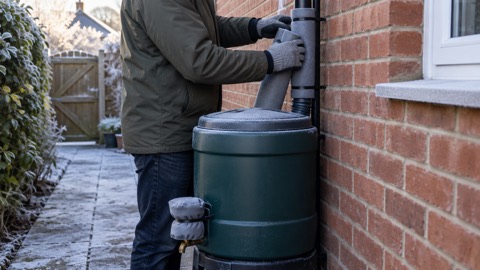 Rainwater Winter Checklist
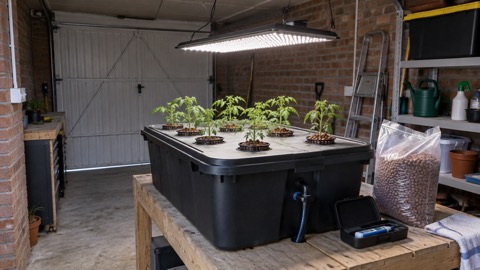 Hydroponic System Parts List