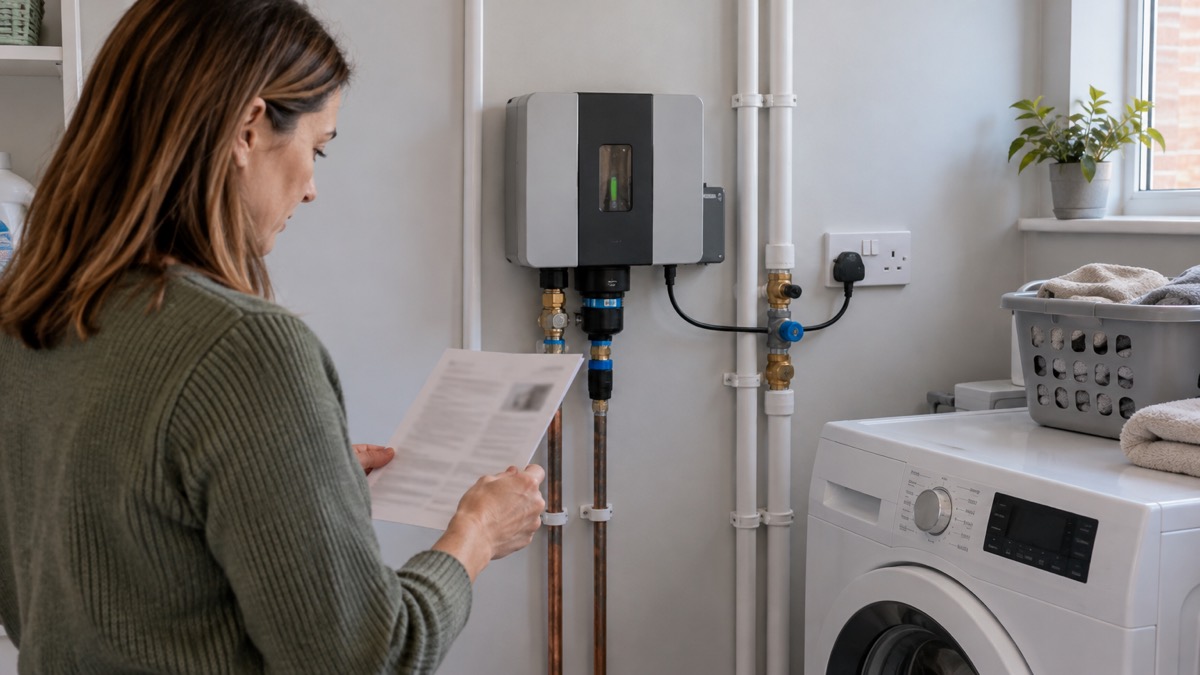
The Rain Director is a control panel for a household rainwater harvesting system, made in the UK by Rainwater Harvesting Ltd. It sits between an underground rainwater tank, a pump, a small header tank and your mains water supply, and it decides where the water comes from. In an ordinary week that means stored rain feeding the toilets, washing machine and garden. In an emergency it means the system keeps working when the rain stops, and it falls back to mains water when the tank runs low1.
For a household preparing for disruption, the useful part is the automatic behaviour. If rainwater is not available in the underground storage tank, the system registers this and switches over to mains water on its own1. If nobody uses any water, it refreshes the water in the header tank every 3 days, which matters because water held in a tank or pipes for longer than 24 hours deteriorates and becomes stagnant1. And if you are leaving the house for more than a week, a holiday button empties the header tank and refills it with treated mains water so you do not come home to stale water sitting in the system1.
This page sets out what the unit does for a household getting ready for a power cut, flood, storm or dry spell, what the pump and pipework must be, how to install and commission it, and how to deal with the faults the manual covers. It does not cover price, and it does not compare the unit with any other product.
What the Rain Director does for a household
Think of the unit as the switchboard for your rainwater. Rain falling on the roof is filtered and stored underground. A pump lifts it into a small header tank inside the building, and the header tank feeds the appliances. The Rain Director controls that flow, and it holds a mains water connection in reserve so the house is never without water simply because the rain has not fallen1.
That reserve is the part that matters for preparedness. A rainwater system on its own is only as reliable as the tank, the pump and the electricity supply. The Rain Director removes one of those dependencies by topping up from the mains when the stored rain runs out. It does not remove the others: the pump still needs power, and the panel still needs its sensor connection to the header tank to work properly1.
The unit is also built to keep the water moving. Water that sits in a tank or pipes for longer than 24 hours deteriorates, losing its chlorine residual, warming up and interacting with the plumbing materials2. The automatic 3 day refresh is the maker's answer to that in normal use, and the holiday mode is the answer when the house is empty1.
For a household thinking about emergencies, the sensible way to see the Rain Director is as a reliability layer on a rainwater system. It makes the system keep supplying the house through a dry spell, and it gives you a way to leave the system in a safe state when you go away. It is not a backup power supply, and it does not store water itself beyond the header tank.
Water in a power cut, pump failure or low rainwater
The first thing to understand is what the Rain Director can and cannot do when something goes wrong. It can switch the source of water from stored rain to mains. It cannot make a pump run without electricity, and it cannot fill an underground tank that has run dry.
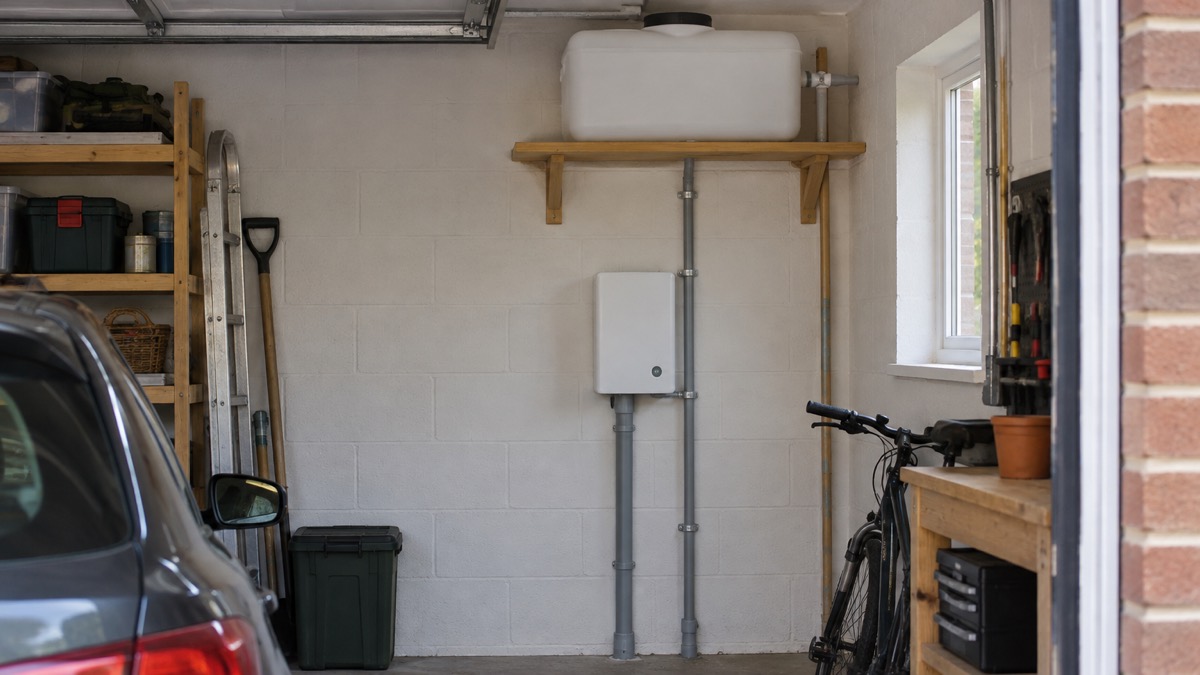
When the underground tank empties, the system registers the lack of rainwater and switches over to mains water automatically1. That is the low rainwater case, and it is the one the unit is designed for. A long dry spell is exactly when a rainwater system earns its keep, and it is also when the stored rain runs out. Water companies can bring in hosepipe bans when water is in short supply, usually after a long dry or hot spell, and their drought plans set out the triggers, such as low rainfall levels or low reservoir levels, that prompt them to act3. The Rain Director's automatic switch means the house keeps its supply while the garden waits for rain.
A power cut is different. The panel's fallback to mains depends on the pump and the panel having power, and the manual gives no battery backup. If you want to know how a rainwater system behaves when the electricity fails, the site's page on whether a rainwater system keeps working in a power cut sets out the position. The practical step for a household is to treat the rainwater system as one supply among several and to keep a separate store of water for drinking and sanitation, which official emergency kit guidance lists as a basic item5.
If your home does flood, the rainwater system is part of the property to check afterwards. Pumping flood water into street drains, highways or highway ditches is not a decision for a household to take alone: check with the local highways authority or National Highways first7. For the wider picture of what to do before, during and after a flood, see the site's guide to flooding.
Hosepipe bans and dry spells: using mains water mode
A hosepipe ban changes what a household may do with mains water, and it is the moment the Rain Director's mains water mode becomes useful. The maker's instruction is to press the button during a dry period or hosepipe ban to run internal appliances on mains water and conserve rainwater for garden use1.
The restriction itself is straightforward. If a hosepipe ban is in place where you live, you cannot use a hosepipe connected to your mains water supply for things like watering your garden, filling a paddling pool or washing your car3. Water companies may choose to enforce these Temporary Usage Bans to help conserve water3. The point of mains water mode is that the house's internal demand moves onto the mains, leaving the stored rain for the garden, where a watering can or a water butt is the recommended way to water in a drought3.
| Situation | What the Rain Director does | What the household should do |
|---|---|---|
| Rain in the tank, normal use | Runs on stored rainwater | Leave it in rain mode |
| Dry spell or hosepipe ban | Can be set to run internal appliances on mains water | Press mains water mode and keep stored rain for the garden1 |
| Underground tank empty | Switches to mains water automatically1 | Check the panel lights and let it work |
| House empty over 1 week | Holiday mode empties and refills the header tank with treated mains water1 | Press holiday mode before leaving |
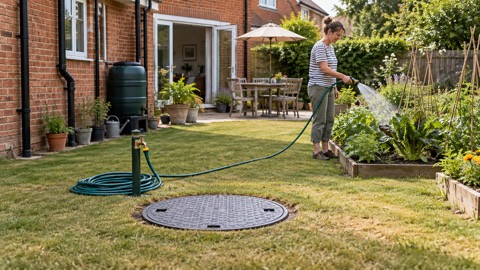
Garden watering during a dry spell does not have to stop. Official advice is to keep the garden maintained and watered in dry spells, and to consider using water from water butts or wastewater from the home if hosepipe bans are in place8. During hot, dry spells, grey water can be used for watering plants and lawns so that the ground can be kept damp even when hosepipe use is limited9. The site's page on using rain and grey water in the garden covers the practical side.
Going away for more than a week: holiday mode
A rainwater system left alone for a fortnight is a system full of water that has been sitting still. The maker's answer is the holiday button. If you are leaving the home for a prolonged period, over 1 week, press the holiday button to empty the header tank and refill it with treated mains water1. The manual adds a sensible detail: it may be worth flushing each toilet twice so that treated water is left in the cistern and bowl1.
That is the whole of the holiday procedure as the manual gives it, and it is worth building into your departure routine alongside the other things a household does before a long absence. The reason it matters is the stagnation point already made: water held in a tank or pipes for longer than 24 hours deteriorates2. A header tank that has been sitting for a fortnight is exactly the case the holiday mode is designed to prevent.
If you are going away in winter, the frost protection around the control panel matters as much as the holiday button. The panel must be located in a frost protected area1. The site's rainwater system winter checklist covers the wider set of cold weather checks.
What comes in the kit and what the pump must do
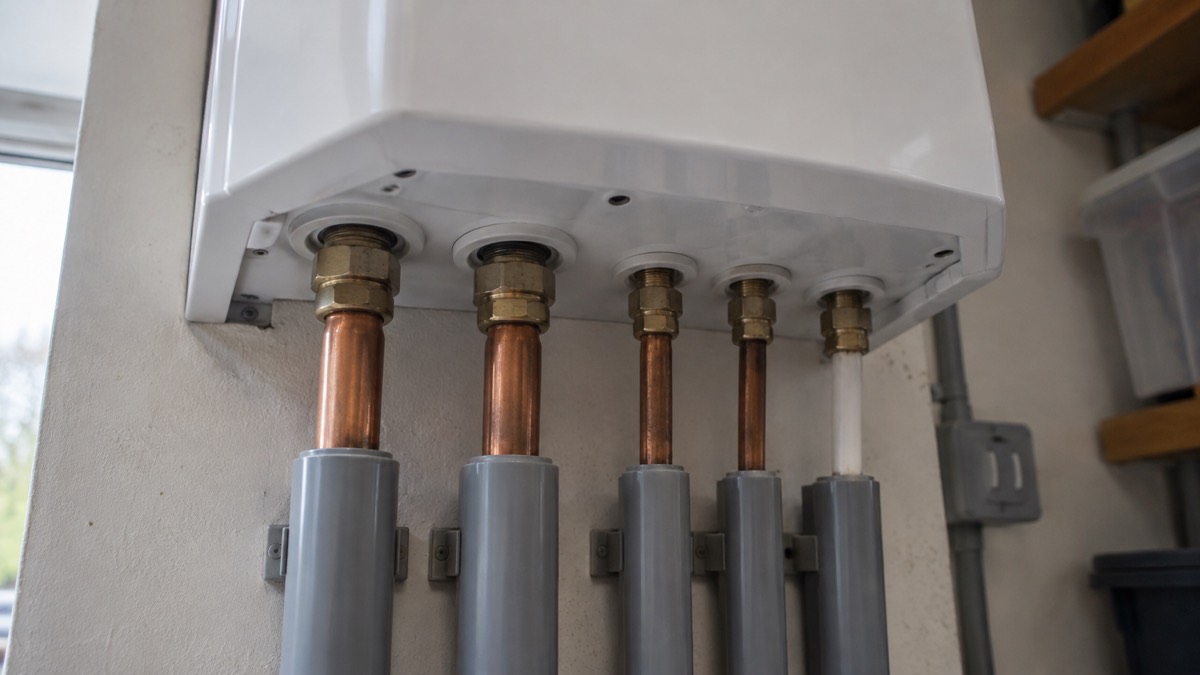
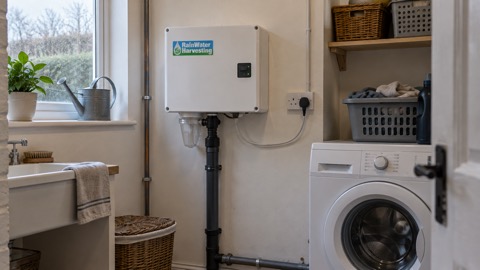
The Rain Director is a control panel with a sensor bar and a supplied length of CAT 5 cable that links the two. The panel has five numbered connections, and the pipe sizes are fixed by the design.
| Connection | What it is for | Pipe size |
|---|---|---|
| A | Refresh outlet to underground tank | 22mm1 |
| B | Rainwater inlet from pump | 22mm1 |
| C | Mains water inlet | 15mm1 |
| D | Services and header tank feed | 22mm1 |
| E | Mains water outlet to header tank | 15mm1 |
The pump is not supplied as part of the panel's specification in the manual, but the manual is clear about what it must be: a mains electric submersible pump that is pressure-sensitive and equipped with a non-return valve10. The pressure sensitivity is what lets the system respond to demand at the tap or appliance, and the non-return valve stops water running back down into the tank. If you are choosing a pump, the site's page on pumps for rainwater tanks sets out the submersible and surface types, and the HydroForce Series 4 rainwater pump page covers one model in detail.
The mains water outlet from the control panel (E) connects to the header tank mains water inlet using 1/2 inch BSP1. Either plastic or copper pipe may be used1. If your home still has lead water pipes, independent guidance suggests you might want to replace them with copper or plastic ones, which is a separate job from the rainwater system but worth knowing about if pipework is being opened up9.
Installation rules that protect the warranty
The manual is unusually direct about installation: incorrect installation invalidates all warranties, and installation according to the manual is required for the manufacturer's warranties to be valid1. That makes the installation rules worth reading before anyone lifts a pipe.
- Mounting height and place: locate the control panel where the rainwater enters the building, on a wall in a frost protected area at least 1.2m below the header tank1.
- Overflow route: the overflow must run straight out of the house without obstruction, bends, or decreasing pipe diameter, using a 40mm waste pipe elbow, either solvent or compression fitting1.
- Cable: do not cut or modify the supplied CAT 5 cable, and only use the cable supplied by Rainwater Harvesting Ltd1.
- Materials: approved materials, WRAS approved or permitted under regulation 5, should be used to prevent contamination of rainwater during runoff and collection11.
The materials point is an official one rather than a maker's preference. Approved materials, WRAS approved or permitted under regulation 5, should be used to prevent contamination of rainwater during runoff and collection11. The site's page on rainwater systems and the law covers BS 8551, the water fittings rules and mains top-up in more detail, and what pipe to use for rainwater and labelling rules deals with pipe choice.
The warranty itself runs for 2 years from the date of purchase, if the installation instructions are complied with1. Keep the manual, the purchase date and a record of who installed the system. If a contractor does the work, ask them to confirm in writing that they followed the manual's mounting height, overflow and cable rules.
First-time commissioning: up to twenty minutes
Commissioning is the first run after installation, and the manual warns that it is not instant. While commissioning, different light sequences will flash, and the process may take up to twenty minutes1. Commissioning has finished once the rainwater light and power light are on, and the system is then in rain mode1.
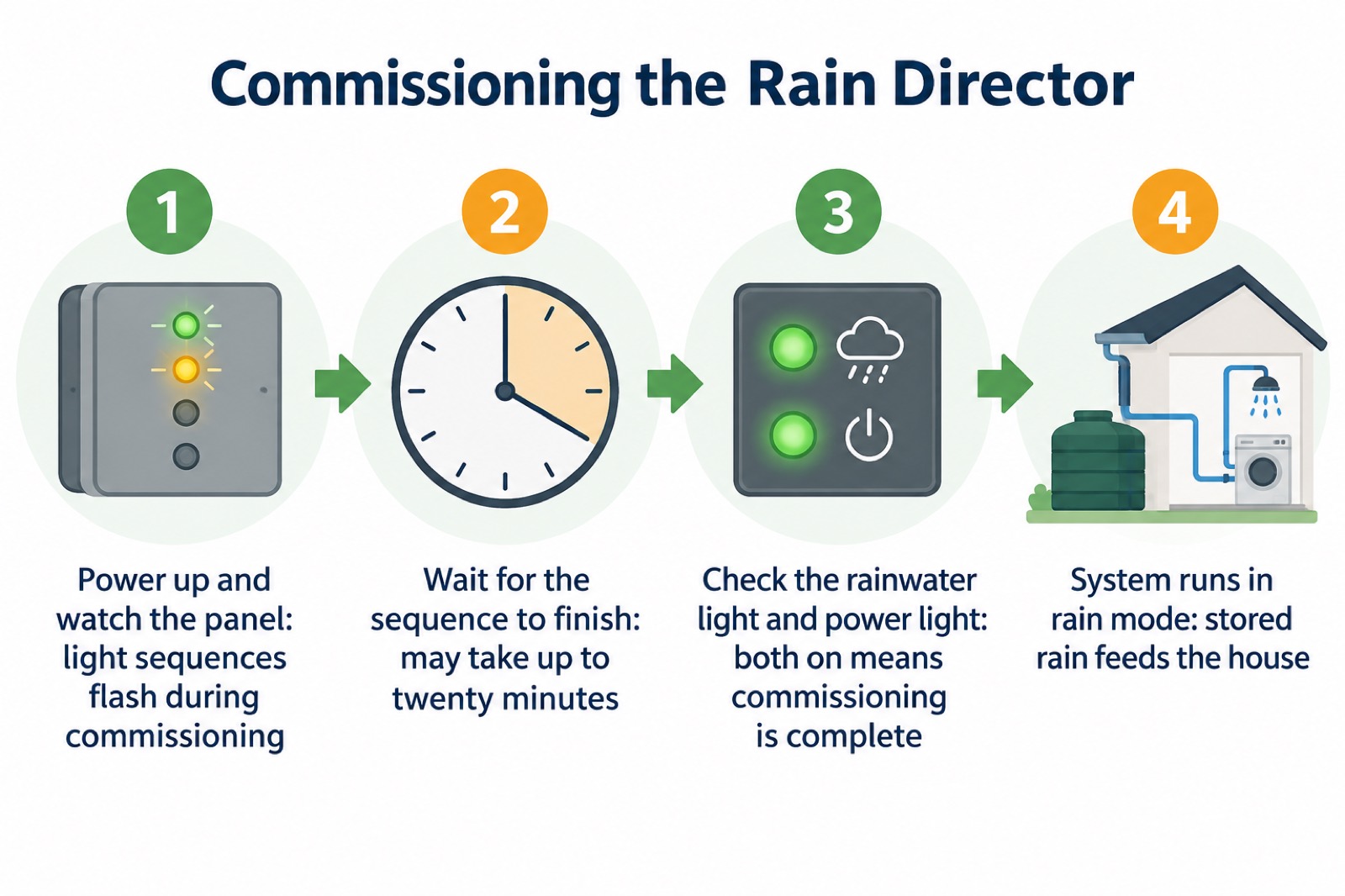
The practical advice for a household is to plan commissioning for a time when someone can watch the panel for twenty minutes without needing the water. Do not switch the power off part way through because the lights are flashing: that is the process working. If the sequence does not settle, go to the fault checks below before changing any wiring.
Once commissioned, the system looks after itself. It refreshes the header tank every 3 days when there is no activity, and it switches to mains water when the underground tank has no rain to give1. The household's job is to check the panel lights now and then, and to press holiday mode before a long absence.
Fixing a flashing red spanner light and airlocks
The panel reports faults through its lights, and the manual gives two distinct spanner light faults. They are not the same problem, and the manual does not resolve them into a single sequence, so treat them as separate checks.
| Light | When it appears | What the manual says it means | What to check |
|---|---|---|---|
| Flashing red spanner | During initial power up or commissioning | Sensor bar not connected, or a wiring fault1 | Check the connections of the CAT 5, making sure it is plugged in at the Rain Director and the header tank1 |
| Solid red spanner | During commissioning | Filling fault1 | Check rainwater and mains water are available, repeat the airlock removal step, clear the solenoid valves (contact supplier)1 |
Airlocks are the other common problem, and the manual gives a specific removal step. Fully fill the header tank and unscrew the air release cap, wait for all air to leave the system to eliminate airlocks, then replace the cap, ensuring that the black washer under the cap is replaced1. The washer detail is easy to miss and matters: a cap replaced without it will not seal.
For any issues, the manual directs owners to the troubleshooting website at www.rainhub.co.uk1. The unit is made in the UK1. The maker's product information also states that the unit is fully NSF Reg4 approved, with one version of that information giving the approval number as NSF Reg4 No. 2510615, and lists Waterwise approval and two award wins; the manual instead certifies compliance with the Machine Directive 89/392/EC and amendments, the Low Voltage Directive 73/23/EC and the Electromagnetic Compatibility Directive 89/336/EC and amendments1. Where you need the approval for a specification, ask the maker for the current certificate.
Where the Rain Director fits a household plan
A rainwater system with a Rain Director gives a household a second source of water for toilets, washing and the garden, and it keeps that source working through a dry spell by falling back to the mains. That is a useful thing to have ready, and it is worth being clear about its limits.
- It is not a drinking water supply. Harvested rainwater is not covered by this page as drinking water; the site's page on whether harvested rainwater is safe to drink deals with that question.
- It is not a power backup. The pump and panel need electricity, so a plan for a power cut should include a separate water store and, if you want the pump to keep running, a backup power arrangement. The site's backup power and power cuts guides cover the options.
- It rewards routine checks. Panel lights, the 3 day refresh and the holiday button are the whole of the routine, and they take minutes.
If you are at the start of putting a system together, the site's guide to rainwater harvesting at home explains how the parts fit together, and how to size a rainwater tank covers the storage question. For the wider household plan, start with getting started and the water in an emergency guide.
Sources (11)
- Rain Director installation and operating manual, Rainwater Harvesting Ltd, 2026
- Stagnant water advice, Southern Water, 2026
- Droughts: be informed about hazards, UK Government Prepare campaign, 2026
- Drought, Ofwat, 2026
- Get help and advice in an emergency, Lincolnshire County Council, 2026
- Stay safe in heavy rain, Met Office, 2026
- Help during a flood, GOV.UK, 2026
- Reduce the risk of wildfire damage to your property, Hampshire Fire and Rescue Service, 2026
- Does your home have lead water pipes?, WaterSafe, 2026
- rain-director-install-20190315.pdf, RainWater Harvesting Ltd
- Protecting your private water supply - Drinking Water Inspectorate, Drinking Water Inspectorate

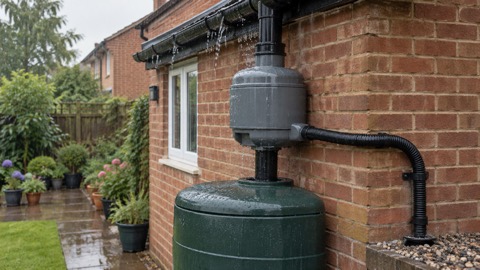 Enduramaxx Rainwater Filter Kit
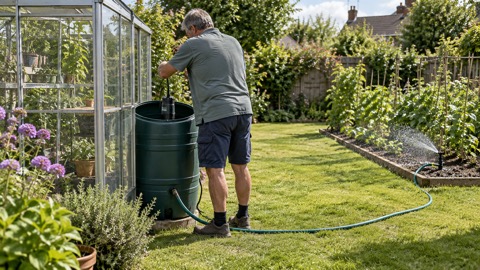 GARDENA Tank Pump 4000/1
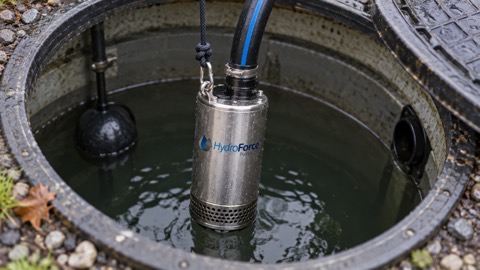 HydroForce Series 3 Clean Water Pump
 HydroForce Series 4 Pump
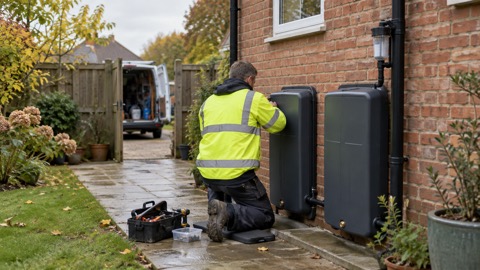 Multitank Rainwater Wall Tank
 Rain Activ Dual Garden System
 Rainwater Harvesting Rain Backup
 Rainwater Harvesting Header Tank