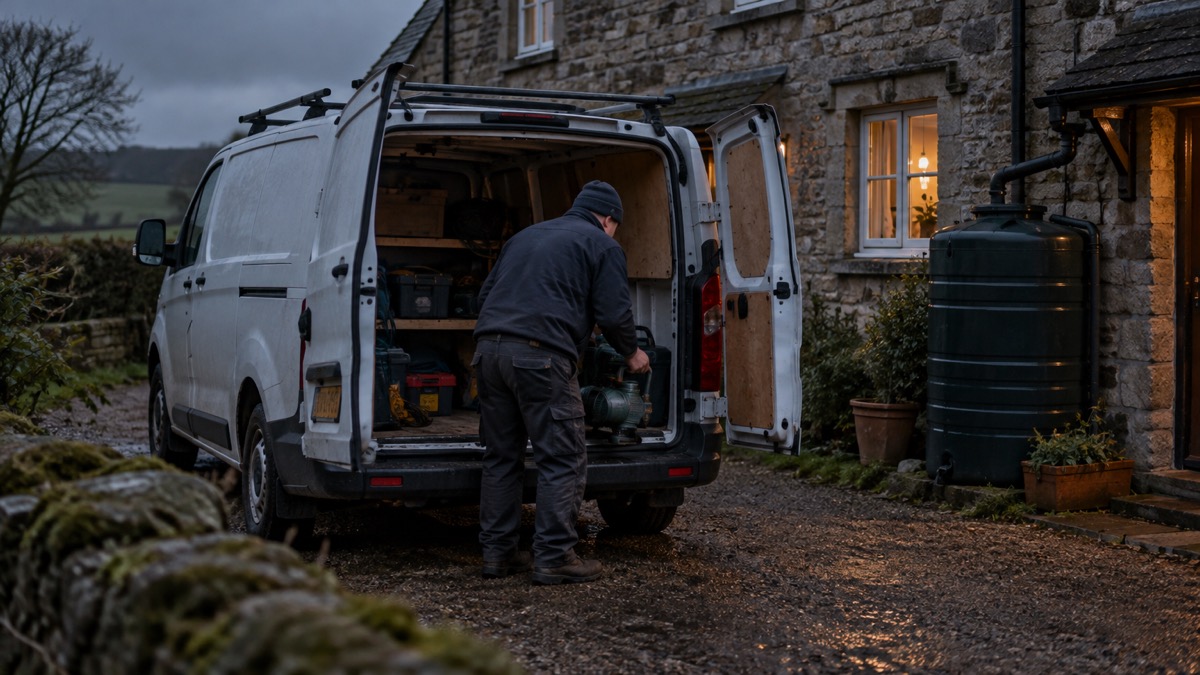
Whether your rainwater system keeps working in a power cut comes down to one question: does the water reach your taps by pump or by gravity? A direct feed system pumps water from the underground tank to each appliance, so when the electricity goes off, the supply stops with it1. A gravity feed system pumps water into a header tank in the loft and lets gravity do the rest, and the maker states that toilets and washing machines keep working during low rainfall, pump failure or a power cut2.
That difference matters most for the toilet. A direct feed system's pump registers the pressure drop when you flush, runs until the cistern is full, then switches itself off, all of which needs power1. A gravity system's header tank holds a batch of water ready to fall, so flushing continues until that store runs down3. If you have neither, water from a garden butt can still be used for flushing toilets, as Public Health Wales advises4.
This page sets out what each type of system does when the power fails, what the water can and cannot be used for, how surface pumps fit in, and how to draw water from an underground tank by hand if you have to.
Direct feed systems stop when the power goes off
In a direct feed system, water is fed directly from the submersible pump in the underground tank to each appliance1. The pump is pressure-sensitive: it reacts automatically when water is needed, registering the pressure drop when a toilet is flushed, pumping until the cistern is full, then switching itself off1. It is an efficient arrangement with no header tank taking up loft space, and the maker notes it is the only suitable option for homes without loft space, such as a flat roof or a converted loft2.
The catch is that every one of those steps depends on electricity. When the power goes off, the pump cannot run, the pressure signal is not answered, and the appliances fed from the tank lose their supply. The system is not broken; it simply has nothing to drive it. A direct feed system collects, filters and stores rainwater in an underground tank for domestic use and garden irrigation, and feeds it from a pressure-sensitive submersible pump straight to each connected appliance, but none of that helps while the pump is idle1.
Direct feed systems usually include a mains water backup. In the maker's design, when the tank level becomes too low, the control unit opens a solenoid valve and allows approximately 200 litres of mains water to enter the tank2. That backup protects you against a dry spell, not against a power cut: it still relies on the pump to move the water to the appliances. If your mains water supply is itself interrupted, for example during a wider incident, the backup has nothing to add either.
What to do: if you have a direct feed system, treat a power cut as a water cut for everything the tank supplies. Fill a few containers from the mains tap while you still can, keep water butts in reserve for flushing, and check the system over when the power returns. If the pump does not restart cleanly, the maker's manual for gravity systems describes a bypass valve for refilling the header tank from the mains; for a direct feed system, contact the installer.
Header tank systems keep a steady supply for a while
A gravity feed system works differently. It pumps from the underground tank, through a control unit, into a Smart Header Tank within the loft space, and the water is then gravity fed to toilets and washing machines3. Because the header tank holds a batch of water above the appliances, the pump only runs occasionally, and the maker states the system fills the tank to the upper part of its level tube and then does not use the pump again until virtually all of that water has been used8.
That batch is what carries you through a power cut. The maker states that if the underground tank runs low, the control unit switches to mains water and feeds the header tank directly, keeping toilets and washing machines working during low rainfall, pump failure or a power cut2. The Rain Director product page puts it more plainly: the control unit automatically registers when rainwater is unavailable and fills the Smart Header Tank with mains water, so toilets work in every eventuality, including a power cut3.
There are limits worth knowing. The supply lasts as long as the water already sitting in the header tank, so a household that has just done several loads of washing may find less in reserve than one that has been away. The maker also states that the system refreshes unused water in the Smart Header Tank every 3 days to protect against water quality issues, which is a routine cycle rather than an emergency measure8. And the gravity system's efficiency claim, that it uses 6 to 8 times less energy than a traditional system, is about running costs in normal use, not about surviving an outage3.
If you are choosing a system and power cuts are a concern, this is the practical difference between the two designs. A gravity feed system gives you a buffer of stored, gravity-fed water; a direct feed system gives you a simpler installation and no loft tank. The direct feed and gravity feed comparison sets out the trade-offs in full.
What rainwater can and cannot be used for in an emergency
Harvested rainwater is non-potable. The maker describes its systems as being for non-potable use in the home and garden, and the domestic uses it names are toilets, washing machines and garden watering5. With some plumbing alterations, rainwater can be used inside the house to flush toilets and feed washing machines5. It is not drinking water, and nothing in the system's design makes it safe to drink.
That leaves you with a clear split in an emergency. Rainwater can flush toilets, run a washing machine if the machine has power, and water the garden. It cannot be drunk, used for cooking, used to wash yourself or used to clean wounds. For drinking, keep a separate store of mains water or bottled water and follow official advice on water supply interruptions9. The page on what harvested rainwater can be used for goes through the permitted uses in detail, and the drinking rainwater page explains why treatment matters.
For flushing specifically, official guidance is reassuring: Public Health Wales advises that other sources of water, such as garden water butts, can also be used for flushing4. The government's Prepare campaign makes the same point, that water from a rain butt can be used for flushing toilets or watering plants9. So even if your system is completely dead, a water butt and a bucket keep the toilet usable.
There is one more safety point that applies whenever water and electricity meet. If your home has been flooded, do not touch any electrical equipment, switches or sockets while standing in water, or if the equipment is wet, damp or has been flooded and the electricity is still on10. Cornwall Fire and Rescue Service advises turning off the electricity at the mains only if you can do so safely, and never attempting it while standing in water11. Power cuts are common during adverse weather, and electrical items such as fridges and freezers may break down if they come into contact with water12.
Surface pumps and the kit that needs power
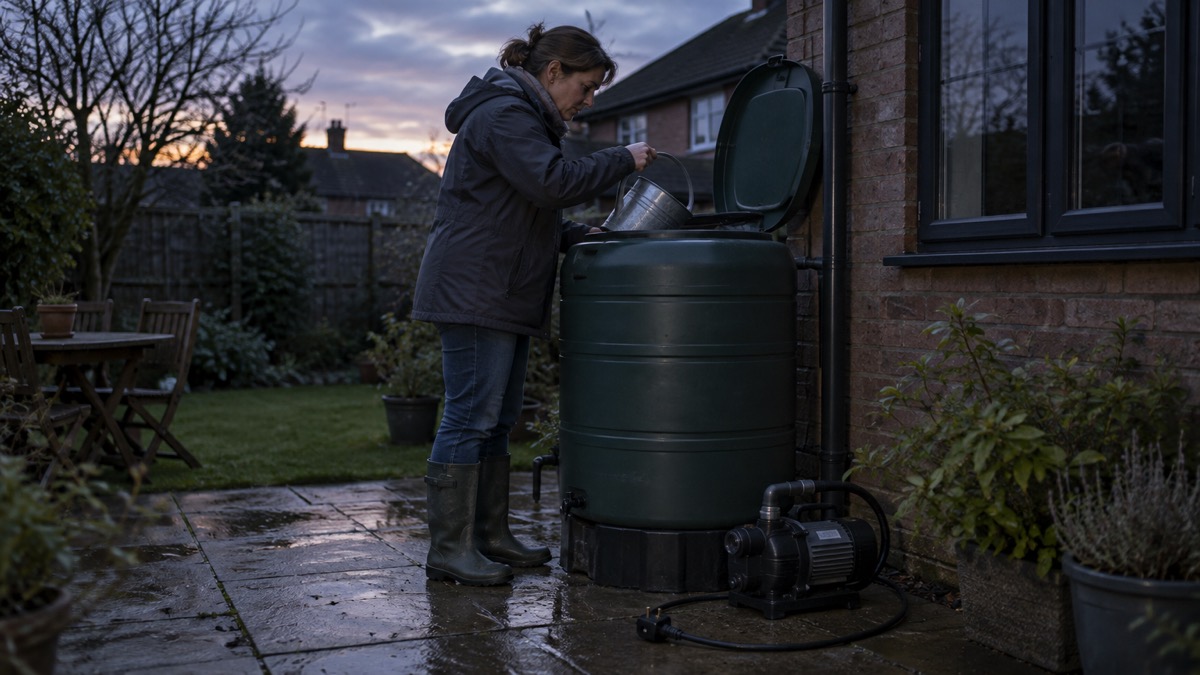
A surface pump sits outside the tank rather than in it, and is the kind of pump used for moving water around: flood water, garden irrigation, transferring from one container to another. The maker's surface water pumps come with manual or automatic operation and a 10m lay-flat discharge hose, with longer lengths available on request13. Like any mains-powered pump, a surface pump stops when the electricity does, so it is not a way to keep a supply running through a power cut.
Submersible pumps are the ones that sit down in the tank and push water up to the house. The maker's 800W StrongArm submersible pump includes a float switch for dry run protection, so when the water level falls the pump switches off14. That protection matters if you are drawing a tank down during an outage: it stops the pump running dry and burning out when the water runs low.
There is a known limitation when a backup device and a powerful pump work together. The maker states that if you run two garden taps with a high power pump, such as the HydroForce, Steel Pumps or Divertron 1100 watt pumps, the outflow exceeds the inflow from the backup device, dry-run protection turns the pump off, and some pumps need resetting at the mains15. In plain terms, drawing water faster than the backup can replace it trips the pump. During an emergency, draw from one outlet at a time and give the system a chance to recover.
If you are thinking about backup power for a pump, remember that pumps have a starting surge and a running load, and a small solar set-up may not carry either. The pumps for rainwater tanks page compares submersible and surface types, and the backup power section covers what a household can realistically run from a battery or generator. Any generator must be used outdoors, well away from windows and doors, because of the risk of carbon monoxide.
Getting water out of the tank without mains power
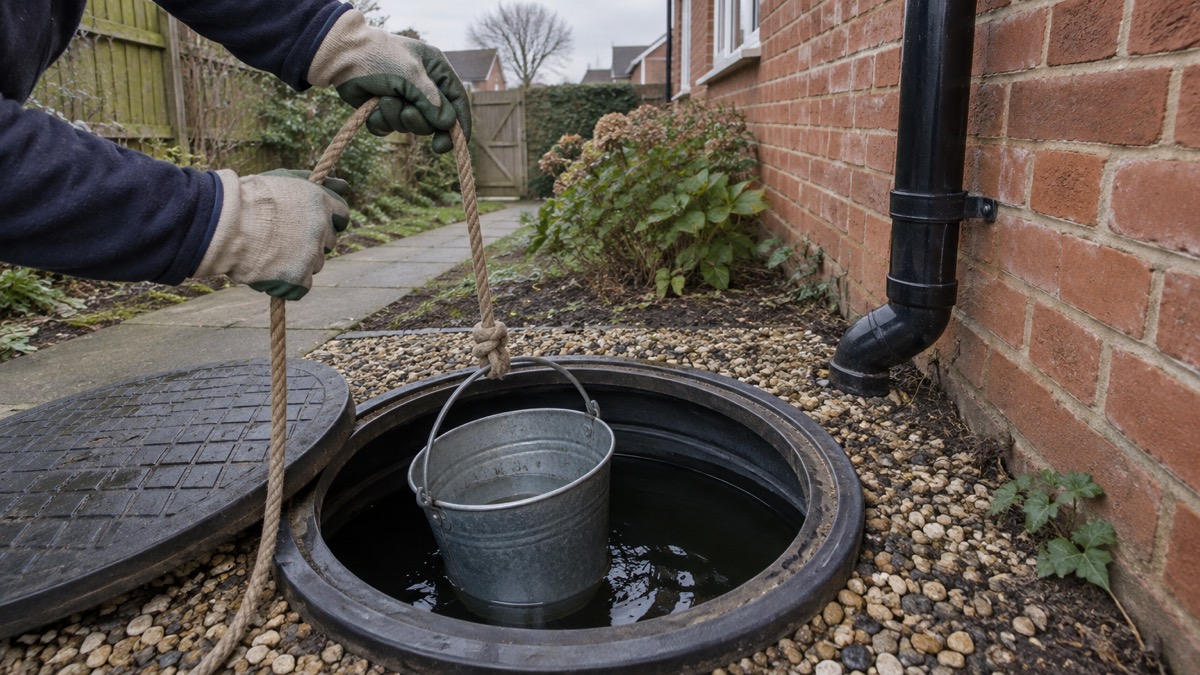
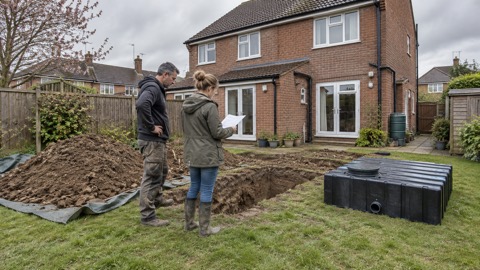
If the pump has stopped and you need water, you can go to the tank itself. Underground tanks have an access lid or cover, and with the lid open you can lower a bucket on a rope and draw water by hand. It is slow work, but it keeps toilets flushing and the garden watered. Take a torch, wear gloves, and never climb into the tank: the sides are slippery, the depth is deceptive and the air inside can be unsafe.
The maker's manual for the Rain Director describes what happens in a power cut and gives a workaround. If the pump and control panel are not functioning because of a power cut in the home, the system will auto fill with mains water; if that fails, a quarter turn valve can be used to bypass the system and refill the header tank with mains water16. That is a maker's instruction for its own product, and it only helps if your mains water is still running. If the mains supply is also off, the header tank and the underground tank are your only stores.
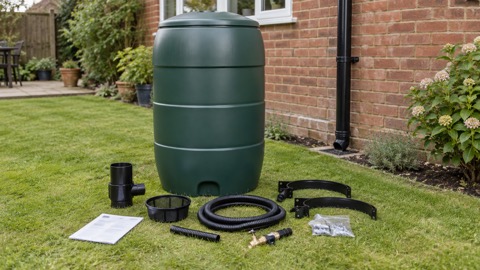
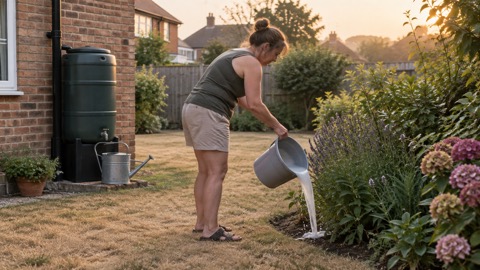
For garden use, the simplest answer is a system that needs no pump at all. The maker sells an 800 litre above-ground garden system with no pump, which delivers water by gravity through a tap17. The RHS also points out that a rain garden can manage rainwater runoff from hard surfaces after downpours by planting an attractive, low maintenance, wildlife-friendly space, which is a longer-term way to make heavy rain work for the garden rather than against it18.
A few practical points for drawing water by hand:
- Keep the lid accessible. Do not stack stored items on top of an underground tank cover.
- Use a clean container reserved for non-potable water, and label it so nobody drinks from it.
- Watch the outflow. With two garden taps and a high power pump the outflow can exceed the inflow from the backup device, and the pump's dry-run protection will turn it off; some pumps then need resetting at the mains15.
- Check the tank level before you start, so you know how much is there.
- Refit the lid securely afterwards, for safety and to keep debris and animals out.
If the power cut is widespread, report it on 105, the national power cut number7. Official planning for a loss of water supply assumes that up to 350,000 people could be affected for between 24 hours and two weeks, which is a reminder that a stored reserve at home is worth having19. The water in an emergency guide covers how much to store and how to keep it safe, and the power cuts guide covers what else to do when the electricity fails.
Sources (19)
- Rainwater Harvesting Direct Feed Systems, Rainwater Harvesting Ltd, 2025-10-23
- Direct Feed or Gravity Feed, Rainwater Harvesting Ltd, 2026-04-10
- Rainwater Harvesting Gravity Feed Systems, Rainwater Harvesting Ltd, 2025-10-23
- Weather and Health, Public Health Wales, 2026-07-16
- Rainwater Harvesting FAQ, Rainwater Harvesting Ltd, 2025-11-06
- Tank Size Calculator, Rainwater Harvesting Ltd, 2026-08-12
- Community Resilience Plan, Wiltshire and Swindon Prepared, 2025
- Rain Director, Rainwater Harvesting Ltd, 2025-10-23
- Water Supply Interruptions or Outages, UK Government Prepare campaign, 2026-10-12
- Flooding, Runnymede Borough Council, 2026-10-26
- Flooding, Cornwall Council, 2026-10-29
- Flooding, Food Standards Scotland, 2026-10-25
- Surface Water Pumps, Lakeside Flood Solutions, 2026-06-29
- 800W StrongArm Submersible Pump, Rainwater Harvesting Ltd, 2026-05-26
- F-Line 5000 Litre Direct Feed System, Rainwater Harvesting Ltd, 2026-07-07
- Rain Director Manual, Rainwater Harvesting Ltd, 2026-01
- 800 Litre Garden System No Pump, Rainwater Harvesting Ltd, 2025-11-19
- Conserving Water, Royal Horticultural Society, 2026
- London Risk Register, Greater London Authority, 2025-01
 Composting Toilet Kit Checklist
 Garden Harvesting Kit Checklist
 Rainwater Winter Checklist
 Composting Toilet Near Wells
 Flies in a Composting Toilet
 Composting Toilet Chamber Size
 Is Harvested Rainwater Safe
 Garden and Lawn Water Needs
 Grey Water Disposal Off Mains
 Rain and Grey Water in Garden
 House With a Private Supply
 Rainwater Pipe Types and Labels
 Private Water Supply Visitors
 Does Stored Rainwater Stagnate
 Underground Tank Dig Depth