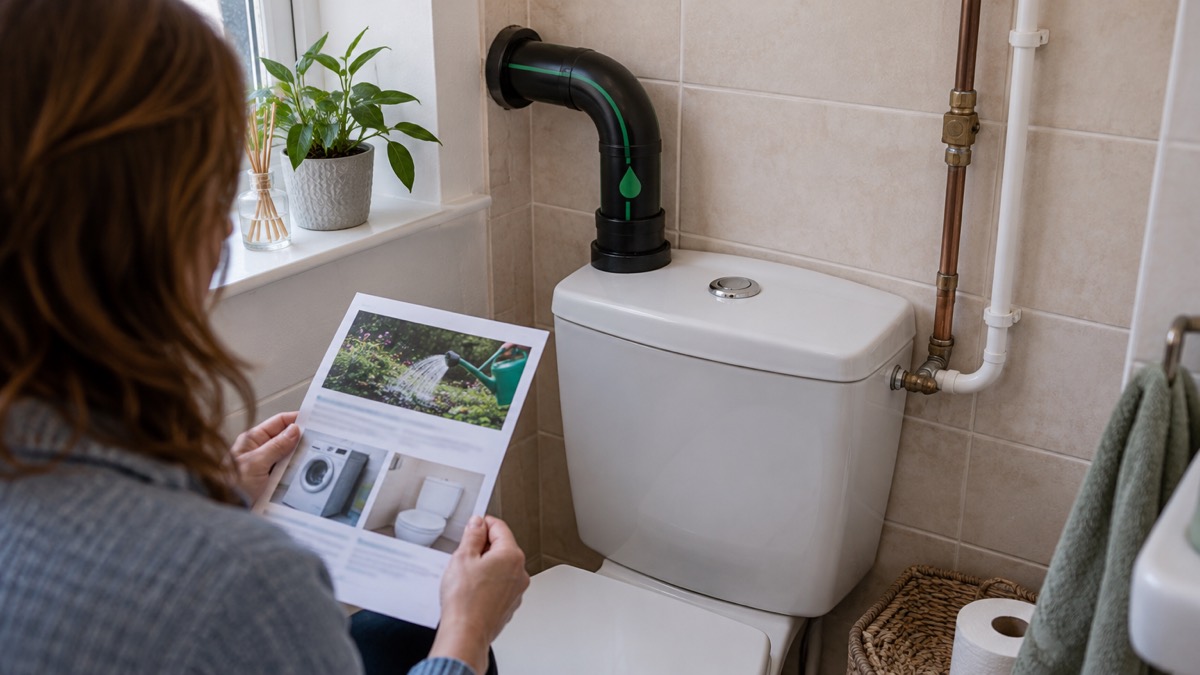
Rainwater collected from your roof is a free supply of water for every job around the house that does not need water you could drink. Flushing toilets, running the washing machine and watering the garden are all listed by official guidance as proper uses for collected rainwater1, and a plumbed-in system can feed all three automatically2. What it must never be used for, without proper treatment, is drinking, cooking or food preparation, because rainwater running off a roof can carry bacteria and disease3.
The prize is larger than many households realise. Studies cited by a water company show that 55% of domestic treated water could be substituted with rainwater4, and a single water butt can save more than 800 litres of mains water a year5. During a hosepipe ban, water from a butt or tank remains allowed for the garden when hosepipes are not6, which is exactly when plants need it most.
This page sets out what harvested rainwater can and cannot be used for, why plants do better on it than on tap water, how a system collects and stores the water, how to choose a tank size, and what grants and rules apply. For how a full system works, see rainwater harvesting at home; for the safety question of drinking it, see is harvested rainwater safe to drink?.
Toilets, washing machines and the garden: what rainwater can do
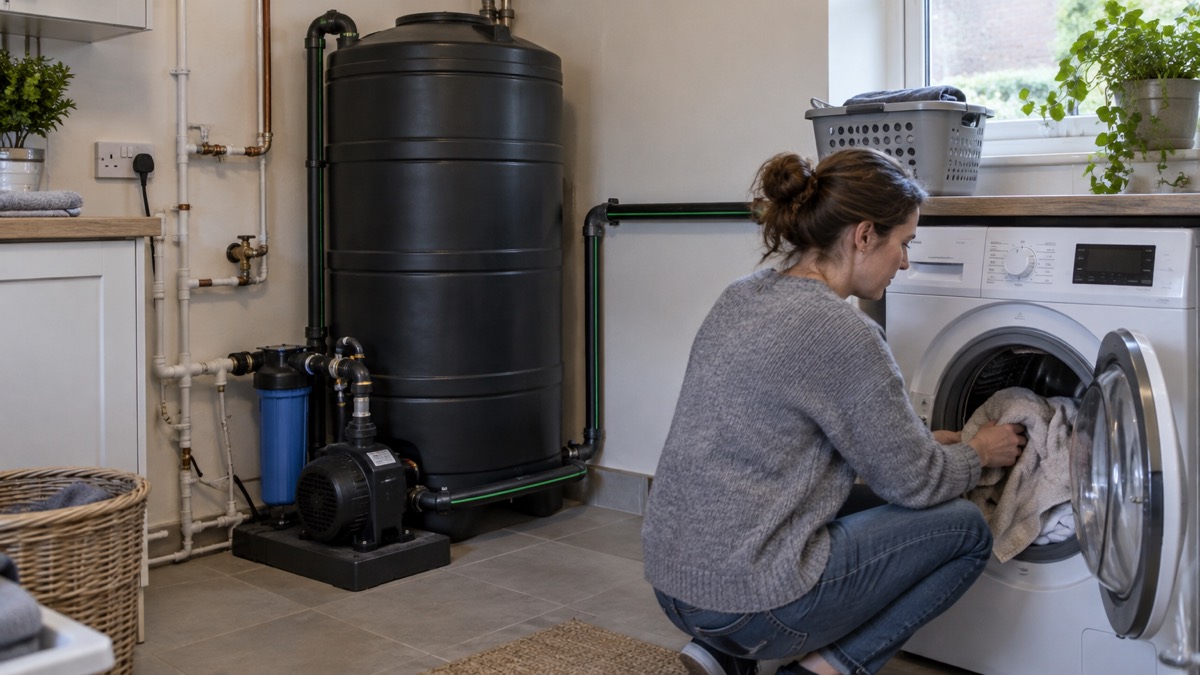
The three big household uses for rainwater are the three that use the most water without anyone drinking it: toilet flushing, garden watering and washing clothes in a washing machine2. Official preparedness guidance gives the same list in plainer terms, saying water collected in a butt or tank "can be used for flushing toilets or watering plants"1, and Greater Manchester's resilience guidance adds the warning that matters: do not drink this water, as it could contain bacteria or disease3.
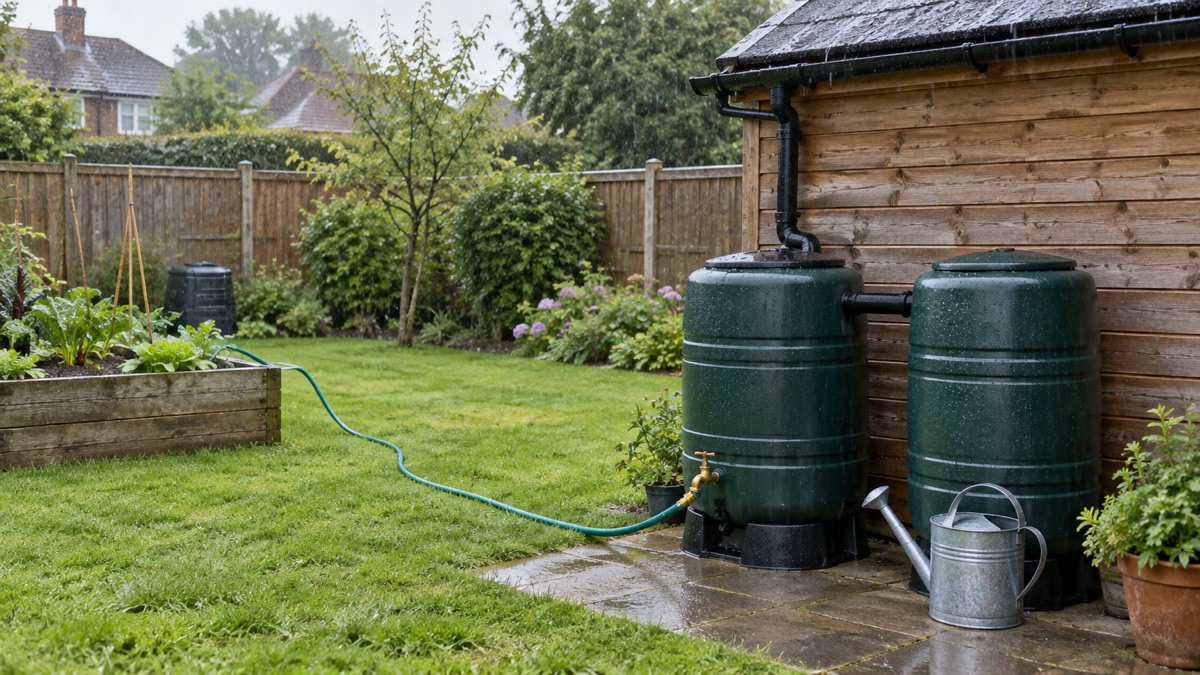
A water butt is the simplest starting point. Water butts collect rainfall from the roof of the house and any outbuildings, and the water can be used in the garden, or appropriately filtered and stored for reuse within the home8. That second half of the sentence is the important one for a household thinking beyond the garden: with filtration and proper storage, butt water can move indoors to the toilet cistern and the washing machine. Westminster City Council's flood planning advice encourages households to install rainwater butts both to conserve water and to reduce flood pressure on the drainage system9, so the same butt serves two purposes.
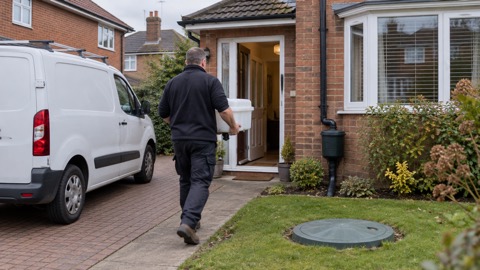
A plumbed-in system does the same job automatically. The maker of one domestic system, the Carat 2700 litre Rain Director, describes its purpose plainly: "Use rainwater to flush toilets, fill washing machines and water the garden."10 In a system of that kind, rainwater is pumped or gravity-fed to the appliances on its own pipe run, kept separate from the mains, and topped up from the mains only when the tank runs low. How the water is distributed, by direct feed or gravity, is covered in direct feed and gravity feed systems explained.
For most households the garden comes first, and that is a sound order to work in. Outdoor use needs no plumbing, no filters beyond a simple leaf trap, and no connection to the house's water system, so a butt and a watering can deliver the benefit on day one. Moving rainwater indoors is a bigger step, usually taken during a renovation or a new build, and it is worth knowing what it involves before deciding. The rest of this page covers both.
Why plants prefer rainwater to tap water
Gardeners who keep a water butt are not just saving mains water; they are giving their plants something tap water does not. Rainwater has a lower pH than mains water, which makes it better for your plants11, and because it is not chlorinated, it is better for plants and gardens generally2. In hard water areas the difference is sharper: rainwater avoids the high pH or alkalinity of mains water, helping sensitive plants like rhododendrons, camellias and other container-grown plants flourish12.
The Royal Horticultural Society adds a caution about young plants. Use rainwater stored in water butts on established plants, but avoid using it on seedlings, because it may contain damping-off diseases. It is, however, described as perfect for houseplants, particularly orchids and carnivorous plants13. So the rule of thumb is the reverse of what many people assume: the tenderest seedlings get mains or boiled-and-cooled water, while the tough established plants and the acid-loving houseplants get the butt.
Watering method matters as much as water source. Wessex Water's advice, highlighted by Wiltshire and Swindon Prepared, is to use watering cans rather than hosepipes, because cans use much less water and are more efficient at targeting the roots of plants, and to use rainwater rather than tap water if you have a butt installed14. If you are raising seedlings, our seed sowing kit checklist covers the equipment, and sowing seeds indoors and outdoors covers the timing.
Rainwater and planting also meet in the middle of the garden's water cycle. The London Fire Brigade's flooding advice notes that green roofs help hold rainwater, and that some plants reduce rainfall runoff through their higher rates of evapotranspiration15. The RHS's school gardening resources describe the rain garden idea: an attractive, low maintenance, wildlife-friendly planting that manages rainwater runoff from hard surfaces after downpours16. A household that both collects rainwater and plants with runoff in mind is handling the same rainfall twice, once as a resource and once as a risk. For more on the garden side, see using rain and grey water in the garden.
Watering the garden through a hosepipe ban
A hosepipe ban, formally a Temporary Use Ban, is when a stored supply of rainwater earns its keep. The rules are consistent across water companies on the central point: you can water your garden using a watering can or water collected in a water butt, just not with a hosepipe or sprinkler6. The government's drought guidance says the same to households: use a watering can instead of a hosepipe and install a water butt if you can, to capture rain17.
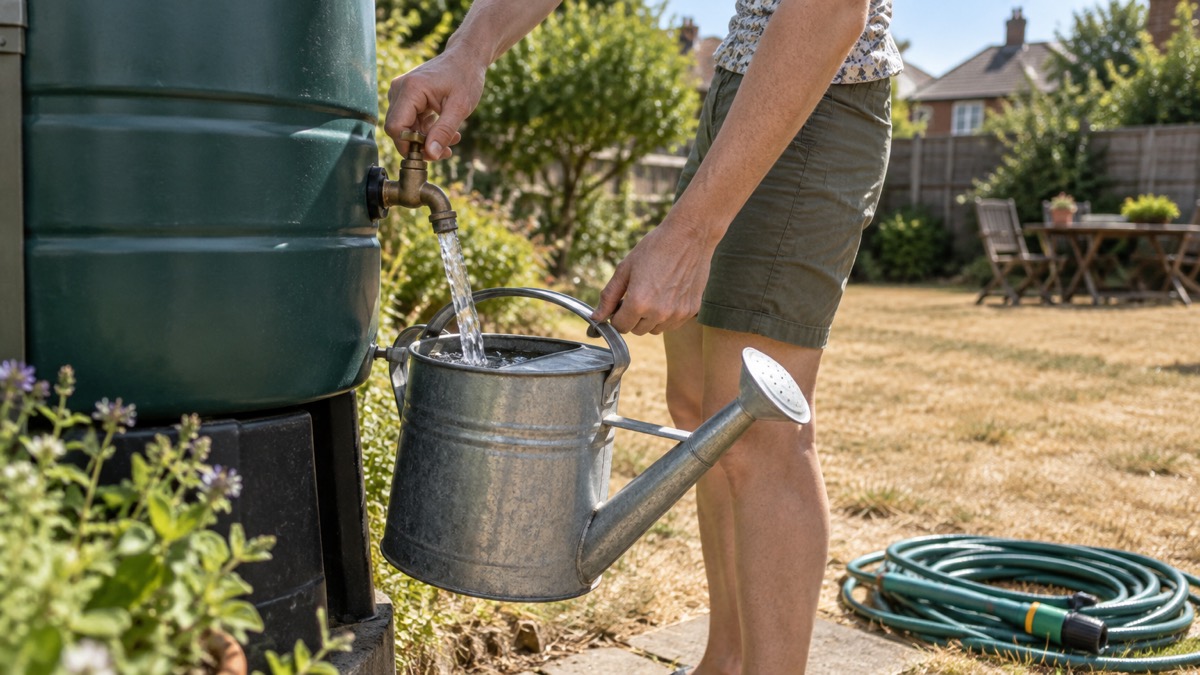
What a ban prohibits is any use of a hosepipe for a defined list of purposes. Essex and Suffolk Water's ban notice lists them: watering a garden, cleaning a private motor vehicle or trailer, watering plants on domestic or other non-commercial premises, cleaning a private leisure boat, filling or maintaining a domestic swimming or paddling pool, drawing water for domestic recreational use such as filling a hot tub, filling or maintaining a domestic pond, filling or maintaining an ornamental fountain, cleaning walls or windows of domestic premises, cleaning paths or patios, and cleaning other artificial outdoor surfaces18. Bristol Water's version adds filling a paddling pool, swimming pool or hot tub and cleaning a patio, driveway, walls and windows to the same list19.
The bans carry exceptions, and they matter if you grow food. Thames Water allows a hosepipe for plants grown for sale or commercial use, National Plant Collections, food crops at home or on an allotment when a watering can is not practical, new turf, lawns and trees planted by a professional landscaper for up to 28 days, and young trees, hedges and saplings planted within the last 3 years where hand watering is not practical20. South East Water's 2026 ban similarly allows hosepipe watering of trees, whips, saplings and hedging planted in the last planting year, where a watering can cannot reasonably do it21. Bristol Water permits drip or trickle irrigation that delivers water directly to soil, fitted with a time and pressure-reducing valve, along with watering cans and fixed watering systems that do not use a hosepipe22.
Two cautions from the ban notices are worth noting. Thames Water does not allow a hosepipe to maintain planters; a watering can or drip irrigation must be used instead20. And South East Water defines a garden broadly, as a public garden, a lawn, a park, a grass verge or an area of grass used for sport or recreation, so the restriction reaches further than flower beds21. Suffolk's warm weather advice sums up the practical position: keep your garden maintained and watered in dry spells, and consider using water from water butts or wastewater from the home if hosepipe bans are in place23. If you grow your own, which vegetables cope best with drought? and how much water a garden and lawn need in summer will help you plan.
How much mains water rainwater can replace
The headline figure is large. Cambridge Water's saving advice states that studies have shown 55% of domestic treated water could be substituted for rainwater4. That share is not a promise for every house; it reflects the fact that most of the water a household uses goes on flushing, washing and outdoors rather than on drinking and cooking. A household that plumbs rainwater to the toilet and the washing machine and uses it in the garden is substituting for exactly the uses that dominate the total.
Whether that translates into money depends on the meter. The factors that influence savings from a rainwater system are the demand for non-potable water, the amount of rainwater that can be collected, and whether the property is charged by volume used2. On an unmetered supply there is no saving on the bill, only the resilience and garden benefits. On a meter, every litre of rainwater used is a litre not bought. Southern Water's drought advice puts a number on the simplest version: fitting a water butt to collect and reuse rainwater could save more than 800 litres of water a year5.
Westminster City Council's drought advice describes the route from butt to house: install a water butt for rainwater storage from your downpipes, which can be connected to greywater systems such as toilet flushing and garden watering24. Savings are highest where roof area and demand are both large; the maker Enduramaxx notes that savings are higher in commercial and industrial buildings and schools, which have much larger roof areas and greater demand for non-potable water2. The same logic scales down to a house: a big roof and a thirsty garden collect and use more.
The context is pressure on the supply itself. Enduramaxx's guidance notes that water resources are under pressure in England and Wales as demand rises with population growth, changing lifestyles and a changing climate2. For a household, that pressure shows up as hosepipe bans in dry summers, which is when a full tank is worth the most.
How a rainwater system collects, filters and stores water
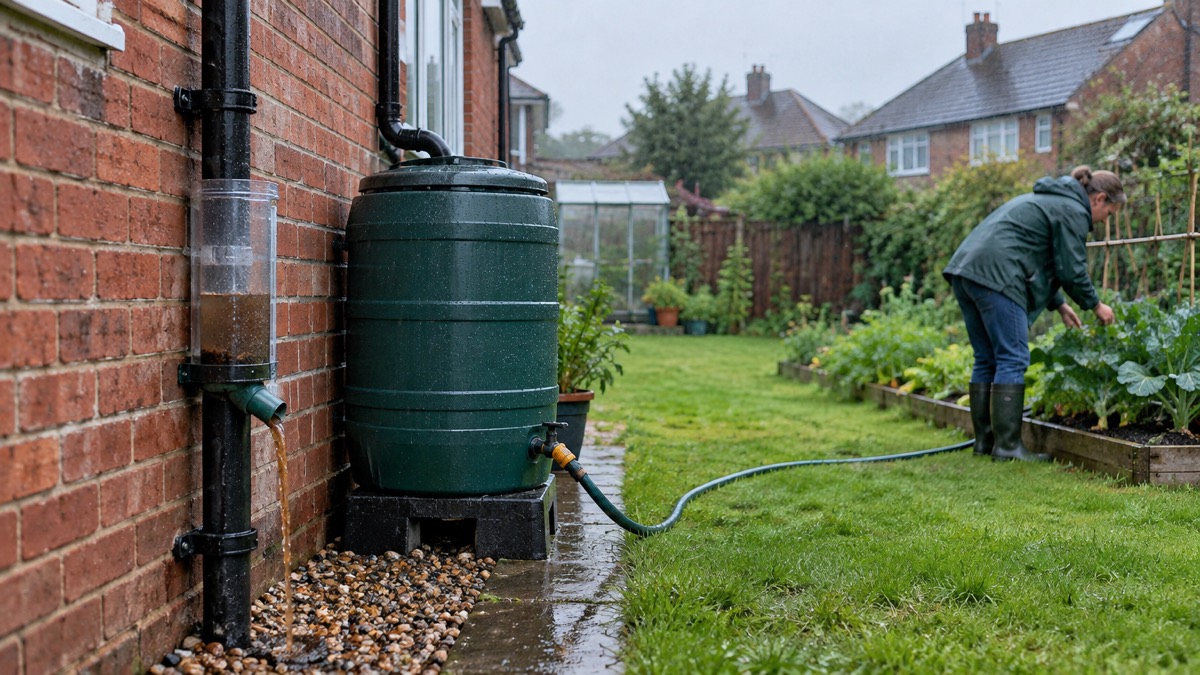
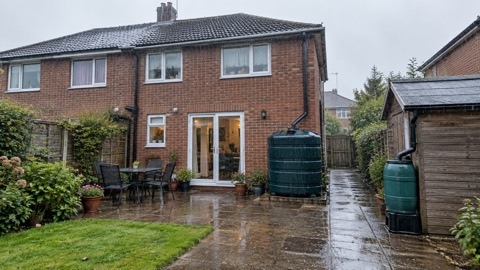
A rainwater system is a short chain: roof, filter, tank, then either a tap and a watering can or a pump and the house's non-drinking pipework. The first link is the roof itself. Water butts collect rainfall from roofs adjacent to the property and any outbuildings8, so the house roof, a garage and a shed can all feed the store, each through its own gutter and downpipe. How to make that connection is covered in how to connect a water butt to a downpipe.
Before the water enters the storage tank it passes a filter, whose job is to filter debris from the rainwater as it flows from the collection roof2. Leaves, moss and grit from gutters are what turn a tank sour, so the filter is not an optional refinement. The types available, downpipe, inline and in-tank, are compared in rainwater filters: downpipe, inline and in-tank types.
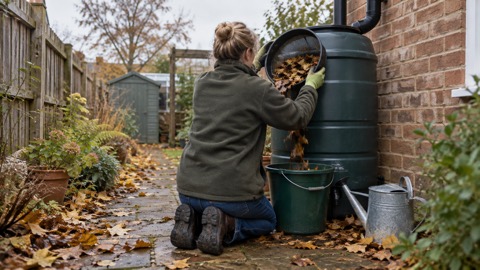
Inside the tank, design details keep the water usable. A calmed inlet brings incoming water in gently, which oxygenates the water in the tank and helps prevent it from stagnating2. When the tank is full, an overflow siphon diverts the excess water to a drain or soakaway2, so a full tank sheds water safely rather than flooding its surroundings. Keeping the whole system clean through the year is covered in keeping a rainwater system clean and working and how to clean a water butt and keep debris out.
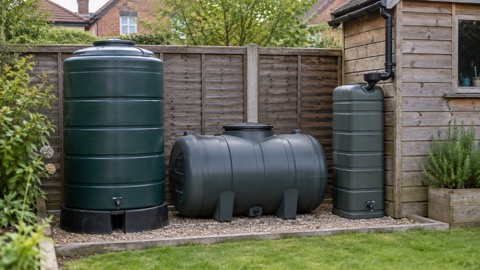
Storage can be above or below ground. The RHS notes that with drier summers but more winter rain as the climate changes, larger systems, some with underground storage tanks, may be practical to support plants in hotter months13. Underground tanks hold more, keep the water cooler and free the garden, at the cost of excavation; the options are set out in underground rainwater tanks and above-ground rainwater tanks. The whole arrangement also does wider work: the Greater London Authority describes how sustainable drainage systems manage surface water runoff by capturing, using, absorbing, storing and transporting rainfall in a way that mimics nature25. A household tank is the "capturing and using" part of that idea.
Choosing the tank size
Tank size follows three things: the roof area feeding it, the rainfall your area receives, and the demand you plan to put on it. The British Standard for rainwater harvesting, BS 8515, provides criteria for rainwater harvesting equipment manufactured in the UK4, and a proper sizing calculation works from those three inputs. Our dedicated page, how to size a rainwater tank, walks through the calculation; here it is enough to see how scale changes the choice.
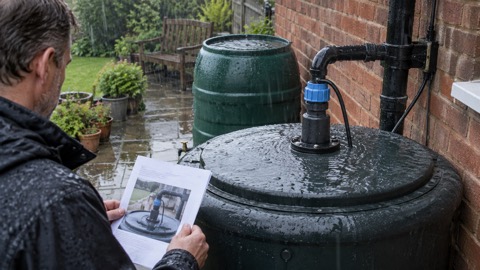
At the small domestic end, a butt or a wall tank serves the garden. A step up, a system such as the 2700 litre Rain Director is built to flush toilets, fill washing machines and water the garden in an ordinary house10. Its distribution method is worth noting as an example of how a sized system behaves: it works by batch filling a smart header tank with a ceramic level sensor tube, filling the header tank to the top of the tube and then not using the pump again until virtually all of that water has been drawn10. Fewer pump cycles mean less wear and less power used.
Larger tanks serve larger roofs and demands. The maker Enduramaxx notes that its tanks suit many domestic and commercial applications where mains water is not available2, which is the other reason for size: a property with no mains supply needs storage that carries it through dry spells. The same maker's guidance points to commercial and industrial buildings and schools, with their much larger roof areas and greater demand for non-potable water, as the settings where the savings are highest2, and that logic scales down to a house with a big roof and a thirsty garden.
A household choosing a tank should also think about what happens when the store runs low, since mains top-up has its own rules, covered in rainwater systems and the law. And if the aim is garden watering only, water butt or underground tank? compares the two directly.
Grants, new builds and the SuDS requirement
Rainwater harvesting is usually most straightforward when it goes in as a house is built. Cambridge Water's guidance is direct about this: typically, rainwater harvesting systems are more suited for new-build properties, where the cost of plumbing them in is negligible, while retrofitting into an existing property can be expensive4. A new build is also when the tank, the pipework and the separate labelling can be designed in rather than fitted around what exists.
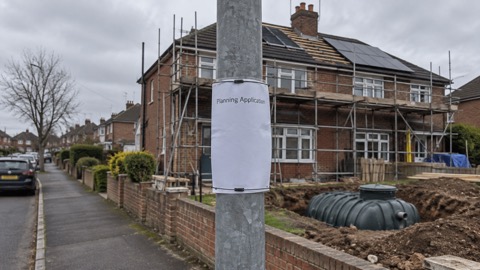
New developments in England are now pushed in this direction by drainage rules. Updated national standards for sustainable drainage, released in June 2025, prioritise rainwater harvesting as the solution to water runoff and make it a requirement for virtually all developments in England. The Greater London Authority's description of SuDS, managing runoff by capturing, using, absorbing, storing and transporting rainfall in a way that mimics nature25, is the principle behind those standards. For a self-builder or someone extending, planning permission and building regulations for tanks covers what needs approval.
For existing homes at risk of flooding, grant money can pay for resilience measures that often sit alongside water storage. Suffolk County Council's Property Flood Resilience grant scheme allows eligible property owners to apply for up to £5,000 (including VAT) to help make their property more resilient to future flooding, and the grant can only be used for resilience measures that are in addition to any reinstatement covered by insurance claims26. Lincolnshire Council describes the same kind of scheme: grants help households install measures that reduce future flood damage27. Cornwall's recoverability work gives examples of what that means in practice, using flood resilient building materials and raising sockets further up walls28.
The nations differ in what they offer. In Northern Ireland, the Homeowner Flood Protection Grant can give owners financial help to install physical barriers and equipment, like door barriers, air brick covers, non-return drainage outlets and waterproofing walls29. In England, community routes exist too: Northumberland's local resilience forum describes how community flood groups can apply for grants to buy property level protection for buildings of importance such as community centres and places of worship, with volunteers trained as flood wardens30. The Flood Hub's guidance on traditional and modern buildings adds measures any owner can specify in repair work: draught-proof windows and doors to prevent rainwater and floodwater entering, use water resistant mortars and renders for repointing or rendering, and apply waterproof coatings to walls up to the likely flood height of around 500mm31.
None of these grants is a rainwater subsidy as such, but a household already making its property resilient is doing work, digging and drainage included, that makes adding a tank cheaper than it would be cold. Westminster's flood planning advice to install rainwater butts to reduce flood pressure on drainage systems and conserve water9 is the same argument from the other end.
What a rainwater system cannot do
The limit that overrides everything: harvested rainwater is not drinking water. The government's water outage guidance and Greater Manchester's resilience guidance both state that collected rainwater can be used for flushing toilets or watering plants but must not be drunk, as it could contain bacteria or disease1. That extends to cooking, food preparation and anything where water is swallowed. The treatment that would make rainwater drinkable is a separate subject, covered in is harvested rainwater safe to drink?.
Contamination is not always visible. Wandsworth Council's guidance on chemical accidents and toxic fumes warns households not to use rainwater after such an incident, because it may look normal but could be dangerous to drink or wash with, and any stored rainwater, including water butts, should be discarded7. The Drinking Water Inspectorate's guidance for private supplies makes the same point about the collection side: approved materials, WRAS-approved or permitted under regulation 5, should be used to prevent contamination of rainwater during runoff and collection32. If you keep animals, note that Southern Water's ban advice allows a hosepipe to clean animals and their areas, such as a yard or stable, and to provide drinking water for them5, but that is mains water under an exemption, not rainwater.
A rainwater system also does not run itself without a little discipline. Stored water that sits unused can stagnate, which is why a calmed inlet that oxygenates the tank matters2, and why the water should be used and the system cleaned through the year. The system depends on rain: in a long dry spell the tank empties, and a household needs the mains top-up arrangement to be correct and legal. And if the pump needs electricity, a power cut stops the supply; will a rainwater system keep working in a power cut? answers that directly.
None of these limits changes the core case. For the uses that dominate a household's water bill, flushing, washing and the garden, rainwater does the job as well as mains water, better in the garden, and it keeps working through the dry spells when restrictions bite.
Sources (32)
- Water supply interruptions or outages, Campaign.gov.uk
- 45,000 litre vertical rainwater harvesting tank, Enduramaxx, 2026-09-28
- Loss of essential services, Greater Manchester Combined Authority
- Saving water FAQs, Cambridge Water, 2026-10-28
- Temporary Use Ban advice, Southern Water, 2026-10-28
- Hosepipe ban FAQs, Affinity Water, 2026-10-29
- Chemical accidents and toxic fumes, Wandsworth Borough Council, 2023-04-13
- Flood Smart Living, Suffolk County Council, 2024-11
- Plan and prepare for floods, Westminster City Council, 2026-09-03
- Carat 2700 litre Rain Director system, Rainwater Harvesting Ltd, 2026-07-01
- Drought: save money and water, CCW, 2026-06-10
- 2026: a year we prepare, not react, WaterWise, 2026-03-05
- RHS advice: water butts and rainwater, Royal Horticultural Society, 2026
- Spotlight on Wessex Water: advice on saving every drop, Wiltshire and Swindon Prepared, 2026-10-25
- Planting and flooding, London Fire Brigade, 2026-10-25
- Conserving water: rain gardens, Royal Horticultural Society, 2026
- Droughts: be informed about hazards, Campaign.gov.uk, 2026-10-19
- Temporary Use Ban, Essex and Suffolk Water, 2026-08
- Hosepipe ban, Bristol Water, 2026
- Temporary hosepipe ban FAQs, Thames Water, 2026-10-28
- TUBs in Kent: FAQs, South East Water, 2026-10-28
- Hosepipe ban exceptions, Bristol Water, 2026
- Warm weather safety advice, Suffolk Fire and Rescue Service, 2026-10-29
- Drought advice and support, Westminster City Council, 2026-08-06
- Surface water flooding and climate adaptation, Greater London Authority, 2026-10-25
- Property Flood Resilience grant scheme, Suffolk County Council, 2026-10-29
- Apply for a Property Flood Resilience grant, Lincolnshire County Council, 2026-10-29
- Property flood resilience projects, Cornwall Council, 2025-08-15
- How to protect your home from flooding, nidirect, 2025-12-18
- Northumbria Local Resilience Forum, Northumberland County Council, 2026-10-28
- Traditional vs modern building flood resilience guidance, The Flood Hub, 2025-12
- Protecting your private water supply, Drinking Water Inspectorate, 2026-10-28
 Composting Toilet Kit Checklist
 Garden Harvesting Kit Checklist
 Rainwater Winter Checklist
 Above-Ground Rainwater Tanks
 Composting Toilets
 Direct vs Gravity Feed Systems
 Planning Permission for Systems
 Private Water Supply Running Low
 Private Water Supply Regulations
 Private Water Supplies Scotland
 Treating a Private Water Supply
 Rainwater Filter Types
 How Rainwater Harvesting Works
 Rainwater System Maintenance
 Pumps for Rainwater Tanks