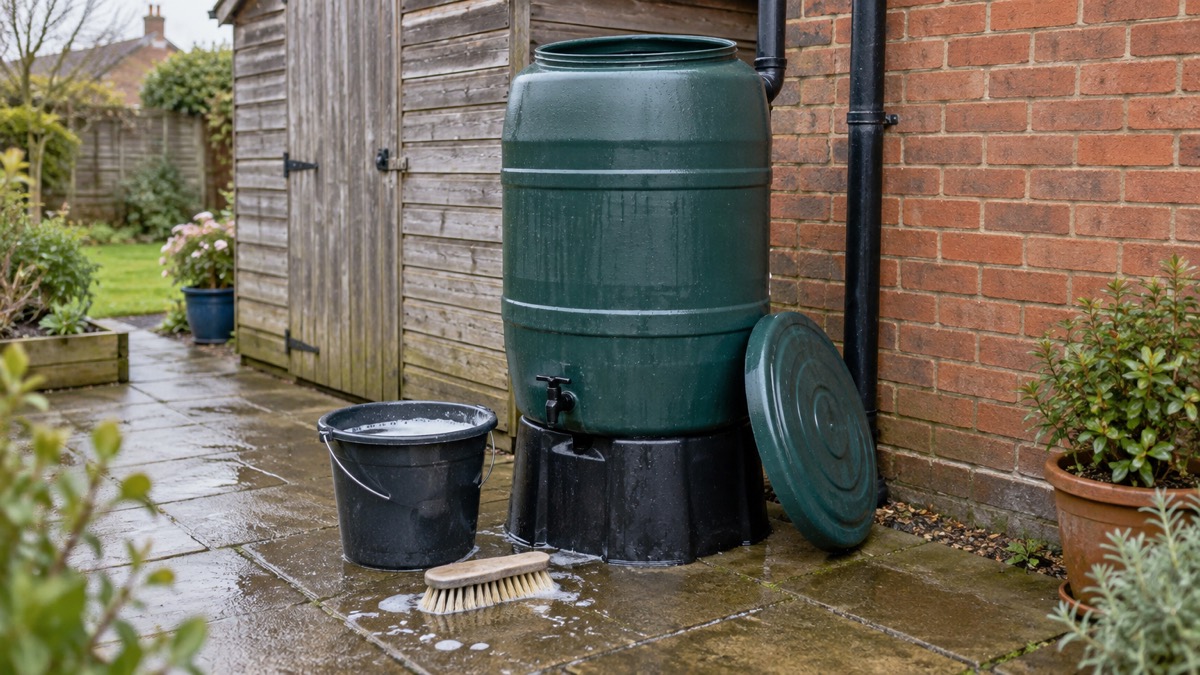
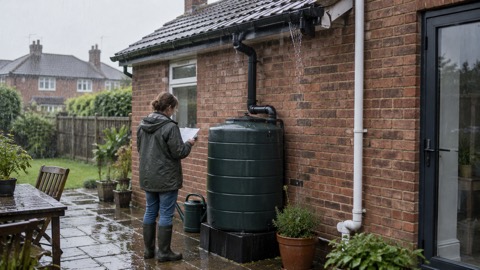
A water butt is one of the simplest pieces of kit a household can fit: a large barrel that collects rainwater from a downpipe, so the garden can be watered without reaching for the mains1. Clean it once a year with warm water and a little washing-up liquid, and you head off most of the trouble. The Royal Horticultural Society's advice is to clean water butts annually to prevent disease build-up and smells, using warm water and a little washing up liquid2.
The water inside is for the garden, the car and the toilet, not the kitchen. Official guidance says water from a water butt can be used for flushing toilets or watering plants, and warns plainly: do not drink this water as it could contain bacteria or disease3. If the water starts to smell, the fix is to empty the butt, clean it and start again, not to add chemicals2.
This page covers the yearly clean, what to do when a butt turns smelly, how to keep the water fresh between cleans, and the safety rules that decide what the water can and cannot be used for.
Clean it once a year with warm water and washing-up liquid
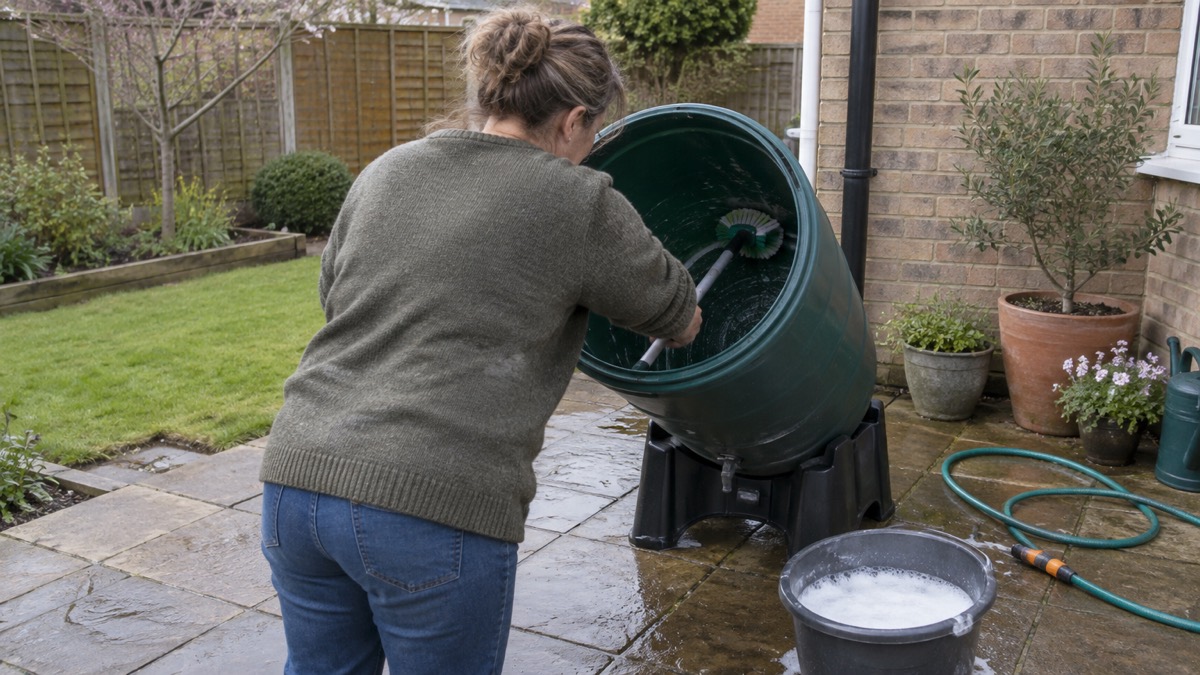
The yearly clean is the whole job in one sentence: empty the butt, wash it out with warm water and a little washing-up liquid, rinse, and put it back to work2. The RHS gives this as its standing advice to prevent disease build-up and smells, which tells you why it matters: a butt is a dark, wet container that sits outside all year, and anything that lands on the roof ends up in it.
A few practical points follow from that. Do the clean on a dry day when the butt is low, so there is less water to empty and the butt dries before it refills. Wash the inside surfaces and the lid, and rinse thoroughly so no soap is left behind. While the butt is empty, clear the gutters and the downpipe that feed it: the RHS advises keeping gutters clear to reduce waterborne plant diseases such as Phytophthora and Pythium2. A clear gutter also means less leaf litter and grit settling at the bottom of the butt.
The same principle applies to the fittings. A water butt is fed from a downpipe, and the connection is where debris gets in, so check it while the butt is empty. If you are fitting a new butt or reconnecting one, our guide to connecting a water butt to a downpipe walks through the fittings, and Water Butts: Sizes, Fittings and Where to Put One covers choosing and siting one in the first place.
How often you clean depends on what falls on the roof. A butt under trees will collect more leaves and need more attention; one on a clean roof may only need the annual clean. The RHS advice is annual, and that is the baseline to work from2.
A smelly water butt: empty it and start again
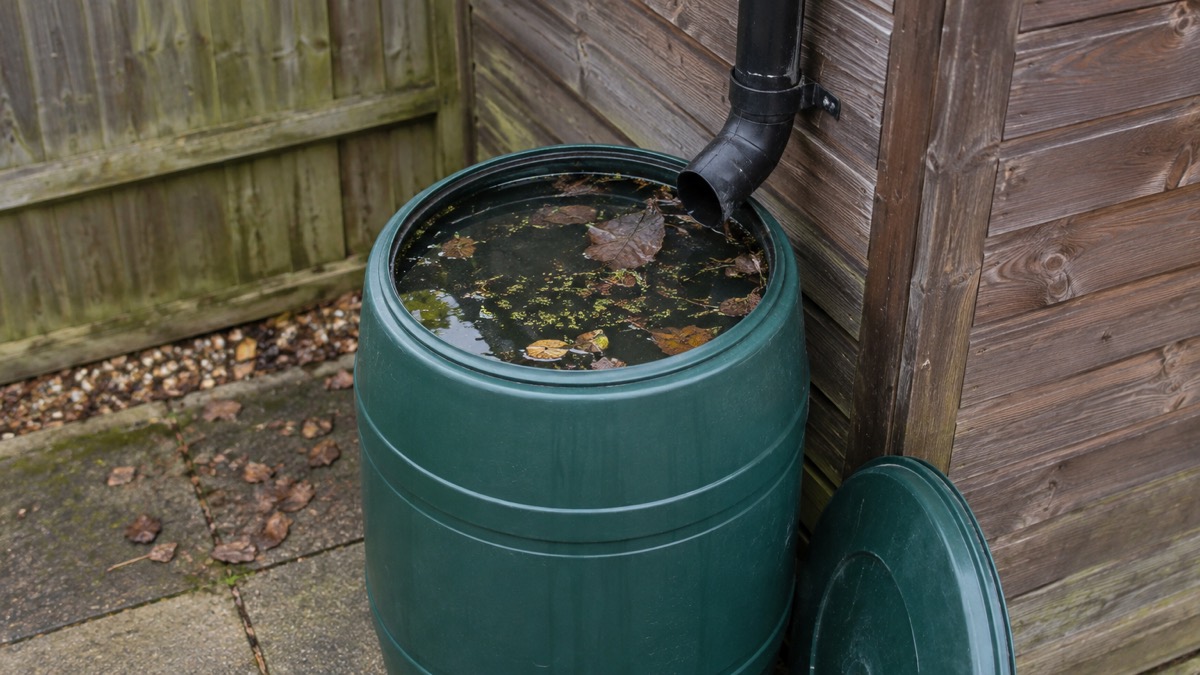
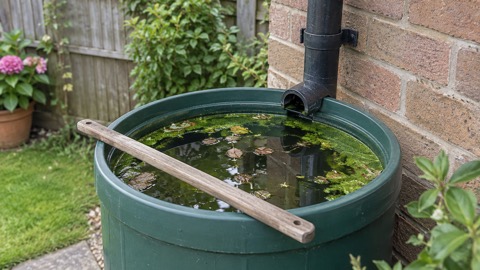
When the water in a butt turns stagnant or rotten, the cause is usually the water sitting too long with organic matter in it. The RHS is direct: if the water smells, empty and clean the water butt rather than adding chemicals2. A garden supplier's own guidance on keeping butt water fresh says the same thing in practical terms: empty the butt, clean it and then start again using one of the treatments to keep the water fresh4.
That order matters. Cleaning first removes the debris and the film on the walls that the smell is coming from; a treatment added to a dirty butt is working against the problem rather than removing it. So:
- Empty the butt, using the water on established plants or the garden if it is not foul.
- Clean the inside with warm water and a little washing-up liquid, as in the annual clean2.
- Rinse thoroughly.
- Clear the gutters and downpipe feeding it, to reduce waterborne plant diseases2.
- Let it refill, and use the water regularly so it does not sit.
If the smell is musty or earthy, check the butt is not the only source. Water companies advise that a musty or earthy smell in tap water can be cleared by running the tap for a few minutes, or by washing the tap with a mild household disinfectant and rinsing afterwards5. That is about mains water, not butt water, but it is a useful reminder to check where a smell is actually coming from before emptying a butt that may be fine.
Keeping the water fresh after cleaning
A clean butt stays fresher if the water in it is used. The RHS advises using stored water frequently to keep it fresh, alongside keeping gutters clear2. A butt that fills in autumn and is never drawn down until summer is the one most likely to turn.
The other habits that keep a butt in good order:
- Use it often. Water the garden from the butt rather than the hose where you can; frequent use keeps the water moving and replaced2.
- Keep the lid on. A lid keeps light, leaves and animals out of the water.
- Clear the gutters. This reduces waterborne plant diseases such as Phytophthora and Pythium2.
- Check the downpipe and filter while the butt is empty, so debris does not build up again.
- Do not add chemicals to deal with a smell; empty and clean instead2.
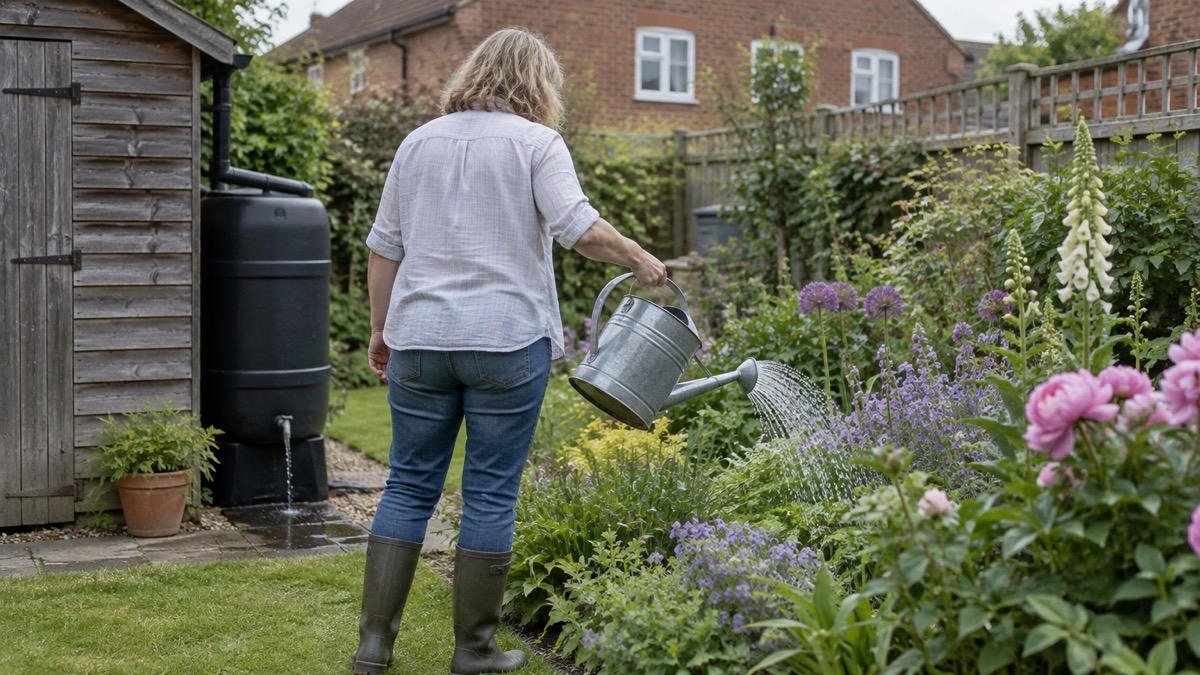
The water itself is worth having. A water butt collecting and reusing rainwater could save more than 800 litres of water a year, according to a water company6, and a Welsh water company notes that a roof collects enough rainwater to fill a water butt 450 times a year7. A butt installed as part of a local flood scheme was sized to collect up to 200 litres of rainwater8. Those figures explain why the annual clean is worth the effort: the butt is doing real work, and clean water does it better.
For the wider picture, Keeping a Rainwater System Clean and Working Through the Year covers filters, pumps and the rest of a system, and Does Stored Rainwater Go Off or Stagnate? looks specifically at what happens to water left standing.
Never drink water butt water without proper treatment
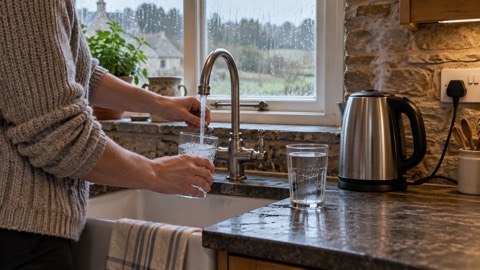
The rule is simple and official: do not drink water butt water, because it could contain bacteria or disease3. That applies to drinking, cooking, cleaning teeth and washing food. The same official guidance says the water can be used for flushing toilets or watering plants3, and water companies repeat the point during supply interruptions, when you can pour water from a butt into the toilet to flush it9.
Rainwater can be treated to drinking quality, but the treatment has to be right. A rainwater harvesting supplier notes that rainwater can be treated with UV filtration to make it potable quality, yet this is typically only economically viable where occupants are off grid and have no mains water source11. Where UV is used on a private supply, official guidance says it must be designed for drinking water, and its spare parts such as UV bulbs kept available and maintained in line with the manufacturer's instructions12. It should be checked regularly to ensure it is operating correctly, with the pre-filter replaced as required depending on the quality of the source water13. After floods or storms, replace any filters and make sure the quartz sleeve is clean and the bulb is operational and has been renewed within the previous year or as the manufacturer's handbook requires14.
| Use | Is it safe? | What the guidance says |
|---|---|---|
| Watering established plants | Yes | Use on established plants, but avoid on seedlings because it may contain damping-off diseases2 |
| Flushing the toilet | Yes | Water from a water butt can be used for flushing toilets3 |
| Washing the car | Yes | Stored water can be reused for washing cars15 |
| Drinking, cooking, cleaning teeth | No | Do not drink this water as it could contain bacteria or disease3 |
| Drinking after UV treatment | Only with a properly designed and maintained system | UV must be designed for drinking water and maintained to the maker's instructions12 |
If a chemical incident has happened, the advice changes again: official guidance says not to use rainwater as it may look normal but could be dangerous to drink or wash, and any rainwater stored, for example in water butts, should be discarded16. That is a specific instruction for a specific incident, and it overrides the usual garden uses until you are told otherwise.
What the water is good for, and what to watch
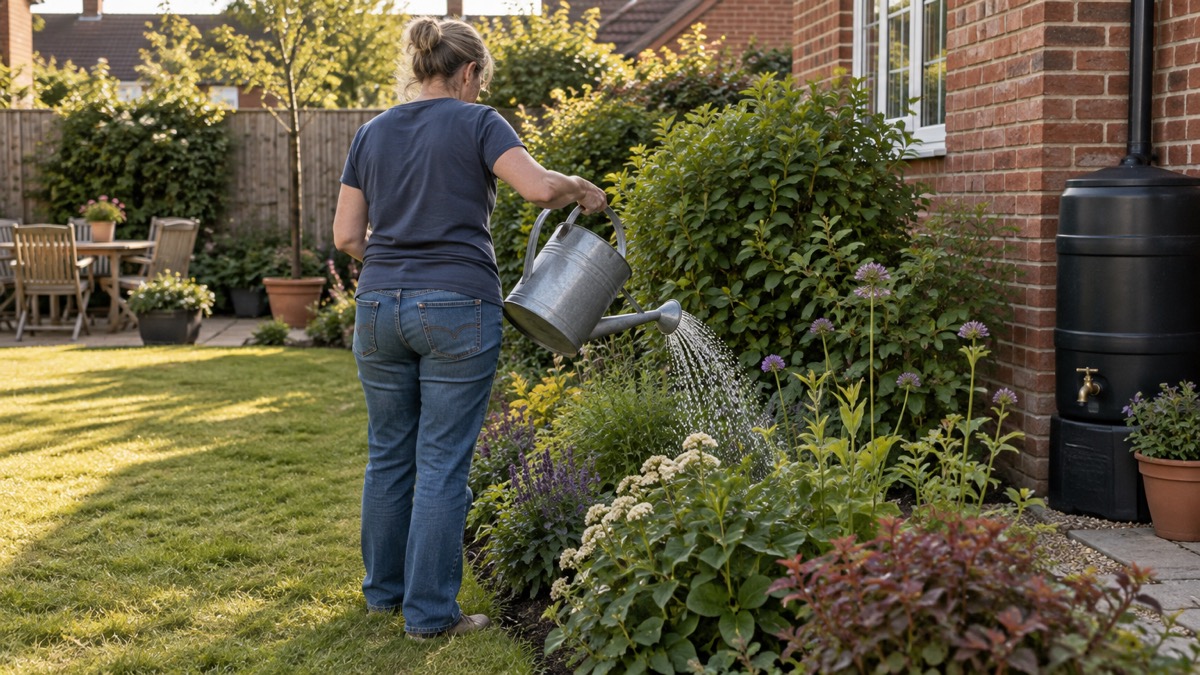
Water butt water earns its place in the garden and around the house. The RHS says rainwater stored in water butts is better for plants because it has a lower pH, and a rainwater supplier explains that gardens prefer rainwater to mains water because it does not contain the chemicals needed to make mains water drinking quality11. Use it on established plants, but avoid using it on seedlings because it may contain damping-off diseases; it is perfect for houseplants, particularly orchids and carnivorous plants2.
Beyond the garden, official guidance lists the practical uses: flushing toilets or watering plants3, and connecting a butt to greywater systems such as toilet flushing and garden watering18. A Scottish council lists the use of grey water, for example from a rainwater butt, for flushing toilets as a way of conserving drinking water19. A water company adds that stored water can be reused for watering the garden and washing cars15.
The things to watch are the ones that make the water dirty in the first place. Bird droppings, leaves and grit land on the roof and wash into the butt, which is why the water is not for drinking3. Gutters left full of debris raise the risk of waterborne plant diseases2. Water left standing for months turns stagnant, which is what the annual clean and regular use are there to prevent2.
If you are storing water for an emergency as well as for the garden, keep the two jobs separate. Our guide to water in an emergency covers how much to store and how to keep it safe, and What Harvested Rainwater Can Be Used For in Your Home and Garden sets out the household uses in more detail. For the system as a whole, Rainwater Harvesting at Home: How a System Works is the place to start.
Sources (19)
- 10 quick easy ways to start saving water today, NI Water, 2021-08-27
- Water butts advice, Royal Horticultural Society, 2026
- Water supply interruptions or outages, Prepare campaign, 2026-10-12
- Waterbutt Fresh, Harrod Horticultural, 2026-11-04
- My water smells strange, South East Water, 2026-10-28
- Save a little water, Southern Water, 2026-10-28
- Seven water saving tips to get water smart, Hafren Dyfrdwy, 2025-06-09
- Butt-ressing the battle against Chard flooding, Wessex Water, 2026-10-29
- How to prepare for an incident, Thames Water, 2026-10-28
- Why does my water smell or taste of petrol, diesel or oil?, WaterSafe, 2026-10-29
- Rainwater harvesting FAQ, Rainwater Harvesting Ltd, 2025-11-06
- Protecting your private water supply, Drinking Water Inspectorate, 2026-10-28
- Private water supplies, Scottish Borders Council, 2026-10-29
- Private water supplies after floods or storms, Argyll and Bute Council, 2026
- Reduce flooding risk, United Utilities, 2026-10-28
- Chemical accidents and toxic fumes, Wandsworth Council, 2023-04-13
- Drought, Consumer Council for Water, 2026-06-10
- Advice and support during drought, Westminster City Council, 2026-08-06
- Loss of supply for private water supply users, Argyll and Bute Council, 2026
 Composting Toilet Kit Checklist
 Garden Harvesting Kit Checklist
 Rainwater Winter Checklist
 Composting Toilet Near Wells
 Flies in a Composting Toilet
 Composting Toilet Chamber Size
 Is Harvested Rainwater Safe
 Garden and Lawn Water Needs
 Grey Water Disposal Off Mains
 Rain and Grey Water in Garden
 House With a Private Supply
 Rainwater Pipe Types and Labels
 Private Water Supply Visitors
 Rainwater Systems in a Power Cut
 Does Stored Rainwater Stagnate