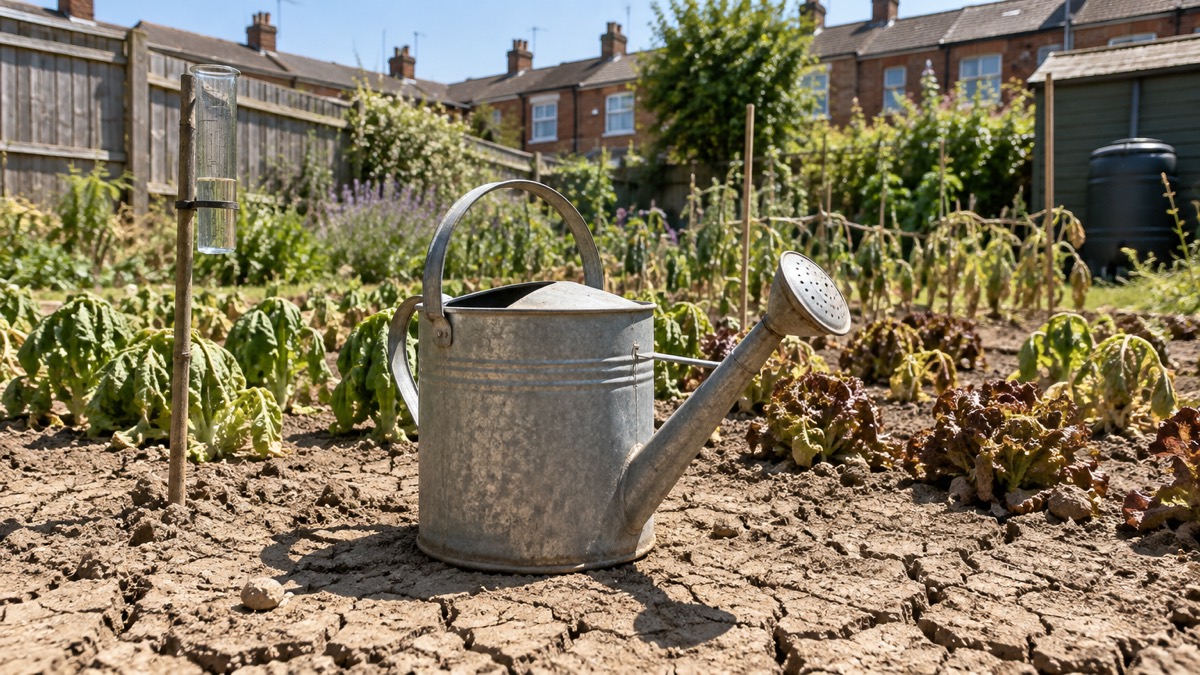
In high summer, a garden of about 100 square metres can take roughly 2,000 litres of water a week. That is the figure to hold in your head, because it is far more than most households expect, and it is the number that decides whether you reach for a hose or a watering can1.
The good news is that most of that water is not needed. Grass can survive long periods without water and recovers quickly from drought, and established plants in Britain generally do not need watering at all unless they are under drought stress2. The water that matters goes to new planting, containers, raised beds and anything in its first year or two.
This page works out what your own plot needs, what that means for your mains supply, and how to cut the figure with timing, mulch, water butts and the right choice of plants. It also covers what changes in a dry spell or hosepipe ban, and where to get help.
A 100 square metre garden needs about 2,000 litres a week in high summer
The 2,000 litre figure is a planning number, not a rule. It describes what a garden of that size can absorb in the hottest weeks, when soil dries, plants transpire hard and rain is scarce. It is the amount you would use if you watered everything freely, which is exactly what the official advice tells you not to do.
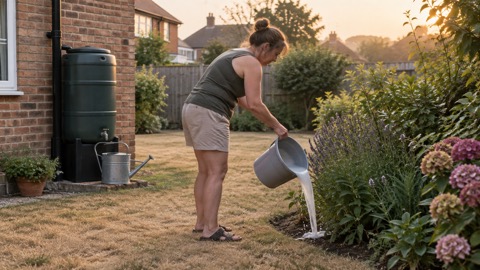
The reason the figure is so large is that water leaves a garden in several ways at once. It evaporates from the soil surface, it is drawn up by plant roots and lost through leaves, and it drains away. Watering in the heat of the day wastes a share of it to evaporation before it ever reaches a root. That is why Waterwise advises watering in the early morning or evening, using a watering can rather than a hose or sprinkler, watering only the plant root zone, and checking the forecast so you hold off if rain is due4. Cornwall Council gives the same advice to households: water gardens in the early morning or late evening to reduce evaporation, and collect rainwater for gardens, pots and outdoor plants whenever possible6.
The type of planting changes the figure more than anything else. Established plants, meaning those in the same spot for two or three years, generally do not need watering in Britain, though their growth improves if you water them when they are under drought stress3. Fruit plants are thirstier: water developing plants, especially those near walls or on dwarfing rootstocks, and any trees or bushes planted in the last 12 months, if the weather is dry for more than two weeks, soaking each area thoroughly7. Raised beds raise the figure again, because the higher the bed the more soil it takes to fill and the more watering it needs in hot weather8.
Working out the figure for your own garden size
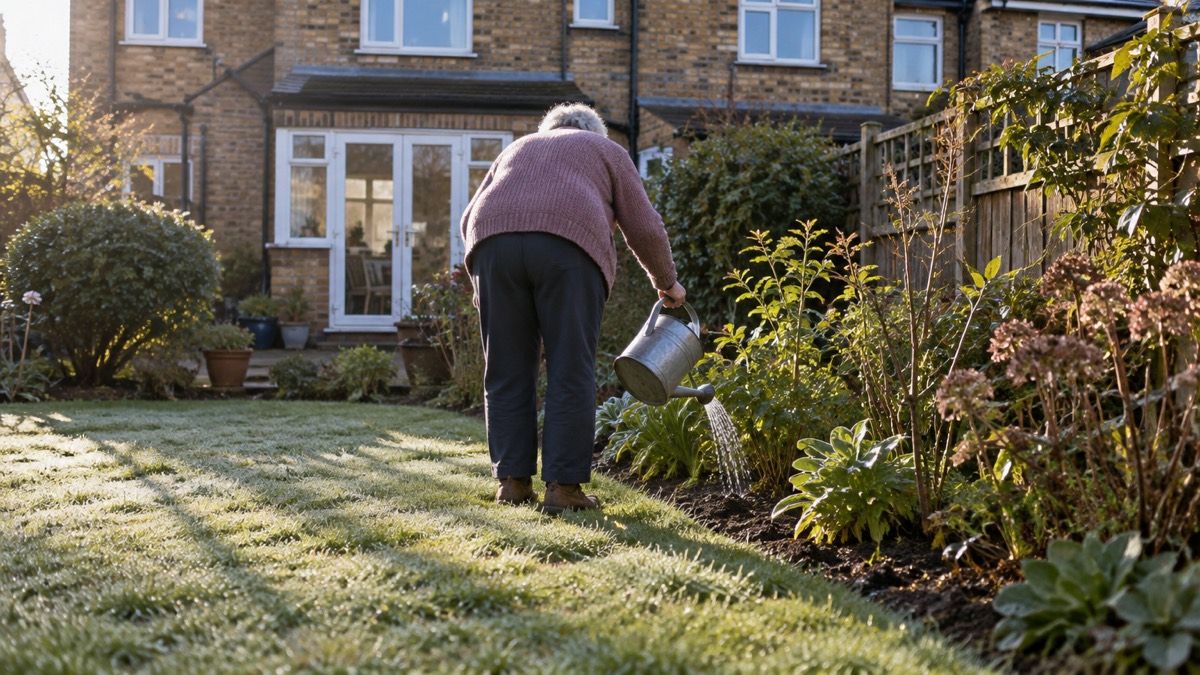
Scale the 2,000 litres to your plot. A garden of 50 square metres carries roughly half the figure, and one of 200 square metres roughly double. Measure the beds, borders and lawn you actually water rather than the whole plot, because paths, sheds and paving do not drink.
Then adjust for what is growing. A garden of mature shrubs and a settled lawn will sit well below the figure. A garden full of containers, a new fruit plot or a set of raised beds will sit above it. Plants in containers may need watering every day in summer, while a visit once or twice a week should keep outdoor plants ticking over7. Large containers need less frequent watering than hanging baskets and small pots, so go easy on the small pots in summer3.
A few practical rules cut the figure without harming the garden:
- Water the root zone, not the leaves, and water thoroughly rather than little and often4.
- Mulch the soil, and water the plants well first if it has not recently rained and the soil seems dry9.
- Group thirsty plants together so one watering serves more of them.
- Check the forecast before you water and skip the session if rain is coming4.
If you are watering from a stored supply rather than the mains, the same arithmetic applies, but the volume you have is fixed. A 200-litre water butt holds a tenth of the weekly figure for a 100 square metre garden, so it is a supplement for beds and containers rather than a replacement for watering a whole lawn. For more on matching storage to demand, see how to size a rainwater tank.
What 2,000 litres a week means for your household water supply
Two thousand litres a week is a large draw on a household supply. South East Water notes that a garden hose can use up to 1,000 litres an hour, about the same as an average person uses in a week10. Whatever your local figure, a freely watered garden can rival or exceed the water used by the people living in the house.
That matters most when the mains supply is interrupted. Emergency planning guidance puts the minimum for drinking, cooking and hygiene at 10 litres per person per day, with extra for medical needs or pets11. Drinking water alone is put at least 2 litres per person per day by Birmingham City Council, and about 2 litres, or 6 to 8 cups, by Wiltshire and Swindon Prepared12. Greater Manchester gives a minimum of 2.5 to 3 litres of drinking water per person per day for survival, and 10 litres per person per day for comfort including basic cooking and hygiene14. The government's Prepare campaign suggests bottled water for 3 days at 3 litres per person per day for drinking, with more for cooking and washing15.
Set those against the garden. A household storing three days of water at 3 litres per person per day holds a small fraction of one week's garden watering, even before you count the people in it. If a supply interruption is possible, the garden is the first place to cut back, not the last. For household storage planning, see Water in an Emergency.
| Use | Figure | Source |
|---|---|---|
| Garden, 100 square metres, high summer | about 2,000 litres a week | 1 |
| Garden hose | up to 1,000 litres an hour | 10 |
| Drinking water, minimum | at least 2 litres per person per day | 12 |
| Drinking, cooking and hygiene | 10 litres per person per day | 11 |
| Emergency store, government checklist | 3 litres per person per day for 3 days | 15 |
Where the 2,000 litre figure comes from and its limits
The figure is a rule of thumb for planning, not a measurement of your soil. It assumes a garden that is fully watered through a hot week, and it will overstate the need for a settled garden of mature plants and understate it for a plot of new beds, containers and raised beds. Treat it as a ceiling to work down from, not a target to hit.
Its second limit is legal. If you take water from a source other than the mains, such as a borehole, stream or well, the rules change. Somerset Council advises that if you plan to abstract more than 20 cubic metres per day you will need to check guidance on abstraction licences from the Environment Agency16. That is far above garden use, but it shows that large-scale abstraction is regulated. For households on a private supply, the council is the body to ask about testing and risk assessment; see Private Water Supply Regulations.
The third limit is the weather. The figure describes high summer, not the year. Water companies depend on rainfall over the autumn and winter to top up reservoir levels and underground sources, so a dry winter leaves less to go round in July17. A garden plan built on the assumption of unlimited summer water is a plan that fails in the year you need it most.
Watering in a dry spell or hosepipe ban
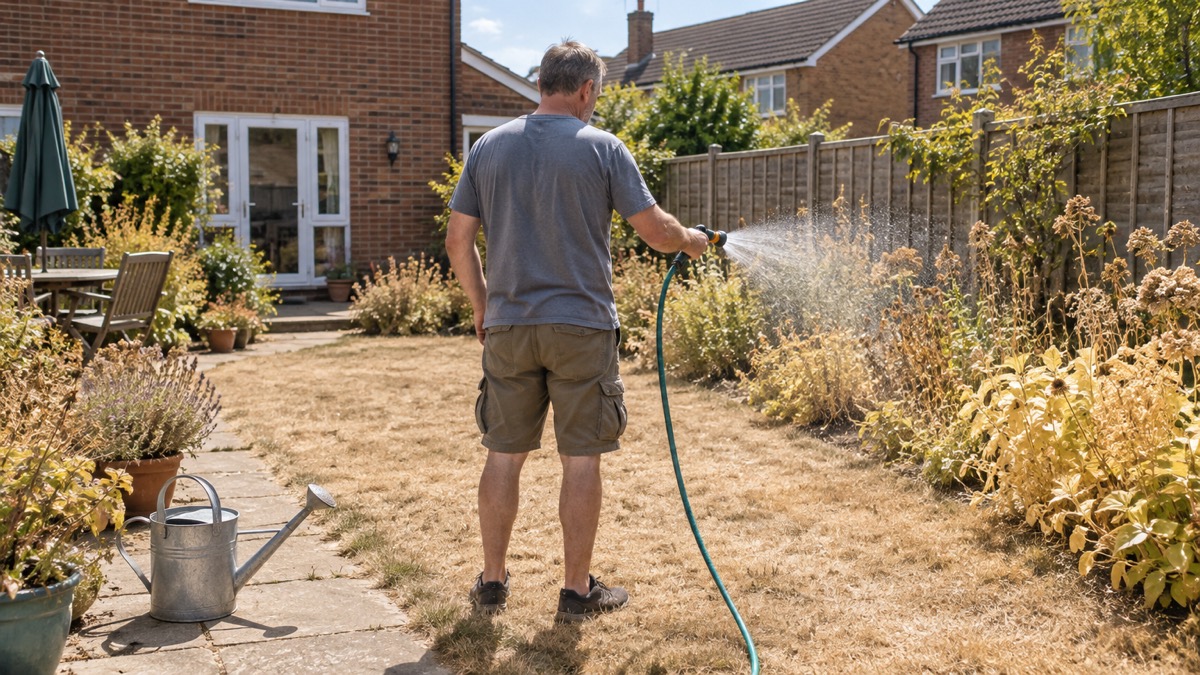
When a hosepipe ban is in place, the garden does not have to fail. Suffolk Fire and Rescue Service advises keeping your garden maintained and watered in dry spells, and considering water from water butts or wastewater from the home if hosepipe bans are in place18. Westminster City Council goes further and suggests replacing thirsty grass lawns with wildflower or clover meadows, or drought-resilient gardens that need significantly less watering19.
The government's drought guidance for households is simple: in the garden, use a watering can instead of a hosepipe, and install a water butt if you can to capture rain20. Scotland's Ready Scotland guidance gives the same core advice, to use a watering can instead of a garden hose21. Bristol Water lists being mindful when watering plants alongside shorter showers and turning off the tap while brushing teeth22.
Prioritise in this order:
- Newly planted trees, shrubs and fruit, especially in their first 12 months7.
- Containers and hanging baskets, which dry fastest7.
- Vegetables and raised beds, which need more water the higher the bed8.
- Established borders, only if they are visibly under drought stress3.
- Lawns, last or not at all2.
Lawn compared with beds
The lawn is the least thirsty thing in most gardens, and watering it is usually a mistake. Grass can survive for long periods without water and will quickly recover from drought, and unless you totally drench the lawn, watering encourages the roots to come to the surface, making it less tolerant to dry conditions23. In other words, a light sprinkling does harm as well as waste.
The exception is a new lawn. The Royal Horticultural Society advises watering only if absolutely necessary, for example if you laid or sowed a new lawn in spring, and using grey water or stored rainwater rather than mains water where possible2. A spring-sown lawn is less well established by summer, must be sown before April at the latest, and will need regular watering through summer2. If you are planning a lawn, that timing matters more than any summer watering regime.
Beds are different. They hold the plants you have chosen, often young and often close together, and they dry faster than turf. Mulching helps: water the plants well if it has not recently rained and the soil seems dry, then mulch to hold the moisture9. Raised beds need more water than ground-level beds of the same area, because the higher the bed the more soil it holds and the more it dries8.
There is a drainage angle too. Make sure your garden has areas where rainwater can absorb into the ground, such as flower beds or gravel, rather than running straight off24. A rain garden, a shallow area of ground that fills with rainwater and then drains, does the same job deliberately25. Both reduce how much you need to water, because the ground holds moisture instead of shedding it. For drought-tolerant planting choices, see Which Vegetables Cope Best with Drought?.
Water butts and other ways to cut the mains figure
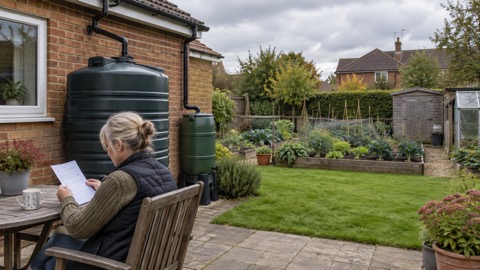
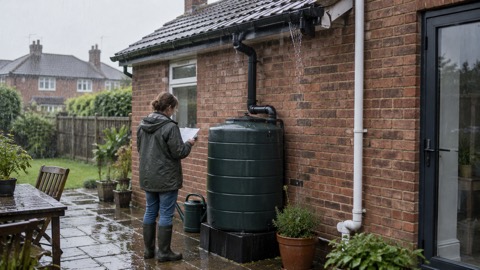
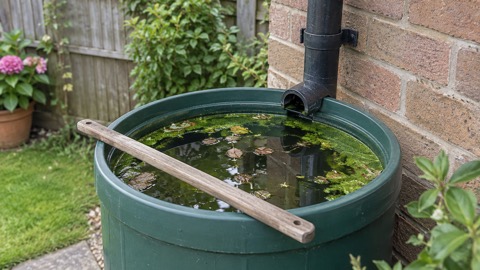
A water butt is the single most useful piece of garden water kit for an ordinary household. Fitting one to collect and reuse rainwater could save more than 800 litres of water a year, according to Southern Water5. Wessex Water puts the saving at around 1,000 litres a year, and notes that in a supply interruption you can use the stored water to flush your toilet11. Northumbrian Water describes a butt as giving you a free supply of water for the garden during warmer periods26.
How much you can collect depends on your roof. In dry south-east England, 2,500 to 3,500 litres of rainwater a year can be collected from the roof of a small shed, enough to fill around 10 to 15 standard 240-litre water butts27. United Utilities notes that the average UK roof collects 90,000 litres of water a year, more than enough to keep a butt topped up28. The limit is storage, not rainfall.
| Approach | What it does | Suits |
|---|---|---|
| Water butt on a downpipe | Captures roof runoff for beds and containers5 | Households with a downpipe |
| Watering can | Slower, targeted, no hose ban issue20 | All gardens, especially in a ban |
| Mulch | Holds soil moisture, reduces frequency9 | Borders, beds, fruit |
| Rain garden or bioswale | Lets rainwater soak in or directs it elsewhere25 | Gardens that flood or shed water |
| Drought-resilient planting | Needs significantly less watering19 | New or redesigned borders |
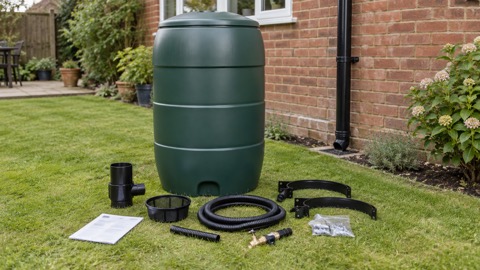
A rain garden is a natural or artificial dip filled with soil and plants, where surface water is channelled so it can be absorbed by the plants or drain into the ground28. A bioswale is similar but directs the rainwater elsewhere in the garden before it drains away25. Both are worth considering if your garden already collects water. For the kit itself, see Water Butts: Sizes, Fittings and Where to Put One and Garden Rainwater Harvesting Kit Checklist.
Spring and autumn watering
The garden's water year does not begin in July. Water companies depend on rainfall over the autumn and winter to top up reservoir levels and underground sources, so the water you use in summer is the water that fell months earlier17. That is why water saving advice is framed as a year-round habit: reporting leaks, installing water-efficient fixtures and collecting rainwater all year round, to water your garden during the drier months29.
In spring, the main job is getting new planting established before the heat. Sow a lawn before April at the latest if you want it to cope, and expect to water it regularly through its first summer2. Water new fruit trees and bushes through dry spells in their first 12 months7. Mulch beds once the soil is warm and wet, watering first if the soil is dry9.
In autumn, the pressure eases. Established plants generally do not need watering in Britain, though watering helps if they are under drought stress3. Autumn rain refills butts and soil, and it is the time to check your storage is ready for winter rather than to water. If you garden on a private supply, autumn is also when a dry year shows; see When a Private Water Supply Runs Low or Dry.
Where to get help and further reading
If you are struggling to water a garden you rely on, or your supply is restricted, start with your water company. They publish current restrictions and water-saving advice, and several offer practical help: NI Water, for example, gives free water saving items including a 4 minute shower timer and swell gel bags for the garden to customers who complete an online water audit or water saving challenge30. Wessex Water's incident guidance covers what to do if supply is interrupted11.
For households with extra needs, the Priority Services Register is the route to extra help from your water company during an interruption. For the wider picture on storing and managing water at home, see Water in an Emergency and Rainwater Harvesting at Home. If you are planning a bigger system, What Harvested Rainwater Can Be Used For sets out the limits.
Sources (30)
- Rainwater Harvesting Garden Systems - Rainwater Harvesting, Rainwater Harvesting (rainwaterharvesting.co.uk)
- Drought care for lawns, Royal Horticultural Society, 2026
- Conserving water, Royal Horticultural Society, 2026
- Save water, Waterwise, 2026
- Save a little water, Southern Water, 2026
- Private water supplies, Cornwall Council, 2026
- Fruit gardening calendar, Royal Horticultural Society, 2026
- Creating raised beds, Royal Horticultural Society, 2026
- Mulch your garden, Royal Horticultural Society, 2026
- Water latest | South East Water, South East Water
- Guidance for incidents, Wessex Water, 2026
- Are you ready?, Birmingham City Council, 2026
- Failure of water infrastructure or loss of drinking water, Wiltshire and Swindon Prepared, 2026
- Loss of essential services, Greater Manchester Combined Authority, 2026
- Get prepared for emergencies, Prepare campaign, 2026
- Private water supplies, Somerset Council, 2026
- Drought, Consumer Council for Water, 2026
- Warm weather safety, Suffolk Fire and Rescue Service, 2026
- Advice and support: drought, Westminster City Council, 2026
- Be informed about hazards: droughts, Prepare campaign, 2026
- Hot weather, Ready Scotland, 2026
- Drought 2026, Bristol Water, 2026
- Saving water FAQs, Cambridge Water, 2026
- Hydraulic flooding, Thames Water, 2026
- Planting and flooding, London Fire Brigade, 2026
- Customers urged to use water wisely, Northumbrian Water, 2020
- Water butts and rainwater harvesting, Royal Horticultural Society, 2026
- Reduce flooding risk, United Utilities, 2026
- Save water, Severn Trent, 2026
- Water saving advice ahead of warmer weather, NI Water, 2025
 Composting Toilet Kit Checklist
 Garden Harvesting Kit Checklist
 Rainwater Winter Checklist
 Composting Toilet Near Wells
 Flies in a Composting Toilet
 Composting Toilet Chamber Size
 Is Harvested Rainwater Safe
 Grey Water Disposal Off Mains
 Rain and Grey Water in Garden
 House With a Private Supply
 Rainwater Pipe Types and Labels
 Private Water Supply Visitors
 Rainwater Systems in a Power Cut
 Does Stored Rainwater Stagnate
 Underground Tank Dig Depth