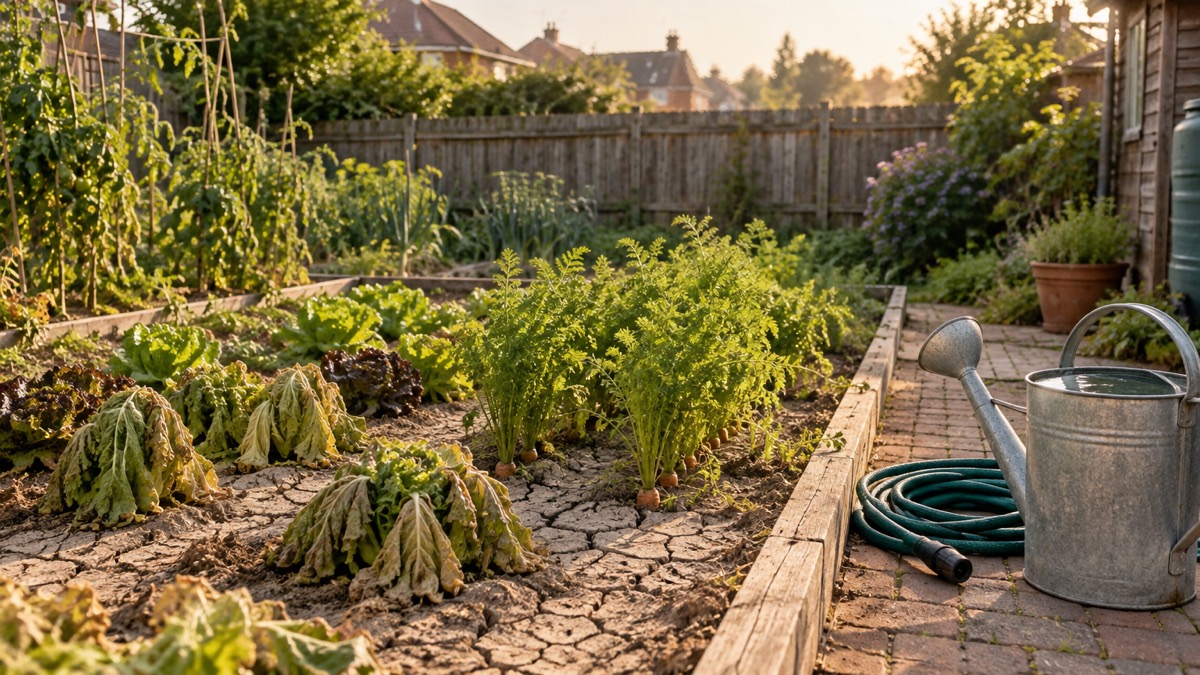
A dry summer does not have to mean a bare vegetable patch. The first thing to do is change how you water: use a watering can rather than a hosepipe, water in the evening or early morning, and put a water butt on a downpipe to catch rain1. The second is to keep moisture where it is: mulch the soil, group thirsty crops together, and choose varieties that mature quickly.
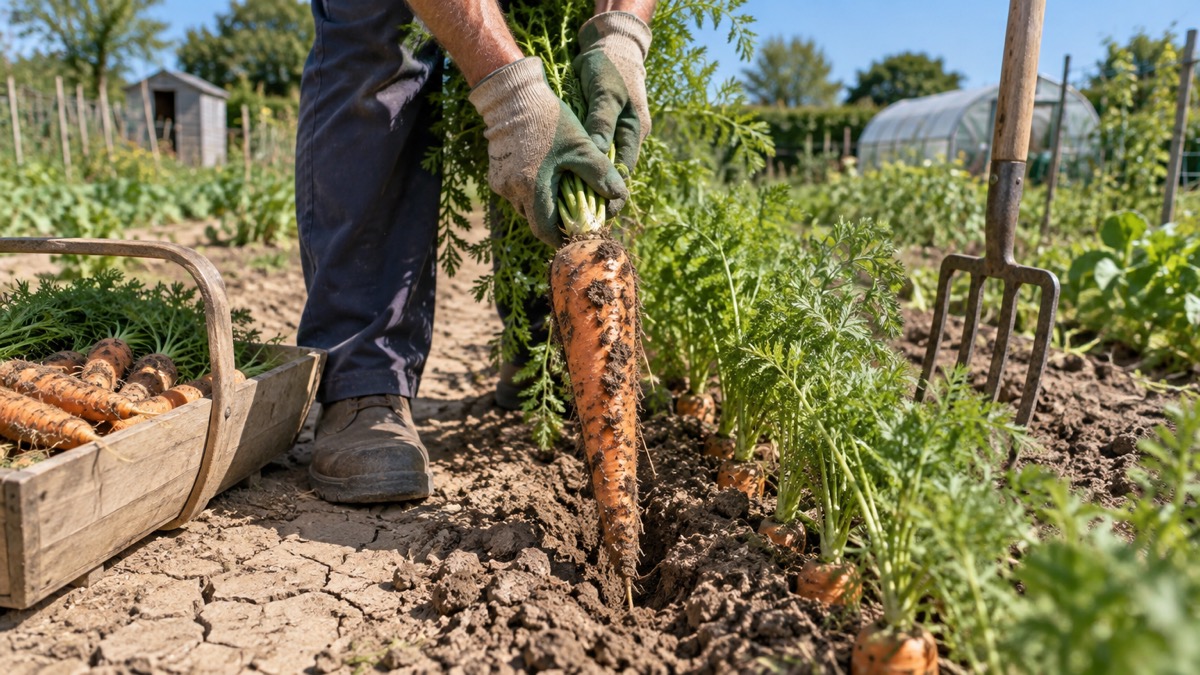
Some crops do better than others when water is short. Deep-rooted plants such as carrots and parsnips reach water below the surface and open up the soil for shallower crops the following year4. Brassicas such as kale, cabbage, turnips and broccoli grow over the winter months, and some varieties of spinach beet will survive frosts5. Quick, small varieties crop well at close spacing, which suits a plot where every drop counts5.
Then there is the legal side. If a hosepipe ban is in place where you live, you cannot use a hosepipe connected to your mains water supply for things like watering your garden, filling a paddling pool or washing your car1. There are exemptions, and several water companies exempt food crops grown at home or on a private allotment where a watering can is not feasible6. Check your supplier's own list before you assume anything.
Vegetables that cope best with dry weather
The most reliable approach is to match the crop to the conditions rather than fight the weather. Garden Organic's planning advice is built on rotation and root depth: deep-rooted plants such as carrots and parsnips open up the soil for more shallow-rooted plants such as salads the following year4. That single fact does a lot of work in a dry garden, because the crop that copes with dry soil also improves the bed for the crop that does not.
Winter cropping spreads the risk. Brassicas, including kale, cabbage, turnips and broccoli, will all grow over the winter months, and some varieties of spinach beet will survive frosts5. These are not drought specialists in the way a Mediterranean herb is, but they give you a harvest from a season when watering is less of an issue.
For the summer gap, choose small and fast. Mini-veg varieties are ready to harvest sooner than large size varieties, which Garden Organic notes is particularly helpful if you have a short growing season further north, and they crop well at close spacing5. A small plant needs less water to reach harvest than a large one, and close spacing shades the soil surface between plants.
If you want colour and structure in the dry parts of the plot, the RHS suggests Mediterranean plants such as lavenders, cistus and oleander, or oriental grasses and succulents, for naturally dry soil, with drought-resistant perennials including artemisia, brachyglottis, dianthus, echinacea purpurea, iris and papaver orientale10. South West Water's gardening tips name lavender, hebe, salvia, olive trees, chaste tree, euphorbia, cosmos, verbena, Californian poppy, globe thistle and sedum11. These are ornamental and herb plantings rather than staples, but they fill the dry corners so the vegetables get the water.
| Crop group | Why it suits a dry plot | What to know |
|---|---|---|
| Carrots and parsnips | Deep roots find water below the surface4 | Open the soil for salads the following year4 |
| Brassicas (kale, cabbage, turnips, broccoli) | Grow over the winter months5 | Spreads your harvest into a wetter season5 |
| Spinach beet | Some varieties survive frosts5 | Useful for extending the picking season5 |
| Mini-veg and salad varieties | Ready sooner and crop well at close spacing5 | Good where the growing season is short5 |
Deep-rooted crops that find water below the surface
Root depth is the quiet advantage in a dry year. A carrot or parsnip sends a taproot down while the surface bakes, reaching moisture that a lettuce root never will. Garden Organic's rotation advice treats this as a structural benefit: the deep roots open up the soil, so the shallow-rooted salads that follow have an easier time4. In a dry year that is worth planning for a season ahead.
The same principle applies to perennial plantings. The RHS notes that a perennial wildflower meadow is more drought tolerant than a traditional all-grass lawn12. If part of your plot is given over to grass or a rough edge, letting it grow longer without regular clipping lets it establish more strongly and become more resilient to drought, and you can include meadow flowers and bulbs12.
There is a fire dimension to dry vegetation that matters in a hot spell. Prolonged periods of dry weather or drought conditions make vegetation highly flammable, according to Essex Prepared13. Hampshire Fire and Rescue Service advises that during hot, dry spells you can consider using grey waste water for watering plants and lawns, so that even if there are limits on hosepipes the ground can be kept damp14. Keeping the ground around the plot damp is therefore both a gardening measure and a safety one.
Watering in a drought: when and how much
Timing matters as much as quantity. Cambridge Water is blunt: never water in the heat of the day, because most will evaporate and, if it is sunny, you run the risk of scorching your plants, and it is better to water in the evening or early morning2. Cornwall Council gives the same instruction for gardens, watering in the early morning or late evening to reduce evaporation3.
How much depends on the plant. The RHS says established plants do not generally need watering in Britain, but their growth is usually improved by watering when they are under drought stress15. Newly planted fruit is different: water developing fruit plants, especially those near walls or on dwarfing rootstocks and any trees or bushes planted in the last 12 months, if the weather is dry for more than two weeks, and soak each area thoroughly16.
For containers, the rule is simpler. Water the container when the compost is dry, particularly during hot or dry weather, and stop watering when the potatoes are ready to harvest17. Pots made from plastic, glazed terracotta or wood hold moisture better than porous alternatives, and burying a pipe in a pot lets you water straight to the roots, according to NI Water's water-saving advice18.
A practical order of work for a dry week:
- Check the soil under the surface before watering anything; if it is damp below, leave it15.
- Water the newest and thirstiest plants first: recent fruit plantings, containers and seedlings16.
- Water in the evening or early morning, and soak thoroughly rather than sprinkling2.
- Leave established plants and grass alone unless they are clearly struggling12.
Keeping moisture in the soil with mulch and shade
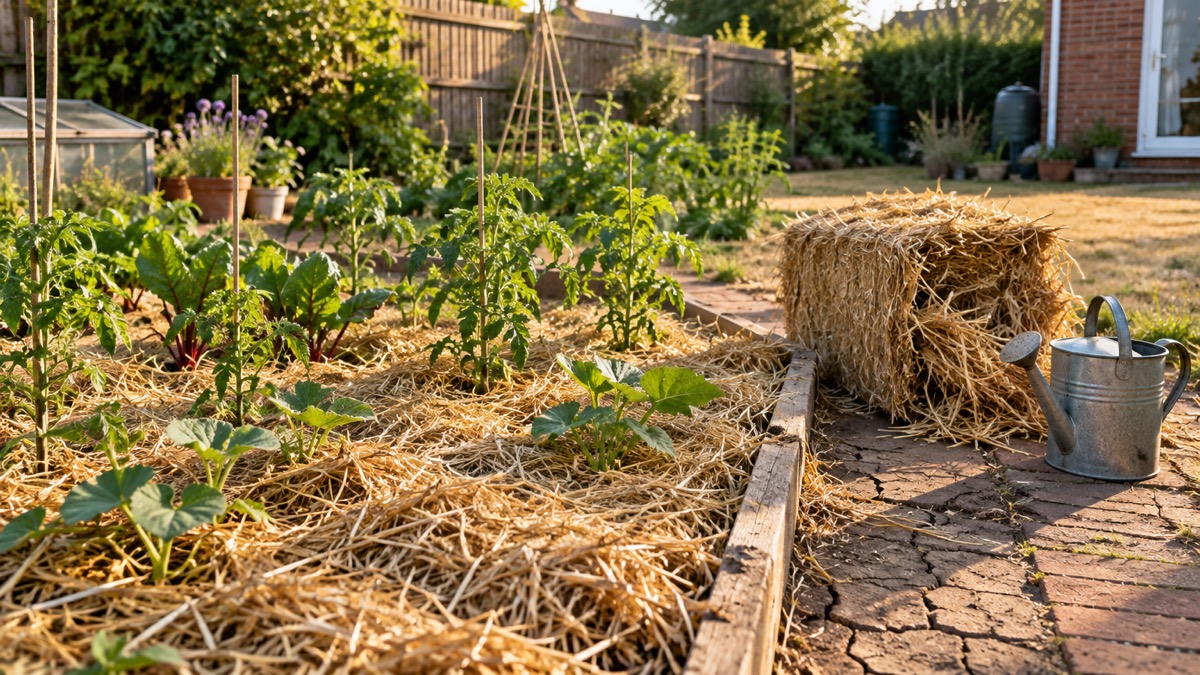
Mulch is a practical water-saving measure on the plot. The RHS describes its purposes plainly: it provides frost protection, improves plant growth by adding nutrients or increasing organic matter content, reduces water loss from the soil, serves decorative purposes and suppresses weeds9. For a dry vegetable bed, the water-loss and weed-suppression roles are the ones that matter, because weeds compete for the same moisture. Water the plants well before applying mulch if it has not recently rained and the soil seems dry9.
Apply it properly. The RHS advises watering the plants well if it has not recently rained and the soil seems dry, then mulching9. Mulching over dry soil locks in the dryness, so the watering comes first.
Shade is the other lever. Garden Organic advises planting tall crops on an east to west orientation to prevent lower growing crops from being shaded out20. That sounds like the opposite of shade, but the point is controlled shade: the tall crop casts a band of shade that moves across the bed rather than sitting over the low crops all day. The soil beneath stays cooler and loses less water.
Raised beds need a word of caution. The RHS says the higher the raised bed, the more soil you will need to fill it and the more watering it requires during hot weather21. A tall bed warms faster and drains faster. If you are building new beds for a dry site, a lower profile loses less. For more on constructing them, see raised beds.
Where a hosepipe ban limits what you can do
A hosepipe ban, formally a temporary use ban, means you cannot use a hosepipe connected to your mains water supply for things like watering your garden, filling a paddling pool or washing your car1. The restriction is on the hosepipe and the mains supply, not on watering as such, which is why a watering can remains the default tool.
The exemptions are where it gets practical for a vegetable grower, and they vary by company. Wessex Water lists food crops grown at home or at a private allotment, where using a watering can is not feasible, among its garden exemptions6. Bristol Water lists the same, alongside trees, hedges and saplings planted within the last planting season where a watering can is not feasible, turf laid within the last 28 days, and newly bought plants for the first 14 days after purchase7. South East Water allows a hosepipe for trees, whips, saplings and hedging planted before the ban, in the last planting year, where a watering can cannot reasonably do it22.
Other exemptions are about the household rather than the crop. Bristol Water lists a hosepipe allowed where needed for health or safety reasons, for Blue Badge holders, for an approved drip or trickle irrigation system with a pressure-reducing valve and timer, for people with reduced mobility who cannot use a watering can without a Blue Badge, and for watering newly laid turf during its first 28 days23. Affinity Water notes that limited hosepipe use may be allowed in wildlife-friendly gardens to protect the welfare of aquatic animals or wildlife, using the minimum water needed and stored rainwater or a watering can where possible8.
| Exemption | What it covers | Company example |
|---|---|---|
| Food crops | Home or private allotment crops where a watering can is not feasible6 | Wessex Water, Bristol Water |
| New planting | Trees, hedges and saplings in the last planting season7 | Bristol Water, South East Water |
| New turf | First 28 days after laying7 | Bristol Water, Dwr Cymru |
| New purchases | First 14 days after buying plants7 | Bristol Water |
| Health, safety and access | Health or safety need, Blue Badge, reduced mobility23 | Dwr Cymru |
| Approved irrigation | Drip or trickle system with pressure-reducing valve and timer23 | Dwr Cymru |
| Wildlife ponds | Limited use to protect aquatic animals8 | Affinity Water |
Saving and reusing water for the vegetable patch
The RHS's top five water-saving tips are: choose the right plant for the right place, improve soil with organic matter, mulch beds and borders annually, store rainwater from hard surfaces in water butts, and use mains water only as a last resort24. That order is worth following, because the first three cost nothing and reduce demand before you get to storage.
Rainwater is the best source for the plot. The RHS advises using rainwater stored in water butts on established plants, but avoiding it on seedlings because it may contain damping-off diseases24. For more on collecting and storing it, see water butts and rainwater harvesting.
Grey water is the other option in a dry spell. Hampshire Fire and Rescue Service suggests using grey waste water for watering plants and lawns during hot, dry spells, so the ground can be kept damp even when hosepipes are restricted14. The RHS says grey water from washing up can be used to water ornamental plants in containers24. Cambridge Water notes that grey water can be used for flushing the toilet, watering gardens and washing cars, helping to cut down water consumption by more than a third2. Keep grey water for established plants rather than seedlings, and do not store it.
NI Water's list of household measures is a useful checklist for a dry summer: use a watering can instead of a hose to water plants, avoid watering lawns, buy water efficient plants, use pots made from plastic, glazed terracotta or wood, bury a pipe in pots to water roots, mulch to retain moisture, avoid washing cars frequently and use a bucket and sponge, take showers instead of baths, take shorter showers, wait until the washing machine is full, turn off the tap when brushing teeth, do not fill swimming or paddling pools and hot tubs, and consider whether pressure washer tasks are essential18.
"In the garden, use a watering can instead of a hosepipe and install a water butt if you can to capture rain."
Lawn or vegetables: where the water should go
If you have to choose, choose the vegetables. The RHS says grass can survive for long periods without water and will quickly recover from drought, and that unless you totally drench the lawn, watering encourages the roots to come to the surface, making it less tolerant to dry conditions2. NI Water's advice is to avoid watering lawns altogether18.
There are exceptions. The RHS says only water a lawn if absolutely necessary, for example if you laid or sowed a new lawn in spring, and use grey water or stored rainwater rather than mains water where possible12. Westminster City Council goes further and suggests replacing thirsty grass lawns with wildflower or clover meadows or drought-resilient gardens that require significantly less watering25.
If you keep some lawn, let the clippings fall back into the grass to act as a mulch and hold in moisture12. Weeds and moss in a drought-affected lawn may help it stay green and may be more resistant to adverse conditions, and are not always a bad thing12. For the wider picture on dry spells, see heatwaves and drought.
Signs of drought stress and what to do about them
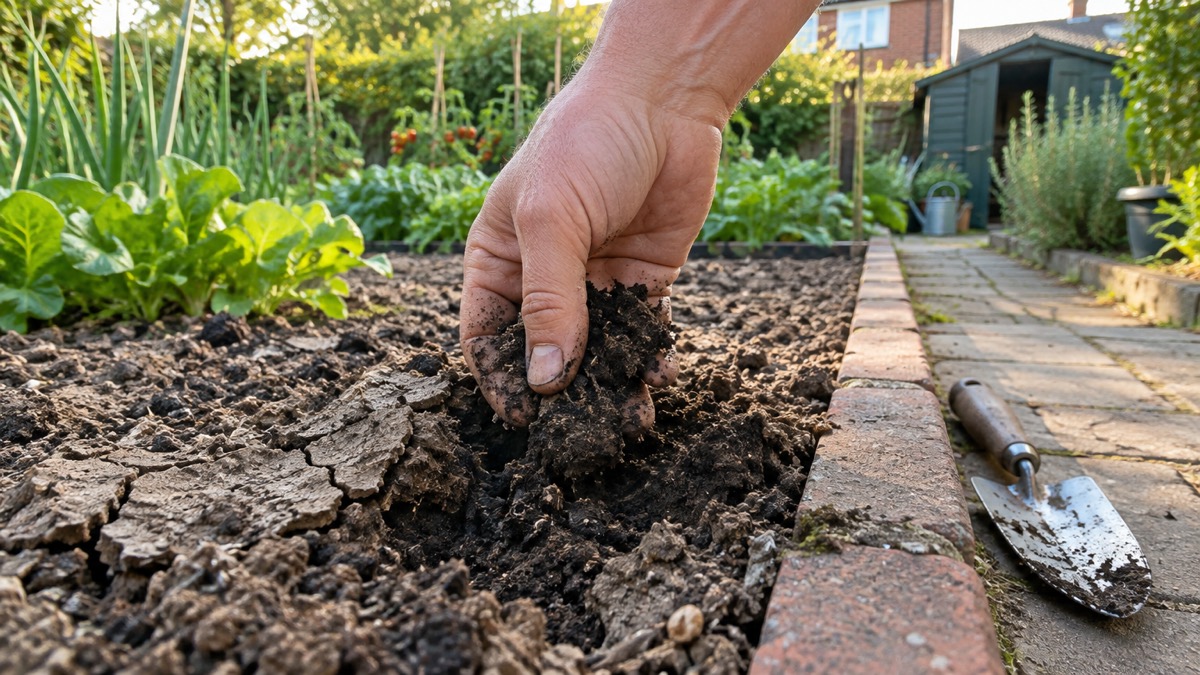
At garden scale, the signs are simple: soil that is dry below the surface, plants that stop growing, and leaves that wilt in the middle of the day. The RHS's guidance that established plants do not generally need watering in Britain, but benefit when under drought stress, is the practical test15. If a plant is clearly struggling, water it thoroughly rather than little and often.
At national scale, Defra's drought stages give the context. In a severe drought, defined by exceptionally low indicators over a long period of time, the possible impacts include widespread long term environmental damage, widespread wildfires, failure of crops or plants and shortage of fodder and drinking water for livestock, and failure of public and private water supplies19. South Staffs Water says its reservoir levels are the main indicator of drought conditions26.
If you keep livestock or have a private water supply, the advice is more urgent. Farmers should monitor water levels and water quality closely during drought conditions, reduce non-essential water use where possible, and have plans in place for alternative water supplies for both livestock and essential farm operations before supplies become critical3. For households on a private supply, see when a private water supply runs low or dry.
One safety point that catches gardeners out after heavy rain follows drought. Do not eat any garden or allotment vegetables that have been covered by flood water, and leave undamaged vegetables in the ground for at least another 2 weeks and then only use them after thorough washing and cooking27. A dry summer can end in a downpour, and the rules change with it.
Sources (27)
- Droughts, UK Government Prepare campaign, 2026-10-19
- Saving water FAQs, Cambridge Water, 2026-10-28
- Private water supplies, Cornwall Council, 2026-10-29
- Planning your planting, Garden Organic, 2026-10-29
- Vegetables all year round, Garden Organic, 2026-10-29
- Hosepipe ban exemptions, Wessex Water, 2026-10-28
- Hosepipe ban exceptions, Bristol Water, 2026
- Hosepipe ban FAQs, Affinity Water, 2026-10-29
- Mulch your garden, Royal Horticultural Society, 2026
- Saving water in the garden, CAT, 2025-06-27
- TV gardeners' top tips for saving water in the garden, South West Water, 2026-10-28
- Drought care for lawns, Royal Horticultural Society, 2026
- Wildfire, Essex Prepared, 2026-10-29
- Reduce the risk of wildfire damage to your property, Hampshire Fire and Rescue Service, 2026-08-27
- Conserving water, Royal Horticultural Society, 2026
- Fruit gardening calendar, Royal Horticultural Society, 2026
- How to grow potatoes in containers, Royal Horticultural Society, 2026
- Public asked to reduce water usage now, NI Water, 2020-05-31
- Drought: how it is managed in England, Defra, 2026-04-08
- How to grow vegetables and herbs, Garden Organic, 2026-10-29
- Creating raised beds, Royal Horticultural Society, 2026
- Tubs and Kent FAQs, South East Water, 2026-10-28
- Hosepipe ban exemptions, Dwr Cymru, 2026-10-28
- Water saving in the garden, Royal Horticultural Society, 2026
- Advice and support: drought, Westminster City Council, 2026-08-06
- Drought FAQs, South Staffs Water, 2026-10-28
- Flooding before, during and after: FAQs, Nottinghamshire County Council, 2026-10-29
 Hydroponic System Parts List
 Year-Round Sowing Calendar
 Preserving Equipment Checklist
 Blanching Vegetables
 Carrot Fly Protection
 Knowing When Chutney Is Ready
 Clubroot in Your Soil
 Edible Flowers Safety
 Extending the Growing Season
 Freezing Fruit Without Sugar
 Garden Fleece Frost Protection
 Avoiding the Hungry Gap
 Keeping Varieties Pure for Seed
 Making Leafmould
 Growing Microgreens Indoors