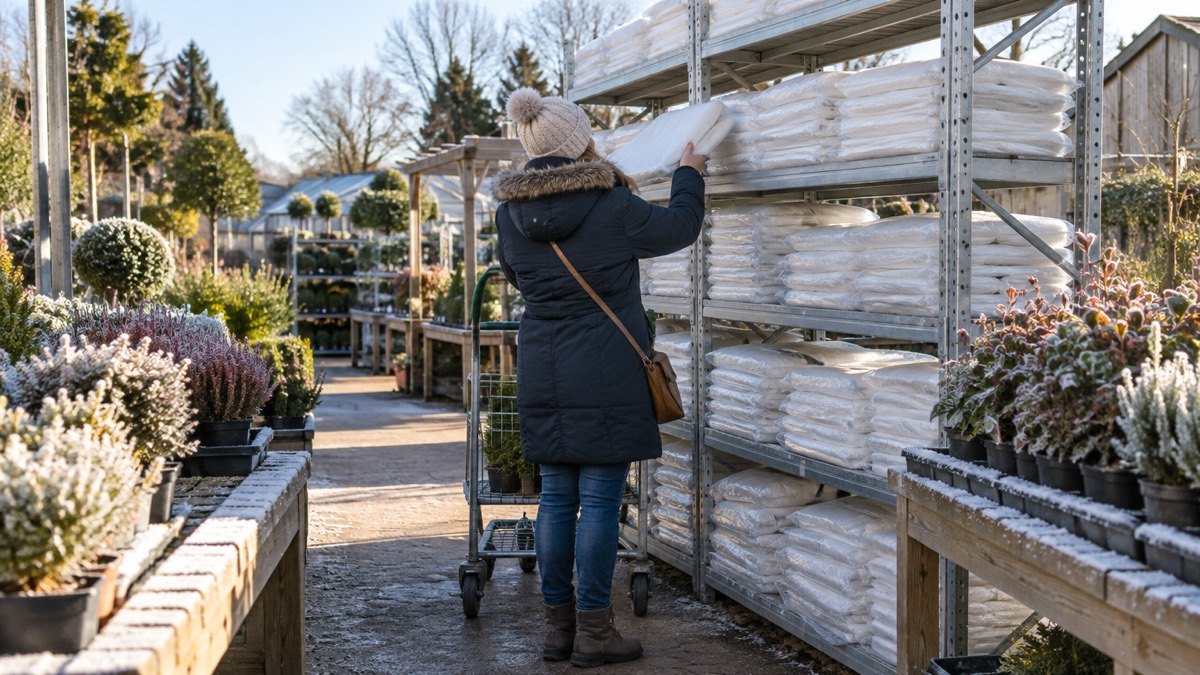
Garden fleece is a soft, fibrous, translucent material laid over or around plants to hasten their growth and protect them against weather and pests, usually used without supporting hoops1. On the frost question, the honest answer is that it helps but does not guarantee survival: heavier grades of fleece give about 2°C of protection from frost1. That is enough to carry a tray of seedlings or an early fruit blossom through a light spring night. It is not enough to hold off a hard, settled freeze.
So the practical rule is to use fleece as a short-term tool timed to the forecast. Put it on when a frost is forecast, take it off once the risk has passed, and keep it ready for the next cold night. Seed suppliers give the same advice for tender crops: have your fleece ready in case a frost is forecast, because unexpected late frosts can damage young plants3.
This page sets out what fleece can and cannot do, when in the year it earns its place, how to put it on and take it off without harming the plants, and the safety points that matter when you are working outside in cold weather.
What fleece can and cannot do
Fleece works by holding a layer of warmer air and soil around the plant. The same principle sits behind cloches, cold frames, greenhouses and polytunnels, which keep warm air and soil around plants and protect them from frost, wind and rain damage7. Fleece is simply the lightest and most flexible version of that idea, which is why it is usually laid straight over a crop without hoops1.
The limit is the number. About 2°C of protection1 covers a night that dips a degree or two below zero. It does not cover a sharp, prolonged frost, and it does nothing about the wind chill on an exposed site. Where a severe frost threatens, additional protection may still be required for a crop in some regions of the UK even inside a polytunnel8. Treat the 2°C figure as the margin you are buying, and judge each forecast against it.
Fleece is not only a frost tool. Covers sold for crop protection are described by their makers as protecting plants against frost and stopping wind, hail, birds and insects from damaging them6. That makes a cover useful in an exposed garden well beyond the cold months.
| What fleece does | What it does not do |
|---|---|
| Gives about 2°C of frost protection in heavier grades1 | Save a plant through a hard or prolonged freeze |
| Keeps warm air and soil around the plant7 | Warm the air on an exposed, windy site |
| Stops wind, hail, birds and insects6 | Replace a greenhouse or polytunnel for a whole season |
| Raises soil temperature to aid germination9 | Guarantee a crop if the forecast is much colder than expected |
When fleece earns its place in the year
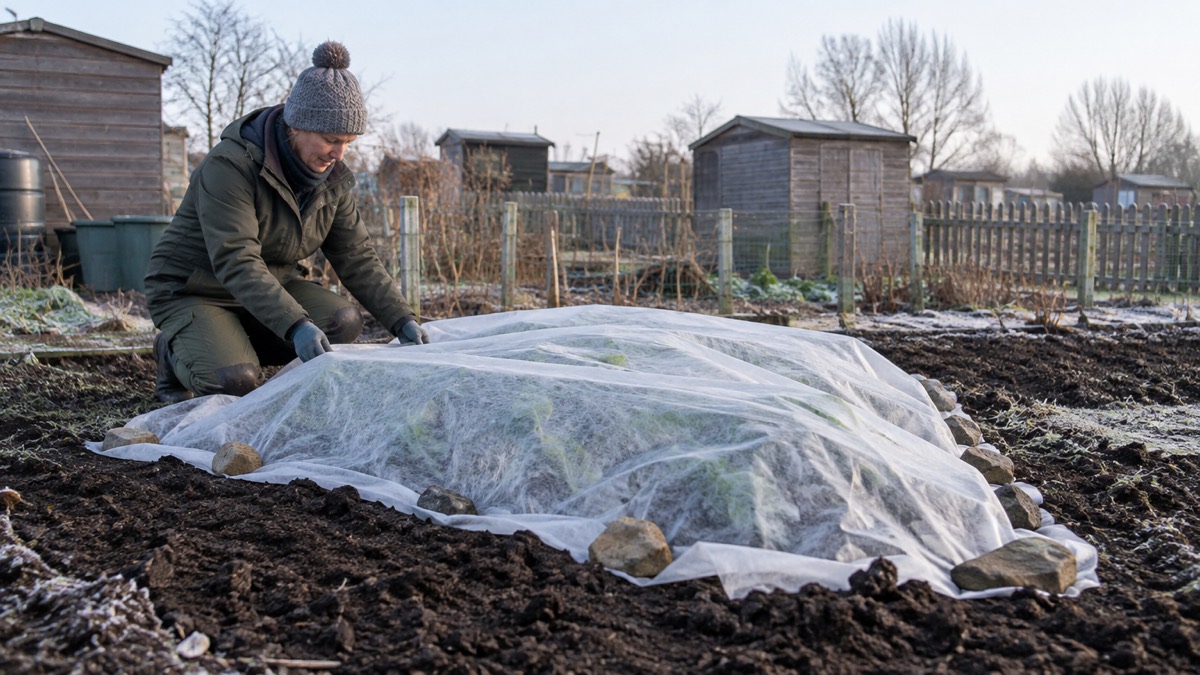
Fleece is most useful at the two ends of the season, when the soil is warming or the first cold nights arrive, and for the odd late frost that catches a crop already in growth.
In spring, the Royal Horticultural Society's month by month guide suggests protecting pear and plum blossom from frost with fleece in March2. Fruit growers know the risk: apricots need shelter from frost when in flower, so training one against a warm wall is the ideal situation10. A cover over a wall-trained tree or a bush in flower can carry the blossom through a cold snap that would otherwise take the year's fruit.
For vegetables, the seed suppliers are consistent. French beans need fleece ready in case a frost is forecast, because unexpected late frosts can damage young plants3. Asparagus spears emerging in spring can be damaged by late frosts, so have fleece handy to cover the crop if any frosts are forecast11. Cauliflower sown in spring or transplanted young can be protected from frost by covering with cloches or row covers of some kind12. Beetroot sown in early March may need frost protection even inside a polytunnel, to reduce damage to seedlings13.
In autumn and winter, fleece shifts from a frost emergency measure to a season extender. Garden Organic notes that many crops can be protected through winter and early spring by using fleece, cold frames and cloches5. Turnips still in the ground can be protected from frosts in colder regions with a mulch of straw or bracken held down with netting or horticultural fleece14. Blueberries can be damaged by a late frost threatening their flowers, and the advice is to cover the plant with fleece or other material if the forecast shows this threat15.
Putting fleece on and taking it off
The routine is simple, but the timing is what decides whether it works.
- Watch the forecast. Put fleece in place on days when a frost is forecast4.
- Cover in the late afternoon or early evening. The soil has stored some warmth from the day, and the fleece holds it around the plant overnight.
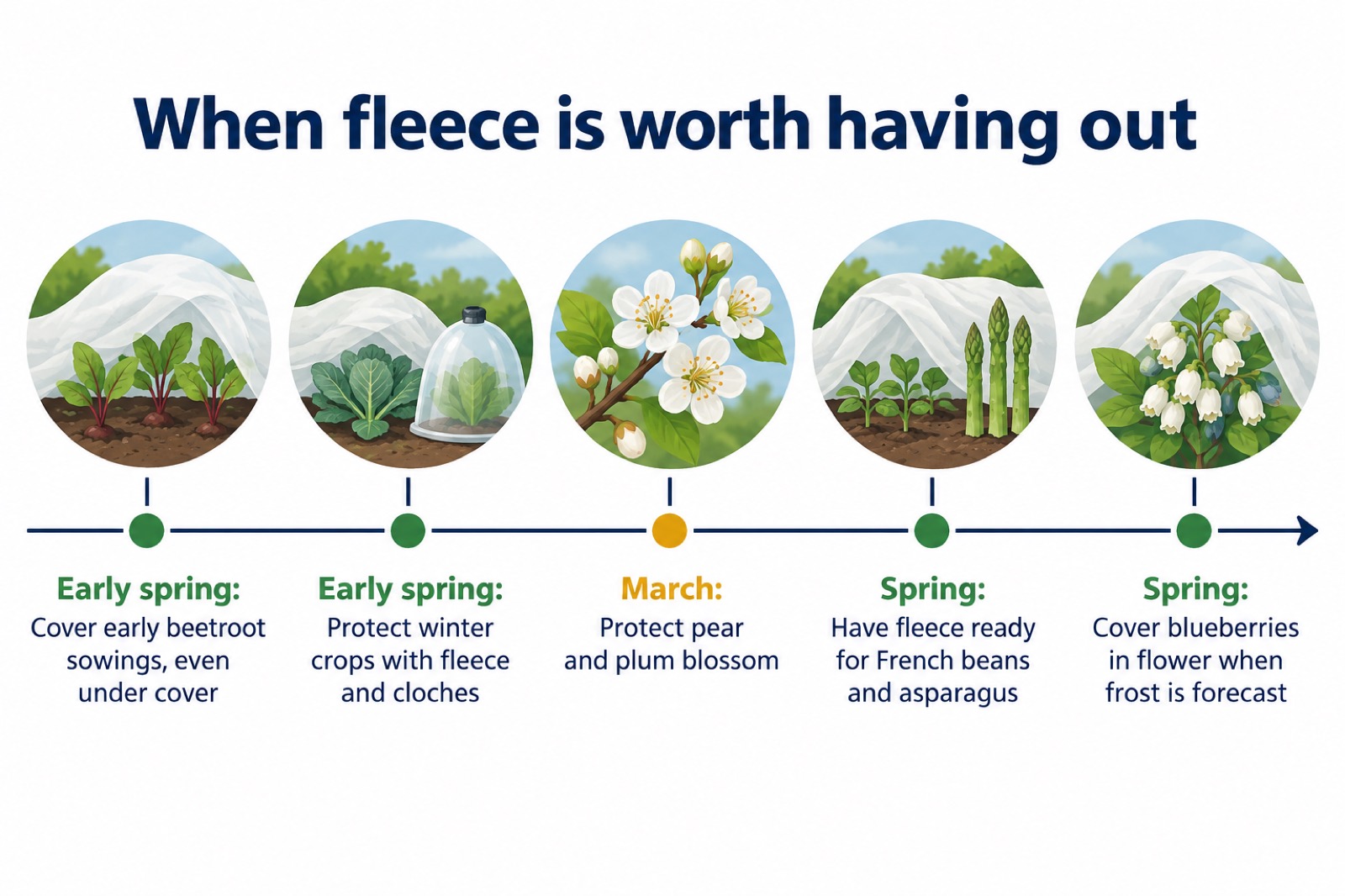
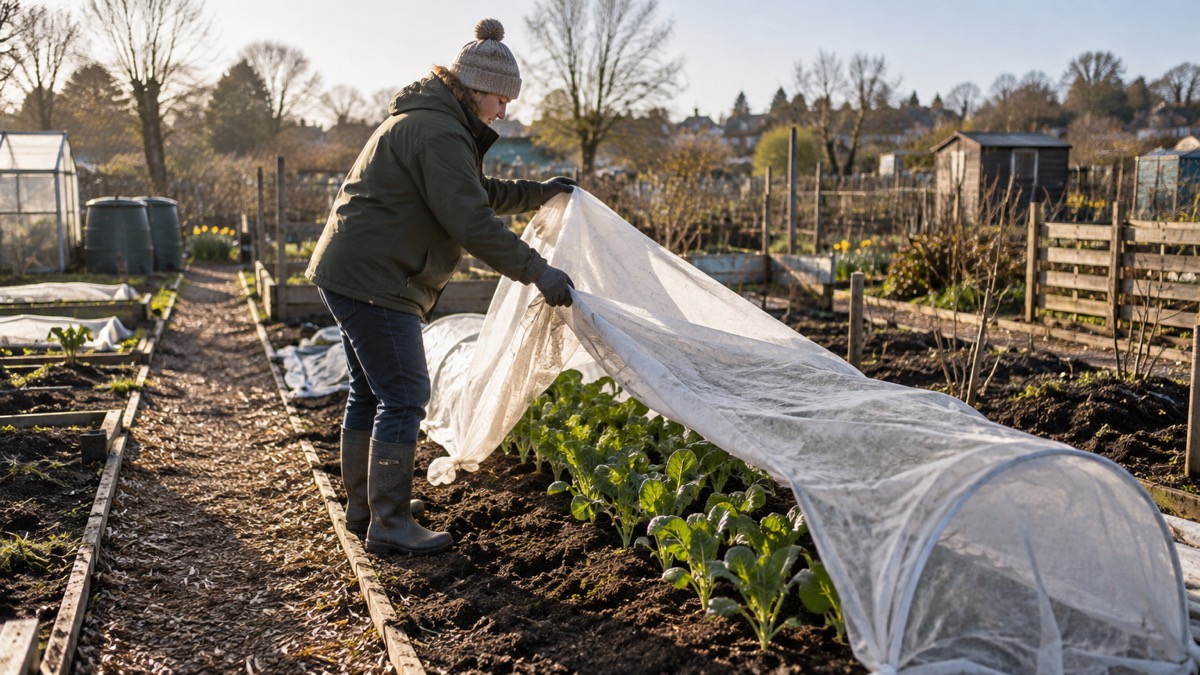
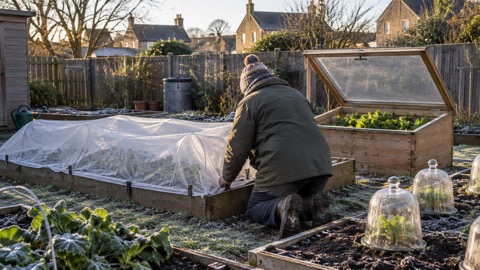
- Lay it loosely over the crop. Fleece is usually used without supporting hoops1, so drape it so it rests on the leaves without crushing them, and weight the edges.
- Lift it in the morning once the temperature has risen, so light and air reach the plant.
- Put it back on for later frosts. One supplier advises that fleece can be put back in place during the spring on days when a frost is forecast4.
For a seeded lawn, the same cover has a second benefit: it keeps the temperature up, which aids germination9. That is a different job from frost protection, but it explains why a light fleece is worth keeping to hand in early spring.
For specimen plants, a shaped cover is easier to manage than a flat sheet. Fleece plant jackets are described by their maker as particularly useful for protecting specimen plants such as tree ferns or olive trees, because they are very easy to remove and replace during the spring4. If you are covering and uncovering the same plant repeatedly, that ease matters.
Choosing a cover: fleece, cloche or cold frame
Fleece is one of several ways to protect a crop, and the right choice depends on how much protection you need and how long for.
| Cover | What it does | Suits |
|---|---|---|
| Garden fleece | About 2°C of frost protection in heavier grades; stops wind, hail, birds and insects1 | A quick cover for a light frost, or a short run of cold nights |
| Cloche or row cover | Protects spring sowings and young transplants from frost12 | Individual rows and small beds |
| Cold frame or greenhouse | Keeps warm air and soil around plants, protecting from frost, wind and rain7 | Raising seedlings and overwintering tender plants |
| Polytunnel | Keeps warm air and soil around plants7 | A whole season of growing under cover |
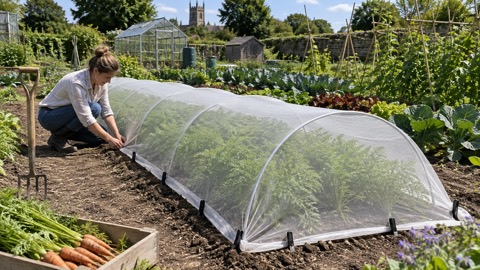
A fleece cover sold as a dome or jacket combines the sheet with a frame. One such cover is described by its maker as protecting plants against frost and stopping wind, hail, birds and insects from damaging them6. That is a convenient option for a single specimen or a small bed, but it does the same job as a sheet of fleece and some weights.
If you are deciding how much structure to invest in, our guide to polytunnels and greenhouses sets out the year-round options, and extending the growing season without a greenhouse covers the low-cost routes. For the wider picture of what to grow and when, see growing your own vegetables.
Staying safe while you work outside
The risks here are not from the fleece itself, which is light and harmless, but from the cold, the structures and the ground you are working on.
The NHS advises that if you own a greenhouse or cold frame, you make sure it has safety glazing or is fenced off from children16. Glass that shatters is the hazard, not the cover. Keep outdoor steps, paths and garden walkways clear of ice and frost, as falls guidance advises17, so that a trip out to cover a crop at dusk does not end in a fall.
Dress for the job. Falls prevention guidance recommends dressing warmly in layers to protect against cold muscles, which are more prone to injury, and wearing reflective clothing to improve visibility18. The NHS advises wearing a hat and scarf to protect your head, neck and face in cold weather19. If you are out after dark, a torch and something reflective make you visible to others.
If you burn garden rubbish after clearing beds, think carefully first. Fire and rescue advice is not to have fires close to trees, hedges, fences or sheds, and not on windy days when the fire could spread more easily20. A smouldering heap beside a dry hedge is a far greater danger than a cold night.
For the wider picture of preparing a garden and household for winter, see our guides to storms, snow and ice and extra help in an emergency.
Sources (20)
- Month by month guide to food growing: spring term, Royal Horticultural Society, 2026
- Fruit gardening calendar, Royal Horticultural Society, 2026
- French beans, Harrod Horticultural, 2026
- Fleece protection, Harrod Horticultural, 2026
- Vegetables all year round, Garden Organic, 2026
- Popadome crop protection system, 2m x 2m, Harrod Horticultural, 2026
- Growing year-round guide, Centre for Alternative Technology, 2025
- Top of the crops: sweet potato, First Tunnels, 2026
- How to protect a recently seeded lawn, Harrod Horticultural, 2026
- How to grow fruit, Garden Organic, 2026
- Asparagus, Harrod Horticultural, 2026
- Top of the crops: cauliflower, First Tunnels, 2026
- Top of the crops: beetroot, First Tunnels, 2026
- Top of the crops: turnip, First Tunnels, 2026
- Top of the crops: blueberries, First Tunnels, 2026
- Baby and toddler safety, NHS, 2026
- Falls guidance: at home, Oxford Health NHS Foundation Trust, 2026
- Judo-inspired programme prevents falls this winter, NHS Lanarkshire, 2026
- Frostbite, NHS, 2025
- Stay home and stay safe, North Yorkshire Fire and Rescue Service, 2020
 Hydroponic System Parts List
 Year-Round Sowing Calendar
 Preserving Equipment Checklist
 Blanching Vegetables
 Carrot Fly Protection
 Knowing When Chutney Is Ready
 Clubroot in Your Soil
 Drought-Resistant Vegetables
 Edible Flowers Safety
 Extending the Growing Season
 Freezing Fruit Without Sugar
 Avoiding the Hungry Gap
 Keeping Varieties Pure for Seed
 Making Leafmould
 Growing Microgreens Indoors