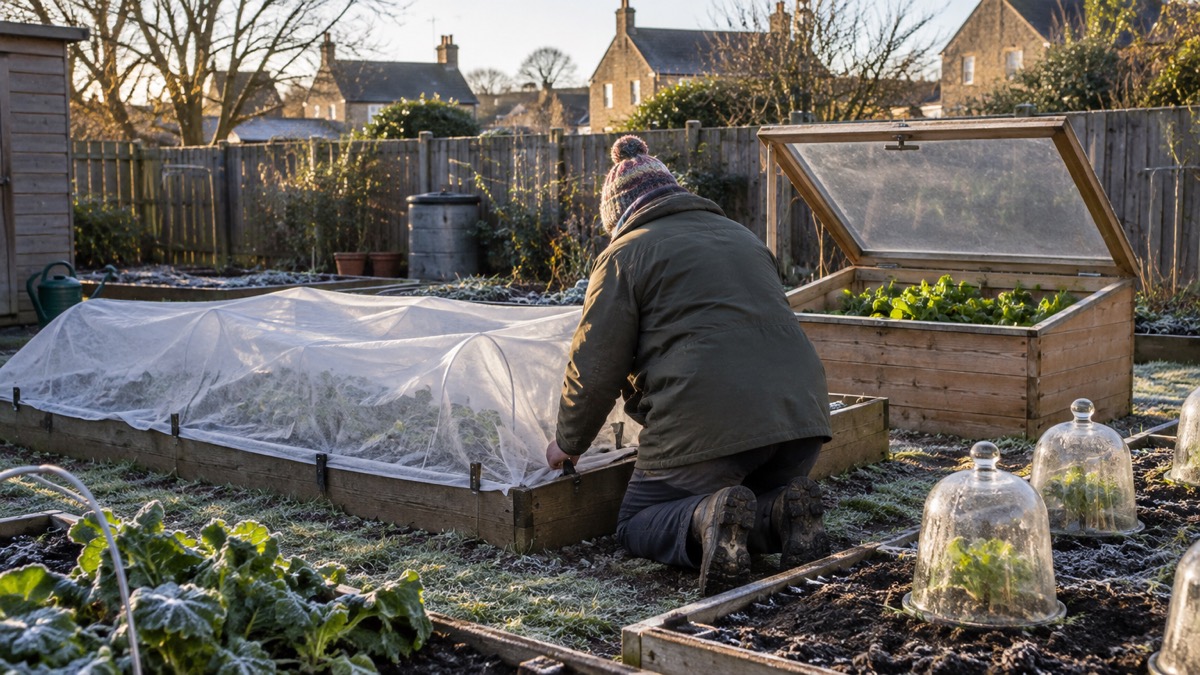
You do not need a greenhouse to eat from the garden for more of the year. You can protect many crops throughout winter and early spring by using fleece, cold frames and cloches, and heavier grades of fleece give about 2°C of protection from frost1. A cool, light windowsill in late January and February is a perfectly good place to raise early plants, especially if you do not have a greenhouse1.
The principle behind every cover is the same: cloches, cold frames, greenhouses and polytunnels keep warm air and soil around plants, protecting them from frost, wind and rain damage3. What changes is scale and control. A cloche covers a row, a cold frame covers a bed you can open and close, and a windowsill gives you a frost-free start before anything goes outside.
This page sets out what to put over your crops and where, how to warm the soil sooner, how to start seeds indoors, which crops cope with cold and short days, and where covers can do harm. It also covers the safety points that matter when you are gardening in cold weather, and where to get help if a power cut or a fall interrupts the season.
Cloches and cold frames: covering crops where they grow
A cloche or a cold frame lets you keep growing in the ground you already have, rather than moving everything under glass. Cloches, cold frames, greenhouses and polytunnels are all effective because they keep warm air and soil around plants, sheltering them from frost, wind and rain3. For a household without a greenhouse, the cloche and the cold frame are the practical versions: cheap to set up, easy to move, and enough to carry a row of salad or a few winter greens through a cold snap.
The difference between the two is how much control you have. A cloche is usually a continuous cover over a row, laid over the plants or supported on hoops. A cold frame is a box with a transparent lid you can lift, which makes it easier to ventilate on a mild day and to close down again at night. If you are choosing between the two, think about how often you will be at home to open and close it.
- Cloche: a cover for rows of low crops, and for hardening off plants before they go out.
- Cold frame: a cover for a few plants, winter salads, and raising seedlings on.
- Fleece: a quick, light cover over a whole bed when frost is forecast.
If you already own a greenhouse or cold frame, the NHS advises that it has safety glazing or is fenced off from children6. The same caution applies to any glazed structure or homemade cover in a garden where children play.
Horticultural fleece keeps off light frosts
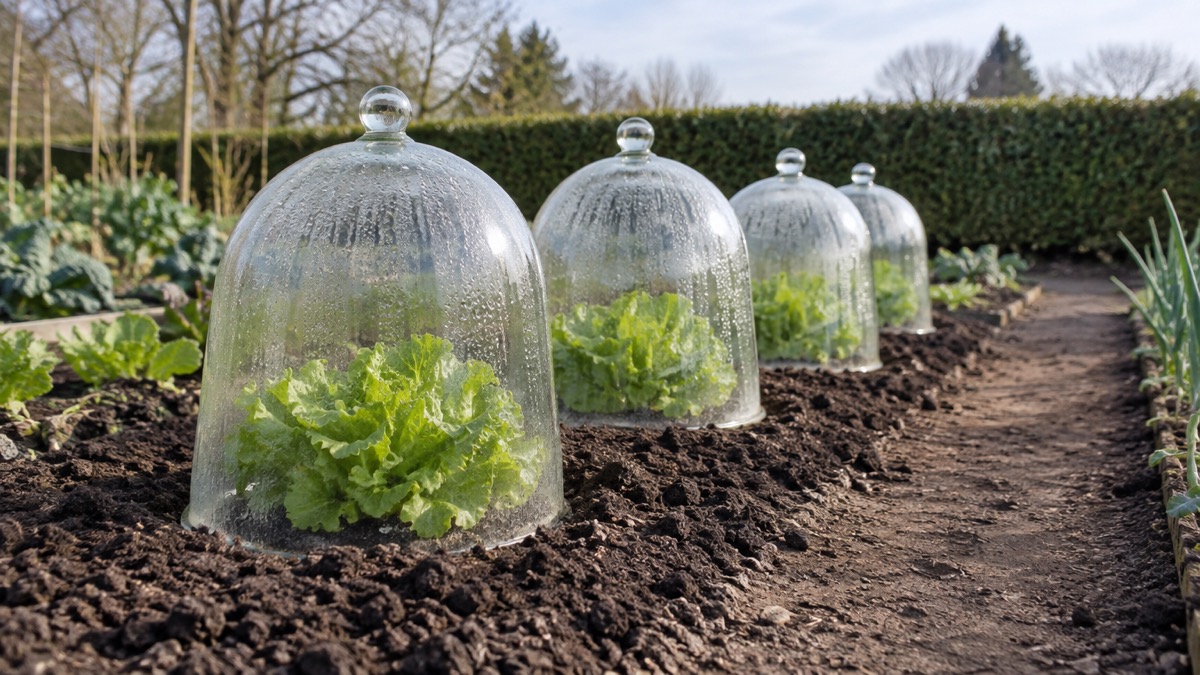
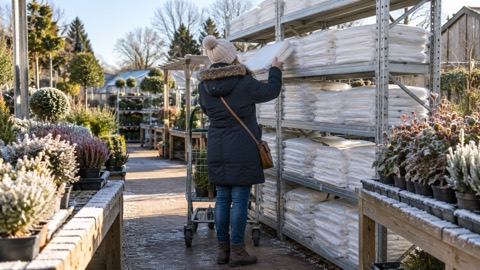
Garden fleece is a soft, fibrous, translucent material laid over or around plants, hastening their growth and protecting them against weather and pests, usually used without supporting hoops2. It is the lightest and quickest form of protection: you drape it over a bed, weigh down the edges, and lift it when the weather eases.
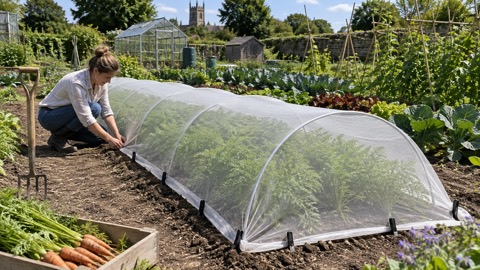
Its limit is worth knowing before you rely on it. Heavier grades of fleece give about 2°C of protection from frost2. That is enough for a light frost, not for a hard, prolonged freeze, so fleece is a first line of defence rather than a guarantee. It also lets rain through, which means it does not solve wet soil, only cold air.
Fleece earns its place for more than frost. In March, carrots can be grown under fleece to protect them from carrot fly2, so the same sheet that keeps a crop warm can keep a pest off it. If carrot fly is a recurring problem, there is more on that in how to protect carrots from carrot fly.
Some crops will take more than fleece can give. Some varieties of spinach beet will survive frosts1, and brassicas such as kale, cabbage, turnips and broccoli will all grow over the winter months1. Match the cover to the crop: fleece over the tender things, and let the hardy ones stand.
Raised beds and warm, sheltered spots warm the soil sooner
Soil temperature decides when the season really starts, and a few simple choices warm it sooner. A raised bed is one of them. There is a greater depth of soil in a raised bed, so plants will grow well in a smaller space7, and the bed itself drains and warms faster than open ground.
There is a trade-off to plan for. The higher the raised bed, the more soil you need to fill it and the more watering it requires during hot weather8. A tall bed is a fine thing in a wet spring and a thirsty one in a dry summer, so match the height to how much watering you can realistically do.
A hot bed goes further. Once set up, hot beds can be used to grow salad crops in winter, to get a head start on seed sowing in the spring by up to a month, and for growing melons and other cucurbits in summer4. The heat comes from the material beneath the soil, and it gives you a genuinely warm root zone when the air is cold.
Where you put the bed matters as much as what it is made of. To prevent lower growing crops from being shaded out, plant tall crops on an east to west orientation4, so the sun runs along the row rather than casting one crop into shadow. Shelter from wind helps too, because a sheltered spot holds the warmth that a cover traps.
Starting seeds indoors on a windowsill
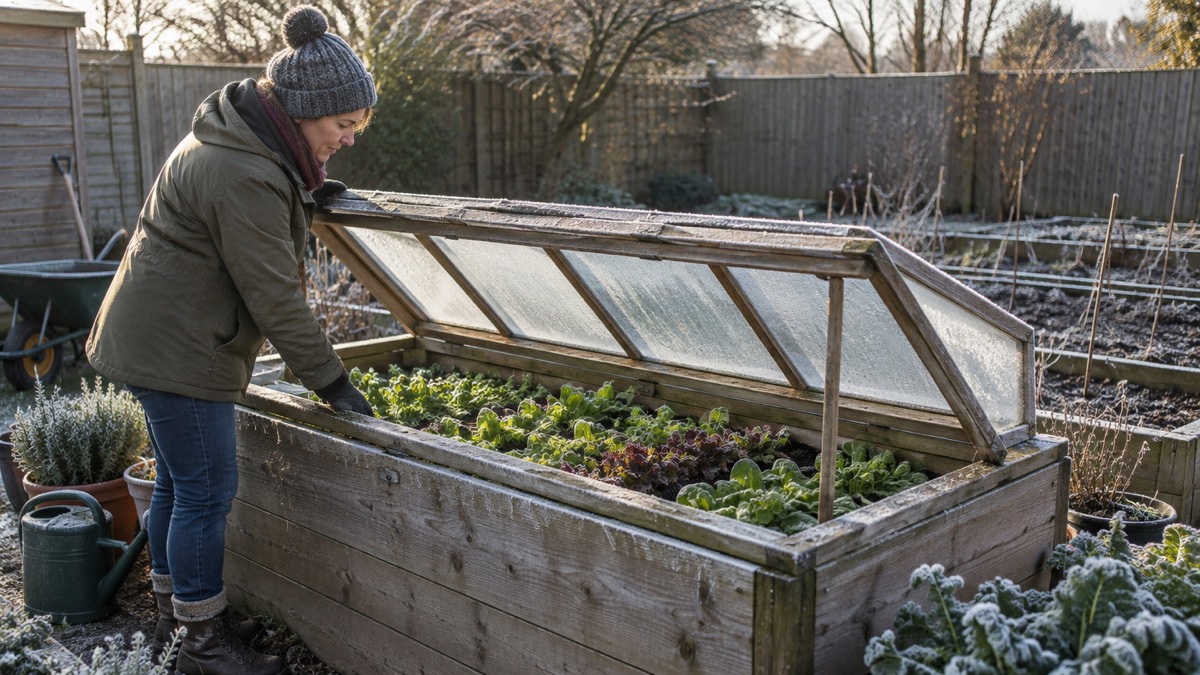
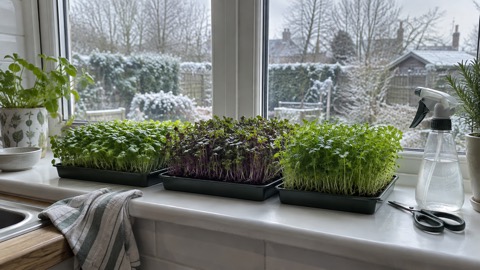
A windowsill costs nothing and extends the season in any home. Sow or raise plants early in the year indoors: cool, light windowsills in late January and February are perfect for seed sowing, especially if you do not have a greenhouse1. You are giving seeds the warmth and light they need while the garden is still cold.
Microgreens are the quickest crop to try. Put the container on a warm, sunny windowsill or in a bright indoor space, and keep the compost moist but not soggy while the seeds germinate9. They are best grown indoors on a windowsill that gets at least four hours of natural light a day10. For a step by step, see how to grow microgreens indoors.
You do not need special equipment to start. Fill your chosen container with a peat-free compost, and if you do not have flower pots or seed trays to hand, a yogurt pot or fruit punnet with holes punched in the bottom works perfectly10. What matters is drainage and light, not the price of the pot.
- Light: at least four hours of natural light a day for microgreens10.
- Moisture: keep compost moist but not soggy while seeds germinate9.
- Timing: late January and February for early indoor sowing1.
- Containers: anything that drains, including a yogurt pot or fruit punnet10.
If you want to compare kit for this job, heated or unheated propagator for seeds sets out the choice, and the seed sowing equipment checklist lists what to have ready.
Choosing crops that cope with cold and short days
The crops you choose decide how much the season can be stretched. Brassicas are the backbone of winter growing: kale, cabbage, turnips and broccoli will all grow over the winter months1. Some varieties of spinach beet will survive frosts1. These are plants that tolerate low light and cold soil, which is exactly what a British winter offers.
Timing can dodge a problem as well as fill a gap. Carrots can be sown in June for use over winter, which also has the added bonus of missing the first attack of the carrot root fly1. A winter crop that avoids a summer pest is doing two jobs at once.
Plan the year so something is always coming on. A spring term food growing guide sets out the skills involved: identifying crops that can be sown, planted and harvested during winter and spring, preparing soil, protecting plants and maintaining a productive garden in colder months, and using seasonal techniques such as mulching, pruning and protective coverings2. The same guide covers the science of plant life cycles and growth conditions, and the geography of weather patterns and sustainable food production2.
| Crop group | What it gives you | How to protect it |
|---|---|---|
| Brassicas (kale, cabbage, turnips, broccoli) | Growth over the winter months1 | Fleece or a cold frame in hard weather |
| Spinach beet (some varieties) | Survives frosts1 | Fleece for light frost |
| Carrots sown in June | Use over winter, misses first carrot fly1 | Fleece against carrot fly2 |
| Winter salads | Thinnings, broad bean tops and kale tops3 | Cloche or frame |
Rotation still applies in a small garden. Keep plants in the same families together, such as potatoes and tomatoes, but move them around the different sections each year11. That habit keeps the soil and the crops healthier, whatever the season.
Watering, mulching and keeping covers working
Covers change how water behaves, so watering becomes a skill rather than a routine. Use a watering can instead of a garden hose12, and in a drought use a watering can instead of a hosepipe and install a water butt if you can to capture rain13. A butt also gives you a supply that is not subject to a hosepipe restriction, which matters in a dry summer.
Mulch does several jobs at once. It is used to provide frost protection, improve plant growth by adding nutrients or increasing organic matter content, reduce water loss from the soil, for decorative purposes and suppressing weeds14. Around a raised bed or a cold frame, that combination of frost protection and moisture retention is exactly what you want.
If you keep a lawn, mowing can feed the soil. A mulching mower produces much finer clippings that fall down into the lawn, coating the soil surface, helping retain moisture and returning nitrogen to the soil as they decompose, with no grass collection needed16. In dry spells, letting grass grow longer helps too: without regular clipping, grass can establish more strongly and become more resilient to drought16.
For small areas that are rarely walked on, low-growing drought-resistant plants such as dwarf thyme can be used instead of a lawn16. That reduces the watering you have to do in summer, which leaves more for the crops under cover.
Where covers can do harm: wind, overheating and condensation
A cover is a tool, and like any tool it can work against you. Three things go wrong most often: wind takes the cover, sun overheats what is inside, and condensation builds up where air cannot move.
Wind is the first risk. A cloche or fleece that is not weighted or anchored will lift in a gust and either expose the crop or damage it. Check the forecast before you rely on a cover, because during autumn and winter there is an increase in unsettled weather and with it a greater chance of weather warnings being issued5.
Overheating is the second. A closed frame or cloche traps warm air, which is the point, but on a mild or sunny day the temperature inside can rise well above what the plant needs. Open the lid or light for part of the day when conditions allow, and close it again before evening. The same principle applies indoors: growing plants outside can provide shade, particularly in front of south-facing windows, while plants inside may help cool the air17.
Condensation is the third. Cold weather can increase the likelihood of condensation forming inside your home, which left untreated can lead to damp and mould, and exposure to damp and mould can be harmful19. The same damp, still air under a sealed cover encourages fungal problems on plants. If seed heads are maturing later in the year, as with leeks, rain can inhibit ripening and promote fungal infection, and plastic conical covers used for show blooms could be adapted for vegetables20.
Staying safe and well while you garden through the cold
Gardening in winter is still being outdoors in cold weather, and the official advice on cold applies. Wear lots of thin layers, and clothes made from cotton, wool or fleecy fibres are good at keeping in the heat22. Keep outdoor steps, paths and garden walkways clear of ice and frost23, because a fall in the garden is a common winter injury.
Cold and damp at home matter too. Poor quality housing and particularly cold homes are a cause of cold weather health risk24, and spending more time at home using more electrical and heating equipment brings additional risks, whether from fire, flooding or carbon monoxide25. If a power cut follows a storm, have warm clothes, blankets and food which does not need heating accessible26.
Food safety changes with the season as well. Warm weather enables bacteria to multiply faster in conditions where food hygiene practices are poorer29, so keep harvested crops cool and handle them cleanly. For more on storing what you grow, see storing the harvest.
Where to get help
If cold weather, a power cut or a fall affects your household, help exists. Keep a note of your energy supplier's emergency number and the national power cut line, and check on neighbours who live alone. For households with older or disabled members, the extra help in an emergency page explains the Priority Services Register and other support.
If you are gardening on an allotment, your tenancy agreement and the council's duties are set out in getting an allotment. For the wider picture on growing food at home, start with growing your own vegetables, and for the equipment that goes with it, the garden rainwater harvesting kit checklist and seed sowing equipment checklist are practical places to begin.
Sources (29)
- Vegetables all year round, Garden Organic, 2026
- Month-by-month guide to food growing: spring term, RHS, 2026
- Growing Year-Round, CAT, 2025
- How to grow vegetables and herbs, Garden Organic, 2026
- Weather warnings, Traffic Scotland, 2026
- Baby and toddler safety, NHS, 2026
- Vegetable crop planner, RHS, 2026
- Creating raised beds, RHS, 2026
- Growing microgreens, RHS, 2026
- Quick growing food, Garden Organic, 2026
- Planning your planting, Garden Organic, 2026
- Hot weather, Ready Scotland, 2026
- Droughts, Prepare, 2026
- Mulch your garden, RHS, 2026
- Conserving water, RHS, 2026
- Drought care, RHS, 2026
- Beat the heat: keep cool at home checklist, GOV.UK, 2026
- Beat the heat: resources for hot weather, GOV.UK, 2026
- How to stay safe in cold weather, NHS Inform Scotland, 2026
- Preserving varietal purity, Garden Organic, 2026
- Wildfires / Open Fires, Mid and West Wales Fire and Rescue Service
- Keeping warm, healthy and safe in cold weather, London.gov.uk, 2026
- Falls guidance at home, Oxford Health NHS Foundation Trust, 2026
- Stay warm and well this winter, Lancashire Prepared, 2026
- Winter safety, Mid and West Wales Fire and Rescue Service, 2026
- Get winter ready, Powercut105, 2026
- Potato, Love Food Hate Waste, 2026
- Break-in and housebreaking, Police Scotland, 2026
- BBQ and food safety, NHS Wales, 2026
 Hydroponic System Parts List
 Year-Round Sowing Calendar
 Preserving Equipment Checklist
 Blanching Vegetables
 Carrot Fly Protection
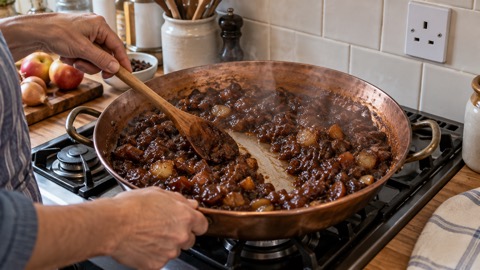 Knowing When Chutney Is Ready
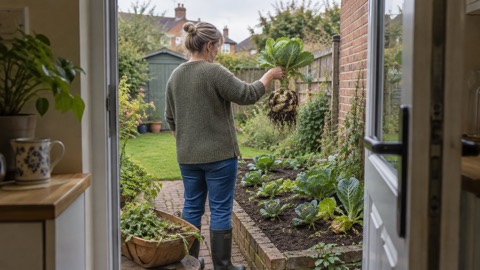 Clubroot in Your Soil
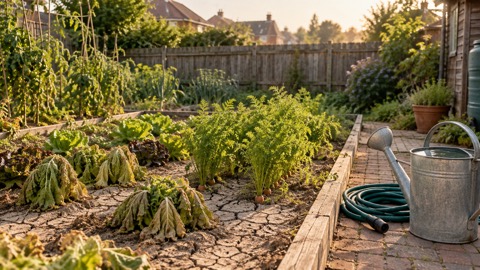 Drought-Resistant Vegetables
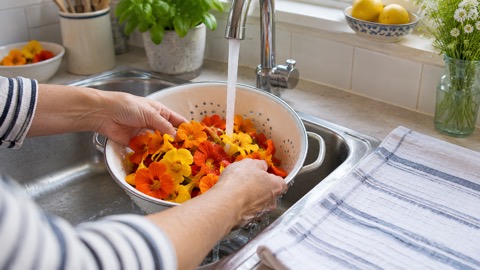 Edible Flowers Safety
 Freezing Fruit Without Sugar
 Garden Fleece Frost Protection
 Avoiding the Hungry Gap
 Keeping Varieties Pure for Seed
 Making Leafmould
 Growing Microgreens Indoors