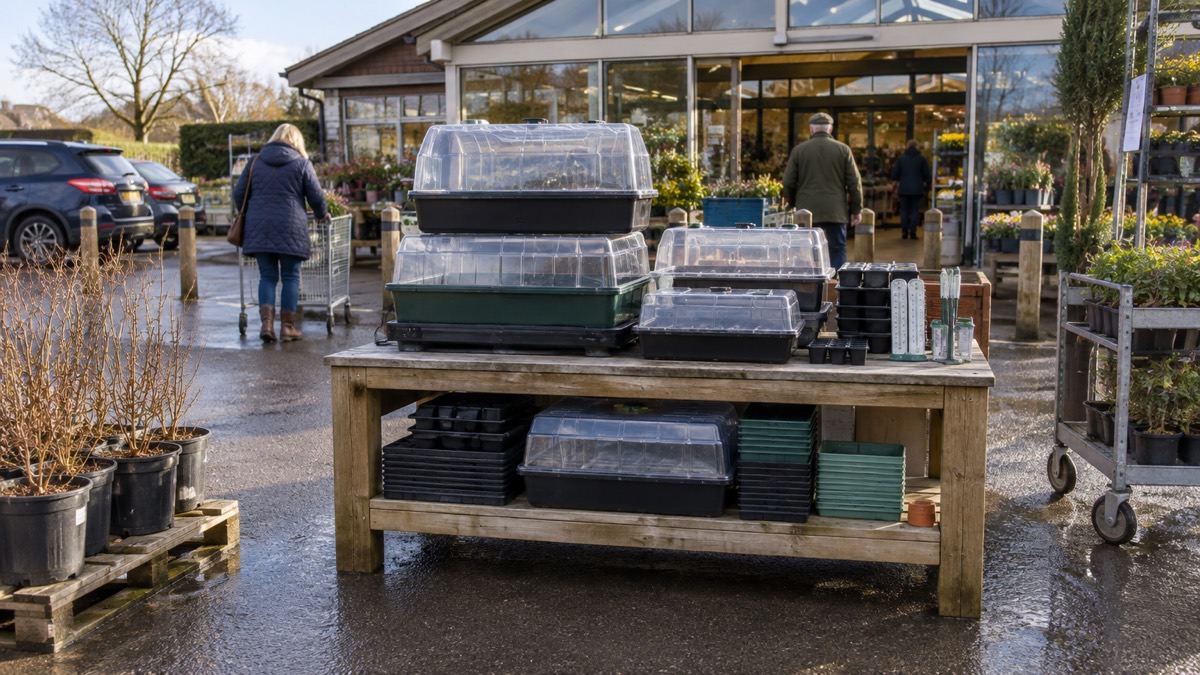
A propagator is a portable, lightweight structure, usually plastic, with a vented or unvented lid that gives seeds and cuttings a humid, slightly warmer atmosphere to start in1. The RHS describes it as useful for helping seeds germinate and root cuttings, and notes that it may have adjustable, thermostatic temperature control2. That last point is the heart of the heated versus unheated question: an unheated propagator traps warmth and moisture that are already there, while a heated one adds warmth from below.
For most households the answer is straightforward. If you are sowing in a warm room and the seeds are easy, an unheated cover is enough, and the RHS even suggests an upcycled clear food tray as a propagator lid for microgreens1. If you are sowing early in the year, working in a cool greenhouse or spare room, or rooting cuttings that need steady bottom heat, a heated propagator with a thermostat holds a set temperature rather than letting it swing with the room. One maker states its heating element is powerful enough to maintain its set temperature even during a cold winter, and that most propagators are underpowered and will not reach temperature when it is cold outside3.
Whichever you choose, the job is the same: keep the compost warm and humid, let stale air out through the vents, and watch for the condensation and damping-off that come from a lid that is too sealed. The sections below take each decision in turn.
| Unheated propagator | Heated propagator | |
|---|---|---|
| What it does | Traps warmth and moisture already present1 | Adds warmth from a heated base3 |
| Best for | Easy seeds in a warm room; microgreens; a cheap start1 | Early sowing, cool rooms, cuttings needing bottom heat3 |
| Temperature control | None; follows the room | Thermostatic on variable models, commonly 5°C to 30°C3 |
| Cold-weather behaviour | Slows with the room | One maker states it maintains its set temperature in a cold winter3 |
| Things to watch | Damping-off in a sealed lid5 | Ambient temperature below 5°C on one model4 |
What a propagator does, and what it does not
A propagator gives seed and cuttings a sheltered start: a lid holds in moisture and a little warmth, and a base tray holds the compost. The RHS defines it as a portable, lightweight structure, usually plastic, with a vented or unvented lid to provide a humid, slightly warmer atmosphere, and says it may have adjustable, thermostatic temperature control1. It is useful to help seeds germinate and root cuttings2. That is the whole promise, and it is worth being clear about what it is not: it does not supply light, it does not feed plants, and it does not replace the need to prick out and harden off seedlings once they are up.
Germination itself is the process by which a seed develops into a new plant. It starts with the seed coat absorbing water, expanding and splitting, which lets oxygen and water into the seed so its food reserves can be broken down and used by the embryo for growth7. A propagator helps at exactly this stage by keeping moisture and warmth around the seed. The RHS's sowing guidance says to cover pots with a layer of cling film, a plastic bag or a plastic propagator top to retain moisture and heat6. So the cover is doing real work even without heat.
Where a propagator earns its place is in extending what you can raise. One retailer notes that greenhouse propagators help you make best use of your greenhouse and extend the growing season8. A heated model goes further: one maker says its propagator helps you propagate, harden off and protect plants through the winter, and flat-packs away when not in use3. That three-in-one use is worth knowing before you buy, because it changes the calculation: a heated unit with height extensions can carry plants on past the seedling stage.
Unvented or vented lid: controlling humidity
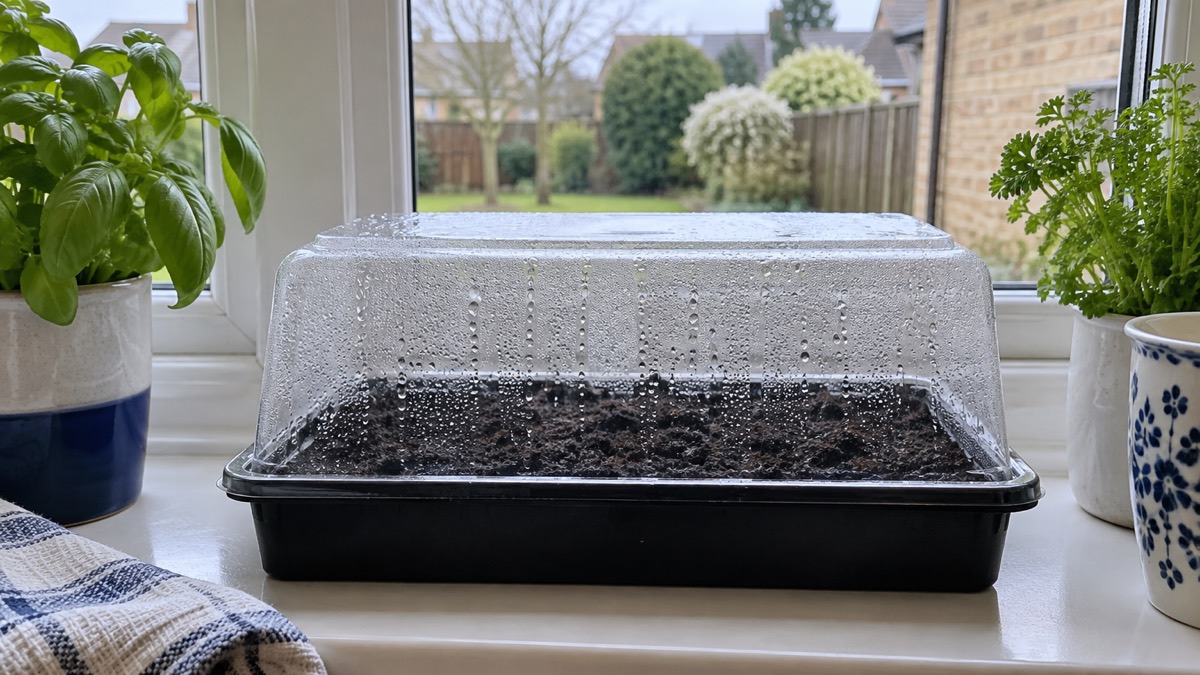
The lid is where most of the day-to-day management happens. A closed lid traps moisture rising from warm compost, which is what you want while seeds are swelling and germinating. But a lid that stays sealed once seedlings are up creates a still, wet atmosphere where damping-off, a fungal problem that kills young seedlings, can take hold. Vents are the answer, and they are the reason to prefer a vented lid if you have the choice.
The makers describe the mechanism plainly. One states that the vents in the lid allow condensation to be released, preventing damping-off without having to remove the lid5. Another says its large vents in the lid help regulate moisture levels, preventing damping-off while maintaining the right environment9. A third describes large adjustable vents that help prevent damping off and support healthy growth by improving air circulation and moisture control10. Even the simplest electric model in the range has a crystal clear high top cover with an adjustable vent to control ideal humidity conditions11.
The practical routine follows from that:
- While seeds are germinating: keep vents closed or nearly closed to hold humidity and warmth.
- Once seedlings emerge: open the vents a little, and widen them over a few days.
- If the lid runs with water or you see mould: open the vents fully, wipe the lid, and consider propping it slightly.
- If compost dries out fast: close the vents partway to slow moisture loss.
Condensation is not a fault. It is the visible sign that the lid is doing its job. The aim is a humid atmosphere, not a soaking one, and the vents are how you strike that balance without lifting the lid and losing the warmth you have built up.
Heated or unheated: how each one behaves
An unheated propagator is a cover and a tray. It holds the warmth of the room and the moisture from the compost, and that is often enough. The RHS's microgreens guidance suggests adding a clear plastic lid to a tray to keep seeds warm and moist, and notes an upcycled clear food tray works well as a propagator lid1. If your sowing room is warm and your seeds are undemanding, this is the low-cost route, and it has nothing to go wrong electrically.
A heated propagator adds a warming element under the base. The difference is most obvious in cold conditions. One maker states that its heating element is sufficiently powerful to maintain its set temperature even during a cold winter, and that most propagators are underpowered and will not reach temperature when it is cold outside3. That is a maker's claim about its own product, but it points to the real variable: a heated propagator is only as good as its ability to hold temperature against a cold room or greenhouse.
The heated route also brings electrical safety into the home. A propagator is a small appliance, and the fire services' advice on portable heaters is a useful discipline to borrow: place it on a flat, stable surface, keep it clear of flammable materials, and do not leave it switched on and unattended12. The same caution about ventilation applies: ventilate the room in which the appliance is being used14. None of this should put you off a heated propagator, but it should shape where you put it.
Thermostatic control on heated models
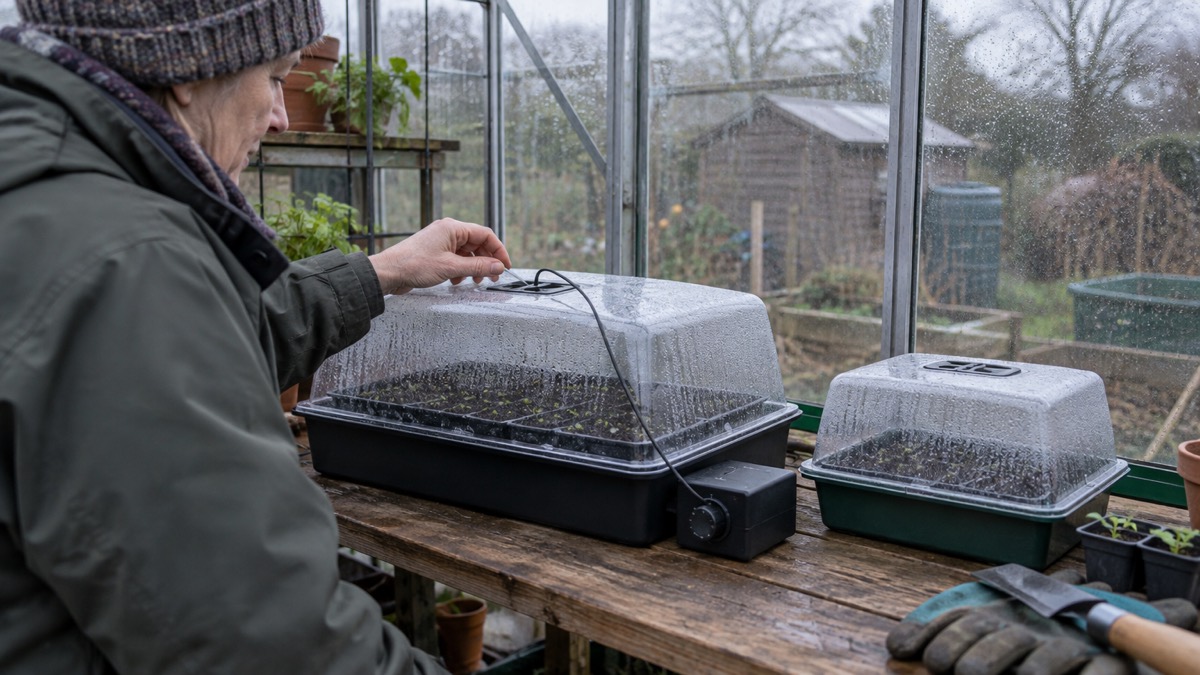
The step up from a basic heated base is thermostatic control, and it is the feature that decides whether a heated propagator is genuinely useful or just warm. On a thermostatic model you set a target temperature and the unit holds it. One maker describes a soil probe inserted into the compost or the base of the propagator, which triggers the supply of heat depending on the sensor reading5. Another says that once the probe sensor is in position, you simply enter your desired target temperature and leave the unit to automatically regulate, heating only when needed4.
The ranges are consistent across the models described. One states you can set a temperature target anywhere between 5°C and 30°C5, and that the temperature is adjustable to 1°C within that range3. Another gives the same 5°C to 30°C range and says the probe sensor on a 2m lead controls the temperature of the growing area to within 1°C4. A smaller model lets you set the temperature to any 1°C increment between 5°C and 30°C using the built-in digital thermostat10. The sensor maintains the correct temperature for you, so you have not got to constantly adjust it3.
Two practical points follow. First, check the maker's lower limit for the room, not just the dial. One maker states it does not recommend operation of the unit where the ambient temperature falls below 5°C4. Second, a thermostat is only as good as its heat distribution. One maker says heat is distributed evenly throughout the base, so there are no hot or cold spots5, and another says a consistent heat across the base means no cold spots and better germination results10. Uneven heat is the quiet cause of patchy germination.
Germinating seeds in a propagator
Sowing in a propagator is the same as sowing in pots, with the cover added. The RHS's sowing guidance is to cover pots with cling film, a plastic bag or a plastic propagator top to retain moisture and heat6. Fill the tray or pots with compost, sow at the depth the seed packet gives, water, and cover. Then leave it somewhere bright and warm and resist the urge to keep lifting the lid.
The heat question depends on the seed and the season. In a warm room, an unheated cover will germinate many easy seeds. Where you are sowing early, or the room is cool, a heated base holds the temperature the seed needs rather than letting it fall overnight. One customer review on a simple electric propagator describes using it to germinate tomatoes, peppers and chillies in place of a lost greenhouse, then moving the seedlings to a cold frame afterwards11. That is the pattern: heat to germinate, then a cooler, brighter place to grow on.
Watch for these as seedlings come through:
- Damping-off: seedlings collapse at the base in a still, wet atmosphere. Open the vents5.
- Patchy germination: often uneven heat. A base with no cold spots helps10.
- Leggy seedlings: they are reaching for light. Move them to brighter conditions once up.
- Dried-out compost: a fully open vent in a warm room can dry a small tray quickly.
Once seedlings are up, the propagator has done its main job. Move them on to a brighter spot and begin hardening them off, and the cover can come off entirely.
Rooting cuttings in a propagator
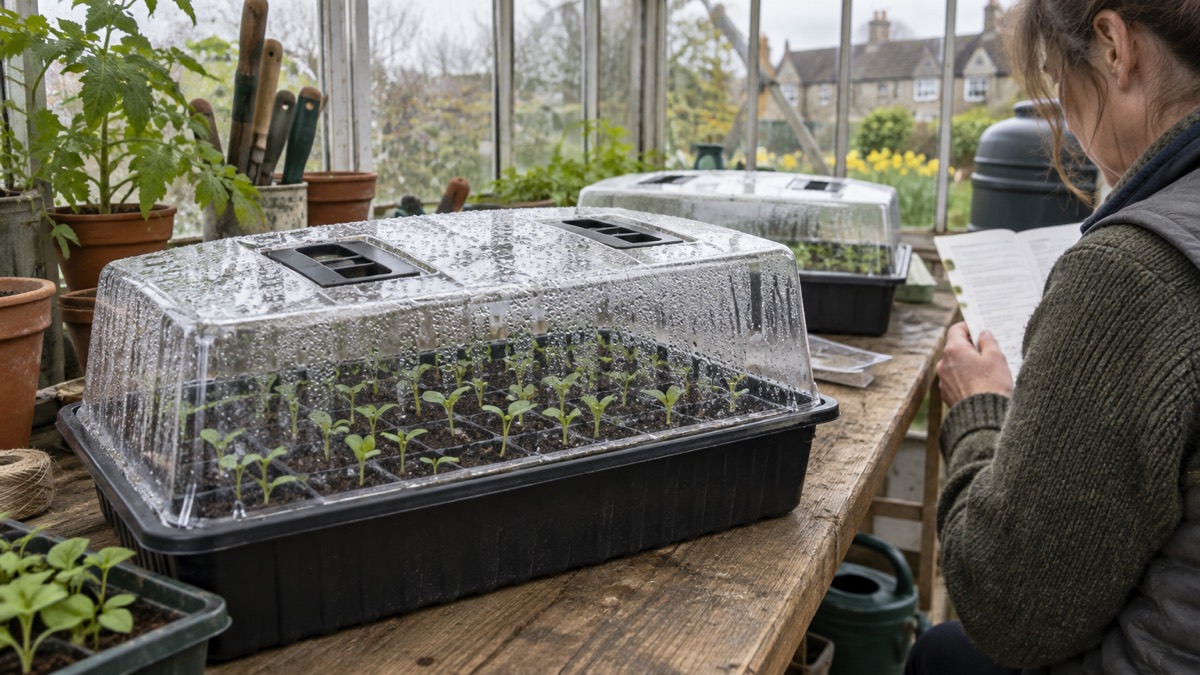
Cuttings are the other half of the propagator's purpose, and here the case for heat is often stronger. The RHS says a propagator is useful to help seeds germinate and root cuttings2. Softwood and hardwood cuttings both benefit from a humid, sheltered environment while they form roots, and bottom heat can speed that along in a cool season.
The RHS describes vegetative propagation as a form of propagation where new plants are grown from parts of an existing plant, such as sections of root, stem, leaf or bud, and notes that hardwood cuttings are one such method for woody plants15. A propagator gives those cuttings the still, humid air that stops them drying out before roots form. The vents matter here too: you want humidity without a sodden, airless lid.
Height is the practical limit. A standard propagator lid suits short cuttings and seedlings, but taller cuttings and plants grown on need more room. One maker notes that height extensions allow you to grow plants until they are quite tall, and a reviewer describes buying a third extension for the small propagator to grow on tomatoes3. If you plan to root larger cuttings or carry plants on, check whether the model offers extensions before you buy.
A heated propagator with lights takes the idea further. One dual-purpose model is described as extending the daylight whilst propagating simultaneously with two lights that sit in the lid16, and the maker says it emits a spectrum of light that guarantees lush green growth and prevents seedlings becoming weak16. That is a maker's claim, but it addresses a real problem: cuttings and seedlings in a dim room stretch and weaken without enough light.
Choosing between them, and using either safely
The choice comes down to your room, your season and what you are raising. An unheated propagator suits a warm, bright room, easy seeds and a modest budget, and the RHS's suggestion of a clear food tray as a lid shows how little you need to start1. A heated propagator with a thermostat suits early sowing, cool greenhouses and spare rooms, and cuttings that need steady bottom heat, with the 5°C to 30°C range and 1°C adjustment giving you control3. A model with lights and height extensions suits someone carrying plants on past the seedling stage16.
Whatever you choose, treat it as an electrical appliance in the home. The fire services advise placing portable heating appliances on a flat, stable surface, keeping them clear of flammable materials, and not leaving them switched on and unattended12. They also advise ventilating the room in which the appliance is being used14. A propagator is small, but the same habits keep it safe: a stable surface, clear space, and a check before you leave it running.
For the wider picture of raising food at home, see Growing Your Own Vegetables: Where to Start and Sowing Seeds Indoors and Outdoors: Timing, Depth and Germination. If you are setting up a seed-sowing station from scratch, the Seed Sowing Equipment Checklist sets out what to gather, and Extending the Growing Season Without a Greenhouse covers the alternatives when you have no heated space.
Sources (16)
- Growing microgreens, RHS, 2026
- How to take softwood cuttings, RHS, 2026
- Small Vitopod Heated Propagator, Harrod Horticultural, 2026
- Single High Top Variable Temperature Control Electric Propagator, Harrod Horticultural, 2026
- Small Vitopod Variable Temperature Control Electric Propagator, Garland Products, 2026
- Sowing in pots, RHS, 2026
- Direct seed sowing, RHS, 2026
- Greenhouses, sowing and propagation, Harrod Horticultural, 2026
- New Large Vitopod Electric Variable Temperature Control Propagator, Harrod Horticultural, 2026
- Small Vitopod Electric Variable Temperature Control Propagator, Harrod Horticultural, 2026
- Electric Starter Propagator, Harrod Horticultural, 2026
- Safe home heating, Warwickshire County Council, 2026
- Portable heaters, Cheshire Fire and Rescue Service, 2026
- Portable heaters, Mid and West Wales Fire and Rescue Service, 2026
- How to take hardwood cuttings, RHS, 2026
- Geopod Heated Propagator, Harrod Horticultural, 2026
 Hot Composter vs Cold Bin
 Polytunnel vs Greenhouse
 Pressure Canner vs Water Bath
 Wormery vs Bokashi Bin