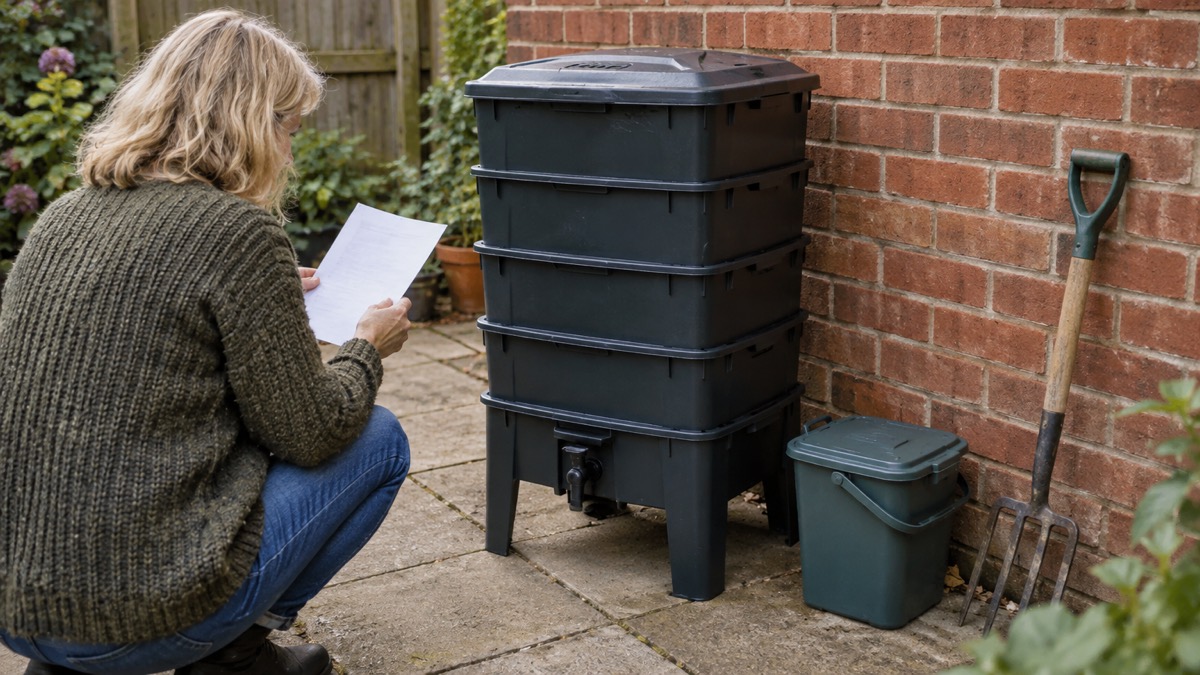
A wormery and a bokashi bin both deal with kitchen scraps, but they work in different ways and suit different households. A wormery is a living system: you add worms, bedding and small amounts of food, and the worms turn it into compost and liquid feed. A bokashi bin is a sealed fermentation bucket that pickles food waste with a bran, and it takes everything a wormery cannot, including cooked food, meat and dairy. Which one suits you depends on how much waste you make, where you can put a bin, and whether you want compost at the end or a pre-treatment before the waste goes elsewhere.
If you want a wormery, the essentials are simple. Start with at least 500g of worms and about 30cm of bedding, keep the bedding as damp as a wrung-out sponge, and feed no more than 2.5cm of food at a time. Empty your kitchen caddy into the bin at least every other day so scraps do not rot before the worms get to them. Expect the population to take about 8 months to reach full strength, so start small and be patient.
Whichever you choose, the same safety rules apply. Keep the bin out of full sun in summer and sheltered from hard frost in winter, and never put anything in it that will harm the worms or the process. The sections below set out how to run a wormery through the year, what to keep out of it, and where a bokashi bin fits alongside it.
| Wormery | Bokashi bin | |
|---|---|---|
| What it takes | Raw fruit and vegetable scraps, tea, coffee, eggshells1 | Cooked food, meat, dairy and most kitchen waste |
| How it works | Worms break down the food | Sealed fermentation with a bran |
| Speed | Slow, about 8 months to full strength1 | Fast, sealed and odour-free |
| Where it goes | Outdoors, sheltered from frost and sun1 | Indoors, in the kitchen |
| What you get | Compost and liquid feed | Fermented pre-compost to bury or compost |
| Best for | Households with a garden and a sheltered spot | Flats and households with cooked food waste |
Setting up a wormery: worms, bedding and the first feed
A wormery is a container of worms and bedding that you feed kitchen scraps. The starting quantities matter more than the bin itself. Put in at least 500g of worms and about 30cm of bedding, so the worms have somewhere to live before the food arrives1. A bin that is mostly air with a handful of worms and a pile of scraps will sour, smell and attract flies.
The bedding is the worms' home. It needs to be damp, loose and deep enough for them to move through. Aim for the texture of a wrung-out sponge: damp to the touch but not dripping. If you squeeze a handful, no more than a drop or two should come out. Too dry and the worms dehydrate; too wet and the bin goes anaerobic and smells.
Once the bedding is in, add a thin layer of food and leave the bin for a week or two before feeding again. The worms need time to settle and start breeding. Keep the lid on to hold moisture and keep out flies, and put the bin somewhere sheltered, out of full sun and away from the coldest wind.
A wormery is not a compost heap. It is a small, managed system, and the quantities are small. That is why the feeding rule matters: no more than 2.5cm of food at a time1. If you have a lot of waste, a wormery alone will not keep up, and a bokashi bin or a cold compost bin alongside it will take the surplus.
Bedding materials and how moist to keep them
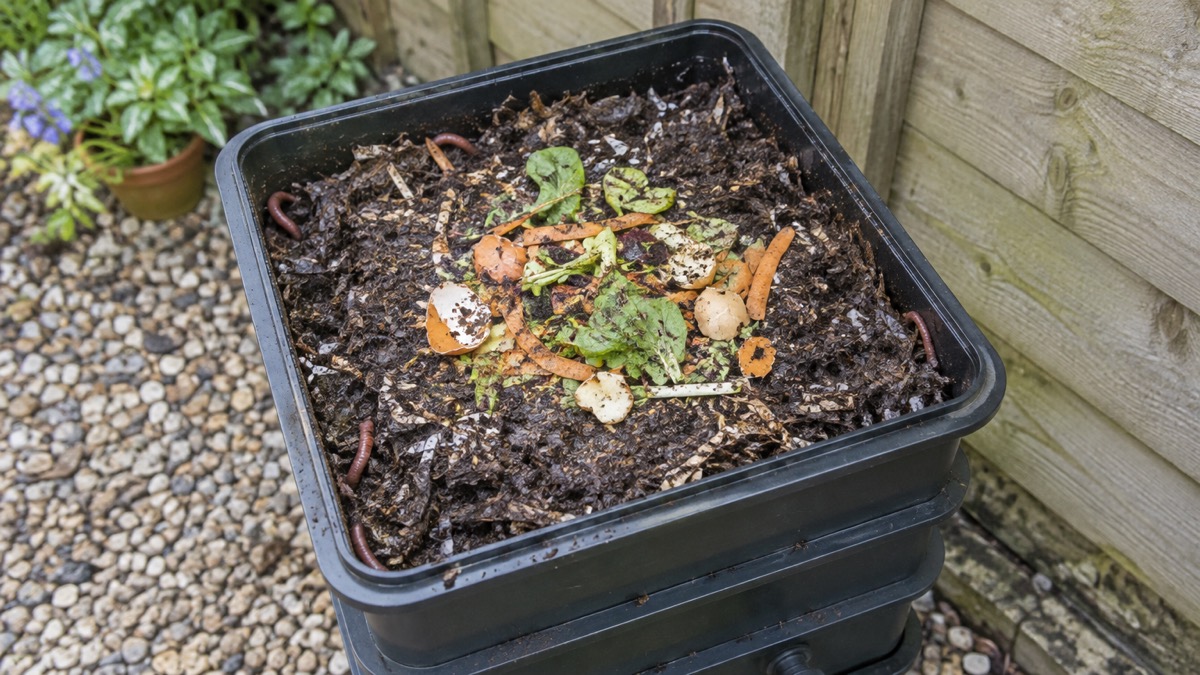
The bedding is what the worms live in, and it decides whether the bin works. Good bedding is loose, damp and made of materials that will break down slowly. Shredded paper, cardboard, coir and well-rotted leafmould all work. Mix them so the bedding does not mat down into a solid block.
Shredded paper is a useful bedding material and a way to reuse waste paper. Use plain paper, not glossy magazines or anything plastic-coated, and shred it before dampening. Mix it with other bedding so it stays open and airy. A layer of damp newspaper over the surface of the food helps hold moisture and keeps flies down.
Moisture is the thing to check most often. The bedding should stay as damp as a wrung-out sponge. In hot weather it dries out faster, so check it more often and add water if needed. In wet weather, make sure the bin is draining and not waterlogged. A bin that is too wet will smell and the worms will try to climb out.
The same principle applies to any living system you keep at home: the conditions matter more than the feeding. If the bedding is right, the worms will look after themselves. If it is wrong, no amount of food will fix it.
Feeding: little and often, and empty the caddy
The feeding rule for a wormery is small and often. Add no more than 2.5cm of food at a time, and wait until the worms have worked through it before adding more1. Bury the food lightly in the bedding rather than leaving it on the surface, and cover it with damp newspaper or a mat.
The kitchen caddy is the link between the kitchen and the bin. Empty it into the wormery at least every other day1. Scraps left in a caddy for a week will rot and smell before they reach the worms, and rotting food in the bin attracts flies and fruit flies. A small caddy emptied often is better than a large one emptied rarely.
What goes in is kitchen fruit and vegetable scraps, tea leaves, coffee grounds and crushed eggshells. What stays out is covered in the section below. The general rule is that a wormery takes raw plant matter, not cooked food, meat, dairy, oils or pet waste.
If you make more waste than the wormery can take, do not simply add more. Either start a second bin, use a bokashi bin for the surplus, or compost the rest. Overfeeding is the most common reason a wormery fails.
Population growth: about 8 months to full strength
A new wormery is not at full capacity. The worms need time to settle, breed and build up their numbers. Expect the population to take about 8 months to reach full strength1. That means the bin will take less food in the first few months than it will later, and you should feed it accordingly.
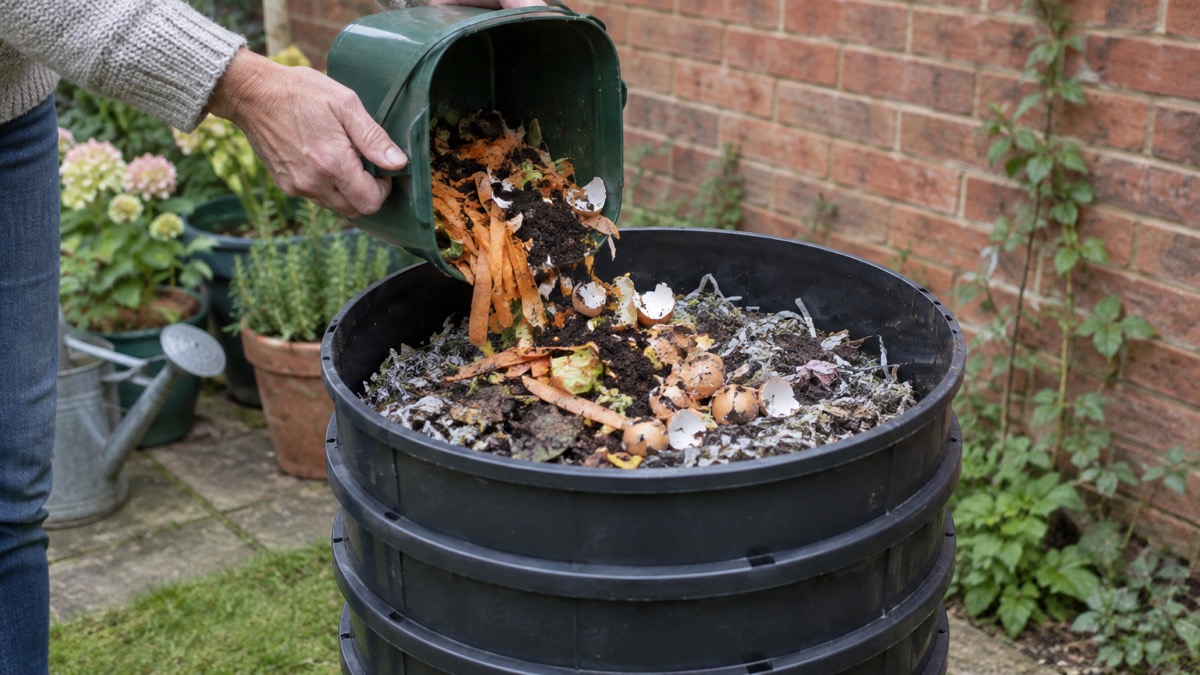
This is why starting small matters. A bin that is overfed in the first weeks will sour before the worms can catch up. Feed little and often, watch how quickly the food disappears, and increase the amount only when the worms are keeping pace.
The population also responds to conditions. Worms breed when there is food and the bedding is right, and they slow down when it is cold or dry. A bin that seems to be doing nothing in winter may simply be waiting for warmer weather.
Once the bin is established, you can harvest the compost from the bottom and the liquid feed from the tap. The compost is a useful soil improver, and the liquid feed should be diluted before use. Neither is a substitute for a proper compost bin if you have a lot of garden waste.
Keeping a wormery working through winter
Worms slow down in the cold and can be killed by a hard freeze. The main job in winter is to keep the bin from freezing and to keep the bedding from getting too wet. Move the bin into a shed, garage or porch if you can, or wrap it and stand it against a warm wall.
The official winter advice for households is to check on neighbours and to keep warm, and the same principle applies to a wormery: a little attention goes a long way2. Check the bin regularly, keep the lid on, and hold back food when the worms are inactive. Food that is not eaten will rot.
In very cold weather, insulate the bin with bubble wrap, old carpet or straw, and make sure it is not standing in a puddle. A bin that is waterlogged and frozen is a bin that will lose its worms. If the bin does freeze, do not panic: bring it somewhere warmer and let it thaw slowly.
The same care applies to the rest of the household in winter. Keep the heating on where you can, keep the bedroom windows closed at night, and stay active during the day3. A wormery is a small part of a household that is looking after itself through the cold months.
Hot weather: shade, moisture and a cool spot
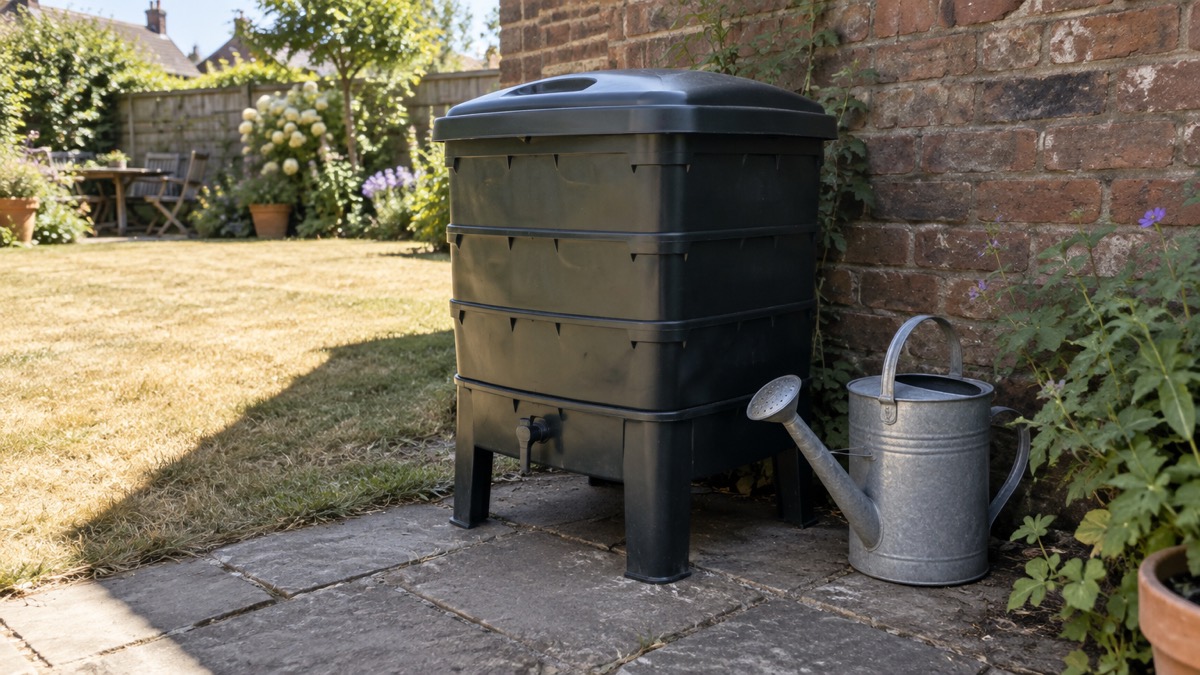
In hot weather the risk reverses. Worms can be killed by heat, and the bedding dries out fast. Keep the bin out of direct sun, in shade or against a north-facing wall, and check the bedding more often. If it is dry, add water.
The official hot weather advice is to keep your home cool by closing windows and curtains in rooms that face the sun, to drink plenty of water, and to avoid extreme physical exertion5. The same logic applies to a wormery: shade it, keep it moist, and do not move it around in the heat of the day.
A bin in full sun can overheat even in a British summer. If you cannot move it, drape a damp cloth or a piece of shade netting over it, and make sure the lid is on but the bin is ventilated. A bin that is too hot will smell and the worms will try to escape.
In a heatwave, check the bin daily. If the bedding is dry, add water and mix it through. If the bin is too wet and hot, add dry bedding and open the lid for a while in the cool of the evening. Do not add food when the worms are inactive.
What not to put in a wormery
A wormery is not a general waste bin. What goes in decides whether the bin works, and some things will harm the worms or the process. The main things to keep out are cooked food, meat, fish, dairy, oils and fats, pet waste, and anything treated with chemicals.
The chemical rule is the one to take seriously. Household cleaning products can be dangerous, and the official advice is not to mix any cleaning products together or with bleaches, as this may release dangerous fumes8. The same caution applies to what goes in the bin: keep out bleach, disinfectants and anything labelled as hazardous.
Batteries and vapes are a fire risk in waste, and the official advice is not to put vapes in any kerbside bin or the mixed waste bin at a recycling centre9. They do not belong in a wormery either. The same goes for anything that will not break down, such as plastic, glass or metal.
Garden waste is a separate matter. A wormery is for kitchen scraps, not for autumn leaves, prunings or grass cuttings. Fallen leaves can block gullies in autumn, and the official advice is to clean private gullies for that reason11. Leaves are better made into leafmould or added to a cold compost bin.
Wormery or bokashi: which suits your kitchen
The two systems do different jobs, and many households use both. A wormery turns raw kitchen scraps into compost and liquid feed, but it takes only small amounts at a time and cannot take cooked food, meat or dairy. A bokashi bin ferments everything, including cooked food, meat and dairy, in a sealed bucket, and the result is buried or added to a compost bin.
If you have a garden and a sheltered spot, a wormery gives you compost and liquid feed and is a good use of raw kitchen scraps. If you live in a flat, or you cook a lot of food and want to keep waste out of the general bin, a bokashi bin is the more practical choice. Many households run a bokashi bin in the kitchen and a wormery or compost bin outside.
Whichever you choose, the principles are the same: keep the system in the right conditions, feed it what it can take, and keep hazardous waste out. For more on the wider picture, see Composting at Home: Bins, Wormeries and Bokashi and What Not to Put in a Wormery.
Sources (11)
- How to grow turnip, Garden Organic, 2026-10-29
- WeatherReady winter checklist, Met Office, 2026-10-28
- Staying well in winter, Derbyshire County Council, 2026-10-29
- Keeping warm in winter, Nottinghamshire County Council, 2026-10-29
- Beat the heat: staying safe in hot weather, UK Government, 2026-07-21
- Beat the heat, Wiltshire and Swindon Prepared, 2026-10-25
- How to keep cool this summer, Lancashire County Council, 2026-10-29
- Flooding and health, Public Health Wales, 2026-07-31
- Incorrectly disposed of battery triggers fire at Kenilworth recycling centre, Warwickshire County Council, 2026-10-26
- Fire safety tips: smoking, vaping and e-cigarettes, Warwickshire County Council, 2026-10-29
- Preparing for flooding, nidirect, 2025-09-11
 Heated vs Unheated Propagator
 Hot Composter vs Cold Bin
 Polytunnel vs Greenhouse
 Pressure Canner vs Water Bath