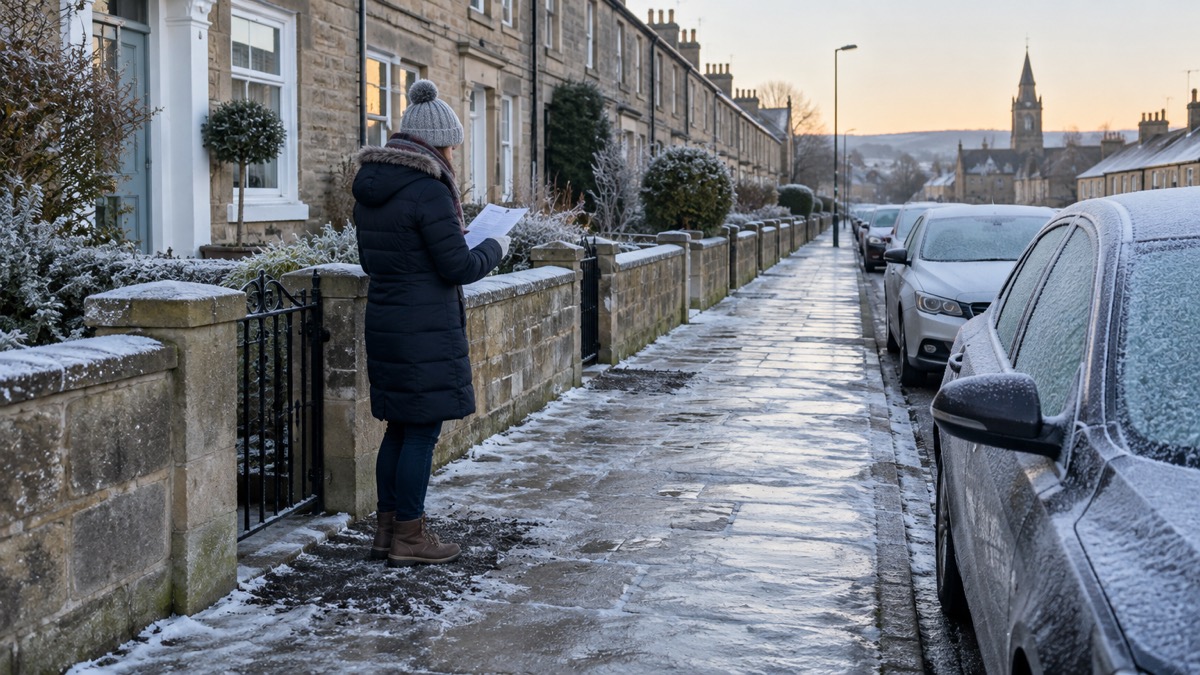
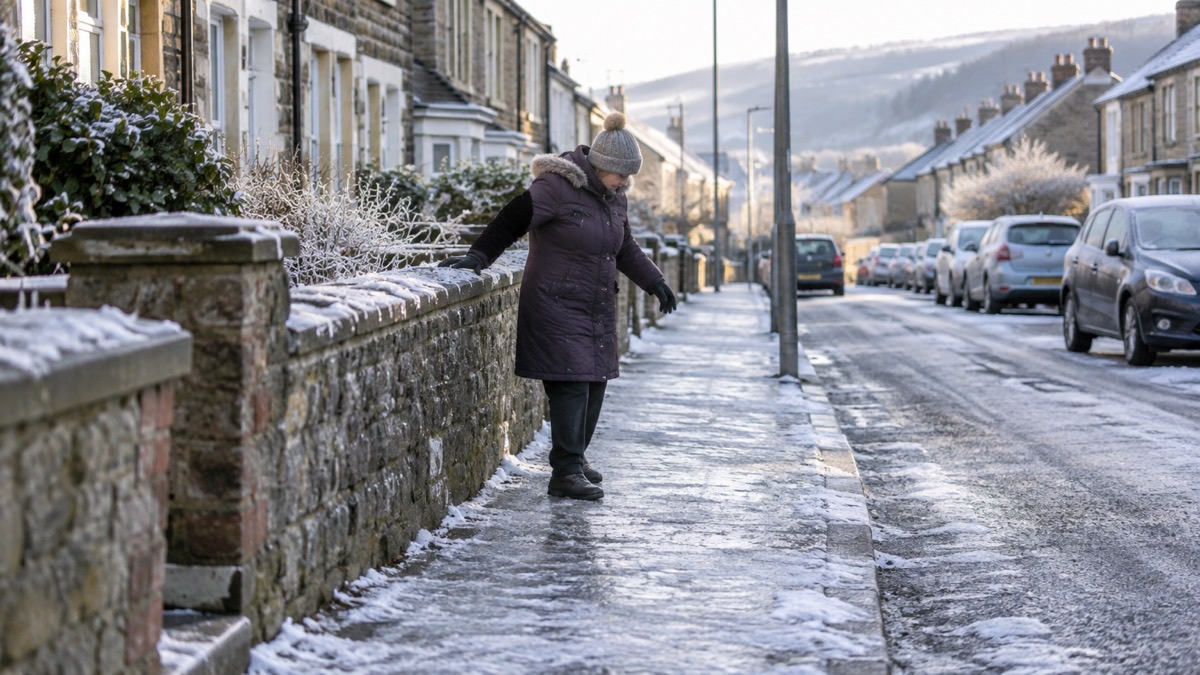
Most slips on ice are avoidable, and the advice that prevents them is short: wear shoes with good grip, keep your walkways clear, and give yourself more time so you are not rushing. The Met Office advises taking extra care on untreated pavements and preparing for journeys by wearing footwear with a good grip1, and its winter advice includes leaving the house five minutes earlier than usual, because rushing increases the risk of slips and falls, and using pavements along main roads, which are likely to be less slippery2. NHS self-care guidance puts the two halves of the problem together: keep walkways clear of ice and wear shoes with good grip3.
The other half of this page deals with frozen water, because it is where a slip stops being an inconvenience and becomes a life-threatening emergency. Fire and rescue services across the UK give one unvarying rule: never go onto frozen ponds, lakes, canals or reservoirs, no matter how safe the ice looks. Cold water shock can kill in minutes, and more than half of ice-related drownings have involved someone trying to rescue another person or a dog.
Shoes with good grip, and how to walk on ice
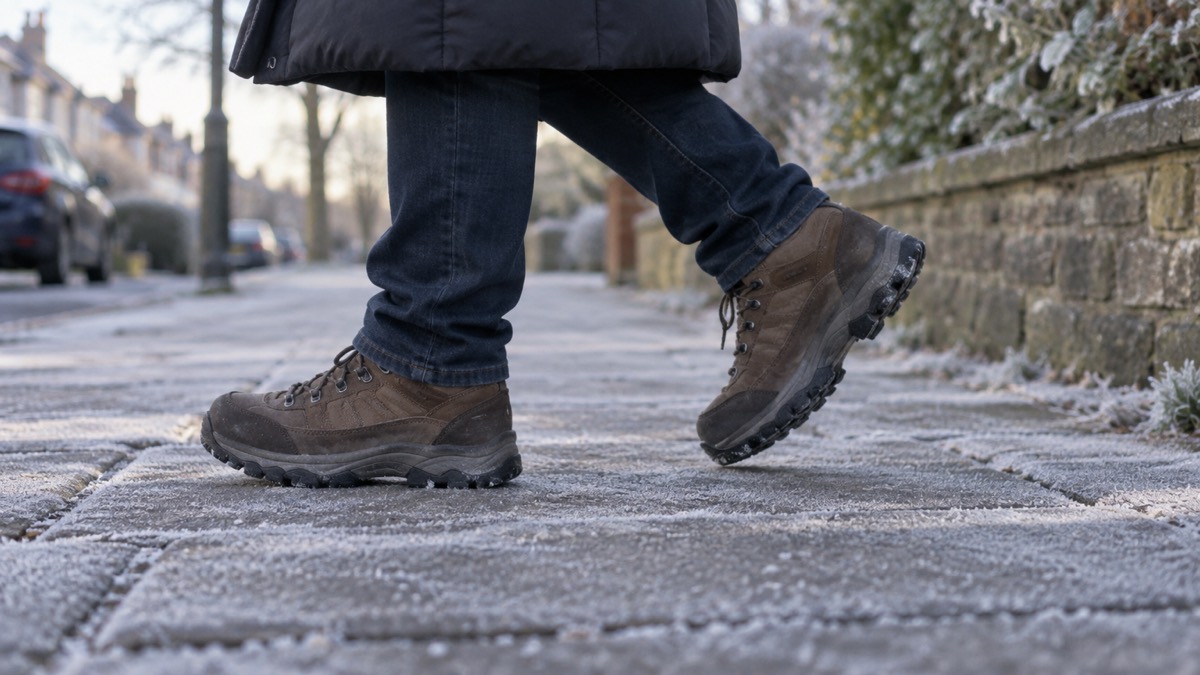
Every official source on this page converges on the same first instruction. UK Health Security Agency guidance on keeping warm and well says to wear shoes with good grip to avoid slips and falls on slippery or icy surfaces when out and about8. It is not a marginal gain: grip is the single most cited measure against winter falls across UK official guidance.
What "good grip" means in practice is footwear that is well fitting, in good condition and supports the ankle. NHS falls guidance says to wear well-fitted shoes with good grip, avoid loose slippers and going barefoot9, and Welsh ambulance advice says the same10. Loose-fitting or worn shoes let the foot slide inside the shoe even when the sole holds, and a sole with worn-down tread will not bite into ice however carefully you place your foot.
The same thinking applies indoors, where melted snow and ice follow you in. Birmingham Community Healthcare advises wearing well-fitting shoes or slippers with good grip at home, and staying active with strength and balance activities at least twice a week, because strength and balance are what keep you upright when a surface surprises you11. South East Coast Ambulance Service adds the indoor basics: mop up spillages straight away, remove clutter, trailing wires and frayed carpet, use non-slip mats and rugs, keep rooms, passages and staircases well lit, and do not walk on slippery floors in socks or tights4. Cornwall Council's home safety list covers the same ground: keep the stairs clear, do not leave shoes or toys on the floor, clean up spills straight away, make sure your lights work, and use rugs that do not slip, especially on wooden or tiled floors12.
How you walk matters too. The Met Office's advice for icy weather is to take extra care on untreated pavements1, and its winter tips add the two practical measures already noted: leave earlier so you can walk slowly and deliberately, and choose pavements along main roads, which are more likely to have been treated or worn clear by foot traffic2. Rushing is the enemy: a hurried stride lands on the heel, slides, and gives you no time to correct. If you support an older neighbour or relative, the South Western Ambulance Service advises checking they wear shoes with good grip to prevent falls13, and some fire and rescue services offer free safe and well visits that include preventing slips, trips and falls14.
For households that want more than ordinary shoes, ice grips that stretch over the sole are widely sold for exactly this purpose. The pack's official guidance speaks only of "footwear with a good grip", so treat grips as one way of meeting that instruction rather than a separate recommendation, and take them off when you go indoors, where metal studs on hard floors become a slip hazard of their own.
Keeping your paths, steps and doorways clear
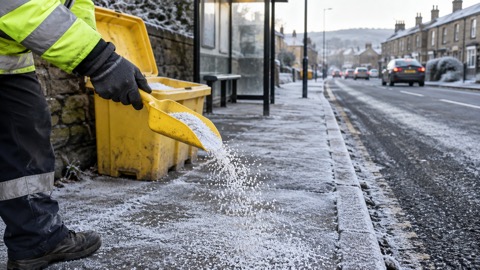
The second half of preventing slips is the surface itself. NHS falls guidance is direct: keep outdoor steps, paths and garden walkways clear of ice and frost5. Essex Prepared notes that clearing snow and ice from the pavement outside your home or public areas can help prevent slips and falls, yours and other people's15. Staffordshire's winter advice adds that paths and steps should be not only clear but well lit, so that ice is visible before you step on it16.
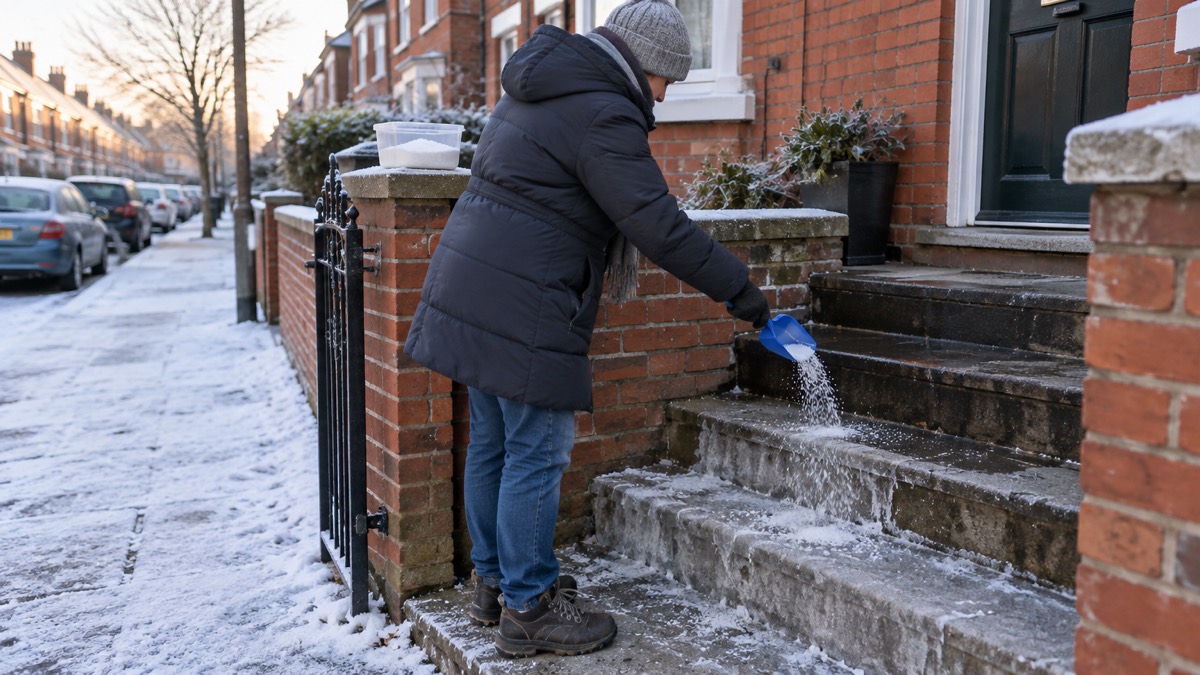
Steps deserve particular attention. Warwickshire's snow warden guidance says to pay particular care and attention to steps and steep gradients when clearing snow and ice17, and the Snow Code used by several councils says to pay extra attention to clearing snow and ice from steps and steep pathways, as you might need to use more salt on these areas18. A step combines everything that makes ice dangerous: a sloped surface, a change of level and a fall onto hard ground. Treat steps first, and treat them generously.
On what to spread: the Derbyshire Snow Code explains that sand or ash will not stop the path icing over as well as salt, but will provide good grip underfoot19. Salt melts ice; sand and ash only give traction, so they suit a path that is already icy when you have no salt left. If you are clearing snow yourself, the London Fire Brigade's winter guide says to wear waterproof non-slip shoes while you do it6, and the Scottish Ready campaign says to wear warm waterproof clothing and shoes with a good grip20. We cover the practicalities in more detail on how to clear snow and ice from a path safely, how much salt you need and whether you can clear the pavement outside your house.
If you are walking rather than clearing, the same logic applies to route choice. West Midlands Ambulance Service's winter cycling advice, aimed at two wheels but true on foot, is to choose routes that have been gritted or are clear of snow and ice, to be cautious of black ice and to keep away from the edge of the road where slush accumulates21. Councils treat main roads and busy pavements first, so a slightly longer route along a treated pavement is usually safer than a shortcut down an untreated lane. Our page on which roads are gritted and how councils decide explains the priorities, and what to do if you hit black ice covers the invisible version of the hazard.
Leaves, snow and the edges of water
Ice is not the only thing that makes winter ground slippery, and it is not always visible. The Met Office's winter water safety advice warns that fallen leaves and snow could obscure the water's edge and cause slippery surfaces, so keep a safe distance from the edge22. London Fire Brigade's winter water safety advice makes the same point more broadly: watch out for slippery surfaces, because ice, rain, fallen leaves and mud could cause you to slip into the water23.
This matters most anywhere a path runs beside water: a canal towpath, a riverbank, a reservoir track or the edge of a pond in a park. A wet leaf on a sloping bank is nearly as slippery as ice, and snow hides both the leaf and the edge itself, so you can step off solid ground without knowing it was there. Devon and Somerset Fire and Rescue Service's frozen water guidance says not to wander too near the edge, because icy or wet conditions could cause you to slip and fall in24. The rule is simple: in ice, snow or heavy leaf-fall, walk a few steps back from any bank or edge, and keep children and dogs back with you.
The same principle applies to familiar ground near home. A kerb hidden under snow, a drain cover glazed with frost, or a paving slab tilted into a puddle that has frozen overnight are all ordinary surfaces turned hazardous. Where you cannot see the surface, assume it is slippery, shorten your stride, and put each foot down flat rather than on the heel.
Never walk onto frozen ponds, lakes or rivers
This is the one rule on this page with no exceptions and no judgement calls. North Wales Fire and Rescue Service says never to venture onto frozen ponds and lakes, no matter how safe it looks25. Manchester Fire and Rescue says going onto frozen ponds, reservoirs, lakes and canals is dangerous and can have fatal results7. Devon and Somerset Fire and Rescue says simply: never walk or play on frozen water26. Derbyshire's winter guidance extends it to dog walking: do not walk on ice-covered lakes, ponds or rivers when walking your dog or by yourself27.
Why the ice will not take your weight
The reason the rule is absolute is that you cannot assess the risk from the bank. The Met Office is explicit: never go onto the ice, because there is no way of knowing whether it will take your weight, how thick the ice is, or how cold, deep and fast the water beneath is22. Manchester Fire and Rescue adds that even if the ice appears thick from the bank, it becomes thinner very quickly and can crack7. North Yorkshire Fire and Rescue Service gives the same warning: ice that looks thick from the bank thins very quickly28.
Ice thickness varies with everything you cannot see: currents under the surface, springs feeding a pond, outfalls from drains, deeper and shallower areas, and the recent temperature history of each spot. A sheet that held a heron at dawn may not hold a child at noon. Forestry and Land Scotland notes that in Scotland it is rare that ice becomes thick enough to support your weight at all29, and the same caution applies anywhere in the UK where winters rarely produce long, deep freezes.
Do not test it, either. Devon and Somerset Fire and Rescue Service says do not be tempted to test the thickness of the ice, because it is easy to slip from the bank and fall through into the freezing water while doing so24. There is no safe way to check ice thickness from the bank, and no thickness you could confirm that would make walking on it advisable.
Children and dogs
Two groups need particular attention. On children, the Scottish Ready campaign says to stay off frozen waterways, make sure children are aware of the dangers and keep pets off icy water20. Derbyshire's guidance says to warn children about the dangers of open water and ice, because even a short exposure to freezing water can be fatal27. North Yorkshire Fire and Rescue Service adds the point adults most often miss: set a good example to children by staying off the ice yourselves28. Children copy what adults do, not what they say.
On dogs, the fire and rescue services are unanimous. Manchester Fire and Rescue says that if a dog or other animal ventures onto the ice, or falls through it, do not go onto the ice to rescue it, because you are likely to end up in the freezing water and unable to help the animal7. Devon and Somerset says dog owners should keep their pet on a lead and not throw sticks or balls onto the ice24, and North Yorkshire says never throw sticks or balls onto the ice for your dog, and keep them on a lead near frozen water28. A ball thrown onto a frozen pond is the start of most dog-on-ice emergencies; the throw is the moment to prevent it, not the rescue.
Cold water shock: what falling through ice does to the body
Falling through ice into freezing water triggers a specific, well-documented physical response, and understanding it changes what you should do. The Northern Ireland Fire and Rescue Service notes that cold water can affect you physically and you can get cold water shock30. London Fire Brigade's warning is starker: cold water shock can kill in minutes6. North Yorkshire Fire and Rescue Service explains the mechanism: the coldness can make your arms and legs numb, which means you cannot control them and cannot swim28.
The instinct that cold water shock produces, to swim hard for the edge, is the danger itself. Devon and Somerset Fire and Rescue Service teaches the opposite: fight the instinct and float until the cold water shock has passed, which gives a far better chance of staying alive26. The gasping, racing heart and flailing arms of the first minutes are the shock at work; they pass, and a person who floats through them retains the ability to help themselves.
If you fall through the ice yourself
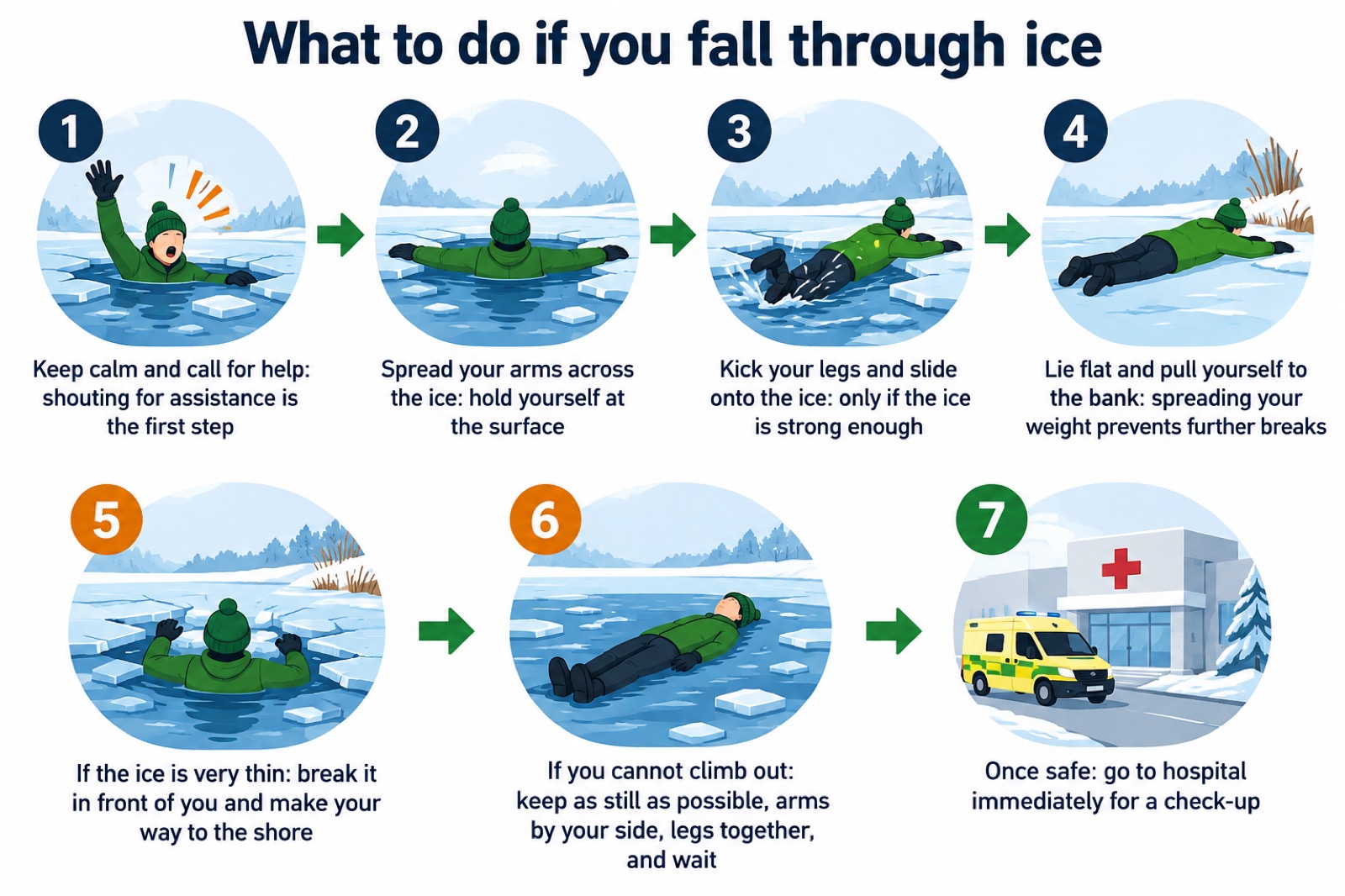
Fire and rescue guidance gives a consistent sequence for someone who has fallen through. Oxfordshire's fire and community safety advice and North Wales Fire and Rescue Service both set it out: keep calm and call for help; if no help is available, spread your arms across the surface of the ice; if the ice is strong enough, kick your legs and slide onto the ice; lie flat and pull yourself to the bank; if the ice is very thin, break it in front of you and make your way to the shore; if you cannot climb out, wait for help keeping as still as possible, with your arms pressed by your side and your legs together31. London Fire Brigade adds that once out of the water you should spread your weight across the ice as much as possible and move carefully to the edge23, and the London Fire Brigade winter guide says to roll away from the hole to prevent further cracks, then lie flat and pull yourself across the ice to the bank6.
Lying flat is the key technique throughout: it spreads your weight so the ice around the hole is less likely to break again. Once you are safe, North Wales Fire and Rescue Service says to go to hospital immediately for a check-up25, even if you feel fine, because the effects of immersion in freezing water are not always immediately obvious.
Helping someone who has fallen through, and when to call 999
The hardest instruction on this page is also the most important: do not go in after them. Forestry and Land Scotland says that if you see a person or animal in distress on ice, or who has fallen through, call for help but do not go in after them29. The London Fire Brigade winter guide puts it in capitals: do not go onto the ice or in the water if you see a person or animal in difficulty, and wait for the emergency services6. Oxfordshire's guidance gives the reason in a figure: over 50% of ice-related drownings involved an attempted rescue of another person or a dog31. The would-be rescuer is very often the person who dies.
What to do instead follows the same pattern everywhere. Phone 999. Manchester Fire and Rescue says to ask for the fire service if inland, or the coastguard if by the sea7, and Manchester's water safety guidance repeats the same routing32.
"Don't be tempted to go into the water, WAIT FOR THE EMERGENCY SERVICES."
Derbyshire's guidance covers the whole sequence in one instruction: if you see a person or animal fall through the ice, do not try and rescue them, telephone 999 immediately and ask for the fire and rescue service27. North Yorkshire Fire and Rescue Service says the same for any person or animal in trouble in icy water: stay on the bank and phone 99928. We cover this scenario in more detail on what to do if someone falls through ice.
After a fall on ice
Most falls on ice happen on pavements and paths, not through ice, and most do not need an ambulance. NHS falls guidance says that if you find someone who has fallen, keep them comfortable and warm, and carefully help them get up if they can, but do not try to lift them yourself9. Lifting someone awkwardly can injure both of you, and moving someone who has hurt a hip or a wrist can make the injury worse. If they cannot get up, or are in pain, dazed or injured, treat it as a medical emergency and seek help.
For the person who has fallen, NHS falls guidance also covers the longer view: wear shoes or slippers that fit well, do not slip off and have a good grip; use a non-slip mat in the bath or shower; consider safety rails on steps and grab rails in the bathroom; consider using a walking aid; and wear a personal alarm or carry a mobile phone so you can call for help if you fall when alone9. These matter most for older people and anyone with a history of falls, and they are worth acting on before winter rather than after a fall. Our first aid at home guide covers what to keep ready for treating minor injuries.
If someone has fallen through ice and been pulled out, the position is different: North Wales Fire and Rescue Service says to go to hospital immediately for a check-up once safe25, whatever the person says about feeling fine.
Where to get help and more information
Help in this area comes in three forms. In an emergency, phone 999, asking for the fire and rescue service if the emergency is inland, or the coastguard by the sea7. For preventing falls, NHS falls guidance sets out the footwear advice that applies at home as well as outdoors, including avoiding loose slippers and going barefoot9.
For prevention, the Scottish Ready campaign advises making sure people who need extra help have important phone numbers written down20, which is worth doing for older neighbours and relatives before a cold snap. The South Western Ambulance Service's guidance on supporting neighbours includes checking their footwear has good grip13, and some fire and rescue services offer free safe and well visits covering slips, trips and falls14. For the wider picture of cold weather risks to health, see our pages on staying well in cold weather and cold-health alerts, and for the broader subject, storms, snow and ice: a household guide.
Sources (32)
- Stay safe in ice, Met Office, 2026-10-28
- Met Office WeatherReady tips for snow and ice, Met Office, 2025-11-19
- Self-care at home advice, South Western Ambulance Service NHS Foundation Trust
- Winter preparedness, South East Coast Ambulance Service NHS Foundation Trust
- Falls guidance: weather safety, Oxford Health NHS Foundation Trust, 2026-09-15
- Extreme weather winter guide, London Fire Brigade, 2025-01
- Frozen water safety, Manchester Fire and Rescue Service, 2026-10-29
- Top tips for keeping warm and well this winter, UK Health Security Agency, 2026-04-28
- Falls, NHS, 2025-03-06
- Some of the reasons people call 999, Welsh Ambulance Services NHS Trust
- Keep winter well, Birmingham Community Healthcare NHS Foundation Trust, 2026-10-28
- Slips, trips and falls in the home, Cornwall Council, 2025-06-19
- Neighbour and vulnerable people support, South Western Ambulance Service NHS Foundation Trust, 2026-10-29
- Apply for a safe and well visit, Warwickshire County Council, 2026-10-29
- Snow and ice, Essex Prepared, 2026-10-29
- Stay warm and safe, Staffordshire County Council
- Snow wardens, Warwickshire County Council, 2026-10-29
- The snow code, Suffolk County Council, 2022
- The snow code, Derbyshire County Council, 2026-10-29
- Cold, snow and ice, Ready Scotland, 2026-03-25
- Cold weather advice, West Midlands Ambulance Service NHS Foundation Trust, 2026-05-20
- Winter water safety, Met Office, 2026-10-25
- Winter water safety, London Fire Brigade, 2026-10-25
- Frozen water dangers, Devon and Somerset Fire and Rescue Service, 2024-01-18
- Stay safe, stay off frozen water, North Wales Fire and Rescue Service, 2026-10-29
- Water safety, Devon and Somerset Fire and Rescue Service, 2026
- Keep warm in winter, Derbyshire County Council, 2026-10-29
- Ice safety, North Yorkshire Fire and Rescue Service, 2022-12-12
- Water safety, Forestry and Land Scotland, 2026-10-29
- NIFRS simple steps to stay safe, Northern Ireland Fire and Rescue Service, 2025-06-23
- Stay safe this winter, Oxfordshire County Council, 2026
- Water safety, Manchester Fire and Rescue Service, 2026-10-29
 Car Checks Before Winter
 Flood Warning Checklist
 First Steps After a Flood
 Beast from the East 2018
 Driving in Snow and Ice
 Which Roads Are Gritted
 Winter Home Preparation
 Staying Well in Cold Weather