Driving in snow and ice is the one winter task where the best decision is often not to do it at all. The Highway Code is blunt: in winter, check the local weather forecast for warnings of icy or snowy weather, and "DO NOT drive in these conditions unless your journey is essential"1. If you must go, the two numbers that should shape everything you do are ten and one hundred: it can take ten times longer to stop on ice than on a dry road2, and fog lights come into play when visibility drops below 100 metres3.
The rest of this page follows the journey in order: deciding whether to travel, clearing the car properly, what to carry, how to pull away, brake and handle a skid, where ice hides, and what to do when roads close. The advice comes from the Highway Code, National Highways, the Met Office, fire and rescue services and councils across the four nations, and it is consistent between them.
Stay off the roads unless the journey is essential
Every official body that advises on winter driving starts in the same place. The Highway Code tells drivers not to set out in icy or snowy conditions unless the journey is essential1. North Yorkshire Fire and Rescue Service adds the practical test: if your journey is not essential and an ice or snow warning is in place, do not drive, and check local forecasts for warnings before you decide8.
That test matters because ice and snow do not need to be dramatic to be dangerous. Ready Scotland notes that cold, snow and ice create transport disruption9, and Manchester Fire and Rescue Service frames the first question of any winter journey as simply: "Firstly, ask yourself, is your journey really necessary?"10. If the honest answer is no, the safest place for you and your car is off the roads altogether.
If the journey is essential, there are still ways to reduce the risk before you turn the key:
- Check the forecast first. The Highway Code's winter advice begins with checking the local weather forecast for icy or snowy warnings1. Our page on Met Office weather warnings explains what yellow, amber and red mean.
- Consider public transport. Official winter driving advice suggests asking whether you could use public transport instead of taking the car7.
- Stick to main roads. National Highways advises sticking to main roads where you can and only travelling if necessary during severe winter weather2.
- Keep an eye on local conditions. Local authority advice is to watch conditions as they develop and make essential journeys only11.
If you are unsure whether to go at all, our page on whether to delay your journey in bad weather works through that decision in more detail.
Before you set off: clear every window, mirror, light and the roof
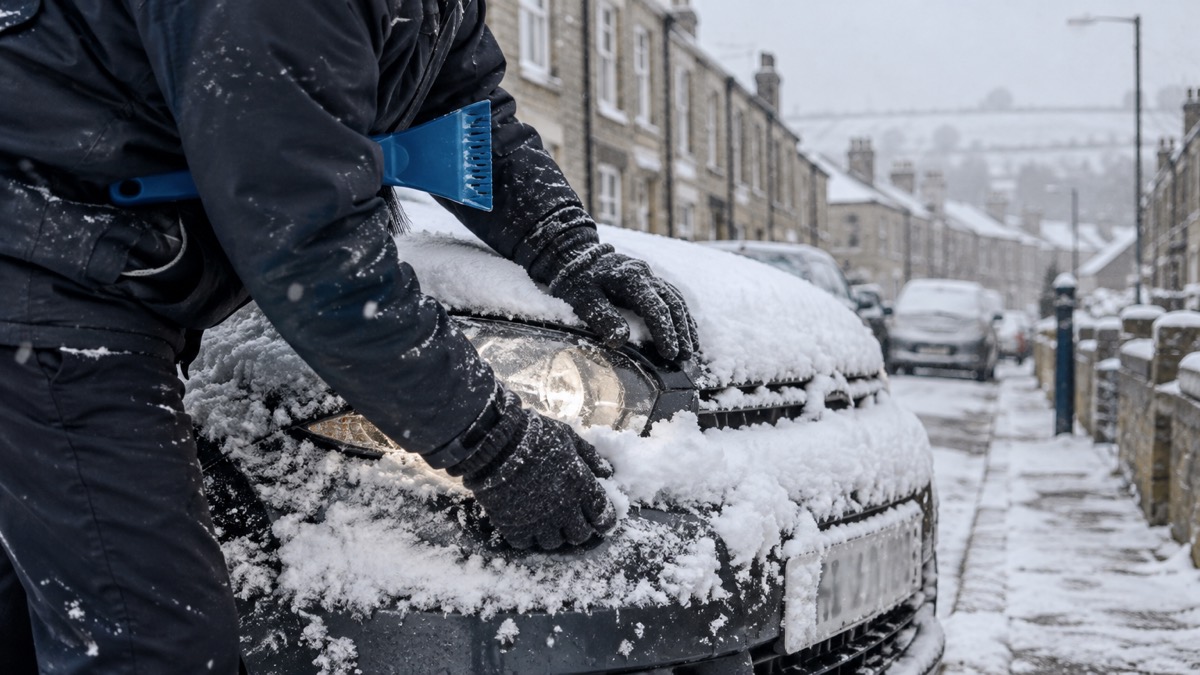
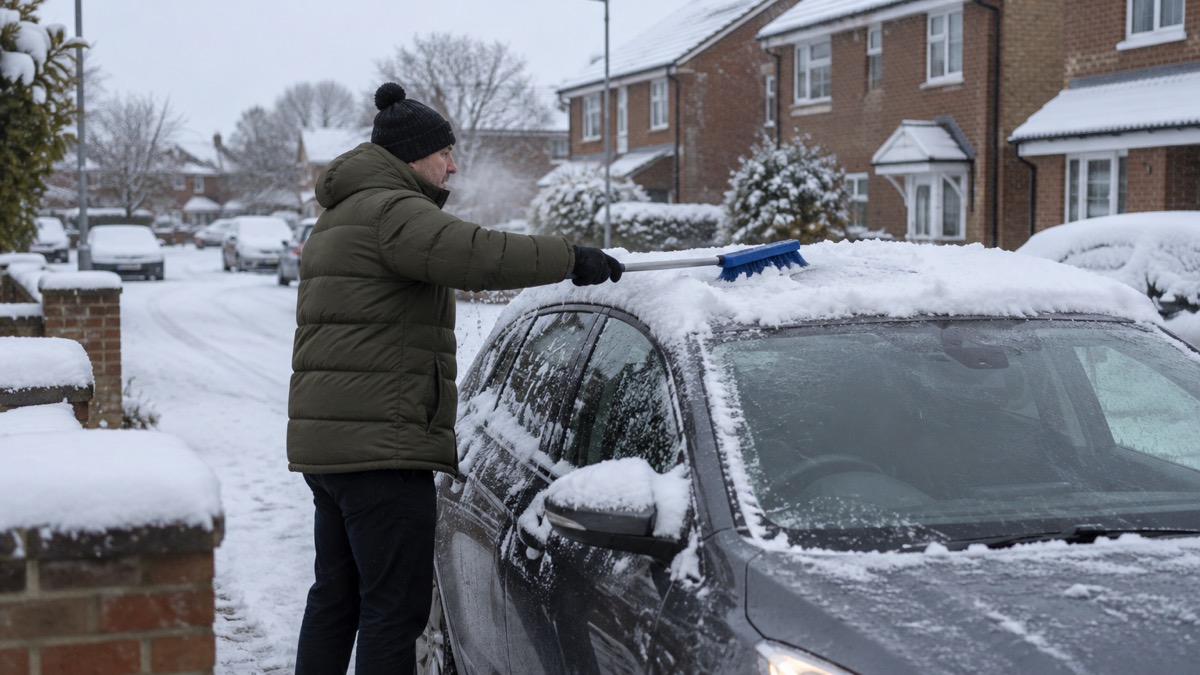
Clearing the car is not a quick scrape of a porthole in the windscreen. Nottinghamshire County Council is explicit: clear all windows using a scraper and de-icer, and "don't drive off with a tiny hole cleared in the windscreen"6. Transport Scotland's advice is that all windows should be demisted and fully cleared of any frost, snow or ice before setting off12, and Anglesey Council adds that the heater should be blowing warm air before you move off13.
North Yorkshire Fire and Rescue Service lists the full checklist: mirrors, windows, the windscreen front and back, and lights, all clear of snow and ice and demisted8. Cheshire Fire and Rescue Service, summarising the Highway Code, advises keeping the lights, windows and mirrors clean and free from ice and snow, and checking the vehicle is well maintained and serviced14.
The roof is the part people forget. Devon and Somerset Fire and Rescue Service warn: "Clear snow off the roof of your vehicle too, as it might fall and obscure your vision during your journey"7. A sheet of snow sliding down the windscreen at speed, or blowing off into the path of another driver, turns a cleared car into a hazard again.
Winter items to keep in the car
If you do have to travel, carry a kit that would let you survive a long wait if you get stuck or break down. The advice from councils and fire services across the UK overlaps heavily, which makes the core list easy to assemble. Northern Ireland's nidirect guidance, for example, advises carrying an ice scraper and de-icer, a torch and spare batteries or a wind-up torch, an in-car phone charger, warm clothes and blankets, a high-visibility vest or jacket, boots, a first aid kit, jump leads, an empty fuel can, a shovel if snow is possible, a road atlas, sunglasses for low winter sun, and two reflective warning triangles16.
| Item | Why it earns its place |
|---|---|
| Ice scraper and de-icer | Clearing windows fully and safely, without water16 |
| Warm clothes, boots, blanket | Keeping warm if you are stuck for hours17 |
| Torch and spare batteries | Light and visibility in the dark16 |
| Fully charged phone and in-car charger | Calling for help and checking travel updates18 |
| Food, water and a hot drink in a flask | Energy and warmth during a long wait18 |
| First aid kit | Dealing with minor injuries16 |
| Shovel | Digging out if you get stuck in snow16 |
| Jump leads | A flat battery is a common winter failure16 |
| Warning triangle and hi-vis vest | Making you visible if you stop on or near a road16 |
| Road atlas | Coping with unplanned diversions when phone signal fails18 |
Ceredigion County Council suggest a tow chain or rope and a sleeping bag as well as the usual blanket17. Oxfordshire's fire and community safety team suggest the same core kit: torch, blanket and warm clothes, food and drink, a first-aid kit, a spade, and a warning triangle and high-visibility vest19. Our wider guide to an emergency kit for the household covers what to keep at home alongside what lives in the car.
If you live or work somewhere prone to high snowfall, North Yorkshire Fire and Rescue Service note that winter tyres, snow chains or snow socks may be worth considering11. Our comparisons of winter tyres or all-season tyres and snow chains or snow socks set out the trade-offs.
Stopping distances: ten times longer on ice
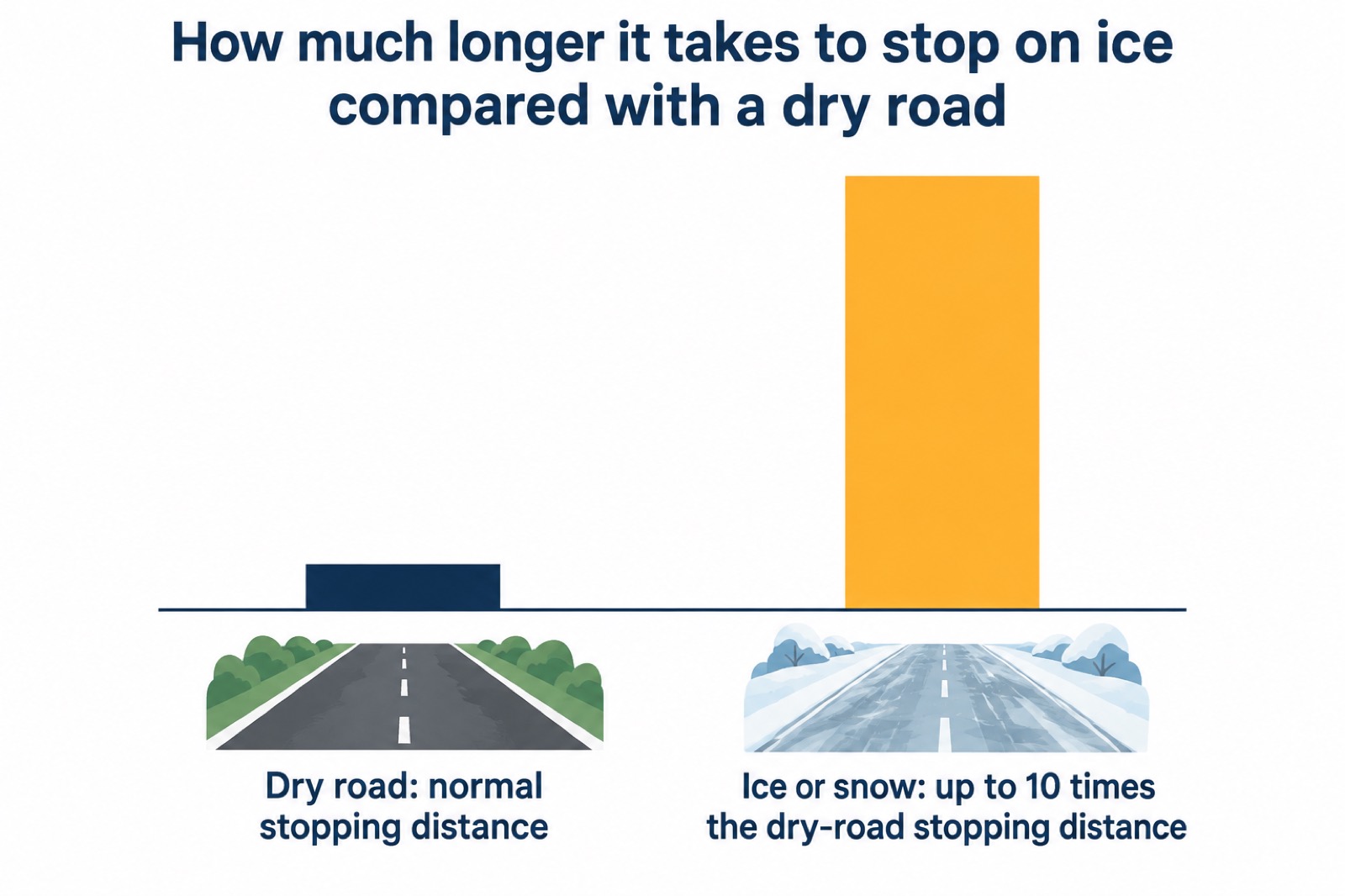
The single most important number in winter driving is ten. It appears, with striking consistency, in official guidance from every part of the UK. National Highways: "it can take 10 times longer to stop in icy conditions"2. Sefton Council: "Your stopping distance is increased ten times when driving in snow and ice"20. Transport Scotland: stopping distance in icy conditions is ten times more than in dry conditions21. Ready Scotland: stopping distances can be 10 times greater in cold and icy conditions9. The Highway Code for Northern Ireland: keep well back from the road user in front, as stopping distances can be ten times greater than on dry roads22.
What that means in practice is that the gap you leave has to grow enormously. The Met Office advises that in snow you may need 10 times the normal gap between your car and the car in front4. Anglesey Council frame the speed rule the same way: "Only travel at a speed at which you can stop within the distance you can see to be clear"13. Cheshire Fire and Rescue Service make the same point: in snow or icy conditions it will take longer to stop, so always drive at a speed appropriate for the conditions14.
Two things make this worse than it sounds. First, junctions: National Highways advise extra caution at junctions where road markings may not be visible under snow23. Second, bends: the South East Coast Ambulance Service NHS Foundation Trust warn that braking on an icy or snow-covered bend is extremely dangerous, because centrifugal force continues to pull the vehicle outwards while the wheels cannot grip, which can cause a spin24. The answer to both is the same: lose your speed well before the junction or the bend, not on it. Our page on stopping distances on ice works through the figures in more detail.
Pulling away and climbing hills: second gear and low revs
On a slippery surface, the enemy is wheelspin, and the defence is gentleness. Nottinghamshire County Council and Sefton Council give the same starting instruction: pull away in second gear, easing your foot off the clutch gently to avoid wheel-spin6. Once moving, the Met Office advise accelerating gently, using low revs and changing up to a higher gear as quickly as possible11. Transport Scotland's advice runs in the same direction: drive at a slow speed in as high a gear as possible, and accelerate and brake very gently12.
The reason is mechanical. High revs in a low gear deliver more torque to the wheels than ice can transmit, and the tyres spin instead of gripping. A higher gear and low revs soften the force at the point where rubber meets road. The same logic governs hills: build up gentle momentum on the approach rather than arriving at the slope too fast, and avoid changing gear on the hill itself, because the change in force as you shift can break traction at the moment you least want it.
Slowing down uses the mirror image of the technique. The South East Coast Ambulance Service NHS Foundation Trust advise lifting off the gas early to let speed fall enough to select a lower gear, and if you must brake, using very gentle pressure and depressing the clutch early to avoid stalling24. Every input, on the pedals or the wheel, should be smaller and slower than it would be on a dry road.
Braking without locking the wheels
Braking is where ice catches drivers out, because the instinct in an emergency is exactly the wrong one. Sefton Council state the danger plainly: "Do not brake heavily, it will just lock your wheels and you will skid further, consider changing to a lower gear"20. The Met Office agree: try not to brake suddenly, as it may lock up your wheels and you could skid further4. Nottinghamshire County Council give the technique for stopping safely: get into a low gear earlier than normal when braking on ice or snow, allow the vehicle's speed to fall, and use the brake pedal gently6. Oxfordshire's fire and community safety advice matches it word for word19.
The sequence to practise mentally before you need it is therefore:
- See the hazard early, because you are scanning far ahead.
- Lift off the accelerator early and let the speed fall24.
- Change down to a lower gear sooner than you normally would6.
- Apply the brake gently, with the clutch depressed early if needed to avoid stalling24.
If you do have to brake hard and the wheels lock, ease off and reapply gently rather than staying on the pedal. The Met Office's advice for a necessary stop in snow is to pump the brakes rather than slamming them on3. The aim throughout is to keep the wheels turning, because a turning wheel can still steer; a locked one cannot.
If the car skids
A skid is frightening, but the response is short and simple, and every official source gives the same one. Devon and Somerset Fire and Rescue Service: "Never brake if the vehicle skids. Instead, ease off the accelerator and steer slightly in the direction of the skid until you gain control"7. Their news advice repeats it word for word7. Nottinghamshire County Council: ease off the accelerator but do not brake suddenly if skidding occurs6. The Met Office: if you start to skid, gently ease off the accelerator and avoid braking3.
Steering "in the direction of the skid" means steering towards where the back of the car is sliding, so the wheels point the way the car is actually travelling. It feels counter-intuitive, but it lets the tyres regain grip. Braking mid-skid locks the wheels and removes the last of your control, which is why every source forbids it.
The best defence against a skid is spotting ice before you reach it. The Highway Code describes the warning signs: "If the steering feels unresponsive this may indicate ice and your vehicle losing its grip on the road. When travelling on ice, tyres make virtually no noise"1. Traffic Scotland repeat the same advice, adding that you can check your grip by choosing a safe place to brake gently21. Northern Ireland's Highway Code guidance carries the same test22. If the steering goes light and quiet, ease everything off and let the speed bleed away. Our page on what to do if you hit black ice covers the worst case.
Lights in heavy snow: dipped headlights and fog lights below 100 metres
Snow cuts visibility in two directions: you see less, and others see you less. The Met Office advise using dipped headlights when visibility is reduced4, and Ceredigion County Council say the same for rain, snow and fog17. The South East Coast Ambulance Service NHS Foundation Trust put it simply: visibility will probably be reduced, so use dipped headlights24.
The crucial point for modern cars is that daytime running lights are not enough. North Yorkshire Fire and Rescue Service warn: "When driving in heavy snow, make sure you use your dipped headlights. Don't rely on daytime running lights as they do not always put your rear lights on"11. A car running only daytime running lights in falling snow may be invisible from behind.
Fog lights have a specific threshold. Transport Scotland advise that in really foggy conditions, with visibility of less than 100 metres, you switch your fog lights and rear high-intensity lights on, and remember to switch them off when visibility improves12. Sefton Council give the same 100-metre rule20. Fog is often patchy, so Transport Scotland also warn against speeding up as visibility improves12. Our page on when to use fog lights covers the rules in full.
One further winter light hazard is the sun itself. North Yorkshire Fire and Rescue Service note that in winter the sun rises and sets during the morning and evening commute, and its low angle pushes rays below the sun visor and into drivers' eyes8. Sunglasses in the car kit are not a luxury in December.
Where ice catches drivers out
Not all road surfaces freeze equally, and knowing where ice lingers is as valuable as knowing how to drive on it. The Highway Code for Northern Ireland warns that ice forms more easily on hilly or exposed roads, roads that pass under or over a bridge, and roads shaded by trees or buildings16. Mid and West Wales Fire and Rescue Service add the country-road version: on colder days be particularly careful, because trees and hedges can stop the sun from reaching road surfaces, which may still be icy when all around has thawed15.
North Yorkshire County Council add the gritted-road caveat: beware of dawn frost and fresh snow on gritted surfaces, and beware of "wet looking" patches or cold spots under trees, near rivers and on bridge decks, where temperatures can be lower than the surrounding area25. The South East Coast Ambulance Service NHS Foundation Trust describe the same trap: a road will often have isolated patches of frost or ice after most of the road has thawed, and this commonly occurs under bridges24.
Gritting has limits, and those limits change what a treated road can promise. The shaded bridges, flyovers and tree-lined stretches where ice catches drivers out are the same places where a salted surface can still catch you out, so keep the caution described above even on roads you know have been treated. A gritted road at dawn is not a guaranteed road.
On untreated roads, even the wheel tracks of other cars can be a trap. North Yorkshire Fire and Rescue Service warn that if the road has not been gritted, take extra care driving in the wheel-tracks of other vehicles, because compressed snow is likely to be more icy than fresh snow11. Our page on which roads are gritted and how councils decide explains the priority system behind all this.
Gritters: keep your distance and do not overtake
Gritters and snowploughs are working vehicles moving slowly on purpose, and they deserve a wide berth. The Met Office advise taking care around gritters and not being tempted to overtake3. Mid and West Wales Fire and Rescue Service add: take care when overtaking vehicles spreading salt or other de-icer, particularly on a motorcycle or bicycle15.
National Highways give the detail that surprises drivers: when clearing snow with snowploughs fitted, gritters may be found travelling in any lane at speeds between 5 and 40mph23. Where possible, message signs will inform you that salt spreading or snowploughing is taking place23. The road behind a gritter is being treated; the road ahead of it is not, which is the strongest argument for patience. Our page on whether to overtake a gritter or snowplough works through the decision.
If you park on the road during gritting hours, Anglesey Council ask that you leave at least three metres of width for the gritting vehicle to get past26. Surrey County Council, for scale, run around 1,775 miles of road when gritting their Priority 1 routes27.
Road closures and travel warnings
Before you travel in snow, check what the roads are doing. Traffic Wales advise checking their traffic alerts for road restrictions or closures before setting off, and checking with your local authority for closures on non-trunk roads28. North Wales Fire and Rescue Service note that travel warnings are broadcast on local TV and radio, and that the North Wales Police website carries the latest on road closures29. National Highways' own traffic information service covers England's strategic road network23.
The arrangements differ slightly by nation, but the action is the same everywhere:
| Nation | Where to check before travelling |
|---|---|
| England | National Highways traffic information for motorways and major A-roads30 |
| Wales | Traffic Wales alerts, plus your local authority for non-trunk roads28 |
| Scotland | Traffic Scotland winter travel information21 |
If you are caught out and roads close around you, the Met Office have specific advice for getting stuck: stay with your car, and tie something brightly coloured to your aerial3. If the car will not move at all, Nottinghamshire County Council advise clearing the snow from the wheels and putting a sack or old rug in front of the driving wheels to give grip6. Our page on what to do if your car gets stuck in snow covers this in full, and our guide to trains, buses and bridge closures in bad weather covers the wider picture if you abandon the car and switch to public transport.
Getting ready for winter, before the snow arrives
The best time to deal with winter driving is weeks before the first frost. Cheshire Fire and Rescue Service, reflecting the Highway Code, advise checking that the vehicle is well maintained and serviced, and keeping lights, windows and mirrors clean14. A battery that struggles in autumn will fail in a cold snap, so our page on how to stop your car battery going flat in winter is worth reading early, and our car checks before winter checklist gathers the lot.
Tyres are the other big decision. North Yorkshire County Council note that driving with winter tyres can reduce your stopping distance on ice or snow by up to 10 metres25, and North Yorkshire Fire and Rescue Service suggest winter tyres, snow chains or snow socks for those who live or work in areas prone to high snowfall11. The right choice depends on where you live and how often you genuinely need to travel in snow, which is why we treat it as a comparison rather than a recommendation: winter tyres or all-season tyres, and snow chains or snow socks. Tread depth matters all year round and our page on tyre tread depth for winter explains the requirement.
Finally, remember that driving is only one part of getting through a cold snap safely. Our guides to getting your home ready for cold weather, staying well in cold weather and walking on ice cover the rest of the household's winter, and the storms and snow section brings them together.
Sources (30)
- Driving in adverse weather conditions (rules 226 to 237), The Highway Code, GOV.UK
- Travelling in snow and ice, National Highways
- Travelling in heavy snow and ice, Met Office
- Driving in severe weather, Met Office
- Driving in snow and icy conditions, Devon and Somerset Fire and Rescue Service
- Safe driving in winter, Nottinghamshire County Council
- Driving in snow and icy conditions, Devon and Somerset Fire and Rescue Service
- Help keep our roads safer this winter, North Yorkshire Fire and Rescue Service
- Cold, snow and ice, Ready Scotland
- Winter driving, Manchester Fire and Rescue Service
- Staying safe in the snow, North Yorkshire Fire and Rescue Service
- Driving in bad weather, Transport Scotland
- Winter driving tips, Isle of Anglesey County Council
- Driving in adverse weather, Cheshire Fire and Rescue Service
- Winter driving, Mid and West Wales Fire and Rescue Service
- Ice weather warning: information and advice, nidirect
- Snow and ice severe weather advice, Ceredigion County Council
- Winter weather roads and travelling FAQs, Argyll and Bute Council
- Driving in winter, Oxfordshire County Council
- Winter road safety, Sefton Council
- Driving in snow and ice, Traffic Scotland
- Driving in adverse weather conditions (226 to 237), nidirect
- Travelling in snow and ice, Traffic England
- Winter preparedness, South East Coast Ambulance Service NHS Foundation Trust
- Winter, summer and wet weather driving tips, North Yorkshire County Council
- Winter gritting, Isle of Anglesey County Council
- Salting and gritting, Surrey County Council
- Driving in snow and ice, Traffic Wales
- Driving in snow, North Wales Fire and Rescue Service
- Driving in winter | Northumberland County Council, Northumberland County Council
 Car Checks Before Winter
 Flood Warning Checklist
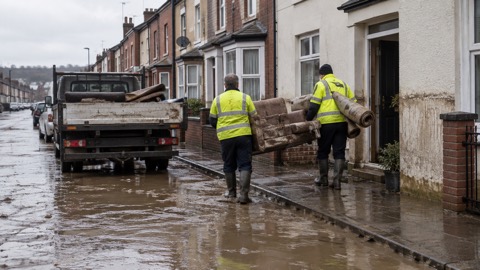 First Steps After a Flood
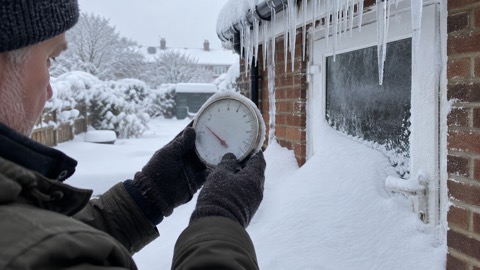 Beast from the East 2018
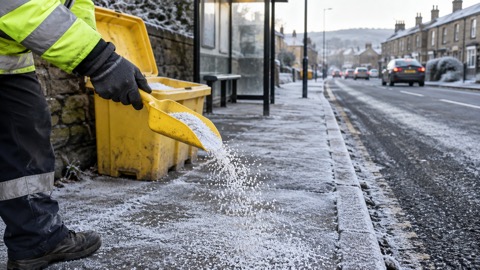 Which Roads Are Gritted
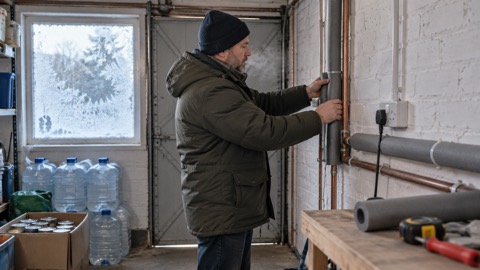 Winter Home Preparation
 Staying Well in Cold Weather
 Walking on Ice Safely