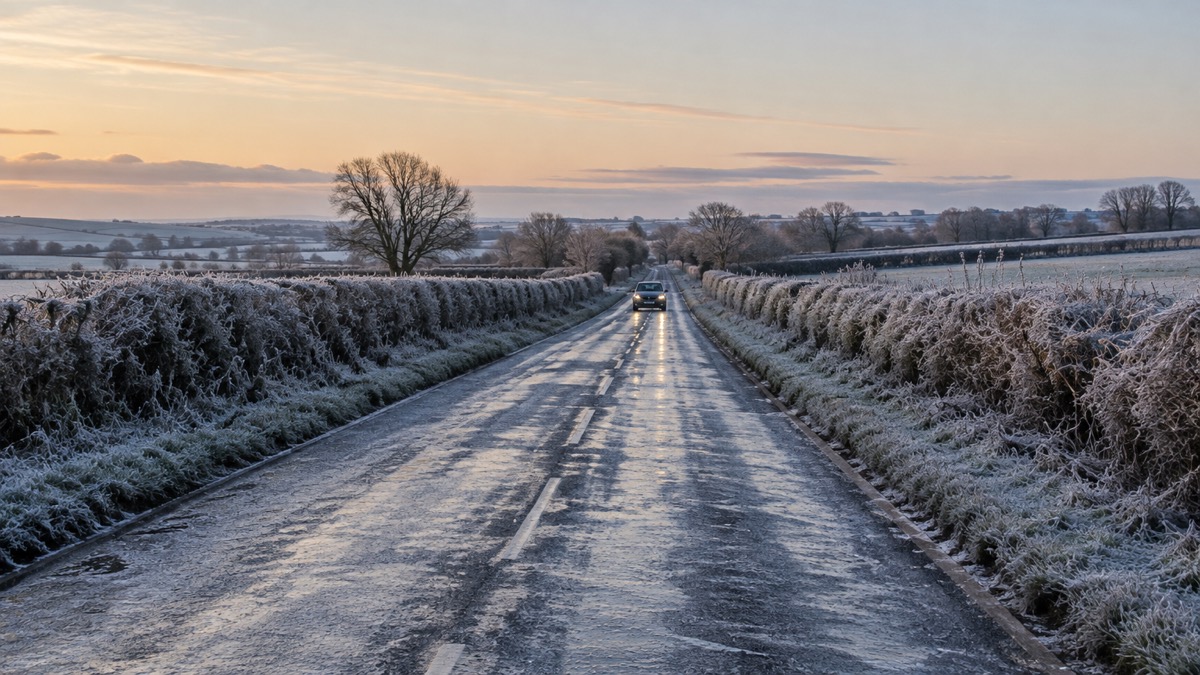
On ice, your car can take up to 10 times longer to stop than it would on a dry road1. That is the single figure to hold on to. The Met Office says it can take 10 times longer to stop in snowy or icy conditions, so allow extra room2. Winter driving advice comes down to the same three things: slow down, leave a much bigger gap, and give yourself more time3.
The comparison is with a dry road. In the wet, official guidance says stopping distances are at least double those on a dry road4. On ice or snow they can be ten times greater5. So the room you need roughly doubles in rain and multiplies by ten on ice, and the gap you leave has to grow with it.
What follows is what that means in practice: how to drive and leave space when the roads are icy, how to plan a journey so you are not caught out, and where the official advice comes from so you can check it for yourself.
Why ice multiplies your stopping distance
Tyres stop a car by gripping the road, and ice takes most of that grip away. The result is the tenfold figure that runs through official winter driving advice. Derbyshire County Council says it can take up to 10 times longer to stop in icy conditions compared to being on a dry road1. North Wales Fire and Rescue Service puts it as 10 times further9. Transport Scotland says your stopping distance is increased 10 times when driving in snow and ice10.
The same message comes from every direction. Mid and West Wales Fire and Rescue Service advises driving at a slow speed in as high a gear as possible and accelerating and braking very gently6. Somerset Council says braking distances can increase tenfold in icy conditions5. Manchester Fire and Rescue Service says braking distances can increase tenfold on ice compared to a dry road11. The Met Office says it can take 10 times longer to stop in snowy or icy conditions, so allow extra room12.
Two practical points follow. First, the figure is a comparison, not a measurement: it tells you the gap you thought was generous is not. Second, it applies to snow as well as ice. Ceredigion County Council's advice covers both, saying it can take 10 times longer to stop in snowy or icy conditions13.
How to drive and leave space when roads are icy
The core technique is the same wherever you read it. Drive at a slow speed in as high a gear as possible, and accelerate and brake very gently6. A high gear keeps the wheels from spinning; gentle inputs keep them from locking. Transport Scotland adds that you should not brake heavily, because it will lock the wheels and cause skidding, and that you should consider changing to a lower gear10.
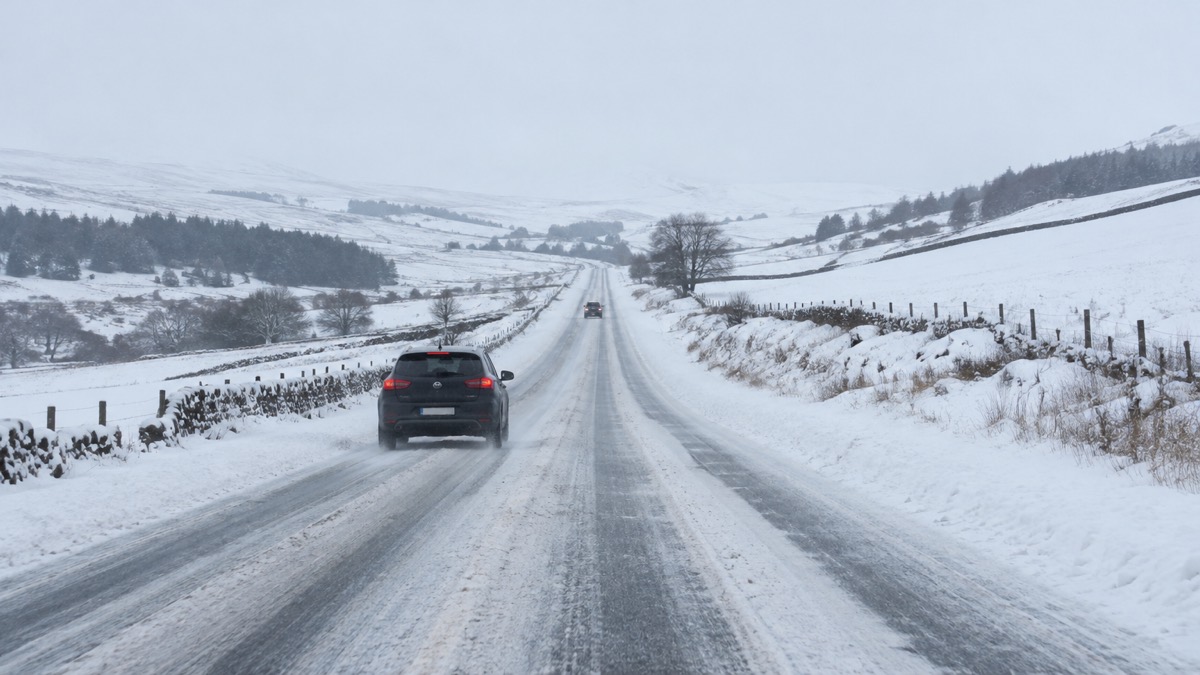
Steering matters as much as braking. Reduce your speed, steer gently and avoid harsh braking, and allow extra room to slow down and stop1. South Western Ambulance Service says to reduce your speed and leave extra space between you and other vehicles15. If you do need to stop on ice or snow without locking your wheels, Oxfordshire Fire and Community Safety advises getting into a low gear earlier than normal, letting your speed drop, and using the brake pedal gently16.
The Met Office advises reducing your speed and leaving extra space between you and other vehicles12. If you start to skid, gently ease off the accelerator and avoid braking; if braking is necessary, pump the brakes rather than slamming them on17.
- Before you set off: check your grip by choosing a safe place to brake gently; if the steering feels unresponsive, that may indicate ice4
- On the move: drive especially slowly on bends, brake gradually on the straight before a bend, and steer smoothly6
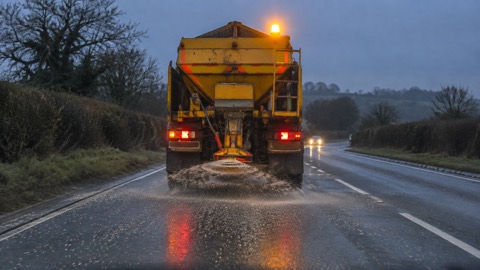
- Around gritters: take care, and do not be tempted to overtake12
- Listen: travel bulletins and variable message signs tell you what the road ahead is doing6
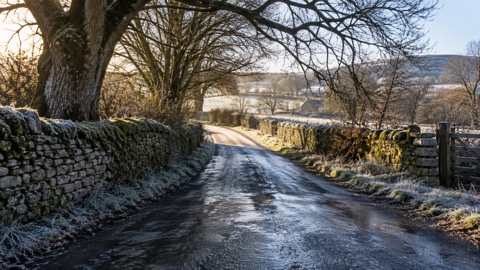
"when travelling on ice, tyres make almost no noise"
That silence is a warning in itself. If the road has gone quiet under your tyres, treat it as ice.
Stopping distance in snow, and what slush does to grip
Snow and ice behave differently under a tyre, but the official advice treats them together for stopping distance: it can take 10 times as long to stop in these conditions12. The Met Office's snow and ice guidance says the same and adds the skid technique: slow down, ease gently off the accelerator if you skid, and pump the brakes rather than slam them on12.
The speed rule is the one to carry into any snowy journey. Slow right down and only travel at speeds at which you can stop within the distance you can see to be clear7. On a road where you cannot see far, that alone sets your speed.
Slush is where grip becomes unpredictable. West Midlands Ambulance Service's winter cycling advice says to choose roads that have been gritted or are clear of snow and ice, be cautious of black ice, and keep away from the edge of the road where slush accumulates18. The same logic applies behind the wheel: the slushy margins are the least reliable part of the lane, so keep your steering smooth and your speed down near them.
Winter tyres are worth knowing about, though they are a choice rather than a rule. North Yorkshire Council says driving with winter tyres can reduce your stopping distance on ice or snow by up to 10 metres19. That is a reduction, not a cure: the tenfold figure still governs how you drive.
Allow plenty of time for winter journeys
The simplest protection against ice is not being on it in a hurry. NHS guidance says to allow extra time for journeys20. Staffordshire County Council says to keep your distance from other vehicles, be patient and allow for extra time on your journey3. Traffic Wales says to give yourself extra time to get to your destination safely21.
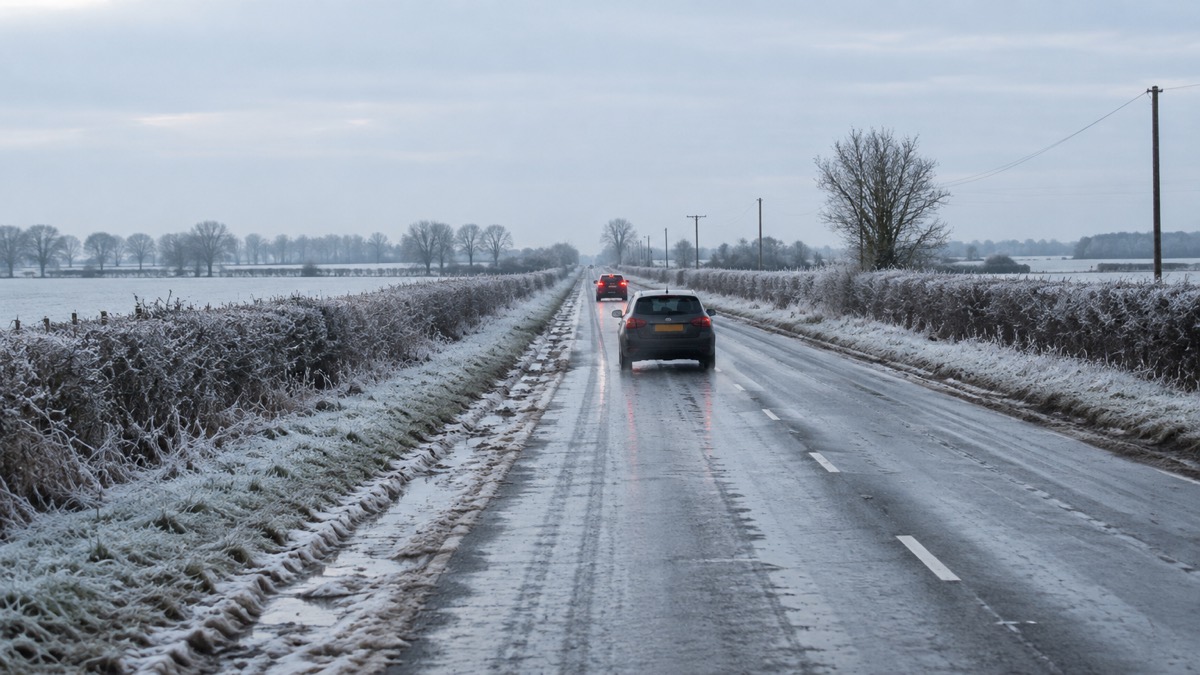
Planning starts before you leave. NHS England's cold weather advice says to check the weather forecast and plan your route, allow extra time so you can drive safely, and, if snow or ice is expected, consider delaying your journey until it clears8. The Met Office says to plan your route when there is an ice warning in place22. Northern Ireland's Highway Code rules go further: in winter, check the local forecast for warnings of icy or snowy weather and do not drive in these conditions unless your journey is essential4.
- Check the forecast before you decide to go8
- Plan your route when an ice warning is in place22
- Consider delaying if snow or ice is expected8
- Stick to main roads where you can, and only travel if necessary in severe winter weather23
- Allow extra time so you are not tempted to make it up with speed20
Where official advice on icy roads comes from
The tenfold figure is not one organisation's opinion. It appears in Highway Code advice reproduced by fire and rescue services, in council winter service pages and in Met Office travel advice, which is why it is safe to treat as the standard6.
In England, councils run winter services on a priority network and publish their own advice. Bedford Borough Council's winter roads pages explain how it keeps winter roads safe24. Somerset Council's gritting pages set out its precautionary network and repeat the tenfold braking figure5. The Department for Transport's Snow Code covers clearing snow and ice from paths outside your home, and is separate from driving advice25.
Scotland, Wales and Northern Ireland each publish their own guidance alongside the UK-wide Highway Code. Transport Scotland's driving in bad weather pages and Ready Scotland's cold, snow and ice advice cover Scottish journeys10. Traffic Wales and the Welsh Government's Ready campaign cover Wales23. In Northern Ireland, nidirect sets out the Highway Code rules on driving in adverse weather, rules 226 to 2374.
For the wider picture, our guide to driving in snow and ice covers the full set of winter road skills, and which roads are gritted explains how councils decide what gets treated. If you are weighing up whether to go at all, should I delay my journey in bad weather? walks through the decision.
Sources (27)
- Winter driving and riding tips, Derbyshire County Council, 2026-10-29
- Driving in snow and ice, Transport Scotland, 2026-10-29
- Winter driving, Staffordshire County Council, 2026
- Driving in adverse weather conditions (rules 226 to 237), nidirect, 2026-09-22
- Gritting, Somerset Council, 2026-10-28
- Diogelwch ar y ffyrdd yn y gaeaf, Mid and West Wales Fire and Rescue Service, 2026-10-29
- Driving in snow and icy conditions, Devon and Somerset Fire and Rescue Service, 2026-01-02
- Cold weather warning advice, North Cumbria Integrated Care NHS Foundation Trust, 2026-10-29
- Driving in snow, North Wales Fire and Rescue Service, 2026-10-29
- Driving in bad weather, Transport Scotland, 2026-10-29
- Winter driving, Greater Manchester Fire and Rescue Service, 2026-10-29
- Are You Ready booklet, Culham Parish Council, 2025-09
- Snow and ice, Ceredigion County Council, 2026-10-29
- Winter news, Trafficwatch NI, 2026-10-28
- Winter travel and driving safety advice, South Western Ambulance Service NHS Foundation Trust, 2026-10-29
- Driving in winter, Oxfordshire County Council, 2026
- Travelling in heavy snow and ice - Met Office, Met Office
- Cold weather advice, West Midlands Ambulance Service, 2026-05-20
- Winter, summer and wet weather driving tips, North Yorkshire Council, 2026
- Weather safety, Oxford Health NHS Foundation Trust, 2026-09-18
- Driving in snow and ice, Traffic Wales, 2026
- Stay safe in ice, Met Office, 2026-10-28
- Travelling safely in winter, Traffic Wales, 2026
- Keeping winter roads safe, Bedford Borough Council, 2026
- Clearing paths and driveways, Met Office, 2026-10-25
- Cold, snow and ice, Ready Scotland, 2026-03-25
- Driving in adverse conditions, Dorset and Wiltshire Fire and Rescue Service, 2024-02-07
 Car Checks Before Winter
 Flood Warning Checklist
 First Steps After a Flood
 Bedroom Temperature at Night
 Hitting Black Ice
 Car Battery in Winter
 Car Stuck in Snow
 Clearing Snow and Ice Safely
 Clearing Snow from Pavements
 Using Fog Lights
 Signs of Frostbite
 Falling Through Ice
 De-Icing a Frozen Windscreen
 Request or Refill a Grit Bin
 Overtaking a Gritter