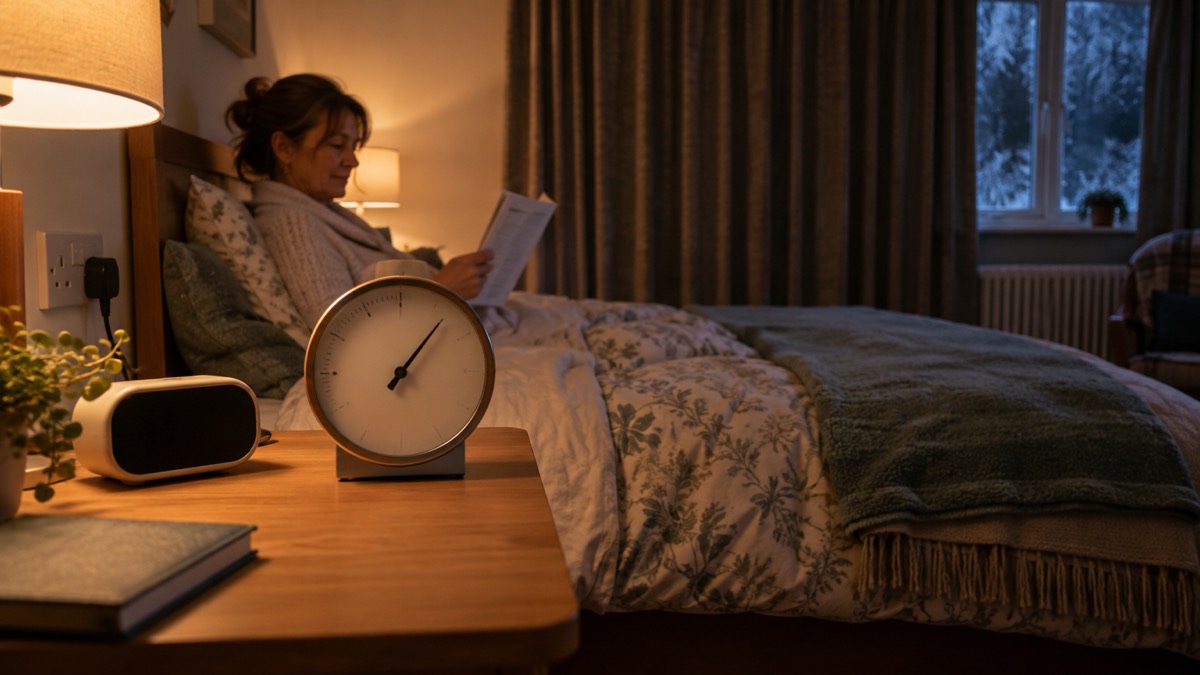
The short answer is at least 18°C. Official health guidance across the UK is consistent on this: your bedroom should be kept above 18°C overnight, and if you can, at 18°C all night1. That figure is the same whether you read it in a council winter guide, an NHS trust leaflet or a fire and rescue service safety page.
It matters because cold bedrooms are not just uncomfortable. Cold thickens the blood and raises blood pressure, and breathing cold air can increase the risk of chest infections3. Cold homes are linked to more heart attacks, strokes, respiratory illness, flu, falls and hypothermia4. Keeping warm over winter helps prevent colds, flu and more serious conditions such as heart attacks, strokes, pneumonia and depression5.
The practical job is to hold the bedroom at or above 18°C through the night, not just at bedtime. That means heating the room before you turn in, closing curtains and doors to keep the warmth in, and knowing what to do if the heating fails during a cold snap. This page sets out the figures, who needs them most, how to check your room, and where to get help.
Keep your bedroom at 18°C or above overnight
The 18°C figure appears again and again in official winter guidance, and it is given specifically for the bedroom. Derbyshire County Council's snow buddies guidance says your bedroom should be kept above 18°C overnight1. Suffolk Fire and Rescue Service's Winter Matters advice says during the night try to keep the temperature above 18°C in your bedroom2. Cumberland Council's keeping warm guidance puts it at above 18°C (65°F) in your bedroom at night9. The South Western Ambulance Service advises keeping your bedroom at 18°C all night if you can, and reducing drafts10.
The same number comes from NHS and government sources. The UK government's top tips for keeping warm and well say to heat rooms you spend a lot of time in, such as the living room or bedroom, to at least 18°C11. NHS Cheshire and Merseyside says if you can, this should be at least 18°C in the rooms that you regularly use, such as your living room and bedroom12. NHS Inform in Scotland gives the same figure: at least 18°C in the rooms that you regularly use13.
So the target is not a range you have to guess at. It is a floor: 18°C, overnight, in the room where you sleep. Some people will be comfortable a little warmer, and the Centre for Sustainable Energy notes that 18°C is the recommended night time bedroom temperature, though some people may be more comfortable in a slightly cooler room14. For most households, though, the safe approach is to aim for 18°C and not let the room fall below it.
Heat the rooms you use most, including the bedroom
You do not need to heat the whole house to the same temperature. Official advice is to concentrate warmth where you spend time. The government's winter wellness leaflet says heat your home to at least 18°C in the rooms you regularly use, such as your living room and bedroom15. The Prepare campaign says the same: heat rooms you spend the most time in, such as the living room or bedroom, to at least 18°C16. The Met Office's keeping warm guidance says to try to heat rooms you spend a lot of time in, such as the living room or bedroom, to at least 18°C3.
If you cannot heat every room, there is specific guidance on what to do instead. The Met Office says: if you can't heat all the rooms you use, heat the living room throughout the day and your bedroom just before you go to bed, and close curtains and shut doors to keep heat in the rooms you use most3. That is a practical sequence: keep the main living space warm while you are up, then bring the bedroom up to temperature shortly before you turn in.
The living room figure is usually given as a range or a slightly higher number. Nottinghamshire County Council says your living room should be between 18 and 21°C6. The NHS in Northern Ireland suggests heating your main living room to around 18 to 21°C (64 to 70°F)5. One NHS trust gives 21°C through the day and at least 18°C at night7. The rest of the house can be cooler: Humber Local Resilience Forum guidance suggests at least 16°C (61°F) for the rest of the house8.
| Room | Suggested temperature | Source |
|---|---|---|
| Bedroom, overnight | Above 18°C (65°F) | 1 |
| Living room, daytime | 18 to 21°C | 6 |
| Living room, day and night | 21°C day, at least 18°C night | 7 |
| Rest of the house | At least 16°C (61°F) | 8 |
The living room figure is given as 18 to 21°C by Nottinghamshire County Council and the NHS in Northern Ireland6, and as 21°C through the day with at least 18°C at night by NHS Cheshire and Merseyside7. The bedroom figure of 18°C is consistent across sources.
Who most needs a bedroom kept at 18°C
For a healthy adult under 65 with appropriate clothing and bedding, the overnight bedroom temperature may be less important3. But for some groups it is a health matter, not a comfort preference. The Met Office says people who are 65 and over or who have pre-existing health conditions may find bedroom temperatures of at least 18°C are good for their health3. The same guidance says heating to at least 18°C is particularly important if you have reduced mobility, are 65 or over, or have a health condition such as heart or lung disease3.
Other official sources say the same. Greater Manchester Combined Authority's Winterwise guide asks older people whether they know it is important to keep room temperature to at least 18°C17. Norfolk and Suffolk ICB says health advice recommends keeping your home heated to at least 18°C during winter, especially if you are aged 65 or over or have a health condition18. The Department of Health advice for older people, quoted in Derbyshire guidance, is to warm the bedroom and bed before turning in for the night, and that your bedroom should be kept above 18°C overnight19.
The health reasons are well documented. Cold weather causes an increase in heart attacks and stroke, respiratory disease and flu, falls and injuries, and hypothermia4. The cold thickens blood and increases blood pressure, and breathing in cold air can increase the risk of chest infections3. Keeping warm helps prevent colds, flu and more serious conditions such as heart attacks, strokes, pneumonia and depression5.
For people living with diabetes, there is an extra consideration. Diabetes UK says that when you live with diabetes, emotions can impact your blood sugar levels too20. The stress and cost of cold weather can be part of that picture. NHS advice for people with a health condition like diabetes is to heat your home to at least 18°C in the rooms that you regularly use and to keep bedroom windows closed at night20.
If you are in one of these groups, or you care for someone who is, the bedroom temperature is worth checking every night during a cold spell. The staying well in cold weather guide sets out the wider health risks and who is most at risk.
Checking your bedroom temperature at night
You cannot manage what you do not measure. Official guidance is to use a room thermometer. Nottinghamshire's top tips for keeping warm say simply: use a room thermometer21. Lancashire County Council's guidance says to place a thermometer in your main living room and bedroom to keep a check on the temperature22. Central East ICB gives the same advice23.
A thermometer in the bedroom lets you see the overnight low, not just the temperature when you go to bed. Rooms cool through the night, especially on a clear, still winter night, so a reading taken at 10pm may not reflect the room at 3am. A simple wall or digital thermometer placed away from the radiator, window and door will give a more representative reading.
There are other practical steps that help hold the heat:
- Close curtains and shut doors to keep heat in the rooms you use most3.
- Reduce drafts in the bedroom10.
- Warm the bedroom and bed before turning in for the night1.
- Keep bedroom windows closed at night, particularly if you have a health condition20.
When the heating fails during a cold spell
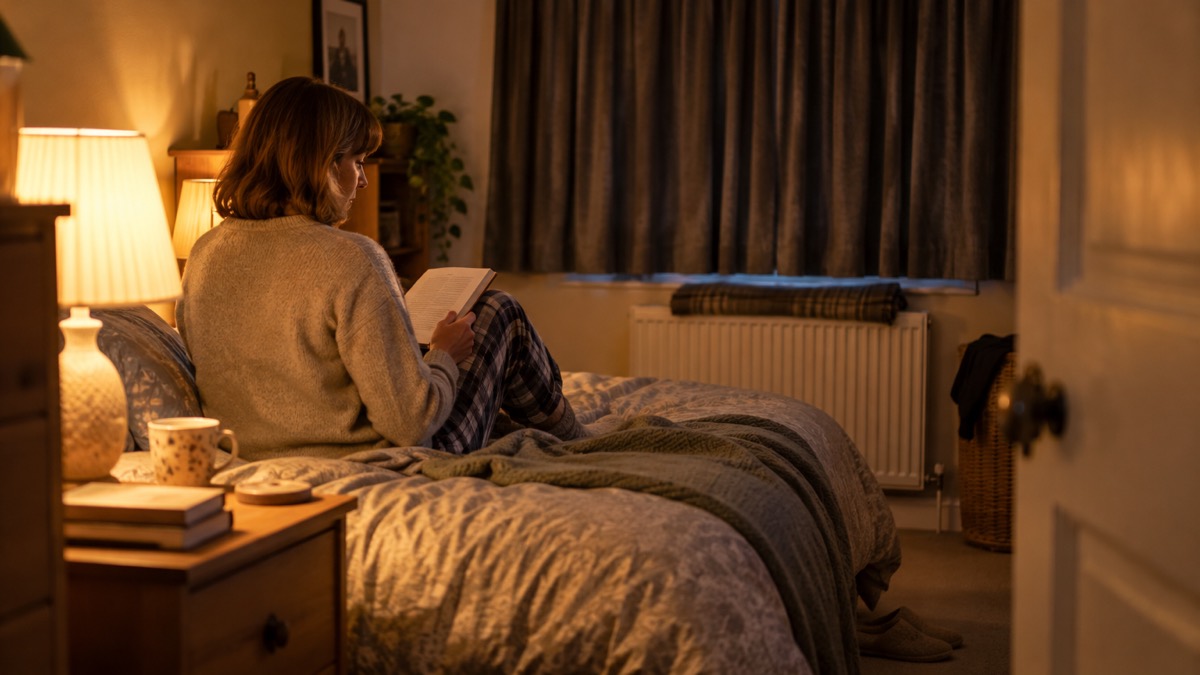
A heating failure in a cold snap turns the 18°C target into an urgent problem. The first thing to know is what a failure can mean. Welsh guidance says if the heating system fails or makes a loud banging noise, this could indicate that a pipe is freezing; turn off the system and call a plumber immediately24. Do not keep running a system that is banging or has stopped, in case a frozen pipe is the cause.
Prevention is better than a repair in the cold. London Assembly guidance says to get your heating system and cooking appliances checked, make sure you ventilate your home, and if you do not have gas or electric heating, make sure you have fuel25. A service before winter is the single most useful thing you can do to avoid a failure on the coldest night.
If the heating does fail, the priority is to keep one room warm and to look after the people most at risk. The Met Office advice to heat the living room through the day and the bedroom just before bed assumes you have heating at all; if you do not, concentrate everyone in one room, use layers and bedding, and check on anyone who is 65 or over or has a health condition3.
For more on what to do when the boiler or heating stops, the gas and heating failures guide covers the steps in order. If the power is off as well, the power cuts guide explains what to expect and how long it may take to restore.
Where to get help if you cannot keep warm
If you are struggling to keep your bedroom at 18°C, you are not on your own. Councils and health bodies publish winter help, and there are people whose job is to support you. Cumberland Council, for example, publishes keeping warm guidance as part of its winter advice9. Many councils also run warm hubs and winter wellbeing schemes.
If you are 65 or over, have a health condition, or care for someone who does, ask about the Priority Services Register through your energy supplier. It is there to help households that need extra support during a power cut or supply interruption. The extra help in an emergency guide explains who qualifies and how to sign up.
For health advice, the NHS is the place to start. NHS Inform in Scotland has a cold weather safety page13, and NHS trusts across England publish winter advice12. If you have a heart or lung condition and the cold is making you unwell, seek medical help rather than waiting.
The wider storms, snow and ice guide covers cold-weather warnings, travel disruption and what to do before, during and after a cold spell. If a cold-health alert has been issued for your area, the cold-health alerts guide explains what the levels mean and what changes at each one.
Sources (25)
- Snow buddies, Derbyshire County Council, 2026
- Seasonal winter safety advice, Suffolk Fire and Rescue Service, 2026
- Keeping your home warm in winter, Met Office, 2026
- Cold weather advice, Derbyshire Fire and Rescue Service, 2026
- Staying warm in winter, nidirect, 2026
- Keeping warm in winter, Nottinghamshire County Council, 2026
- Cold weather warning advice, NHS Cheshire and Merseyside, 2026
- Winter guidance, Humber Local Resilience Forum, 2024
- Keeping warm, Cumberland Council, 2026
- Winter top tips and advice, South Western Ambulance Service NHS Foundation Trust, 2026
- Top tips for keeping warm and well this winter, UK Government, 2026
- Stay well this winter, NHS Cheshire and Merseyside, 2026
- How to stay safe in cold weather, NHS Inform, 2026
- Cold homes and health, Centre for Sustainable Energy, 2026
- Winter Wellness leaflet, NHS North East London ICB, 2025
- Be informed about hazards: cold weather, snow and ice, Prepare campaign, 2026
- Winterwise guide, Greater Manchester Combined Authority, 2026
- Stay warm and nourished, NHS Norfolk and Suffolk ICB, 2026
- Snow buddies - Derbyshire County Council, Derbyshire County Council
- Cold weather and diabetes, Diabetes UK, 2026
- Top tips for keeping warm, Nottinghamshire County Council, 2023
- How to keep cool this summer, Lancashire County Council, 2026
- Hot weather advice, NHS Central East ICB, 2026
- Adverse weather events, Llangattock Community Council, 2026
- Keeping warm, healthy and safe in cold weather, London Assembly, 2026
 Car Checks Before Winter
 Flood Warning Checklist
 First Steps After a Flood
 Hitting Black Ice
 Car Battery in Winter
 Car Stuck in Snow
 Clearing Snow and Ice Safely
 Clearing Snow from Pavements
 Using Fog Lights
 Signs of Frostbite
 Falling Through Ice
 De-Icing a Frozen Windscreen
 Request or Refill a Grit Bin
 Overtaking a Gritter
 Insulating a Loft Water Tank