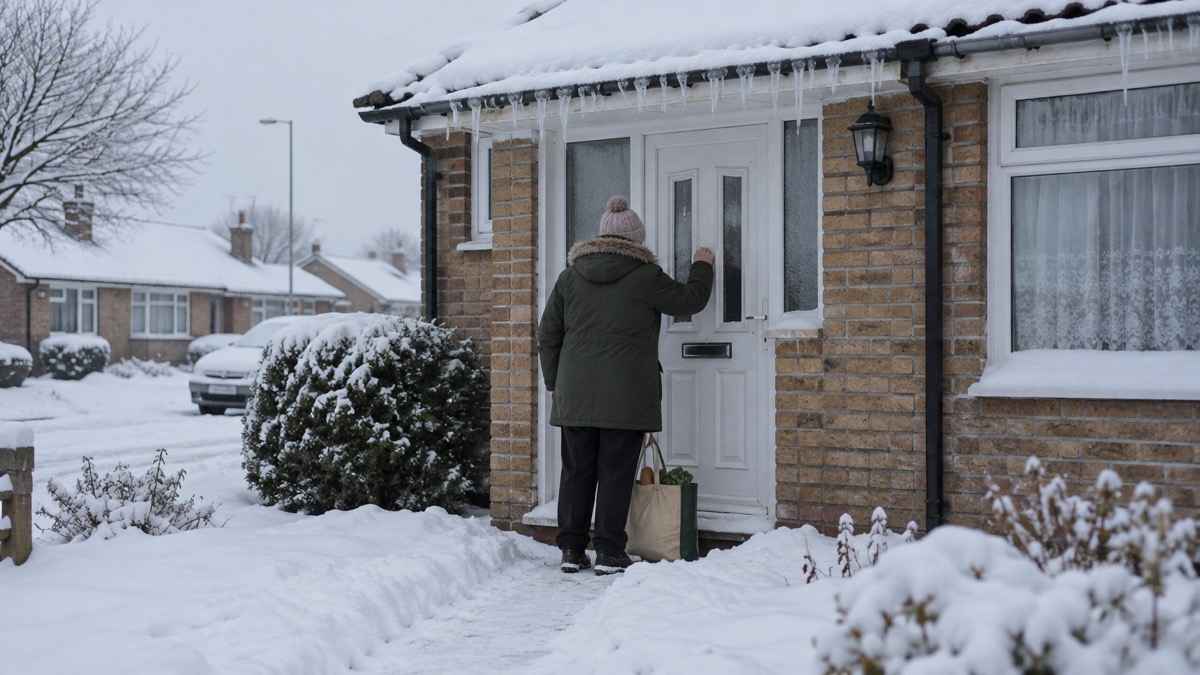
A cold-health alert tells you that cold weather is forecast which could lead to significant impacts on people's health. The alerts are issued by the UK Health Security Agency (UKHSA) together with the Met Office, and they are given a colour, yellow, amber or red, based on the combination of the impact the cold could have and the likelihood of that impact happening1. A yellow alert means the cold is unlikely to affect most people but could affect those who are particularly vulnerable. An amber alert means impacts are likely across health and social care, with the potential for the whole population to be at risk. A red alert would indicate significant risk to life for everyone, including the healthy population2.
The system is primarily aimed at health and social care professionals and anyone with a role in responding to cold weather to protect health, but it is freely available and the public can access it1. For an ordinary household, its value is situational awareness: knowing that health and wellbeing is at risk lets you take precautions, especially for older relatives, neighbours, and anyone with a long-term health condition. The alerts are issued for England only, over a core season from 1 November to 31 March, and you can register to receive them by email1.
Cold is not a minor risk. UKHSA's first annual cold mortality monitoring report, published in February 2026 as official statistics in development, estimated 2,788 cold-associated deaths in England over the winter of 2024 to 2025, a figure corrected on 22 October 2026 after an error in identifying the dates of one episode3. The first cold episode of that winter, a 2-day spell from 20 to 21 November 2024, brought amber alerts to six regions of England and yellow alerts to the other three, and was associated with an estimated 421 deaths3.
Yellow, amber and red: what each level means
The Cold-Health Alert service has four colour states, like the Heat-Health Alert: green, yellow, amber and red7. Green is the default state in which no alert is issued. The three alert levels are named for the response they call for: yellow is a response, amber is an enhanced response, and red is an emergency response3.
| Level | Name | What it means | Who is at risk |
|---|---|---|---|
| Green | Preparedness | No alert issued; conditions likely to have minimal impact on health | Business as usual8 |
| Yellow | Response | Cold unlikely to impact most people, but the particularly vulnerable are likely to struggle to cope; action required in health and social care | Vulnerable groups2 |
| Amber | Enhanced response | Impacts likely to be felt across the health and social care sectors | Potential for the whole population to be at risk2 |
| Red | Emergency response | Significant risk to life | Everyone, including the healthy population2 |
Two things are worth understanding about how the colours are chosen. First, the colour is based on a combination of impact and likelihood, not on temperature alone1. Yellow and amber assessments cover a range of potential impacts, from impacts on specific vulnerable groups, for example people sleeping rough, through to wider impacts on the general population, as well as the likelihood, low to high, of those impacts occurring9. Second, a yellow alert may also be issued when confidence in the forecast is low but there could be more significant impacts if the worst-case scenario is realised, in which case the alert may be upgraded as confidence improves2. So a yellow alert is sometimes an early, cautious signal rather than a final judgement of how bad the cold will be.
An amber alert represents a situation in which the expected impacts are likely to be felt across the health and social care sectors, with potential for the whole population to be at risk2. A red alert would indicate significant risk to life for everyone, including the healthy population2. Red cold-health alerts are rare, but the level exists so that the most severe episodes can be flagged for an emergency response.
Green means no alert
When no alert is in force, the system is in its green, or preparedness, state: the conditions are likely to have minimal impact on health, and it is business as usual, with summer or winter planning and preparedness activities continuing8. The current status for each region is shown on the UKHSA Weather-Health Alerts platform, which displays the alert level, for example "No alert", alongside what that level means, such as "Little impact observed on health, healthcare services and social care provision. Business as usual."10
Green is not a message that nothing needs doing. It is the state in which planning happens: health and social care services use it to prepare for the season ahead, and households can use it the same way, checking heating, insulation and emergency supplies before the cold arrives. Our guide to getting your home ready for cold weather and ice covers what to do in the quiet weeks before winter.
What to do when an amber or red alert is issued
When an amber or red cold-health alert is issued, the suggested actions step up. The official action cards for the voluntary and community sector set out the escalation clearly: at amber, high-risk individuals should be actively monitored during the cold weather episode, checking that individuals most vulnerable to cold-related illnesses have visitor or phone call arrangements in place; at red, the same monitoring should consider daily visits or phone calls to those vulnerable to cold-related illnesses2.
For a household, that translates into practical steps:
- Check on vulnerable people daily. At red, the official advice is daily visits or phone calls to those vulnerable to cold-related illnesses2.
- Confirm contact arrangements. Make sure anyone at risk has visitor or phone call arrangements in place before the coldest days2.
- Watch indoor temperatures. The advice at yellow level is to monitor temperature in places where vulnerable individuals spend substantial time2, and this matters even more at amber and red.
- Follow the wider cold weather advice. Check the weather forecasts and warnings, pay particular attention to any National Severe Weather Warnings or Cold-Health Alerts covering your area, and act on any advice issued11.
The same escalation applies in professional settings. Guidance for adult social care managers says that if a cold-health alert is issued, they should ensure high-risk individuals are actively monitored during cold weather episodes, and that those most vulnerable to cold-related illnesses have visitor or phone call arrangements in place12. If you care for someone professionally or informally, that is the standard you are aiming to match.
Once the decision is made to issue an alert, it is cascaded to everyone registered to receive them and made available on the dedicated web platform2. Alerts are also sometimes issued alongside Met Office warnings: in some circumstances a National Severe Weather Warning Service warning may be issued for snow, ice or wind in conjunction with, and aligned to, the cold-health alert2. In January 2025, for example, an amber cold-health alert was issued for all regions of England on 2 January and remained in place until 14 January, while the Met Office issued several amber snow warnings for parts of northern England from 3 to 12 January3.
Checking on vulnerable people during a yellow alert
A yellow alert is the level at which checking on vulnerable people begins. Yellow alerts cover a range of situations in which action is required within the health and social care sector2, and the action for individuals and community groups is to monitor temperature in places where vulnerable individuals spend substantial time2. For most households that means the living room and bedroom of anyone elderly, disabled or unwell that you look after.
Who counts as vulnerable is broader than many people assume. The official guidance on supporting vulnerable people before and during cold weather lists people with mental health conditions among the at-risk groups12, alongside the groups more commonly thought of, such as older people and those with long-term health conditions. Our page on staying well in cold weather sets out the health risks and who is most at risk in more detail.
Yellow alerts also prompt action for specific groups. The voluntary and community sector action card advises liaising with providers of emergency shelters for people experiencing homelessness to agree plans for adverse cold weather and ensure capacity to scale up provision2. If you volunteer with a local group, a yellow alert is the signal to ask what the plan is.
A yellow alert can be upgraded. Because yellow may be issued when forecast confidence is low but more significant impacts could occur if the worst-case scenario is realised, the alert may be upgraded as confidence improves2. Treat a yellow alert as a prompt to prepare, not a guarantee that conditions will stay mild: if the forecast firms up towards the worst case, the level can move to amber.
The alert season: 1 November to 31 March
The core cold-health alerting period is 1 November to 31 March each year1. The Met Office's cold weather alert service page describes the same season, 1st November to 31st March every year7. One GOV.UK document, the Weather-Health Alert system user guide dated 22 April 2026, gives the operating period as 1 November to 30 March13, so the documents differ by a day at the end of the season; the guidance pages consistently state 31 March, and that is the date to work to.
During the core period, cold-health planners are issued every Monday and Friday1. These are planning products for the health and social care sector rather than public alerts, but they show that the system is watched continuously through the winter, not only when a cold snap is imminent.
Cold weather outside the season is not ignored. Extraordinary alerts may be issued if an episode of cold that can impact health occurs outside the core period1. The Weather-Health Alerting system guidance puts it more generally: an out-of-season alert may still be issued if impacts from adverse weather on health, heat or cold, are expected6. So a late frost in April or an early one in October can still trigger an alert if the health impacts justify it.
The season matters for households because it marks the window in which to be ready. If your heating, insulation or emergency supplies are not sorted by the start of November, you are preparing during the period when the alerts are most likely to be issued.
How UKHSA and the Met Office decide to issue an alert
During the winter, UKHSA and the Met Office monitor weather forecasts, and where an adverse episode is identified using predefined evidence-based considerations, a joint dynamic risk assessment is carried out and the appropriate alert issued1. Weather forecasts are provided by the Met Office, and cold-health risk scores are determined by the UKHSA Extreme Events and Health Protection Team9.
The system looks further ahead than many people realise. It uses regional forecasts of weather conditions for the following 5 days, for 6 to 15 days, and for 16 to 30 days1. That means an alert can arrive with up to several days' warning, giving time to check on relatives, book a heating service or stock up before the cold sets in.
The cold-health risk score behind the assessment is a number between 1 and 16, determined based on the potential impact level of the low temperatures and the likelihood of those impacts occurring9. The Cold-Health Alert Service considers two aspects: adverse cold weather and health-sector resilience7. That second aspect is why the alerts can differ from what you might expect from the temperature alone: a cold spell arriving when health services are under strain may be treated more seriously than the same temperatures in a quieter week.
The service was previously issued by the Met Office and is now issued by UKHSA's online alerting system, but it remains in association with the Met Office for weather forecast input7. The Weather-Health Alerting system as a whole is operational year-round, with a seasonal focus7.
Cold-health alerts cover England only
The Weather-Health Alert system currently operates in England only7. The guidance is explicit: the Cold-Health Alerting system applies to England1, and the heat-health alert service likewise covers England only14. If you live in Scotland, Wales or Northern Ireland, there is no equivalent cold-health alert for your nation.
What you have instead are Met Office weather warnings, which cover the whole of the UK. The Met Office issues warnings for a range of high-impact weather events including rain, fog, wind, thunderstorms and, most relevant to cold, snow and ice9. Our page on Met Office weather warnings explains that system in full. In November 2025, for example, yellow warnings for snow and ice covered northern Scotland and parts of northeast England, with heavier falls of snow likely in the north, while UKHSA issued an amber cold-health alert focusing on the impacts for health and social care in England15.
The Adverse Weather and Health Plan that the alerts support also applies to England16. Health advice on cold weather is available from the health services of each nation, but the colour-coded alert levels described on this page are an England service.
How to sign up for cold-health alerts by email
Those wishing to be notified when an alert is issued should complete the registration form to receive them by email1. Registration is free, and when you register for the Weather-Health Alert system you can specify the government region you wish to receive alerts for13, so you only get alerts relevant to your part of England.
Once a cold-health alert is issued, it is cascaded to everyone registered to receive the alerts and made available on the dedicated web platform2. You do not have to register to see the current status: the UKHSA Weather-Health Alerts platform shows the current alert level for cold across England's regions4, and the cold alerts page displays the current status, for example "No alert", with its update time10.
For households that want a fuller picture, the government's preparedness advice is to check the weather forecasts and warnings, or download the Met Office Weather Forecast app where you can create alerts for your area, paying particular attention to any National Severe Weather Warnings or Cold-Health Alerts covering your area, and acting on any advice issued11. Our guide to how to sign up for Met Office weather alerts covers that side.
How cold-health alerts differ from Met Office weather warnings
The two systems are separate, and they will often differ. UKHSA's Weather-Health Alerts are separate from the Met Office's National Severe Weather Warning Service17. The reason is that they measure different things: the health alerts are weighted on adverse effects to public health and healthcare capacity7, while the National Severe Weather Warnings also consider other impacts of severe weather, such as impacts on infrastructure7.
One difference surprises many people: unlike heat, there is currently no extreme cold weather warning issued as part of the National Severe Weather Warning Service by the Met Office9. The Met Office can warn for snow and ice, but not for cold itself, so the cold-health alert is the only official alert that flags a period of low temperature for its own sake.
In practice the two systems work alongside each other. Assessments for cold-health alerts are made in conjunction with the Met Office when adverse weather conditions are indicated within the forecast9, and in some circumstances a National Severe Weather Warning Service warning may be issued for snow, ice or wind in conjunction with and aligned to the cold-health alert2. During the cold episodes of January 2025, both were in force at once: an amber cold-health alert for all English regions and amber Met Office snow warnings for parts of the north3.
The practical rule for a household is simple: check both. A cold-health alert tells you the risk to health; a Met Office warning tells you the risk of disruption from snow, ice or wind. Acting on either alone gives you half the picture.
The Adverse Weather and Health Plan
The Weather-Health Alerting system underpins the Adverse Weather and Health Plan4. The plan, developed by scientists and public health experts in UKHSA's Centre for Climate and Health Security, brings together and improves existing guidance on weather and health, merging the previous Heatwave Plan for England and the Cold Weather Plan for England into a single annual document18. It was first published in April 202319, and the latest edition is the Adverse Weather and Health Plan 2026 to 2027, added on 25 March 202620.
The plan aims to protect individuals and communities from the health effects of adverse weather and to build community resilience16. It seeks to address nine action areas, including service delivery, capacity building, communication, risk management, early warning systems, research and data analysis, and policy development and accountability16. Local organisations and partnerships can use the plan to develop local health and resilience plans outlining how they will protect their local populations from the health impacts of adverse weather events16.
For a household, the plan matters mainly as the framework behind the alerts: it raises awareness of the harm to health from adverse weather and provides guidance on how to prepare for and respond to it21. The alerts are the early warning arm of that plan, and the guidance the plan points to, such as the Keeping Warm and Well advice, is what to act on when an alert arrives.
Heat-health alerts: the summer counterpart
The Weather-Health Alerting system is made up of two parts: Heat-Health Alerts and Cold-Health Alerts22. Both are provided by UKHSA in partnership with the Met Office6, and both use the same four colour levels of green, yellow, amber and red, based on the same combination of impact and likelihood6.
The heat system runs over the summer rather than the winter, and an extraordinary alert will be issued if heat occurs outside its core period23. The levels carry parallel meanings: yellow heat alerts are sent out when weather poses health risks to vulnerable people, amber when weather is also likely to affect the health service, and red alerts indicate a significant health risk to the general population24. Individuals can register to receive the heat alerts via an online form, just as with cold alerts14.
If you have registered for the Weather-Health Alert system, you are registering for the system as a whole, so it is worth knowing that heat alerts may arrive in your inbox in summer as well. Our heatwaves and drought guide covers what to do when they do.
Easy-read and accessible versions
The official cold weather guidance comes in accessible formats. The Keeping Warm and Well: Staying Safe in Cold Weather page offers an easy-read version, a British Sign Language video, a poster with key recommendations, and translations of the guidance in 11 languages11. Easy-read translations were added on 28 April 2026 in Arabic, Bengali, Gujarati, Hindi, Italian, Kutchi, Punjabi, Portuguese, Somali, Tamil and Urdu25.
There is also a Weather-Health Alert system user guide on GOV.UK, published on 22 April 2026, which is intended to help users understand how the information contained within the alerts can be used when coordinating the response to adverse temperatures, and to provide an overview of what each alert colour means in terms of expected impacts on health13. If you support someone who finds standard guidance hard to follow, the easy-read version and the poster are the formats to print and keep.
Where to get help and more information
The main sources of help around cold-health alerts are:
- The UKHSA Weather-Health Alerts platform, which shows current alert levels for cold and heat across England's regions4.
- The registration form on GOV.UK, to receive cold-health alerts directly by email1.
- Met Office forecasts and warnings, which you should check alongside the health alerts and act on any advice issued11.
- The Keeping Warm and Well guidance, with its easy-read, BSL and translated versions, for what to do in cold weather11.
- The Adverse Weather and Health Plan, for the wider framework of how England prepares16.
If you or someone you look after is at risk from cold weather, the time to act is before the first alert of the season. Register for the alerts, check the heating, and arrange how you will keep in touch with vulnerable relatives and neighbours. The storms and snow section of this guide covers the practical side, from home winter readiness to staying well in cold weather.
Sources (25)
- Cold-Health Alerting system: overview, GOV.UK, 2025-09-24
- Cold-Health Alert action card for the voluntary and community sector, GOV.UK, 2025-09-24
- Cold mortality monitoring report: winter 2024 to 2025, GOV.UK, 2026-02-18
- Weather-Health Alerts platform, UKHSA Dashboard, 2026-10-29
- Weather-Health Alerting (WHA) system, GOV.UK, 2024-12-19
- Weather-Health Alerting system, GOV.UK, 2023-06-01
- Cold Weather Alerts: seasonal advice, Met Office, 2026-10-26
- UKHSA heat and cold alerts, Essex Prepared, 2026-10-29
- Cold-health alert risk score: metrics documentation, UKHSA Dashboard, 2025-05-08
- Cold-Health Alerts current status, UKHSA Dashboard, 2026-02-20
- Cold weather, snow and ice: be informed about hazards, Prepare Campaign, 2026-10-02
- Supporting vulnerable people before and during cold weather: for adult social care managers, GOV.UK, 2025-09-24
- Weather-Health Alert system user guide, GOV.UK, 2026-04-22
- Heat-health Alert service: seasonal advice, Met Office, 2026-10-29
- Met Office Weather Ready: tips for snow and ice, Met Office, 2025-11-19
- Adverse Weather and Health Plan, GOV.UK, 2024-12-19
- What is the difference between Weather-Health Alerts and severe weather warnings?, Wiltshire and Swindon Prepared, 2026-10-25
- Adverse Weather and Health Plan, Local Government Association, 2026
- Hot Weather Toolkit 2025, NHS Humber and North Yorkshire ICB, 2025-05-28
- Adverse Weather and Health Plan: publications, GOV.UK, 2026-03-25
- Stay well in winter, Met Office, 2026-10-28
- Severe weather planning, Derbyshire County Council, 2026-10-29
- Heat-Health Alerting system, GOV.UK, 2024-12-19
- Supporting vulnerable people before and during hot weather: social care managers, GOV.UK, 2024-12-19
- Keeping Warm and Well: Staying Safe in Cold Weather, GOV.UK, 2026-04-28