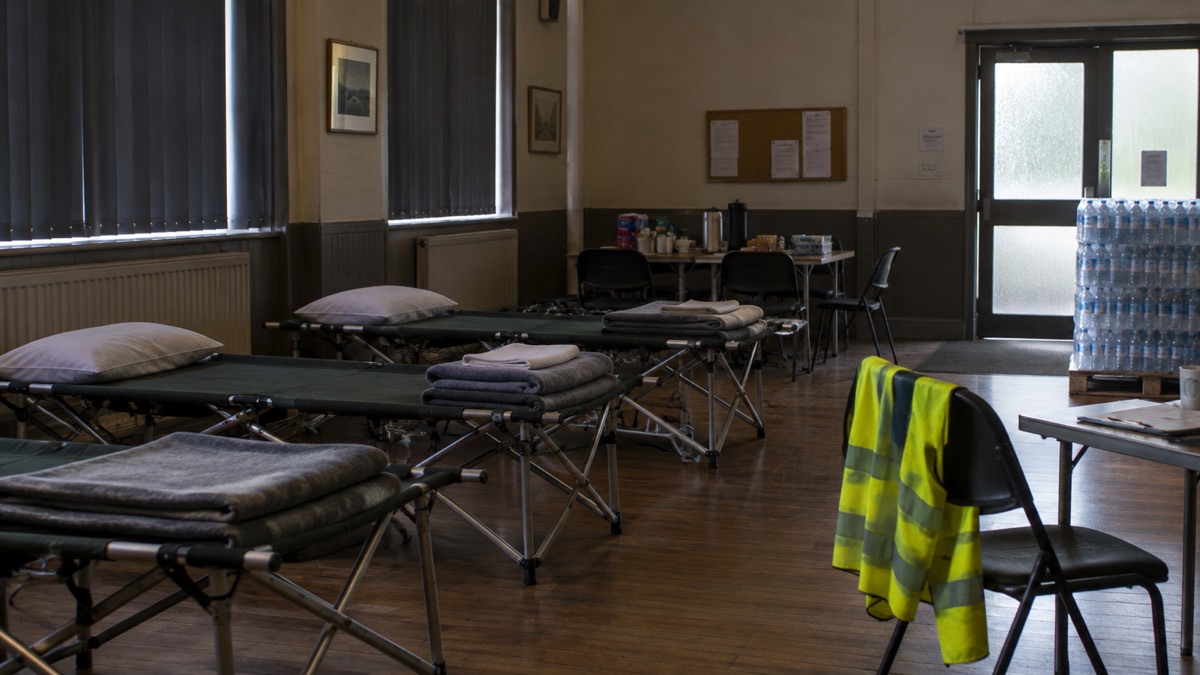
When a heatwave, a cold snap, a flood or a drought threatens people's health in England, the response you see from the NHS, your council and care services is not improvised. It follows a single framework called the Adverse Weather and Health Plan (AWHP), created by the UK Health Security Agency (UKHSA) in association with the Met Office and other partners1. The plan was first published in April 2023 and launched on 11 May 2023, and the current edition is the Adverse Weather and Health Plan 2026 to 20271. It brings together and builds on the previous Heatwave Plan for England and the Cold Weather Plan for England into one annual document3.
For your household, the plan matters in three practical ways. It drives the Weather-Health Alerts you may see in the news or receive by email, which give early warning when adverse temperatures are likely to affect people's health4. It shapes what your local NHS services, council and care providers do when those alerts are issued. And it sets out guidance that you can read yourself, including a cold weather guide that is part of the plan's support materials5. This page explains how all of that works, what you can expect from each service, and where the plan's limits are, including the fact that it applies to England only.
What the plan is for
The Adverse Weather and Health Plan exists to raise awareness of the harm weather can do to health, and to provide guidance on how to prepare for and respond to it8. Its stated aim is to protect individuals and communities from the health effects of adverse weather and to build community resilience6. It was developed by scientists and public health experts in UKHSA's Centre for Climate and Health Security, and it forms part of a commitment under the climate change National Adaptation Programme3.
Before 2023, England had two separate plans: the Heatwave Plan for England and the Cold Weather Plan for England. The AWHP brings these together and improves the existing guidance on weather and health, outlining where health and social care, other organisations and local communities can work together during adverse weather3. Cornwall Council's public health team describes the plan as outlining where health and social care and other organisations and local communities can work together to deliver the response2. That word "together" is the heart of it: no single service can protect health in a heatwave or a freeze, so the plan sets out how the pieces fit.
The programme of work contains four components6:
| Component | What it is |
|---|---|
| The plan itself | The main Adverse Weather and Health Plan document, published as a PDF of 82 pages1 |
| Supporting evidence document (SED) | A summary of the scientific evidence supporting the plan, published in parallel, as a PDF of 21 pages1 |
| Guidance and support materials | Practical guidance for heat, cold, flood and drought, listed in the plan's appendices6 |
| Weather-Health Alerting (WHA) system | The heat and cold alert system, developed with the Met Office6 |
The plan is an annual document, so it is refreshed each year rather than sitting unchanged3. The 2025/26 update included refreshed sections on mortality associated with hot and cold weather, updated material on flooding and emerging hazards including drought and thunderstorm asthma, an updated behavioural factors section, and updated information on health inequalities arising from the AWHP Equity Review10. Older editions are withdrawn as they are replaced: the 2023 to 2024 plan was removed as superseded by the 2024 to 2025 report1.
Who the plan is written for, and what it means for your household
The plan is written first for organisations, not directly for households. It recommends a series of steps to reduce health risks for the NHS, local authorities, social care and other public agencies, and for professionals working with people at risk. But it also addresses individuals, local communities and voluntary groups9. Local organisations and partnerships are encouraged to use the plan to develop local health and resilience plans setting out how they will protect their local populations from the health impacts of adverse weather events6.
What does that mean for you? It means that when a Weather-Health Alert is issued, the services you deal with are already acting to a script. Your GP practice, community nurses, care home, school and council are drawing on the same guidance, aimed at the people most at risk. If you or someone you look after is vulnerable to heat or cold, that is who the system is built around, and it is worth making sure your household has its own plan to match.
A household plan is the mirror image of the official one, and councils across the UK encourage it. The Scottish Government's Ready Scotland campaign publishes a home emergency plan and states plainly that an emergency plan will help you and your household stay safe in an emergency11. Northern Ireland's nidirect service offers a household severe weather plan with advice on preparing for severe weather12. In England, councils such as West Northamptonshire and Buckinghamshire publish household emergency plan templates: a Household Emergency Plan includes all the information you could need during an emergency and should be stored in your grab bag13.
What to put in a household plan, drawing on the official templates:
- Emergency contact details for your family or the people you live with, plus details of your insurance and utility providers15
- What to do for the severe weather most likely where you live: snow, ice, flooding, heatwave or high winds14
- Who checks on anyone in the household who is older, disabled or medically dependent
- If you care for someone, a carer's emergency plan: Suffolk and Norfolk councils both publish these, setting out in advance what needs to happen to the person you care for if you cannot continue providing care, and identifying someone to be contacted16
If you want to go further, Argyll and Bute Council guides communities through making a Community Emergency Plan, covering deciding who the plan is for, getting advice, thinking about the risks to your community and your local skills, knowledge and resources, involving people who can help, and writing and testing the plan18. Our community resilience guide covers this in more depth.
Weather-Health Alerts: the warnings the plan is built on
The Weather-Health Alerting (WHA) system is the trigger mechanism for the whole plan. It provides an early warning when adverse temperatures are likely to impact on the health and wellbeing of the population4. The system is operated by UKHSA together with the Met Office, and its Heat-Health Alerts and Cold-Health Alerts underpin the Adverse Weather and Health Plan19. The alerts provide key advice when adverse temperatures are likely to affect health and wellbeing, and the ambulance service counts them among the warnings households should act on20.
Two things make these alerts different from the Met Office weather warnings you may be more familiar with. First, they are weighted on adverse effects to public health and healthcare capacity, not just on how extreme the weather itself is7. A temperature that would be harmless in August can be dangerous in an unusual June heat, and the alert reflects the health impact, not the number on the thermometer. Second, the Cold-Health Alert Service considers two aspects: adverse cold weather and health-sector resilience7. If the health system itself is under strain, that changes the alert.
The system operates through the whole year with a seasonal focus, and it currently operates in England only7. Outside the core alerting periods, an out-of-season alert may still be issued if impacts from adverse weather on health, heat or cold, are expected4. So an unusually hot spell in September or a cold snap in April can still trigger an alert.
Within the core alerting period, a Heat-Health Planner is also issued every Monday and Friday, providing heat-health horizon scanning for the days ahead10. You can see current alerts on the UKHSA dashboard21, and local resilience sites such as Essex Prepared explain how the UKHSA heat and cold alerts work alongside other warnings22. If you want to receive them directly, our guide on how to sign up for heat-health alerts walks through it, and our page on heat-health alert levels explains what yellow, amber and red mean for what you should do.
Nine areas of action services work through
The plan seeks to address nine action areas6. These are the headings under which the NHS, councils and their partners organise their response, and UKHSA outlines them as important areas for action that healthcare organisations and their partners can consider when developing local cold weather plans23:
| # | Action area | What it covers in practice |
|---|---|---|
| 1 | Service delivery | How health and care services continue and adapt during the weather event |
| 2 | Capacity building | Having enough staff, beds and equipment for surge periods |
| 3 | Organisation arrangements | Who does what, and how organisations coordinate |
| 4 | Communication | Getting advice to the public and to professionals |
| 5 | Risk management | Identifying who is at risk and acting before harm occurs |
| 6 | Early warning systems | Acting on Weather-Health Alerts and other warnings |
| 7 | Research and data analysis | Understanding weather impacts on health |
| 8 | Quality assurance | Checking the response worked and improving it |
| 9 | Policy development and accountability | Long-term planning and who answers for it |
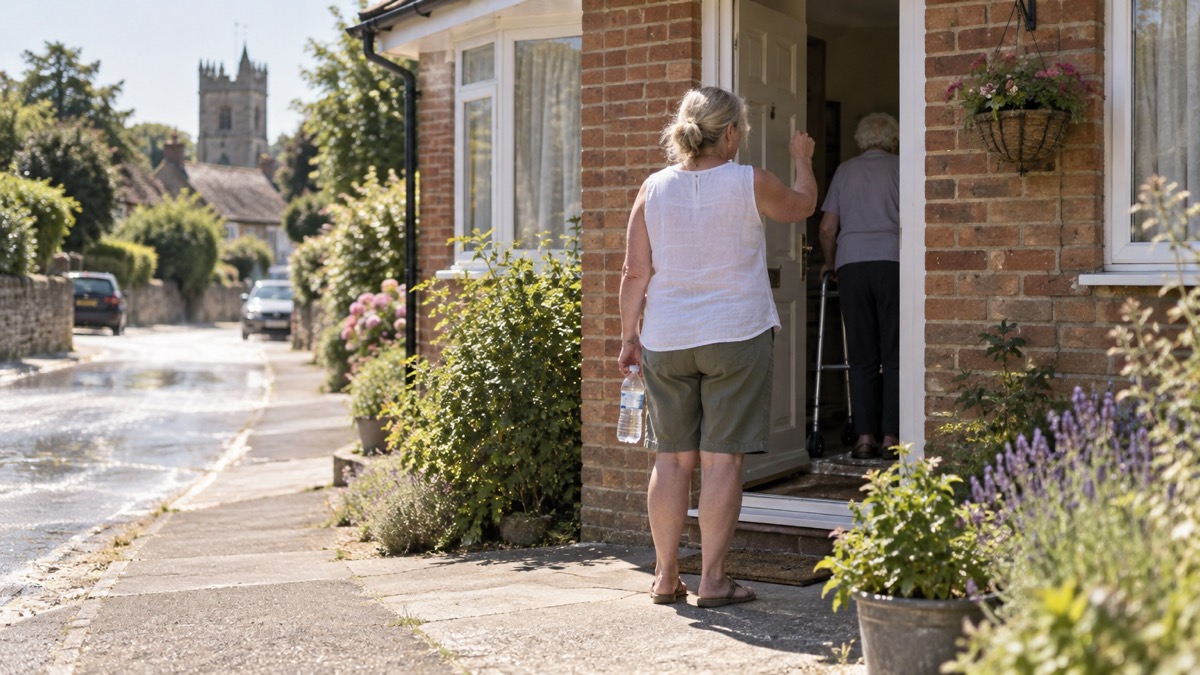
For a household, the areas you will notice most are communication and service delivery. Communication is why you will hear consistent advice, from the NHS, your council and the Met Office, when an alert is issued: the plan's guidance materials are the common source. Service delivery is why your GP, pharmacist or care provider may contact you, or change how they work, during a heatwave or cold snap. UKHSA publishes separate guidance for professionals on supporting vulnerable people before and during cold weather, one version for healthcare professionals and one for teachers and educational professionals, and both are built on the same framework23.
Cold weather planning has a rhythm you can rely on. Plans for managing adverse cold weather events should be agreed and distributed before 1 November each year23. So by the time the first frost arrives, the local plans that protect older people, those with health conditions and rough sleepers are already in place.
Heat, cold, flood and drought: the guidance appendices
The plan itself is a strategy document. The practical guidance sits in its appendices, which list the guidance and support materials available on GOV.UK: Appendix 2 covers heat, Appendix 3 covers cold, and Appendix 4 covers flood and drought6. These appendices are where a household can read the same advice the professionals use.
For cold, the key public-facing document is "Keeping warm and well: staying safe in cold weather", which is part of UKHSA's Adverse Weather and Health Plan for cold weather advice and aims to protect people's health and reduce harm from adverse cold weather5. The Met Office's Stay Well in Winter advice sits alongside it and explains the alert system in everyday terms8. For heat, the Met Office's heatwave guidance explains the thresholds that define a heatwave and points to the plan and its alert service9. Our pages on what counts as a heatwave, who is most at risk in hot weather and keeping your home cool translate this guidance for households.
Flood and drought are treated as emerging hazards in the plan, and the 2025/26 update strengthened the material on both, along with thunderstorm asthma10. The health angle matters here: drought is not only about hosepipes. Houses with a private water supply may be more vulnerable to drought because private water supplies often rely on small water sources that can dry up quickly, and their water quality can decline during drought conditions, with contamination possible when water levels are low, which could make someone who drinks that water unwell25.
If your private water supply is affected by drought, contact your local authority25. The Drinking Water Inspectorate explains that insufficiency can arise from challenging weather conditions such as drought or severe cold weather, sources drying up or freezing, undetected leaks, pipe bursts, pump failure, inadequate supply arrangements and disconnection of pipework26. Relevant persons, which usually means the owners and users of the supply, should ensure clear and achievable documented contingency procedures are in place, including arrangements for alternative supplies of water26. Cornwall Council, an area with many private supplies, notes that during prolonged dry weather these supplies can become unreliable and may also experience changes in water quality, and advises farmers to monitor water levels and quality closely, reduce non-essential use, and have plans for alternative water supplies for livestock and essential farm operations before supplies become critical27. Our page on what to do if your private water supply dries up covers the practical steps.
What your local authority does when severe weather hits
Your council is the layer of the system closest to your street, and its duties stretch well beyond health. During severe flooding, local authorities work with the emergency services and co-ordinate shelter for people evacuated from their homes29. If you are ever told to evacuate, that shelter is being arranged through your council, and you should follow the emergency services' instructions at the time.
Councils also take a lead role in local resilience forums (LRFs), the partnerships that bring together councils, emergency services, the NHS and utilities, and it is their duty to prepare for severe drought impacts within their emergency plans30. In Scotland, local authorities are responsible for producing Local Flood Risk Management Plans in partnership with SEPA, Scottish Water and other responsible authorities29. Councils also carry specific legal duties in rarer scenarios: GB law places a legal duty on the relevant local authority to produce plans to deal with off-site emergencies at nuclear sites, and should a radiation emergency be declared, the local authority will activate its off-site emergency plan to protect the public within a pre-determined area known as the Detailed Emergency Planning Zone31.
On water, the local authority is the regulator for private water supplies, with functions prescribed in sections 77 to 85 of the Water Industry Act 199128. The Regulations give councils enforcement powers when a supply presents a potential danger to human health, but they do not give powers to require a sufficient supply28. Where circumstances do pose a danger to life or human health, the local authority has power to require, if practicable at reasonable cost, the local water company to supply water by means other than in pipes for a specified period, with costs recoverable from the relevant persons28. Under section 79 of the Act, the local authority must require the local water company to provide a wholesome water supply to the premises where the supply causes a danger to life or health and it is practicable at reasonable cost by means other than pipes28.
If you live in a building with a shared evacuation arrangement, such as a block of flats, note that the building's evacuation plan is the responsibility of the Responsible Person under fire safety law, as North Yorkshire Fire and Rescue Service explains for residential personal emergency evacuation plans32. Ask your landlord or managing agent what the plan is for your building before you need it.
What to expect from your council, and when:
| Situation | What the council does |
|---|---|
| Severe flooding | Works with the emergency services and co-ordinates shelter for people evacuated from their homes29 |
| Heat or cold alert | Acts on the Adverse Weather and Health Plan's guidance, protecting those most at risk6 |
| Severe drought | Leads in local resilience forums and prepares for drought impacts in emergency plans30 |
| Private water supply failure | Regulates the supply; can require the water company to supply water where there is a danger to life or health28 |
| Radiation emergency | Activates its off-site emergency plan for the Detailed Emergency Planning Zone31 |
The plan applies to England only
One limit matters if you live outside England: the Adverse Weather and Health Plan applies to England6, and the Weather-Health Alerting system currently operates in England only7. There is no UK-wide equivalent under this name, so households in Scotland, Wales and Northern Ireland should look to their own arrangements.
That does not mean nothing happens elsewhere. NHS inform, Scotland's health information service, publishes advice on how to stay safe during a drought, including the guidance on private water supplies quoted above25. Ready Scotland publishes the home emergency plan11. nidirect in Northern Ireland covers severe weather, storms, flooding and drought, and offers a household severe weather plan12. The Met Office's seasonal health advice, including Stay Well in Winter, is available UK-wide even though the alert system behind it is England-only8. Our guides to staying informed in an emergency and extra help for those who need it point to the equivalents in each nation.
For everyone, wherever you live, the practical starting point is the same: know the risks where you live, keep a household emergency kit ready, and make a simple plan with the people you live with. The official system described on this page is the safety net; your own preparations are what carry you through the first hours and days of any heatwave, flood or freeze while that system swings into action.
Sources (32)
- Adverse Weather and Health Plan (publication page), GOV.UK, updated 22 April 2026
- Health protection and the Adverse Weather and Health Plan, Cornwall Council
- Adverse Weather and Health Plan (LGA briefing), Local Government Association
- Weather-Health Alerting (WHA) system, GOV.UK, 19 December 2024
- Keeping warm and well: staying safe in cold weather, GOV.UK
- Adverse Weather and Health Plan (guidance), GOV.UK, 19 December 2024
- Cold weather alerts, Met Office
- Stay well in winter, Met Office
- Heatwave: types of weather, Met Office
- Hot Weather Toolkit 2025, NHS Humber and North Yorkshire ICB, May 2026
- Home emergency plan, Ready Scotland
- Severe weather, storms, flooding and drought, nidirect
- Protecting yourself: household emergency plans, West Northamptonshire Council
- Are you ready? Household emergency plan, Buckinghamshire Council
- Household emergency plans, Greater London Authority
- Family carers emergency plan, Suffolk County Council
- Carer's emergency plan, Norfolk County Council
- How to make a community emergency plan, Argyll and Bute Council
- Heat-Health Alert service, Met Office
- Be prepared: public safety advice, West Midlands Ambulance Service NHS Foundation Trust
- Weather-Health Alerts dashboard, UKHSA
- UKHSA heat and cold alerts, Essex Prepared
- Supporting vulnerable people before and during cold weather (healthcare professionals), GOV.UK, 24 September 2025
- Supporting vulnerable people before and during cold weather (teachers and educational professionals), GOV.UK
- How to stay safe during a drought, NHS inform
- Managing insufficiency of private water supplies (installations), Drinking Water Inspectorate, 15 December 2025
- Private water supplies in Cornwall, Cornwall Council
- Managing insufficiency of private water supplies, Drinking Water Inspectorate, 15 December 2025
- Flooding: developing our knowledge, SEPA
- Drought: how it is managed in England, GOV.UK, 8 April 2026
- Local emergency arrangements, Office for Nuclear Regulation
- Residential personal emergency evacuation plans (PEEPs), North Yorkshire Fire and Rescue Service
 Finding Cool Spaces
 Heat-Health Alerts Explained