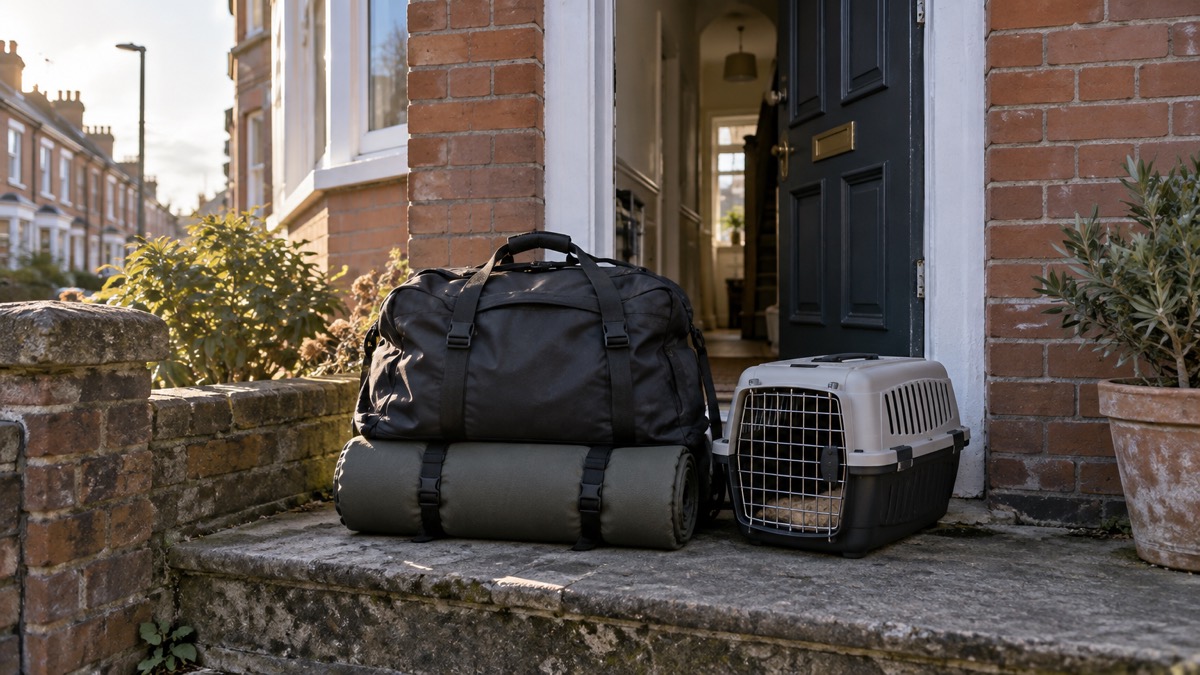
If the emergency services tell you to evacuate your home, you must do so. Refusing to leave will put you, your household and those trying to help you at risk1. That is the single most important thing to know, and it is the same advice whether the cause is flooding, a fire, a gas leak or another emergency2. In Northern Ireland the wording is the same in substance: if the emergency services tell you to evacuate your home, you should leave, because refusing to leave on their advice puts you, your family and people trying to help you at risk3.
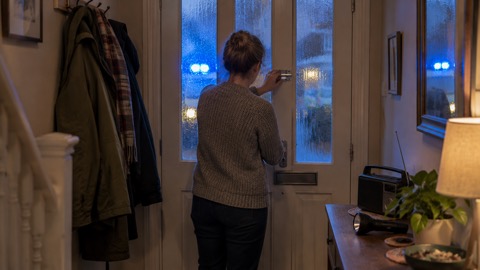
In practice, evacuation usually works like this. The police, fire service or another responder asks you to leave, either in person, through loudhailer announcements or through local media and official channels. They will usually point you to a place of safety, often a rest centre run by your local council4. You take a grab bag of essentials, turn off your gas, electricity and water if you have time, lock up, and go. Rest centres typically open about 2 hours after the event and run for around 48 hours5. If you go somewhere else instead, tell the emergency services so you can be accounted for4.
This page walks through each of those steps: what to take, how to leave safely, where you can go, what a rest centre actually provides, what to do if you live in a block of flats, and the situations where the advice is the opposite and you should stay indoors.
If you are told to evacuate, leave
The instruction to evacuate comes from the emergency services, and it is not advisory. Lancashire's local resilience guidance puts it plainly: "If the emergency services tell you to evacuate your home, you must do so. Refusing to leave will put you, your household and those trying to help you at risk"1. The same instruction appears in guidance from Cotswold District Council, which adds that refusing to leave on their advice will put you, your family and those trying to help you at risk8, and in Westminster's household preparedness advice9. The London Resilience Partnership asks households to follow the advice of emergency services before leaving home and to cooperate if told to evacuate2.
You may be asked to evacuate in a range of situations. Essex Prepared lists flooding, fires and gas leaks as typical examples, and notes you may be directed either to a rest centre or to friends and family10. Anglesey's guidance for terrorist incidents is simply to follow all instructions from the emergency services if you are asked to evacuate11.
The reason the advice is so firm is what happens to people who stay. Ashford Borough Council's flood support guidance warns that if you decide to stay in an area evacuated due to flooding, it may not be possible for assistance such as food, drinking water or medical supplies to reach you, and there may be no way to flush toilets or get rid of waste. Refusing to evacuate and changing your mind later may put yourself, family and rescuers at risk and increase costs12.
Telling the police where you are going
The police will ask you to go to a place of safety. If you decide to go somewhere else, let them know so you can be accounted for4. This matters more than it sounds: if nobody knows where you are, the emergency services may treat you as missing and divert resources to searching for you. Surrey County Council gives the same advice with a specific route: if the evacuation is overnight and you choose not to stay at the rest centre, inform the emergency services of where you have gone and how you can be contacted by calling 1016.
If you receive care at home, the Greater London Authority's flash flooding guidance adds one more step: let your care package provider know where you have gone, as well as telling family, friends and carers13.
What to take with you: a grab bag of the essentials
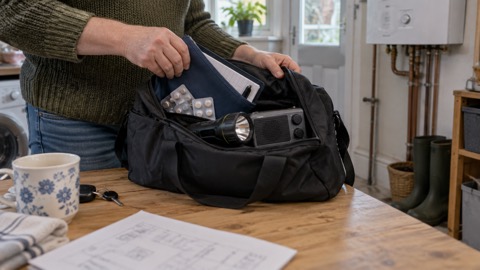
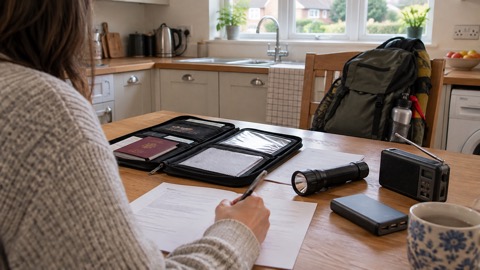
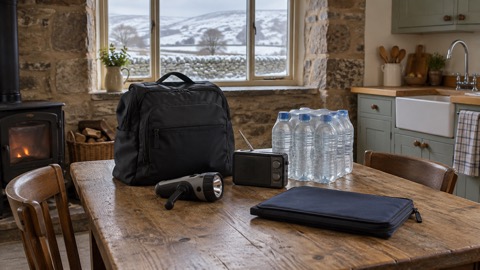
The most useful thing you can do before any evacuation is keep a grab bag packed. Surrey County Council's version of the essentials is short: medication if you require it, mobile phone and charger, ID or passport, and cash or your debit or credit card6. Nottinghamshire County Council's list is similar: mobile phone, credit cards, medication and ID14. Scottish Borders Council adds warm clothes, any special foods and personal documents if there is time4.
A fuller grab bag, based on Basingstoke and Deane Borough Council's emergency guidance, covers the things a household needs for a night or two away from home15:
- a wind-up torch, or a torch and spare batteries
- bottled water and non-perishable food or snacks
- spare glasses and hearing aid batteries
- spare car and house keys
- spare phone chargers or a small battery pack
- spare pet supplies
- a written list of key contacts and information
- a first aid kit
- spare clothes, blankets, toiletries and hand sanitiser
- baby formula, nappies and nappy wipes
- children's entertainment
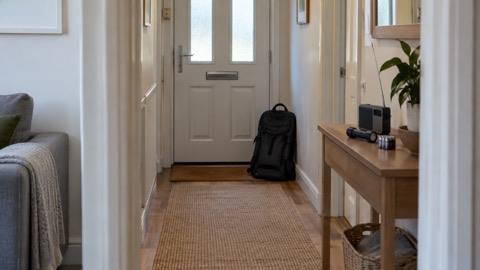
- a wind-up or battery-powered radio15
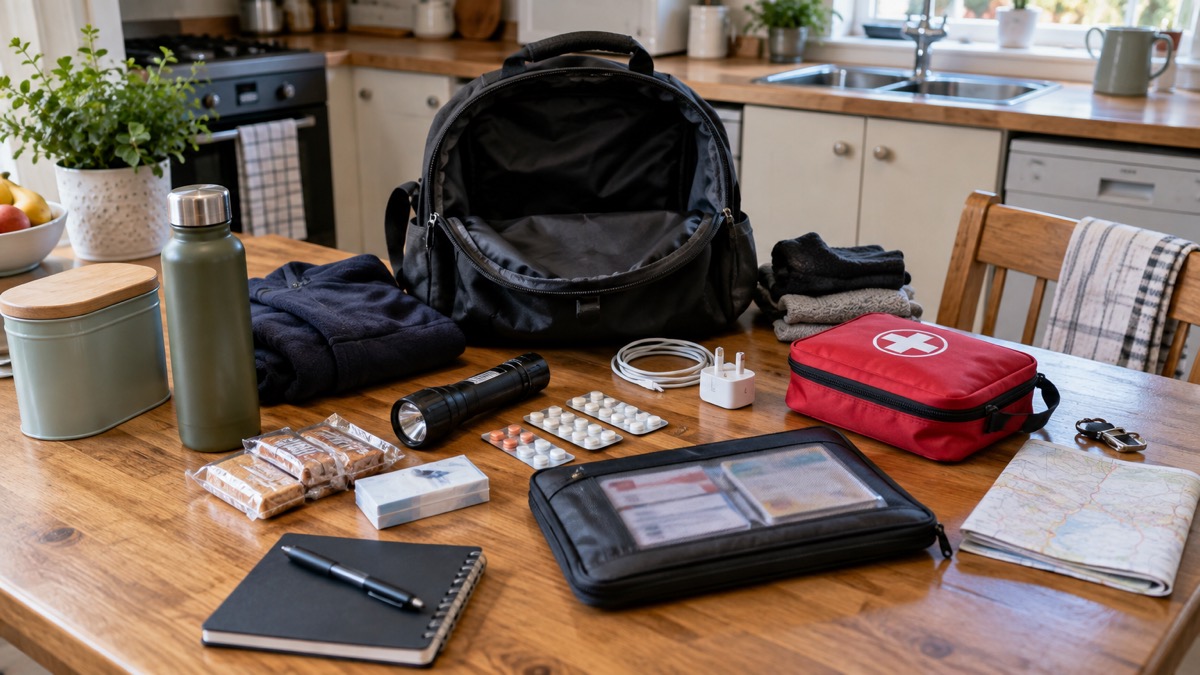
Warwickshire County Council's high-rise guidance suggests a slightly different set for flat dwellers: prescriptions, documents such as driving licence and passport, spare keys, a mobile phone, charger and a torch16. Portsmouth City Council's radiation emergency booklet, which applies to households near certain industrial sites, adds warm clothing and bedding, medicines or special food, baby food, clothes, nappies, toys and books, and private documents and valuables17.
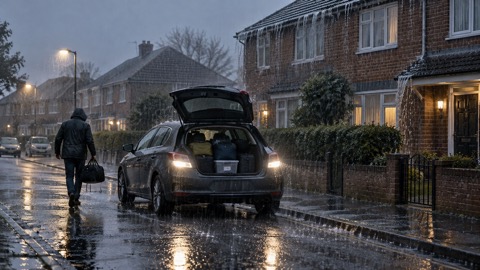
If you are leaving by car, Anglesey's guidance suggests taking bottled water and blankets, and taking pets with carriers or leads plus pet food11. For a fuller kit list, see our emergency kit guide, and for planning how your household would leave home, see planning how your household would leave home.
Turn off the supplies and lock the door behind you
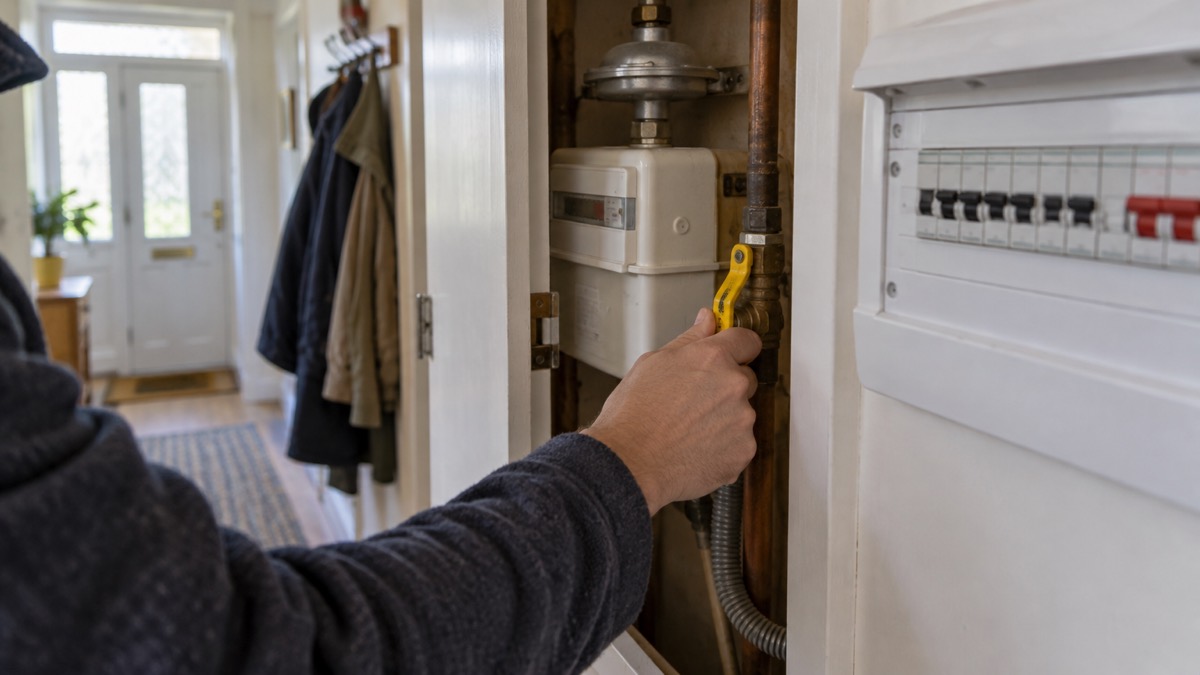
If you have time before you leave, Scottish Borders Council advises making sure that fires are out, your water, gas and electricity are switched off, and your property is locked up4. Anglesey's household emergency kit guidance gives the fuller sequence: leave as quickly and calmly as possible, turn off electricity, gas and water, unplug appliances, lock doors and windows, take your emergency kit, and tune in to local radio or trusted social media11.
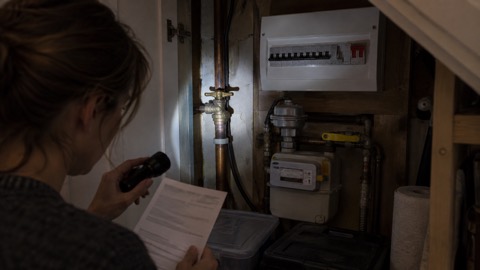
Knowing where your stopcock, gas valve and fuse box are before an emergency is the part that makes this possible in a hurry. Warwickshire's high-rise guidance includes knowing how to isolate your gas, electric and water supply as part of being prepared for evacuation18. Our guide to finding your stopcock, gas valve and fuse box covers this in detail.
If there is no time, do not delay your escape to switch anything off. In a fire, the priority is reversed: get out first and close doors behind you, because a closed door holds back fire and smoke. London Fire Brigade's escape plan for blocks of flats tells residents to leave their flat or maisonette and close the doors behind them19, and its home fire safety guide for purpose-built flats repeats the same instruction when the alarm sounds or when directed to leave20.
Where you can go: family, friends or a place of safety
When the police ask you to leave, they will direct you to a place of safety4. In practice you have two options, and you can choose between them.
The first is family or friends. Westminster's household preparedness guidance suggests arranging "emergency friends": households that provide each other with a place to stay if you have been evacuated from your home or if it has been affected by a flood, fire or utility failure9. Agreeing this in advance, as part of a household emergency plan, means you are not making phone calls in the middle of the night. Portsmouth's radiation emergency booklet advises that if you are told to leave, you should stay with friends or relatives outside the affected area, and that the council will make special arrangements for those who cannot17.
The second is the rest centre. If you are stranded, the council will provide basic accommodation at a welfare or rest centre1. If you have no transport of your own, transport will be provided to get you there6. Whichever you choose, tell the emergency services where you have gone, as covered above.
Rest centres: what they are, who runs them and when they open
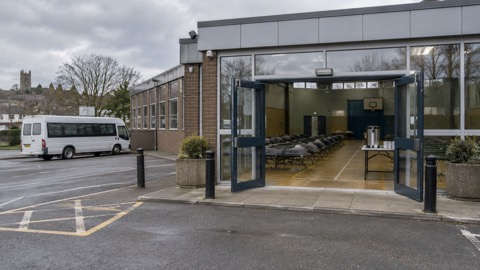
A rest centre is a temporary shelter for people who are evacuated and unable to stay with family and friends, where basic care and welfare support as well as information and advice is provided12. Nottinghamshire County Council describes it as a facility, such as a leisure centre, where the immediate welfare needs of those evacuated can be provided21. In Moray, the premises generally used are typically community education centres or town or village halls22; in Cornwall, a building with potential overnight facilities is taken over for the temporary accommodation of affected individuals, with more suitable overnight accommodation sourced whenever possible5.
Who runs them: the emergency services decide whether an evacuation is necessary, and it is then the council's duty to ensure the welfare of those made unintentionally homeless23. Cotswold's guidance puts it simply: you will be taken to an evacuation centre run by your local council8. In Cornwall's arrangements, lead responsibility sits with the local authority, with assistance from adult care, health and wellbeing services and the Cornwall Partnership Trust, and contributions from the police, the NHS, the voluntary sector and representatives of faith communities5. Basingstoke and Deane Borough Council describes working with Hampshire County Council to set up rest centres to provide transport, shelter, food and information to people evacuated15.
The location of the rest centre is decided at the time of the incident, so you will not find a published address in advance; listen for it in the evacuation instruction6.
Timing: about 2 hours to open, around 48 hours running
Cornwall Council's reception centre arrangements give the clearest published timings. A rest centre is opened approximately 2 hours after the event and remains in operation for 48 hours or so5. That two-hour gap is why the grab bag matters: you may be waiting somewhere, or travelling, before the rest centre is ready.
Cornwall's arrangements also describe the other types of centre that may open around a major incident, each with its own timescale5:
| Type of centre | When it opens | How long it runs |
|---|---|---|
| Shelter, evacuation assembly point or emergency refuge | As soon as possible | The first few hours after the event |
| Survivor reception centre | Immediately | The first few hours after the event |
| Rest centre | Approximately 2 hours after the event | Around 48 hours |
| Family and friends reception centre | Within the first 12 hours | Possibly many weeks, depending on the incident |
What help a rest centre gives
Moray Council's emergency planning guidance lists the support a rest centre provides: registering and recording of evacuees to ensure they receive appropriate support; catering; arranging longer term accommodation provision; first aid; enabling contact with family and friends; and providing information on the emergency and its impacts22. Ashford's description matches: basic care and welfare support as well as information and advice12.
The registration step is worth cooperating with. Being recorded at the centre is how the council ensures you receive appropriate support, and it is how people looking for you, including family using a family and friends reception centre, can find out you are safe22.
Longer-term accommodation is part of the rest centre's job, not something you have to arrange alone. If the rest centre is closing and you cannot return home, tell staff: arranging longer-term accommodation provision is one of the services listed22. For what happens after an evacuation ends, see our guide to returning home after an emergency.
Evacuating a block of flats when the fire alarm sounds
Flats need their own section because the fire safety arrangements differ from building to building, and because the wrong response in a fire costs minutes you may not have.
Your landlord, housing provider or managing agent needs to tell you about the fire safety arrangements for your building, including the evacuation plan19. Find out which strategy your building operates before anything happens. Manchester Fire and Rescue Service publishes separate guidance for flats operating an evacuation strategy and flats operating a Stay Safe policy24.
If your building operates an evacuation strategy and the fire alarm sounds, Manchester Fire and Rescue Service's instruction is: get everyone in your flat out; make sure your flat door closes behind you; implement your emergency evacuation plan if you have agreed one; leave the building using the emergency exit routes and stairs provided; do not use the lift unless agreed in your plan; get out, stay out, call 99924. The same guidance is blunt about the consequences of ignoring it: "Failure to evacuate the building upon hearing the fire alarm puts you at serious risk in the event of a fire and could put firefighters at risk"26.
If you find fire or smoke in your flat, never try to fight the fire yourself. Where possible and safe, close the door to the room where the fire is, alert people in the flat, activate any manual alarms, call 999 and stay on the phone whilst evacuating, stay low if there is smoke, close all doors behind you, use the stairs and keep left, and do not use the lift unless instructed by a firefighter24.
Once outside, move away from the building, go to the assembly point and wait for the fire service; do not leave before they arrive, and do not re-enter until told it is safe by a firefighter. If the fire was in your flat, tell firefighters where your flat is, where the fire started and what is on fire24.
Lincolnshire Fire and Rescue adds a point that catches people out: even if your own flat is unaffected by a fire elsewhere in the block, you should still call the fire service for advice and to ensure they have been mobilised, and prepare to evacuate27. And Dorset and Wiltshire Fire and Rescue Service notes that each flat in a high-rise block has its own stand-alone detection and alarm, which will not normally be linked to any other area of the block, so an alarm sounding inside your flat means something different from a building-wide alarm28.
If you cannot get out of your flat, move to a room where you think you will be safe and call 999, tell the control operator you cannot leave your flat and why, keep the door closed and use towels or bedding at the bottom of the door to stop smoke getting in24. The NHS home fire safety guide gives similar advice if your escape is blocked by fire: it may be safer to stay put until the fire brigade arrives; close the door, block gaps with soft materials, call 999 and go to a window and shout "HELP, FIRE"29.
Flats with a Stay Safe policy: when to stay and when to go
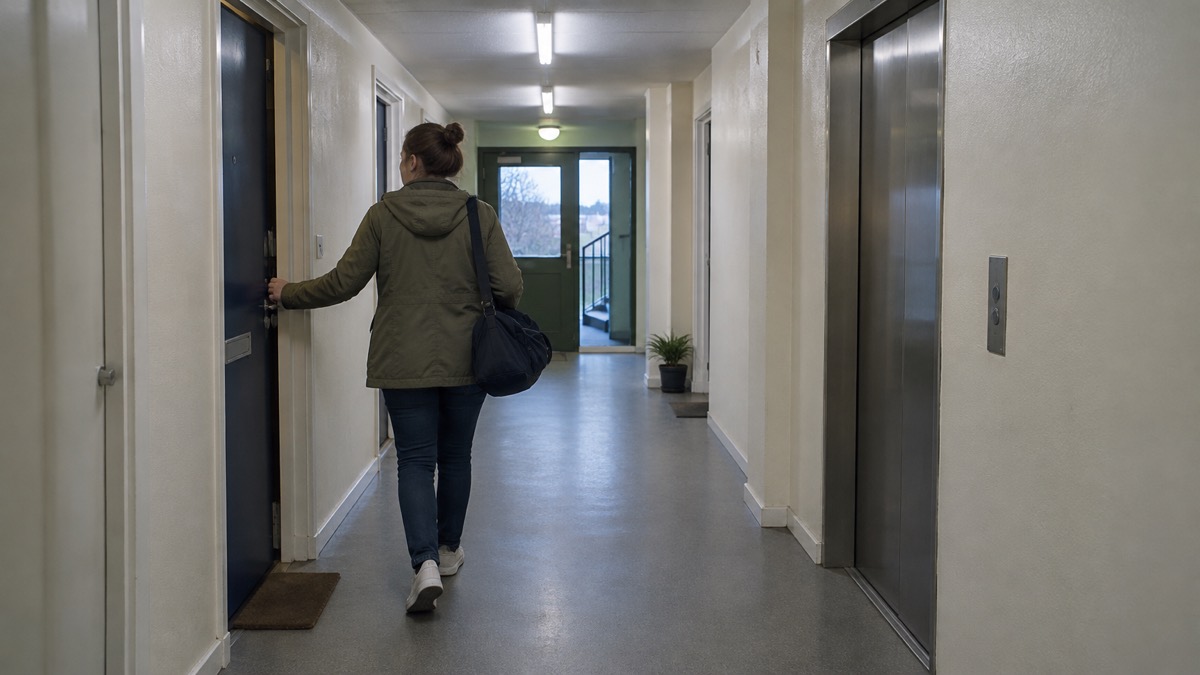
Many purpose-built blocks operate a Stay Safe policy, sometimes called Stay Put. Manchester Fire and Rescue Service explains what it means: if there is a fire in your flat you should leave the flat and the building; if there is a fire somewhere else in the building, you can remain in your flat and do not need to leave the building25. The design principle is that flats are built to hold back fire and smoke for a period, so a fire in one flat is not immediately a danger to the whole block.
The limits of that protection are equally clear. You should always evacuate if asked to do so by firefighters, and you should get out if you can and call 999 if your flat is affected by heat or smoke or you feel unsafe25. Warwickshire County Council's guidance for high-rise residents says the same: it will usually be safe to stay in your own flat, but you must leave immediately if the smoke or heat affects your home, or if you are told to leave by the fire service; if in doubt, get out18.
If there is a fire or smoke in your flat, the Stay Safe guidance gives the same sequence as the evacuation strategy: alert anyone else in your flat; close the door to the room where the fire is; get out of your flat making sure the flat door closes behind you; call 999 and ask for Fire; leave the building using the stairs if you can30. And it lists what not to do: do not try and fight the fire, do not stop to collect belongings, do not go back into your flat, do not use the lifts, and do not re-enter the building until told it is safe30.
One practical consequence is worth knowing in advance. If there is a fire elsewhere in the building and you choose to leave anyway, you may not be able to re-enter until firefighters have dealt with the fire, meaning you may not be able to go back to your flat for a few hours30. Some buildings also have an evacuation alert system; if your building has one and you hear the alarm, you should evacuate, and the fire service may decide to partially evacuate the building on a floor by floor basis25.
When to stay indoors instead: gas, chemical or radiation release
For some emergencies the advice is the exact opposite of evacuation, and following the evacuation instinct would put you in more danger. If a gas cloud, chemical release or radiation emergency is happening outside, you should go indoors.
Essex Prepared's guidance for hazardous substance exposure gives the rule in three words: go in, stay in, tune in. If you are outside and are alerted to a chemical emergency nearby, you should shelter7. For a radiation emergency, the most important thing to do is go indoors as soon as you can and stay there, close the doors and windows, and stay as far away from external walls as possible7.
West Yorkshire Prepared's booklet adds the practical detail for industrial accidents: go into a house or building straight away and stay indoors until you hear an all-clear message; close all external doors and windows; turn off central heating and ventilation systems; stay in a room away from the source of the chemical release, preferably upstairs; and tune into local news31.
Portsmouth City Council's radiation emergency booklet, for residents near sites covered by radiation emergency regulations, is emphatic that staying at home is usually the best option: "The best thing to do is stay at home. You will be much safer indoors with your windows and doors shut"17. If you are advised to leave, stay with friends or relatives outside the affected area, or the council will make special arrangements; use your own transport, or transport will be provided; and entry to evacuated areas is carefully controlled until the emergency has ended17.
The judgement between leaving and staying is not yours to make alone: follow the instruction given by the emergency services at the time. Our guide to sheltering in place covers the indoor option in full, and staying put or leaving: how to decide sets out how that choice is made.
Evacuating during a flood
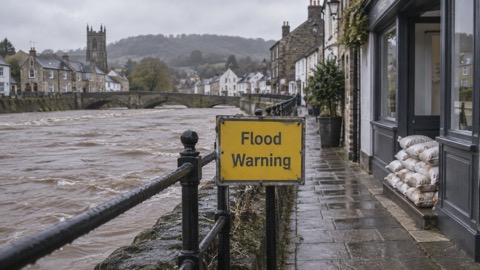
Flood evacuation has its own pattern because floods usually give warning, and because the danger is water in the routes out. GOV.UK's flood help guidance sets out the stages: at a flood warning, follow advice from your local council or the emergency services, as you may be asked to evacuate; at a severe flood warning, leave the area if the emergency services tell you to evacuate32.
The Greater London Authority's flash flooding guidance adds the personal steps: if asked to leave your home, take your medication and, if possible, any medical equipment you need; tell family, friends and carers where you are going; and let your care package provider know where you have gone13. Northern Ireland's nidirect guidance gives the same core instruction for flooding there: if the emergency services tell you to evacuate your home, you should leave, and refusing to leave on their advice puts you, your family and people trying to help you at risk3.
The same warnings about staying behind apply with force in floods. Ashford's guidance on evacuated flood areas, quoted above, covers the loss of food, drinking water, medical supplies and sanitation12. Our flooding guide covers preparation, warnings and what to do during and after a flood.
Getting help if you or a neighbour needs it
Not every household can self-evacuate. Culham Parish Council's "Are You Ready" booklet advises supporting vulnerable neighbours and alerting the local council if further help and support is required, such as transport, medication, temporary accommodation and medical attention23. If you or someone in your household needs transport to a rest centre, it will be provided if you have no transport of your own6.
Warwickshire's high-rise guidance also suggests getting to know your neighbours who may need assistance in an emergency18, and keeping door and window keys near the exit and exits clear18. Households that need extra help in an emergency can find more in our guide to extra help for older, disabled and medically dependent households.
Sources (32)
- Protect yourself: terrorist attack, Lancashire Prepared
- Preparing yourself for flooding incidents, London Resilience Partnership
- What to do if a flood happens, nidirect, 2025-10-24
- Emergency planning, Scottish Borders Council
- Reception centres, Cornwall Council
- Prepare for emergencies: homes prepared, Surrey County Council
- Hazardous substance exposure, Essex Prepared
- Preparing your home for flooding, Cotswold District Council, 2020
- Prepare your household for emergencies, Westminster City Council, 2014-04
- Step 2: during an emergency, Essex Prepared
- Preparing for an emergency: what you need to know, Isle of Anglesey County Council, 2020
- Flood support, Ashford Borough Council
- How to prepare for flash flooding, Greater London Authority
- Evacuating your home, Nottinghamshire County Council
- Emergency planning, Basingstoke and Deane Borough Council
- High rise living, Warwickshire County Council
- REPPIR residents booklet 2024, Portsmouth City Council, 2024-08
- Fire safety in high rise buildings, Warwickshire County Council
- Escape plan for blocks of flats, London Fire Brigade
- Home fire safety guide for purpose-built flats and maisonettes, London Fire Brigade, 2023-10
- Flooding before, during and after: frequently asked questions, Nottinghamshire County Council
- Emergency preparations you can do, Moray Council
- Are You Ready booklet, Culham Parish Council, 2025-09
- Fire safety information for residents living in flats operating an evacuation strategy, Manchester Fire and Rescue Service
- Fire safety information for residents living in flats operating a Stay Safe policy, Manchester Fire and Rescue Service
- What is your building's evacuation strategy, Manchester Fire and Rescue Service
- Flats and high rise buildings, Lincolnshire Fire and Rescue
- FAQs about safety in high rise premises, Dorset and Wiltshire Fire and Rescue Service, 2024-09-03
- Home fire safety guide, NHS, 2025-01-24
- Fire safety information for residents living in flats operating a Stay Safe policy, Manchester Fire and Rescue Service
- Don't Panic, Prepare booklet, West Yorkshire Prepared, 2020-11
- Help during a flood, GOV.UK, 2026-10-25
 30-Day Household Checklist
 Emergency Plan Template
 Supply Interruption Checklist
 Household Emergency Plan
 Emergencies to Prepare For
 Community Risk Registers
 What to Do in an Emergency
 Sheltering in Place
 Staying Put or Leaving
 Planning Your Evacuation
 Rest Centres
 Stopcock, Gas Valve and Fuse Box
 Returning Home
 Recovering After an Emergency
 Scotland Emergency Planning