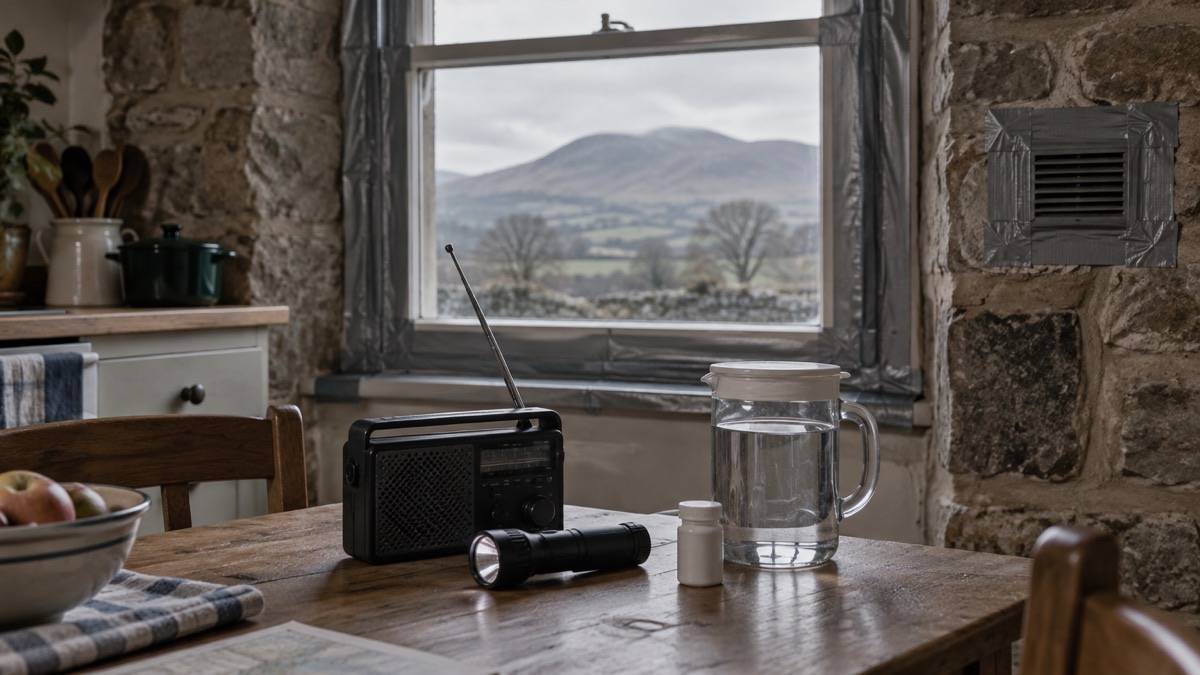
A radiation emergency in the UK means a situation that could lead to an increased risk of exposure to significant radiation, such as an incident at a nuclear power plant or an incident during the transport of radioactive material1. These are rare events, and the most immediately affected areas will generally be those within a few miles of where the emergency happened1. If you are told there is a radiation emergency near you, the advice is the same across the UK: go indoors as soon as you can, stay there, and tune in to local radio or television for instructions2.
You may need to stay indoors for one to two days3. Radiation cannot be seen, heard, smelt, tasted or felt, so you must follow official advice even if nothing seems wrong2. Do not leave the area and do not go to collect children from school unless you are told to: the emergency services will say when and how to move, and if they tell you to evacuate, you must do so4.
Go in, stay in, tune in: your first actions
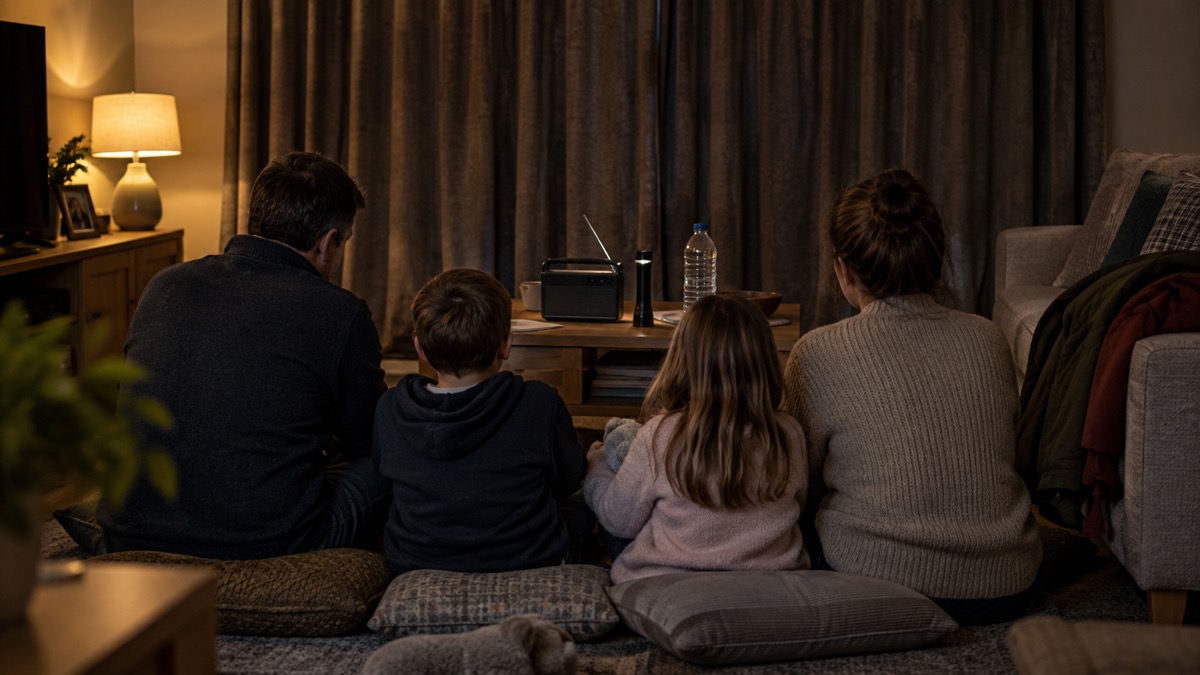
The drill in a radiation emergency is simple and is the same whether the release comes from a nuclear site, a naval berth or a transport accident: GO IN, STAY IN, TUNE IN7. Go indoors and close all windows and doors. Stay indoors until the emergency services or local radio tell you otherwise. Tune in to local radio, TV or official social media, where public information and advice from the emergency responders will be broadcast8.
If you are out when the alert comes, shelter in the nearest building rather than trying to get home. Official UK guidance is clear: do not travel home to shelter there, because the journey may expose you to more radiation than staying put1. Once inside, move to a room where you can stay as far away from external walls as possible2.
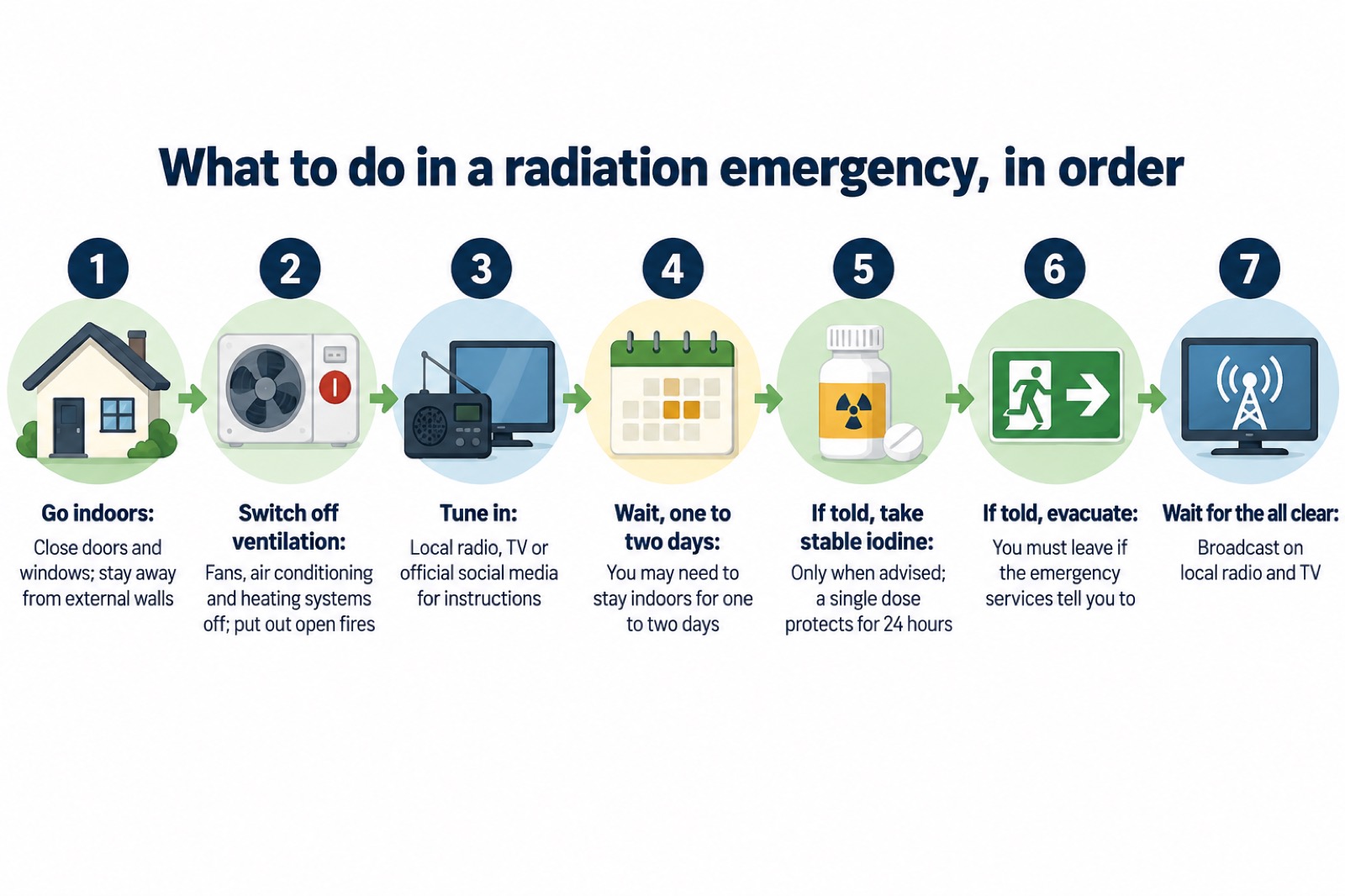
The numbered steps below cover the first minutes. Councils near nuclear sites issue the same list to every household in the planning zone.
- Go indoors and stay there4.
- Close doors and windows4.
- Switch off ventilation fans, air conditioning and heating systems that draw in outside air, and put out open fires4.
- Try not to use telephones unless you need urgent help; if you must call, keep it short, because the telephone system can become very busy7.
- Tune in to local radio or TV and follow the emergency services' advice4.
- Do not leave the area unless the police tell you to4.
If people are injured or in danger, contact the emergency services on 9999. If you think you may have become contaminated, contact the emergency services for help on 9996.
Why you must follow official advice even if nothing seems wrong
Radiation cannot be seen, heard, smelt, tasted or felt, so it is important that you follow the advice given to you, even if you cannot tell that anything has happened2. There is no smell of smoke, no visible cloud you can judge, no sensation on your skin. A release of radioactive material can pass over an area while everything looks and feels completely normal, which is why the authorities measure it with monitoring equipment and issue instructions based on those measurements rather than on what you can perceive.
That is also why the advice can change quickly, and why it may differ street by street. Follow the advice in any official warning or emergency alert you receive10. In a major emergency, if you are not involved in the incident but are close by or believe you may be in danger, the best thing is to go inside a safe building, stay inside until advised otherwise, and tune in to local radio or TV for information11. During an emergency, always follow the advice of the emergency services, stay safe and do not take risks12.
The same principle applies to your neighbours. Support anyone who needs help getting indoors, and alert the local council if further help and support is required, such as transport, medication, temporary accommodation or medical attention9.
Sheltering indoors: you may need to stay in for one to two days
Sheltering is the main protection for most people in most radiation emergencies, and you may need to stay indoors for one to two days3. Sheltering works because it puts walls between you and radioactive material in the air, and because a sealed building slows the rate at which outside air replaces inside air. Guidance for residents near Sellafield puts it plainly: sheltering will help reduce the effects of a radioactive or chemical release13.
While you are sheltering, keep the building closed up. Close all doors and windows, switch off ventilation fans, air conditioning and heating systems, and put out all open fires4. If there is an incident, go indoors unless you are asked to leave by the emergency services; close all doors, windows and vents; put out all naked flames such as pilot lights; switch off gas supplies; put away or cover all fresh food; have emergency provisions ready; use the phone only if you need to; stay indoors until you know more; and tune in to a local radio or TV station6.
Being ready to shelter for up to two days is mostly a matter of ordinary household stores: food that does not need cooking, water, a battery-powered radio and torch with spare batteries, and any medicines the household needs. You can read more about what to keep in the house in our emergency kit, water and food guides, and about keeping informed in our staying informed guide.
How radiation reaches people, and who is most affected
Understanding the three ways radiation reaches people explains why the official advice is what it is. Every countermeasure, from sheltering to iodine tablets to food restrictions, blocks one of these routes14.
| How radiation reaches you | What it is | What blocks it |
|---|---|---|
| Breathing it in (inhalation) | Radioactive material carried in the air | Sheltering indoors with windows and doors closed14 |
| Direct exposure | Radioactive material in the air and deposited on surfaces, clothing or skin | Sheltering, and later decontamination14 |
| Eating or drinking it (ingestion) | Food or water contaminated with radioactive material | Restrictions on locally grown produce, milk and water4 |
The most immediately affected areas will generally be those within a few miles of where the emergency happened1. The exact distance depends on the source. For a radiation emergency involving a nuclear vessel at Southampton, official guidance says an accident is unlikely to affect people more than half a kilometre (500 yards) from the vessel7. Around Sellafield, the areas that could be most likely to be directly affected during and following a radiation emergency are between 6.1km and 8km from the centre of the site13. Your local booklet tells you which zone you are in.
Children and young people are a priority group in planning because the thyroid gland is more sensitive in the young, which is why schools hold stable iodine tablets and why dose guidance is broken down by age8. Countermeasures used in the UK are sheltering, evacuation, taking stable iodine tablets, and restrictions on the consumption of locally grown produce, milk and water4.
Stable iodine tablets: doses by age and when they work
Stable iodine tablets protect against one specific hazard: radioactive iodine. Taking stable iodine tablets at the right time blocks the absorption of radioactive iodine by the thyroid gland and speeds up the body's ability to remove it, but it does not protect against other sources of radiation1. Radiation emergencies at nuclear reactors that are operational, or that have recently shut down within 90 days, may result in releases of radioactive iodine1.
Take the tablets only when you are told to. A single dose provides protection for 24 hours1. Public health advice is that stable iodine is most effective when accompanied by either sheltering or evacuation, and if administered less than 24 hours prior to, or up to 2 hours after, inhalation of radioactive iodine released to the atmosphere15.
The dose depends on age. The table below is the dose schedule issued to households near the Portsmouth naval base; the same schedule appears in the Southampton residents' booklet7.
| Who | Dose |
|---|---|
| Adults, including pregnant women and women who are breastfeeding | Two tablets8 |
| Children aged three to twelve years | One tablet8 |
| Children aged one month to three years | Half of a tablet8 |
| Newborn babies and women more than six months pregnant | Take as directed in the leaflet issued with the tablets, then see your GP, who will arrange any necessary checks by a paediatrician4 |
For young children, the tablet can be crushed and mixed with milk, water or jam4. A 2019 public health report gives the equivalent iodine mass per single dose as 100 mg for adults and children over 12 years, 50 mg for children aged 3 to 12 years, 25 mg for children aged 1 month to 3 years and 12.5 mg for newborn babies up to 1 month, though in the UK no distinction is made on the basis of age when distributing stable iodine15. Repeat dosing should be avoided in pregnant or breastfeeding women and newborn babies aged up to 1 month15. Our separate guide to stable iodine tablets goes into more detail.
If you are told to evacuate, you must leave
Evacuation is the temporary removal of people from an area to avoid or reduce short-term radiation exposure1. It reduces exposure by taking people away from the affected area14. If the emergency services tell you to evacuate your home, you must do so: refusing to leave will put you, your household and those trying to help you at risk5.
The best thing to do in most radiation emergencies is to stay at home, because you are much safer indoors with your windows and doors shut8. If you are advised to leave, stay with friends or relatives outside the affected area if you can; otherwise the council will make special arrangements. Use your own transport if you have it, or transport will be provided8. If the police ask you to leave your home, they will direct you to a place of safety; if you decide to go somewhere else, let them know so you can be accounted for16.
If you have time before leaving, make sure that fires are out, your water, gas and electricity are switched off, and your property is locked up16. Entry to evacuated areas is carefully controlled until the emergency has ended, so expect not to return immediately8. Evacuation may be for some time, from a few hours to much longer, so be sure to bring your emergency pack5.
If you need additional support, make sure the emergency services or council are made aware of this so that arrangements can be made for you17. Councils can help with transport, medication, temporary accommodation and medical attention9.
Rest centres and accommodation
If you are stranded, the council will provide basic accommodation at a welfare or rest centre5. At a rest centre you will be asked to provide details of yourself and any family members who are present18. The support provided there includes registering and recording of evacuees to ensure they receive appropriate support, catering, arranging longer term accommodation, first aid, enabling contact with family and friends, and providing information on the emergency and its impacts17. Facilities are basic: seating and very basic sleeping facilities, for example blankets and airbeds18.
What to pack if you have to leave home
Prepare an evacuation checklist before any emergency, so you are not deciding what to take while the police are at the door19. Get a large bag or suitcase and pack the following8:
- Warm clothing and bedding
- Medicines or special food, and baby food
- Clothes, nappies, toys and books for children
- Private documents and valuables
- Your mobile phone and charger, plus key documents like ID, your purse or wallet and current prescriptions20
Before you leave, make sure fires are out and appliances are switched off and unplugged, then lock up and leave8. Keep a basic emergency kit in your vehicle depending on the time of year19. Our emergency kit guide covers the full household kit, and extra help in an emergency covers what to prepare if someone in your household needs specific support.
Where to get information during an emergency
Up to date information on the situation, including advice on what you should do and where to get further details, will be broadcast on local radio and television channels and websites21. Watch TV, listen to the radio or check the internet often for official news and instructions as they become available11. Information will also be available on local radio stations, on social media, at rest centres or other facilities, and on emergency services and council websites17.
Each area has named stations. Around Portsmouth and Southampton, for example, information is broadcast on BBC 1, BBC 2 and ITV Meridian on TV, and on BBC Radio Solent (96.1 and 103.8 FM), Hits Radio South Coast (107.8 FM), Heart FM (96.7 FM), Greatest Hits Radio South Coast (105.2 FM) and Capital FM (103.2 FM) on radio, with updates on the council's website and social media channels7. Around Barrow, the listed stations are BBC Radio Cumbria 96.1 MHz FM, 358m (837 kHz) MW or CandoFM 106.3 FM4. Your local booklet names your stations; keep a battery-powered radio and spare batteries so you can receive them in a power cut.
A telephone helpline number will be released in the event of an emergency; check local news and social media for it7. Any number printed in a booklet in advance is for non-emergency queries only8. The UK Health Security Agency guidance on what to do in a radiation emergency also provides information related to evacuations, pets, use of stable iodine and safety advice related to food and water2.
Living near a nuclear site or naval base
If you live close to a nuclear licensed site, you should refer to the specific local information provided to you14. Under the Radiation (Emergency Preparedness and Public Information) Regulations 2019, local authorities must plan for mitigating the consequences of a nuclear off-site emergency, and the regulations ensure that members of the public are provided with information both before and during an emergency, so that they are properly informed and prepared in advance14. REPPIR places a duty on local authorities, where there is a regulated nuclear establishment, to protect the public in the unlikely event of a radiation emergency23.
For naval berths, legislation requires people living up to 1.5km away from an operational berth to be given prior information about a nuclear emergency7. Around Portsmouth, the residents' booklet is distributed to all households within a 1.5-kilometre radius of the nuclear berths in accordance with emergency regulations8. Around Devonport in Plymouth, prior information is distributed to households and businesses in the detailed emergency planning zones, with an Easy Read version available23. Information leaflets on what to do in a radiation emergency have also been prepared and distributed to households within the Detailed Emergency Planning Zones outlined in the Clyde Off-Site Emergency Plan in Scotland21.
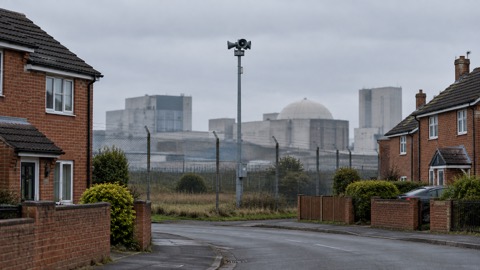
Some sites have warning systems. The Site Nuclear Alert Siren, reminiscent of the old air-raid siren, is sounded if a radiation emergency occurs on a submarine that could affect the safety of people on the site and potentially the public4. Our guides to sirens and phone warnings and emergency planning zones explain these in more detail.
It is worth stressing how unlikely these events are. The possibility of such emergencies occurring is remote, and the design and operation of all plants on all sites are independently monitored by the Office for Nuclear Regulation and the Environment Agency22. All civil and military facilities working with or transporting ionising radiation pose some risk, however remote, to the general public, and as such a radiation emergency could occur anywhere in Somerset, or any other county24. There is no possibility of a nuclear bomb type explosion at these sites8.
Children at school near a nuclear site
Do not go to collect children from school during a radiation emergency, as this may expose you and them to radiation; the school will look after them and contact you when it is safe for children to leave25. Schools within the planning zone hold stable iodine tablets for all children and staff in their care and will look after children in an incident8. Schools more than 1.5km from the naval base will be told about incidents by the council and will look after pupils living within the 1.5km zone whose parents cannot collect them8. If a school needs to be evacuated, children will be taken to a safe place nearby and the school will contact you to let you know what to do; contact your emergency contact at the school and look at the school's website26. Schoolchildren will be looked after as a priority group either at the school or evacuated to a safe place where they will be looked after by school staff and those responding to the emergency4. See also should you collect children from school.
After the emergency: the all clear and long-term advice
Information concerning the end of the emergency will be broadcast on local radio and television4. Wait for the all clear announcement before changing what you do8. After the immediate danger has passed, keep listening and looking for announcements and updates on the news, and watch for long-term safety information in the news and in leaflets8.
You might be asked to decontaminate, that is clean, yourself. Advice on how to safely remove radioactive material from your skin and clothes, called self-decontamination, is provided by the UK Health Security Agency2. If you think you may have become contaminated, contact the emergency services for help on 9996. Follow any later restrictions on locally grown produce, milk and water, which are one of the standard countermeasures after a release4. Our guides on tap water safety and food after a nuclear accident cover these questions in detail.
Sources (27)
- What to do in a radiation emergency, UK Health Security Agency, 2024-09-10
- Hazardous substance exposure, Essex Prepared
- Hazardous materials incident, Prepare Campaign, 2026-10-13
- What to do in an Emergency booklet 2023 to 2027, Westmorland and Furness Council, 2023
- Protect yourself: terrorist attack, Lancashire Prepared, 2026-10-29
- Release of gas, toxic chemical or radiation, City of Edinburgh Council, 2026-10-29
- Radiation leaflet 2024 for residents, Southampton City Council, 2024-07
- REPPIR residents booklet 2024, Portsmouth City Council, 2024-08
- Are You Ready booklet, Culham Parish Council, 2025-09
- Be prepared for emergencies, North Devon Council, 2026-10-29
- Get help and advice in an emergency, Lincolnshire County Council, 2026-10-29
- Household Emergency Plan, West Yorkshire Prepared, 2026
- Sellafield off-site emergency booklet, Cumbria County Council, 2023-09
- Nuclear emergencies: information for the public, UK Government, 2026-09-28
- Advice for Radiation Emergencies 2019, Public Health England, 2019-05
- Emergency planning advice, Scottish Borders Council, 2026-10-29
- Emergency preparations you can do, Moray Council, 2026-10-29
- What to do if you are evacuated, Lewisham Council, 2023-10-31
- Preparing for emergencies, Somerset Council, 2026-09-17
- Surrey Prepared ICE template, Surrey County Council, 2026-10-29
- Preparing for civil emergencies in Argyll and Bute, Argyll and Bute Council, 2026
- REPPIR plans, Lancashire County Council, 2026-10-29
- Devonport offsite emergency plan, Plymouth City Council, 2026
- Radiation emergencies, Somerset Council, 2025-09-11
- Radiation emergency guide resident leaflet, Portsmouth City Council, 2023-11
- Emergencies at school, Lewisham Council, 2026-09-14
- How to remove radioactive material from your skin and clothes, UK Health Security Agency, 2024-09-10
 Bomb Threat Calls
 Radiation Checklist First Hour
 Power Cut Kit Checklist
 UK Terrorism Threat
 Terrorism Threat Levels
 Reporting Suspicious Activity
 Unattended or Suspicious Items
 Radicalisation Concerns
 Support for Attack Victims
 CBR Attack Signs
 Chemical Releases Near Home
 Site Sirens and Warnings
 Stable Iodine Tablets
 Radiation Dose Levels