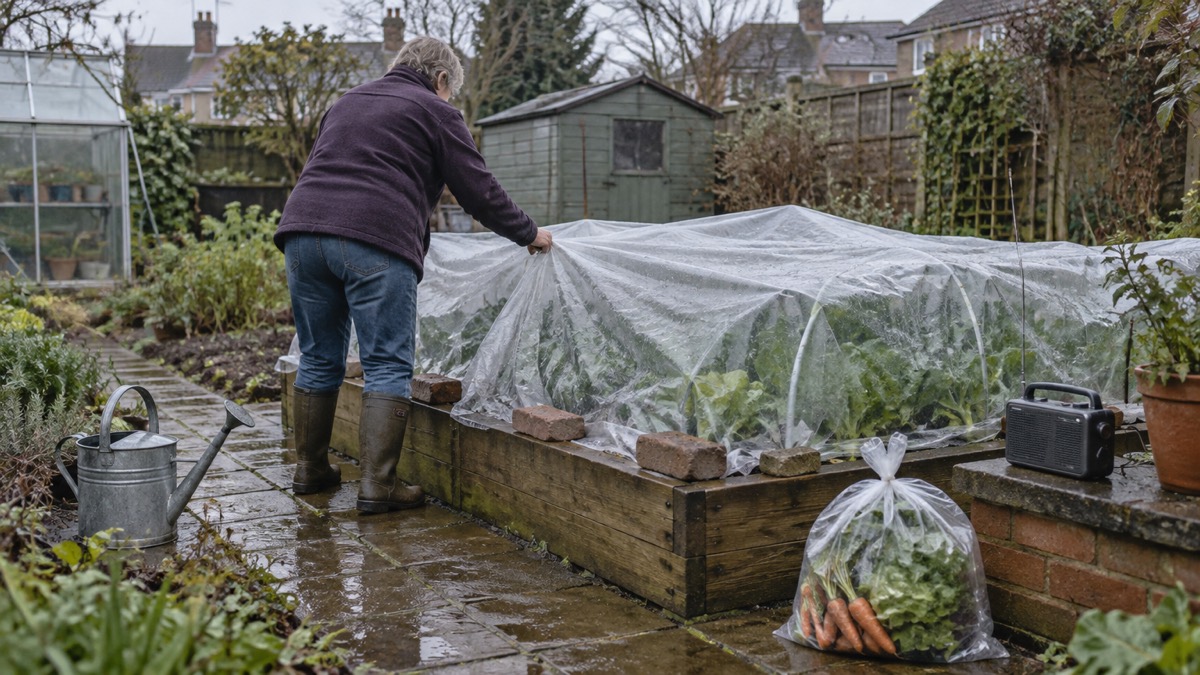
If a nuclear accident happens in the UK, milk and some other foods may be restricted for a time in the area around the release. That does not mean the food in your kitchen is unsafe. The official advice is that it might be necessary to ban milk or other foods containing radioactive material following an emergency, and that a wide range of food supplies and drinking water would be checked against the allowed levels1. The limits on radioactivity in food are deliberately low to reduce radiation dose to minimal levels, and because of that a wide area may be subject to food controls1.
For your household, the practical answer is simple. Keep eating the food you already have. Keep using the cold tap for drinking, cooking and making infant formula unless you are told otherwise2. Wait for official advice before eating produce from your garden, eggs from your own hens, foraged food or wild game. And listen to local radio, television and council websites for the announcement that any restriction has been lifted.
A nuclear accident is one of the risks the National Risk Register places in the low likelihood but highest impact category, alongside a national power outage, a pandemic and large-scale chemical, biological, radiological or nuclear attack3. That is why the plans exist, and why the food checks are prepared in advance rather than improvised.
What a food restriction means for your household
A food restriction is a public health measure, not a sign that everything in your kitchen has become dangerous. The limits on radioactivity in food are set deliberately low to reduce radiation dose to minimal levels, and the consequence is that a wide area may be covered by controls1. In practice that means certain foods from certain places are held back from sale or from your table until monitoring shows they are within the limits.
Restrictions on the consumption of locally grown produce, milk and water sit alongside sheltering, evacuation and stable iodine tablets as standard countermeasures after a radiation emergency4. They are part of a package, and which ones apply to you depends on where you are and what the monitoring shows.
For an ordinary household the effect is mostly on what you buy and what you grow, not on what is already in the cupboard. The food supply chain is long and mixed, and checks would cover a wide range of food supplies and drinking water after an emergency1. If you live outside the affected area, you may notice nothing at all beyond news coverage.
Where arrangements differ across the UK, the same principle applies: official advice for your nation is published by the body responsible for it, and you should follow the version issued for where you live. The radiation emergency page sets out the wider steps to take at home, and Go In, Stay In, Tune In explains the sheltering advice that usually comes with a food alert.
What to do with food, milk and water when an alert is issued
When an alert names food or water, the first move is to stop and check before you eat, drink or feed anyone. The steps below are the ones that matter in the first hours.
- Tune in and keep listening. Official sources include the websites and social media accounts of the emergency services, government agencies and local councils, plus local radio, TV and the internet6. Up to date information on the situation, including what you should do and where to get further details, will be broadcast on local radio and television channels and websites7.
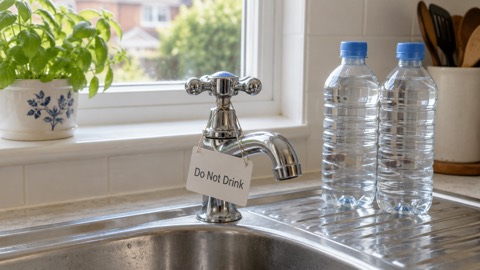
- Use the cold tap for water. Only use the cold tap water for drinking, cooking and making infant formula2. Hot water from a tank or boiler is not drinking water.
- Hold back local produce. Do not eat garden vegetables, eggs from your own birds, foraged food or wild game until you are told they are safe. Restrictions on locally grown produce are a standard countermeasure4.
- Keep eating stored food. Food that is normally stored at room temperature will continue to be safe to eat as you usually would, even if the best before date has passed5.
- Do not throw out your shopping. Unless a specific product or area is named, shop-bought food remains part of the normal supply.
Food already in your home is usually safe to eat
The reassuring part of the official guidance is that your existing store is not in question. Food that is normally stored at room temperature will continue to be safe to eat as you usually would, even if the best before date has passed5. That covers tins, packets, jars and dry goods kept in a cupboard.
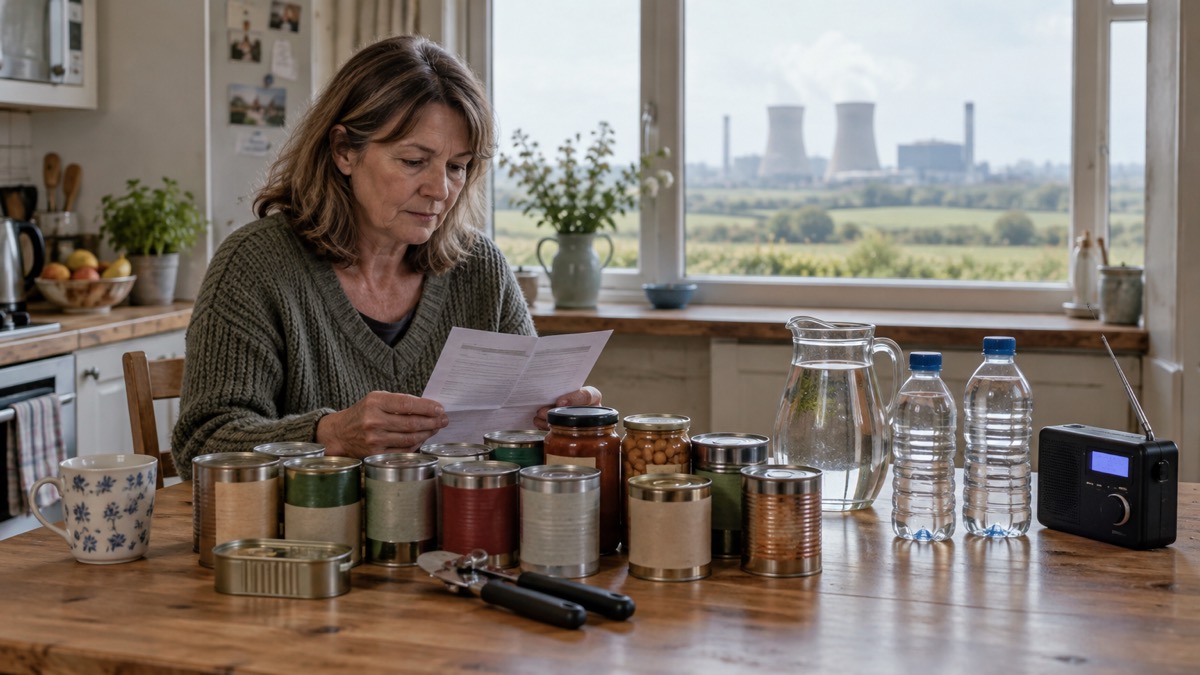
This is why a household food store earns its place. The Be Ready checklist advises food with a long shelf life that does not need refrigeration or cooking, such as tinned meat, fish or vegetables, dried fruit and nuts, and says it is best to buy food you would usually eat9. Greater Manchester's resilience guidance adds bottled water and non-perishable tinned food that does not need cooking, like ready-to-eat tinned meat, fruit or vegetables, plus a tin opener, ready-made baby formula and pet food if needed10.
If the power goes at the same time, ordinary food safety rules still apply. If a power cut has affected your home and you have no electricity supply, it is important you continue to store and prepare food safely11. Consider transferring food to a neighbour's house if theirs still has power12. If in doubt, throw it out12.
| Situation | What to do | Source |
|---|---|---|
| Tinned and dry food in the cupboard | Keep eating it, even past the best before date | 5 |
| Fridge, power off up to 4 hours, door kept closed | Food inside is safe | 13 |
| Fridge, power off more than 4 hours | Throw the food away | 13 |
| Freezer lost power, meat, fish or dairy gone soft | Throw it away | 14 |
| Food touched by flood water | Dispose of it immediately, double bagged if possible | 14 |
The emergency food guide goes further into stores, dates and meals without power.
How restrictions on farm produce and milk work
Restrictions are applied at the point where food enters the food chain, which is why farms and dairies are affected before shops are. After an emergency, a wide range of food supplies and drinking water would be checked to see if they contained more radioactive materials than the allowed levels1. Monitoring of the general public near a nuclear licensed site would be conducted to provide reassurance, with initial monitoring followed up if necessary to assess long-term doses to individuals1.
That monitoring is not new. Following the Chernobyl nuclear power accident in 1986, Northumberland County Council continues to measure background radiation in order to monitor changes and track those caused by nuclear incidents15. The habit of measuring, and of keeping the records, is what allows a restriction to be targeted rather than blanket.
For a household, the practical points are these:
- Milk and dairy may be restricted first, because they come from animals grazing outdoors and are consumed quickly.
- Locally grown produce may be restricted, alongside milk and water, as one of the consumption restrictions applied after a radiation release4.
- Water may be restricted, because drinking water supplies are checked alongside food1.
- Shop-bought food from elsewhere continues to flow through the normal supply chain.
The radiation monitoring page explains how readings are taken and published, and Living Near a Nuclear Site covers the planning zones and information booklets that come with them.
Why milk is checked first after a release
Milk is the food most closely watched after a release, for reasons that are easy to see once you know how the supply works. It comes from animals that graze in the open, it reaches the shops quickly, and it is drunk in large quantities by young children. A restriction on milk protects the people who drink most of it.
Dairy is also a food where dates and testing already matter. Some milk and dairy products may have a best before date rather than a use by date, because food businesses use certain technologies during production and the products are tested to make sure they are safe16. That testing culture is what makes a rapid check possible after an emergency.
If you have a baby or young child, the advice on feeding is specific. Carry on breastfeeding or using formula, giving small amounts more often than usual; give small sips of extra water if on formula or solid foods; boil water first for babies under 6 months and let it cool; give regular small sips of rehydration solution; and give small children their usual diet17. Ready-made baby formula in your emergency kit means a restriction on water does not leave you without a way to feed10.
Home-grown food, eggs, foraged food and washing produce
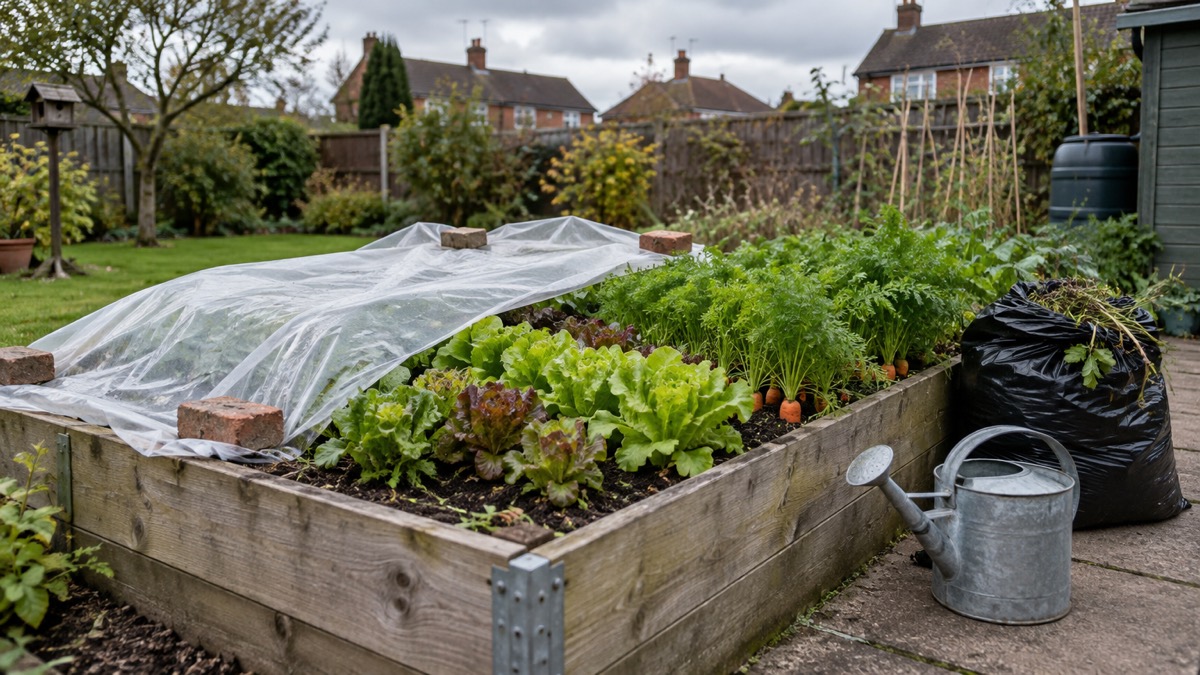
Garden produce, eggs from backyard poultry, foraged food and wild game all sit in the same category after a release: local food that may carry more radioactivity than the limits allow. Restrictions on the consumption of locally grown produce, milk and water are a standard countermeasure4. Treat your own produce the same way until official advice changes.
Washing is worth doing for ordinary reasons but is not a substitute for a restriction. After flooding, clean kitchen surfaces and utensils with hot water, detergent and a food-safe sanitiser, and discard chipped or damaged kitchenware18. Washing does not remove radioactivity that a growing plant has taken up, which is why the advice may be to stop eating the produce rather than to rinse it.
For your own birds and animals, keep pet food and treats in your emergency kit, and remember emergency medication and food for pets19. If you are sheltering, your animals come inside or into a secure outbuilding with stored feed.
Where to get official updates and help
Official information after a nuclear accident comes through the same channels as any other civil emergency. Check official sources including the websites and social media accounts of the emergency services, government agencies and local councils, plus local radio, TV and the internet6. Tune into local radio and television and listen for information20. Watch TV, listen to the radio or check the internet often for official news and instructions as they become available21.
If you need extra help, the Priority Services Register gives priority help in an emergency from energy suppliers22, and it is worth joining before anything happens if someone in your household is older, disabled or medically dependent. The extra help guide explains who qualifies and how to sign up.
For food specifically, your local council's environmental health team is the body that handles food safety questions, and council websites carry the local emergency advice for your area. The staying informed guide covers radios, alerts and keeping in touch when networks are busy.
"Up to date information on the situation, including advice on what you should do and where to get further details will be broadcast on local radio and television channels and websites."
Sources (22)
- Nuclear emergencies: information for the public, GOV.UK, 2026-09-28
- Lead poisoning, NHS Inform, 2026-09-07
- Resilience of the food supply chain to disruptions, National Audit Office, 2026-09-04
- What to do in an emergency booklet 2023 to 2027, Westmorland and Furness Council, 2023
- Food safety in the kitchen: power cuts, Food Standards Scotland, 2026-10-25
- Find and share information in an emergency, Ready Scotland, 2026-03-24
- Preparing for civil emergencies in Argyll and Bute, Argyll and Bute Council, 2026
- Why food is recalled, Food Standards Scotland, 2026-07-07
- Be Ready checklist, UK Government, 2026
- Loss of essential services, Greater Manchester Combined Authority, 2026-10-29
- Strong winds: weather warning information and advice, nidirect, 2026-10-24
- Steps after a fire, North Yorkshire Fire and Rescue Service, 2026-06-17
- How to recover from flooding, GOV.UK, 2023-12-19
- Flooding aftercare in Runnymede, Runnymede Borough Council, 2026-10-26
- Radon and radiation, Northumberland County Council, 2026-10-28
- Use by and best before dates, Food Standards Scotland, 2026-10-25
- Dehydration, NHS, 2026-05-01
- Clearing up after a flood | Oxford City Council, Oxford City Council
- Get help and advice in an emergency, Create an emergency kit - Lincolnshire County Council, Lincolnshire County Council
- Chemical accidents, Fareham Borough Council, 2026-10-29
- Get help and advice in an emergency, Lincolnshire County Council, 2026-10-29
- Priority Services Register, Surrey County Council, 2026-10-28
 Bomb Threat Calls
 Radiation Checklist First Hour
 Power Cut Kit Checklist
 Where to Hide in an Attack
 When Armed Police Arrive
 Young People in a Terror Attack
 Family Caught in an Attack
 Suspicious Letters and Parcels
 Reporting Terrorist Content
 Corrosive Attack First Aid
 Tap Water Safety
 Shelter or Evacuate
 Collecting Children at School
 Martyn's Law at Venues
 Sellafield Emergency Advice