
If you are caught up in a terror attack, the police advice is the same for everyone, whatever your age: Run, Hide, Tell. Run if there is a safe route. If there is not, hide, lock or barricade yourself in, be quiet, silence your phone and turn off vibrate. Call 999 when it is safe to do so1.
That is the whole of it in three words. The rest of this page is about what those three words mean in practice when you are a teenager: whether to stay with your friends, what to do with your phone, what armed police might say to you, and where to get support afterwards.
The guidance is published by Counter Terrorism Policing on ProtectUK and is used in schools and colleges as learning material1. It is not about making you frightened. It is about giving you something clear to do if the worst happens, so that you are not left guessing.
Run, Hide, Tell: the three steps to follow in an attack
Run, Hide, Tell is the national advice for a marauding terrorist attack, the kind where someone is moving through a place trying to hurt as many people as possible2. It is taught in schools and colleges precisely because young people may be caught up in an attack at a venue, on transport or in the street, and because a few simple actions, rehearsed in advance, make a difference3.
The three steps are in order of preference. Running is always the best option if there is a safe route to do so5. Hiding is what you do when you cannot get away. Telling the police is what you do once you are safe, so that they can stop the attack and help the injured2.
The Run, Hide, Tell page sets out the full guidance. The terrorism threat page explains the kinds of attack that happen in the UK, and the threat levels page explains what the current threat level means. You do not need to know any of that to act on the three words, but understanding the background can make the advice feel less abstract.
One point worth knowing before anything happens: the police rely on the public to report suspicious activity, and they say your information may be vital6. If something feels wrong, trust your instincts and report it7. The report suspicious activity page explains how.
Run: get away if there is a safe route
If there is a safe route, run. The police guidance is blunt about this: running to a place of safety is a far better option than to surrender or negotiate8. Escape if you can, and consider the safest options as you go1.
Before you move, ask yourself one question: can you get to safety without exposing yourself to greater danger? If the answer is yes, go. If the answer is no, hide instead1.
When you run:
- Leave your belongings behind. Official advice is to leave belongings behind and insist others go with you1.
- Insist others come with you, but do not let their indecision slow you down1.
- Do not attempt to film the incident. Official guidance says this explicitly1.
- Be aware of your exits as you move, and try not to get trapped2.
The hardest part for a teenager is often the question of friends. The guidance answers it: insist others leave with you, but do not let their indecision slow you down1. That is not callous. It is practical. If you stay and are hurt, you cannot help anyone. If you get out, you can tell the police where your friends were last seen, and that information may be what helps them.
Hide: what to do when you cannot get away
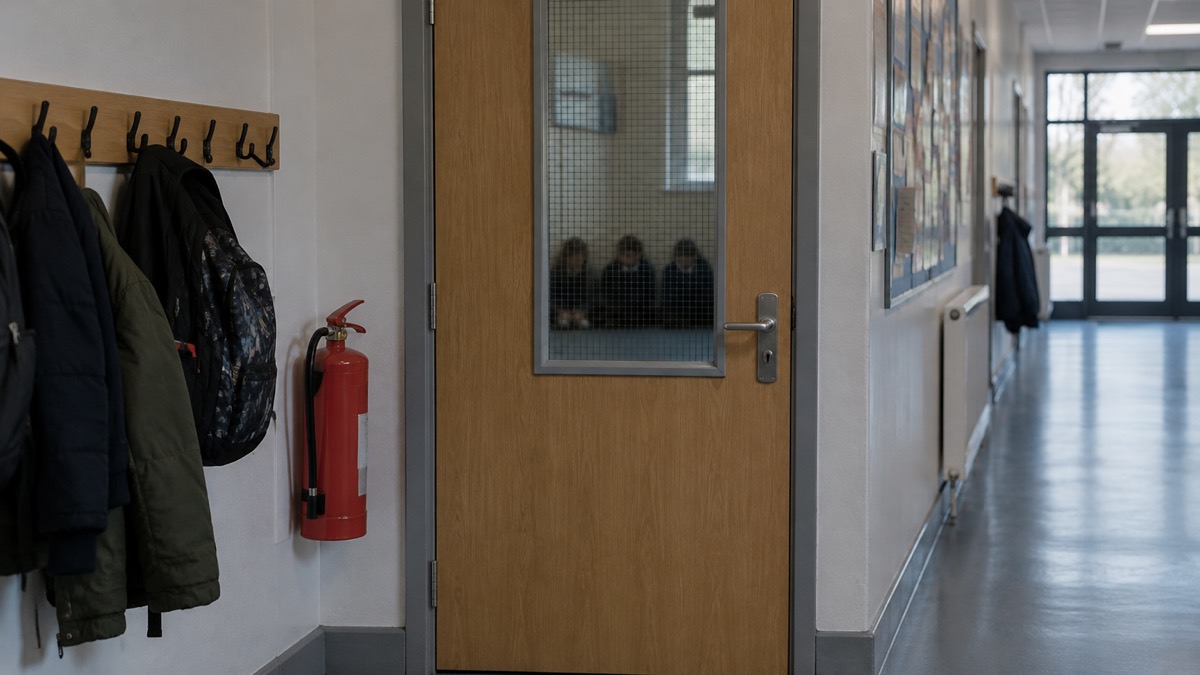
If you cannot run safely, hide. The police guidance on hiding is specific, and each detail matters1.
Find cover that can withstand threats such as a knife attack or gunfire, for example substantial brickwork or heavy reinforced walls2. Remember that if you can see the attacker, they may be able to see you. Cover from view does not mean you are safe1.
Once you are hidden:
- Lock or barricade yourself in. Use whatever is to hand1.
- Move away from the door. Do not stand behind it1.
- Be quiet. Silence your phone and turn off vibrate1.
- Be aware of your exits. Try not to get trapped2.
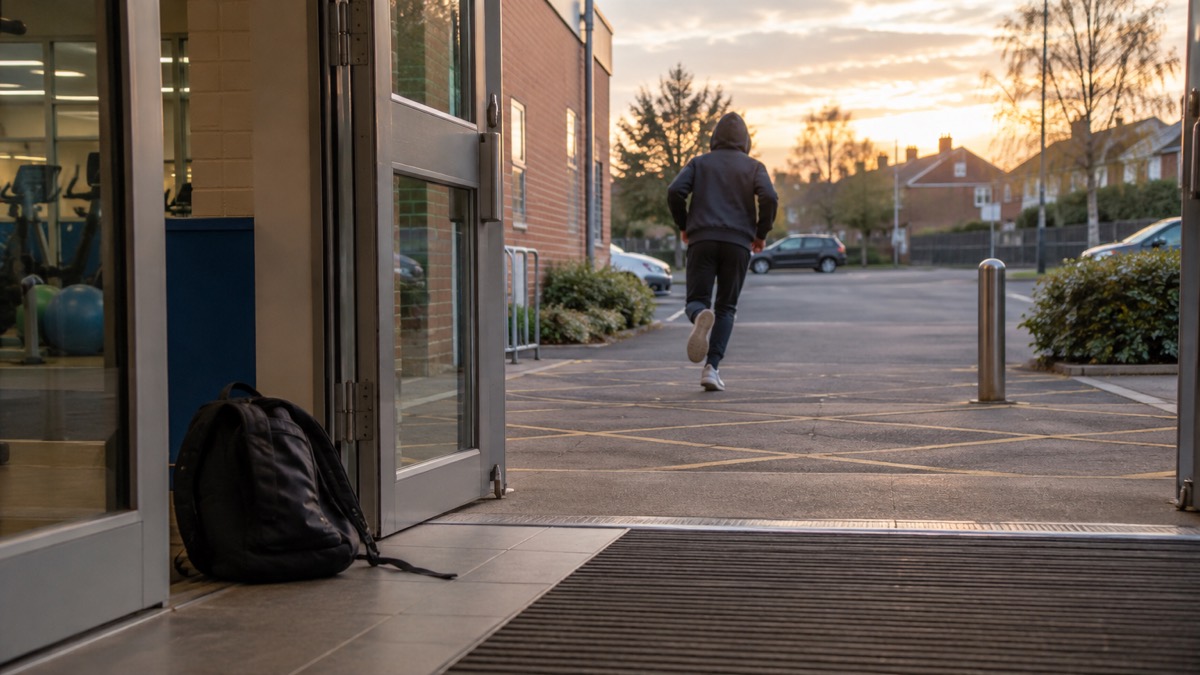
The phone point is the one young people ask about most. A ringing phone or a buzz can give away your position. Put it on silent and turn vibrate off, but keep it with you so you can call 999 when it is safe1. The where to hide page goes into more detail about choosing a hiding place.
Tell: call 999 when it is safe to do so
Once you are safe, call 999. The police guidance is to tell them only when it is safe to do so5. If there is a threat to life, call 999 and ask for the relevant emergency response service10.
When you get through, the call handler will want specific information. The police list it as follows2:
| What they ask | What to tell them |
|---|---|
| Nature of the incident | What is happening? |
| Location | Where is it? Give an address or general location. |
| Suspects | Where are the suspects? |
| Direction | Where did you last see them? |
| Descriptions | How many, what features, clothing? |
| Further information | Casualties, injuries, building layout, entrances, exits, hostages |
You do not need to have all of it. Give what you can, clearly2.
If you cannot speak safely, you can still call 99911. For non-emergencies, the police can be contacted online, including to report a possible terrorist threat2.
After an attack: helping police and getting support
Once the immediate danger is over, the police will need information from witnesses. If you saw anything, tell them. Trust your instincts and report anything that could potentially be related to terrorism1.
Support is available for anyone who has been affected by a terrorist incident2. The Victims of Terrorism website provides information on how to get help and advice, and signposts official helplines and support services for victims, survivors, witnesses, family members and all those affected2. The support for victims page explains what is available.
Most people exposed to a traumatic event benefit from informal support: sharing feelings with others who had similar experiences, speaking with people they trust, sticking to a routine and paying attention to healthy living12. You do not need to have been injured to be affected. Witnessing an attack, being nearby, or worrying about a friend can all leave a mark.
If you are worried about someone close to you becoming radicalised, act early and seek help. The sooner you reach out, the quicker they can be protected from being groomed and exploited by extremists13. The radicalisation page explains the signs and where to get help.
What armed police may tell you
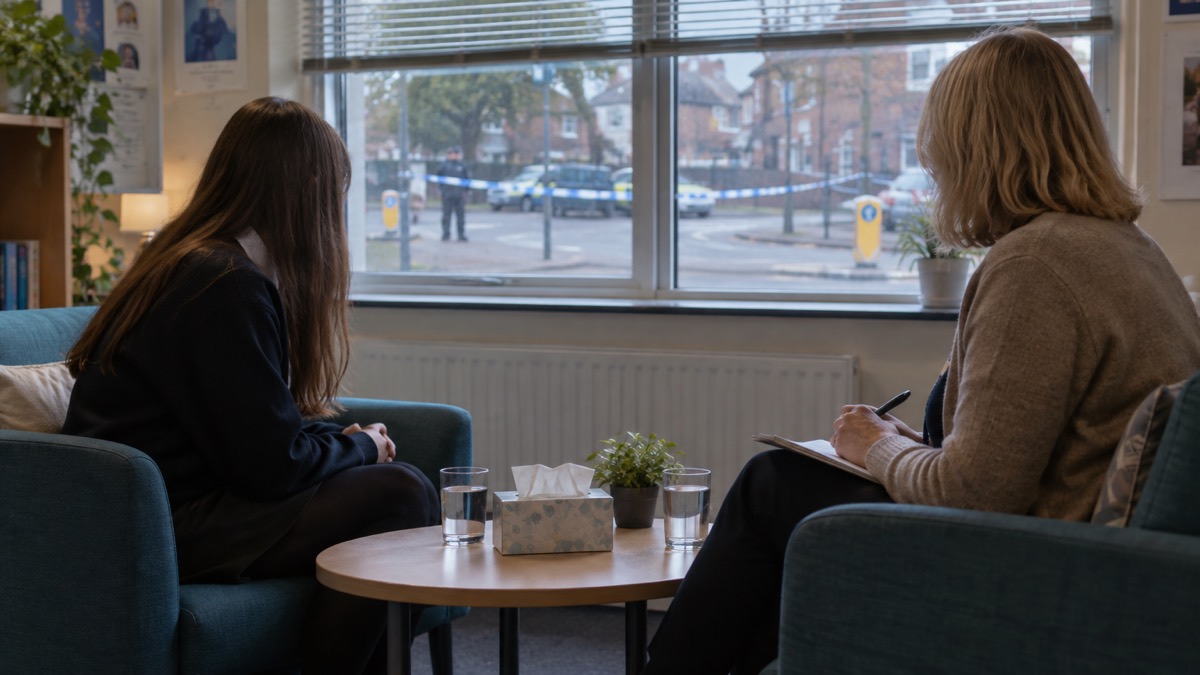
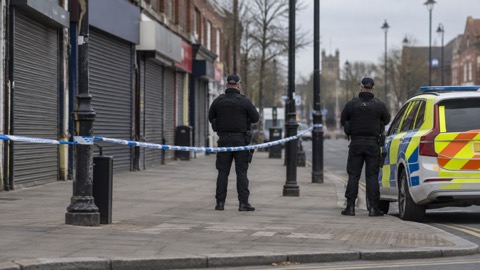
Armed police may arrive quickly and may not know who you are or whether you are involved. Their priority is to stop the threat. They may shout instructions at you, and those instructions may feel frightening or unfair4.
Follow them. Stay calm, avoid sudden movements that may be considered a threat, and keep your hands in view4. Do exactly as they say, even if it feels wrong in the moment. The armed police page explains what to expect in more detail.
If you are with friends, do not try to explain or negotiate. Follow police officers' instructions, remain calm, avoid sudden movements that may be considered a threat and keep your hands in view4.
Attacks at school or college
The same Run, Hide, Tell advice applies at school or college. Schools and colleges use this guidance as learning material, and staff should know what to do3.
If you are at school when an attack happens:
- Follow staff instructions. Your child's school should have plans and procedures in place to deal with different types of emergencies14.
- Run if you can get out safely. Do not wait for permission if there is a clear route1.
- Hide if you cannot. Lock or barricade yourself in, silence your phone and turn off vibrate1.
- Call 999 when it is safe. Give the location and what you know2.
Schools should have plans and procedures in place to deal with different types of emergencies, including severe weather, loss of utilities and fire14. The same planning applies to security incidents. If you are a student in accommodation, pay attention to fire drills and never ignore alarms; the same discipline of knowing your exits applies15.
Filming, posting and what not to do
Police guidance is clear: do not attempt to film the incident1. Filming can put you in danger, can alert an attacker to your position, and can spread rumour and misinformation.
If you see content online that praises terrorists, incites violence, stirs up hatred against any religious or ethnic group, or gives bomb-making instructions, report it. The police list these as examples of online content to report7. The report online content page explains how.
If you are worried that someone you know might be at risk of getting involved in terrorism, do not rely on others to report it. Report any concerns you have about anyone, adult or child, who you think may be vulnerable to being drawn into extremism, as support is available to them16.
Sources (16)
- Run, Hide, Tell, ProtectUK, 2026-05-21
- Protect Yourself: Terrorist Attack, Lancashire Prepared, 2026-10-29
- Run, Hide, Tell School Teaching Guide, ProtectUK, 2021-10-13
- Physical Threats, ProtectUK, 2022-10-06
- Are You Ready Booklet, Culham Parish Council, 2025-09
- Malicious Threats and Security Incidents, West Yorkshire Prepared, 2026-10-29
- ACT Report Suspicious Activity, ProtectUK, 2026-06-01
- Terrorism, Prepare Campaign, 2026-10-12
- Preparing for an Emergency: Be Ready, Stay Safe, Act Now, Sussex Police, 2025-10
- 24 Hour Emergency Numbers, Cornwall Council, 2026-02-04
- Get Help and Advice in an Emergency, Lincolnshire County Council, 2026-10-29
- 2023 National Risk Register, Cabinet Office, 2023
- ACT Early, ProtectUK, 2026-06-01
- Get Prepared for Emergencies, Prepare Campaign, 2026-10-21
- Student Safety, Devon and Somerset Fire and Rescue Service, 2026
- ACT Report Suspicious Activity, ProtectUK, 2026-06-01
 Bomb Threat Calls
 Radiation Checklist First Hour
 Power Cut Kit Checklist
 Where to Hide in an Attack
 When Armed Police Arrive
 Family Caught in an Attack
 Suspicious Letters and Parcels
 Reporting Terrorist Content
 Corrosive Attack First Aid
 Tap Water Safety
 Shelter or Evacuate
 Collecting Children at School
 Food After a Nuclear Accident
 Martyn's Law at Venues
 Sellafield Emergency Advice