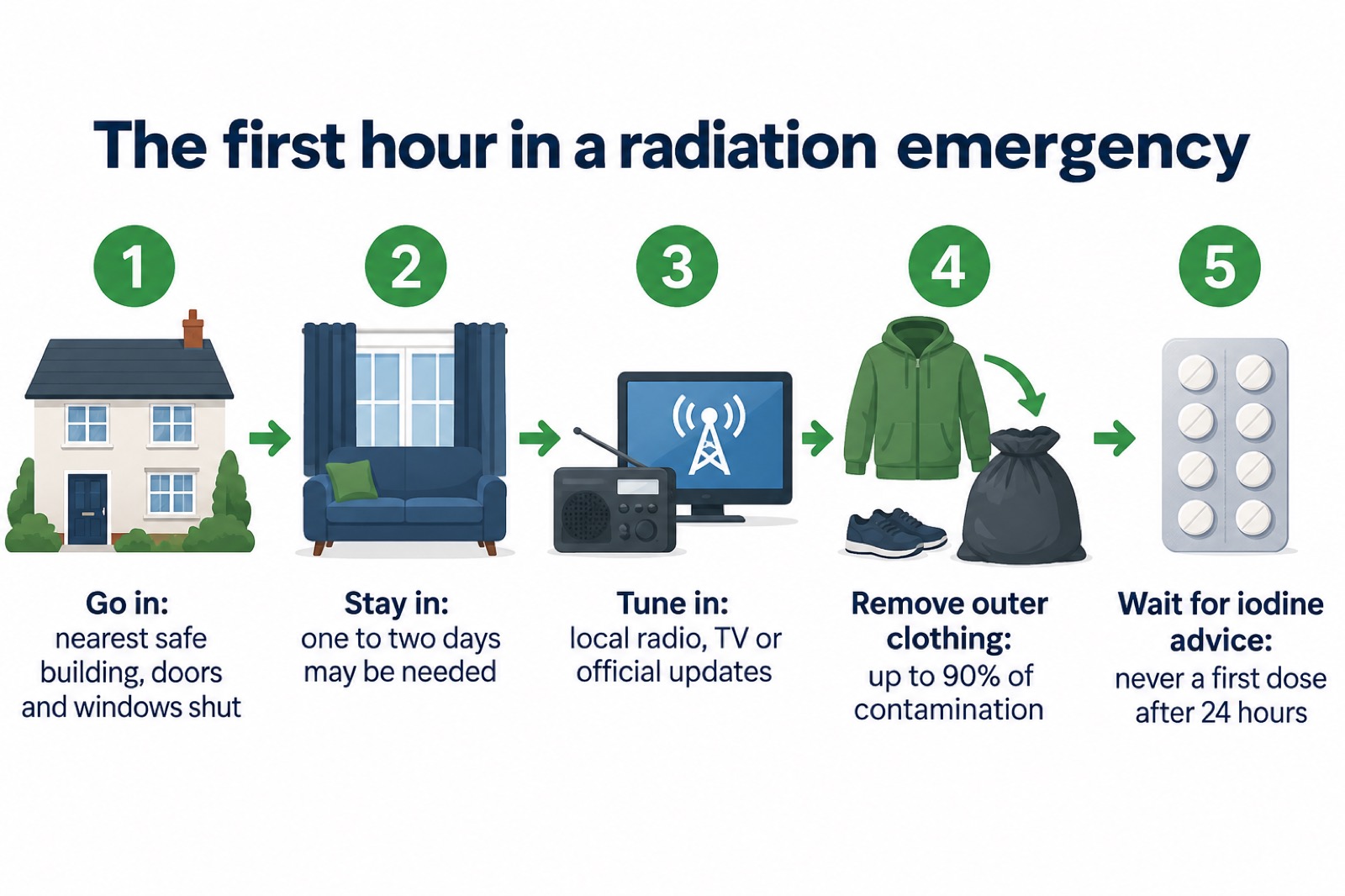
If you are told there has been a radiation emergency near you, the single most useful thing you can do in the first hour is get inside a building and stay there. Official advice is to go in, stay in and tune in: close doors and windows, keep away from external walls, and follow local radio, television or official online updates1. You may need to stay indoors for one to two days2.
Radiation is not like smoke or a chemical cloud. It cannot be seen, heard, smelt, tasted or felt, so everything will look normal outside even when something serious has happened2. That is why the instruction to shelter matters more than your own senses, and why you should act on the warning rather than wait for evidence.
This checklist sets out what to do in order, what to have ready, how to strip contamination from clothes and skin, and when stable iodine tablets are, and are not, the right step. It is written for ordinary households, including those living near a nuclear site or naval base where these warnings are most likely.
The first-hour checklist
Work through this in order. The first three items are the ones that matter most, and they take minutes.
Radiation looks normal: you will not see, smell or feel it
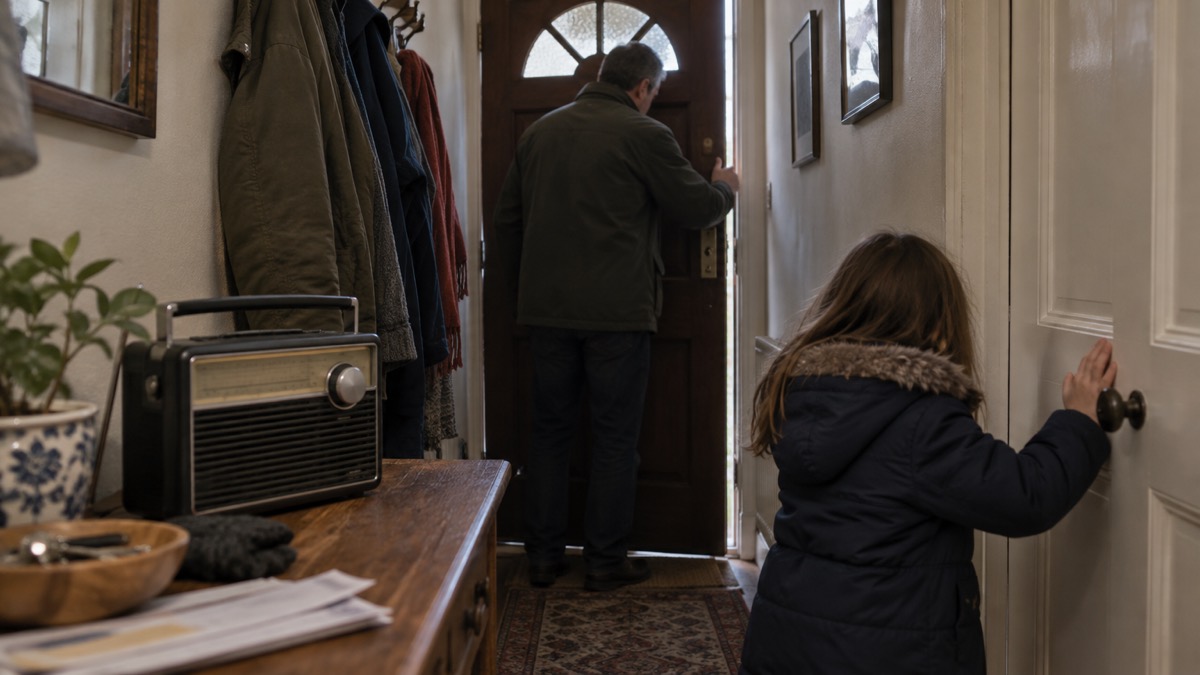
The hardest part of a radiation emergency for an ordinary household is that nothing looks wrong. Official guidance is blunt about it: with radiation everything will look normal and you will not see, smell or feel anything different3. Radiation cannot be seen, heard, smelt, tasted or felt, so it is important to follow the advice given to you, even if you cannot tell that anything has happened2.
There are three ways radiation from a release can reach you: breathing in radioactive materials, direct exposure to material carried in the air or deposited on surfaces, clothing or skin, and eating or drinking contaminated food or water1. Sheltering indoors addresses the first two, which is why it is the headline action. Food and water restrictions, where they are needed, come later and are announced officially.
"Radiation cannot be seen, heard, smelt, tasted or felt, so it is important that you follow the advice given to you, even if you can't tell that anything has happened."
This is also why you should not go outside to investigate, and why the advice to stay put applies even if the street looks entirely ordinary. If you are not involved in the incident but are close by or believe you may be in danger, the usual advice is go in, stay in, tune in5.
There is one important exception. There are always going to be particular occasions when you should not go in to a building, for example if there is a fire5. If your home is on fire or structurally unsafe, get away from it and follow the instructions being broadcast. The rule is to shelter from the radiation, not to shelter inside a danger.
Removing outer clothing takes off around 90% of contamination
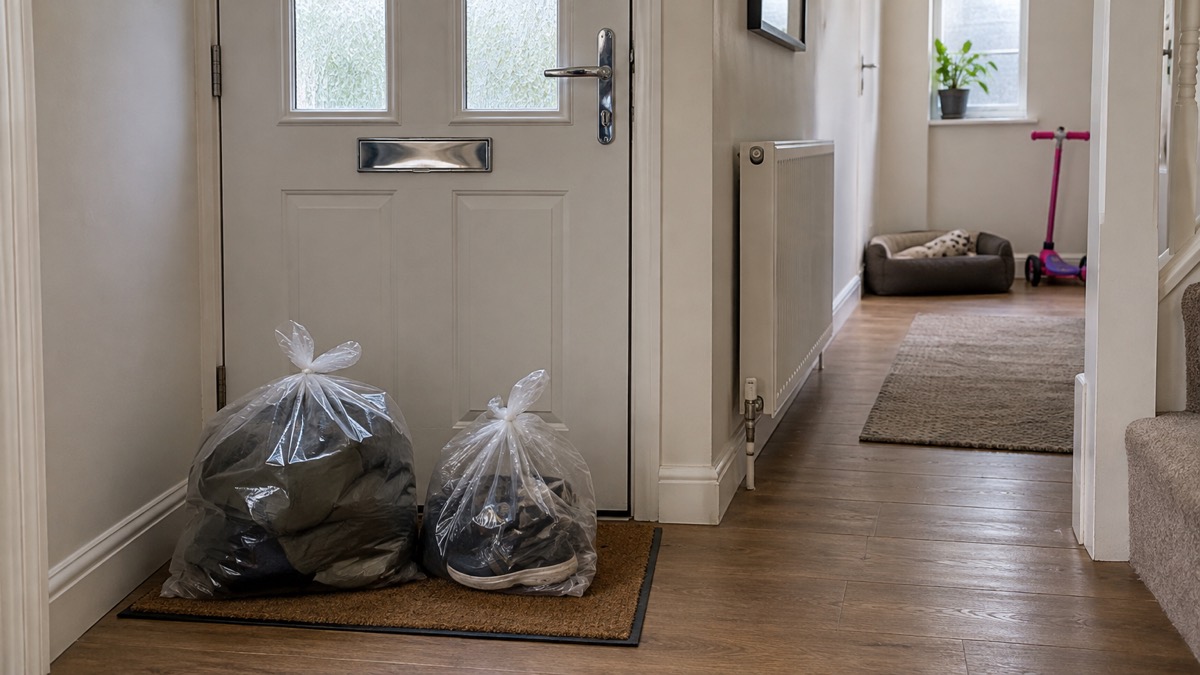
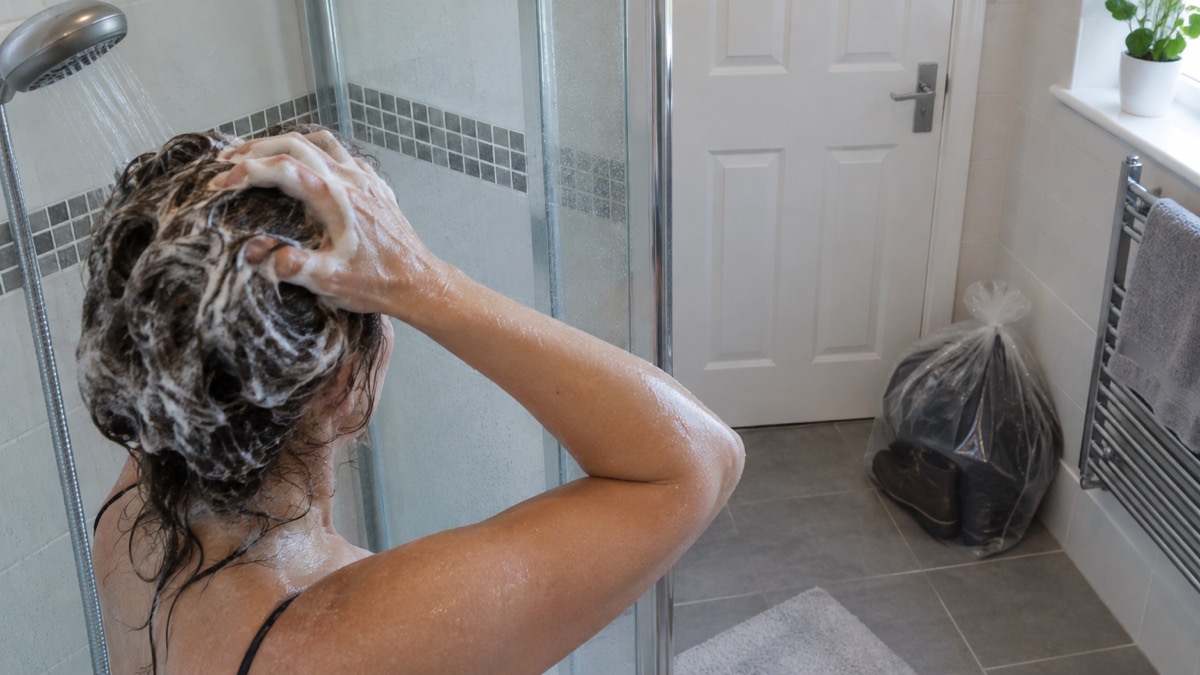
If you were outside when a release happened, or you are not sure, the simplest decontamination step is also the most effective. Studies show that simply taking off your outer clothing can remove around 90% of the contamination1. The UK Health Security Agency puts it as up to 90% of radioactive material removed by taking off the outer layer of clothing4.
Do it carefully:
- Take off outer layers first. Coat, jacket, shoes and outer garments come off before anything else4.
- Avoid pulling clothing over your head where you can, as this can spread material onto your face and hair8.
- Bag it and set it aside. Keep removed clothing away from children and pets until you are told how to dispose of it.
- Do not pull off clothing stuck to skin. If clothing is stuck, leave it and seek advice8.
- Wash with simple soap or a mild shampoo. Do not use conditioner when washing your hair, as this can bind contamination to hair1.
- Do not smoke, eat or drink while you are contaminated or handling contaminated clothing8.
If you have a burn, remove clothing and jewellery near the burn unless it is melted or firmly stuck to the skin11. Do not improvise treatment beyond basic first aid. For the fuller process, see Remove, Remove, Remove: What to Do After Contact With a Harmful Substance.
Stable iodine tablets: when to take them and how much
Stable iodine tablets are not a general radiation pill. They work on one specific hazard: radioactive iodine released from a faulty operating nuclear reactor, which can deliver a dose to the thyroid gland12. Taking stable iodine at the right time blocks the absorption of radioactive iodine by the thyroid gland and speeds up the body's ability to remove it, but it does not protect against other sources of radiation1.
Timing decides whether they help or harm:
| When the tablet is taken | What official guidance says |
|---|---|
| Between 24 hours before and 2 hours after exposure | Most effective1 |
| Up to 8 hours after exposure | Can still be useful1 |
| More than 24 hours after exposure | Must not be taken for the first time, as it can increase the radiation dose and cause more harm than benefit1 |
A single dose provides protection for 24 hours1. Doses differ by age, and the booklet issued with the tablets is the authority for your household:
| Who | Dose |
|---|---|
| Adults, including pregnant and breastfeeding women | Two tablets13 |
| Children aged 3 to 12 years | One tablet13 |
| Children aged 1 month to 3 years | Half a tablet13 |
| Babies from birth to 1 month | A quarter of a tablet, crushed in a teaspoon of jam, honey or yoghurt or dissolved in a small quantity of milk formula or juice14 |
Read the patient information leaflet before taking stable iodine tablets1. Do not take them if you are allergic to iodine or have rare conditions including hypocomplementaemic vasculitis, dermatitis herpetiformis, or stage 4 or 5 kidney failure, and pregnant women with thyrotoxicosis should not take them15. If you are allergic to iodine or any of the other ingredients, or have one of those rare conditions, consult your doctor before taking them14.
Very young babies, under three months, and women more than six months pregnant should take the tablets as directed in the leaflet issued with them, but should afterwards be seen by their GP, who will arrange any necessary checks by a paediatrician15. For the full picture on supply, doses and local arrangements, see Stable Iodine Tablets: When to Take Them, Doses and Where to Get Them.
Who gets iodine tablets, and who does not
Stable iodine can only be prescribed and issued to individuals as part of nuclear off-site planning if there is evidence of a threat to health that requires this protective action16. That condition is not met everywhere. At Hinkley Point B in Somerset, the council reports that radioactive iodine levels have been declining since generation ended in August 2022 and are now at negligible levels, so stable iodine tablets are no longer recommended as a protective action there16.
Around naval bases, the picture is different. In Southampton, most residential properties receive tablets from Royal Navy personnel or council staff distributing to the door, and if you are out when they call, the tablets are left with a leaflet telling you what to do14. Legislation requires people living up to 1.5km from an operational berth to be given prior information about a nuclear emergency14. Portsmouth's booklet runs to July 2027, and Southampton's to July 20277.
Schools and nurseries inside these arrangements hold tablets for the children in their care. In Southampton, named schools and nurseries just outside the incident area hold stable iodine tablets for all children and staff14. In Portsmouth, St George's Primary School, Portsmouth Grammar School and Top Tots Day Nursery in the John Pounds Centre hold tablets for all children and staff and will look after children in an incident7.
If you live near a site and have not received a booklet or tablets, do not assume you need them. Check with your council's emergency planning team, and read Living Near a Nuclear Site: Emergency Planning Zones and Information Booklets and Radiation Emergency Plans at Portsmouth, Devonport and Southampton.
Leave children at school: they will be cared for there
The instinct to drive to the school gate is strong and, in a radiation emergency, usually wrong. Portsmouth's resident guidance is explicit: going to collect your children may expose you and them to radiation, and the school will look after them and contact you when it is safe for children to leave7. Warwickshire's advice is the same: do not collect children from school unless you have been told to do so, because they will be properly cared for5.
Schools have plans for this. If a school needs to be evacuated, children will be taken to a safe place nearby and the school will contact you to let you know what to do17. In the Portsmouth area, schools more than 1.5km from the naval base will be told about incidents by the council and will look after pupils living within the 1.5km zone whose parents cannot collect them7. Southampton operates a similar arrangement for pupils whose parents live within the zone14. Schoolchildren are treated as a priority group, looked after either at the school or at a safe place by school staff and those responding to the emergency15.
What you should do instead is make sure the school can reach you. Check that your child's school has the correct contact numbers for you, and that it has plans for emergencies such as severe weather, loss of utilities and fire10. Do that now, before anything happens. For the detailed reasoning, see Should You Collect Children From School in a Radiation Emergency?.
Getting help and asking about tablets
If you have a question about whether to take stable iodine tablets, or any other health concern during an incident, the route is NHS 111. Council booklets tell residents to contact the NHS helpline on 111 with any queries about taking the tablets7, and Portsmouth's guidance says to call 111 or go to www.111.nhs.uk for health issues13.
NHS 111 online can be reached at 111.nhs.uk or through the NHS App on a smartphone or tablet, and there is British Sign Language access through SignVideo and text relay on 18001 11118. Easy read and large print guides to NHS 111 are available if you need them19. In Scotland the non-emergency number is NHS 24 on 11120.
For households that need extra help, such as older or disabled residents or people who rely on medical equipment, plan now for who checks on them and how. Write down contact details of anyone who might need checking on, and a list of any regular medication and doses10. The Extra Help in an Emergency: Older, Disabled and Medically Dependent Households guide covers this in more detail.
Keeping the checklist ready before you need it
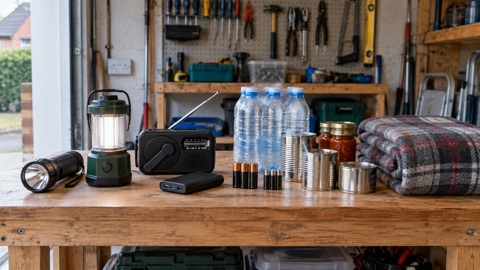
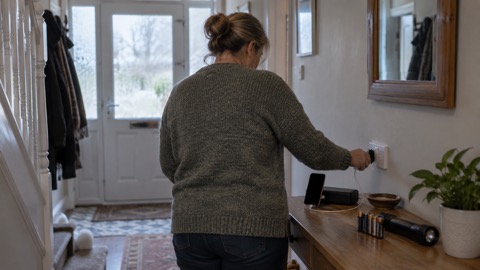
A checklist is only useful if the things on it are already in the house. The core kit for sheltering is modest: your household emergency plan with contact numbers, a battery torch with spare batteries or a wind-up torch, a first aid kit, important documents, bottled water and ready-to-eat food that will not go off, spare keys, spare glasses or contact lenses, toiletries and details of important medicines, a pencil and paper, a penknife and whistle, and pet supplies22. A first aid kit should include waterproof plasters, bandages, a thermometer, antiseptic, eyewash solution, sterile dressings and gloves, medical tape and tweezers10.
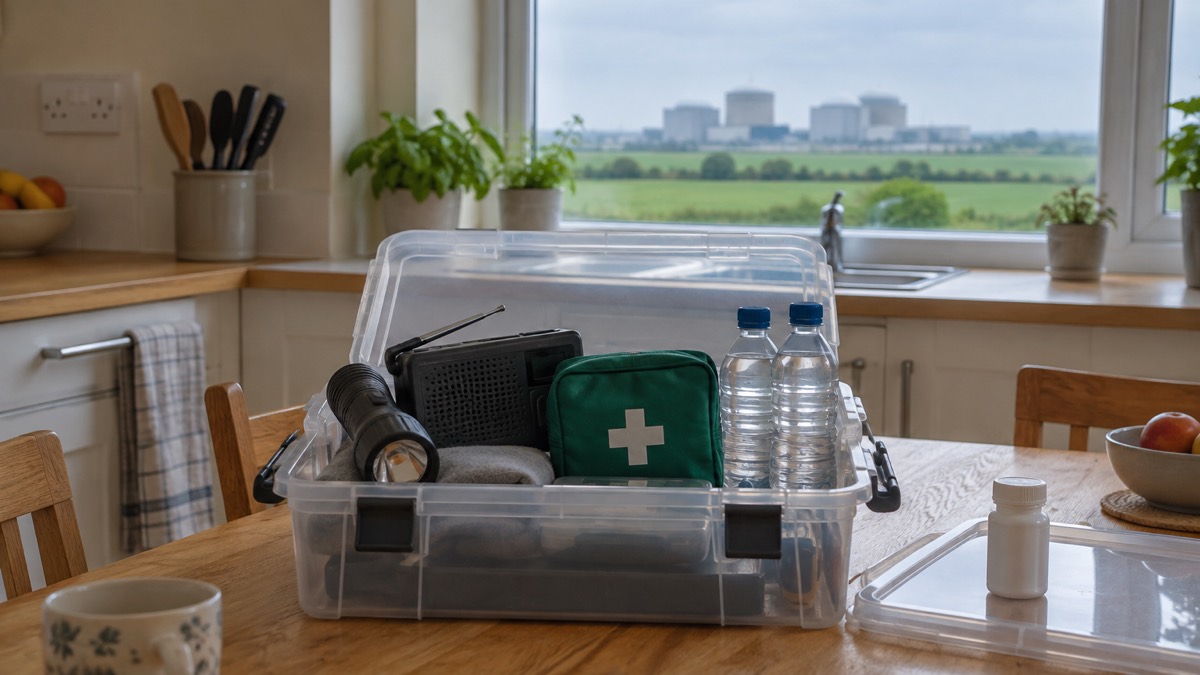
If you have a baby, add infant formula milk, disposable nappies and nappy sacks9. If you have pets, add pet food and treats9. Keep toiletries, hand sanitiser and wet wipes for hygiene23.
If you are ever told to evacuate rather than shelter, the packing list is different: get your family and pets together, pack warm clothing and bedding, medicines or special food, baby food, clothes, nappies, toys and books, and private documents and valuables such as bank books and passports, make sure fires are out and appliances are switched off and unplugged, then lock up and leave13. For the choice between the two, see Radiation Emergency: Should You Shelter or Evacuate?.
Sources (23)
- What to do in a radiation emergency, GOV.UK, 2024
- Hazardous materials incident, Prepare campaign, UK Government, 2026
- Major accident hazards and emergencies, Merthyr Tydfil County Borough Council, 2026
- How to remove radioactive material from your skin and clothes, GOV.UK, 2024
- Emergency advice for residents, Warwickshire County Council, 2026
- Get prepared for emergencies, Prepare campaign, UK Government, 2026
- REPPIR residents booklet, Portsmouth City Council, 2024
- What to do in a chemical emergency, GOV.UK, 2024
- Emergency kit checklist, Lincolnshire County Council, 2026
- Be ready for emergencies, Be Ready campaign, UK Government, 2026
- Burns and scalds first aid, NHS Western Isles, 2025
- Nuclear emergencies: information for the public, GOV.UK, 2026
- Radiation emergency guide for residents, Portsmouth City Council, 2023
- Radiation emergency leaflet for residents, Southampton City Council, 2024
- What to do in an emergency booklet, Westmorland and Furness Council, 2023
- Radiation emergencies, Somerset Council, 2025
- Emergencies at school, Lewisham Council, 2026
- NHS 111 online, NHS England Digital, 2026
- Alternative access to NHS 111, NHS North West Ambulance Service, 2024
- Your Home Emergency Plan, Royal Borough of Windsor and Maidenhead, 2025
- Emergency Alerts, GOV.UK, 2026
- Get Prepared - Carmarthenshire County Council, Carmarthenshire County Council
- Chemical, radiological and nuclear incidents, NHS, 2024
 Bomb Threat Calls
 Power Cut Kit Checklist
 What to Keep Charged