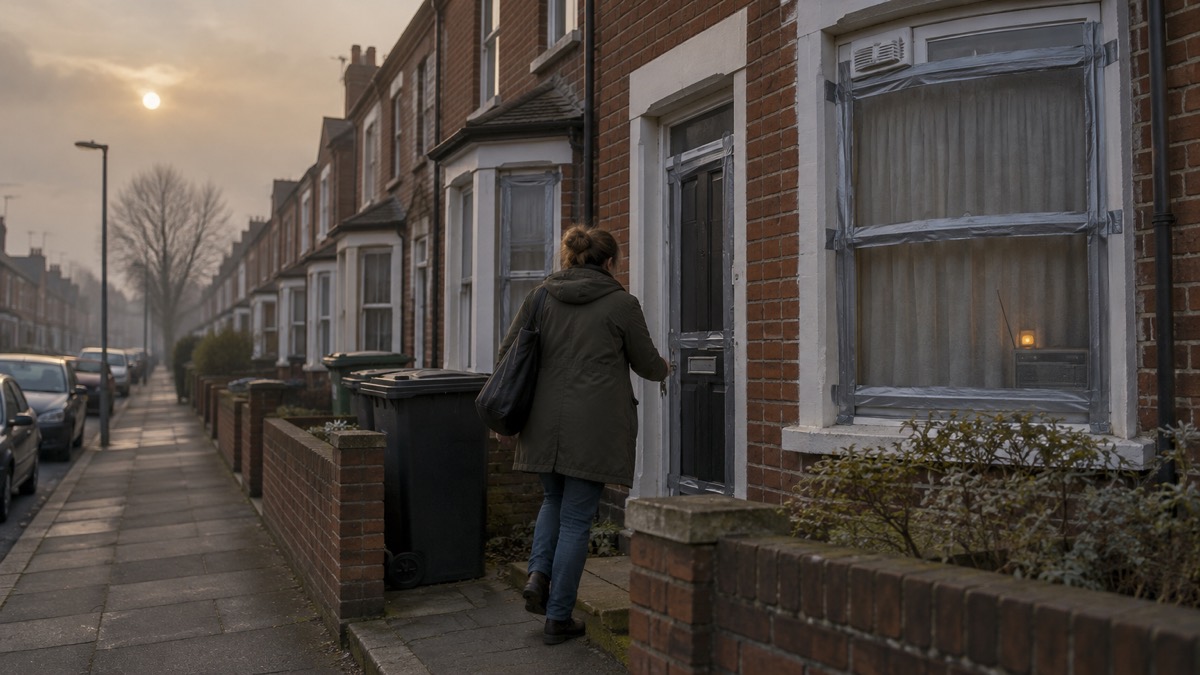
If a chemical leak, a radiation emergency or another major incident happens near you, the advice you are most likely to receive is simple: Go in, Stay in, Tune in. Go indoors as soon as you can, stay there until the emergency services give more advice, and listen to local radio and other media for updates1. You may need to stay indoors for one to two days2.
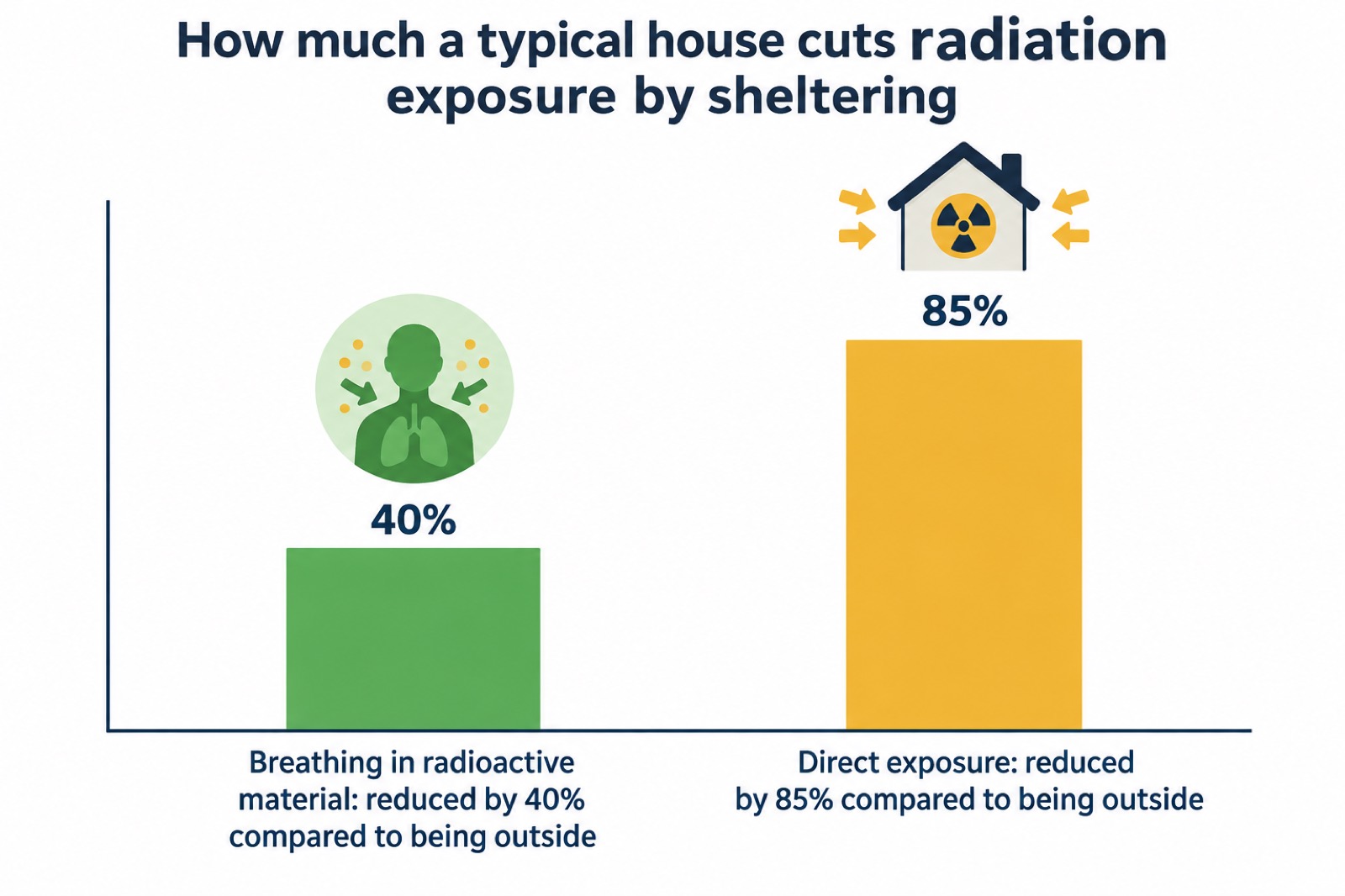
Sheltering indoors is not a token gesture. For a typical house, sheltering in place during a radiation emergency reduces the exposure from breathing in radioactive material by 40% and reduces direct exposure by 85% compared with being outside2. Closing doors, windows and vents, and turning off anything that draws in outside air, turns your home into a barrier between you and whatever is in the air outside3.
This page explains what to do in the first minutes, how to seal your home, how long to expect to stay in, what to do about children at school, and the important exceptions, above all fire, where going in is the wrong answer.
Go In, Stay In, Tune In: what to do if an incident happens near you
If you are not involved in an incident but are close by, or believe you may be in danger, the usual advice is Go in, Stay in, Tune in4. The phrase comes from long-standing UK emergency planning and it is the same drill whether the danger is a chemical release, a radiation emergency or another hazard in the open air. Somerset Council describes it as sheltering, staying there until more advice is given by the emergency services, and listening to local media stations for more information1.
The UK Health Security Agency sets out what each part means in a radiation emergency. Go in: the most important thing to do if you are told you are near a radiation emergency is to go indoors as soon as you can and stay there, close the doors and windows, and stay as far away from external walls as possible6. Stay in: remain indoors until the emergency services tell you it is safe to leave. Tune in: monitor the news and follow official advice on GOV.UK7.
The same drill applies to chemical emergencies. If you are outside and are alerted to a chemical emergency nearby, you should shelter: go in, stay in, tune in3. Central Bedfordshire Council includes the instruction in its home emergency kit advice: in emergency incidents you may be instructed to Go In, Stay In and Tune In until it is safe to leave8.
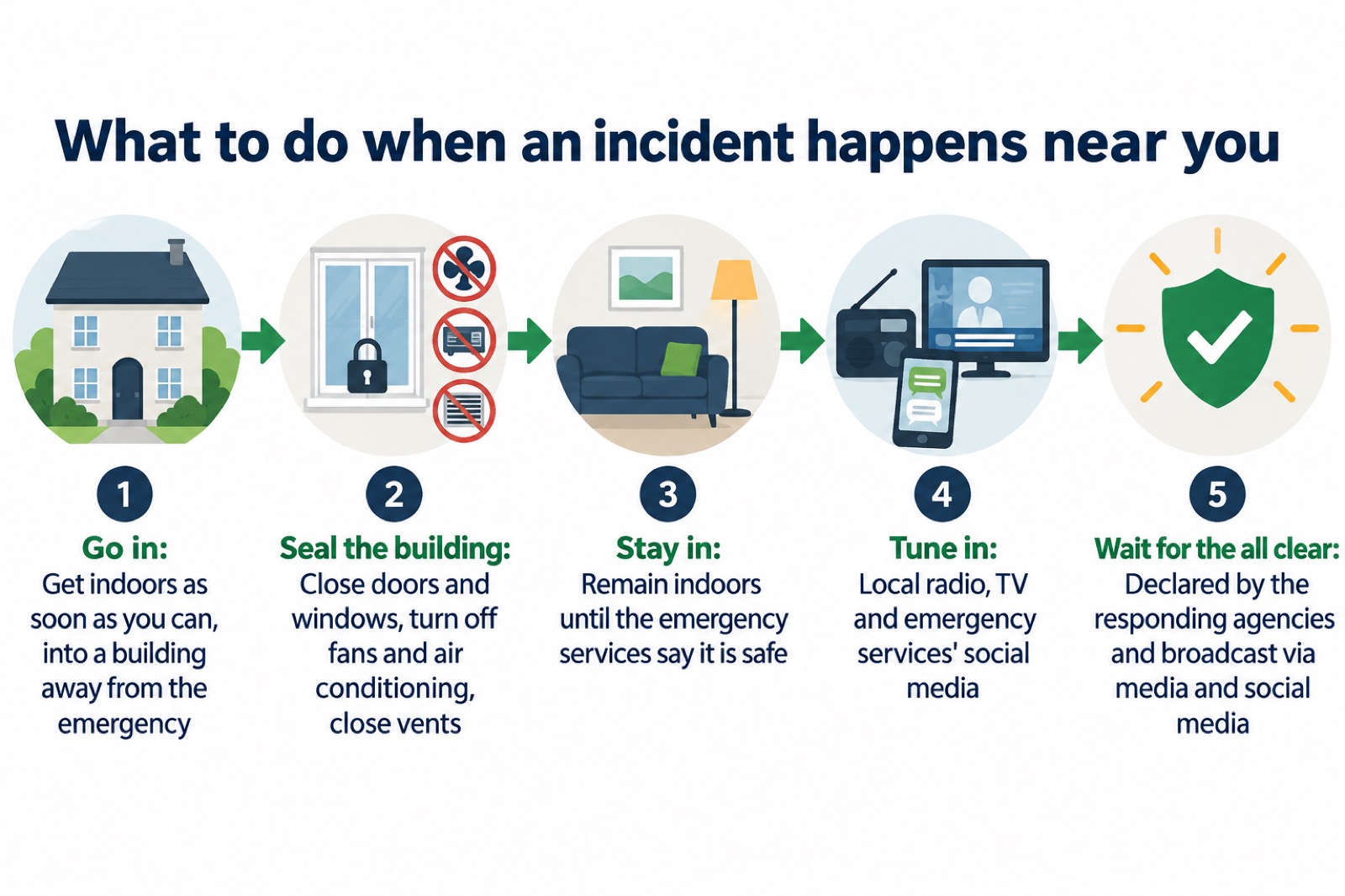
The reason sheltering works is that most airborne hazards dilute and disperse outdoors, while a closed building holds cleaner air inside for hours. Shropshire Council notes that taking shelter in your own home or place of work, closing windows and turning off air conditioning, may be the safest available option10. Greater Manchester's resilience guidance puts the same point plainly: stay in, remain indoors as long as it is safe to do so and wait until the emergency has passed9.
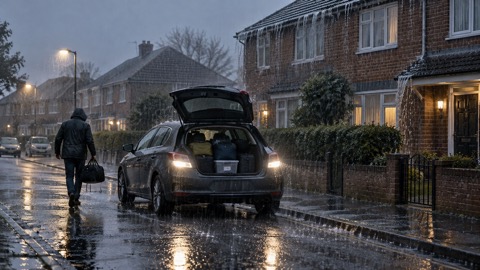
If you are driving when an alert arrives, the government's Emergency Alerts guidance says to find somewhere safe and legal to stop before reading the message11. If there is nowhere safe to stop and no one else in the vehicle to read it for you, you can listen to news on live radio to find out about the emergency11.
Shelter quickly: close doors, windows and vents
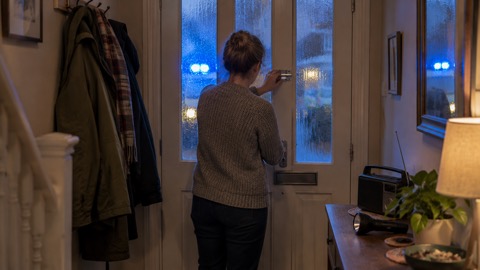
Once you are inside, the priority is to stop outside air coming in. The UK Health Security Agency's chemical emergency guidance is specific: go into a building other than the one with the emergency, close external doors and windows, and turn off equipment bringing outside air in, such as fans and air conditioning, and close air vents including trickle vents3.
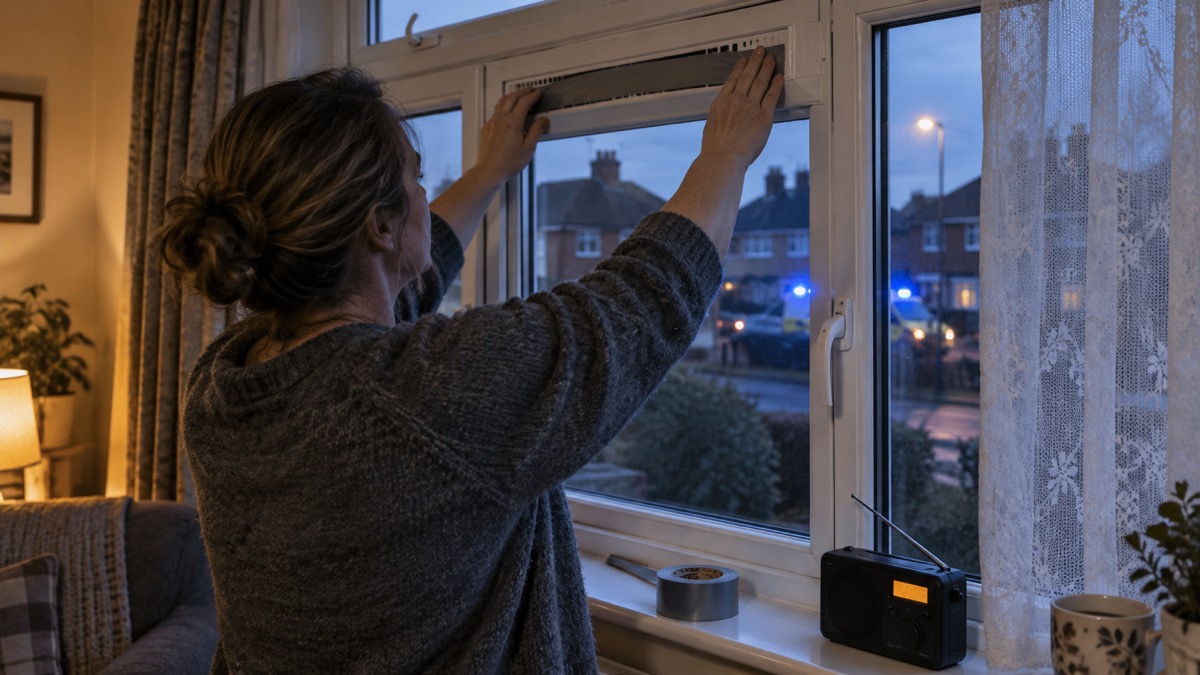
For a radiation emergency near a nuclear site, the advice goes further. Cumbria's Sellafield emergency guidance tells residents to close doors and windows, switch off fans and heating systems, put out open fires and close all ventilators12. The extra steps matter because heating systems and open fires move air through the house, and because a shelter that lasts a day or two needs to stay sealed.
Work through the house in a sensible order:
- Close all external doors and windows, including any on the windward side of the house3.
- Turn off fans and air conditioning units3.
- Close air vents, including the trickle vents at the top of window frames3.
- If the incident is a radiation emergency, switch off heating systems and put out open fires12.
- Move to a room away from external walls, especially in a radiation emergency6.
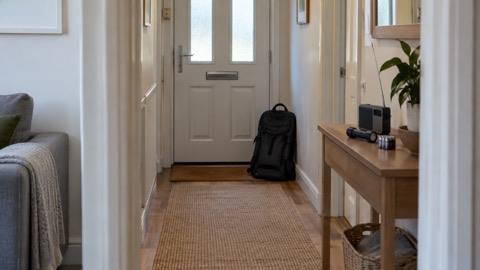
- Take your radio, phone, torch and emergency kit into that room with you.
If you live close to a large chemical site, Lancashire's preparedness advice is to keep the information you were sent about actions to take in an accident in a handy place13. Sites covered by emergency regulations send this to surrounding households in advance, and it names the specific actions for that site.
Stay indoors until the emergency services say it is safe
Staying in is not a judgement you make yourself by looking out of the window. Nottinghamshire's emergency guidance is to stay inside until the emergency is over or you are instructed by the emergency services5. Greater Manchester's advice adds that after an incident you should avoid entering a dangerous area until the emergency services tell you it is safe, and that the best option if you cannot stay in your own home is to stay with friends or relatives, with the local authority possibly opening a rest centre9.
The end of sheltering is marked by an all clear. Shropshire Council explains that when it is safe to do so following an emergency, the responding agencies will declare an all clear, which will be communicated directly to rest centres and via broadcast media and social media10. Until you hear it, assume the advice to shelter still stands, even if the street outside looks quiet.
"When it's safe to do so following an emergency, the responding agencies will declare an 'all clear' which will be communicated directly to rest centres and via broadcast media and social media."
Portsmouth's radiation emergency plan adds a note of reassurance for anyone who has to leave home: entry to evacuated areas will be carefully controlled until the emergency has ended, so do not worry if you have to leave belongings behind14. After the emergency, keep listening and looking for announcements and updates on the news, and watch for long-term safety information in the news and in leaflets15.
Expect to stay in for one to two days
Plan on the basis that sheltering may last a day or two. The UK Health Security Agency's radiation emergency guidance states plainly: "You may need to stay indoors for one to two days"2. The same wording appears in the wider "Go in, Stay in, Tune in" advice that applies to emergencies beyond radiation3.
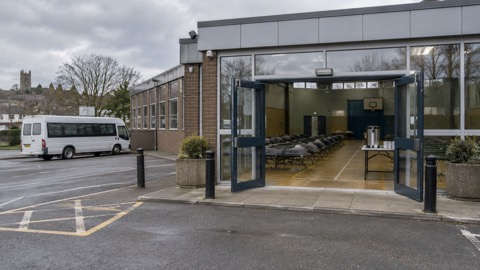
That figure is not theoretical. In rare but serious situations, official guidance says you may need to stay indoors for up to 3 days7. The support arrangements around an incident run to similar timescales: Cornwall Council's guidance on humanitarian assistance describes rest centres opening approximately 2 hours after an event and remaining in operation for 48 hours or so16.
| What | How long it typically lasts | Who says it |
|---|---|---|
| Sheltering indoors after a chemical or radiation emergency | One to two days2 | |
| Risk areas in a radiation emergency exercise statement | Likely duration 2 days17 | |
| Rest centre | Opened about 2 hours after the event, running for 48 hours or so16 | |
| Survivor reception centre | Opened immediately, first few hours16 | |
| Family and friends reception centre | Opened within 12 hours, may run for many weeks16 | |
| Humanitarian assistance centre | Set up within 24 hours, may last some months16 |
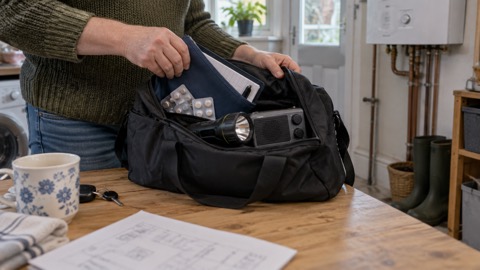
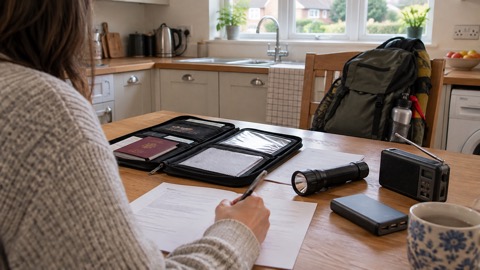
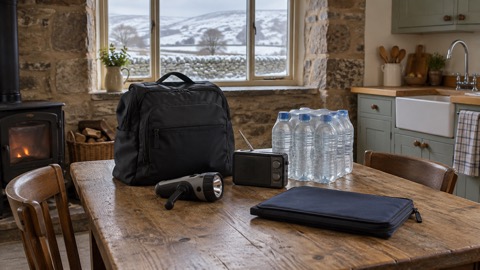
Two days indoors is manageable if you have basic supplies ready. Water, food that needs no cooking, torches, a battery or wind-up radio and any essential medicines are the core of it. Central Bedfordshire Council's home emergency kit advice is built around exactly these Go In, Stay In, Tune In incidents8. Our emergency kit, water and food guides set out what to hold and how much.
Leave children at school: they will be looked after
The hardest instruction to follow in a sheltering incident is usually to leave children where they are. Warwickshire's emergency advice is unambiguous: do not collect children from school unless you have been told to do so; they will be properly cared for4.
The reason is arithmetic. Every trip to a school is a trip outdoors, into the very air you are sheltering from. Portsmouth's radiation emergency plan warns that going to collect your children may expose you and them to radiation, and that the school will look after them and contact you when it is safe for children to leave14. Cumbria's Sellafield guidance says the same: it may not be safe to collect children from school, and they will be looked after as a priority group either at the school or evacuated to a safe place, cared for by the school's staff and those responding to the emergency12.
Schools near nuclear sites are prepared for this. In Portsmouth, schools inside the detailed emergency planning zone, including St George's Primary School, Portsmouth Grammar School and Top Tots Day Nursery in the John Pounds Centre, hold shelter arrangements and stable iodine tablets for all children and staff15. Schools more than 1.5km from the naval base will be told about incidents by the council and will look after pupils living within the 1.5km zone whose parents cannot collect them15. Southampton's plan works the same way, with named schools and nurseries just outside the incident area holding stable iodine tablets for all children and staff in their care18.
If you are ever separated from family in an emergency, the authorities have a route for reuniting you. Cornwall Council describes the Family and Friends Reception Centre, set up to help reunite family and friends with survivors, with the capacity to register, interview and provide shelter16. Argyll and Bute Council's preparedness advice is to pre-arrange meeting points where members of your family and those close to you can gather in an emergency19. Agreeing those now, as part of a household emergency plan, saves difficult decisions later.
Tune in to local radio and media for updates
Tuning in is the third leg of the drill, and it is how you will learn when sheltering ends. Greater Manchester's guidance is to listen to local radio stations and TV channels and check emergency services' social media channels for the latest information9. Argyll and Bute Council adds that up-to-date information on the situation, including advice on what you should do and where to get further details, will be broadcast on local radio and television channels and websites19.
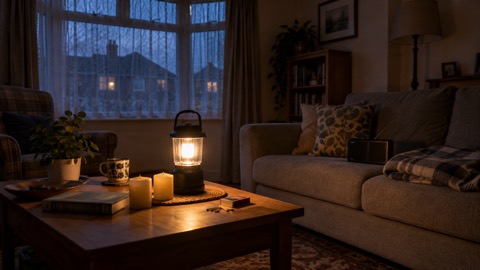
A battery or wind-up radio is the dependable way to do this, because it works through a power cut and does not depend on your phone holding charge. Our staying informed guide covers what to keep ready.
Local arrangements vary slightly, so know your local channels before you need them:
- In Lancashire, the advice during an industrial incident is to tune into local radio stations or follow #lancsalert for further information13.
- In North Wales, flood warnings are also broadcast on local TV and radio, and North Wales Police's social media carries the latest on road closures20.
- Nationally, the government's Emergency Alerts service can send a message to your phone, but if you are driving you should find somewhere safe and legal to stop before reading it11.
In a chemical emergency, the emergency services will update which areas should shelter and for what duration, because the distance from the release and the direction affected may change over time6. That is why tuning in is continuous, not a one-off: the advice for your street can change as the plume moves.
When you should not go into a building
Go in, Stay in, Tune in has a built-in exception, and it matters. Nottinghamshire's guidance warns that during some emergencies it may not be safe to go in to a building, for example if there is a fire5. Warwickshire's advice says the same: there are always going to be particular occasions when you should not go into a building, for example if there is a fire4.
Fire is the clearest case. If fire or smoke is in your own flat, Manchester Fire and Rescue Service's Stay Safe advice is to alert anyone else in your flat, close the door to the room where the fire is, get out making sure the flat door closes behind you, call 999 and ask for Fire, and leave using the stairs if you can21. Do not try to fight the fire, stop to collect belongings, go back into your flat, use the lifts, or re-enter the building until told it is safe21. Essex's advice for anyone trapped by fire is blunter still: don't stop or go back in to the building for any reason22.
If you live in a block of flats, your building will have a fire strategy, and you should know which one applies to you. Dorset and Wiltshire Fire and Rescue Service explains that if your landlord has advised you to stay put in the event of a fire, that advice is based on an individual fire risk assessment for that building23. Buildings are designed so that rescues can take place internally: in normal circumstances, during a fire within a flat, communal corridors and staircases should remain smoke free, allowing firefighters to carry out rescues from within the building23. Surrey Fire and Rescue Service's Stay Put guidance adds that if a fire starts within a flat, everyone in that flat should be alerted, make their way out of the building and call the fire and rescue service24.
If you cannot get out of your flat, move to a room away from the fire and call 999, keep the door closed and use towels or bedding at the bottom of the door to stop smoke getting in21. Surrey's guidance for a blocked escape route is to find a safe room, close the door and use soft materials to block any gaps, then go to a window, raise the alarm and call 999, describing where you are and the quickest way to reach you24. If the fire is directly outside your flat, seal your front door with tape, bedding or clothes, close any ventilators and phone 99922.
Once you are out, stay out and make yourself useful to the firefighters. Manchester Fire and Rescue Service advises you to stand at the main entrance to the building in a safe place, wait for the fire service, and when they arrive tell them where your flat is, where in your flat the fire started and what is on fire25. You should not try to re-enter the building until told it is safe to do so by a firefighter25. If you choose to leave a building during a fire elsewhere in it, you may not be able to re-enter until firefighters have dealt with the fire, meaning you may not be able to go back to your flat for a few hours21.
Cordons work the same way for chemical incidents. Lancashire's industrial incident advice is: do not enter property that is within a cordon until you are told it is safe to do so13. Our stay or leave and evacuation pages cover the decision in more depth.
Radiation incidents: everything will look normal
A radiation emergency is unsettling in a way a fire or flood is not, because nothing looks wrong. There is no smoke, no smell and no visible plume. The government's radiation emergency guidance for the public is built around this: the danger is invisible, so you act on official information, not on what you can see2.
The monitoring that stands behind the advice is continuous. Nottingham City Council describes RIMNet, the network set up after the nuclear reactor disaster at Chernobyl in 1986, which monitors radiation levels in the UK and alerts from other countries and advises the government and local authorities on appropriate action following a radiation incident26. When you are told to shelter, that instruction rests on live measurement, not guesswork.
The scale of the protection is worth knowing. For a typical house, sheltering in place reduces the exposure from breathing in radioactive material by 40% and reduces direct exposure by 85% compared to being outside2. Those two figures are the whole logic of Go in, Stay in, Tune in in a radiation emergency: a closed house between you and the source cuts most of the dose.
Two further points from the official guidance. First, if a radiation emergency happens outside the UK, it is very unlikely that you will need to do anything different from normal if you are in the UK at the time2. The Surrey Community Risk Register does list a radiation release from an overseas nuclear site as a high-level risk on its register27, but the action for households in the UK in that scenario is the same drill, and only if told. Second, households near licensed nuclear sites receive specific advance information: around Portsmouth's naval base, stable iodine tablets are distributed to all households within a 1.5-kilometre radius of the nuclear berths in accordance with emergency regulations15, and Southampton's equivalent distribution covers all households within a 1.5-kilometre radius of the section of the Docks where nuclear-powered vessels would berth18. If you receive such a leaflet, read it now and keep it where you can find it.
The UK Health Security Agency's guidance on what to do in a radiation emergency also provides information related to evacuations, pets, use of stable iodine and safety advice related to food and water6. Its chemical emergency guidance covers evacuations, pets, food and water, and specific hazardous chemicals6. Our major incidents page goes into both in more detail.
Being outdoors when the warning comes
If you are outdoors when a sheltering warning arrives, get indoors into the nearest safe building that is not the one with the emergency3. In a storm rather than a chemical or radiation incident, the hazards are different and so is the sheltering advice.
The Met Office advises that if you hear thunder while you are outside, find a safe, enclosed shelter, such as your car28. If you are caught out in the open during lightning, try not to walk or shelter close to buildings and trees28. During a storm more generally, the Met Office advises that if you do go out, you try not to walk or shelter close to buildings and trees29, and it warns you to keep away from the sheltered side of boundary walls and fences, as if these structures fail they will collapse on this side29. North Wales Fire and Rescue Service gives the same advice about trees during high winds20.
Before a storm arrives, there is useful preparation that also protects anyone sheltering indoors. Lancaster City Council's advice for householders preparing for high winds is to secure loose objects such as ladders and garden furniture, close and securely fasten windows particularly on the windward side and large doors, and park vehicles in a garage if available, otherwise clear of buildings, trees, walls and fences30. The Met Office's yellow wind warning advice adds the items to check for: bins, garden furniture, trampolines, tents, sheds and fences31.
Our storms and snow guide covers storm preparation in full.
Getting ready to shelter before anything happens
Everything on this page is easier if you have prepared for it. The steps are small:
- Keep a battery or wind-up radio where you can find it in the dark, and know your local radio station9.
- Keep an emergency kit with water, food that needs no cooking, a torch and essential medicines, sized for at least a couple of days indoors8.
- Know where your trickle vents, extractor fans and air conditioning controls are, so sealing the house takes minutes, not an hour3.
- If you live near a chemical site or nuclear berth, read and keep the information you were sent, and any stable iodine tablets, in a handy place13.
- Agree meeting points with family in advance, and plan around the fact that you may be told to stay put19.
- Know your flat or building's fire evacuation strategy, so you never confuse fire advice with sheltering advice23.
If you are starting from nothing, the getting started section explains the whole picture and spreads the work out step by step. If you or someone in your household needs extra help, because of age, disability or medical dependence, our extra help page sets out the support available, including how to join your supplier's priority services register.
Sources (31)
- Preparing for emergencies, Somerset Council
- What to do in a radiation emergency, UK Health Security Agency, 2024-09-10
- What to do in a chemical emergency, UK Health Security Agency, 2024-10-10
- Emergency advice for residents, Warwickshire County Council, 2026-10-29
- What to do in an emergency, Nottinghamshire County Council, 2026-10-29
- Hazardous substance exposure, Essex Prepared, 2026-10-29
- Hazardous materials incident, Prepare Campaign, 2026-10-13
- Emergency kits and grab bags, Central Bedfordshire Council, 2026
- Prepare yourself, Greater Manchester Combined Authority, 2026-10-29
- What happens in an emergency, Shropshire Council, 2026-10-29
- Emergency Alerts, Prepare Campaign, 2026-10-20
- Sellafield emergency information for residents, Cumbria County Council, 2023-09
- Industrial incident, Lancashire Prepared, 2026-10-29
- Radiation emergency guide for residents, Portsmouth City Council, 2023-11
- REPPIR residents booklet, Portsmouth City Council, 2024-08
- Humanitarian assistance and evacuations, Cornwall Council, 2026-10-29
- Radiation emergency exercise statement, Environment Agency and Met Office, 2026-01-28
- Radiation emergency information for residents, Southampton City Council, 2024-07
- Preparing for civil emergencies in Argyll and Bute, Argyll and Bute Council, 2026
- Flooding and high winds, North Wales Fire and Rescue Service, 2026-10-28
- Fire safety information for residents in flats operating a Stay Safe policy, Manchester Fire and Rescue Service, 2026-10-29
- If you are trapped by fire, Essex Prepared, 2026-10-29
- FAQs about safety in high rise premises, Dorset and Wiltshire Fire and Rescue Service, 2024-09-03
- Evacuation strategy, Surrey County Council, 2026-10-28
- Flat fire safety: Stay Safe, Manchester Fire and Rescue Service, 2026
- Radiation monitoring in Nottingham, Nottingham City Council, 2026-10-29
- Community Risk Register 2026, Surrey Local Resilience Forum, 2026
- Stay safe in lightning, Met Office, 2026-10-25
- Stay safe in a storm, Met Office, 2026-10-25
- Be prepared for severe weather, Lancaster City Council, 2026-10-26
- Accessible UK weather warnings, Met Office, 2026-10-24
 30-Day Household Checklist
 Emergency Plan Template
 Supply Interruption Checklist
 Household Emergency Plan
 Emergencies to Prepare For
 Community Risk Registers
 What to Do in an Emergency
 Staying Put or Leaving
 If You Are Asked to Evacuate
 Planning Your Evacuation
 Rest Centres
 Stopcock, Gas Valve and Fuse Box
 Returning Home
 Recovering After an Emergency
 Scotland Emergency Planning