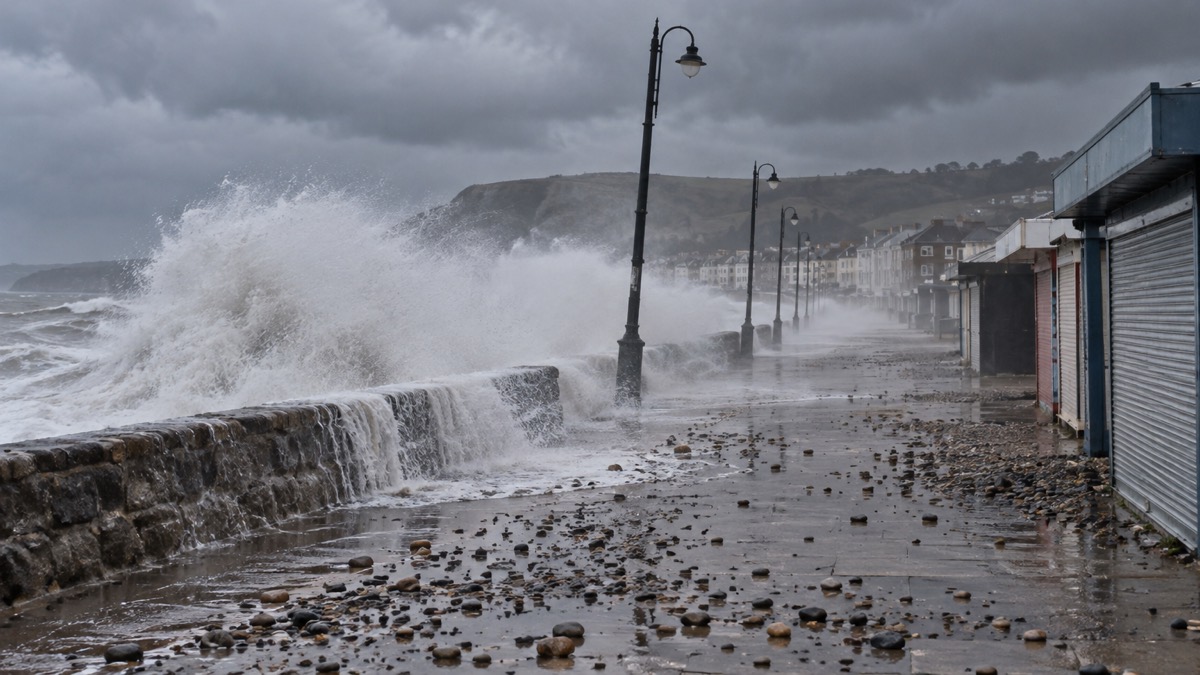
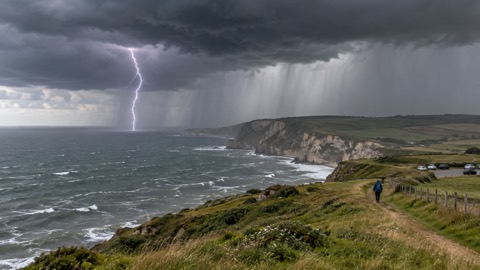
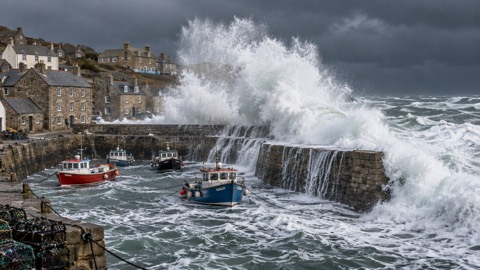
Yes, it is dangerous to be on the coast during high waves, and the official advice is unambiguous: always stay away from the coast when there are high waves, because it is very dangerous for people to be on the coastline then1. Even from the shore, large breaking waves can sweep you off your feet and out to sea2. Met Office warnings spell out the specific risk: near the coast, large waves and beach material thrown onto sea fronts, coastal roads and paths can cause obstructions or danger to life3.
The other half of the answer is what to do if something goes wrong. In an emergency on the coast, call 999 and ask for the Coastguard2. If you are inland and someone is in trouble in the water, call 999 and ask for the fire service4. Everything else on this page, from why the seafront is so dangerous to how to prepare your home for the power cuts that gales can bring, follows from those two points.
Stay away from the coast when waves are high
The single most important instruction on this page is the simplest one. Dorset Prepared, the official resilience partnership for Dorset, states it plainly: "Always stay away from the coast when there are high waves. It is very dangerous for people to be on the coastline when there are high waves."1 That applies to beaches, promenades, sea walls, piers, harbours and coastal footpaths alike. Lancashire Prepared gives the same instruction from the other direction: avoid the coast, because large waves and sea spray can be dangerous on beaches, promenades, coastal footpaths and roads6.
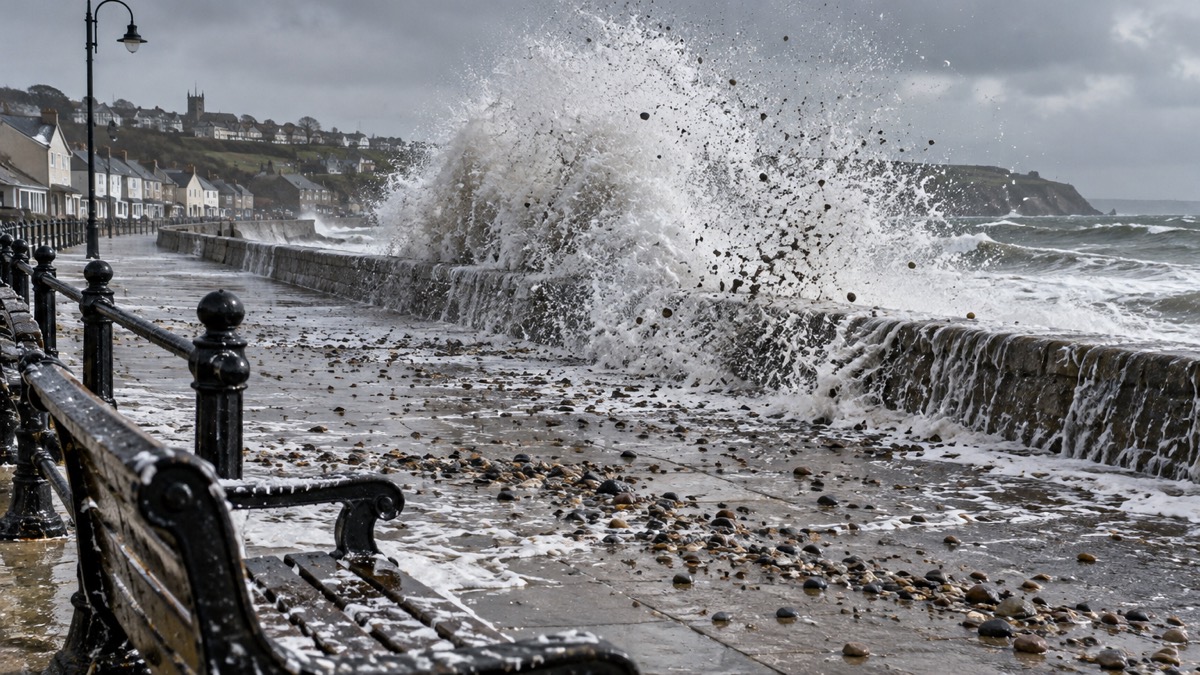
The reason this matters is that the danger is not only the sea itself. Met Office guidance explains that large waves generated by strong winds can throw beach material and sea water onto transport routes, walkways and into properties along some coasts, particularly when the waves coincide with high tides7. Beach material means shingle, cobbles and even rocks, picked up and hurled by a breaking wave with enough force to injure or kill. A Met Office yellow wind warning for 27 October 2026 set out the expected impacts in those exact terms: "There is a small chance that injuries and danger to life could occur from large waves and beach material being thrown on" to sea fronts, coastal roads and properties2.
If you live in a coastal town, this changes what a normal walk looks like during a gale. North Yorkshire Fire and Rescue Service advises that being outside in high winds makes you more vulnerable to injury, and that where possible you should stay indoors3. Scottish Borders Council adds that if you are caught outside during high winds you should avoid roofs or high places8. A stormy seafront is not a place to take a dog for its usual walk, and it is certainly not a place for children. Wait for the wind and the sea to settle, and check the forecast and the tides before you go back out5.
Why the coastline is so dangerous in a storm
The coast concentrates every hazard a storm produces. The wind arrives with nothing to slow it down after hundreds of miles of open sea, the waves it has built up strike the shore at full strength, and the people who come to watch are standing exactly where the two meet.
The Met Office's strong wind safety advice identifies the mechanism that catches people out: "Beware of large waves, even from the shore large breaking waves can sweep you off your feet and out to sea."5 A wave does not need to reach you as a wall of water. A single breaking wave, arriving unexpectedly after a run of smaller ones, can knock an adult down and drag them off the promenade or beach and into the water. North Yorkshire Fire and Rescue Service repeats the same warning: be aware of large waves, even from the shore, as these can sweep you off your feet and out to sea3.
Cliffs add a second danger, and not only from above. Mid and West Wales Fire and Rescue Service advises walkers to keep clear of cliff edges and riverbanks because they may be unstable ground10. North Yorkshire Fire and Rescue Service goes further, warning that cliff edges may be dangerously undercut by erosion and wave action, so you cannot rely on what the ground looks like from the top: "Keep away from all cliff edges as they may be dangerously undercut by erosion and wave action. Adhere to any signs or barriers restricting access or warning of danger."11 The Coastguard's rule for the base of a cliff is to stand at least the height of the cliff away from it, so if the cliff is 25 metres high, do not stand less than 25 metres from its base11.
Cornwall Council's storm advice covers the rest of the picture: with extremely strong winds expected, stay well away from the coast and the water's edge, and follow the RNLI's advice to stay out of the water12. The RNLI itself asks everyone visiting the coast to know the risks, from rip currents and tides to cold water shock and waves, and what they can do to minimise them13. In a gale, every one of those risks is present at once, and the water itself is off limits.
What gales and storms can do: power cuts, transport disruption and damage to homes
Staying off the seafront protects you from the waves, but a gale affects a whole coastal community, and the effects reach well inland too. Understanding them tells you what to prepare for before the wind arrives.
Dorset Prepared summarises the range of impacts: gale force winds or storms may cause loss of power, disruption to the transport network and damage to homes and businesses1. Lancashire Prepared describes the same picture in more detail: storms and gales can cause significant damage to buildings and infrastructure and result in fallen trees, coastal flooding, power cuts and disruption to the transport network6. Pembrokeshire Council lists the expected effects of gales and storms in its area as damage to buildings and trees, risk to high-sided vehicles and other traffic, vehicle collisions, and utility and telephony failure14.
| What a gale can do | Who it affects | What to do about it |
|---|---|---|
| Loss of power | Whole communities, especially where trees fall onto power lines7 | Prepare for a power cut before the storm15 |
| Transport disruption | Road, rail and bridge users; coastal routes worst hit1 | Check warnings before travelling; use main roads3 |
| Damage to buildings and trees | Anyone in the storm's path14 | Stay indoors; do not repair damage mid-storm6 |
| Large waves and spray | Beaches, promenades, coastal footpaths and roads6 | Stay away from the coast1 |
| Coastal flooding | Low-lying land near the sea, especially at high tide16 | Know how to turn off electricity and gas17 |
Power cuts deserve particular attention, because strong winds and storms often result in tree damage and trees being brought down, which can be the catalyst for loss of power when a tree falls onto power lines7. Gales and storms can bring damage to buildings and trees, risk to high-sided vehicles and other traffic, vehicle collisions, and utility and telephony failure17. Northern Ireland's official storm advice tells households to make sure they are prepared in case there is a power cut, and to make sure electric gates are open before a storm, so that a power failure does not leave you shut in15. Our page on power cuts covers what to have ready.
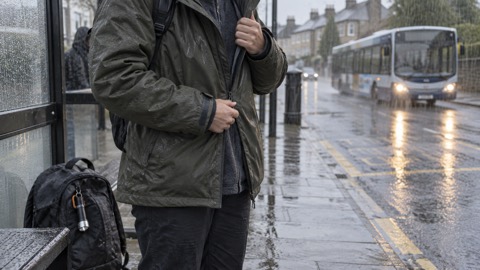
Transport is the other widespread effect. The Met Office's Storm Chandra advice reminds travellers that bridges, coastal routes and high ground are particularly exposed in storms18. Read Scotland, the Scottish Government's preparedness campaign, advises taking care on exposed routes such as bridges and high open roads, because side winds can be dangerous if you are towing or driving a high-sided vehicle19. If a journey cannot be avoided, North Yorkshire Fire and Rescue Service advises using main roads rather than minor routes in heavy rain and flooding3, and our page on travel disruption explains what closes and why.
Falling trees and flying debris: the main cause of storm deaths and injuries
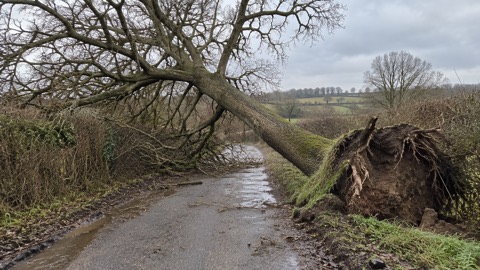
Away from the water's edge, the deadliest hazards in any UK storm are falling trees and flying debris. Dorset Prepared records the consequences of storms, gales and high waves as deaths and injuries from falling trees, and road accidents, along with structural damage to buildings such as a roof being ripped off by the wind1.
Met Office warnings name flying debris first among their possible impacts. The strong winds warning for Storm Boelo in October 2026 warned of "Injuries or danger to life from flying debris, large waves and beach material at coasts, travel delays, fallen trees, and power cuts possible"15. Northern Ireland's storm advice for Storm Chandra carried the same list: injuries or danger to life from flying debris, large waves at coasts, travel disruption, buildings damage, flooding, fallen trees, and power cuts possible17. Flying debris means anything the wind can lift: roof tiles, bins, trampolines, garden furniture, branches and scaffolding boards.
The practical instructions follow from this. Stay indoors where possible during high winds, because being outside makes you more vulnerable to injury3. Northern Ireland's official advice is to avoid all work at height during a storm17, and Lancashire Prepared is equally clear about the temptation to fix things as they happen: "Do not go outside to repair damage while the storm is in progress."6 A loose roof tile or a fallen fence panel can wait; a second fall from a ladder in a gale cannot. Once the storm has passed, check your property from the ground, and see our page on dangerous trees for who is responsible for a tree that has come down or looks ready to.
Before the storm, a short list of jobs reduces the flying debris risk around your home. Our page on preparing your home and garden for high winds covers this in full, but the essentials are to secure or bring inside anything the wind can move, and to park away from trees where you can.
Coastal flooding and tidal surges
The sea does not only attack the shore with waves. It can also rise over it. Coastal flooding happens when high tides and stormy conditions occur at the same time, and a tidal surge may form which can cause serious flooding21. Essex Prepared describes the same mechanism: coastal flooding happens when high tides, storm surges or tidal events bring seawater onto land22.
A storm surge is the sea itself being pushed towards you. The UK Government's storms guidance explains that strong winds can cause large waves that flood the coast and can drive storm surges, where seawater is pushed towards the coast20. Wiltshire and Swindon Prepared describes the result: coastal flooding is predominantly caused by high tides and stormy weather combining, leading to the overtopping of sea defences, with seawater then encroaching onto the land16. Public Health Wales adds the health dimension: during a storm, coastal areas may experience coastal floods from a rise in the sea level and the bad weather conditions23.
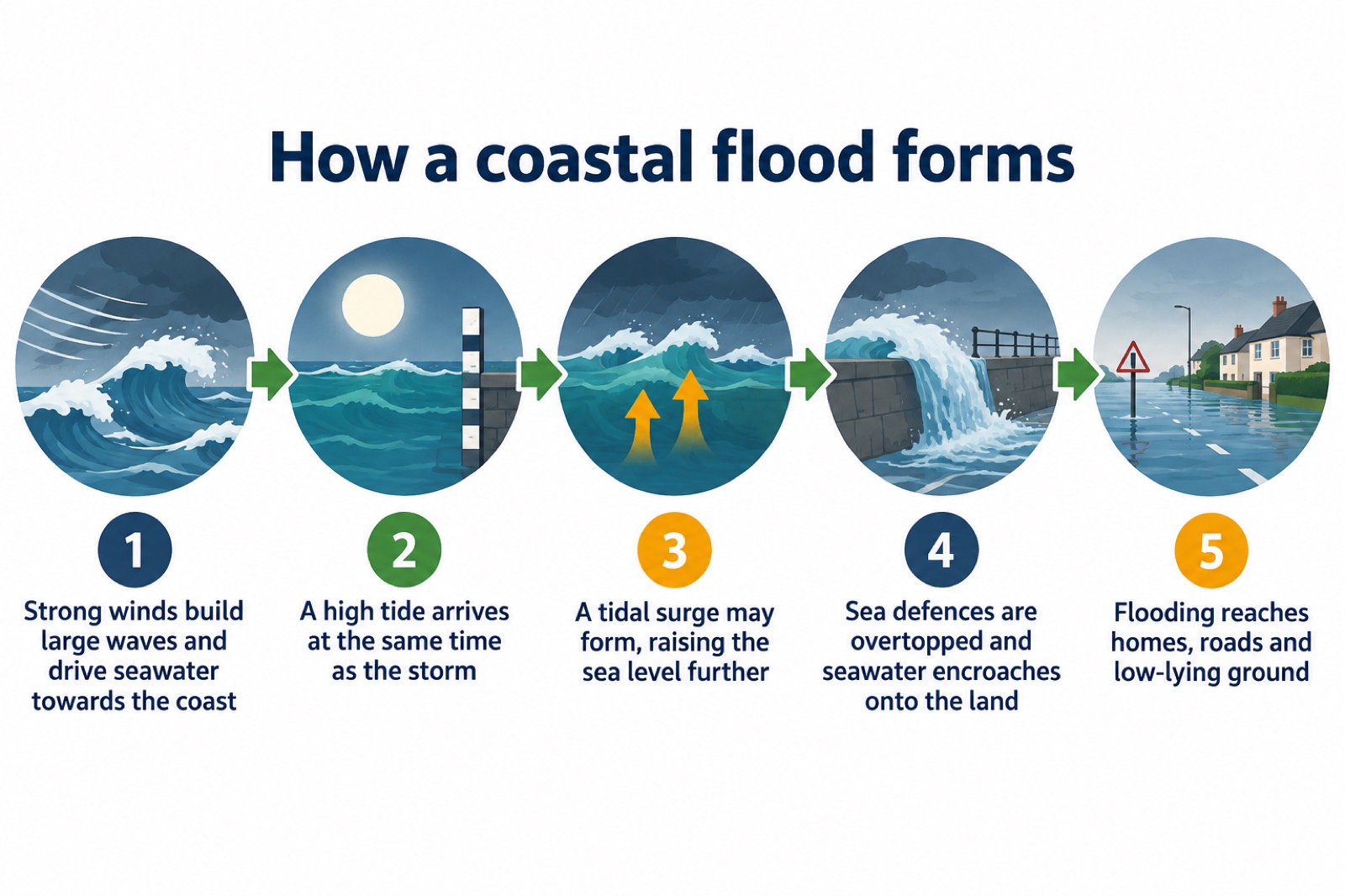
The timing matters, and it is predictable. SEPA, Scotland's environment agency, notes that flooding happens along coastlines when storm surges are associated with a high tide, coinciding with higher than normal river levels or with surface water24. That is why the Met Office's strong wind safety advice tells you to check the forecasts and the tides in your local area at the coast5: the danger window around a storm is concentrated around high tide, and a storm that passes at low water may do far less damage than a weaker one that coincides with a spring tide.
If you live in a coastal flood risk area, the same preparations apply as for river flooding, and our flooding page covers them in detail. Know where to turn off your electricity and gas before water arrives17. Be aware that coastal storms also bring storm surges and high tides that can lead to coastal erosion, which can undermine cliffs, defences and roads over repeated events25. Essex Prepared names its own susceptible areas, including Southend-on-Sea and the Tendring Peninsula, especially during storms that coincide with high tides22, and every coastal council publishes similar local information.
Coastal flooding happens when high tides and stormy conditions occur at the same time, and a tidal surge may form which can cause serious flooding26. Flooding also happens along coastlines when there are storm surges associated with a high tide coinciding with higher than normal river levels or from surface water26. Because the trigger is the tide, the risk follows a predictable rhythm: the danger concentrates around high tides during storms, which is when coastal households need to be most watchful.
Keep up to date with weather warnings and forecasts
Everything on this page becomes easier when you know the storm is coming. The Met Office issues weather warnings for wind, rain and other hazards, graded yellow, amber and red, and each warning states the expected impacts, including the specific coastal dangers. Our page on Met Office weather warnings explains what each level means; the short version is that a yellow warning means be aware, an amber warning means the impacts are likely and you should be ready to change plans, and a red warning means dangerous weather is expected and you should take action to keep safe.
There are several ways to keep informed, and using more than one is sensible because storms can knock out power and phone networks:
- Check the Met Office warnings for your area online2
- Check the latest weather forecast on your TV or radio19
- Look at the weather forecast and check the Met Office for warnings and details of risk in your area6
- Check the forecasts and tides in your local area before any trip to the coast5
- Keep a battery or wind-up radio so you can still receive broadcasts during a power cut
The wording of the warnings themselves tells you what to expect. North Yorkshire Fire and Rescue Service, explaining a yellow wind warning, noted that near the coast large waves and beach material being thrown onto sea fronts and coastal roads and paths may also cause obstructions or danger to life3. For an amber wind warning, the same service stated that injuries and danger to life are likely from large waves and beach material being thrown onto coastal roads, sea fronts and properties27. The shift from "possible" to "likely" is the signal to change your plans, not just to be careful.
Named storms, which you can read about on our named storms page, draw particular attention because they are the ones the Met Office expects to have damaging impacts. Storm Amy in October 2025 brought amber and yellow warnings highlighting a danger to life, the possibility of power cuts, travel disruption and particularly dangerous conditions near coasts28. SEPA's accompanying message for the Scottish coast was that a combination of large waves and high winds would bring danger to life on exposed coastlines, particularly around high tides, and it urged the public to stay away from the coast, adding: if in doubt, stay away from exposed coastal areas28.
Where to get help and information
If someone is in trouble at the coast, the number to call is 999, and the service to ask for is the Coastguard. The Met Office's strong wind safety advice gives the emergency numbers as 999 in the UK or 112 in Ireland, asking for the Coastguard in a coastal emergency5. Cornwall Council gives the same instruction: if you see someone in trouble on the coast, call 999 and ask for the Coastguard12.
The distinction matters if you are inland. North Yorkshire Fire and Rescue Service's water safety advice is to call 999 and ask for the fire service if you are inland, and the Coastguard if you are at the coast4. Getting the right service in the first call saves minutes, and minutes matter in cold water.
Before an emergency, the places to turn are the official ones. If you get in trouble at the coast, dial 999 and ask for the Coastguard2. If you or someone in your household needs extra support during a power cut or an evacuation, our page on extra help in an emergency explains the Priority Services Register and how to join it.
For households that want to be ready before the next named storm arrives, our storms, snow and ice section brings together the preparations that matter most: securing your home and garden against wind, being ready for a power cut, and knowing what to do about fallen trees, travel disruption and flooding.
Sources (28)
- Storms, gales and high waves, Dorset Prepared, 2024-04-03
- UK weather warnings, Met Office, 2026-10-27
- Keeping safe during high winds and heavy rain, North Yorkshire Fire and Rescue Service, 2024-01-22
- Water and wild fire campaign launched, North Yorkshire Fire and Rescue Service, 2021-04-21
- Stay safe in strong wind, Met Office, 2026-10-26
- Storms and gales, Lancashire Prepared, 2026-10-29
- Severe weather advice, Met Office, 2026-10-25
- High winds, Scottish Borders Council, 2026-10-29
- Storms, Wiltshire and Swindon Prepared, 2024-05-31
- Walking in the countryside, Mid and West Wales Fire and Rescue Service, 2026-10-29
- Cliff rock falls campaign, North Yorkshire Fire and Rescue Service, 2019-05-17
- Storm preparation, Cornwall Council, 2026-10-29
- Beach safety, RNLI, 2026-10-29
- Severe weather, Pembrokeshire County Council, 2026-10-29
- Strong winds weather warning information and advice, nidirect (Northern Ireland Government), 2026-10-24
- Flooding, Wiltshire and Swindon Prepared, 2026-10-25
- Strong winds and heavy rain warning information and advice, nidirect (Northern Ireland Government), 2026-08-30
- Met Office Storm Chandra WeatherReady advice, Met Office, 2026-01-26
- Storms and wind, Read Scotland (Scottish Government), 2026-03-24
- Storms, Prepare (UK Government), 2026-10-19
- Be flood ready: guidance for flood wardens, Harborough District Council, 2026-10-29
- Flooding, Essex Prepared, 2026-10-29
- Flooding and health, Public Health Wales, 2026-07-31
- Flooding FAQs, SEPA, 2026-10-29
- Severe weather, Essex Prepared, 2026-10-29
- Flood guidance statement, 28 January 2026, Flood Forecasting Centre, 2026-01-28
- Amber warning in place as Storm Debi hits North Yorkshire, North Yorkshire Fire and Rescue Service, 2023-11-13
- Amber and yellow warnings in force for Storm Amy, Met Office, 2025-10-03
 Flood Warning Checklist
 First Steps After a Flood
 Insurance Claim Records
 Storm Arwen 2021
 Storm Boelo
 Council Help in Severe Weather
 Dangerous Trees
 Storm Darragh 2024
 Landslips After Heavy Rain
 Lightning Safety
 How Storms Are Named
 Travel Disruption in Bad Weather