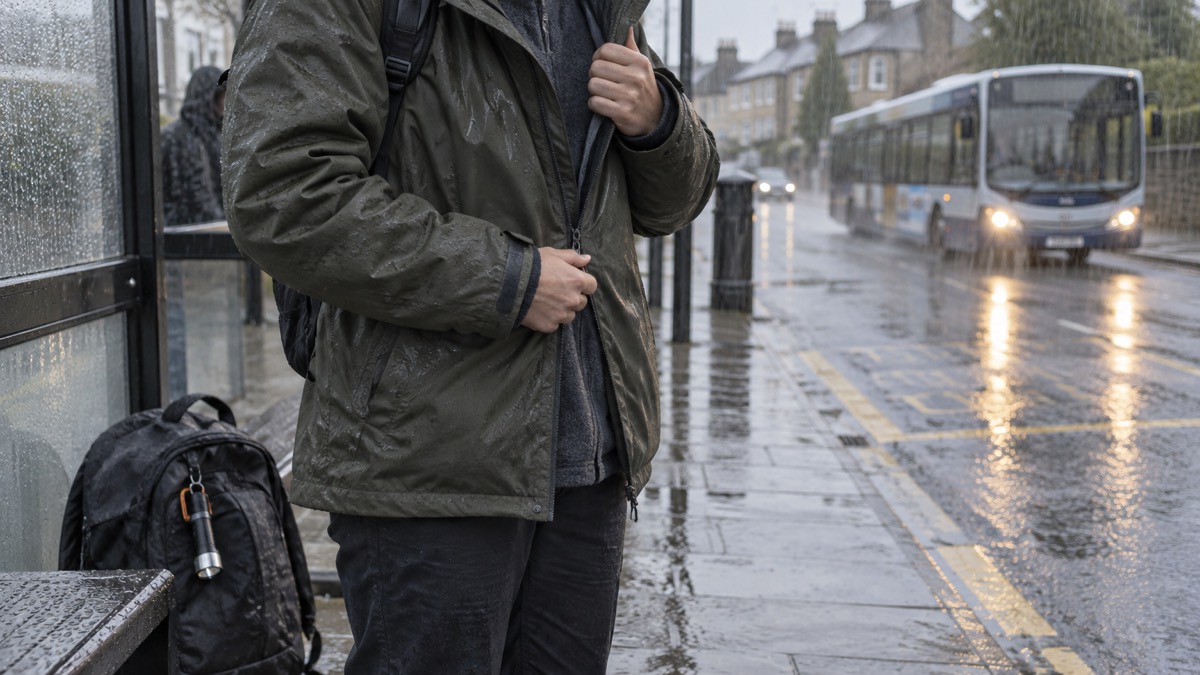
Bad weather disrupts travel in the UK every year, and the pattern is predictable: gales close bridges and bring speed restrictions, snow stops buses on minor roads, and flooding blocks roads and railway lines. The single most useful thing you can do is check before you set out and allow extra time for your journey. The government's travel advice is to plan ahead, check for disruption before travelling, and stay up to date with weather warnings; if disruption is expected, consider whether your journey can be delayed until conditions improve1.
This page sets out what actually happens to trains, buses, roads and bridges in bad weather, who makes the decisions, and where to check before you leave. It covers the wind limits that close the M48 Severn Bridge, the HGV weight restriction in force there since 27 May 2025, how bus operators decide whether routes run, and what to do if you break down on a smart motorway2.
Check before you set out
Every piece of official advice on bad weather travel starts from the same place: ask yourself whether the journey is necessary, and if it is, check conditions before you leave. The Met Office's WeatherReady advice puts it plainly: sometimes roads may be more affected than the rail network, but on other occasions the opposite may be true. You may be able to use a bus if the main roads are clear, or you may be able to switch to rail when the roads are blocked. Because you cannot know in advance which mode will be hit, the practical answer is to check each one you could use, and to consider working from home or doing an online shop if travel is not advised2.
Work through these steps before you leave home:
- Check the local and national weather forecast, and sign up to receive weather warnings from the Met Office so you are not caught out by a warning issued after you set off7.
- Plan your route, and check for disruption before travelling: road conditions if driving, and bus and train timetables for the services you intend to use1.
- Ask yourself whether the journey can be delayed until conditions improve. If snow or ice is expected, consider delaying your journey until it clears10.
- If travel is necessary, allow extra time for your journey, and tell someone your destination and expected arrival time1.
- Check that your vehicle is safe and roadworthy, that you have enough fuel for the journey, and that your mobile phone is charged in case you need to make an emergency call5.
- Listen to local radio for the latest weather and traffic updates while you travel11.
Allowing extra time is not a vague courtesy: it is what lets you drive safely in the conditions instead of rushing. NHS cold weather guidance and winter driving advice from fire and rescue services across the UK all repeat it, because the most common bad weather accidents happen when people drive at their usual speed on roads that will not support it10. In storms and gales, the advice from local resilience forums is firmer still: avoid non-essential travel, and if you must travel, allow extra time13. North Yorkshire's winter driving tips add two practical points worth adopting as habits: plan to use main roads, because they are the ones treated with grit, and check whether you need breakdown or recovery insurance before the season starts14.
If you are flying or sailing, check with the ferry company or airline for delays or cancellations before you leave for the port or airport15. And in hot weather the same rule applies in a different form: allow plenty of time for your journey, including regular breaks16.
Buses in bad weather: the operator decides whether routes run
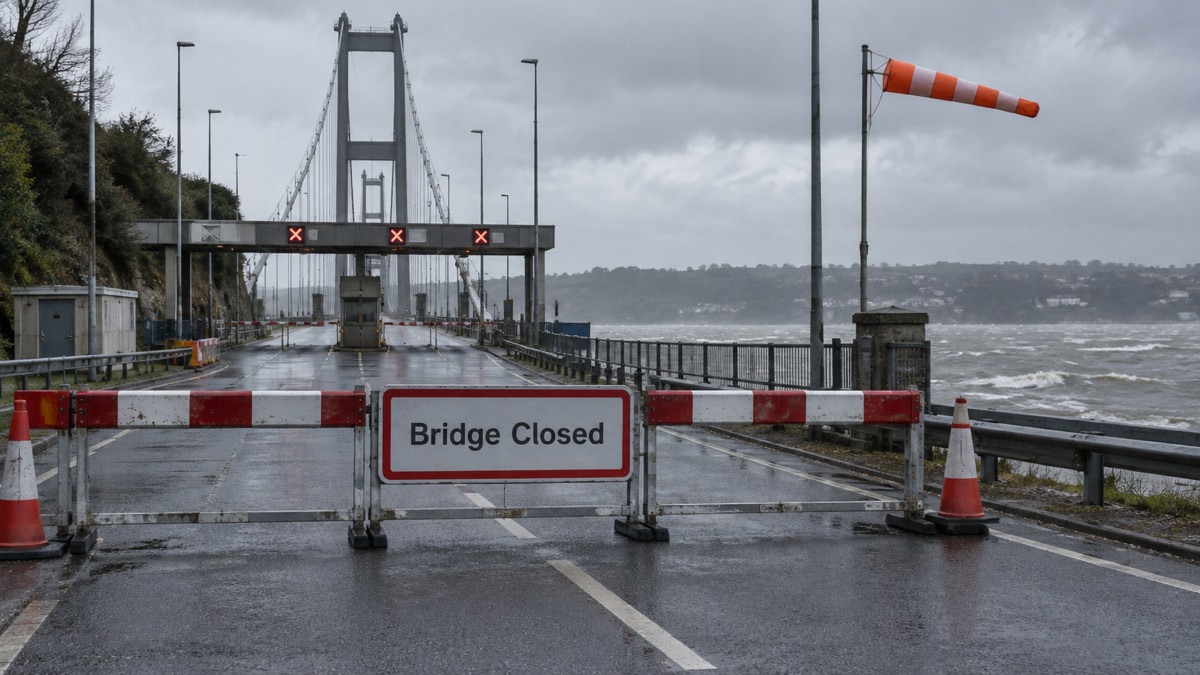
There is no national decision on whether buses run in snow or storms. Bus companies decide whether buses can run during bad weather and whether routes need to change, and they make those decisions to keep passengers and staff safe4. The same principle applies to school transport: it is up to the transport provider to decide whether to operate routes when road conditions are considered dangerous17.
What this means for you as a passenger is that the answer to "are buses running today?" is always local and always changing. Surrey County Council's guidance is a good model for what happens everywhere: weather conditions can change quickly, so bus services may change at short notice, and you should check your bus operator's website or social media pages for the latest information4. Even when services are running, buses may be delayed or cancelled at short notice because of road conditions, traffic or staff availability, and some buses may stay on main roads, so parts of a route may not be served4. If a stop on a minor road is missed in snow, that is usually the driver keeping to treated roads, not the service failing.
Allow extra time for your journey, and check with the individual operator for updates before you set out4. Our page on walking on ice covers that in detail.
School buses and bad weather
School transport follows the same operator-led pattern, with a few additions parents should know. In the Scottish Borders, school bus drivers have discretion to cancel or vary a route if local weather conditions make it necessary, and transport operators continue to assess road conditions and make local decisions on whether it is safe to run services18. Where a driver decides the journey is unsafe, it is at the parents' discretion whether they take the child to and from school themselves18.
Cornwall's severe weather procedures for student travel set out the judgement providers are asked to make when weather deteriorates during the day: consider current road conditions as well as the forecast, and only attempt journeys if confident they can be completed without placing the driver or students at risk17. If a school bus cannot run, the provider must notify the school, who will then let parents know the bus is unable to run17. Our page on school closures in snow explains how to find out whether your child's school itself is closed.
Why gritting affects your bus route
Whether a bus can serve your road often comes down to gritting. Surrey Highways treats key roads with grit during icy weather, including roads leading to the county's main bus depots, but it is not possible to grit every road used by buses, and the number of roads treated depends on how much grit, salt or sand is available and how long the bad weather lasts4. In prolonged snowfall, councils concentrate on a principal route network of key link roads and routes to hospitals, which means a smaller number of vital routes are kept open while others are left20. Our page on which roads are gritted explains how councils decide.
| What you are checking | Where to look | Why it matters |
|---|---|---|
| Whether your bus route is running or diverted | Your bus operator's website and social media | Operators decide at short notice whether routes run or stay on main roads4 |
| Whether your road is likely to be treated | Your council's gritting route map | Not every bus road can be gritted; treatment depends on salt supplies and how long the weather lasts4 |
| Whether school transport is running | Your school or council's school transport updates | The provider must notify the school, who then informs parents17 |
| Whether trains are a better option | Your train operator's website | Roads may be worse than rail, or the other way round2 |
The M48 Severn Bridge: wind limits and the HGV restriction
The M48 Severn Bridge, built in the 1960s to replace the ferry service that had operated across the Severn for many years, is one of the most weather-sensitive crossings in the country3. National Highways operates it with a ladder of wind restrictions, and if you cross it regularly it is worth knowing the thresholds, because they explain everything from a 40mph limit on an otherwise clear day to a full closure in a storm.
| Wind speed | What happens on the bridge |
|---|---|
| 30 knots | 40mph speed limits are put in place3 |
| 35 knots | Leeward lanes are closed, with red X signs above them3 |
| Above 40 knots (46mph) | The bridge is closed to all traffic until wind speeds have dropped3 |
| Above 70 knots (80mph) | Both the Severn Bridge and the M4 Prince of Wales Bridge are closed3 |
Two things follow from this ladder for ordinary drivers. First, the bridge closes to all traffic, cars included, when gusts above 40 knots (46mph) are expected, so a gale that would barely affect a normal motorway journey can stop your crossing entirely3. Second, when the bridge does close, traffic can still travel between England and Wales by following a diversion using the M5, M50, A40 and A449, so allow a good deal of extra time rather than assuming a quick reroute21.
Why HGVs over 7.5 tonnes are restricted
Since 27 May 2025, heavy goods vehicles over 7.5 tonnes have been restricted from the M48 Severn Bridge3. The reason is the condition of the main bridge cables: National Highways needs to reduce the load on the bridge to keep it open to most traffic, and for the time being that means removing the heaviest vehicles3. Work is under way to install a medium-term solution, including the foundations and ducting for traffic lights, automatic number plate recognition (ANPR) and systems that weigh HGVs to protect the bridge, to allow HGVs to return3.
Cars, vans and other vehicles below 7.5 tonnes are not affected by the weight restriction and can cross as normal, subject to the wind limits above. One older arrangement has gone: National Highways stopped filtering high sided vehicles and motorcycles during high winds in late 2019, when Covid-19 work restrictions prevented the practice, and it has not returned, so there is no escorted convoy over the bridge in windy weather3.
Foot and cycle paths on the Severn Bridge
The shared use paths for pedestrians and cyclists on the M48 Severn Bridge are not routinely closed during wind events3. They may be closed if there is a critical incident on the bridge or a severe storm, so if you are planning to walk or cycle across in bad weather, check the live updates before you set out21. The bridge also closes for maintenance more often than most other motorways because its road surface is much narrower than a typical motorway, leaving less space to carry out work while keeping traffic moving; planned closures are published in advance, and for the week 29 October to 4 November 2026 no bridge closures were reported3.
Smart motorways and what to do if you break down
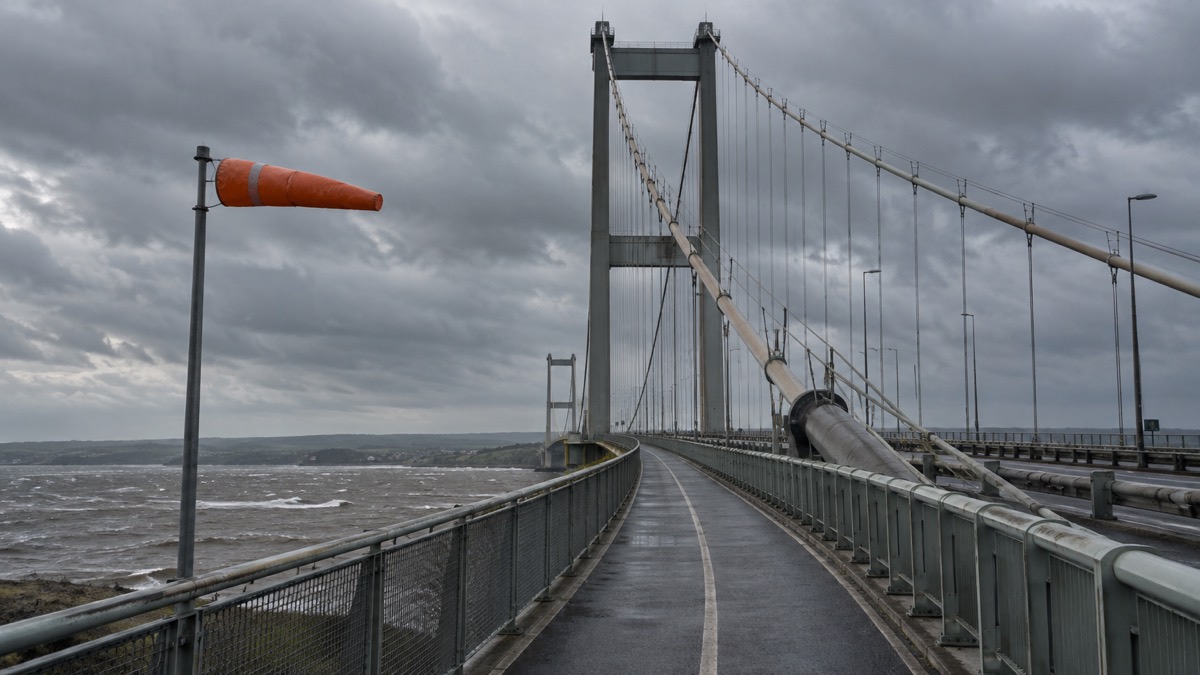
Around 25 per cent of the motorway network is now made up of smart motorways5. These roads use technology to manage traffic, and for a household driver the practical difference in bad weather is the same as in a breakdown: you need to know what to do before it happens, because there may be no hard shoulder to retreat to in the ordinary way.
National Highways' advice for motorway breakdowns includes a step that matters especially for households with older or disabled members, or anyone travelling alone: when you contact the operator for help, inform them if you are a vulnerable motorist, such as disabled, older or travelling alone6. That information is used to prioritise the response, so give it at the outset rather than waiting to be asked.
Before any motorway journey in bad weather, plan ahead: check that your vehicle is safe and roadworthy, and that you have enough fuel for your journey, remembering to plan for breaks and not to drive when tired5. In heavy rain, Cheshire Fire and Rescue Service warns that even modern road surfaces are susceptible to standing water, creating an aquaplaning hazard and significantly reducing visibility; our page on driving in heavy rain covers how to handle that. In high winds, drivers of high-sided vehicles, caravans and motorbikes are advised to take extra care because of the increased risk of vehicles being blown over, with particular caution named for the Thelwall Viaduct on the M6 and Barton Bridge on the M6022.
All road users are asked to pay attention to any road signs and temporary arrangements put in place during severe weather, in the words of the official warning advice23. That includes the red X signs above closed lanes, which on the Severn Bridge at 35 knots of wind mark lanes closed for safety3.
Roads, flooding and reporting problems
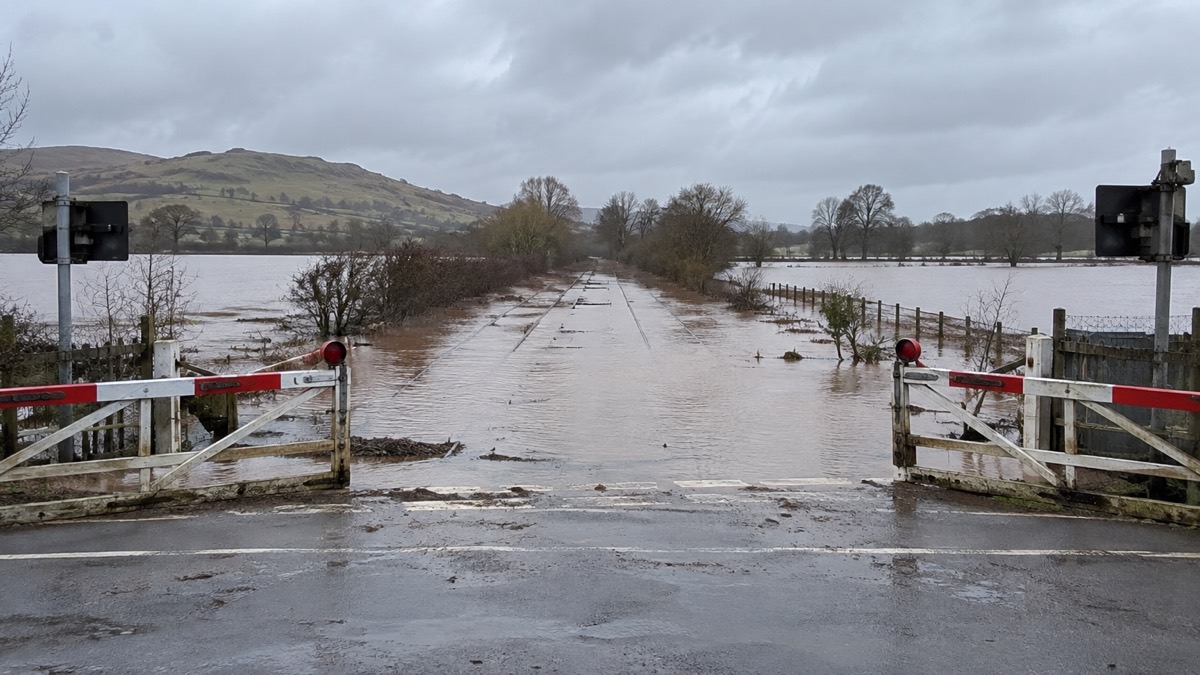
Flooding is now a structural feature of UK road travel, not just a storm-day event. The Environment Agency's national assessment of flood and coastal erosion risk in England found that around a third (38%) of all roads are in areas at risk from one or more sources of flooding, and that this is projected to rise to 46% by mid-century, an increase of 21%24. In practice that means a flooded road is increasingly likely to be on your route even in ordinary winter rain, and councils warn that in severe weather conditions of flooding, snow or high wind, some travel may be disrupted and roads may be closed at short notice25.
If you see flooding or a drainage problem, report it: reports from the public are how highways teams find out about blocked drains and water building up on carriageways.
- In Northern Ireland, the Flooding Incident Line is available 24 hours a day, every day, and you can report flooding problems on roads, burst water mains and blocked drains to it23.
- In Cornwall, flooding involving mud, debris or spillage on a road can be reported online to the council's Highways Service; if you are reporting farmland flooding or runoff to the Environment Agency, give the location as a National Grid Reference, a brief description of the incident, the impact on property, watercourses or infrastructure, and photos or videos if you can, trying to capture where the runoff is coming from26.
- In Argyll and Bute, problems with street lighting or faults on the road, such as potholes, flooding, drains, street lights out or damaged signs, can be reported through an online form, and the RALF (Roads and lighting faults) phone line, 0800 37 3635, operates evenings, weekends and public holidays27.
If flooding has cut off your route, the same planning habits as before apply: check whether rail is running better than the roads, check whether buses can use the main roads, and consider delaying the journey2. Our flooding guide covers protecting your home if the water comes to you rather than just your route.
What past storms show about travel and power disruption
Storms do not just delay traffic: they combine travel disruption with power cuts, and the two feed each other. Gale force winds or storms may cause loss of power, disruption to the transport network and damage to homes and businesses, and road and travel disruption is listed among the standard consequences of storms, gales and high waves in local resilience assessments28. Pembrokeshire's community risk register spells out what heavy snow means in practice: roads and streets impassable, increased journey times, hampered delivery of essential services and supplies, vehicles abandoned, vehicle collisions, and utility and telephony failure30.
Recent named storms show the scale. Storm Arwen in November 2021 significantly affected 11 of the 14 Great Britain network licence areas, with over 190,000 hot meals or meal vouchers issued to households without power and over 1,400 households provided with alternative accommodation; our page on Storm Arwen covers what happened and what changed afterwards. Storm Darragh, which began on 6 December 2024 with winds peaking at 93mph, impacted 181,059 customers across the ScottishPower Manweb area, mostly in Wales; see our page on Storm Darragh. Earlier storms show the same pattern: ex-Hurricane Ophelia in October 2017 brought three deaths in the Republic of Ireland and power cuts affecting thousands of homes and businesses in Wales and Northern Ireland, and Storm Hector in June 2018 left up to 26,000 homes and businesses in Northern Ireland without power.
The lesson for travel planning is that a severe storm can leave you both stranded and without power at home, so the preparations reinforce each other: charge your phone before you travel, keep a torch and a way to get updates at home, and know the power cut helpline number, 1058. Our power cuts guide and staying informed guide cover both.
One further risk is worth knowing about, even though it is rare. Severe space weather has been on the National Risk Register since 2011 as one of the most serious natural and environmental risks, and a severe event could cause widespread disruption of air travel for multiple weeks, localised power outages in the UK, and disruption to satellite services such as satellite navigation and timing services used by many sectors31. For a household, that is a reason to have a paper map or a route you know without relying on satnav, not a cause for alarm.
Getting help and information in each nation
Where you check conditions depends on where you are. In Scotland, Transport Scotland provides advice through its network of Variable Message Signs, the Traffic Scotland website including internet radio, smartphone apps, radio travel information broadcasts and the Traffic Scotland Customer Careline on 0800 028 141432. During named storms, Police Scotland may advise that there is a high risk of disruption for road journeys and that drivers are likely to experience significant delays, and those messages are carried through the same channels32. The Scottish Borders council adds a simple habit worth copying anywhere: take a few minutes before you leave to ensure there are no problems on your intended route, and contact ScotRail to check for disruptions to the Borders Railway service if you use it33.
In Northern Ireland, the nidirect advice for strong winds and heavy rain is to ask yourself if you can put off your journey until conditions improve, and to check with ferry companies or airlines for delays or cancellations if travelling by air or sea15. If your power is off during a storm, contact the NIE Networks Customer Helpline on 03457 643 643 to report it or get more information, and report anything that looks dangerous, such as damaged electricity equipment or broken power lines, to NIE Networks on the same number15. In England and Wales, National Highways publishes live travel updates for the Severn bridges and the motorway network, and your county council or local authority publishes bus, gritting and road closure information3.
Whatever the nation, the sequence is the same: check the warning, check the route, check the operator, and only then decide whether to travel. If a Met Office warning is in force, our page on the warning levels explains what yellow, amber and red mean for the journeys you had planned.
Sources (33)
- Travel advice in emergencies, Prepare (UK government campaign), 2026-10-06
- WeatherReady top tips, Met Office, 2026-10-25
- The Severn Bridges live travel updates, National Highways, 2026-10-29
- Bus disruption due to adverse weather, Surrey County Council, 2026-07-22
- Driving on motorways, National Highways, 2026-10-29
- Motorway road safety and breakdowns, National Highways, 2026-10-29
- Prepare for emergencies: risks, Surrey County Council, 2026-10-28
- WeatherReady top tips, Met Office, 2026-10-25
- Traffic Scotland disruption updates, Traffic Scotland, 2026-10-29
- Cold weather warning advice, North Cumbria Integrated Care NHS, 2026-10-29
- Winter safety on the roads, Mid and West Wales Fire and Rescue Service, 2026-10-29
- Weather safety guidance, Oxford Health NHS Foundation Trust, 2026-09-18
- Storms and gales advice, Lancashire Prepared, 2026-10-29
- Winter, summer and wet weather driving tips, North Yorkshire Council, 2026
- Strong winds and heavy rain warning information and advice, nidirect (Northern Ireland government), 2026-01-27
- Travelling in extreme heat, Traffic England, 2026-10-29
- Severe weather procedures for student travel, Cornwall Council, 2026-10-29
- Winter gritting FAQs: school transport, Scottish Borders Council, 2026-10-29
- Schools winter advice, Scottish Borders Council, 2026-10-29
- Snow information and gritting, Derbyshire County Council, 2026-10-29
- The Severn Bridges live travel updates, Traffic England, 2026-10-29
- Driving in adverse weather, Cheshire Fire and Rescue Service, 2026-03-11
- Strong winds weather warning information and advice, nidirect (Northern Ireland government), 2026-10-24
- National assessment of flood and coastal erosion risk in England 2024, Environment Agency, 2026-08-05
- Severe weather road closures, Oxfordshire County Council, 2026
- Report a flood, Cornwall Council, 2026-02-23
- Winter weather, roads and travelling FAQs: reporting poor road conditions, Argyll and Bute Council, 2026
- Storms, gales and high waves, Dorset Prepared, 2024-04-03
- Thunderstorms weather warning advice and information, Essex Prepared, 2026-08-30
- Severe weather risks, Pembrokeshire County Council, 2026-10-29
- The UK's resilience to severe space weather, National Audit Office, 2026-03-20
- Driving in bad weather: keep Scotland moving, Transport Scotland, 2026-10-29
- Winter travel advice, Scottish Borders Council, 2026-10-29
 Flood Warning Checklist
 First Steps After a Flood
 Insurance Claim Records
 Storm Arwen 2021
 Storm Boelo
 Coastal Safety in Gales
 Council Help in Severe Weather
 Dangerous Trees
 Storm Darragh 2024
 Landslips After Heavy Rain
 Lightning Safety
 How Storms Are Named